Key takeaways
- Entry prices for AI visibility tools run from about $29 to $199 a month, but city-level targeting is often on a higher tier or sold separately.
- The prompt matrix decides your bill. Ten cities times five services is 50 prompts, which fills a typical entry plan before you track anything else.
- Country-level coverage is not city-level tracking. Check that a plan really targets cities before you pay for it.
- Per-engine add-ons, seats and API overages can push the real cost to 2 to 3 times the sticker price.
- Prices below were gathered from third-party sources in mid-October 2026 and conflict in places. Confirm everything on the vendor's pricing page.
Why local AI tracking costs more than it looks
A country-level tracker answers one question: does the brand show up when someone in the US asks ChatGPT for a recommendation? A local business needs a different answer. A plumber in Leeds does not care what a user in Texas sees. A dentist with six branches needs six sets of answers.
That is why location is where vendors split their plans. Some sell it as a core feature, some lock it behind a mid-tier plan, and some only offer it on custom enterprise contracts. The headline price you see on a pricing page rarely includes it.
There is also a measurement problem. SparkToro found less than a 1% chance that ChatGPT or Google AI gives the same brand list twice, and answers are personalized by location (this figure comes via Position Digital's tool roundup). One snapshot of one city tells you very little. You pay for repeat runs, and repeat runs eat prompt and response allowances.
How the prompt matrix drives your bill
Before comparing tools, work out how many prompts you need. Local tracking multiplies fast.
Take locations times services. Ten cities and five services is 50 prompts. That already fills a whole Peec AI or Semrush starter allowance, before you add brand prompts or repeat runs. One practical tip from US Tech Automations' local-business comparison: buy a tool whose printed prompt cap is larger than your matrix, with room left for some brand prompts. They also suggest one prompt set per location cluster rather than one per street.
There is a useful constraint on the other side. According to Promptwatch Data on average sources per response, ChatGPT cites about 5 sources per web-search answer, while Google AI Overviews and Perplexity cite about 10. With only around five ChatGPT slots, a city-level prompt only pays off if you could realistically win one. Tracking 200 prompts you have no chance on is an expensive way to feel bad.
Query fan-outs matter here too. Promptwatch's fan-out data shows ChatGPT's average query length dropping from about 117 characters in December 2025 to roughly 53 after April 2026. Short queries mean the city and service words need to sit in your titles and H2s, because a city modifier tends to get added during fan-out. That is a content point, but it tells you which local prompts are worth paying to track.
Pricing across 10 tools
The table below pulls entry prices and local notes together. Sources disagree in several places, and I did not verify city features on each vendor page myself. Treat it as a starting map, not a quote.
| Tool | Entry price (monthly) | City-level targeting | Notes |
|---|---|---|---|
| Otterly.AI | $29 Lite (15 prompts); $189 Standard; $489 Premium | Country coverage in 50+ countries, not city-level | AI Mode, Gemini and Claude are paid add-ons |
| Peec AI | $95 Starter (50 prompts), $245, $495 | Confirm Local GEO access on your plan | Sources conflict on tier names and prices |
| Promptwatch | $95 Essential; $245 Professional; $579 Business | State and city tracking from Business | Country tracking on every paid plan |
| Semrush AI Visibility | $99 base; $199 SEO + AI starter | State, city and zip-level localization per Position Digital | Higher tiers list multi-location tracking |
| Ahrefs Brand Radar | From $199 standalone; custom prompt packages from about $50 | Prompts can run across selected locations | Lite includes only 5 tracked AI prompts |
| AthenaHQ | $295 monthly, $245 annual | Regional tracking | 3,600 credits, unlimited members |
| Profound | Custom enterprise | Country, state and city on Enterprise | $99 Starter reportedly removed October 2026 |
| RadarKit | From $29 | Local Radar, built for local recommendations | Vendor-reported pricing |
| BrightLocal | From $41 per location | Location-level AI reporting | Combines with listings and reviews |
| Local Falcon | From $24.99 | GPS-point grid with heatmaps | Geographic rather than prompt-first |
The last three rows come from a local-business comparison video by a GEO creator, so they are creator-reported prices.
Entry tier or city tier?
The cheap plans are real, but they usually answer a country-level question. Otterly.AI is the clearest example. It is a good, affordable monitor, but the coverage is by country. RadarKit's comparison says country coverage should not be read as city-level, residential-IP or Maps-grid tracking.

Peec AI sits one step up and is popular with agencies that want structured prompt management and citation research. Peec reportedly detects map widgets and local-business cards, but confirm whether Local GEO is included in your subscription before you commit.

Where city targeting shows up
Promptwatch starts at $95 a month on Essential, with country tracking on every paid plan. State and city tracking begins at Business, at $579 a month, which also includes 350 prompts and 42,000 responses. Agency plans (Kick-off at $199, Growth at $399, Scale at $799) include state and city tracking too, with unlimited projects and prompts, which changes the math if you run many local clients. Always confirm on promptwatch.com/pricing.

The reason to consider a higher tier is what sits next to the tracking: crawler logs, content gap analysis and a Content Agent that publishes. If you only need to see where you rank in five cities, that is more than you need. If you need to fix why you are missing, it is the point.
Semrush is the other mainstream option with explicit local language. Position Digital describes state and city tracking with localization down to zip code, city or address, priced around $99 per domain. A September 2026 snapshot lists Pro+ at $299 with multi-location tracking. Those are third-party numbers, so verify.
Ahrefs Brand Radar lets custom prompts run across one or more chosen locations, which is handy if you already live in Ahrefs. The catch is prompt volume. Five prompts on Lite goes nowhere for a city matrix.

Profound is the enterprise name. Country, state and city targeting is reportedly on its Enterprise tier, with custom pricing. IndustryLens says the $99 Starter plan was removed in October 2026, so any older "Profound from $99" claim is stale.

AthenaHQ lists Starter at $295 monthly or $245 annual, with regional tracking mentioned on its own comparison page. That is vendor-sourced, so treat it with the usual caution.

Local-first options
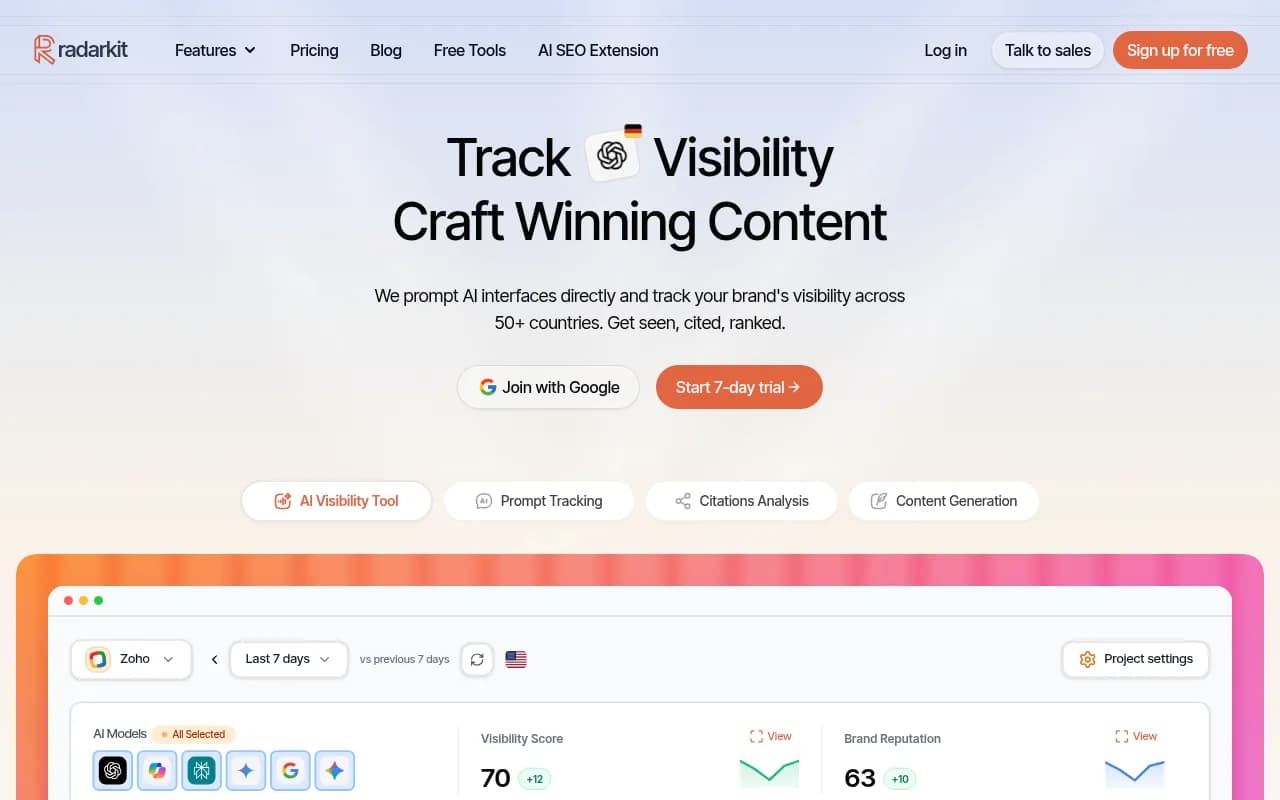
A few tools start from the local problem rather than adding it later. RadarKit pitches local AI recommendations, with appearance rate, recommendation position, competitors, ratings and citations across ChatGPT, AI Mode, AI Overviews, Perplexity, Gemini and Copilot.
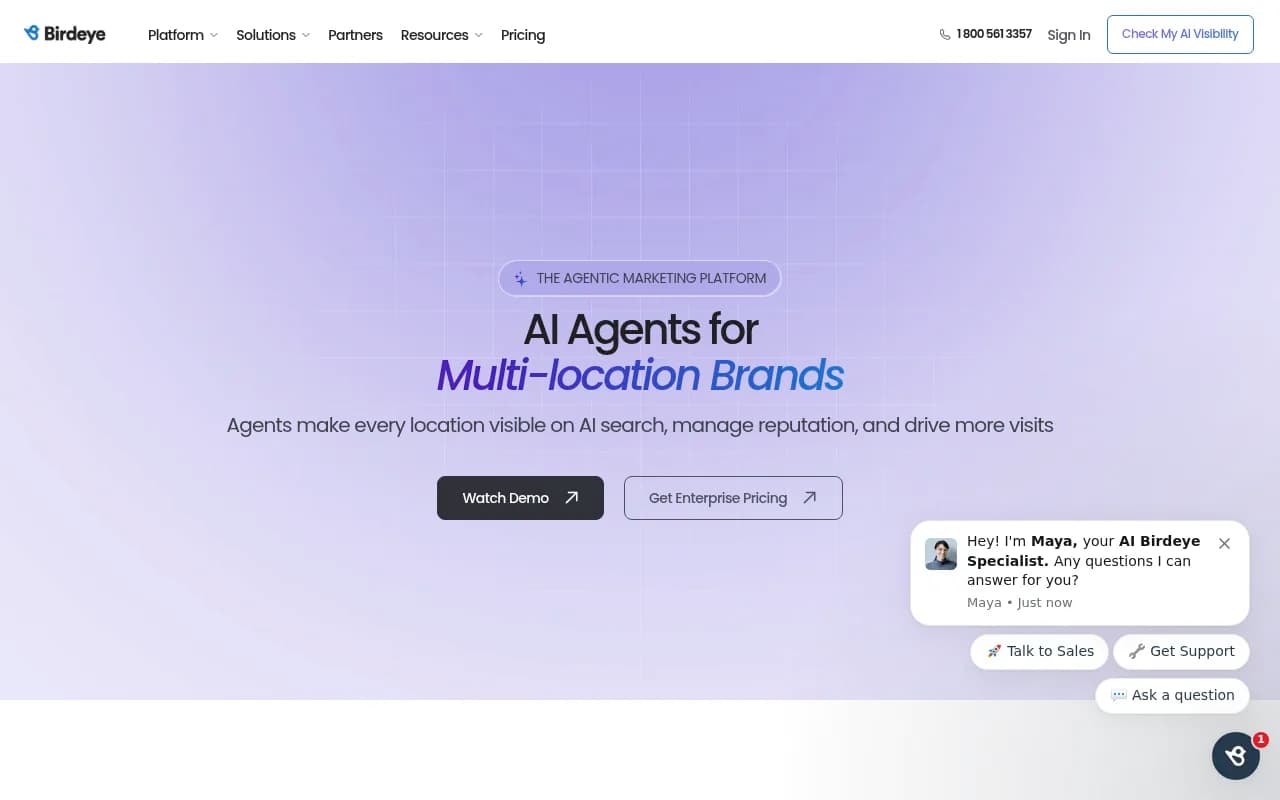
Birdeye Search AI is another catalog entry built around location-level tracking, which suits multi-branch businesses that already use Birdeye for reviews.
OpenForge reportedly has a local and brick-and-mortar plan at $149 a month per location. Per-location pricing is easy to understand at three branches and gets painful at thirty.

The hidden costs
The sticker price is the opening bid. AmICited's pricing analysis argues that once you add per-engine fees, seats, API overages and implementation, you should expect to pay 2 to 3 times the base price. I can't verify that multiple for every vendor, but the individual pieces are real.
- Per-engine add-ons. Otterly's AI Mode costs about $9 a month on the Lite monthly plan, according to Semrush's agency article. Gemini and Claude are add-ons too.
- Prompt caps. A plan that looks cheap becomes expensive once your matrix doesn't fit.
- Seats. Fine for a solo owner, annoying for a team of five.
- Repeat runs. Because answers vary, one run per prompt is weak data.
- Location multipliers. Per-location pricing scales linearly with branch count.
What tools versus services cost
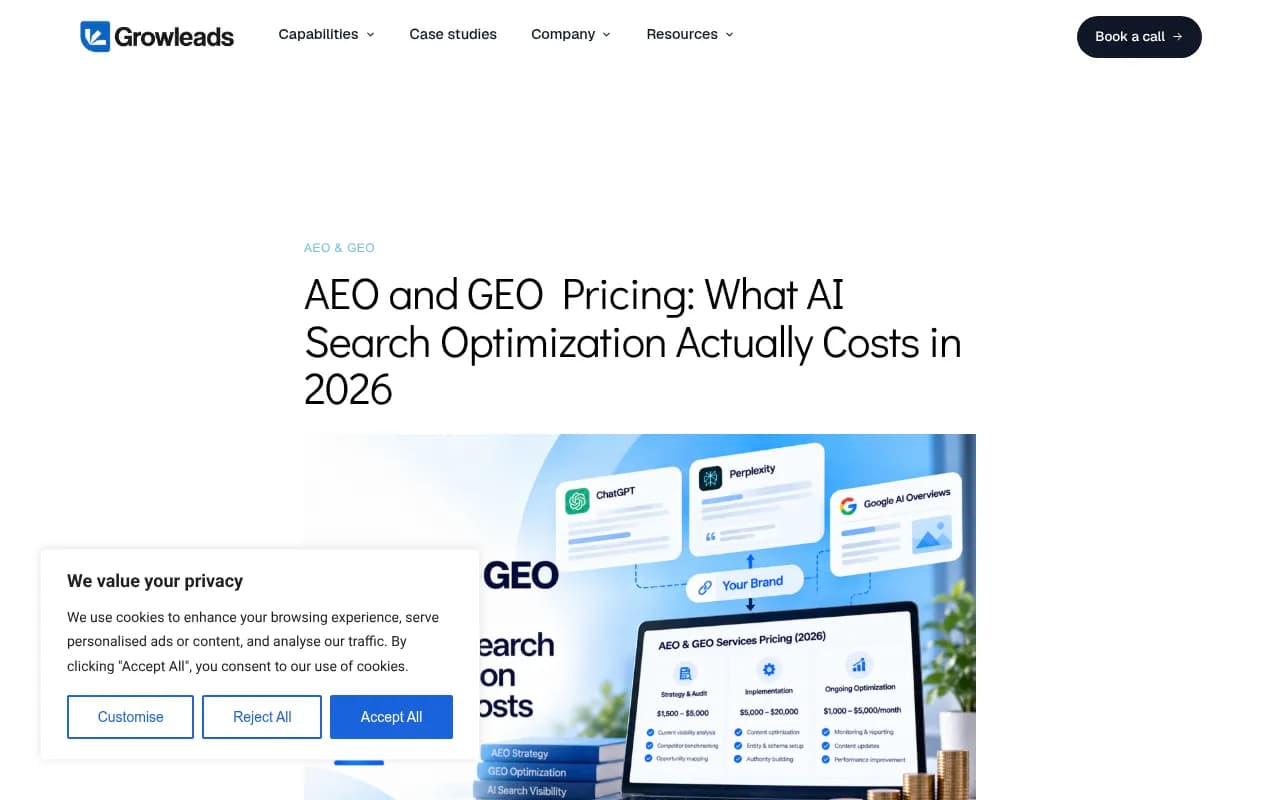
Tools are only half the budget. Growleads' October 2026 pricing guide gives a useful scale for the rest.
| Engagement type | Typical 2026 budget | What you pay for |
|---|---|---|
| DIY monitoring tools | $29 to $500+ per month | Visibility and citation tracking |
| Audit or diagnostic | $750 to $5,000+ | Baseline, gaps, roadmap |
| Entry managed program | $1,000 to $3,000 per month | Foundations, limited content |
| Growth program | $3,000 to $8,000 per month | Strategy, technical work, content, tracking |
| Advanced program | $8,000 to $15,000+ per month | Higher content velocity, authority building |
Other guides put managed GEO at $3,000 to $25,000+ a month. The spread is large because two agencies can both sell GEO and deliver completely different things. One reports whether you appear in ChatGPT. Another fixes technical issues, builds entities and earns third-party mentions. If you are weighing a managed route, a specialist agency such as 1001 SEO Media can scope local work against what a tool alone would cost.
Three realistic budgets
One location, one service area
Skip the tool, at least at first. US Tech Automations notes that pasting about five prompts into ChatGPT weekly may be enough for a single location. Write down the answer, the sources and the date. If you want automation, a $29 to $95 plan covers it.
Five to ten locations
This is where matrix math bites. You need 50 to 100 prompts, city targeting, and probably repeat runs. Expect a mid tier: Peec or Semrush at the starter-to-Pro range, Promptwatch Business at $579, or a per-location local tool. Budget for $250 to $600 a month once add-ons land.
Agency with many local clients
Per-prompt and per-location pricing breaks down. Look at agency plans with unlimited projects and prompts, white-label reporting and city tracking included. Compare cost per response, not just the monthly price.
How to buy without overpaying
- Write your prompt matrix first. Use the Google Business Profile store name for location rows, not the corporate brand.
- Ask each vendor, in writing, whether city targeting is included on the exact tier you are buying.
- Ask what counts as a response and how often prompts rerun.
- Check which engines are included and which are add-ons.
- Take the 7-day trials where they exist, and test one real city.
- Treat a local pack rank and an AI citation as different things. LocalBusiness markup belongs on the location URL, and a strong map pack position does not guarantee ChatGPT names you.
One warning on prompt realism. Most tools use manually entered or AI-suggested prompts, which don't always mirror how people actually ask. Graphite CEO Ethan Smith has called many tools keyword tracking at inflated prices. I'd say that is harsh but not unfair for anything that only reports a rank without telling you why.
For more options, the GEO software directory at bestgeosoftware.com lists dozens of trackers you can filter by features.
Bottom line
If you only need country-level monitoring, $29 to $100 a month is plenty. If you need real city-level data, plan on $95 to $600 a month depending on tool, with enterprise tools quoted privately. Run your prompt matrix before you shop, confirm the city tier in writing, and re-check every number on the vendor's pricing page, since the sources above already disagree with each other.