Key takeaways
- Monitoring-only tools answer "was my client mentioned?" Execution platforms also help plan, write, publish and re-measure the fix.
- Citation gains decay. Promptwatch Data shows news pages lose half their ChatGPT citations in 36 days, so one-off reporting leaves results on the table.
- Monitoring-only is fine for pitches, low-budget retainers and agencies that already have strong content ops. It gets expensive in hours once clients ask "so what do we do?"
- Agency-specific features (client workspaces, pitch projects, white-label reports) matter as much as the monitoring depth.
- Be skeptical of vendor comparison pages. Most "best tools for agencies" lists are written by a vendor ranking itself first.
Why agencies need a different evaluation than single brands
Running AI search for one brand is a research project. Running it for fifteen clients is an operations problem. You need separate workspaces, a way to audit a prospect the night before a pitch, reports a client CMO will read, and some link back to revenue.
That changes what you should look for. A tool with a beautiful dashboard but no way to produce the fix means your team becomes the execution layer, on your own hours, at your own margin.
The category has split into two camps, and the line between them is the most useful filter you can apply before looking at a single price page.
Monitoring-only vs execution platforms
What monitoring-only tools do
They run a set of prompts against ChatGPT, Perplexity, Gemini, AI Overviews and others, then report whether your client was mentioned, where, with what sentiment, and against which competitors. Good ones also list the cited sources.
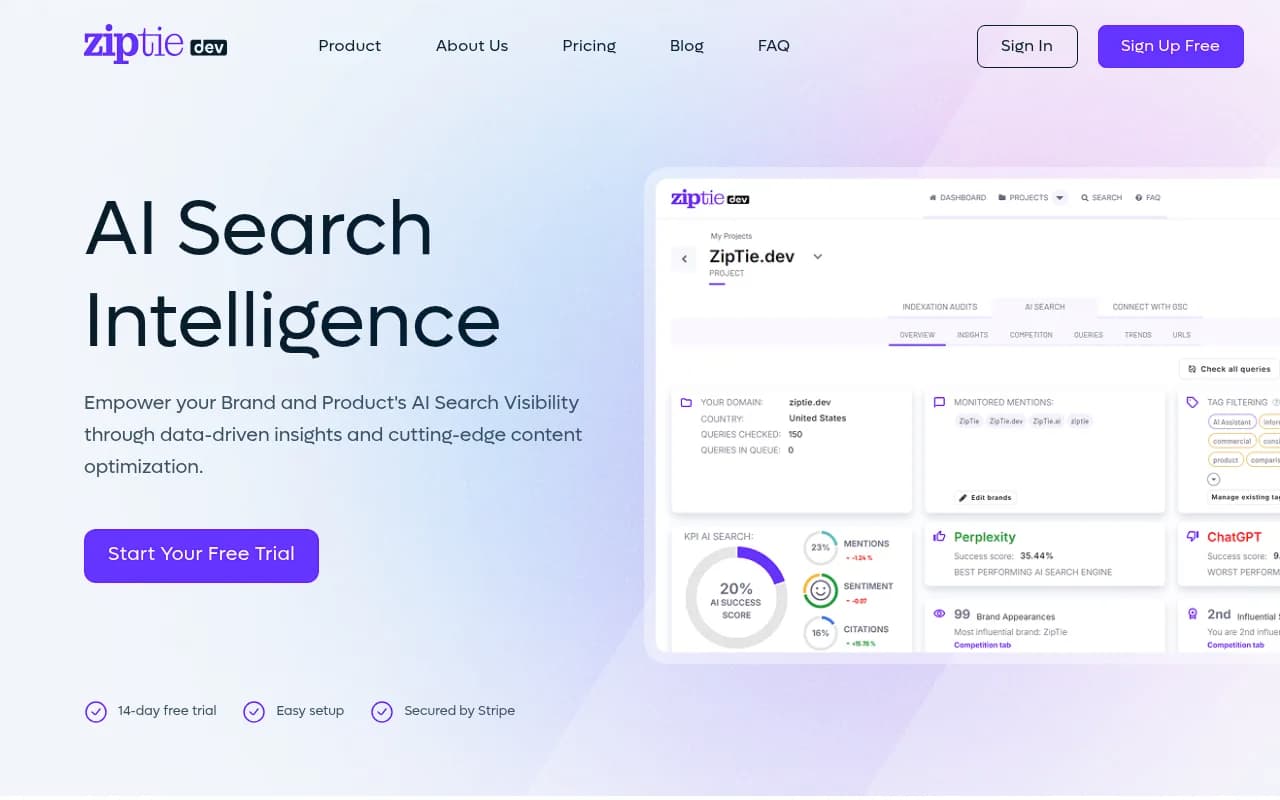
That is valuable. You cannot fix what you cannot see. Tools in this camp include Otterly.AI, Peec AI, Rankscale and ZipTie, and they tend to be cheaper and quicker to set up.


The limit is what happens after the dashboard. Even a vendor's own agency roundup describes Peec AI as "monitoring only, no content generation" while praising its clean client reporting. That is an honest summary and not a criticism: it does one job well.
What execution platforms do
Execution platforms add the second half of the loop: find the gap, brief or write content, publish it, then check whether it got crawled and cited. The spectrum is wide. Some generate content only. Some add action lists. A few connect crawler logs and traffic so you can see whether a published page actually did anything.
The best-known names here include Promptwatch, Profound, AthenaHQ and a growing set of content-focused tools like AirOps and Writesonic GEO.



A caution: "execution" is a marketing word everyone now uses. Ask a simple question in every demo. After you find a gap, what exactly does the tool produce, where does it publish, and how does it tell you the page worked?
Why execution matters: citations decay
The strongest argument for execution workflows is not philosophical. It is that AI citations do not stay put.
Promptwatch Data tracked every page ChatGPT cited on July 6, 2026 for 90 days (through Oct 4, 2026) in its content half-life report. A few findings that matter for retainers:
- Landing pages and docs held up best: 78% and 76% were still cited after 30 days.
- Product pages, reviews and how-tos sat around 55% after 60 days, reaching half-life at 74 to 77 days.
- News was brutal. Half of news pages were gone after 36 days, and almost a quarter were never cited again after day 0.
So a citation win you screenshot in month one is partly gone by month three unless someone refreshes the page or publishes the next one. A monitoring tool will faithfully chart the decline. It will not stop it.
What gets cited also matters. In Promptwatch's ChatGPT content type data for Sep 28 to Oct 4, 2026, product pages were 22.4% of classified citations and landing pages 16.8%, so roughly 39% of citations went to pages describing what a company sells. Listicles were 13.6%. For commercial prompts, product pages, landing pages, listicles and comparisons made up almost 70%. If your client's product pages are thin, a visibility score is not going to tell you that on its own.
The comparison at a glance
| Dimension | Monitoring-only | Execution platform |
|---|---|---|
| Core question answered | Was the brand mentioned? | How do we get mentioned more, and did the fix work? |
| Typical output | Dashboards, share of voice, citation lists | Dashboards plus briefs, drafts, publishing, action lists |
| Crawler and traffic data | Rare | Present in a few platforms |
| Team effort after insight | High, all manual | Lower, depends on the tool |
| Setup speed | Fast | Slower, needs brand inputs and CMS access |
| Price | Usually lower | Usually higher |
| Best for | Pitches, audits, light retainers | Ongoing GEO retainers, content-heavy clients |
What agencies should check regardless of category
Client and prospect handling
Can you create a project per client, and a throwaway pitch project for a prospect without burning a client slot? Some platforms limit projects hard. Others, like Promptwatch's agency plans, include unlimited projects and pitch projects, which changes the economics of prospecting.
Where the data comes from
Answers from a consumer interface can differ from API output. If a tool only calls model APIs, it may report visibility your client's customers never see. Ask whether tracking uses the real ChatGPT, AI Overviews and Perplexity interfaces, and whether it works by country and language.
Reporting
White-label PDFs, scheduled reports, a client portal and a Looker Studio connector all save hours. Test the export before you commit. A dashboard that cannot be put in front of a client is a dashboard only your analysts use.
Attribution
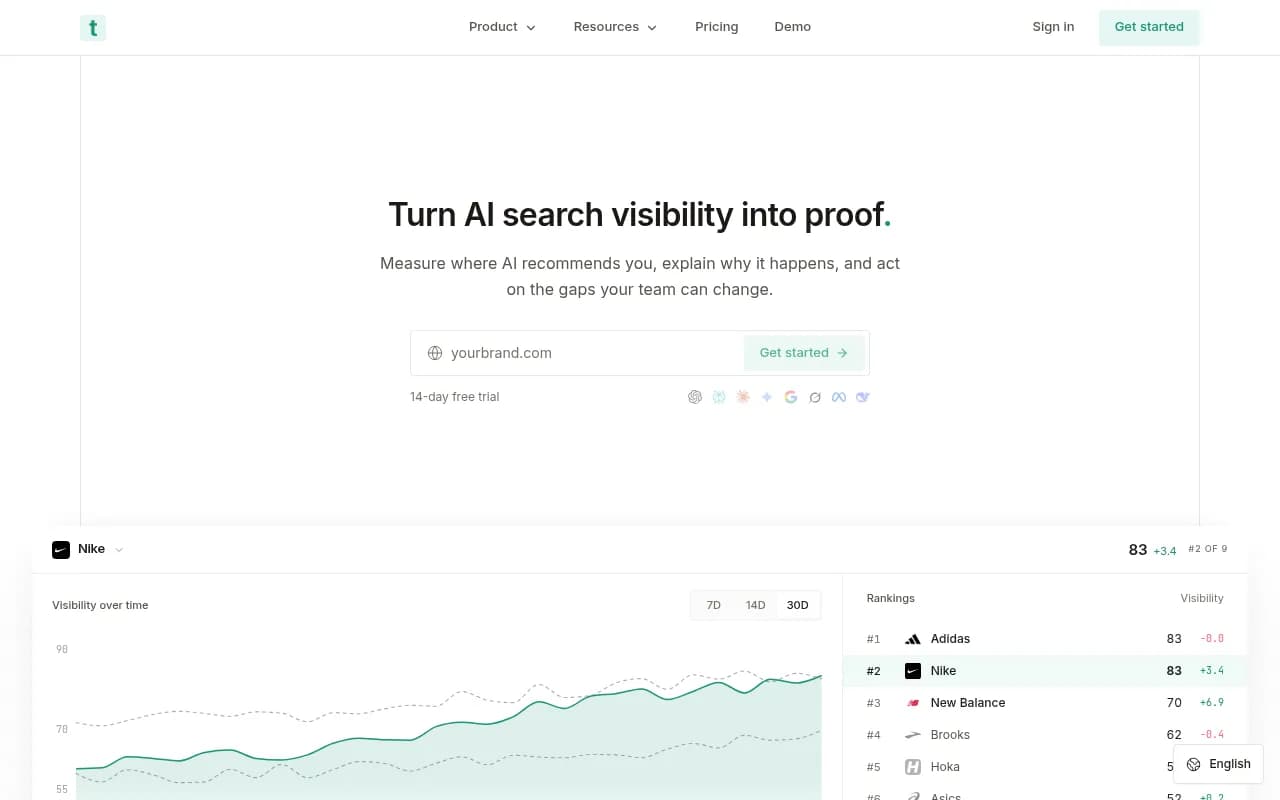
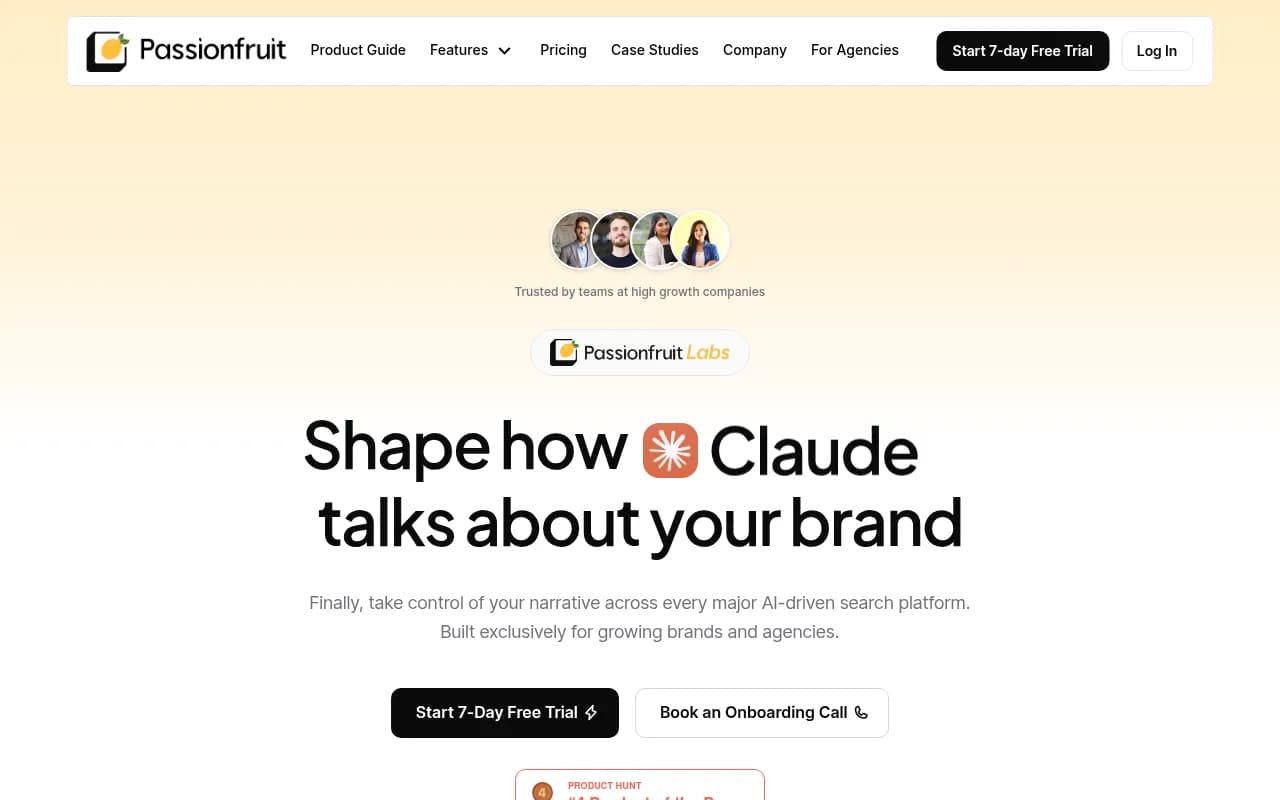
Clients will ask whether any of this brings customers. Tools that connect AI crawler logs and visitor analytics, such as Trakkr and Passionfruit in different ways, give you something better than a mention count to show. Check whether the attribution is real traffic or modeled.
Pricing model
Prompts, responses, projects and seats are all billed differently. Calculate the cost for your actual roster, not the starter plan. A cheap per-brand price can balloon across fifteen clients.
Tools worth shortlisting by agency type
| Agency situation | Shortlist | Why |
|---|---|---|
| Solo or small agency, just starting AEO | Otterly.AI, Peec AI, Airefs | Low cost, fast setup, clean reports |
| Agency bundling GEO into existing SEO | Semrush AI Visibility Toolkit, Ahrefs Brand Radar, SE Ranking Visible | Lives in a stack you already pay for |
| Technical team wanting rendered-answer evidence | ZipTie | Browser-based capture for audit trails |
| Scaled GEO retainers with content production | Promptwatch, Profound, AthenaHQ | Gap analysis plus content and measurement |
| Agency-specific tooling from the start | Search Party, Scrunch AI | Built around agency workflows and partner programs |
| Enterprise clients on large suites | Adobe LLM Optimizer, BrightEdge, Conductor | Fit with existing enterprise contracts |


If you want a wider directory to browse beyond this list, the GEO software directory at bestgeosoftware.com covers more tools by category.
How the major options differ in practice
Vendor comparison pages are a trap here. The two most prominent agency roundups in the research are written by Profound and SearchEye, and each ranks its own product first. Profound's list is dated Jan 30, 2026, so check its feature and pricing claims before relying on them. Treat both as a feature checklist, not a verdict.
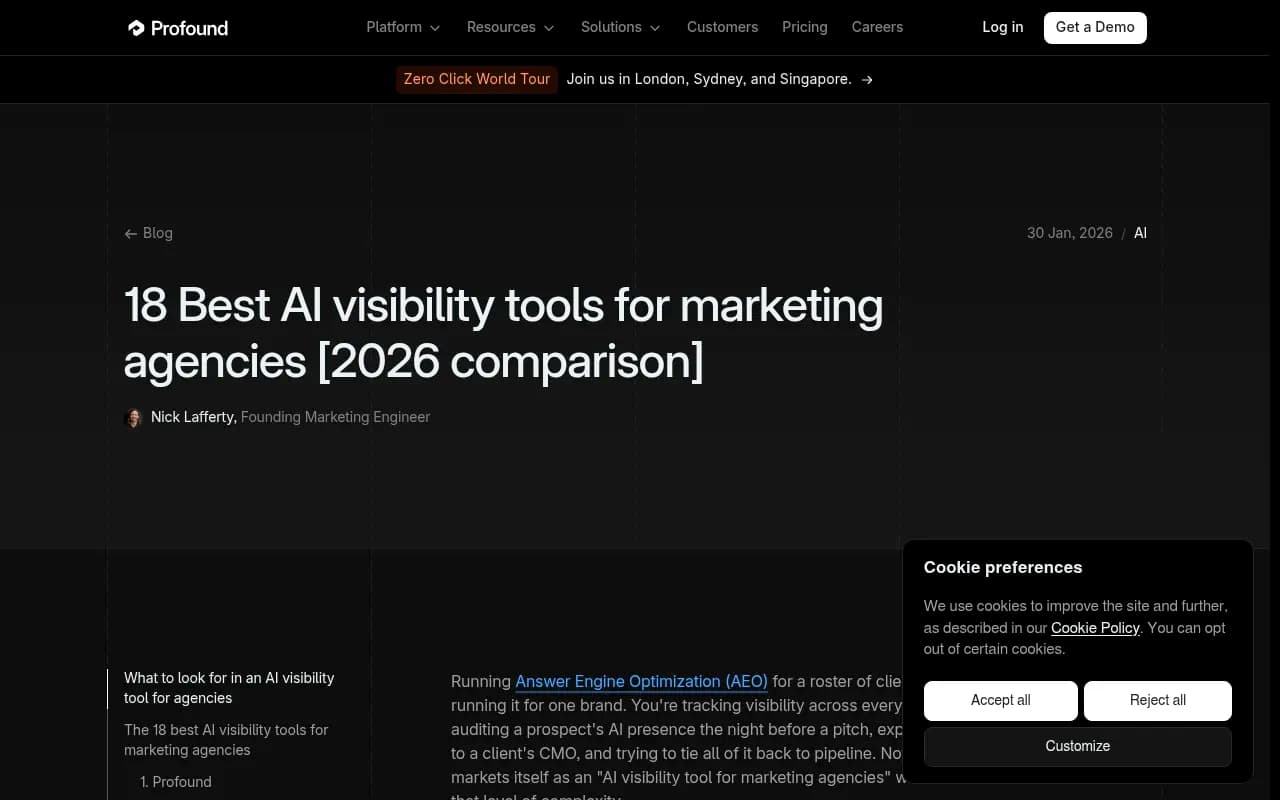
The criteria in that table are worth stealing though: how a tool manages client accounts and prospect pitches, where its data comes from, whether it produces content or only points at problems, how it reports, and the quality of the partner program.
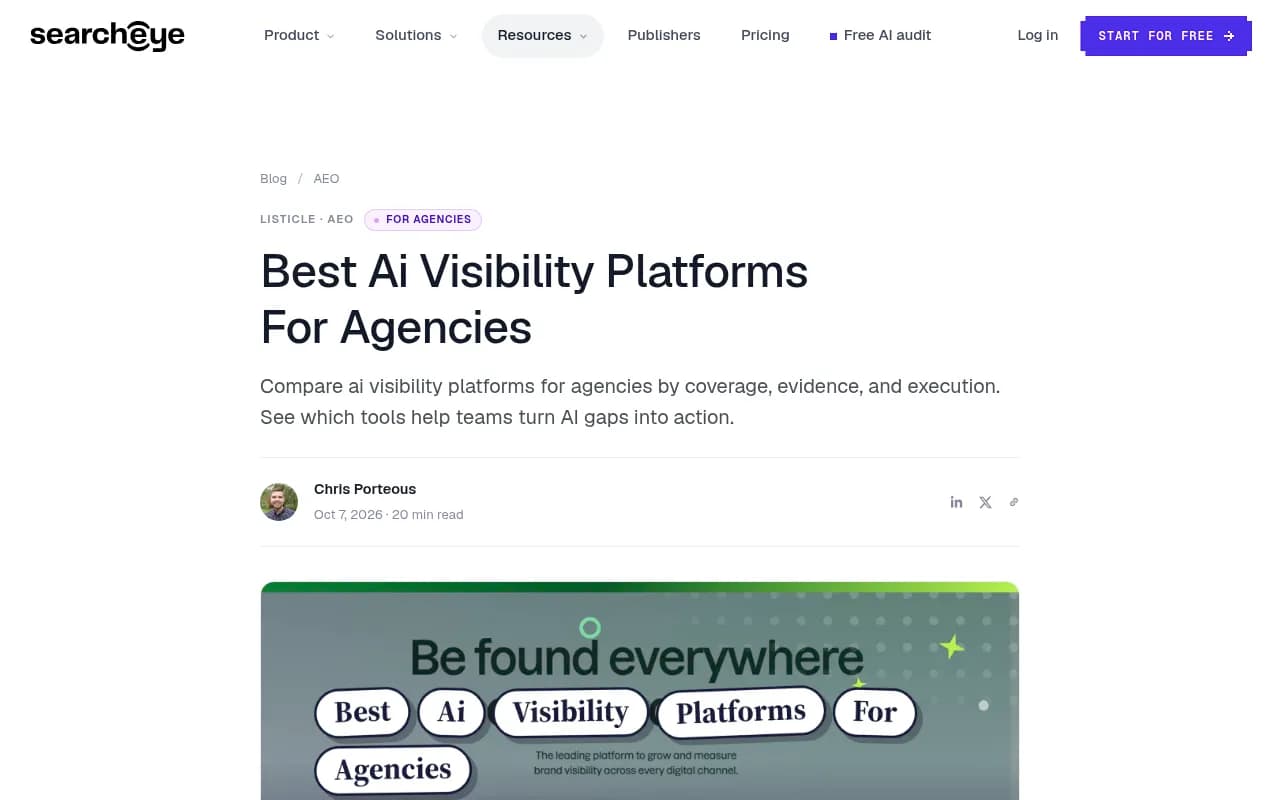
SearchEye's page makes a point I agree with, even if its ranking is self-serving: monitoring is not execution, and if your agency only wants inexpensive monitoring, you may pay for an execution layer you rarely use. That works in both directions. Buying a monitor when clients expect results costs you hours. Buying a full platform when you only audit prospects wastes budget.
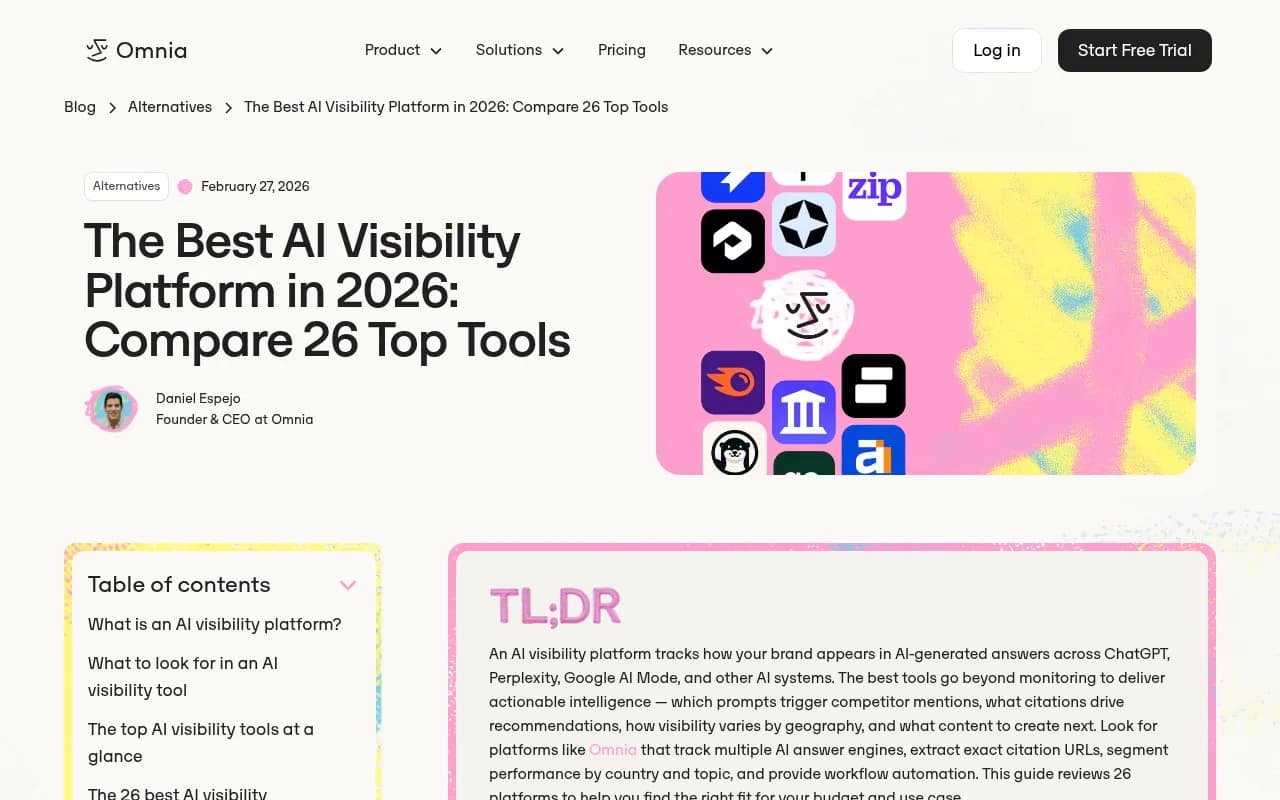
Omnia's guide takes a similar view on the monitoring-to-execution distinction, and it is a useful read for the basic definitions.
Where Promptwatch fits
Promptwatch is one of the few platforms covering the whole loop, which is why it suits agencies running GEO as a standing service. The pieces that matter for client work: IP-verified AI crawler logs to show whether AI systems are reaching a client's pages, prompt tracking from real interfaces with volumes and difficulty, an Action Board of prioritized fixes, and a Content Agent that writes and publishes to WordPress, Webflow or Framer. Published pages are then tracked for crawls, citations and AI traffic, so underperformers come back as new tasks.
Agency plans start at $199/mo (Kick-off) with unlimited projects, pitch projects and prompts and 10 seats, with Growth at $399 and Scale at $799. Confirm current numbers at promptwatch.com/pricing, since plans change. Most pure monitors stop at the dashboard, so for retainers where the client expects pages shipped, that difference is real.
It is also not the right call for everyone. If you only run quick prospect audits, a lighter tracker is cheaper, and a free scan may be enough.
A practical way to decide
Step 1: Write down what you promise clients
If the deliverable is a monthly visibility report, monitoring covers it. If the deliverable is "more citations" or "more AI traffic", you need the execution half, whether from the tool or from your own team.
Step 2: Cost the manual work
Take one client. List what happens after the dashboard flags a gap: research the prompt, write the brief, draft, edit, publish, recheck in three weeks. Multiply by your roster. That number is what an execution platform replaces, and it is usually higher than the price difference.
Step 3: Run a two-week trial on one real client
Use a client you know well. Check whether the tool's gaps match what you already suspected, and whether its suggested content is publishable without a rewrite. Several tools generate content that needs heavy editing, so judge the draft, not the demo.
Step 4: Check the refresh loop
Given how quickly some content types drop out of citations, ask how the tool flags pages that are decaying. A platform that only reports new wins misses half the job.
When to hire help instead
Some agencies would rather not build this capability at all. If you are weighing a white-label partner or an outside team, 1001 SEO Media runs GEO and AI search programs, and uses Promptwatch for its own AI visibility work.
The short version
Monitoring-only tools are good at telling clients where they stand. Execution platforms are built for changing it, and the citation decay data suggests the changing part never really ends. Pick based on what your contracts promise, price the manual hours honestly, and test on a real client before you commit a roster to any tool. To see how a client currently shows up before you decide, Promptwatch's free AI Visibility Report is a no-login way to start.