Key takeaways
- Start free: Google Business Profile, Google Search Console, and a manual prompt check cost nothing and cover most of what a local business needs in its first months.
- Paid tracking is worth it once you have a clean baseline. Budget options run roughly $15 to $100 a month, but verify prices on vendor pages because third-party roundups conflict.
- ChatGPT answers are crowded. In Promptwatch Data, 47.6% of cited responses include 10 or more domains (Sep 28 to Oct 4, 2026), so you will be one source among many.
- Product and landing pages are the most cited content types, so your service pages matter more than blog volume.
- Pick one tracker, one content tool, and your free Google stack. Three tools is plenty.
What GEO means when you run a local business
Generative engine optimization is the work of getting your business named and cited in AI answers: ChatGPT, Google AI Overviews, Gemini, Perplexity and the rest. For a local business, the prompts look like "best emergency plumber in Leeds" or "dentist near me that takes walk-ins."
Here's the honest part. Most GEO tools on the market are built for brands with national footprints and enterprise budgets. Local-specific features, like location-level tracking, are rarer and tend to cost more. I'd also point out a gap in the data: Promptwatch has no report on local-pack, Google Business Profile or Maps citations inside AI answers, so anyone claiming precise numbers on that is guessing. What we can say comes from the general citation data, and it is useful enough.
What the citation data says about small business pages
Before spending anything, it helps to know what AI engines actually pull from. Promptwatch's ChatGPT content type data for Sep 28 to Oct 4, 2026 shows:
- Product pages are 22.4% of classified citations and landing pages 16.8%. Nearly 40% of citations go to pages describing what a company sells.
- For commercial prompts like "best CRM for small businesses", product pages are 26.0%, landing pages 20.6%, listicles 15.0% and comparisons 7.9%.
- For branded prompts, reviews climb to 5.6%, more than triple their overall share, and FAQ pages reach 4.8%.
For a local business, translate that: your service pages, your pricing or "what we do" pages, your reviews and an FAQ page do the heavy lifting. A blog post about industry trends does less.
Crowding is the other fact to absorb. Promptwatch's unique domains report found 47.6% of ChatGPT responses with citations cite 10 or more domains, and only 6% cite three or fewer. You will not own an answer. You earn a slot among many, mostly by being on the third-party listicles, review sites and directories that AI already trusts. Brand-specific queries are less crowded: only 21.3% cite 10 or more domains, which makes it worth checking that your own site and your top review profiles are accurate.
Social matters differently by engine. Promptwatch's social citation report shows ChatGPT drew just 0.46% of citations from social platforms, while Google AI Overviews drew 12.2% (YouTube 4.28%, Facebook 2.38%, Instagram 1.61%). If your customers use Google, keep your public Facebook and Instagram profiles complete, and consider a short YouTube video or two. Don't build a Reddit plan around ChatGPT; its Reddit share collapsed in August 2026.
Tier 0: the free stack
You can do real work before paying anyone.
Google Business Profile
Claimed, verified and fully filled in: categories, services, hours, photos, Q&A, and a steady trickle of reviews. This is the foundation of local visibility in Google's AI surfaces and a primary source for how your business is described. Flento's local roundup lists it first for a reason.
Google Search Console
Free, and it shows the queries that bring people to your site. Use it to find the questions customers actually type, then turn them into FAQ entries and service page sections. Bing Webmaster Tools is a free second view and feeds Copilot-adjacent results.
Manual prompt checks
Open ChatGPT, Perplexity and Google in a private window. Run 10 to 15 prompts customers would use, with your city and neighborhood in them. Record whether you appear, who does, and which sources get cited. A spreadsheet works. Repeat monthly. It's tedious, but one prompt tells you little, so run many and look for patterns.
Free audits
HubSpot's AI Search Grader is a free one-time diagnosis, according to third-party roundups. The GEO audit tools at Geoptie are also described as free for basic checks.
Promptwatch also has free tools that need no login, including a Free AI Visibility Report, an AI Crawler URL Inspector and a Robots.txt Generator for AI. They are handy for confirming AI crawlers can read your site at all, which is the most common silent failure on small business sites built with old plugins.
Tier 1: cheap monitoring, roughly $15 to $100 a month
Once you have a baseline, a tracker saves the spreadsheet time and catches changes. A word of warning on pricing: the sources I found disagree. Otterly.AI appears at $29/mo in one roundup and $49/mo in another; AthenaHQ at $265 and $295. Check every vendor's own pricing page before you commit.

Otterly.AI is the one most often named as the low-cost monitoring pick. It tracks mentions, citations and share of voice across several AI platforms.

Peec AI has clean dashboards for visibility, position and sentiment, but third-party sources put it nearer $95/mo, so it sits at the top of this tier.
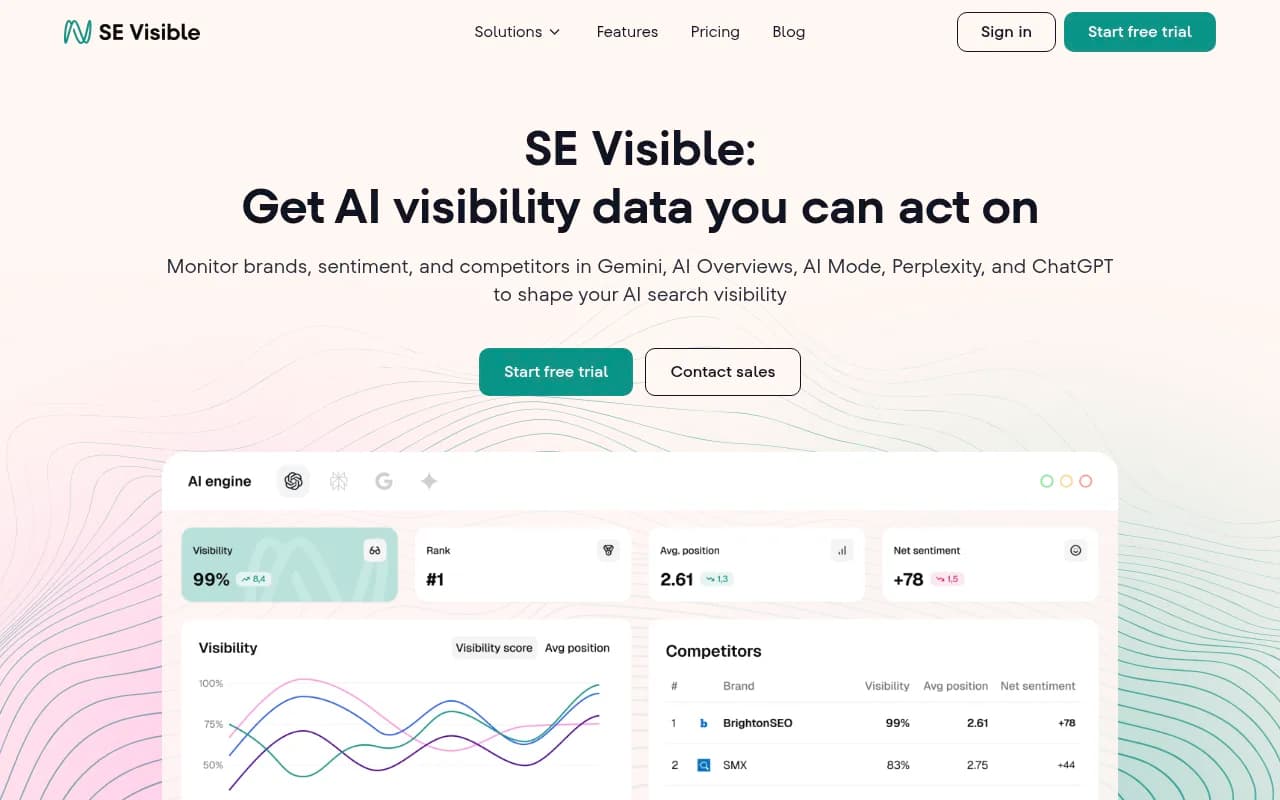
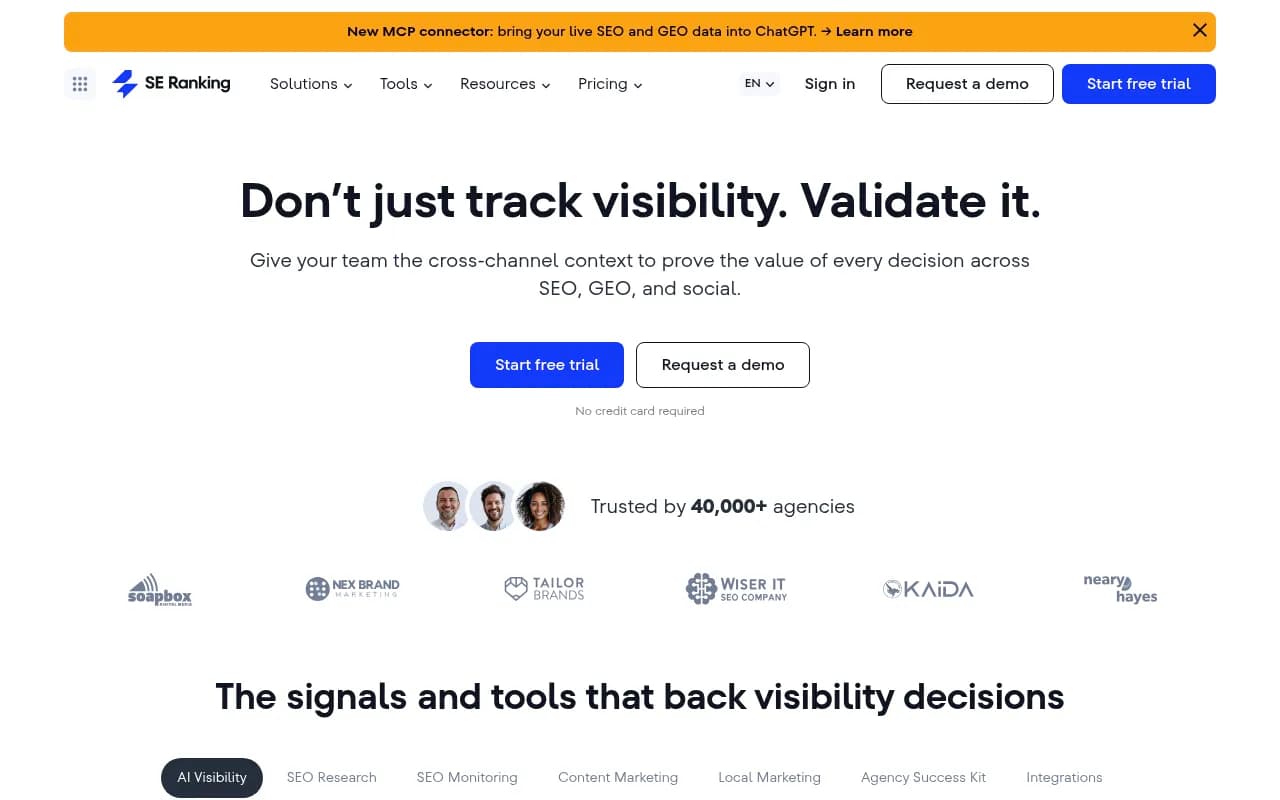
SE Ranking Visible and the broader SE Ranking platform appeal if you want classic rank tracking plus AI visibility in one bill. One roundup lists SE Ranking from $65/mo as the cheapest all-in-one.
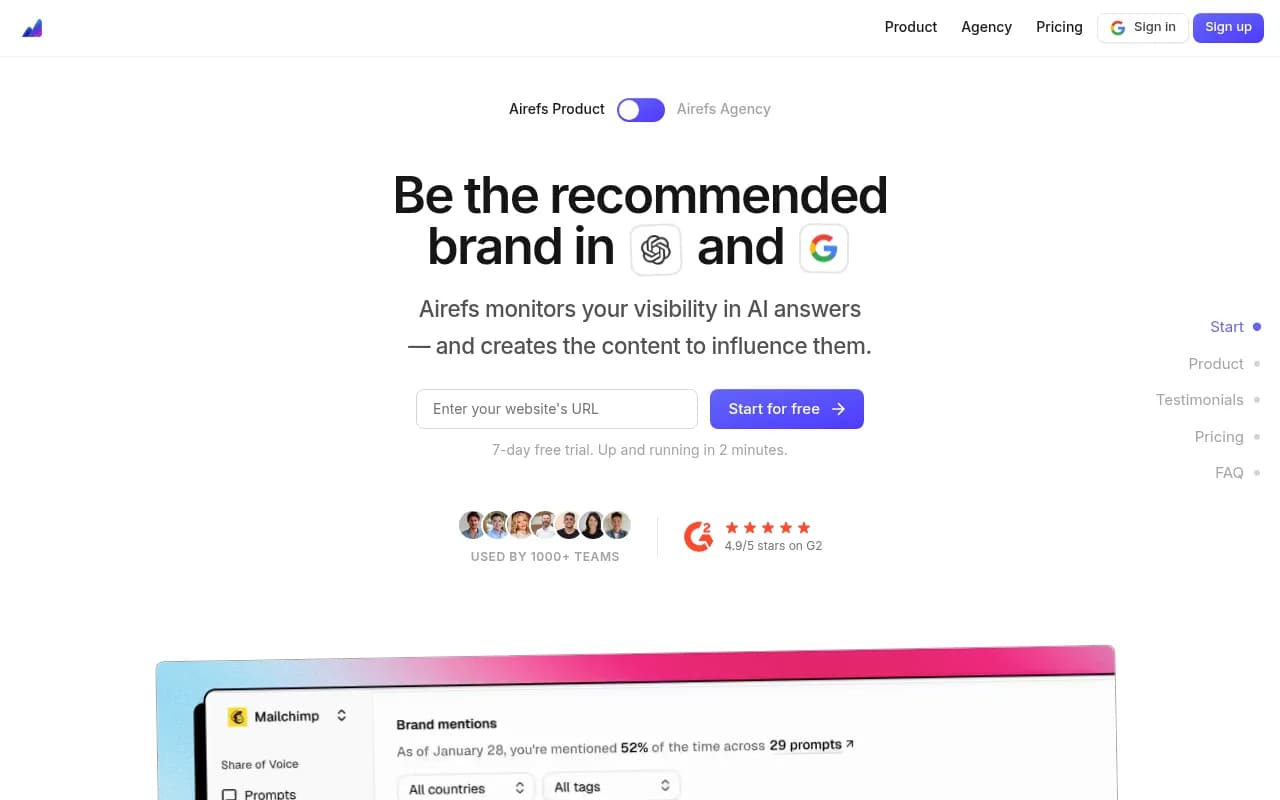
Airefs is positioned as affordable AI search visibility tracking and worth a look if the others are over budget.
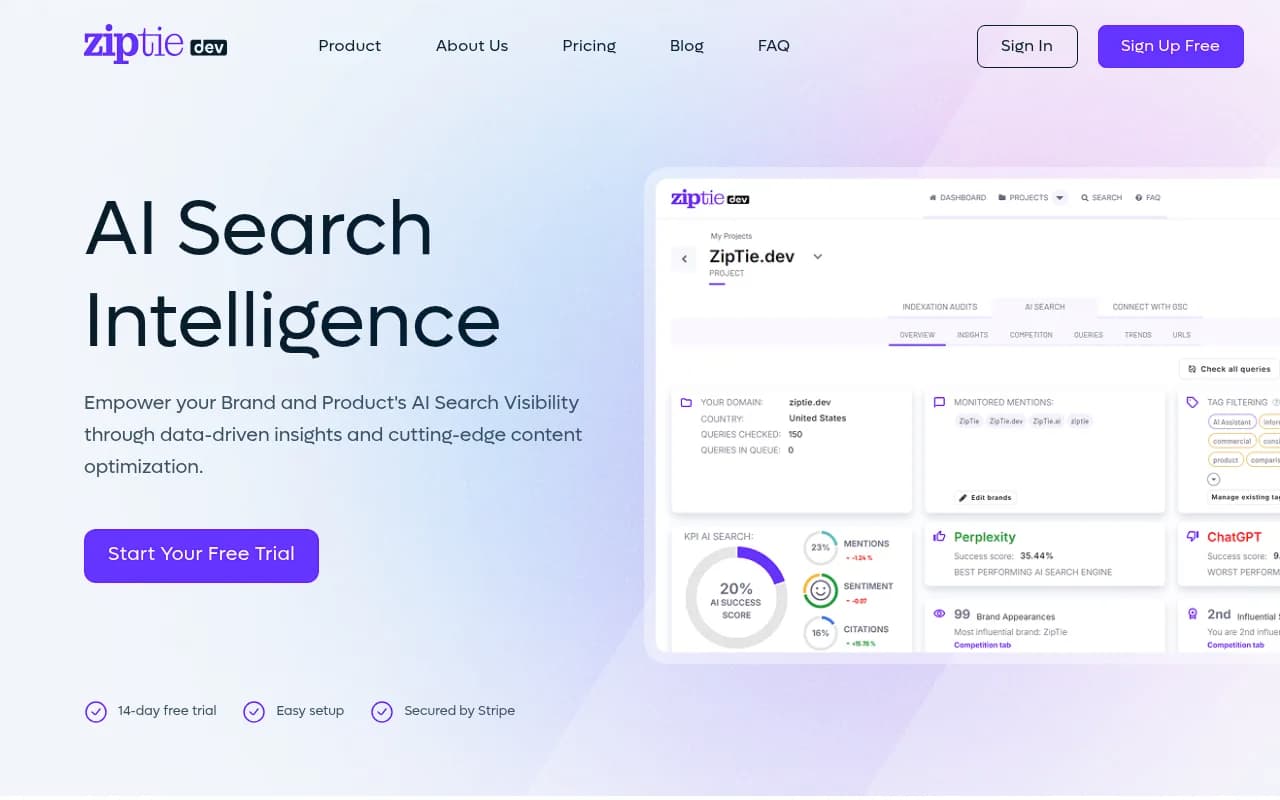
ZipTie is a narrower tool focused on AI search tracking, which can suit a business that only needs a simple dashboard.
Tier 2: local-aware tools
Local is where budget tools thin out. Most trackers let you add a country, and some let you add a city, but many gate that behind higher plans.
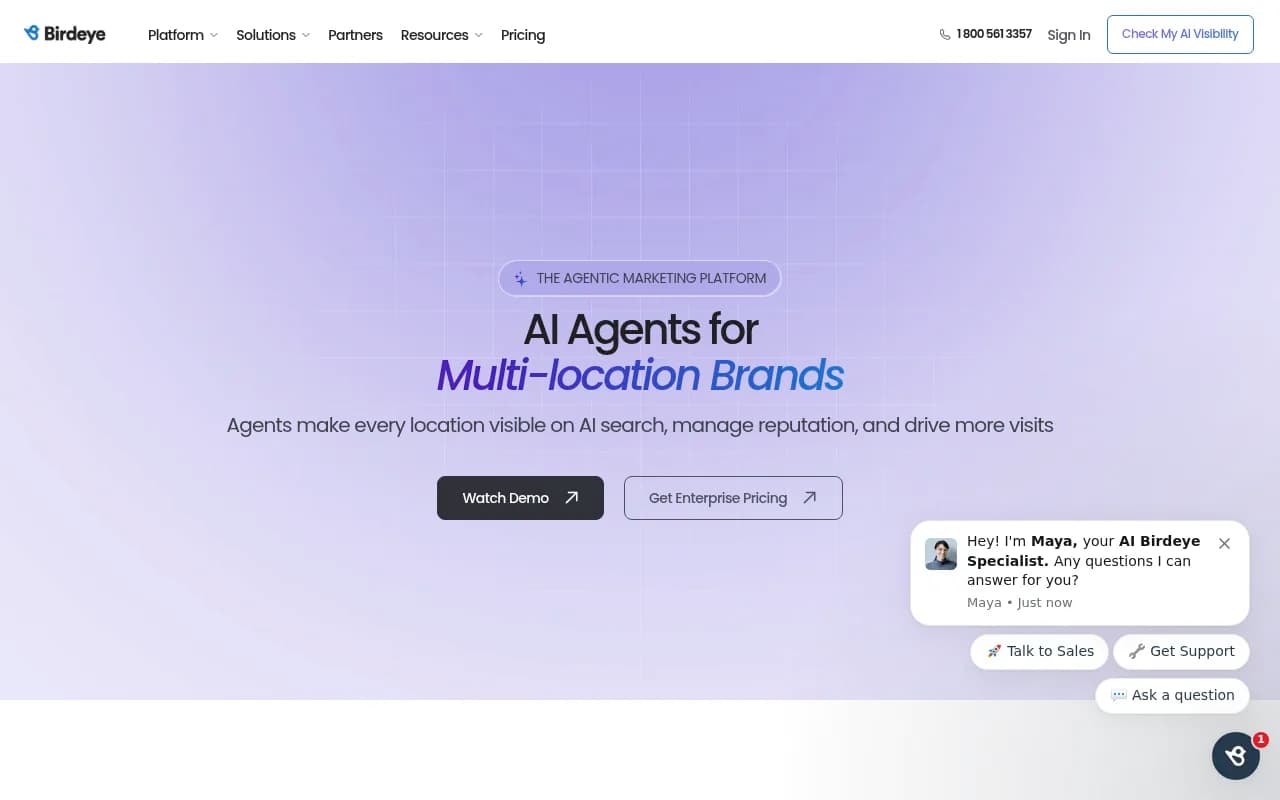
Birdeye Search AI is built around location-level tracking, which suits multi-location businesses such as clinics, salons or dealerships. Expect pricing above the hobbyist tier and get a quote.
For a single location, there is a cheaper trick: put the city in your tracked prompts. "Best accountant in Bristol" tells you more than "best accountant." Local Falcon-style geo-grid tools also exist for map rank tracking, with plans starting around $39/month per one roundup, though they track map pack positions rather than AI answers.
Tier 3: when you want the fixing done too
Monitoring tells you that you are missing. It doesn't fix it. If you can spare the budget, a platform that also guides content work shortens the loop.
Promptwatch is the option here that goes beyond tracking. It monitors the real interfaces of ChatGPT, Google AI Overviews, AI Mode, Gemini, Perplexity and Copilot, with country tracking on every paid plan and state or city tracking from the Business tier. Its Action Board gives a prioritized to-do list, and the AI crawler logs show whether bots can actually read your pages. Essential is $95/month for 50 prompts, which is plenty for a one-location business, with a free Explore tier to try it. Confirm current pricing at promptwatch.com/pricing.

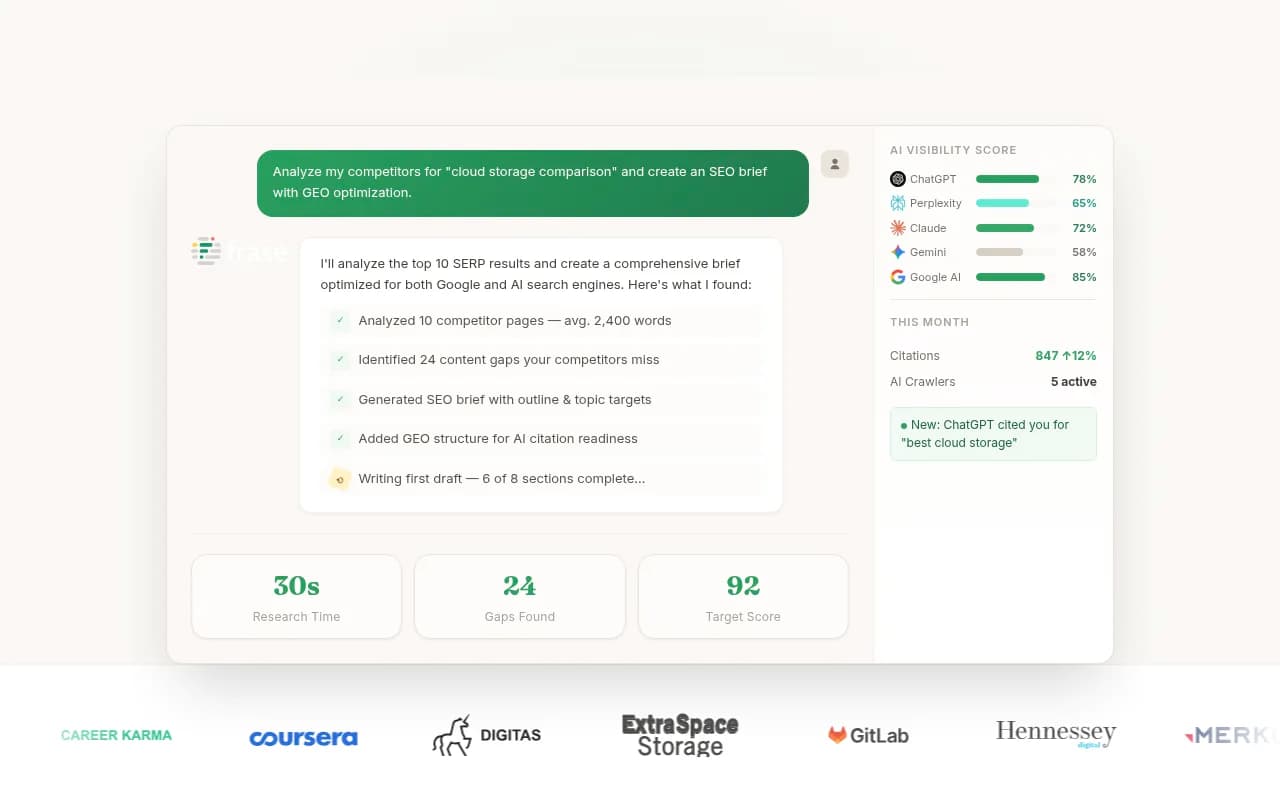
For content help at the cheap end, Frase is quoted from $15/mo, and Writesonic GEO from $12/mo in one roundup.
The bigger platforms, such as Profound, Scrunch and Conductor, are built for enterprise workflows and rarely make sense at this size.
Comparison table
Prices are from third-party roundups and conflict in places. Treat them as starting points and verify.
| Tool | Rough starting price | Best for | Local fit |
|---|---|---|---|
| Google Business Profile + Search Console | Free | Everyone | Core |
| Manual prompt checks | Free | Baseline | Add city to prompts |
| Geoptie | Free audits, tracking from about $49/mo | Audit plus light tracking | Basic |
| Otterly.AI | $29 to $49/mo | Cheap monitoring | Country level |
| SE Ranking | From about $65/mo | SEO plus AI in one place | Moderate |
| Peec AI | About $95/mo | Clean analytics | Moderate |
| Birdeye Search AI | Quote | Multi-location | Strong |
| Promptwatch | Free Explore; Essential $95/mo | Tracking plus action and crawler logs | Country on all paid, city from Business |
| Frase | From about $15/mo | Content optimization | None |
A sensible budget plan
Under $20 a month
Google Business Profile, Search Console, monthly manual checks, and Frase or a similar content tool. Spend your effort on service pages and an FAQ.
$50 to $100 a month
Add one tracker. Otterly.AI or SE Ranking if you want the cheapest route, Promptwatch Essential if you want crawler logs and a prioritized action list. Run 30 to 50 local prompts, with your city in each.
$100 to $250 a month
Only worth it with multiple locations or a high-value service, like legal or home renovation, where one extra lead pays for the year. Look at location-level tracking.
What to do with the data
- Complete your service and landing pages: specs, prices or price ranges, service areas, and clear positioning. These are the most cited types.
- Get into the "best of" roundups and local directories AI already cites. Ask for mentions, don't just wait.
- Collect reviews on trusted sites. Reviews matter more for branded prompts.
- Add an FAQ page answering the questions you saw in Search Console.
- Keep public Facebook, Instagram and YouTube presence current if Google is your main AI surface.
- Check that AI crawlers aren't blocked in robots.txt and that your pages load without heavy scripts.
- Recheck monthly. Freshness matters: Promptwatch's content half-life data shows news loses half its cited pages in about 5 weeks, while landing pages and docs hold on for months. Build durable pages, not a news feed.
If you'd rather hand the whole thing to specialists, an agency like 1001 SEO Media covers local SEO and AI search work. For more tools in this space, the directory at bestgeosoftware.com lists GEO software by category.
Mistakes I see small businesses make
Buying a tracker before fixing the basics is the big one. A dashboard full of red numbers doesn't help if your Google Business Profile has the wrong category. The second is tracking too few prompts and drawing conclusions from one odd answer. The third is chasing Reddit or X for ChatGPT visibility when the data says those platforms barely register there.
Start free, get a baseline, then add one paid tool. That order saves most small businesses a few hundred dollars.