Key takeaways
- A mention only tells you that AI knows your name. The claims inside the answer (pricing, features, who you are for) are what shape a buyer's opinion.
- You can see these claims by hand with a repeatable prompt set, but doing it at scale needs a tool that extracts and groups claims from every response.
- Brand-specific prompts in ChatGPT cite fewer domains, so each source has more say. Per Promptwatch Data (Sep 28 to Oct 4, 2026), 40.7% of brand-specific responses cite five domains or fewer.
- Wrong claims usually trace back to a specific page, a stale review, or a third-party comparison. Fix the source, then re-measure.
- Track accuracy separately from visibility. A favorable description can still contain a wrong capability claim.
Why claims matter more than mentions
Most AI visibility reporting stops at a yes or no question: was the brand mentioned? That is useful for a first pass and not much else.
Imagine ChatGPT answers "is Acme good for small teams?" with "Acme is a solid option, but it is expensive and its mobile app lacks features." You were mentioned. You were even recommended, sort of. But two claims in that sentence are now doing work on your behalf, and if either is wrong or outdated, you are losing deals to a sentence nobody on your team has read.
The Gigawatt Group has a handy reporting vocabulary for this. It separates brand presence, owned citation, recommendation, narrative accuracy, and qualified business action. Their guide points out that a brand can appear in an answer supported entirely by third-party pages, and that a favorable description can still contain an inaccurate capability claim. Narrative accuracy is its own metric. Treat it that way.
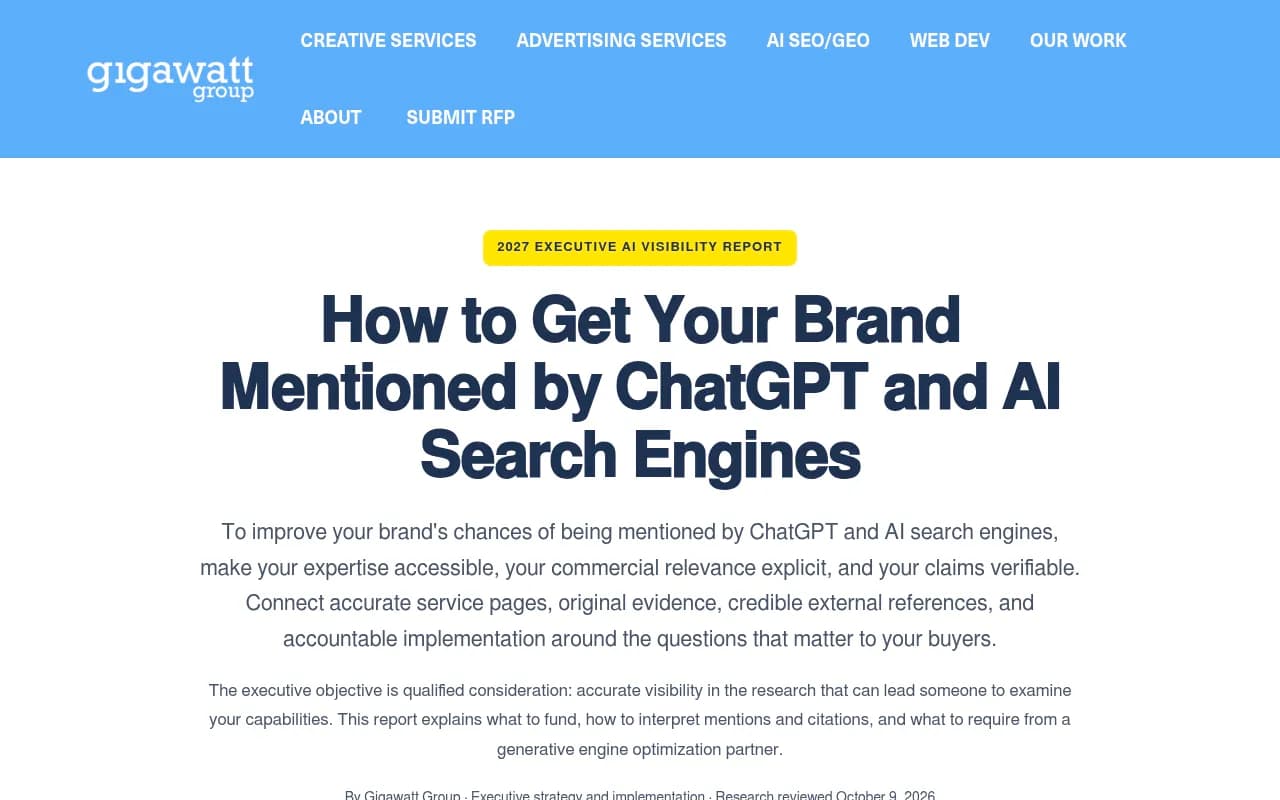
One caveat from the same source: OpenAI states that placement in ChatGPT search is not guaranteed. You control access and evidence. You observe the answers.
What a brand narrative actually is
A brand narrative, in AI search terms, is the set of individual claims models make about you across many responses. Not one answer. The pattern.
A single response is noise. Models vary run to run. But when "affordable for small teams" shows up in 40% of responses and "poor customer support" in 15%, you have a narrative. Those repeated claims can usually be filed under a handful of themes:
- Pricing
- Features
- Support
- Reputation
That grouping is the useful bit. It turns a pile of chatbot text into something a product marketer can act on.
Method 1: See the claims by hand
You can start today with no budget. It is tedious, but it teaches you what you are looking for.
Ask the model about your brand on its own
Open ChatGPT and type just your brand name. One of the research sources recommends this and I agree: see what it thinks you are. If it confuses you with a different company, or describes a product you retired two years ago, that is already a finding.
Build a small, honest prompt set
Write 15 to 25 prompts that mirror how buyers actually ask. Mix the types, because they behave differently:
- Branded: "Is [Brand] good for startups?"
- Pricing: "How much does [Brand] cost?"
- Comparison: "[Brand] vs [Competitor]"
- Category: "Best [category] tools for [use case]" (no brand named)
- Objection: "What are the downsides of [Brand]?"
Run each one several times. A single run tells you little, and the Promptwatch Data report on citations says as much: measure across many organic prompts, not one.
Open the sources
Under a ChatGPT answer, open the sources list and the "searched for" line. That shows the queries it ran and the pages it leaned on. Browser dev tools can show a few more data points about citations. This is where the manual method gets useful, because a wrong claim almost always points at a page.
Log claims in a sheet
Use columns like these:
| Prompt | Model | Claim made | Theme | Accurate? | Source cited |
|---|---|---|---|---|---|
| Is Acme good for startups? | ChatGPT | "Acme has no free plan" | Pricing | No | acme.com/pricing (old version) |
| Acme vs Rival | ChatGPT | "Acme is easier to set up" | Features | Yes | review-site.com |
After 20 prompts and a few runs each you will have 100+ rows and a rough sense of the repeated claims. It will also be out of date in a month.
Why the sources shape the story
Brand-specific prompts are the ones where narrative gets built, and they behave differently from generic ones.
According to Promptwatch Data's report on unique domains per ChatGPT response (Sep 28 to Oct 4, 2026):
- For organic prompts with no brand named, 52.5% of responses cite 10 or more domains.
- For brand-specific prompts, the most common count is five domains (14.9% of responses), and only 21.3% cite 10 or more.
- Across all responses, 47.6% cite 10 or more domains.
So when someone asks about you by name, ChatGPT leans on fewer sources. Each one carries more weight. The report's advice is to check which other domains show up for prompts about your brand, because the review sites and forums on that short list shape how ChatGPT describes you.
The companion report on which content types ChatGPT cites says the same thing from another angle. For branded prompts, product pages are 23.3% of citations and landing pages 22.8%, so nearly half comes from pages describing what a company sells. Reviews rise to 5.6%, more than three times their share across all prompts, and social posts reach 3.0%. FAQ pages are 4.8%.
Put those together and the picture is practical. Your own product pages and docs write roughly half of your branded narrative. Review sites and a few third-party pages write much of the rest.
Method 2: Extract claims automatically
The manual route breaks down in three places. It is slow, it covers one country and one model at a time, and it gives you no trend. You would also have to read every response yourself to pull claims out.
This is where tools earn their place. What you want is a tool that does four things:
- Runs your prompts across several AI models on a schedule, ideally from the real user interfaces, since consumer answers can differ from API output.
- Extracts individual claims from each response, not just brand mentions.
- Groups repeated claims and shows how often and in which models they appear.
- Links each claim back to the cited source.
Promptwatch does this with its Brand Narrative feature, which is on every plan. It pulls claims like "affordable for small teams" or "its mobile app lacks features" out of every tracked response, groups repeated ones, shows which models say each, and files them under themes such as Pricing, Features, Support, or Reputation with a 0-100 score per theme you can compare against competitors.

The follow-up feature matters just as much. Fact Check (Business, Agency Scale, and Enterprise) lets you mark a claim Accurate or Inaccurate, then reads the pages crawled from your site to find the ones that state the claim or its opposite, with quotes and a recommended next step. So you know which of your own pages AI is learning the wrong thing from. It uses Agent Credits.
A few other tools in the category cover parts of this, mostly the perception and monitoring side:




I have not tested all of them on claim extraction specifically, so check each one's current feature set before you commit. The question to ask in every demo is "can I see the individual claims, or only a mention count and a sentiment score?" Sentiment is a blunt instrument. A response can read positive overall and still tell a buyer you lack a feature you shipped last year.
For a wider shortlist, the GEO software directory at bestgeosoftware.com is a decent place to browse.
How the approaches compare
| Approach | Cost | Claim-level detail | Scale | Best for |
|---|---|---|---|---|
| Manual prompts and a spreadsheet | Free, but your time | Yes, if you read carefully | 20 prompts, one model at a time | First audit, small brands |
| Mention and sentiment trackers | Varies | Usually no | Many prompts | Share of voice reporting |
| Claim-extraction platforms (e.g. Promptwatch Brand Narrative) | Included in plans from $95/mo | Yes, grouped by theme | Many prompts, models, countries | Ongoing narrative monitoring |
Pricing changes, so confirm current plans at promptwatch.com/pricing.
Reading your narrative: what to look for
Once you have claims, sort them. Not every wrong claim deserves the same urgency.
Repeated and wrong
These come first. A claim that appears in many responses across several models is probably coming from a source several models trust. Fix it at the source.
Missing
Sometimes the issue is what is not said. If none of the responses mention your strongest differentiator, the problem may be coverage. Your pages might not state it plainly, or the pages that do may not be cited.
Outdated
Pricing, plan limits, integrations, and company facts go stale fast. Old review pages and comparison articles freeze them in place. Content has a shelf life, too. Promptwatch Data's content half-life report tracked pages ChatGPT cited on July 6, 2026 for 90 days. Landing pages and docs stayed cited longest, while news lost half its pages within 36 days. So a wrong claim sitting on a landing page or a doc can persist for a long time.
Right, but weak
Correct claims that frame you poorly ("a basic option") are a positioning problem rather than a fact problem. They are fixed with better evidence and clearer messaging, not corrections.
Fixing a wrong claim
There is no form that makes ChatGPT forget something. OpenAI has feedback channels in the product, but I would not build a process around them, and I have not verified how they handle brand corrections. What works is changing the evidence the model retrieves.
Step 1: Find the source
For each wrong claim, check which pages were cited in the responses that made it. Match the claim to a page. It is usually one of three things:
- Your own page, outdated or ambiguous
- A third-party review or comparison with old information
- A forum thread or social post
Step 2: Fix your own pages first
Make the correct answer plain and findable. The Promptwatch Data content type report suggests making sure your homepage, product pages, and docs answer questions about pricing, features, and who the product is for, and adding a plain-language FAQ page about your brand. Write the pricing page so a model cannot misread it. Say "Plans start at $X per month; there is a free trial" in a sentence, not only in a graphic or a toggle.
Step 3: Handle third-party sources
For review sites, contact the vendor support or update your listing. For comparison pages, the same report suggests finding the third-party comparison pages ChatGPT cites and making sure they describe you accurately. Also publish your own comparison pages so there is an accurate version in the mix. Collect fresh reviews on the sites people trust in your category.
Step 4: Check that AI can read the fix
A corrected page does nothing if AI crawlers cannot fetch it or never revisit it. Check robots.txt, errors, and crawl activity. Tools with IP-verified AI crawler logs, like Promptwatch's crawler logs, show which bots read which pages and where they fail. The free Agentic Readiness Check is a quick first look at crawler access.
Step 5: Re-measure
Rerun the same prompt set. Compare the share of responses repeating the wrong claim before and after. Give it weeks, not days. If a claim does not move, the source you fixed was not the one doing the damage.
A simple monthly routine
- Week 1: run your prompt set across models and countries that matter to you.
- Week 2: sort claims into repeated-and-wrong, missing, outdated, weak.
- Week 3: fix or publish. Pick no more than five items.
- Week 4: re-check the claims you touched, add new prompts from sales calls and support tickets.
Sales teams are an underused source of prompts. Ask them what prospects say they "read somewhere." Those phrases make excellent test queries.
Mistakes I see a lot
- Reading one response and treating it as the truth. Models vary. Run prompts repeatedly.
- Tracking only organic category prompts. Those rarely show the claims made about you by name.
- Ignoring competitor claims. Run the same prompts for rivals. You learn what language AI uses for the category and where you are missing.
- Using sentiment as a stand-in for accuracy. They are different measurements.
- Skipping the source step and trying to "correct" the model directly.
Where this fits with the rest of GEO
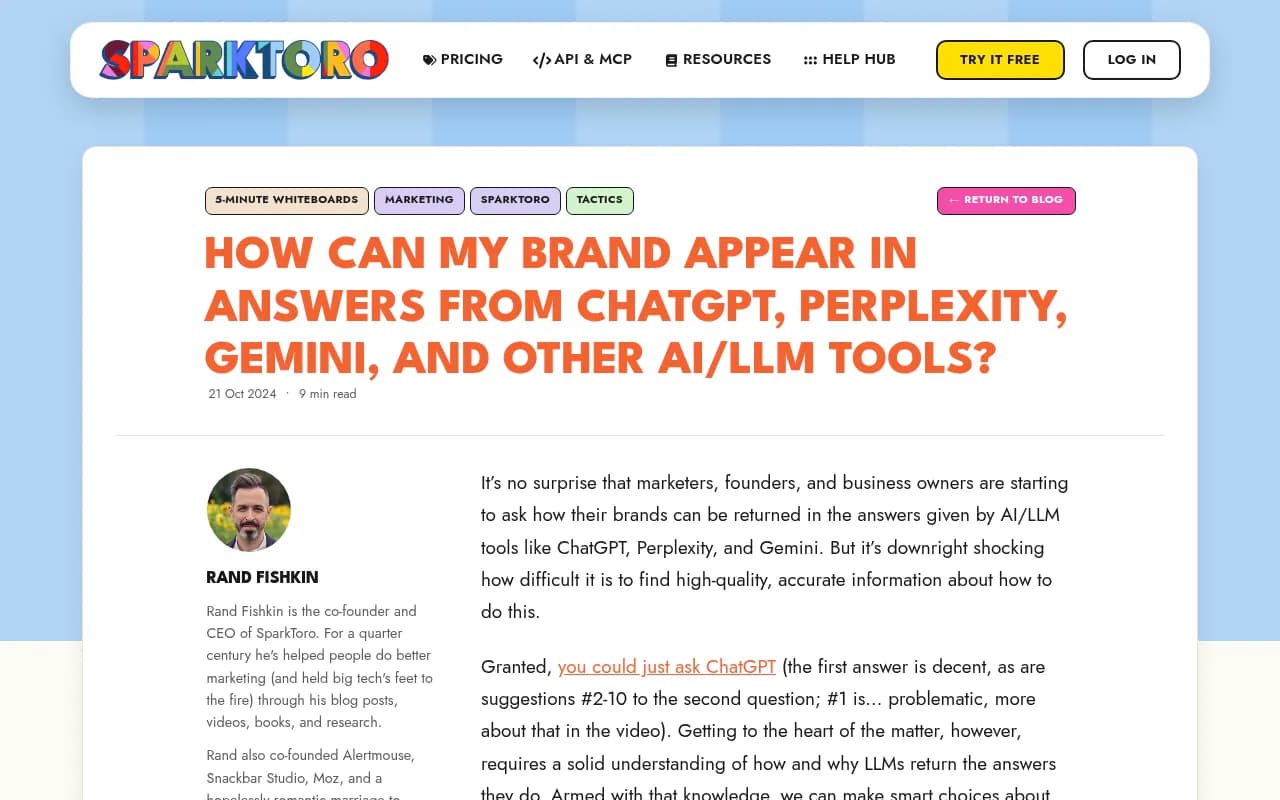
Brand narrative work sits next to visibility work, not instead of it. Visibility tells you whether you appear, narrative tells you what is said, and traffic data tells you whether any of it moves buyers. SparkToro's explainer on how brands appear in LLM answers argues that the currency of language models is mentions across the training data, rather than links, which is one reason third-party descriptions matter so much.
If you want the longer view, the Promptwatch Data hub tracks citation behavior across models month by month. It is worth bookmarking, because source patterns shift quickly. For example, Promptwatch Data recorded reddit.com's share of ChatGPT citations falling from roughly 4% to 0.5% on August 14, 2026, which would change which third-party sources describe your brand.
Quick checklist
- Run your brand name alone and note what the model thinks you are.
- Build 15 to 25 prompts across branded, pricing, comparison, category, and objection types.
- Log claims, theme, accuracy, and cited source for each.
- Mark repeated-and-wrong claims as priority one.
- Trace each to a page, fix your own pages, then third-party ones.
- Check crawler access, then re-measure with the same prompts.
- Automate with a claim-level tool once the manual list gets unmanageable.
Start with the manual pass this week. Twenty prompts and a spreadsheet will show you at least one claim about your company that you did not know AI was making.