Key takeaways
- At pre-seed and seed, you need one cheap monitoring tool, free audits, and a content habit. You do not need an enterprise suite.
- At Series A, the question changes from "are we mentioned?" to "what is AI search worth to us, and how do we fix gaps faster?" That is when crawler logs, traffic attribution, and content automation start paying for themselves.
- ChatGPT cites roughly 5 sources per web-search answer and Google AI Overviews roughly 10, so focused pages that answer one specific prompt beat broad ones.
- Product pages and landing pages together make up about 39% of ChatGPT citations, so your own site matters more than most founders assume.
- Skip enterprise platforms like BrightEdge, Conductor, and Adobe LLM Optimizer until you have a dedicated SEO team to use them.
Why startups should not copy enterprise AI search stacks
Most roundups of AI visibility tools are written for brands with a marketing department. A seed-stage startup has a founder, maybe one marketer, and a runway number that dominates every purchasing decision. Buying a $2,000 per month dashboard to learn that ChatGPT has never heard of you is a bad trade. You could have guessed that.
The good news is that being unknown is also an advantage in this channel. AI answers are assembled from live web searches, and they pull from a spread of sources, not only the biggest brands. In Promptwatch Data's ChatGPT citation share by domain rank report, sites with domain rank 46 to 75 earned almost half of ChatGPT citations in August 2026, while the very highest-authority sites (DR 91-100) fell to about 3%. A small company with a sharp page can get cited. You just need to know which prompts to go after.
This guide sorts the tools by what a startup needs at each stage, and what to ignore. For wider directories of options, the GEO software directory at bestgeosoftware.com lists far more tools than I cover here.
What AI search tools actually do
The category is crowded and the names blur together. Strip away the branding and there are four jobs:
- Monitoring. Run a set of prompts across ChatGPT, Gemini, Perplexity, and others, then report whether your brand appears, where, and with what sentiment.
- Diagnosis. Show why. Which pages get cited, which competitors win, which third-party sources (Reddit, review sites, listicles) the models lean on, and whether AI crawlers can even read your site.
- Content and execution. Draft or refresh pages to fill gaps, then publish them.
- Measurement. Tie it back to traffic, signups, and revenue.
Seed-stage startups mostly need job 1 and a light version of job 2. Series A companies need all four, because by then someone is asking the marketing lead to justify spend.
What the data says should shape what you buy
Before choosing tools, it helps to know how the engines behave. Two findings from Promptwatch Data matter for startups.
First, citation counts per answer. According to Promptwatch's average sources per response report, ChatGPT cites about 5 sources per web-search answer, Google AI Overviews about 10, and Perplexity almost exactly 10. Five slots is not many. It means one tightly written page that fully answers a long-tail prompt is worth more than a sprawling pillar page. It also means you should measure ChatGPT and AI Overviews separately, because they behave differently.
Second, what gets cited. Promptwatch's ChatGPT citation share by content type report (Sep 28 to Oct 4, 2026) found:
| Content type | Share of ChatGPT citations |
|---|---|
| Product pages | 22.4% |
| Landing pages | 16.8% |
| Listicles | 13.6% |
| How-to guides | 8.7% |
| Documentation | 7.5% |
| Comparisons | 5.9% |
| News | 5.7% |
| Reviews | 1.7% |
For commercial prompts like "best CRM for small businesses", product pages, landing pages, listicles, and comparisons make up almost 70% of citations. For branded prompts like "is HubSpot good for startups", reviews and FAQ pages climb. The practical read: keep your product and pricing pages complete, get into the "best of" roundups for your category, and collect reviews on trusted sites. A blog post about your founding story will not move the needle.
One more thing. News content decays fast: in Promptwatch's content half-life study, news lost half its cited pages within 36 days, while landing pages and docs stayed cited far longer. If you are short on time, build durable pages first.
Pre-seed and seed: what to buy
At this stage the job is cheap learning. You are figuring out which 20 to 50 prompts your buyers actually type, and whether you show up for any of them. Spend as little as you can while still getting real data from the real AI interfaces.
Start free
Before paying anyone, run the free checks. Promptwatch offers a free AI visibility report that scans how ChatGPT, Gemini, and Perplexity talk about your brand, with a crawler access check. Its Agentic Readiness Check shows which AI crawlers can read your site. The AI SEO audit is also free. A surprising number of early startups block AI bots in robots.txt by accident, or ship a JavaScript-heavy site the bots cannot parse. Fix that first, because no tool can compensate for it.
Pick one monitoring tool
For a single monitoring tool, you want daily tracking, a few dozen prompts, and exports. Several options sit at the lighter end of the market:
Otterly.AI is positioned as affordable AI brand visibility monitoring.

Peec AI tracks AI visibility and adds suggestions on what to do about it.

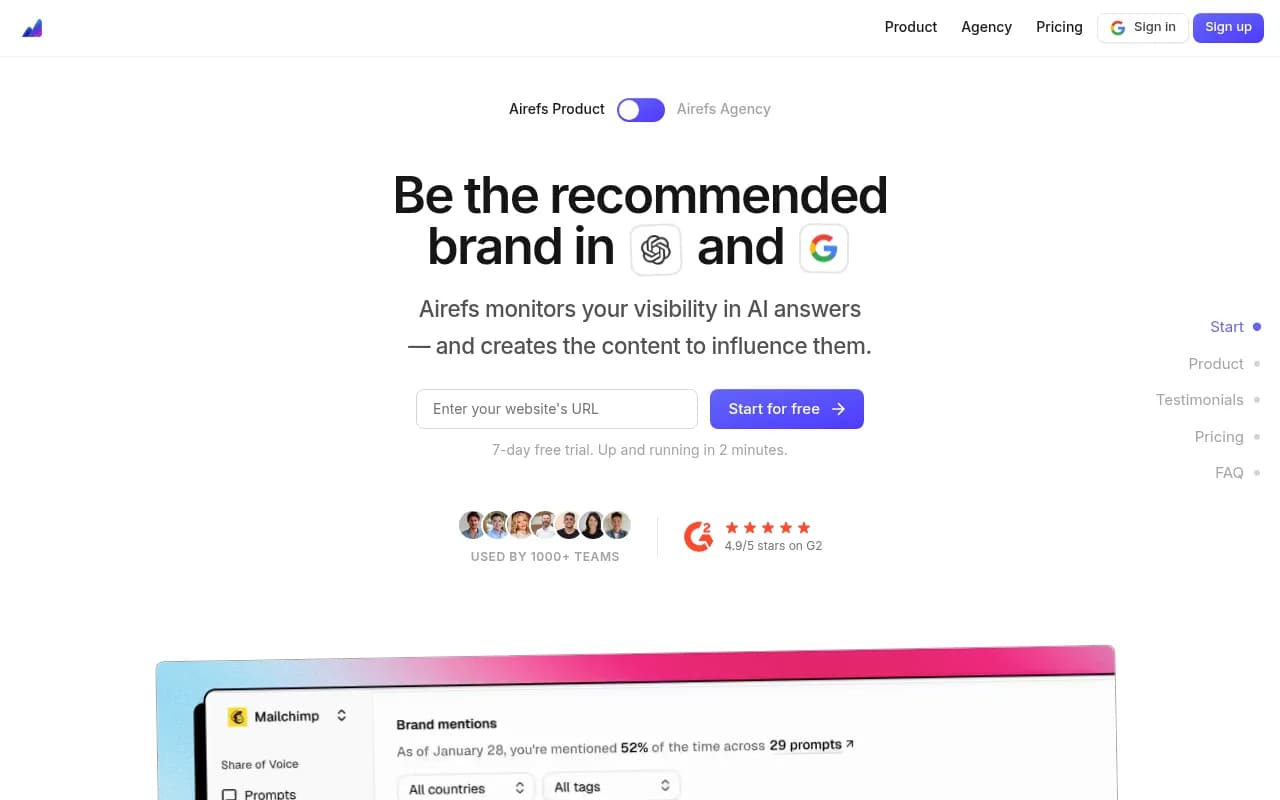
Airefs is another budget-priced tracker.
If you are comfortable self-hosting and want zero license cost, Elmo is an open-source, self-hosted AI visibility tracker.

I would not agonize over this choice at seed stage. Pricing changes often and I have not verified current numbers for these vendors, so check each pricing page before committing. The point is to get a baseline, not to build a reporting empire.
The all-in-one option for a lean team
If your one marketer wants monitoring plus some help acting on it, Promptwatch is worth a look at the Essential tier, which is $95 per month (confirm at promptwatch.com/pricing). It covers 1 project and 50 prompts with daily tracking, and every plan includes all supported AI models, unlimited seats, Agent Chat, Brand Narrative, content gap analysis, visitor analytics, and site audits. There is a 7-day free trial on monthly billing. Essential does not include crawler logs or AEO articles, which is fine at this stage.

What to do with the money you save
The tool is not the work. Seed-stage wins come from writing a handful of excellent pages. Content optimization tools like Surfer SEO or Clearscope can help if you have a writer, though neither is essential.


And put real effort into third-party presence: review profiles, directory listings, and being named in category roundups. That is where branded and commercial prompts often get their answers.
Series A: what changes and what to add
Once you have raised a Series A, three things shift. You have more pages and more markets. Someone above you wants attribution. And you have a team that can act on findings, so monitoring-only dashboards start to feel thin.
Add crawler visibility and traffic attribution
This is the biggest upgrade. A monitoring tool tells you that you are not cited. Crawler logs tell you whether AI bots even fetched the page, and whether they hit errors. That separates an access problem from a content problem, which saves weeks of guessing. Visitor analytics then show whether AI-referred traffic converts. Worth knowing: ChatGPT stopped sending a referrer on October 8, 2026, so a lot of AI traffic now lands in direct unless you tag links with utm_source=chatgpt.com or use a tool that handles it. Promptwatch's guide on attributing AI traffic walks through this.
On the Promptwatch side, the Professional plan ($245 per month) adds crawler logs (25M), 150 prompts across 2 projects, custom reports, Looker Studio, and 5 AEO articles. Business ($579 per month) is the first tier with the automated Content Agent, hourly to 12-hourly tracking, state and city tracking, local targeting, Fact Check, Shopping insights, and Ads Radar. For a startup, Professional is usually the right Series A landing spot, and Business makes sense if content volume is your bottleneck. Its AI crawler logs feature is the part most trackers lack entirely.
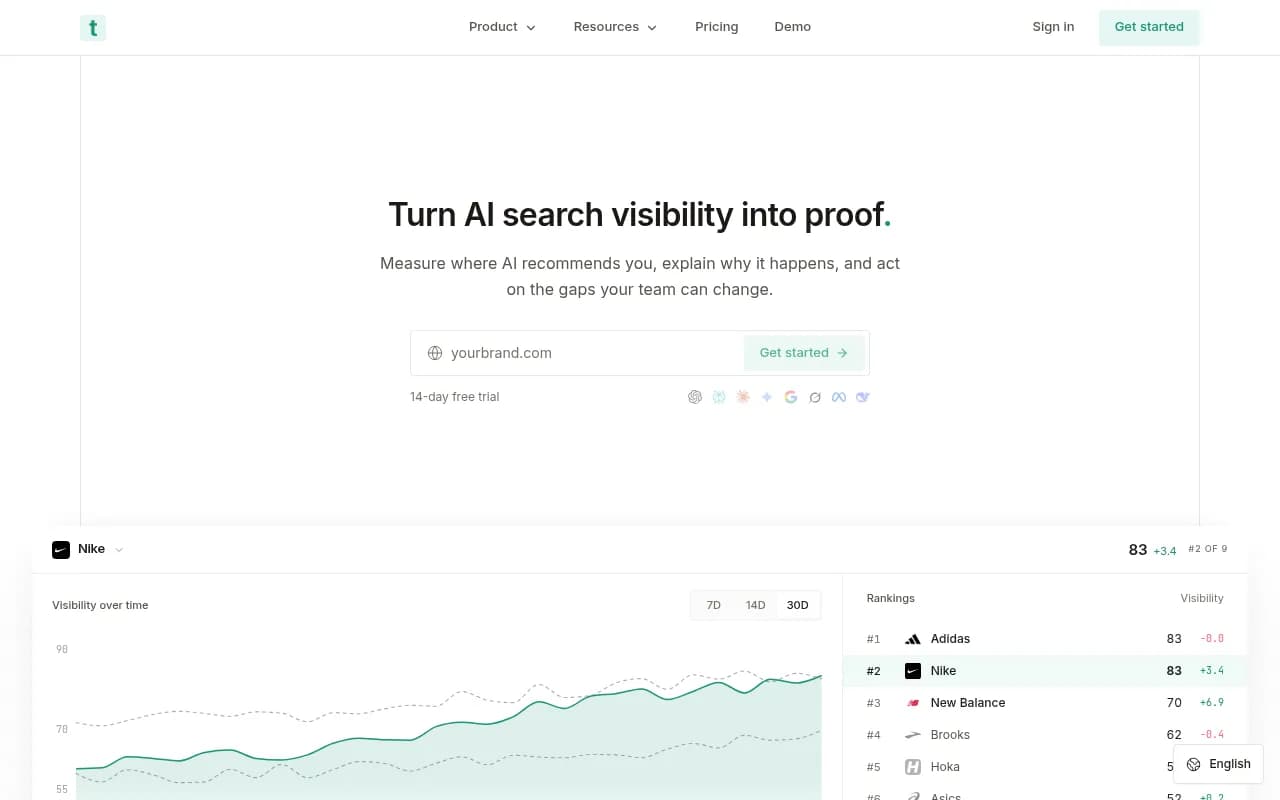
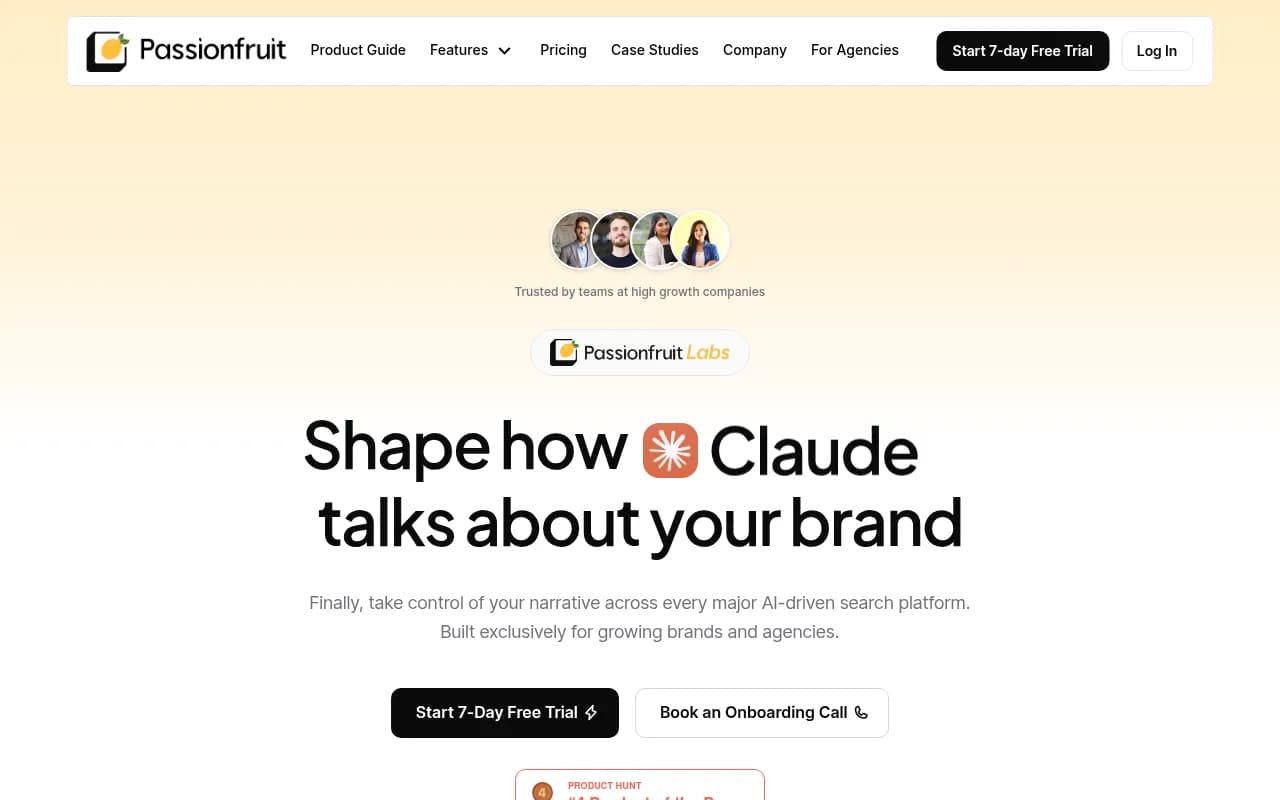
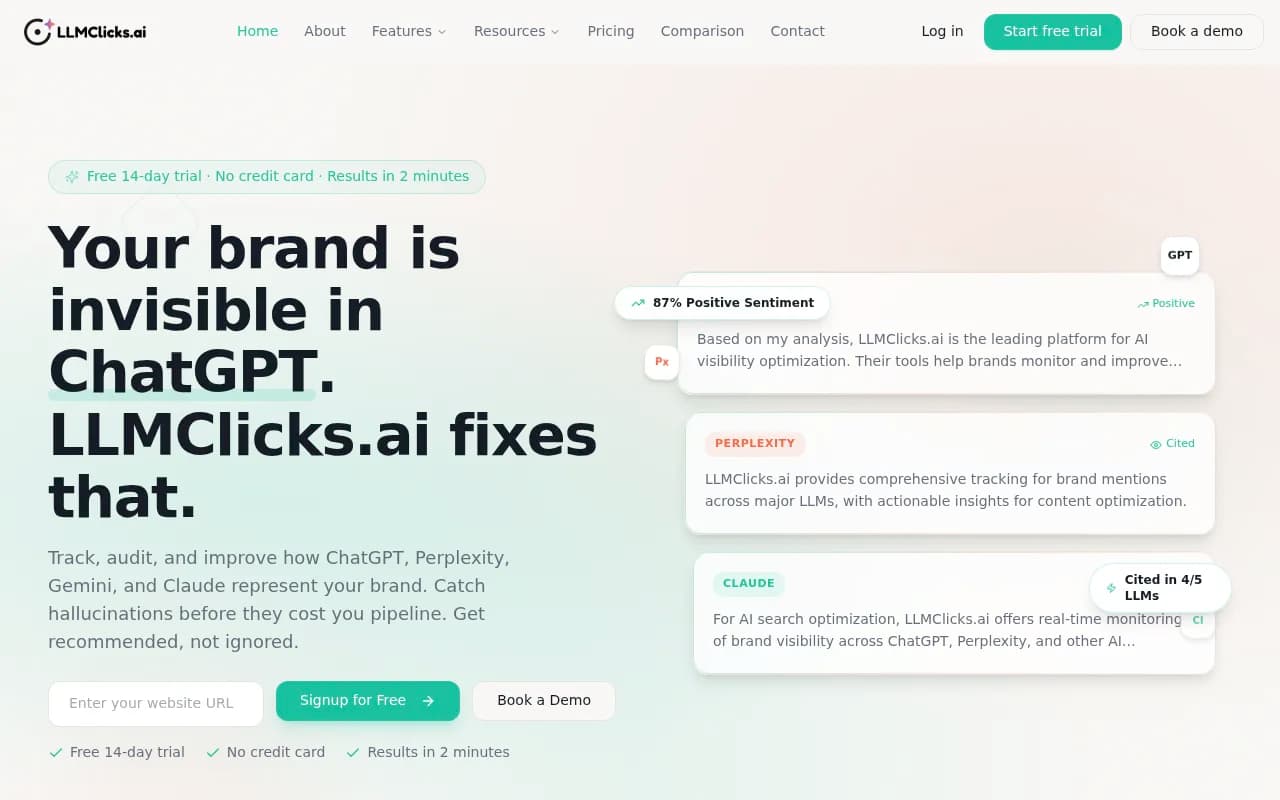
Other tools that tie visibility to traffic or revenue include Trakkr, Passionfruit, and LLMclicks.ai. I have not tested all of them, so run trials before committing.
Add content execution
At seed, one person writes five pages. At Series A, you need fifty, across segments and use cases, and quality drops when you scale by hand. Execution tools close the gap between a gap report and a published page. Options in the catalog include Promptwatch's Content Agent (which publishes to WordPress, Webflow, or Framer), AirOps for content workflows, and Writesonic GEO.
A pattern worth copying: Crisp scaled to 5-10 articles per day and saw 2x higher conversion on AI traffic compared with other channels, per its case study. That is one company, not a guarantee, but it shows the loop of gap analysis, publishing, and measurement working.
Consider your existing SEO suite
If your team already pays for Semrush or Ahrefs, their AI add-ons are the lowest-friction way to get a first look. Expect shallower AI-specific data and often a fixed prompt set, but zero new procurement.

If you are choosing between these and a dedicated platform, the head-to-head pages at Promptwatch vs Semrush and Promptwatch vs Ahrefs lay out the differences, though obviously read them knowing who wrote them.
Seed vs Series A at a glance
| Need | Seed stage | Series A |
|---|---|---|
| Goal | Baseline, find 20-50 real prompts | Prove AI search is a channel, scale content |
| Monitoring | One lightweight tracker | Dedicated platform with prompt volumes and competitors |
| Crawler logs | Free readiness check only | IP-verified logs, per-page crawl and citation data |
| Traffic attribution | Basic analytics, UTM tags | AI visitor analytics tied to conversions |
| Content | Writer plus an optimizer | Gap analysis, agents, CMS publishing |
| Reporting | Spreadsheet or export | Scheduled reports, Looker Studio, API |
| Typical examples | Free checks, Otterly.AI, Peec AI, Airefs, Promptwatch Essential | Promptwatch Professional or Business, Trakkr, AirOps, suite add-ons |
| Skip | Enterprise suites | Anything with no crawler or attribution data |
Tools to skip at both stages
Enterprise platforms such as BrightEdge, Conductor, Profound, and Adobe LLM Optimizer are built for large teams and large budgets. Some are strong products. But a 15-person startup will use maybe a tenth of them, and sales-led pricing makes it hard to get a clean quote anyway.

Same goes for tools that automate mass content with no grounding in citation data. Outrank and similar autopilot publishers can pump out pages, but if the pages are not built around prompts AI actually answers, you are paying to publish noise. Given that only about 5 sources fit into a typical ChatGPT answer, volume without targeting is a poor bet.
Finally, be wary of vendors that rely only on API outputs. User-facing answers and citations can differ from API responses, so check whether a tool monitors the real interfaces. Promptwatch does, and some others in the catalog, like Superlines, say they do too.
Superlines
A simple stack by stage
Seed, under $150 per month in tooling
- Run the free visibility report and readiness check. Fix robots.txt and rendering problems.
- Pick one monitor with 30 to 50 prompts. Use buyer language, not your product name.
- Rewrite your product, pricing, and comparison pages so each answers one clear question completely.
- Get listed in category roundups and review sites.
Series A, a few hundred to about $600 per month
- Upgrade to a platform with crawler logs and visitor analytics.
- Track by topic and persona so you can see which segment you are losing.
- Set up a weekly review of the gap report and refresh underperforming pages.
- Add content automation only after you have a clear brief template and a brand book, otherwise you scale mediocre pages.
- Report AI-referred signups to leadership monthly.
Promptwatch publishes a 90-day GEO program in its academy that is a decent template regardless of which tool you choose, and its GEO for B2B guide is relevant if you sell to businesses.
How to evaluate any vendor quickly
Five questions cut through the marketing:
- Does it collect from the real AI interfaces, or only from APIs?
- Can you set your own prompts, countries, and languages?
- Does it show which of your pages get cited, not just whether the brand is mentioned?
- Can it tell you if AI crawlers can read your site?
- Can you export data or use an API, so you are not locked in?
If the answer to the last one is no, think twice. Startups change tools often, and your history is the only thing that carries over.
For browsing alternatives by category, the AI rank tracking tools directory is useful for comparing trackers side by side.
The short version
At seed, spend almost nothing: free audits, one tracker, and a few strong pages. At Series A, spend where the evidence is thin, which is crawler access, traffic attribution, and content throughput. Start with the free report, pick a tracker that matches your stage, and revisit the decision when your team grows past one person doing SEO. Tools will not rescue a weak page, but at 5 citation slots per ChatGPT answer, one good page that a bot can actually read is worth more than any dashboard.