Key takeaways
- ChatGPT's shopping research mode (launched November 2025) turns product search into a multi-step research process, and that changes what "being cited" means for e-commerce brands
- ByDefault is marketed as an AI visibility tool, but there is no public documentation showing it specifically tracks ChatGPT Shopping cards, product carousels, or shopping-research citations as distinct data points
- Most general-purpose AI visibility trackers monitor text citations in chat responses, not the structured shopping UI (product cards, price comparisons, buyer's guides) that ChatGPT now renders
- If product-level shopping visibility is the actual goal, purpose-built e-commerce GEO tools or platforms with a dedicated shopping/ads radar feature are a safer bet than a generic brand monitor
- Before paying for any tool's "ChatGPT Shopping tracking" claim, ask to see a sample report that shows product card appearances, not just brand mentions in plain text
Why this question even matters now
For most of 2024 and 2025, tracking your brand in ChatGPT meant one thing: did the model mention your name in a text answer. Simple enough. Then OpenAI shipped shopping research in November 2025, and the whole premise shifted.
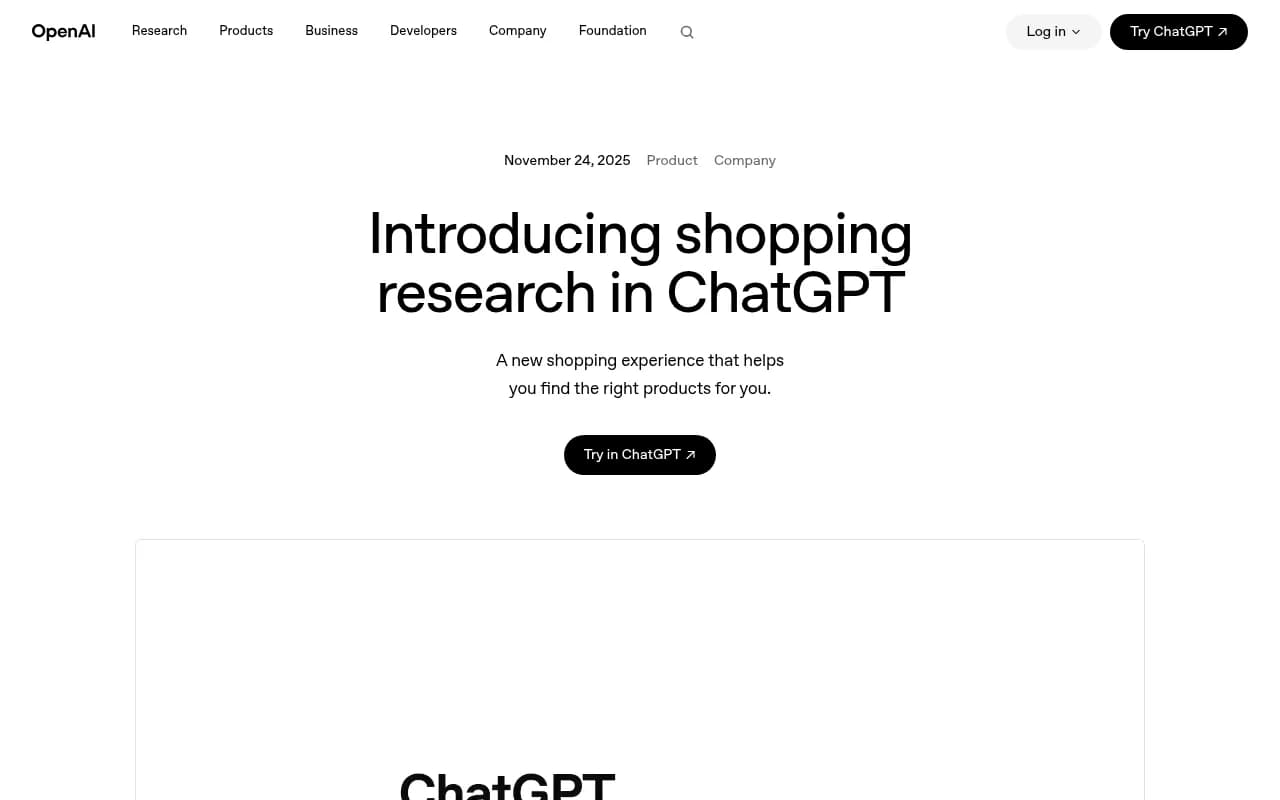
Shopping research isn't a quick answer. It's a multi-minute process where ChatGPT asks clarifying questions, researches across the web, and returns a structured buyer's guide with specific product picks, comparisons, and (per OpenAI's own description) performs best in categories like electronics, beauty, home and garden, kitchen and appliances, and sports and outdoor. That's a very different surface to be "visible" on than a one-paragraph chat response. Your product either makes it into that research pass or it doesn't, and the criteria OpenAI uses to pick winners (structured catalog data, review signals, up-to-date pricing) are not the same criteria that get you cited in a plain-text answer.
So when an e-commerce brand asks "does Tool X track ChatGPT Shopping," they're really asking something more specific than "does it track ChatGPT." They want to know: does it capture product card appearances, shopping carousel placements, and the specific products ChatGPT recommends when a user is in buying mode, as opposed to just scraping whether the brand name showed up somewhere in a response.
What ByDefault claims to do, and what it doesn't document
ByDefault positions itself in the AI visibility and brand monitoring space, tracking how often a brand shows up across AI assistants. That's the standard GEO tracker pitch, and plenty of tools do it reasonably well for text-based mentions.
The honest answer on the ChatGPT Shopping question is this: there's no public product page, changelog entry, or case study from ByDefault that specifically breaks out shopping-research citations, product card appearances, or ChatGPT Shopping ad placements as a tracked metric. That doesn't automatically mean it can't surface shopping-related mentions at all. If its underlying monitoring queries ChatGPT and captures full responses, a shopping research answer would technically get crawled like any other conversation. But capturing it and parsing it into something useful, telling you "your product appeared in the comparison table for the 'best cordless vacuum under $300' prompt, in position 2, alongside these three competitors" is a different engineering problem than general mention tracking.
If you're evaluating ByDefault (or any tool making similar claims) for this specific use case, ask for three things before you sign a contract:
- A sample report showing a product card or shopping carousel appearance, not just a brand name highlighted in a block of text
- Confirmation of whether they query ChatGPT's actual shopping research flow, or just the standard chat completion, since these can return different results for the same prompt
- Whether they track ChatGPT's shopping ads and sponsored product placements separately from organic recommendations
If the answer to all three is vague, treat the "ChatGPT Shopping tracking" claim as marketing language rather than a documented feature.
What actually changed in how ChatGPT surfaces products
A few concrete things are worth knowing if you're building a tracking strategy, regardless of which tool you end up using.
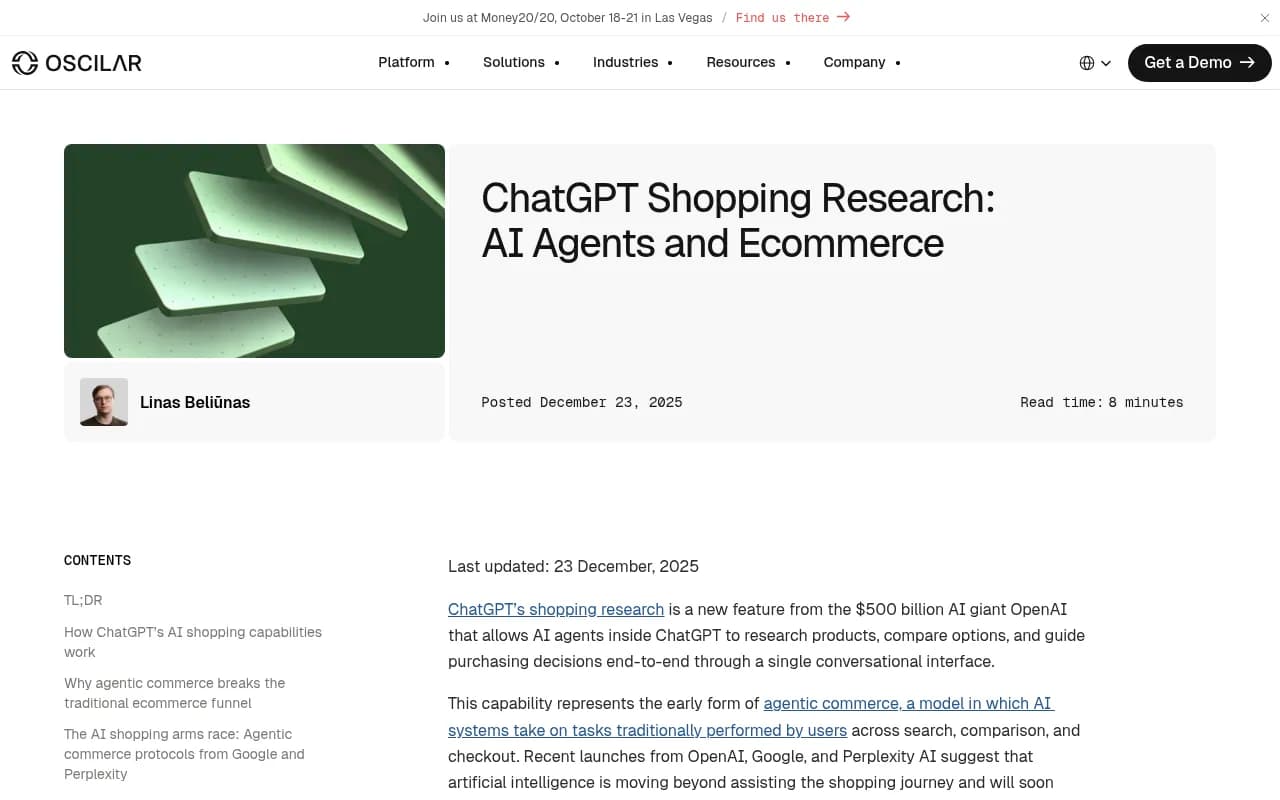
First, shopping research pulls from structured catalog data and quality review sources, not just general web pages. Oscilar's analysis of the launch calls this the start of "agentic commerce," where the AI evaluates options and surfaces recommendations directly rather than sending the user off to compare sites themselves.
Second, ChatGPT is already showing ads inside search-enabled responses, and that extends into shopping contexts. Promptwatch's tracking of ChatGPT ad frequency over a recent 90-day window shows ads appearing in a meaningful share of citation-enabled responses, with variation by prompt type, which matters if you're trying to tell the difference between an organic product recommendation and a paid placement in the same conversation. See the ChatGPT Ads Over Time report for the daily breakdown.
Third, shopping feature usage itself (how often ChatGPT actually shows product cards versus a plain text answer) isn't constant across all queries. Promptwatch's ChatGPT Shopping Feature Usage data tracks the percentage of citation-enabled web search responses that include shopping cards, which gives you a baseline for how often this even comes up for your category before you invest heavily in optimizing for it.
This is also why BigCommerce's guidance to e-commerce teams includes a practical, low-cost first step: tag your product URLs with UTM parameters like utm_source=chatgpt.com so you can at least see, in your own analytics, when traffic is arriving from ChatGPT conversations, shopping research or otherwise, independent of whatever a third-party tracking tool tells you.
Tools that actually separate shopping visibility from general mentions
If ChatGPT Shopping tracking specifically is the priority, a handful of tools are built around e-commerce catalogs and product-level data rather than generic brand mentions.

Promptwatch includes a ChatGPT Shopping and Ads Radar feature specifically for this: tracking product recommendations inside ChatGPT's shopping results and identifying sponsored placements, including which competitors are bidding on your prompts. Combined with its crawler log data (showing when ChatGPT's bots actually hit your product pages) and citation analytics classified by content type, it's one of the few platforms built to answer "is my product showing up in shopping research, and is a competitor's ad showing up next to it" as two separate questions rather than one blended mention count.
Ranketta is built around product-level AI visibility tracking for e-commerce specifically, which is closer in spirit to what a brand asking about ByDefault is actually looking for: not "is my brand mentioned" but "is this specific SKU showing up when someone asks AI to recommend one."
Azoma focuses on agentic-commerce GEO, meaning it's oriented around how AI shopping agents (not just chat responses) discover and recommend products, which overlaps directly with the shopping research use case.
Alhena AI is built for ecommerce catalogs specifically, tracking AI visibility at the catalog level rather than the brand level.
Yotpo Discover
Yotpo Discover approaches this from the reviews and catalog side, given Yotpo's existing footprint in e-commerce reviews and loyalty, which is useful if your visibility strategy leans on review signal strength (something OpenAI explicitly said shopping research weighs).
Zoovu is a bit different, it's an on-site AI product discovery tool rather than an external tracker, but it's worth knowing about if the goal is making your own site's product discovery conversational, which can feed the same structured data signals that external AI shopping tools look for.
Comparison: generic brand trackers vs. e-commerce shopping-focused tools
| Tool | Tracks ChatGPT Shopping cards specifically | Tracks AI crawler hits on product pages | Separates organic vs. ad placements | Built for |
|---|---|---|---|---|
| ByDefault | Not publicly documented | Not publicly documented | Not publicly documented | General AI brand monitoring |
| Promptwatch | Yes, dedicated Shopping and Ads Radar | Yes, crawler log analytics | Yes | Full-stack AI visibility, including e-commerce |
| Ranketta | Yes, product-level focus | Partial | No | E-commerce product visibility |
| Azoma | Yes, agentic-commerce focus | Partial | No | AI shopping agent optimization |
| Alhena AI | Partial, catalog-level | No | No | Ecommerce catalog visibility |
| Yotpo Discover | Partial, review-driven | No | No | Review-backed product visibility |
This table reflects publicly available product positioning as of October 2026. Features change fast in this category, so re-verify directly with any vendor before buying based on a specific claim.
A practical checklist for e-commerce brands evaluating any AI visibility tool
Rather than taking any vendor's word for "we track ChatGPT Shopping," run this checklist:
- Ask for a live demo of a shopping research prompt in your category, and see what the tool actually captures from that response
- Confirm whether the tool distinguishes product card recommendations from plain-text brand mentions in its reporting
- Check if it tracks ChatGPT's ad placements separately, since an ad next to your product isn't the same signal as an organic recommendation
- Ask whether it monitors crawler activity on your product pages (bots like ChatGPTBot or GoogleOther hitting your catalog), which is the leading indicator before a citation shows up
- Confirm pricing is based on actual response volume you need, not a flat seat license that doesn't scale with your SKU count
How to set a baseline before you buy anything
You don't need a paid tool to get started. Run a handful of real shopping-intent prompts manually in ChatGPT for your top product categories ("best [category] under $X" style prompts) and note which brands and products come up, whether a shopping card renders, and whether any ads appear. BigCommerce's suggestion to tag product URLs with ChatGPT-specific UTM parameters is a free way to start catching real referral traffic in your own analytics while you evaluate tools. Once you have that manual baseline, any vendor's reporting should roughly match what you're seeing by hand, if it doesn't, that's a red flag regardless of what the sales page says.
If you want to browse the wider field of GEO and AI visibility software beyond the names mentioned here, the directory at bestgeosoftware.com is organized specifically around this category and worth a look before committing to any single platform.