Key takeaways
- AI search engines (ChatGPT, Perplexity, Google AI Overviews) are increasingly recommending specific products in conversational responses -- and most e-commerce brands aren't optimized for this yet
- Product page GEO requires structured data, dense factual content, and clear brand signals -- not just keywords
- Third-party mentions, reviews, and citations on external sites matter as much as your own product pages
- Technical fundamentals (crawlability, page speed, schema markup) are table stakes before any GEO strategy will work
- Tracking which AI models cite your pages -- and which competitor pages they cite instead -- is the only way to know if your optimization is actually working
When someone asks ChatGPT "what's the best ergonomic office chair for back pain under $500," they're not getting ten blue links. They're getting a direct answer with two or three product recommendations, maybe a short explanation of why each one works, and sometimes a link to buy. That's a fundamentally different game from traditional SEO -- and most e-commerce teams are still playing by the old rules.
This guide covers what actually changes when you optimize product pages for AI search recommendations, what the technical requirements look like, and how to think about content strategy when the "ranking" you're chasing is a sentence inside a chatbot response.
Why product pages are different from editorial content in GEO
Most GEO advice focuses on blog posts, guides, and informational content. That makes sense -- AI models love citing authoritative, well-structured articles. But product pages are a different beast.
A product page has to do three things simultaneously: convince a human to buy, give AI models enough factual density to cite, and satisfy the technical requirements that let crawlers understand what the page is about. Those goals don't always align.
The classic e-commerce product page -- hero image, price, "Add to Cart," a short paragraph of marketing copy -- is almost invisible to AI models. There's nothing to cite. No specifications, no use cases, no comparisons, no real-world context. The AI has no reason to surface it because it can't extract a useful answer from it.
The shift you need to make is from "page that sells" to "page that also informs." The two aren't mutually exclusive, but you have to be intentional about it.
The technical foundation: what AI crawlers actually need
Before worrying about content, get the technical basics right. AI crawlers behave differently from Googlebot in some ways, but they share the same fundamental requirements.
Crawlability and robots.txt
Check your robots.txt. Some e-commerce platforms block crawlers from product pages, faceted navigation, or filtered category pages by default. If AI crawlers can't access your pages, nothing else matters. Tools like Cloudflare or server log analysis can show you which crawlers are actually hitting your site and which pages they're reading.
Structured data (schema markup)
This is probably the single highest-leverage technical change you can make for product page GEO. Product schema tells AI models exactly what your page is about -- the name, price, availability, brand, rating, description, and more. Without it, the model has to infer all of this from unstructured text, and it often gets it wrong or skips the page entirely.
At minimum, implement:
Productschema withname,description,brand,sku,offers(includingprice,priceCurrency,availability)AggregateRatingif you have reviewsReviewschema for individual reviewsBreadcrumbListfor category context
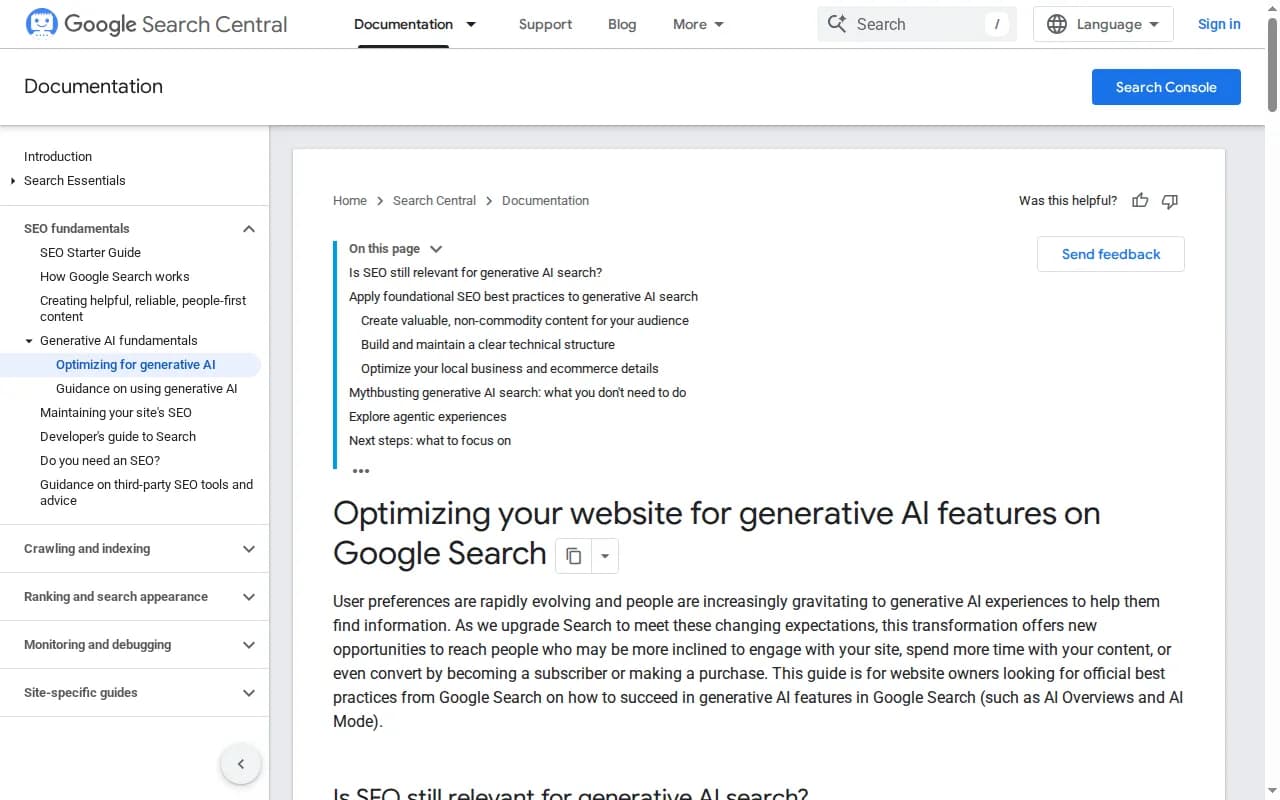
Google's official documentation on AI optimization confirms that structured data helps AI systems understand and represent your content accurately.
Page speed and Core Web Vitals
AI crawlers don't wait around. Slow pages get crawled less frequently and less completely. This is especially true for JavaScript-heavy Shopify or Magento stores where product data is rendered client-side. If your product specs only appear after a JS bundle loads, many crawlers will never see them.
Server-side rendering (SSR) or static generation for product pages is worth the engineering investment if you're serious about AI visibility.
Content strategy for product pages that AI models want to cite
Here's the honest truth: most product page copy is written to convert, not to inform. "Premium quality," "designed for comfort," "trusted by thousands" -- none of that gives an AI model anything to work with when a user asks a specific question.
Write for the question, not the keyword
Traditional SEO optimized for "ergonomic office chair." GEO optimizes for "what office chair is best for someone with lower back pain who sits for 8+ hours a day?" Those require completely different content.
Think about the actual questions your customers ask before buying. Then answer them directly on the product page. Not in a FAQ buried at the bottom -- woven into the product description itself.
For a chair: what lumbar support mechanism does it use? What's the seat depth? Who is it designed for? What's the weight limit? How does it compare to sitting on a standard chair? These specifics are what AI models extract and cite.
Specification density matters
AI models are much more likely to cite a product page that has:
- Precise measurements and dimensions
- Material composition and certifications
- Compatibility information (works with X, not compatible with Y)
- Use case context ("designed for users who..." or "ideal for environments where...")
- Comparison context ("unlike standard chairs that use foam padding, this model uses...")
This isn't about stuffing keywords. It's about giving the model enough factual material to construct a useful answer.
Use natural language, not marketing speak
"Revolutionary ergonomic design" tells an AI model nothing. "Adjustable lumbar support with 4-way positioning, tested to reduce lower back pressure by 23% in a 2024 clinical study" tells it quite a lot.
Be specific. Use numbers. Cite sources where you have them. Write the way a knowledgeable salesperson would explain the product to someone who asked a detailed question.
Address comparison queries directly
A huge portion of AI search queries in e-commerce are comparison queries: "X vs Y," "best X for [use case]," "alternatives to X." If your product page never acknowledges that alternatives exist or explains why your product is different, you're invisible for those queries.
You don't need a full competitor comparison table on every product page. But a paragraph that clearly articulates the product's positioning -- who it's for, what problem it solves better than generic alternatives -- gives AI models the material they need to recommend it in comparison contexts.
Reviews and UGC: the citation layer you're probably ignoring
Here's something that surprises a lot of e-commerce teams: AI models frequently cite review content, not just product descriptions. When a user asks "is [product] worth it for [use case]," the model may pull from customer reviews, Reddit discussions, or YouTube videos -- not from your product page at all.
This means your review strategy is part of your GEO strategy.
On-site reviews with schema markup
Reviews with Review schema are readable by AI crawlers. A product with 200 detailed reviews that mention specific use cases, pros, cons, and comparisons is a much richer citation source than a product with 200 reviews that just say "great product, fast shipping."
Encourage specific, detailed reviews. Ask customers what problem they were solving, how the product compared to what they used before, and what they'd tell someone considering the purchase. That specificity is what AI models extract.
Off-site mentions and third-party citations
AI models don't just read your website. They read the whole web. A Reddit thread where someone recommends your product for a specific use case, a YouTube review that explains the technical specs, a "best of" listicle on a niche blog -- all of these can drive AI recommendations.
This is where traditional link building and PR intersect with GEO. Getting your product mentioned in authoritative third-party content isn't just good for SEO; it's a direct input to AI recommendations.
Category pages and faceted navigation
Product pages don't exist in isolation. Category pages and filtered views are often the first thing AI models encounter when crawling your store, and they provide the context that helps models understand your product catalog.
A category page that just shows a grid of products with names and prices is nearly useless for GEO. A category page that explains what the category is, who it's for, how products in it differ from each other, and what to look for when choosing -- that's a page an AI model can learn from.
Think of category pages as the "guide" layer of your store. They should answer the question "how do I choose the right [product type]?" before a user even clicks through to a specific product.
Brand signals and entity recognition
AI models build a mental model of your brand based on everything they've read about it. If your brand is mentioned consistently across your own site, third-party reviews, press coverage, and social media in the same way -- same name, same positioning, same product categories -- the model develops a clear "entity" for your brand.
Inconsistency hurts this. If your product is called "ErgoChair Pro" on your website but "Ergo Chair Pro" on Amazon and "ErgoChair" in press mentions, the model may treat these as different products or fail to consolidate the information.
Audit your brand name, product names, and key descriptors across all channels. Consistency isn't just good housekeeping -- it's how AI models learn who you are.
Tracking whether your GEO efforts are working
This is where most e-commerce teams fall down. They make changes to product pages, add schema, improve content -- and then have no idea whether AI models are actually citing them more often.
The challenge is that AI search doesn't show up in Google Analytics the same way organic search does. A user who found your product through a ChatGPT recommendation might arrive via a direct link, or might just type your URL directly after seeing it mentioned. Traditional attribution misses this entirely.
You need to track:
- Which AI models are citing your product pages (and which competitor pages they cite instead)
- Which prompts or query types trigger citations of your pages
- How citation frequency changes after you make content updates
- Which third-party pages mentioning your brand are driving AI recommendations
Promptwatch is built specifically for this kind of tracking -- it monitors how AI models like ChatGPT, Perplexity, and Google AI Overviews respond to product-relevant prompts, shows you which pages get cited, and flags the gaps where competitors are being recommended instead of you.
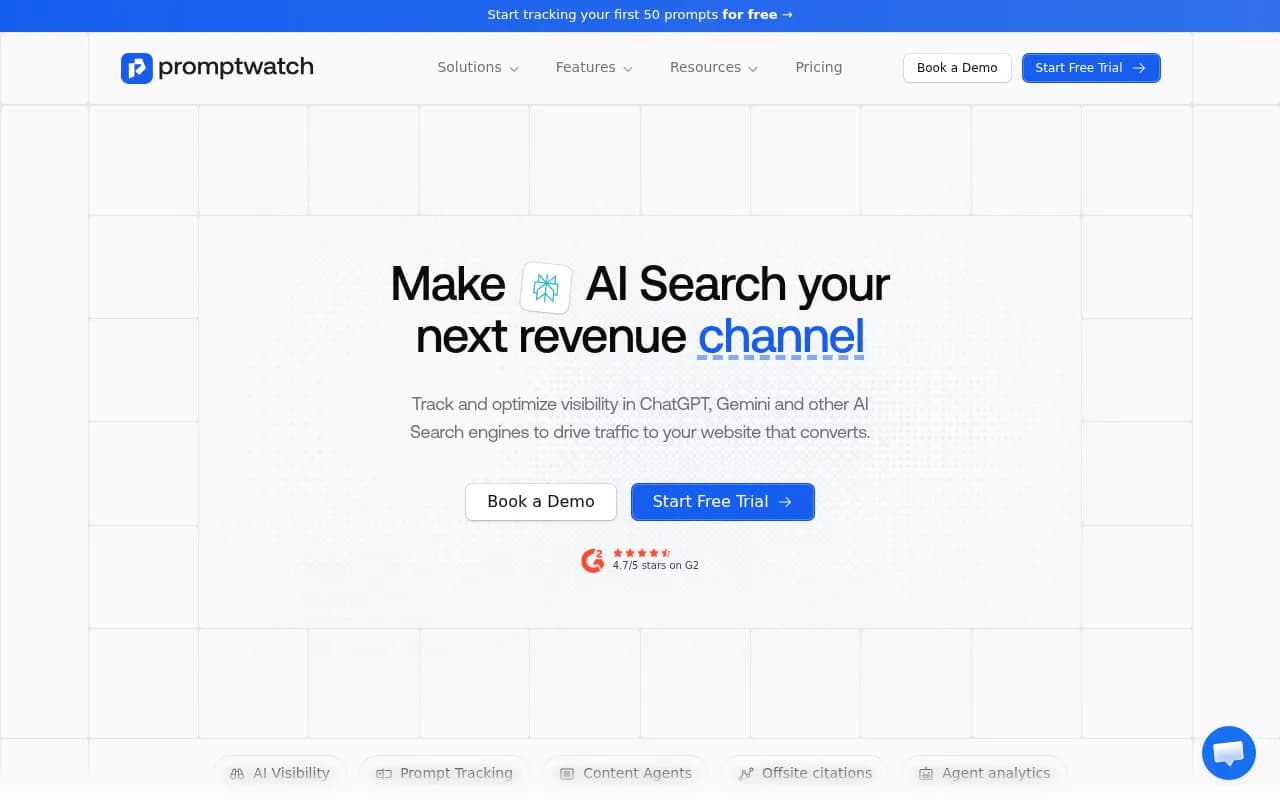
For e-commerce specifically, the Answer Gap Analysis feature is particularly useful: it shows you the exact prompts where a competitor's product is being recommended but yours isn't, so you can reverse-engineer what content changes would close that gap.
A practical GEO audit checklist for product pages
Run through this for your top 20 product pages before anything else:
Technical
- Product schema implemented with all required fields
- AggregateRating schema present if reviews exist
- Page renders fully server-side (no critical content in JS)
- Page loads in under 2.5 seconds on mobile
- Not blocked in robots.txt
Content
- Product description answers "who is this for and what problem does it solve?"
- Specific measurements, materials, and certifications listed
- Use case context included (not just features, but scenarios)
- At least one comparison or differentiation statement
- No vague marketing language without factual backup
Reviews
- Review schema implemented
- Review request process encourages specific, detailed feedback
- Recent reviews mention specific use cases
Brand signals
- Product name consistent across site, Amazon, and third-party mentions
- Brand name consistent in all external citations
- Category page provides buying guide context
Tools worth knowing about
Beyond Promptwatch, a few other tools are useful for different parts of this workflow.
For content optimization and making sure your product descriptions are comprehensive enough to rank in AI responses:
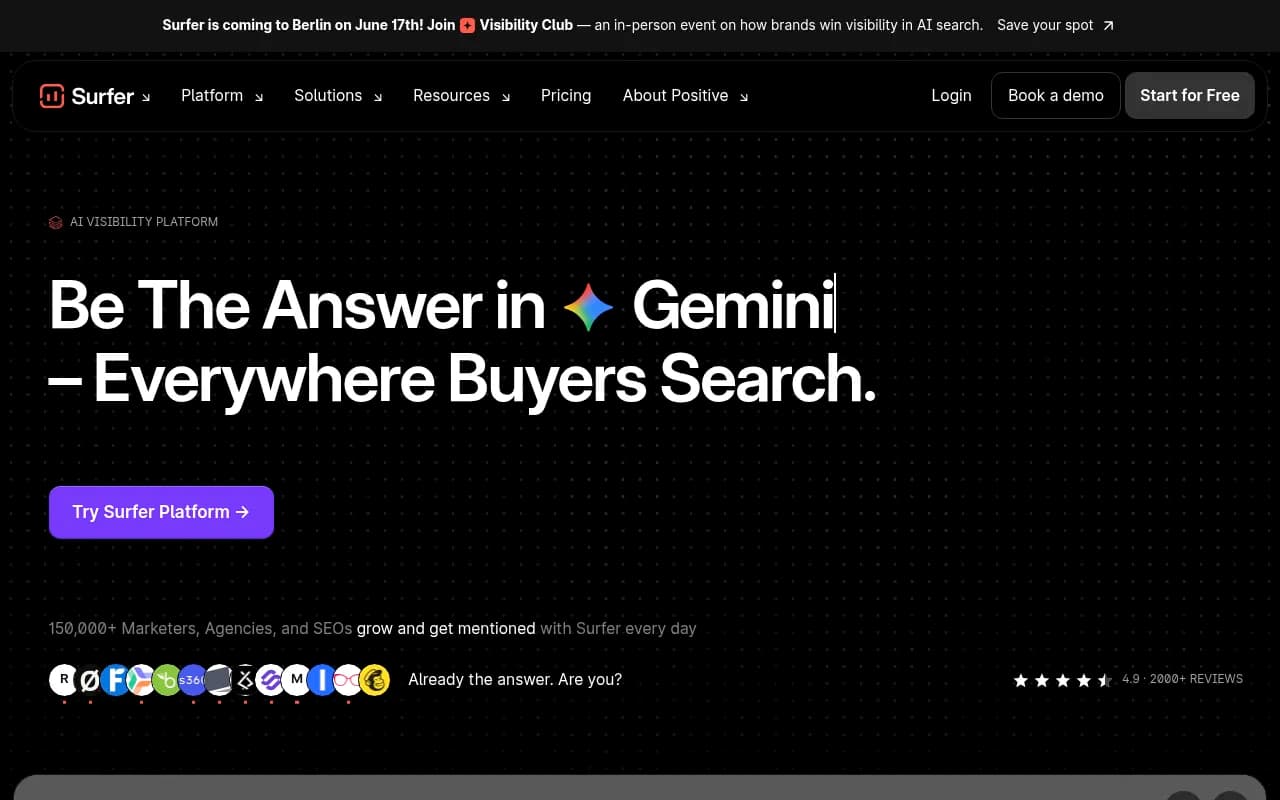

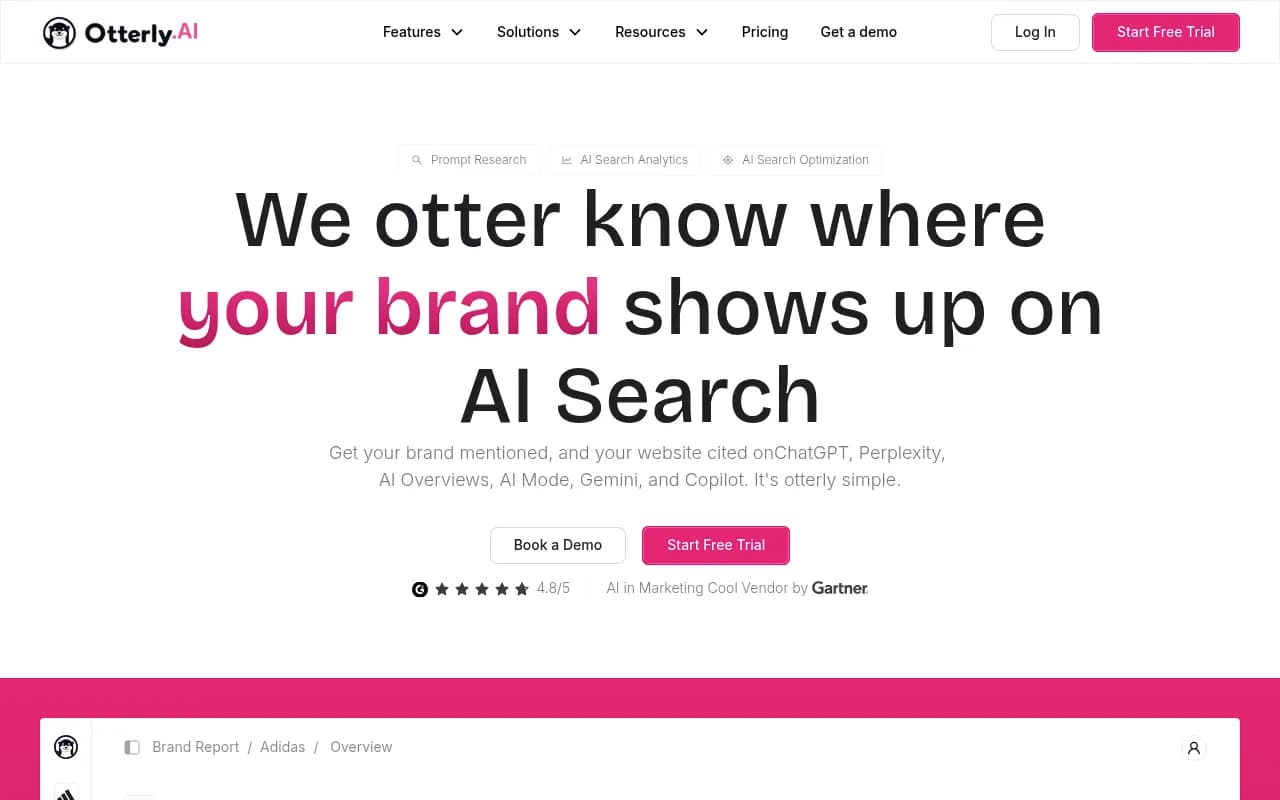
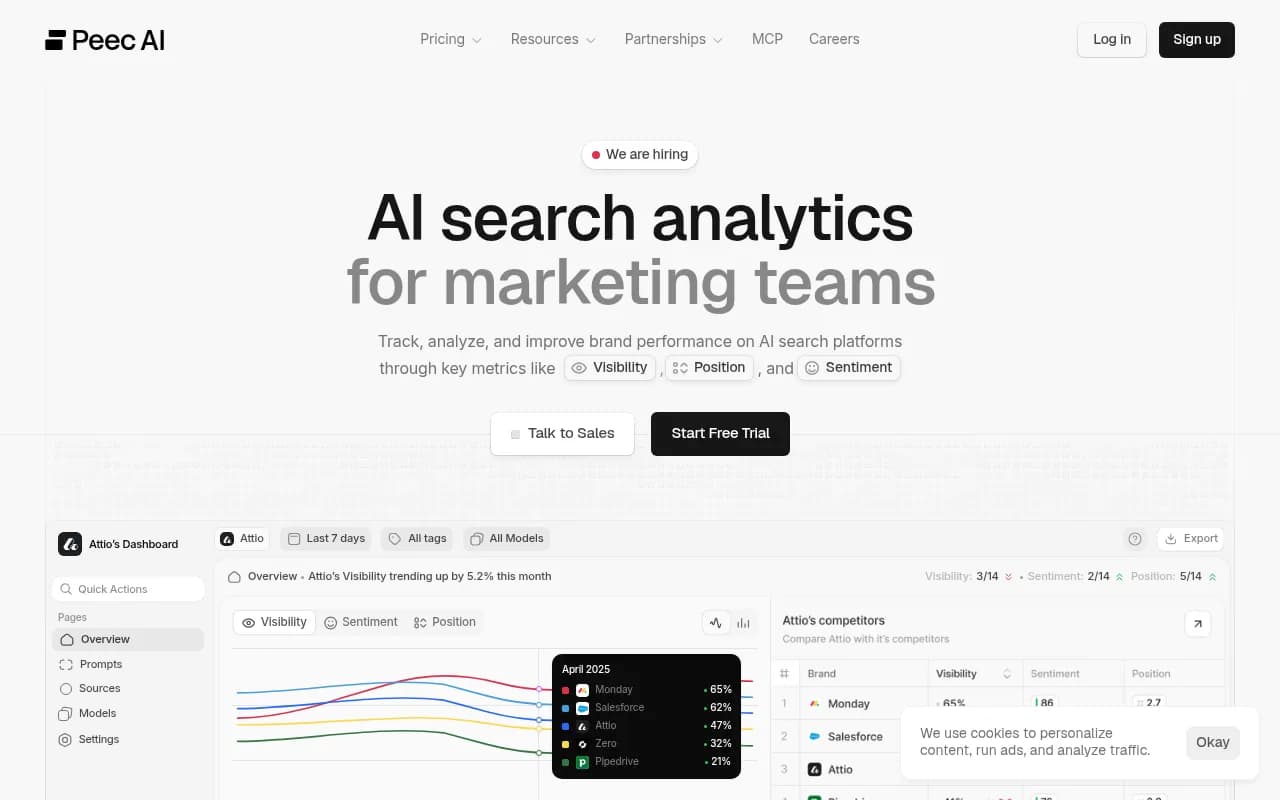
For tracking AI citations and brand mentions across models:
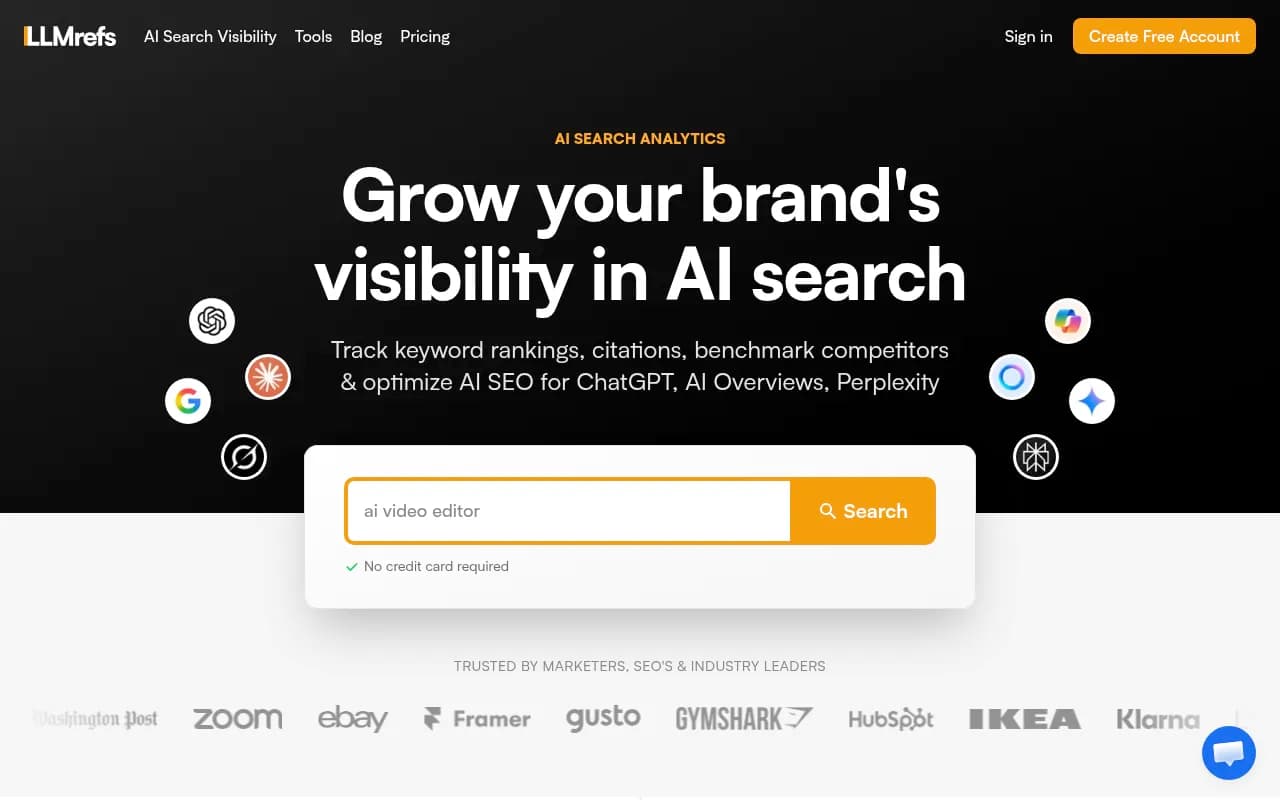
For understanding which prompts and queries are driving AI recommendations in your category:
How the major AI models differ for e-commerce
Not all AI models handle product recommendations the same way, and it's worth understanding the differences.
| AI model | Shopping behavior | Key citation sources | What helps most |
|---|---|---|---|
| ChatGPT | Direct product recommendations, shopping carousels | Product pages, reviews, Reddit | Schema markup, review density |
| Perplexity | Cites sources explicitly, links to pages | Product pages, editorial content | Factual density, structured content |
| Google AI Overviews | Pulls from indexed pages, favors Google Shopping | Product pages, Google Shopping feed | Schema, Google Shopping optimization |
| Google AI Mode | Conversational, comparison-heavy | Editorial content, product pages | Comparison content, E-E-A-T signals |
| Gemini | Integrates with Google Shopping | Google Shopping feed, product pages | Google Merchant Center feed quality |
| Claude | Conservative recommendations, cites authoritative sources | Editorial content, brand pages | Brand authority, third-party mentions |
The practical implication: you can't optimize for one model and assume it transfers. ChatGPT Shopping carousels require different signals than Perplexity citations. Google AI Overviews are heavily influenced by your Google Shopping feed quality, not just your product page content.
The shift from "ranking" to "being recommended"
The mental model shift that matters most here: in traditional SEO, you ranked for a keyword. In GEO, you get recommended for a use case. Those are different things.
A keyword is static. A use case is contextual -- it depends on who's asking, what they've already told the AI, and what the AI thinks they actually need. This means the same product might be recommended in response to twenty different prompts, or it might be invisible for all of them despite being technically relevant.
The brands that win in AI search are the ones that have given AI models enough rich, specific, factual content to confidently recommend their products across a wide range of contexts. That's a content investment, not a technical trick.
Start with your best-selling products. Make them the most informative pages on the internet for what they do. Then track whether AI models start citing them. Adjust based on what you see. That loop -- optimize, track, adjust -- is what GEO actually looks like in practice.