Key takeaways
- "EU hosted" and "EU only" are not the same thing. A vendor can store data in Frankfurt while sending every prompt to a US model provider under Standard Contractual Clauses.
- Most GEO tracking data is brand prompts and AI answers, not personal data. The personal data that does exist is usually team logins, analytics connections, and crawler or visitor logs.
- Ask four things: where data is stored and processed, who the subprocessors are, what security certifications exist, and whether the tool can prove impact rather than just report a score.
- Do not block AI crawlers as a blanket privacy measure without checking what it costs you in visibility.
- Many of the big names are not EU-headquartered. I could not verify EU hosting claims for most vendors below, so treat the shortlist as a list to vet, not a list of approved tools.
Why this question comes up at all
GEO (generative engine optimization) tools sit in an awkward spot for privacy teams. They are marketing software, so they rarely get the scrutiny a CRM or HR system gets. But they send large volumes of prompts to third-party AI engines, they connect to your analytics and Search Console, and some of them ingest server logs. That is enough for a DPO to want a look.
If you are in banking, insurance, healthcare, the public sector, or any company that runs vendor questionnaires as a matter of habit, you will be asked: where does this data live, and who touches it? This guide is about answering that before procurement does.
A caveat up front. I found no regulator, EDPB, or national DPA guidance written specifically for GEO or AI visibility tools. What exists is vendor-authored material, which is self-reported. So the framework below is built on the GDPR basics plus the pitfalls vendors themselves admit to. It is not legal advice. Your DPO has the final word.
GDPR basics that matter for this category
The GDPR applies to organizations anywhere that handle the personal data of people in the EU. It came into force on May 25, 2018, and the GDPR.eu overview is a reasonable starting point if you need a refresher for stakeholders.
For a GEO platform, the practical legal frame is straightforward. The vendor acts as a processor on your instructions, under a signed data processing agreement (DPA). It discloses its subprocessors. And where it uses non-EU providers, it relies on a valid transfer mechanism such as Standard Contractual Clauses. Howseen, a French vendor, lays out exactly this framing in its own buyer guide, and it matches what most privacy teams will ask for anyway.
What counts as personal data here
This is where teams over-worry or under-worry. Tracked brand prompts like "best payroll software for mid-size companies" are generally not personal data. The things that are:
- Team member names, emails, and login data
- Visitor analytics and AI-referred session data, which can include IPs, devices, and locations
- Server or CDN logs connected for crawler analysis
- Anything you paste into a chat assistant or content brief that names real people
One vendor guide raises the question of whether tracked prompts count as personal data, and I could not confirm its answer. Ask your vendor to state their position in writing.
The hosting versus processing trap
This is the single most useful thing to take from this guide. Storage location and processing location are different questions.
The vendor-authored guide from 3RD says it directly: "EU hosted" storage does not mean EU-only processing, because the LLM calls often leave the EU. Its own setup is a typical example. Data sits on AWS and Google Cloud in EU regions, but the AI analysis runs through OpenAI, Anthropic, and Google, which process data in the US under SCCs. Some of those providers keep requests for up to 30 days for abuse monitoring, though the vendor says customer data is never used to train public models.
That is not a scandal. It is how nearly every GEO platform has to work, because the entire point is to ask ChatGPT, Gemini, Perplexity, and others what they say about you. Those engines are US services. A tool that tracks real AI interfaces cannot keep the query inside the EU by definition.
What you want is honesty about it. Good vendors say which parts are EU-resident (your database, app servers, billing) and which parts leave (the AI engine calls), and under what mechanism.
Questions to put in your vendor questionnaire
- Which cloud regions hold the customer database, and where are backups?
- Which steps of data collection and analysis happen outside the EU, and under which transfer mechanism?
- Who are the subprocessors, and how do you notify us of changes?
- How long do you retain raw responses, and can we delete them on request?
- Is any customer data used to train models, yours or a provider's?
- What certifications do you hold (ISO/IEC 27001, SOC 2), and can we see the reports?
- Do you log team activity, and can we export an audit trail?
- Which of our connected data sources (analytics, Search Console, CDN logs) do you ingest, and can we scope them down?
A practical evaluation framework
Howseen's four criteria are a decent skeleton, and I would add a fifth. Here is my version.
| Criterion | What to check | Red flag |
|---|---|---|
| Data location | Database, app servers, backups, billing entity | "EU compliant" with no named regions |
| Processing path | Which AI calls leave the EU and under what mechanism | No mention of SCCs or US model providers |
| Subprocessor transparency | A public list with change notifications | List available only after NDA |
| Security and governance | ISO/IEC 27001, audit logs, SSO, role-based access | No audit log, shared logins |
| Proof of impact | Crawler logs, visitor analytics, traffic attribution | Only a visibility score |
The fifth row matters more than it looks. If the tool just hands you a score and a chart, you are paying for a dashboard and taking on the privacy review for it. A platform that connects visibility to crawls, citations, and traffic gives the DPO something to weigh against the risk.
Where the shortlist comes from, and an honest limit
I did not verify EU headquarters, hosting regions, or pricing for the vendors in the catalog, and I am not going to pretend otherwise. What I can do is group tools by the kind of buyer they suit, and flag the ones that publicly address enterprise security. Verify everything below with the vendor before it goes in a procurement file.
It is also worth keeping GDPR compliance software out of this conversation. Products like OneTrust, Vanta, and Securiti, covered in guides from Strac and Osano, handle consent, DSARs, and data mapping. They are a different category. You might use one to manage the vendor review of your GEO tool, but they do not do GEO.
Promptwatch
Promptwatch is the one I would start with for a GDPR-sensitive enterprise, mostly because the facts a privacy team asks for are on the table. It is run by Promptwatch B.V., a Dutch company headquartered in Amsterdam, with a US office in New York. It is ISO/IEC 27001 certified and GDPR compliant, and data is handled by an EU-based company, which tends to shorten security reviews. There are owner, editor, and viewer roles, SSO on Enterprise, scoped API keys, and an organization audit log on Business, Agency Scale, and Enterprise that records whether a change came from the dashboard, the API, an MCP client, or Agent Chat.
Functionally it is a full loop, not just a tracker: it monitors the real interfaces of ChatGPT, Google AI Overviews, Google AI Mode, Gemini, Perplexity, Copilot, and others per country and language, traces citations, and then acts on gaps with the Action Board and Content Agent. IP-verified AI crawler logs and visitor analytics show whether the work moved traffic. Plans start at $95 a month (Essential), with Business at $579 a month; confirm on the pricing page. Like every tool in this category, it queries US-based AI engines, so the processing-path question above still applies. Ask for the DPA and subprocessor list.

It is also compared head-to-head against the others below, for example Promptwatch vs Profound and Promptwatch vs Peec.
Peec AI and Otterly.AI
Both are popular, relatively affordable monitoring tools with strong European followings. They suit teams who mainly want tracking and reporting. They are narrower on crawler logs, visitor analytics, and content execution, so expect to pair them with other systems, which means more vendors in your DPA register.


Profound, Scrunch, and Brandlight
These target enterprise buyers and generally have the security collateral that large procurement teams expect. Check the specifics: hosting regions, SOC 2 or ISO scope, and how EU customers are handled. Pricing tends to be higher.


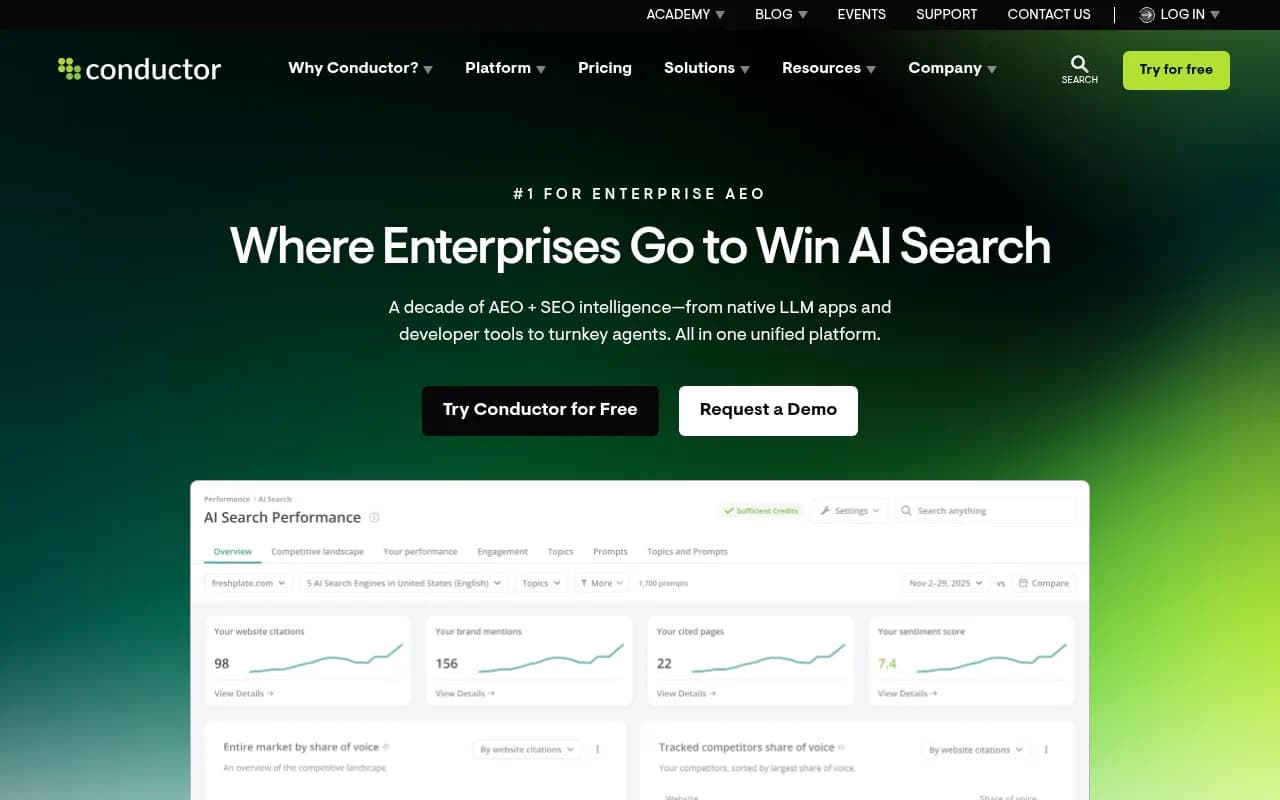
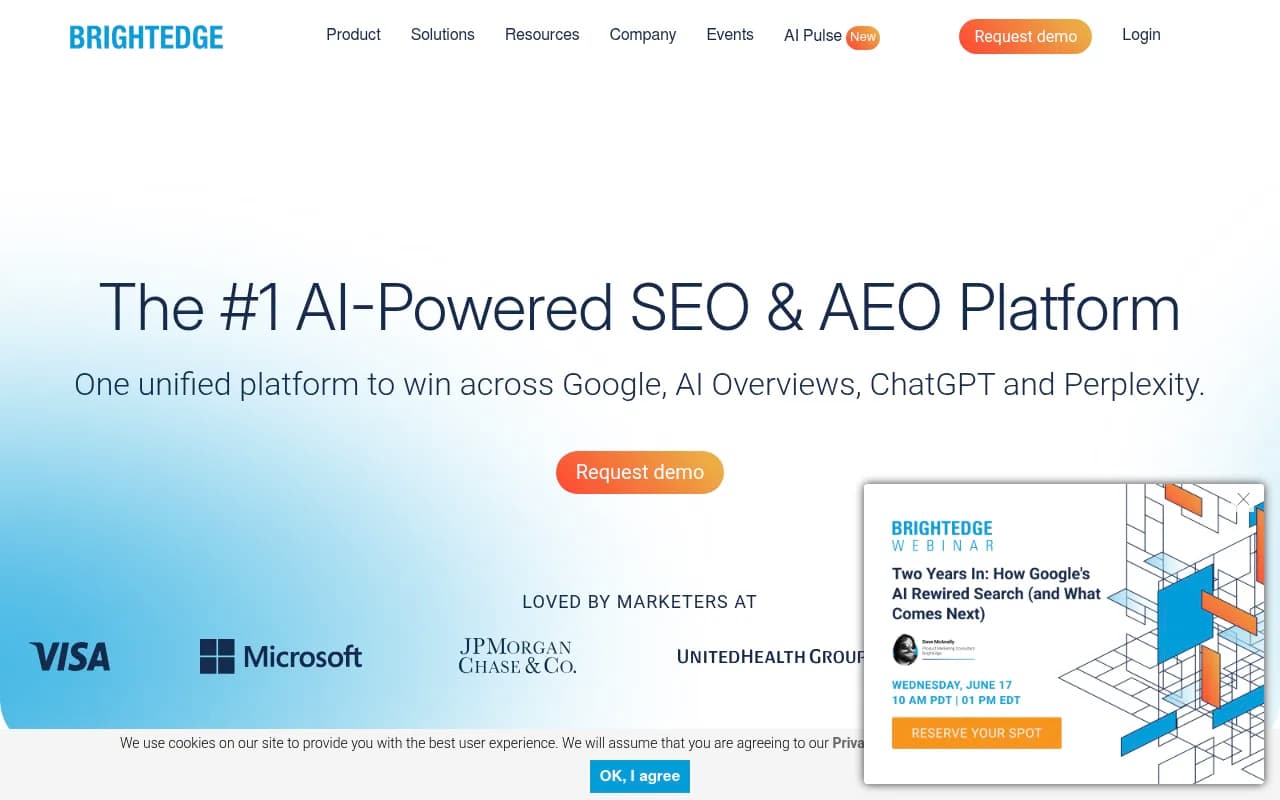
Suite vendors: Semrush, Ahrefs, Conductor, BrightEdge
If you already have a DPA and a security review on file with one of these, adding their AI visibility module is the lowest-friction path for procurement. The tradeoff is depth. AI tracking in a traditional SEO suite is usually shallower than in a dedicated platform.
Self-hosted and open-source options
If your legal team simply will not accept another SaaS processor, Elmo and AI Monitor are open-source trackers you can run yourself. That removes the vendor DPA but moves the burden to you: infrastructure, API keys to model providers (which are themselves processors), and ongoing maintenance. You still send prompts to US engines.

Quick comparison
| Tool type | Examples | Governance fit | Main tradeoff |
|---|---|---|---|
| End-to-end GEO platform | Promptwatch | ISO 27001, EU-based company, audit log, SSO on Enterprise | Still queries US AI engines |
| Monitoring-focused | Peec AI, Otterly.AI | Light footprint, fewer connected data sources | Little on crawler logs or execution |
| Enterprise visibility | Profound, Scrunch, Brandlight | Enterprise security collateral | Higher price, verify EU specifics |
| SEO suites | Semrush, Ahrefs, Conductor, BrightEdge | Existing DPA may cover it | Shallower AI data |
| Self-hosted | Elmo, AI Monitor | You control storage | You carry the ops and model-provider terms |
For a wider scan, the GEO software directory at bestgeosoftware.com lists many more options.
The bot-blocking tradeoff nobody mentions
Here is the part that surprised me when pulling the numbers together. Privacy teams sometimes respond to AI by blocking crawlers wholesale in robots.txt or at the WAF. That is a legitimate choice, but it has a direct visibility cost.
Promptwatch's data on IP-verified AI crawler traffic, covering June 8 to September 6, 2026, shows OpenAI accounted for 79.8% of requests in the week of August 31 to September 6, down from 94.8% in early June. Anthropic, Google, Perplexity, and Mistral make up the rest. You can read the full AI crawler traffic report. Its practical advice is simple: compare your own crawler logs with that mix. A provider that is large in the chart but near zero in your logs suggests you are blocked or unreachable for it.
So decide deliberately. Block training crawlers if your policy requires it, but know which user agents power search and citation. The AI bots directory lists 400+ crawlers with robots.txt guidance, and the AI crawler URL inspector is free.
Your own public pages are part of the answer
There is a flip side that helps you. AI engines cite vendor documentation, and your own trust pages can be cited too. In Promptwatch's data for September 28 to October 4, 2026, product pages made up 22.4% of ChatGPT citations, landing pages 16.8%, and documentation 7.5%, with FAQ pages at 3.3%. See the content type report.
The takeaway for a GDPR-sensitive company: publish a crawlable trust center, with your DPA summary, subprocessor list, hosting regions, and certifications. If those pages are blocked or buried, AI answers will describe you based on whatever third parties say. The same goes for any GEO vendor you evaluate. If you cannot find their subprocessor page in a normal search, that tells you something.
A suggested rollout for a regulated team
- Define scope with your DPO. Decide whether you track only brand and category prompts (low risk) or also connect analytics, Search Console, and server logs (more personal data).
- Send the questionnaire above to a shortlist of three. Ask for the DPA, subprocessor list, and security certificate before any demo.
- Run a trial with only non-personal data. A 7-day trial is usually enough to judge data quality. Use the free AI visibility report first if you want a no-login baseline.
- Connect log and analytics sources second, after sign-off, and scope them down to what the use case needs.
- Set roles and audit. Use viewer roles for most stakeholders and turn on audit logging where available.
- Review quarterly. Subprocessor lists and model providers change quickly in this category.
Where an agency can help
If your team lacks capacity to run the vendor review and the optimization work, an SEO and GEO agency can carry some of it. 1001 SEO Media works with Promptwatch as its AI visibility platform and handles technical SEO, content, and GEO for brands that want senior specialists without long-term contracts. That is relevant only if you want outside help; the evaluation framework above works fine in-house.
Bottom line
There is no regulator-approved list of GDPR-safe GEO tools, and anyone who tells you otherwise is selling something. What you can do is ask better questions. Separate storage from processing. Get the subprocessor list in writing. Prefer vendors with a real certification and an audit trail. Do not let a privacy instinct quietly turn into invisibility in AI answers. For most enterprises, I would shortlist an EU-based end-to-end platform like Promptwatch, one enterprise-focused alternative, and one suite option your procurement team already knows, then let the questionnaire decide.