Key takeaways
- Google AI Overviews now appear on 48% of all queries (up from 31% a year ago), intercepting most B2B buyer research before a single click happens
- Organic CTR drops 34.5-61% when an AI Overview appears, but traffic that comes through AI citations converts at roughly 5x the rate of traditional organic
- 76% of AI Overview citations come from pages already ranking in the top 10, but 46.5% of cited URLs rank outside the top 50 -- meaning you don't need to dominate SEO to get cited
- Content under 3 months old is 3x more likely to be cited, so freshness matters more than most SaaS teams realize
- The playbook comes down to four things: answer-first structure, original data, question-based headings, and consistent authority signals across review platforms and third-party sources
Why this matters more for SaaS than almost any other category
B2B software buyers are researchers by nature. Before they ever book a demo, they've already spent hours asking questions: "What's the best way to reduce churn?", "How does [category] software work?", "What should I look for in a [tool type] platform?"
Those queries used to send them to your blog. Now, a lot of them get answered right there on the search results page -- by Google AI Overviews, which synthesize information from multiple sources and present it as a single, authoritative answer.
Here's the uncomfortable reality: your content might rank on page one and still be completely invisible. If Google's AI is pulling from a competitor's page to answer the question, your ranking is irrelevant. The buyer gets their answer, forms an opinion, and moves on -- without ever seeing your brand.
A Pew Research study tracking 68,000 real search queries found that users clicked on results just 8% of the time when AI summaries appeared, compared to 15% without them. That's a 47% relative drop in click-through rate. For SaaS companies running content programs, that's a serious problem.
But here's the flip side: the brands that do get cited inside AI Overviews see conversion rates around 14.2%, compared to 2.8% for traditional organic traffic. That's roughly a 5x quality premium. The buyers arriving via AI citations are further along in their research, more intent-driven, and more likely to convert.
So the goal isn't just to protect traffic. It's to get into the answer itself -- to be the source Google's AI trusts when your ideal buyer is asking the questions that lead to a purchase decision.
How Google AI Overviews actually decide what to cite
Before optimizing anything, it helps to understand what's actually happening under the hood.
Google AI Overviews don't just pull from the highest-ranking pages. They're looking for pages that best answer the specific question being asked, in a format that's easy to synthesize. A few things drive citation decisions:
Topical authority. Google needs to trust that your site knows what it's talking about in a given category. This is built over time through consistent, in-depth content on related topics -- not one great post.
Answer-first structure. Pages that lead with a direct, clear answer to the query are much easier for AI to cite. If your content buries the answer three paragraphs in, you're competing against pages that don't.
Freshness. Content under 3 months old is 3x more likely to be cited. This doesn't mean you need to rewrite everything constantly, but it does mean that stale content -- even well-written stale content -- is at a disadvantage.
Schema and technical signals. FAQ schema, HowTo schema, and clean heading structures help Google understand what your content is answering and make it easier to extract specific passages.
Third-party authority signals. G2 reviews, Capterra profiles, Reddit mentions, and backlinks from authoritative domains all contribute to how much Google trusts your brand as a source.
One more thing worth knowing: only about 274,455 domains have appeared in AI Overviews out of 18.4 million indexed. That's a small percentage, but it's not a closed club. The barrier is content quality and structure, not domain authority alone.
Step 1: Audit where you actually stand
Most SaaS teams start optimizing before they know what they're optimizing for. That's backwards.
Start by manually searching your core buyer questions in Google and noting whether an AI Overview appears, and if so, who gets cited. Try queries like:
- "best [your category] software for [your ICP]"
- "how to [solve the problem your product solves]"
- "what is [your category] and how does it work"
- "[your category] vs [alternative approach]"
Document which competitors appear in the AI Overviews for each query. Note the format of the cited content -- is it a listicle, a how-to guide, a comparison page? That tells you what Google's AI considers the right format for that type of question.
Then check your own brand: search "[your company name] + [category]" and see whether Google cites you when you're explicitly part of the query. If you're not even getting cited for branded queries, that's a foundational problem to fix first.
Tools like Promptwatch can automate this process at scale, tracking which prompts your competitors are being cited for that you're not -- which is exactly the kind of gap analysis that should drive your content roadmap.

Step 2: Structure your content for AI extraction
This is the single highest-leverage change most SaaS content teams can make. The way you structure a blog post for human readers and the way you structure it for AI citation are different -- and most content is optimized for the former.
Lead with the answer
Every piece of content should answer the primary question in the first 100-150 words. Not tease it. Not build up to it. Answer it.
If someone searches "how does customer success software reduce churn," your page should open with something like: "Customer success software reduces churn by giving teams early warning signals when accounts are at risk, automating health score tracking, and triggering proactive outreach before a customer decides to leave."
That's the kind of passage Google's AI can pull directly into an Overview. A paragraph that starts with "Churn is one of the most pressing challenges facing SaaS companies today..." is not.
Use question-based headings
Descriptive headings that mirror how buyers actually search are far more likely to be cited than clever or brand-voice headings. "What does customer success software actually do?" beats "Unlocking the power of CS platforms."
This feels counterintuitive if you've been trained on traditional content marketing. But AI Overviews are essentially matching questions to answers -- and if your heading is the question, you've made that match trivially easy.
Answer the follow-up questions too
Buyers don't ask one question. They ask a series of them. A page that answers the primary query and the three or four questions that naturally follow it is more likely to be cited across multiple related queries.
Think about the natural progression: "What is [category]?" leads to "How does [category] work?" leads to "What should I look for in [category] software?" leads to "How much does [category] software cost?" Build content that covers the whole arc.
Keep paragraphs short and self-contained
AI systems extract passages, not full articles. A paragraph that makes a complete, standalone point is much easier to cite than one that depends on context from the paragraph before it. Aim for 2-4 sentences per paragraph, with each one carrying its own weight.
Step 3: Add original data and specific numbers
Generic content is everywhere. AI Overviews cite sources that add something the AI can't synthesize from other pages -- and original data is the clearest version of that.
For SaaS companies, this doesn't require a research budget. It can be:
- Aggregated anonymized data from your product (e.g., "customers using our platform see median onboarding time drop from 14 days to 6")
- Survey data from your customer base
- Analysis of publicly available data in your category
- Specific case study metrics ("reduced churn by 23%" is far more citable than "significantly improved retention")
Concrete numbers also do something important for buyer psychology: they signal credibility. A page that says "companies using proactive CS outreach see 15-30% lower churn" is more trustworthy than one that says "proactive outreach can meaningfully reduce churn."
Step 4: Build authority signals across the web
Google's AI doesn't just look at your website. It looks at what the broader web says about you. For SaaS companies, this means a few specific things:
Review platform presence
G2, Capterra, and similar platforms are heavily weighted sources for software-related queries. If your profile is sparse, outdated, or has few reviews, you're missing one of the clearest signals that you're a legitimate player in your category.
Prioritize getting recent reviews that include specific outcomes ("helped us reduce support tickets by 40%") rather than generic praise. AI systems can extract and cite those specific claims.
Reddit and community discussions
Perplexity in particular leans heavily on Reddit discussions. But Google's AI also picks up on community signals. If your product is being discussed in relevant subreddits, Slack communities, or industry forums -- and those discussions are positive and specific -- that contributes to your overall authority.
This isn't something you can manufacture, but you can encourage it. When customers get a win with your product, ask them to share it in the communities where your buyers hang out.
Third-party content and backlinks
Being mentioned in authoritative listicles ("best tools for X"), comparison posts, and industry publications sends strong signals to Google's AI. A backlink from a well-regarded SaaS publication that describes what your product does and who it's for is worth more than dozens of generic links.
Step 5: Go beyond Google AI Overviews
Here's a mistake a lot of SaaS teams make: they optimize exclusively for Google AI Overviews and ignore every other AI search surface.
Your buyers are also using ChatGPT, Perplexity, Claude, and Gemini to research software. Each of these platforms has different citation preferences:
| AI platform | Content preference | Key source types |
|---|---|---|
| Google AI Overviews | Structured, authoritative web content | Your site, G2, YouTube, news |
| ChatGPT | Wikipedia-style authority content | Established publications, your site |
| Perplexity | Recent, well-sourced web content | Reddit, your blog, news |
| Claude | Long-form, nuanced content | In-depth guides, research |
| Gemini | Multi-modal, Google-ecosystem content | YouTube, Google properties |
Optimizing for one and ignoring the others means you're invisible to a significant chunk of your buyers' research process. The content structure principles covered above (answer-first, question headings, specific data) apply across all of them, but you may need to supplement with Reddit presence for Perplexity and YouTube content for Gemini.
Step 6: Fix the technical foundation
Content strategy won't matter much if Google can't properly crawl and understand your pages. A few technical checks that are worth doing:
Indexing. Use Google Search Console to confirm your key pages are indexed. If they're not, no amount of content optimization will help.
Page speed. Slow pages get crawled less frequently, which hurts freshness signals. Core Web Vitals still matter.
Schema markup. FAQ schema and HowTo schema help Google understand the question-answer structure of your content. They're not magic, but they make it easier for AI systems to extract the right passages.
Internal linking. Pages that are well-linked internally signal topical importance. Your most important category and solution pages should be linked from multiple other pages on your site.
What to track and how to know it's working
This is where a lot of SaaS teams fall down. They make content changes but have no systematic way to know whether those changes are leading to more AI citations.
Manual checking is a start -- search your target queries weekly and note whether you appear. But at any meaningful scale, you need tooling.
Platforms like Promptwatch track AI citations across Google AI Overviews, ChatGPT, Perplexity, and other AI search engines, showing you which pages are being cited, how often, and by which models. The answer gap analysis feature shows you specifically which prompts competitors are being cited for that you're not -- which is the most actionable possible starting point for your content roadmap.
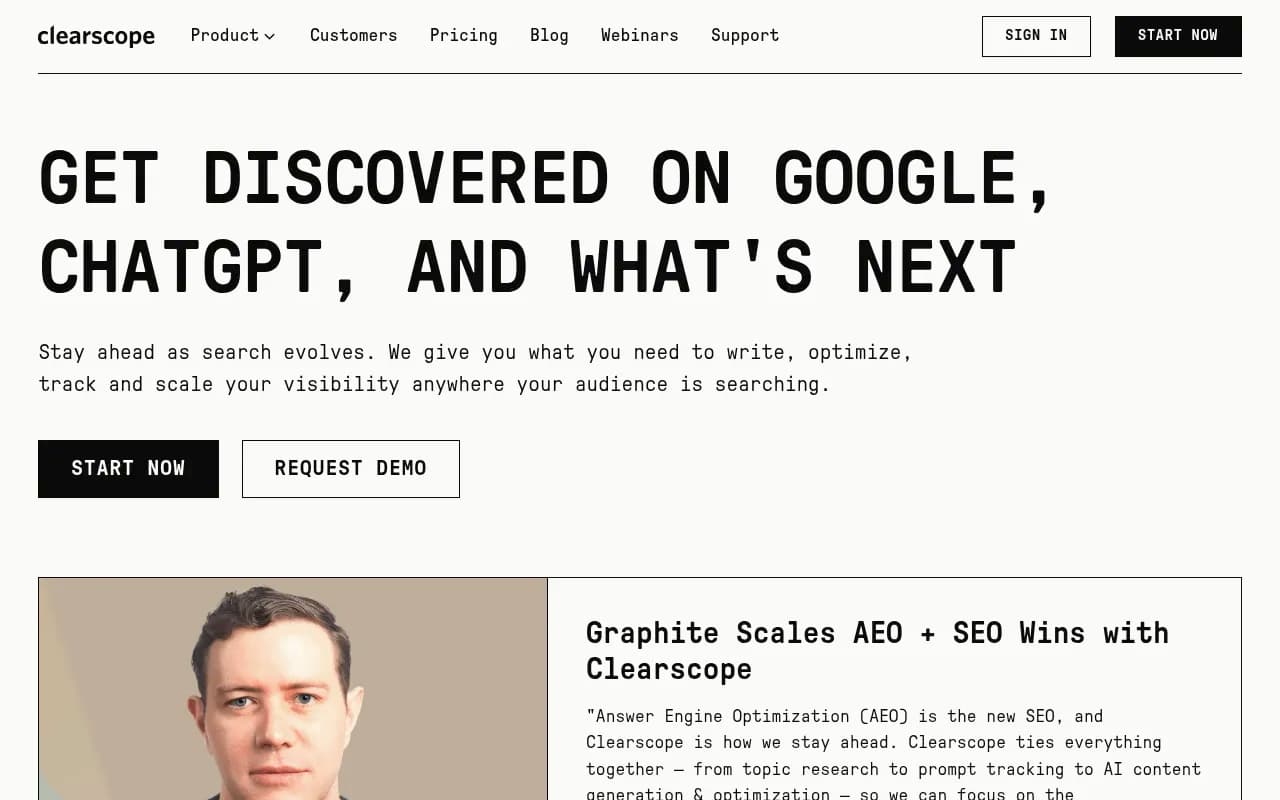
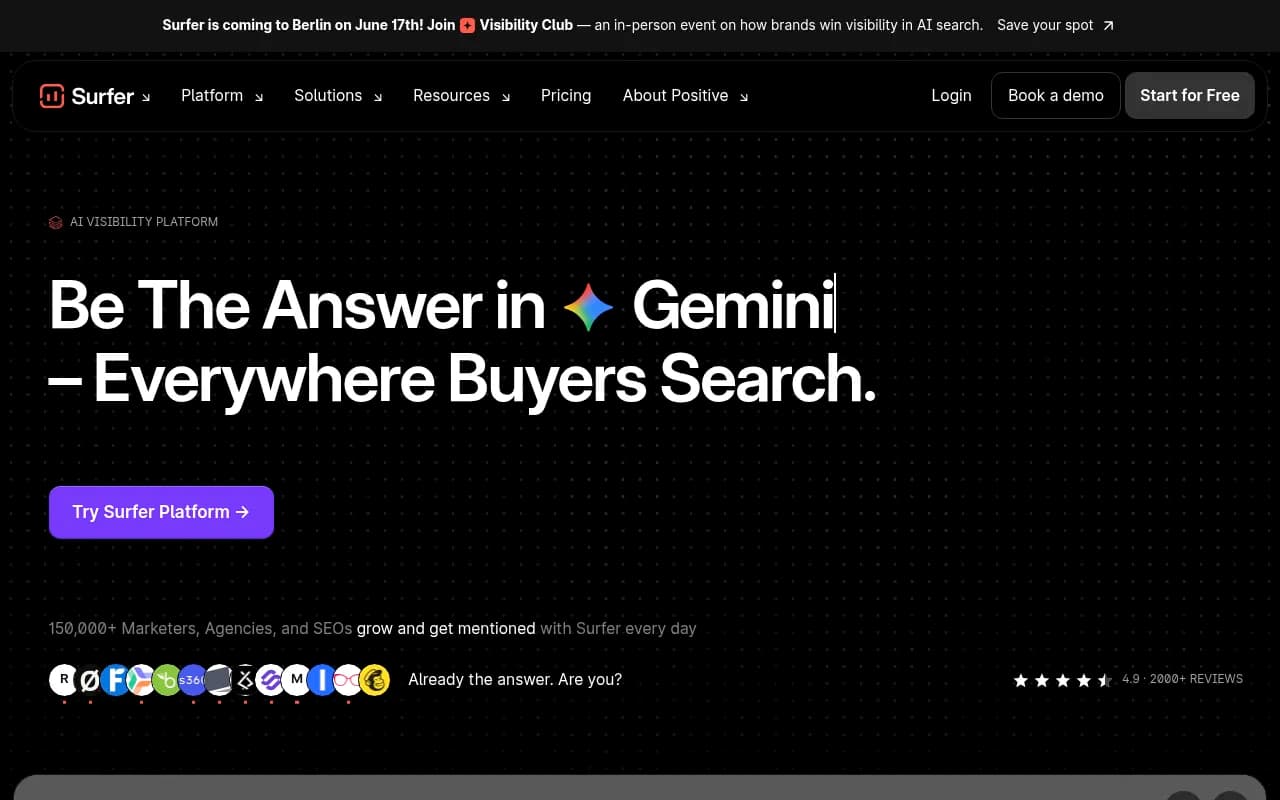
For content creation and optimization, tools like Clearscope and Surfer SEO help you build content that covers topics comprehensively enough to be considered authoritative.
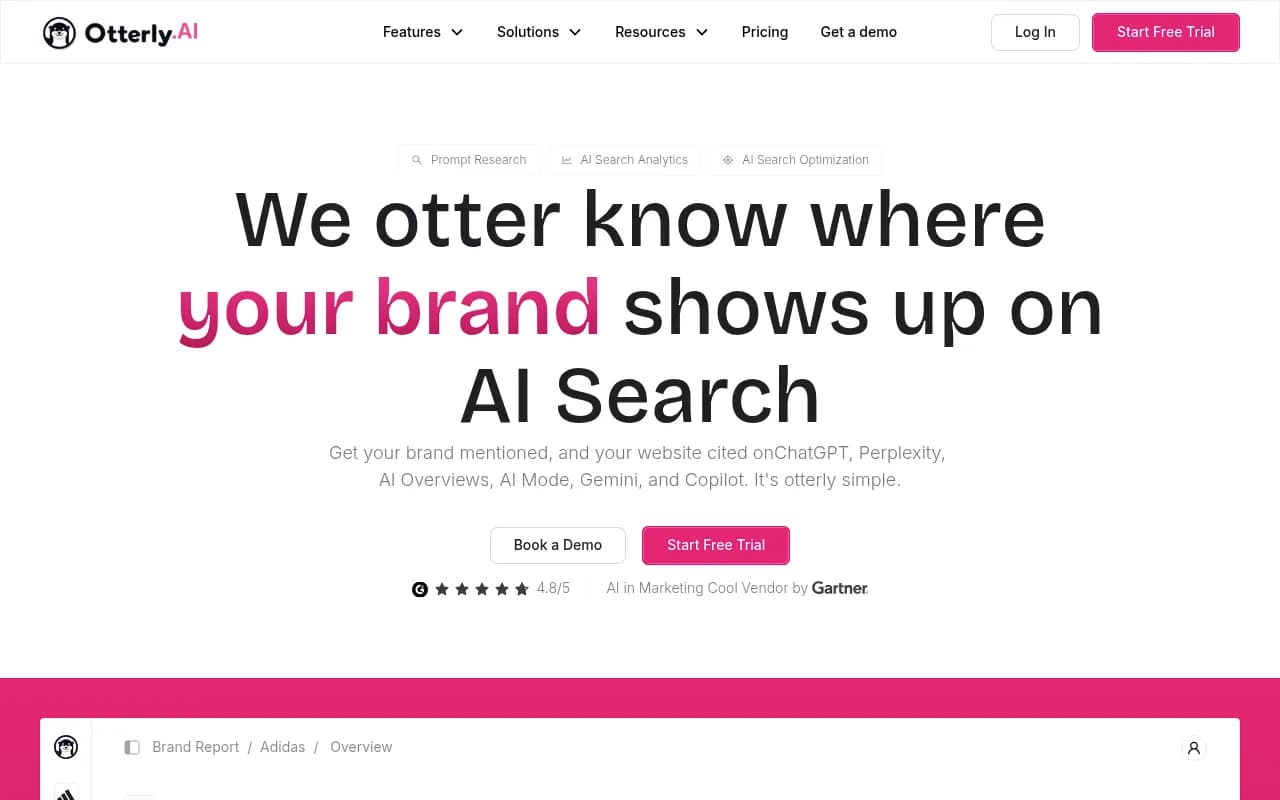
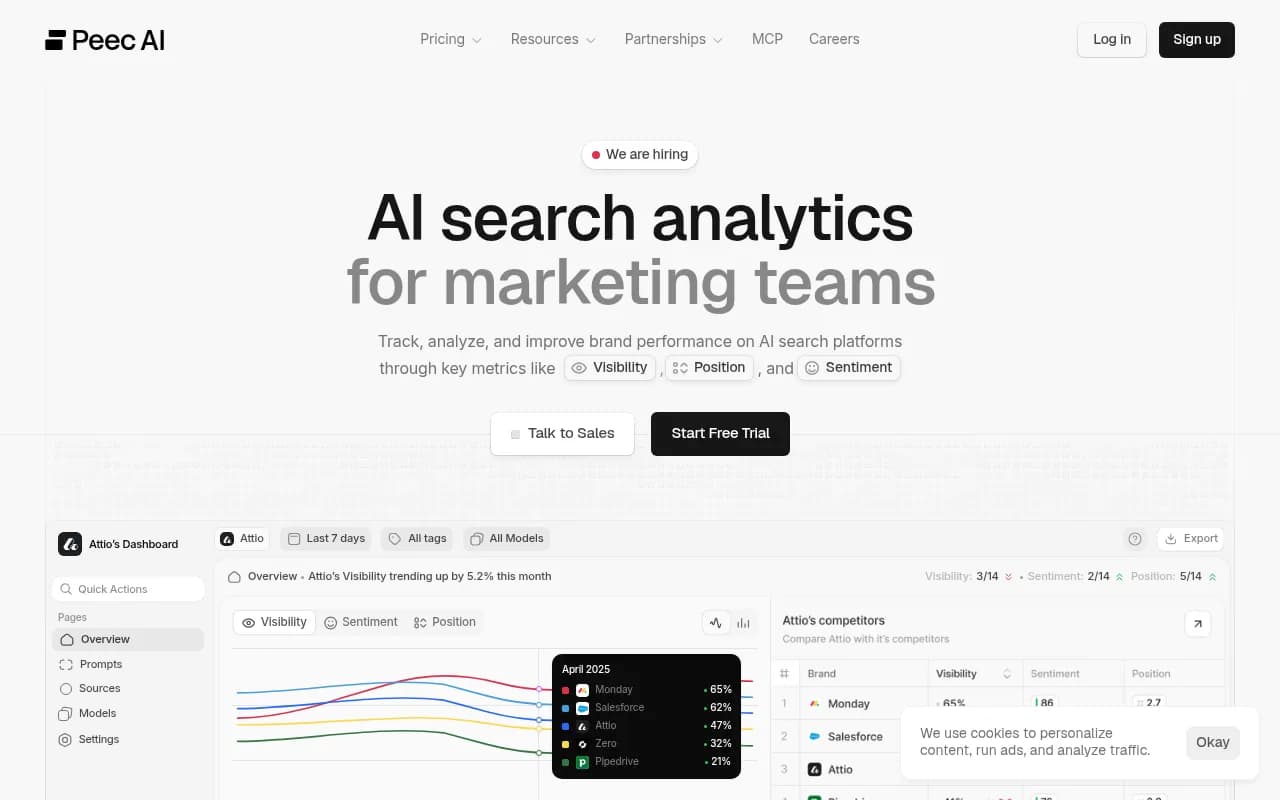
For tracking your brand mentions across AI platforms at a lighter touch, Otterly.AI and Peec AI offer more accessible entry points.
A realistic timeline
Getting cited in AI Overviews isn't instant. Here's roughly what to expect:
- Weeks 1-2: Audit your current visibility, identify the top 10-15 buyer queries you want to target, and do a content gap analysis
- Weeks 3-6: Restructure existing content to be answer-first, add question-based headings, and update stale pages with fresh data
- Weeks 7-12: Publish new content targeting gaps, build out review platform profiles, and start tracking citations systematically
- Months 3-6: See measurable improvement in citation frequency as Google's AI starts treating your domain as a reliable source for your category
The freshness factor means that new and updated content can start getting cited within weeks of publication. But building the kind of topical authority that gets you cited consistently across a broad range of buyer queries takes longer -- typically 3-6 months of sustained effort.
The competitive reality
Right now, most SaaS companies are still optimizing for traditional SEO while their buyers' research behavior has already shifted. The gap between where buyers are doing their research and where most SaaS teams are investing is real -- and it's closing fast.
The companies that figure this out first will have a meaningful advantage: they'll be the brand that shows up in the answer when a prospect asks "what's the best way to solve [problem]?" -- before that prospect has ever heard of them, before they've visited a comparison site, before they've talked to a sales rep.
That's what getting cited in AI Overviews actually means for SaaS. It's not a traffic play. It's a brand awareness play that happens at the exact moment a buyer is forming their consideration set.