Key takeaways
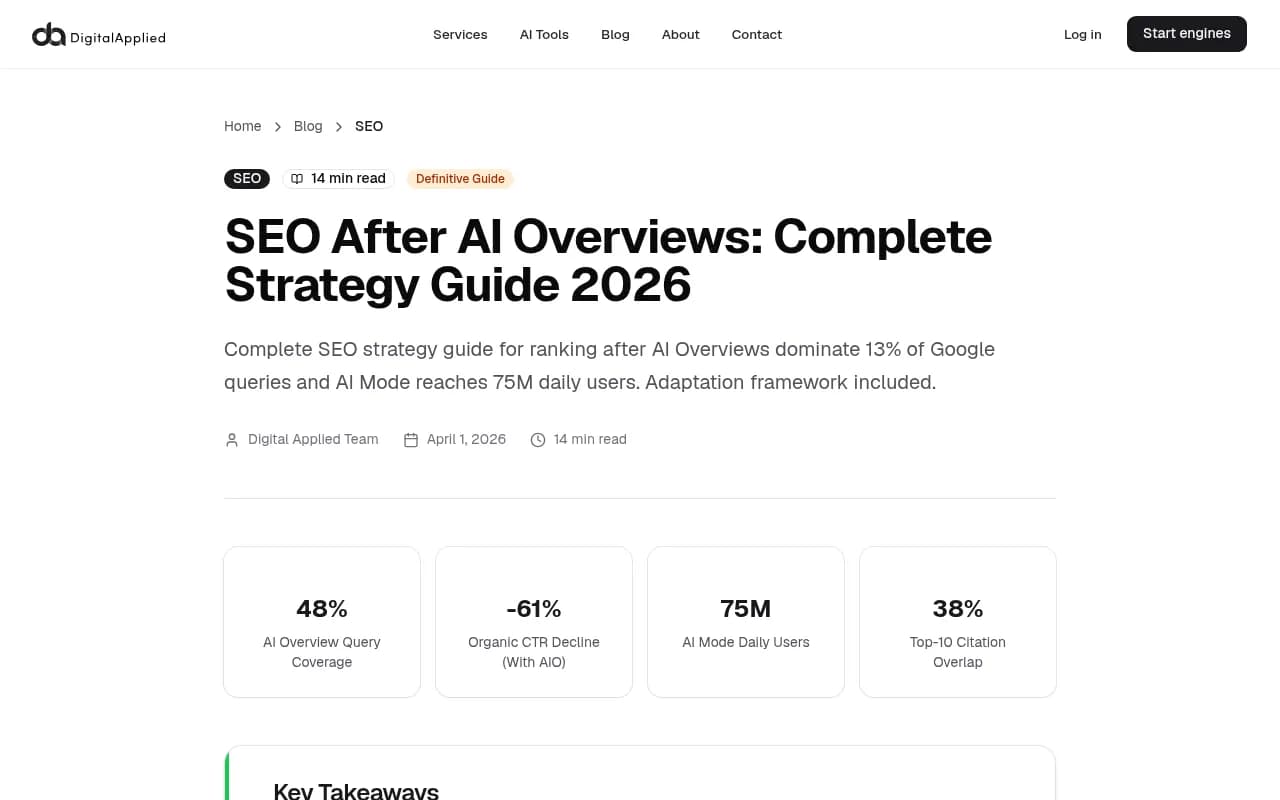
- Google AI Overviews now appear in roughly 48% of all searches, but only 38% of cited pages also rank in the top 10 organic results -- citation and ranking have largely decoupled.
- Bing Copilot operates on a different retrieval model, leaning more heavily on conversational context, recency, and structured data signals than Google's authority-first approach.
- The two systems reward different content structures: Google favors depth and topical authority; Bing Copilot responds better to direct answers, FAQ formatting, and freshness.
- You can optimize for both simultaneously, but only if you understand where their ranking signals overlap and where they diverge.
- Tracking which AI engine is actually citing you -- and for which prompts -- is the only way to know if your strategy is working.
Why these two systems are not the same thing
There's a tempting shortcut in the current AI search conversation: treat Google AI Overviews and Bing Copilot as basically the same problem. Both are AI-generated answers. Both cite sources. Both reduce clicks. So just "optimize for AI search" and you're done, right?
Not quite. The two systems were built on different architectures, trained with different objectives, and integrated into search experiences with different user behaviors in mind. What gets you cited in Google AI Overviews can actively work against you in Bing Copilot, and vice versa -- at least at the margins where the real competition happens.
This guide breaks down exactly how each system works, what signals each one rewards, and how to build a content strategy that wins citations from both without compromising either.
How Google AI Overviews actually select sources
Google AI Overviews are generated by Gemini, but they're grounded in Google's existing index and ranking infrastructure. That's the key detail most optimization guides gloss over.
When a query triggers an AI Overview, Google doesn't just send the question to Gemini and let it hallucinate an answer. It retrieves a set of candidate documents from its index, feeds them to the model as context, and generates a summary that cites those documents. The selection of candidate documents relies heavily on signals Google already uses for organic ranking: PageRank, E-E-A-T signals, topical authority, and freshness.
This is why, as of early 2026, 38% of pages cited in AI Overviews also rank in the top 10 organic results. That number sounds low -- and it is lower than it used to be (it was around 76% just seven months prior, according to Ahrefs data) -- but it still means there's meaningful overlap. Ranking well organically still helps your chances of being cited. It's just no longer sufficient on its own.
What Google AI Overviews reward
A few signals stand out from the available research:
Content depth. Pages above 20,000 characters average around 10 AI Overview citations each. Pages under 500 characters average 2.4. This isn't a coincidence -- Google's retrieval system favors comprehensive documents that cover a topic from multiple angles, because they're more likely to contain the specific passage the model needs to answer a given query.
Topical authority over individual pages. Google evaluates your site's overall coverage of a topic, not just the quality of a single page. A site with 30 well-linked articles on a subject is more likely to get cited than a site with one excellent article, even if that one article is technically better.
Structured, skimmable formatting. AI Overviews pull specific passages, not entire pages. Content organized with clear H2/H3 headings, numbered lists, and short answer-first paragraphs gives the model cleaner extraction targets. Think of each section as a potential citation unit.
E-E-A-T signals. Author credentials, first-hand experience, original research, and citations to primary sources all matter. Google is trying to avoid surfacing misinformation in AI Overviews, so it leans toward content that demonstrates genuine expertise.
Freshness for time-sensitive topics. Pages not updated quarterly are reportedly 3x more likely to lose AI citations on queries where recency matters. This is especially true for anything involving statistics, product recommendations, or evolving topics.
How Bing Copilot selects its sources
Bing Copilot is built on OpenAI's models (primarily GPT-4 class) with Bing's search index as its retrieval layer. The architecture is similar to Google's in broad strokes -- retrieve, then generate -- but the weighting of signals is meaningfully different.
Bing has historically been more willing than Google to surface newer, less-authoritative sources if they directly answer the query. This reflects both a different training approach and a different competitive position: Bing is trying to win users who are frustrated with Google's results, so it has an incentive to surface fresher, more direct answers.
What Bing Copilot rewards
Direct, conversational answers. Bing Copilot is optimized for conversational queries. Content that opens with a clear, direct answer to the question -- before adding nuance or context -- performs better than content that buries the answer in background information.
FAQ and Q&A structure. Bing's retrieval system responds well to FAQ-formatted content. If your page explicitly frames questions the way users ask them and answers them immediately below, you're giving the model exactly what it needs.
Recency and update frequency. Bing weights freshness more aggressively than Google for most query types. A well-structured article published last month can outcompete a more authoritative piece from two years ago.
Structured data markup. Bing has been more explicit than Google about the value of schema markup (FAQ schema, HowTo schema, Article schema) for AI citation selection. This is one area where the technical SEO investment has a clearer, more direct payoff on Bing.
Bing Webmaster Tools integration. Unlike Google, Bing gives you a direct channel to signal content quality and freshness through Bing Webmaster Tools. Submitting updated sitemaps and using the IndexNow protocol (which Bing co-developed) can meaningfully accelerate how quickly new content gets picked up.
Side-by-side comparison
| Signal | Google AI Overviews | Bing Copilot |
|---|---|---|
| Primary model | Gemini (Google) | GPT-4 class (OpenAI) |
| Retrieval basis | Google index + PageRank signals | Bing index + freshness weighting |
| Content depth | Strong positive signal (20k+ chars) | Moderate -- depth helps but direct answers matter more |
| Topical authority | High weight | Moderate weight |
| Freshness | Important for time-sensitive queries | High weight across most query types |
| FAQ/Q&A structure | Helpful | Very helpful |
| Schema markup | Moderate signal | Stronger direct signal |
| E-E-A-T | High weight | Moderate weight |
| Organic rank correlation | 38% citation overlap with top 10 | Lower correlation -- newer sites can compete faster |
| Conversational formatting | Helpful | Critical |
| IndexNow / Webmaster Tools | Not applicable | Direct benefit |
Where the strategies overlap
Despite the differences, there's a solid core of tactics that improve your chances on both platforms simultaneously.
Answer-first writing. Both systems extract passages from your content. If your answer to the core question is buried in paragraph four, neither system will surface it reliably. Lead with the answer, then support it.
Clear heading structure. Both systems use headings as navigation signals to identify what a section is about before reading it. H2 and H3 headings that mirror how users phrase questions ("How does X work?" not "Overview of X") improve extraction accuracy on both platforms.
Regular content updates. Freshness matters on both platforms, just more aggressively on Bing. Quarterly reviews of your most important pages -- updating statistics, adding new examples, refreshing internal links -- is a reasonable baseline for both.
Authoritative sourcing. Citing primary research, linking to original data, and including author credentials helps on both platforms. Google weights it more heavily, but Bing isn't indifferent to it.
Page speed and technical health. Both AI systems rely on their respective crawlers to access your content. Slow pages, crawl errors, and blocked resources hurt your chances of being cited regardless of which platform you're targeting.
Where the strategies diverge
This is where most guides stop short. The overlap is real, but the divergence is where you make real gains.
For Google AI Overviews: go deep and build clusters
Google's system rewards sites that own a topic, not just pages that answer a question. If you want to be cited consistently in AI Overviews for a subject area, you need a cluster of interconnected content that covers the topic from multiple angles.
A single 3,000-word article won't do it. You need a pillar page, supporting articles on related subtopics, and internal links that signal the relationship between them. The depth signal (20,000+ characters per page) is real, but it works best when it's part of a broader topical architecture.
For Google specifically, E-E-A-T investment pays off. That means author bios with verifiable credentials, first-hand experience signals in the content itself, original data or research, and links from authoritative external sources.
For Bing Copilot: optimize for the conversation
Bing Copilot users tend to ask longer, more conversational queries than Google users. Your content should mirror that. Write FAQ sections that use the exact phrasing a person would use in a chat interface. Use second-person voice ("you can do this by...") rather than passive constructions.
Schema markup is worth the investment specifically for Bing. FAQ schema and HowTo schema give Bing's retrieval system explicit signals about the structure of your content that it doesn't have to infer from formatting alone.
Submit your sitemap to Bing Webmaster Tools and enable IndexNow if you're not already. For Bing, this isn't optional housekeeping -- it's a direct citation signal.
The click problem: what it means for your strategy
Both platforms reduce organic clicks, but they do it differently. Google AI Overviews appear in 48% of searches and reportedly cut organic CTR by 34.5% to 38% on affected queries. Bing Copilot has a smaller base of users but a similarly high session-end rate -- most Copilot sessions don't result in a click to any external site.
The counterintuitive finding from the research is that visitors who do click through from AI-generated answers convert at dramatically higher rates. One estimate puts it at 23x the conversion rate of standard search visitors. The reasoning makes sense: if someone clicks through after reading an AI summary, they're not browsing -- they're ready to act.
This changes how you should think about citation strategy. Getting cited isn't just about traffic volume. It's about being present at the moment a user decides to go deeper. Your cited pages should be optimized for conversion, not just for citation -- clear calls to action, fast load times, and content that delivers on the promise of the AI summary that sent them there.
Tracking what's actually working
The biggest mistake teams make with AI citation optimization is treating it as a set-and-forget content project. You publish, you wait, you hope. That's not a strategy.
The only way to know if your content is being cited -- and by which platform, for which queries -- is to track it systematically. That means monitoring your brand and key topics across both Google AI Overviews and Bing Copilot, not just checking organic rankings.
Promptwatch is built specifically for this: it tracks citations across 10 AI models including Google AI Overviews and Bing Copilot, shows you which pages are being cited and how often, and flags when you're losing ground to competitors on specific prompts. The answer gap analysis is particularly useful here -- it shows you the exact prompts where competitors are getting cited and you're not, which is a much more actionable starting point than guessing what to write next.
For teams that want to track citation trends at the enterprise level, BrightEdge has solid AI search intelligence built into its platform.
If you're looking for something more focused on content optimization to support citation, Clearscope and Frase both help you build the kind of comprehensive, well-structured content that performs well in AI retrieval systems.
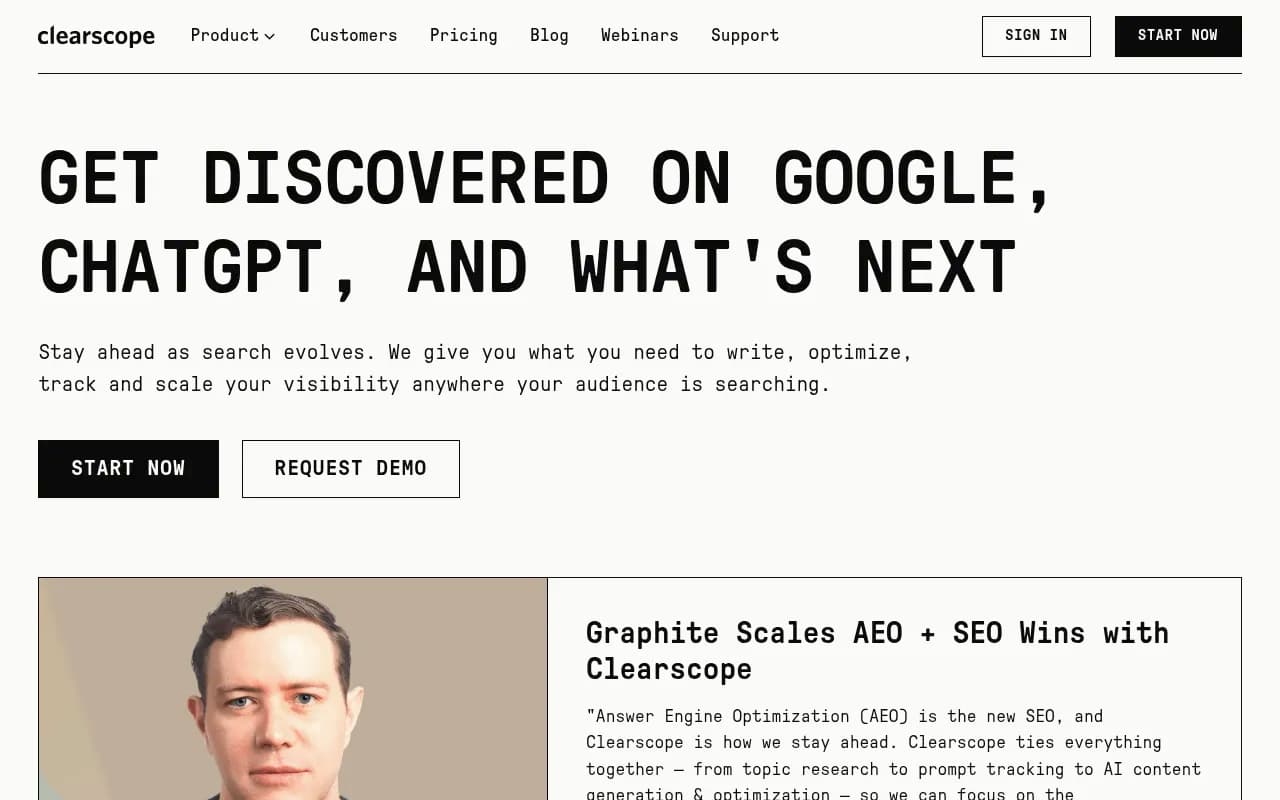
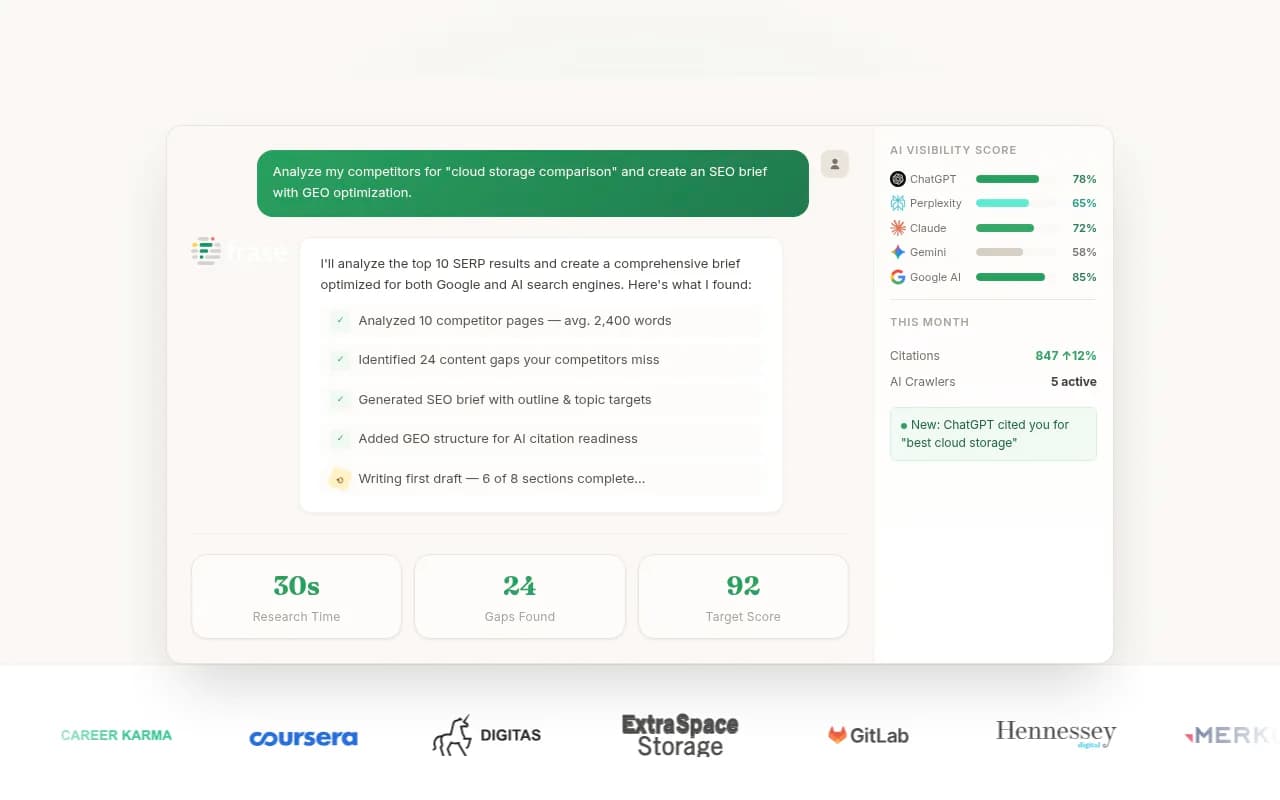
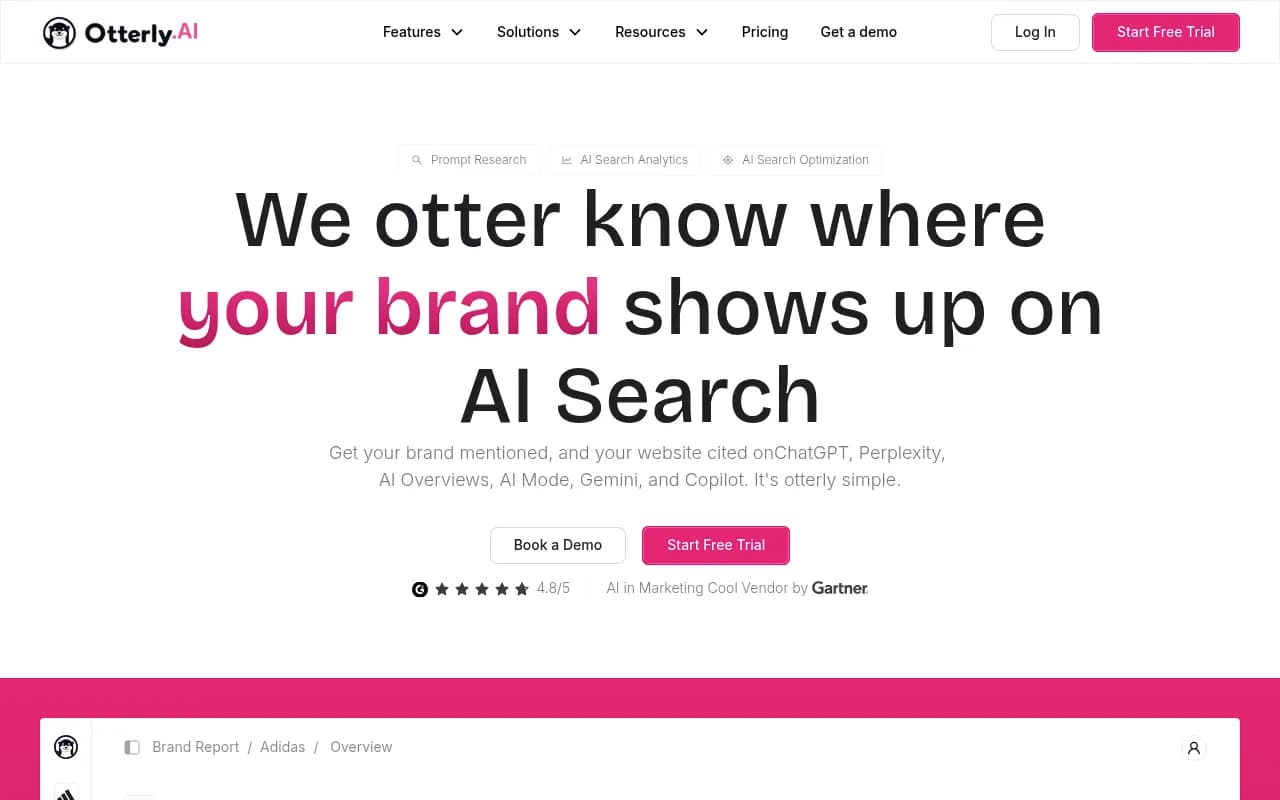
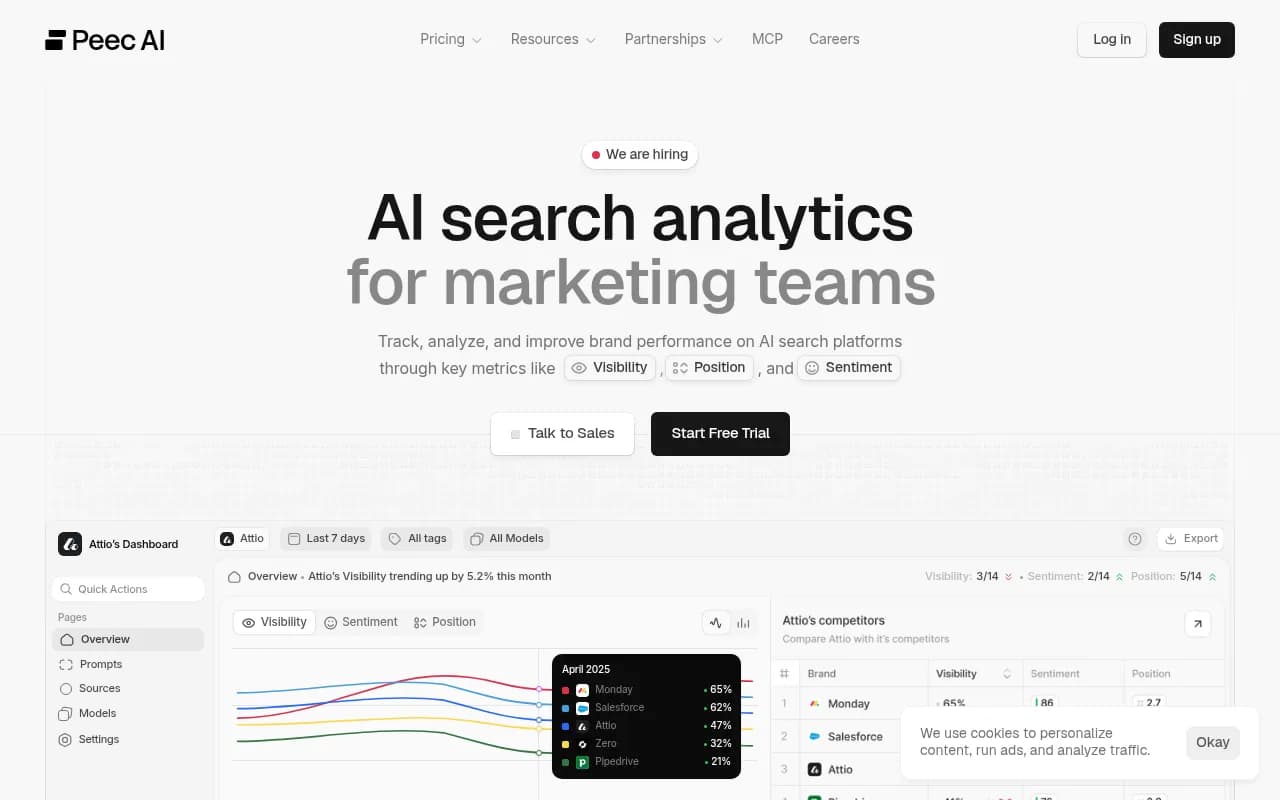
For tracking AI visibility across both platforms without enterprise pricing, Otterly.AI and Peec AI are reasonable starting points, though they're monitoring-only tools -- they'll show you where you stand but won't help you close the gaps.
A practical content audit framework
If you're starting from scratch or reassessing your current approach, here's a reasonable sequence:
-
Identify your target prompts. What questions are your potential customers asking AI search engines? These aren't always the same as your target keywords. Use tools that track actual AI prompts, not just search volume estimates.
-
Check your current citation status. Are you being cited in Google AI Overviews for those prompts? In Bing Copilot? Where are competitors appearing that you're not?
-
Audit your content depth. For your most important topics, do you have enough content coverage? A single page rarely wins consistent citations. Map your existing content against the topic and identify gaps.
-
Restructure for extraction. Go through your existing pages and make sure each section has a clear heading, leads with the answer, and uses formatting that AI systems can parse cleanly. This is often faster than writing new content.
-
Add schema markup for Bing. FAQ schema and HowTo schema on your most important pages. This is a one-time technical investment with ongoing payoff.
-
Set a refresh cadence. Quarterly updates for your most-cited pages. Monthly for anything in a fast-moving topic area. Update statistics, add new examples, and re-submit to Bing via IndexNow.
-
Track and iterate. Monitor your citation rates on both platforms. When you gain or lose citations, understand why. Adjust.
The bottom line
Google AI Overviews and Bing Copilot are not the same system wearing different hats. Google rewards depth, topical authority, and E-E-A-T. Bing rewards directness, freshness, and structured formatting. The overlap is real and worth building on, but the differences are where you can pull ahead of competitors who treat "AI search optimization" as a single undifferentiated task.
The teams winning citations in 2026 aren't the ones who wrote the most content. They're the ones who understood which signals each system responds to, built content that satisfies both where possible, and tracked their results closely enough to know when something stopped working.
That last part -- the tracking -- is what most teams skip. Don't skip it.