Key takeaways
- ChatGPT doesn't rank pages -- it cites brands it trusts. Getting cited requires building consistent, accurate mentions across the sources AI models draw from, not just optimizing a blog post.
- ChatGPT pulls answers from two places: its pre-trained knowledge and live Bing-powered search. Your strategy needs to address both layers.
- According to Ahrefs research from August 2025, 80% of pages ChatGPT cites don't rank in Google's top 100 for the same query. Traditional SEO rankings and ChatGPT citation share are genuinely different games.
- Bing indexing is the most overlooked prerequisite. If Bing can't see your pages, ChatGPT's real-time search mode can't either.
- Visitors arriving from LLMs convert at 4.4x the rate of organic search visitors (Semrush, July 2025) -- because the AI has already done the qualification work.
- The highest-leverage activities: earn mentions on sources LLMs trust (G2, Capterra, Reddit, industry publications), and structure every page so AI can extract a clear answer from it.
Your next B2B buyer isn't opening Google. They're typing a full question into ChatGPT: "What's the best project management tool for a remote engineering team?" or "Which CRM do mid-market SaaS companies actually use?"
Whatever brand appears in that answer shapes the shortlist before a single website is visited, before a sales email lands, before a demo is booked. ChatGPT now has over 800 million weekly active users according to OpenAI, and a meaningful share of those users are your buyers. The problem is that most B2B software teams have no idea whether they're showing up in those answers -- let alone how to influence what gets said.
One agency tracked their own AI traffic and found ChatGPT drove 72% of their AI-referred visitors, yet it was their weakest engine on visibility. After rebuilding their ChatGPT approach, their share of AI answers went from 0.18% to 10.35% in a single quarter. That kind of movement is real, and it's repeatable. Here's how it works.
How ChatGPT actually sources its answers
Most "ChatGPT SEO" advice skips this part, which is why most of it doesn't work.
ChatGPT answers from two distinct places. The first is its pre-trained knowledge -- the model's baked-in understanding of the world, which only updates when a new model ships. The second is live retrieval, where ChatGPT searches the web in real time for current questions and cites what it pulls. That live search draws heavily on Bing's index plus OpenAI's own crawler (OAI-SearchBot and GPTBot).
So winning ChatGPT is two jobs at once. You make yourself retrievable right now through Bing and structured content. And you build the kind of broad, consistent web presence that eventually settles into the model's training data. Most teams focus on one and ignore the other.
There's another implication worth sitting with: ChatGPT doesn't rank pages the way Google does. It doesn't show ten blue links. It writes an answer and names a few brands inside it. The entire game is becoming one of those named brands. That means the question isn't "how do I rank number one" -- it's "when a buyer asks ChatGPT for the best tool in my category, does my name appear in the answer?"
Step 1: Get into Bing's index first
This is the most overlooked prerequisite in the entire playbook. Most B2B software teams obsess over Google and never check Bing. But ChatGPT's live search draws heavily on Bing, so if Bing can't see your pages, ChatGPT often can't either -- regardless of how strong your content is.
Go to Bing Webmaster Tools, submit your sitemap, and verify your key pages are indexed. Check for crawl errors specific to Bing. This takes an afternoon and it's genuinely foundational.
While you're there, make sure OAI-SearchBot and GPTBot are not blocked in your robots.txt. It sounds obvious, but a surprising number of B2B SaaS sites block these crawlers either intentionally (misguided AI-content fear) or accidentally through overly broad disallow rules. If ChatGPT's crawler can't read your pages, you're invisible.
Step 2: Build authority on the sources LLMs trust
ChatGPT doesn't cite your website because you asked nicely. It cites sources it has high confidence in -- and that confidence is built by seeing your brand mentioned consistently across trusted third-party sources.
For B2B software, the highest-trust sources are:
- Review platforms: G2, Capterra, TrustRadius, GetApp. These are heavily cited by LLMs. If you're not actively managing your presence here, you're leaving citations on the table. Get recent reviews, respond to them, and make sure your category tags are accurate.
- Industry publications: TechCrunch, VentureBeat, Product Hunt, niche vertical publications in your space. A single mention in a credible outlet carries more weight than ten blog posts on your own domain.
- Reddit: This one surprises people. LLMs cite Reddit threads frequently, especially for "what does X actually use" and "best tool for Y" questions. If your brand is mentioned positively in relevant subreddits (r/SaaS, r/entrepreneur, category-specific subs), that feeds directly into model training and live retrieval.
- Comparison and listicle content: "Best [category] tools" articles on third-party sites. These are citation gold. Reach out to authors of existing listicles in your category and make the case for inclusion. When you're listed on five credible sites that say "Tool X is one of the best options for Y use case," ChatGPT notices.
The underlying principle: ChatGPT's confidence in your brand is proportional to how many credible, independent sources describe you accurately and consistently. One well-optimized page on your own site doesn't move this needle much. Twenty consistent mentions across trusted sources does.
Step 3: Structure your pages for AI extraction
ChatGPT needs to be able to extract a clear, confident answer from your content. Most B2B SaaS pages are written for humans browsing with context -- they assume the reader knows what the product does, who it's for, and why it matters. AI models don't have that context unless you give it to them explicitly.
Practical changes that make a real difference:
Lead with a direct answer. The first paragraph of any page should answer the most likely question a buyer would ask about it. If it's your pricing page, the first sentence should state what the product costs and who it's for. If it's a feature page, the first sentence should state what the feature does and what problem it solves. Don't bury the answer in paragraph four.
Use comparison tables. ChatGPT loves structured data. A table comparing your product to alternatives -- even if you're the obvious winner -- gives the model something concrete to extract and cite. Tables with clear headers, accurate competitor names, and honest feature comparisons are citation-friendly by design.
Add FAQ blocks. Questions and answers are the native format of AI responses. A FAQ section at the bottom of key pages, with questions written the way buyers actually ask them, dramatically improves your chances of being cited for those queries.
Name your entities explicitly. Don't assume the model knows your category, your competitors, your use cases, or your integrations. State them. "Tool X is a [category] platform used by [buyer type] to [outcome]. It integrates with [named tools] and competes with [named alternatives]." This kind of explicit entity definition helps the model place you correctly in its understanding of the space.
Step 4: Target the prompts buyers actually use
Traditional keyword research finds search terms. ChatGPT optimization requires finding the full-sentence prompts buyers type into AI interfaces -- and these are different. A Google user types "project management SaaS." A ChatGPT user asks "what's the best project management tool for a 20-person engineering team that already uses Jira?"
The specificity is the point. ChatGPT answers are more useful when they're specific, so buyers ask specific questions. Your content needs to match that specificity.
Map out the prompts your buyers are likely using at each stage of their decision:
- Awareness: "What are the best tools for [problem]?"
- Consideration: "How does [your category] work?"
- Decision: "What's the difference between [you] and [competitor]?"
- Validation: "What do users say about [your product]?"
Then check whether your brand appears in ChatGPT's answers to those prompts. If it doesn't, you have a gap. If a competitor does, you have a target.
Tools like Promptwatch are built specifically for this -- tracking which prompts your brand appears in across ChatGPT and other AI engines, and surfacing the gaps where competitors are visible but you're not.
Step 5: Create content that answers the gaps
Once you know which prompts you're missing, you need content that fills them. This is where the playbook gets concrete.
The content types that get cited most often in B2B ChatGPT answers:
Comparison pages. "X vs Y" and "Best alternatives to X" pages are extremely high-value. Buyers ask ChatGPT these questions constantly, and the model cites pages that answer them directly. Write honest, detailed comparison pages -- including comparisons where you're not the obvious winner. The model rewards accuracy.
Use-case specific pages. "Best [tool category] for [specific buyer type]" pages match the specificity of how buyers prompt. A page titled "Best CRM for real estate investors" will get cited for that exact prompt far more reliably than a generic "CRM features" page.
Definitional content. "What is [category]" and "How does [process] work" pages establish your brand as an authority in the space. When ChatGPT explains a concept to a buyer, it often cites the brand that explained it most clearly.
Data and research. Original data is citation gold. If you publish a study, survey, or benchmark report with specific numbers, LLMs cite it because they can extract a concrete fact. "According to [your company]'s 2026 benchmark, X% of B2B teams do Y" is exactly the kind of sentence ChatGPT wants to include in an answer.
Step 6: Build consistent brand signals across the web
This is the long game, and it's the one most teams underinvest in because it doesn't have an obvious "publish and done" moment.
ChatGPT's pre-trained knowledge is built from the web as it existed during training. The more consistently and accurately your brand is described across the open web, the more confidently the model can represent you in its answers. Inconsistency is the enemy: if some sources say you're a "project management tool," others say you're a "work OS," and others say you're a "task tracker," the model gets confused about what you actually are.
Pick a category definition and use it everywhere. Your website, your G2 profile, your Capterra listing, your LinkedIn description, your press releases, your partner pages. Consistent entity definition across sources is how you build model confidence.
Guest posts, podcast appearances, and co-marketing content with complementary tools all contribute here. Every credible external mention that describes you accurately is a vote of confidence the model can draw on.
Step 7: Track your AI visibility and iterate
You can't optimize what you can't measure. The challenge is that AI search visibility isn't tracked by Google Analytics -- a ChatGPT user who clicks through to your site often shows up as direct traffic or gets misattributed entirely.
You need dedicated AI visibility tracking to know:
- Which prompts your brand appears in (and which it doesn't)
- Which AI models are citing you (ChatGPT, Perplexity, Claude, Gemini)
- Which pages on your site are being cited, and how often
- Whether your visibility is improving after publishing new content
- What competitors are being cited for that you're not
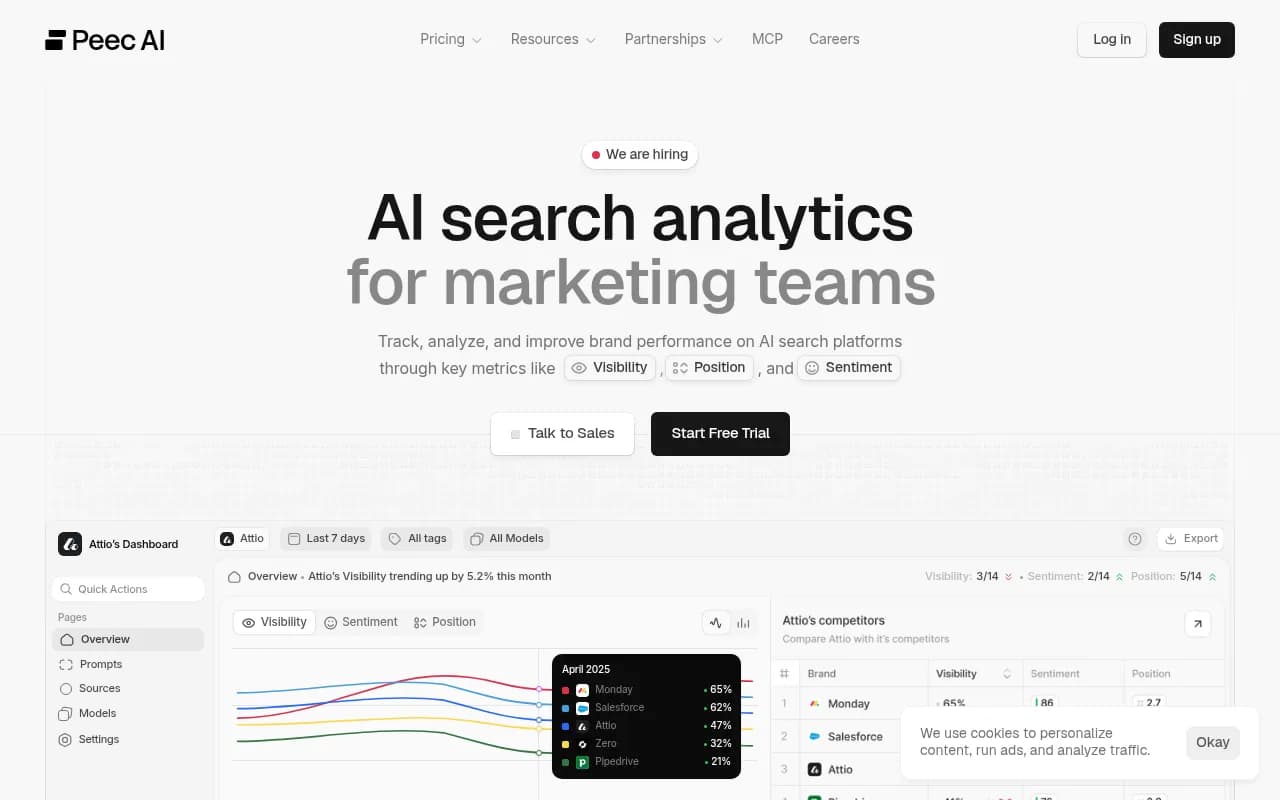
Several tools have emerged to address this. Here's a quick comparison of the main options for B2B software teams:
| Tool | Prompt tracking | Content gap analysis | Crawler logs | ChatGPT shopping | Best for |
|---|---|---|---|---|---|
| Promptwatch | Yes | Yes | Yes | Yes | Full-cycle optimization |
| Peec AI | Yes | Limited | No | No | Monitoring |
| Otterly.AI | Yes | No | No | No | Budget monitoring |
| AthenaHQ | Yes | No | No | No | Enterprise monitoring |
| Profound | Yes | Limited | No | No | Enterprise analytics |
| Rankscale | Yes | No | No | No | Rank tracking |
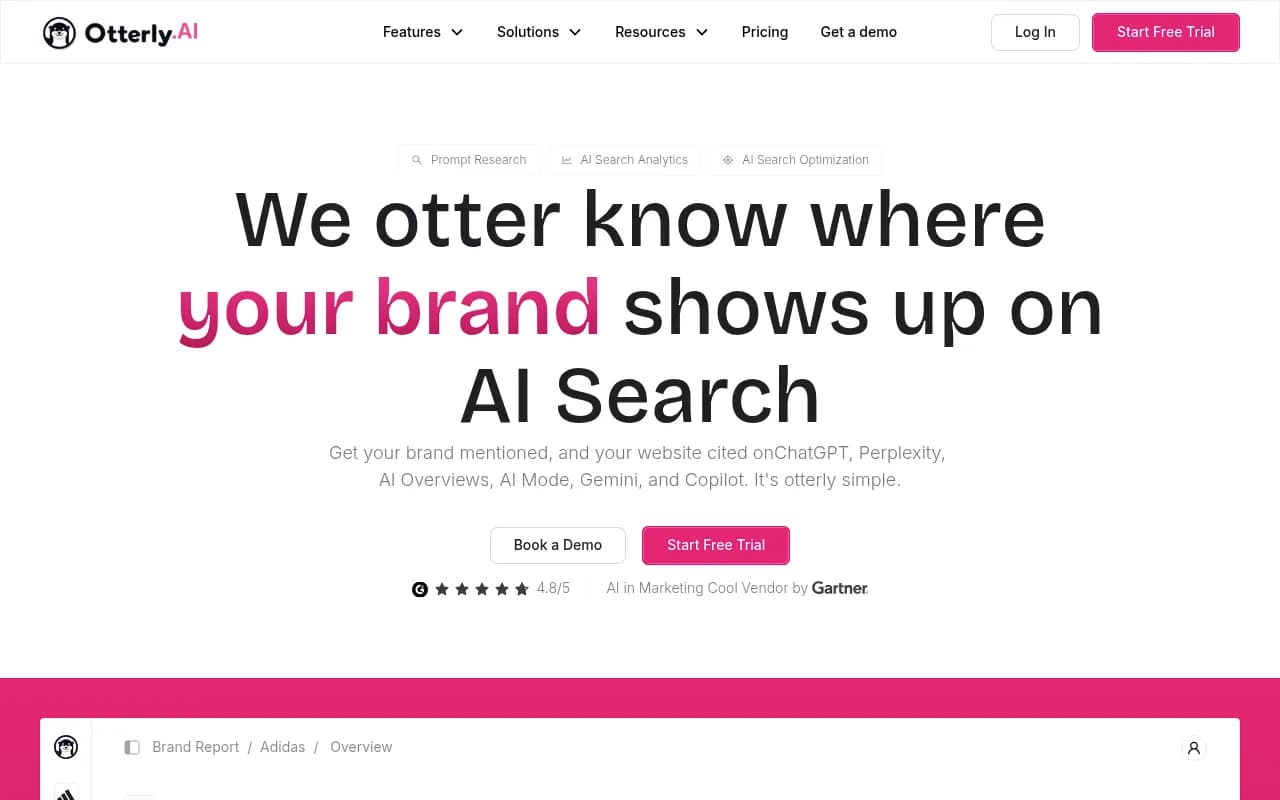
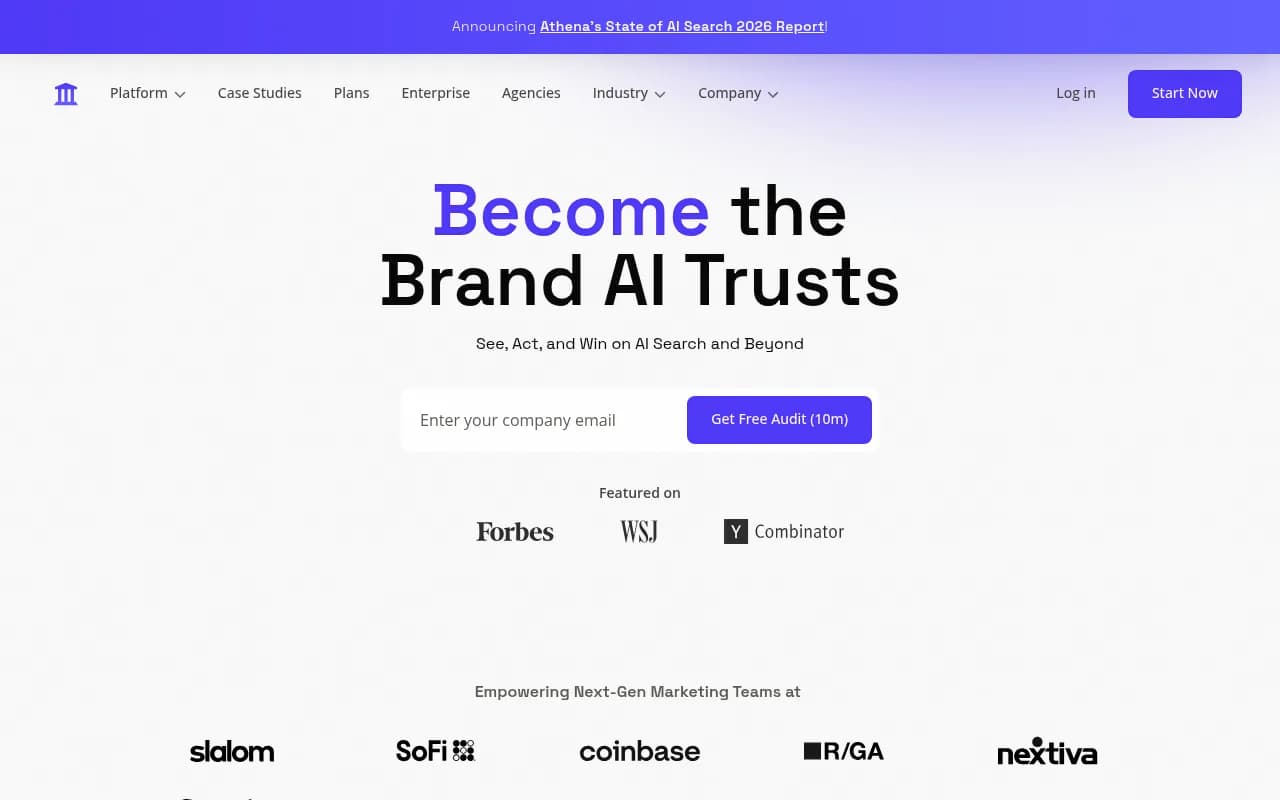
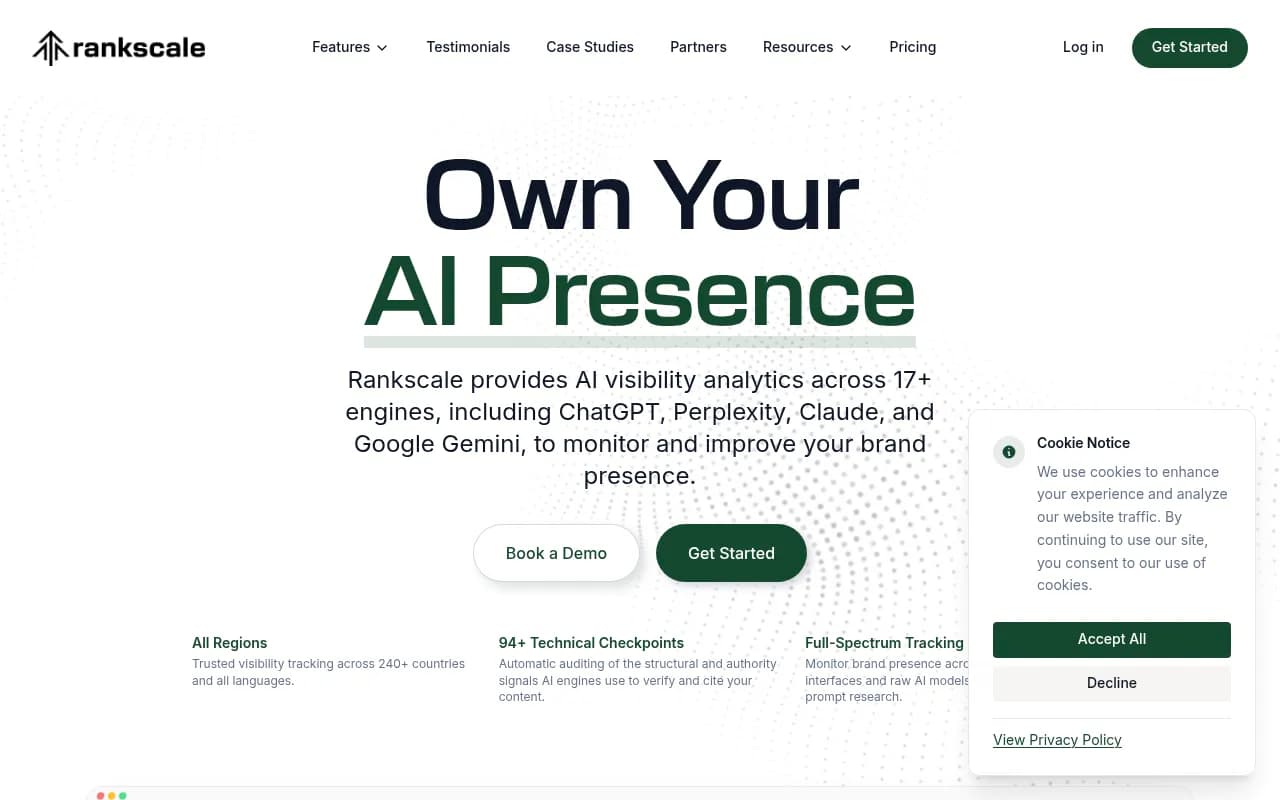
The core difference between these tools: most stop at showing you data. Promptwatch is built around the full loop -- find the prompts you're missing, generate content to fill the gaps, then track whether your visibility improves. For B2B software teams that want to move fast, that end-to-end workflow matters.
Step 8: Don't ignore the other AI engines
ChatGPT is the biggest channel, but it's not the only one. Perplexity, Google AI Overviews, Google AI Mode, Claude, and Gemini all have meaningful B2B user bases, and their citation mechanics differ from ChatGPT's.
Google AI Overviews, for instance, draws heavily on Google's own index and E-E-A-T signals. Perplexity tends to cite more recent content and rewards pages that answer questions directly. Claude has different training data cutoffs and source preferences.
The good news: the foundational work (Bing indexing, structured content, third-party mentions, entity consistency) helps across all of them. But if you're only measuring ChatGPT, you're missing a significant portion of your AI search footprint.
What the timeline actually looks like
Realistic expectations matter here. This isn't a two-week sprint.
Bing indexing and robots.txt fixes: immediate impact on live retrieval, visible within days.
Third-party mention building (G2, Capterra, Reddit, publications): 4-8 weeks to see meaningful citation improvement, because the model needs to encounter the mentions multiple times across sources.
Content creation (comparison pages, use-case pages, FAQ content): 6-12 weeks from publish to consistent citation, accounting for crawl time, indexing, and model confidence building.
Pre-trained knowledge updates: this happens on model release cycles, which are unpredictable. The work you do now influences the next training run.
The teams seeing the fastest results are the ones treating this as a continuous program rather than a one-time project. Publish a comparison page, track whether it gets cited, identify the next gap, repeat.
A quick audit to start today
If you want a concrete starting point, do this:
- Open ChatGPT and ask the five questions your buyers are most likely to ask when evaluating tools in your category.
- Note whether your brand appears in any of the answers.
- Note which competitors do appear.
- Check whether those competitors have G2/Capterra profiles, comparison pages, or recent press mentions that you lack.
- Pick the one gap that's easiest to close and close it this week.
The gap between "invisible in ChatGPT" and "regularly cited" is mostly a content and distribution problem, not a technical one. The brands winning in AI search right now aren't doing anything mysterious -- they're being specific, consistent, and present on the sources AI models trust.
That's the whole game.