Key takeaways
- ChatGPT's web search mode uses OAI-SearchBot to crawl your site in real time. If you're blocking it (or accidentally blocking it), you won't appear in cited answers regardless of how good your content is.
- Technical gaps -- blocked crawlers, missing structured data, unextractable content -- are the most common reason well-optimized sites still don't show up in AI-generated answers.
- Content structure matters more than keyword density for AI citation. ChatGPT needs to extract a clean, self-contained answer from your page without additional context.
- Monitoring which pages AI crawlers actually visit (and which they ignore) is the fastest way to find and fix gaps. Tools like Promptwatch provide real-time crawler logs for exactly this.
- The fix isn't one big overhaul. It's a series of targeted, auditable changes that compound over time.
Most of the conversation about ranking in ChatGPT focuses on content strategy: write authoritative content, build topical depth, get mentioned on third-party sites. That advice is correct. But it skips a layer that quietly kills your chances before any of that work pays off.
If ChatGPT's crawler can't read your pages cleanly, none of the content strategy matters.
This guide is about the technical layer -- the crawler access, the page structure, the markup, the signals that tell AI models whether your content is worth citing. Get this right and your content strategy starts working. Skip it and you're building on sand.
Why technical optimization is different for AI search
Traditional SEO technical work is mostly about Googlebot: sitemaps, crawl budgets, Core Web Vitals, canonical tags. Those things still matter. But ChatGPT's search pipeline has different requirements, and the overlap is smaller than most people assume.
When a user asks ChatGPT a question with web search enabled, the model queries Bing, retrieves a set of pages, and synthesizes a response. It's not just checking whether a page ranks -- it's reading the page, extracting the relevant passage, and deciding whether that passage is trustworthy and complete enough to cite.
That last step is where most technical failures happen. A page can rank on Bing and still never get cited in a ChatGPT answer if the content isn't extractable, the page structure is confusing, or the crawler hit an error the last time it visited.
The other thing worth knowing: ChatGPT also draws on training data when web search is off. That's a slower-moving signal (it updates with model retraining, not in real time), but it responds to the same underlying factors -- brand mention frequency, content clarity, and whether your site has been consistently accessible over time.
Step 1: Make sure OAI-SearchBot can actually access your site
This sounds obvious. It isn't. A surprising number of sites are blocking OpenAI's crawler either intentionally (from a previous decision to opt out of training data collection) or accidentally (through overly broad bot-blocking rules).
OpenAI uses two crawlers:
GPTBot-- used for training data collectionOAI-SearchBot-- used for real-time web search in ChatGPT
These are separate user agents. Blocking GPTBot (which many sites did after OpenAI's training data policies became controversial) does NOT block OAI-SearchBot. But if your robots.txt has a blanket rule blocking all bots except a specific whitelist, or if you've blocked all "GPT" user agents with a wildcard, you may be blocking both.
Check your robots.txt now:
# What you want to allow:
User-agent: OAI-SearchBot
Allow: /

# Blocking training data collection (optional, separate):
User-agent: GPTBot
Disallow: /
Also check your CDN and WAF rules. Cloudflare, Fastly, and similar services often have bot management rules that can block legitimate crawlers. If you've enabled "Bot Fight Mode" or similar features, verify that OAI-SearchBot is on the allowlist.
Beyond robots.txt, check for:
- Rate limiting that kicks in for crawlers hitting multiple pages quickly
- JavaScript-only rendering that serves a blank page to non-browser user agents
- Login walls or cookie consent gates that block unauthenticated access
- Server-side redirects that loop or return 4xx errors for bot user agents
The fastest way to check this is to look at your actual crawler logs. If you're not seeing OAI-SearchBot in your logs at all, that's a red flag worth investigating before anything else.
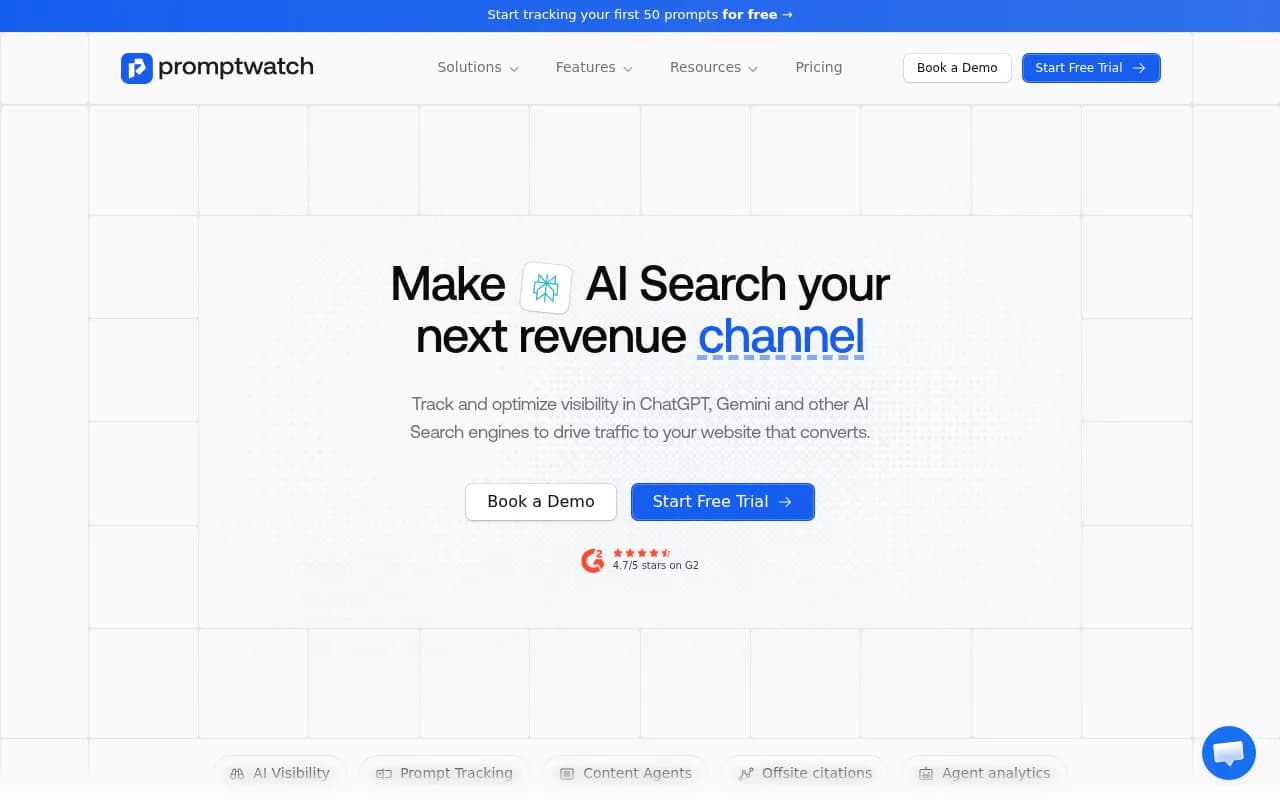
Promptwatch has a crawler log feature that shows exactly which AI crawlers (ChatGPT, Perplexity, Claude, and others) are hitting your site, which pages they're reading, what errors they're encountering, and how often they return. It's the most direct way to verify your site is actually accessible.
Step 2: Fix content extraction problems
Even when a crawler can access your page, it may not be able to extract useful content from it. This is a structural problem, and it's more common than you'd think.
The extraction test
The simplest test: copy the raw text of your page (no styling, no navigation, no sidebar) and ask yourself whether a reader could understand the answer to the page's main question from that text alone, without any surrounding context.
If the answer is "not really" -- because the key information is buried in a table that doesn't render in plain text, or because the answer assumes the reader has read three other pages first, or because the main point is in a video with no transcript -- that's an extraction problem.
Common extraction failures
JavaScript-rendered content is the biggest one. If your content is loaded via JavaScript after the initial page load, many crawlers (including OAI-SearchBot) will see a near-empty page. Server-side rendering or static generation fixes this. If you can't change your rendering approach, at minimum make sure the most important content is in the initial HTML payload.
Paginated content is another issue. If a long guide is split across multiple pages, the AI crawler may only read page 1 and miss the substantive content on pages 2-5. Consolidating long-form content onto a single URL is usually better for AI citation than pagination.
Content locked behind tabs or accordions can also be missed. If your FAQ answers are hidden in collapsed accordions, they may not be extracted. The text is technically in the HTML, but some crawlers don't execute the JavaScript needed to expand them. Put the most important answers in the visible page body, not just in interactive components.
What extractable content looks like
Good structure for AI extraction:
- The page answers one clear question (or a tightly related set of questions)
- The answer appears early in the body content, not buried after long preambles
- Headings accurately describe what follows them
- Lists and tables have enough context to be understood without the surrounding prose
- The page has a clear conclusion or summary
This isn't just good for AI crawlers. It's good writing. But it's worth auditing specifically with the extraction lens, because pages that feel well-organized to a human reader can still be confusing to a crawler that's trying to extract a specific passage.
Step 3: Implement structured data that AI models can use
Structured data (schema markup) helps AI models understand what a page is about and whether it's a reliable source. It's not a magic ranking signal, but it reduces ambiguity -- and reducing ambiguity is exactly what you want when a model is deciding whether to cite you.
The most useful schema types for AI citation:
Article / BlogPosting -- Tells the model this is editorial content, who wrote it, when it was published, and when it was last updated. The dateModified field matters more than people realize. ChatGPT tends to prefer recently updated content for factual queries.
FAQPage -- Marks up question-and-answer pairs explicitly. When ChatGPT is answering a specific question, a page with FAQPage markup that directly addresses that question is easier to extract from.
HowTo -- For process-oriented content, this schema marks up each step explicitly. Very useful for "how to" queries where ChatGPT wants to pull a clean step-by-step answer.
Organization / LocalBusiness -- Establishes your entity. Helps the model connect your content to your brand, which matters for brand-specific queries.
BreadcrumbList -- Helps the model understand where a page sits in your site hierarchy, which signals topical authority.
A quick implementation check: use Google's Rich Results Test (or any schema validator) to verify your markup is error-free. Broken schema is worse than no schema -- it signals sloppy implementation.
Step 4: Optimize your page metadata for AI synthesis
When ChatGPT synthesizes a response, it often pulls from the title and meta description as well as the body content. These elements serve as a quick signal about what the page covers and whether it's worth reading further.
Your title should describe the page's content precisely. Avoid clever or vague titles that make sense in a click-bait context but don't communicate the actual topic. "The Ultimate Guide to X" is worse than "How to Do X: A Step-by-Step Guide" for AI citation purposes.
Your meta description should summarize the page's answer, not just tease it. If someone reads only your meta description, they should understand what the page concludes. This is the opposite of traditional SEO meta description advice (which often recommends teasing content to drive clicks). For AI search, the goal is to be cited, not clicked.
Keep meta descriptions under 160 characters and make them factually dense. Treat them like a one-sentence abstract.
Step 5: Build internal linking that signals topical authority
ChatGPT's training data and real-time search both respond to topical authority signals. One of the clearest signals is whether your site has deep, interlinked coverage of a topic -- not just one good page, but a cluster of pages that collectively cover a subject from multiple angles.
Internal linking is how you make that cluster visible to crawlers. If you have 15 pages on a topic but they're not linked to each other, a crawler that lands on one of them has no way to discover the others.
A practical approach:
- Identify your most important topic clusters (the subjects you want to be cited for)
- Make sure every page in a cluster links to the cluster's main "hub" page
- Make sure the hub page links to all the supporting pages
- Use descriptive anchor text that includes the topic, not just "click here" or "learn more"
This isn't just about crawl discovery. It's about demonstrating to the model that your site has genuine depth on a subject, not just a single page that happens to rank.
Step 6: Monitor which pages AI crawlers are actually visiting
Here's the gap most people miss: they make technical changes and then have no idea whether those changes worked. Did OAI-SearchBot come back after you fixed the robots.txt? Is it reading your new pages? Are there still errors on certain URLs?
Without crawler log data, you're guessing.
The traditional approach is to parse your server logs manually, which is tedious and requires some technical setup. A better approach is to use a tool that surfaces this data automatically.
Promptwatch's crawler log feature does this -- it shows you a real-time feed of AI crawler activity on your site, broken down by crawler (ChatGPT, Perplexity, Claude, etc.), by page, and by status code. You can see which pages are being read, which are returning errors, and how crawl frequency changes over time. It also tracks the timeline from crawl to citation, so you can see when a newly published or updated page starts appearing in AI answers.
This kind of visibility turns technical optimization from a guessing game into something measurable.
Step 7: Fix crawl errors and improve page health
Standard technical SEO hygiene matters here too. Crawl errors, broken links, and slow page loads all affect how often and how deeply AI crawlers visit your site.
Key things to check:
- 404 errors on pages that were previously cited (if a page that was getting AI citations goes down, you lose that citation)
- Redirect chains longer than two hops (crawlers often stop following after two redirects)
- Pages returning 5xx errors intermittently (crawlers may deprioritize unreliable pages)
- Core Web Vitals, specifically Time to First Byte -- slow servers mean crawlers may time out before reading the full page content
Run a crawl of your own site with a tool like Screaming Frog or Ahrefs to surface these issues systematically. Fix the high-priority errors first (pages that are currently cited or that you want to be cited) before moving to lower-priority cleanup.
Step 8: Make your content self-contained and citation-ready
This is the content side of technical optimization. A page is "citation-ready" when ChatGPT can extract a passage from it and use that passage in a response without the user needing any additional context.
What this means in practice:
- Define terms when you use them, even if they seem obvious. If your page uses industry jargon, explain it briefly. AI models prefer sources that don't assume prior knowledge.
- Include the question you're answering explicitly in the page. If your page answers "what is the best way to do X," say that question somewhere on the page -- ideally near the top.
- Write conclusions that stand alone. The last paragraph of a section should summarize the key point, not just trail off.
- Use specific numbers and facts rather than vague claims. "Response times improved by 40%" is more citable than "response times improved significantly."
- Avoid excessive hedging. "It might potentially be the case that..." is harder to cite than "X is true because Y."
The goal is to make your content easy to quote. If a passage from your page can be dropped into an AI response and make complete sense to the reader, that passage is citation-ready.
Putting it together: a technical audit checklist
Here's a practical checklist to work through:
| Area | What to check | Priority |
|---|---|---|
| Crawler access | OAI-SearchBot not blocked in robots.txt | Critical |
| Crawler access | No WAF/CDN rules blocking AI bots | Critical |
| Rendering | Key content in initial HTML, not JS-only | High |
| Structured data | Article, FAQ, HowTo schema implemented | High |
| Metadata | Titles descriptive, meta descriptions factual | High |
| Content structure | Pages answer one clear question | High |
| Internal linking | Topic clusters interlinked | Medium |
| Crawl health | No 4xx/5xx errors on key pages | Medium |
| Crawl monitoring | Crawler log visibility in place | Medium |
| Content quality | Passages are self-contained and citable | High |
Work through this in order. Crawler access issues are the most urgent -- everything else is irrelevant if the crawler can't get in.
Tools worth knowing
A few tools that help with different parts of this process:
For tracking AI crawler activity and seeing which pages are being cited (and by which models), Promptwatch is the most complete option available. Its crawler logs, page-level citation tracking, and answer gap analysis cover the monitoring side end-to-end.
For content optimization and making sure your pages are structured for extraction, Clearscope and Surfer SEO are solid choices for the content-side work.

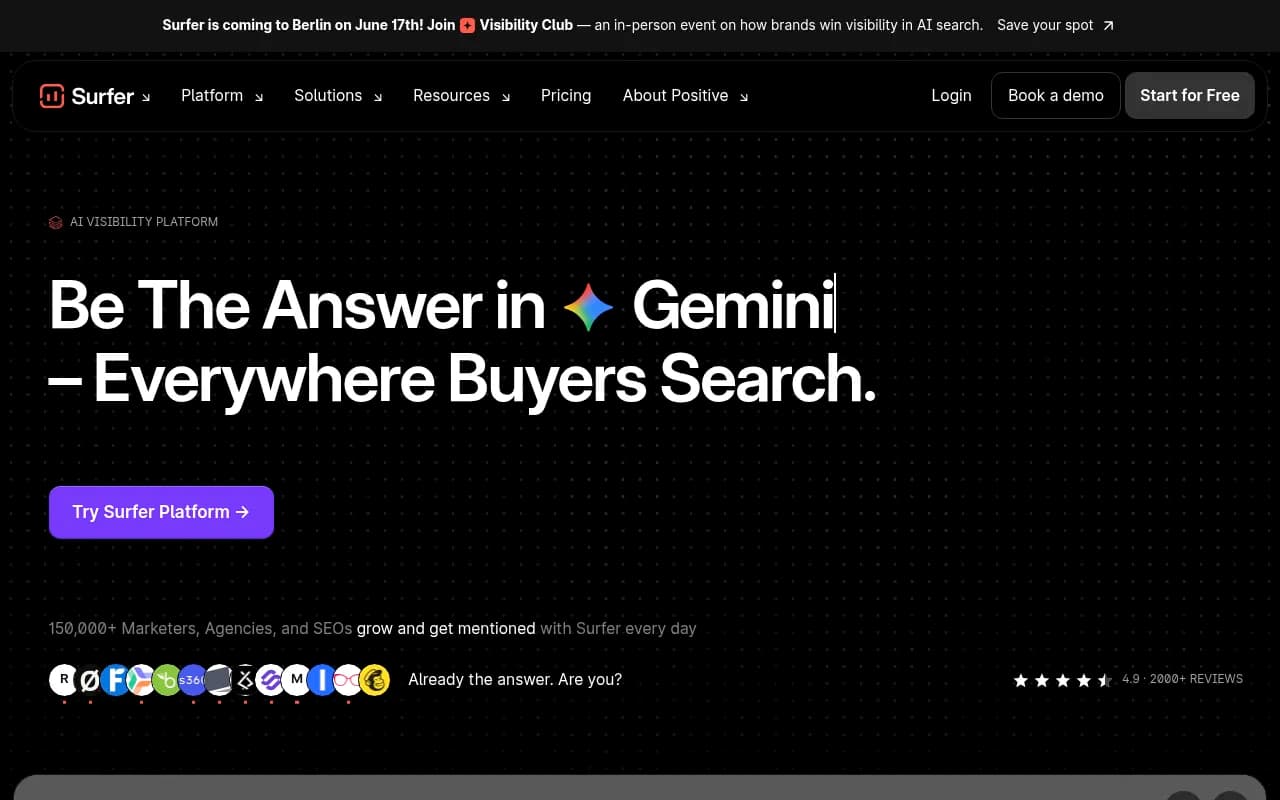
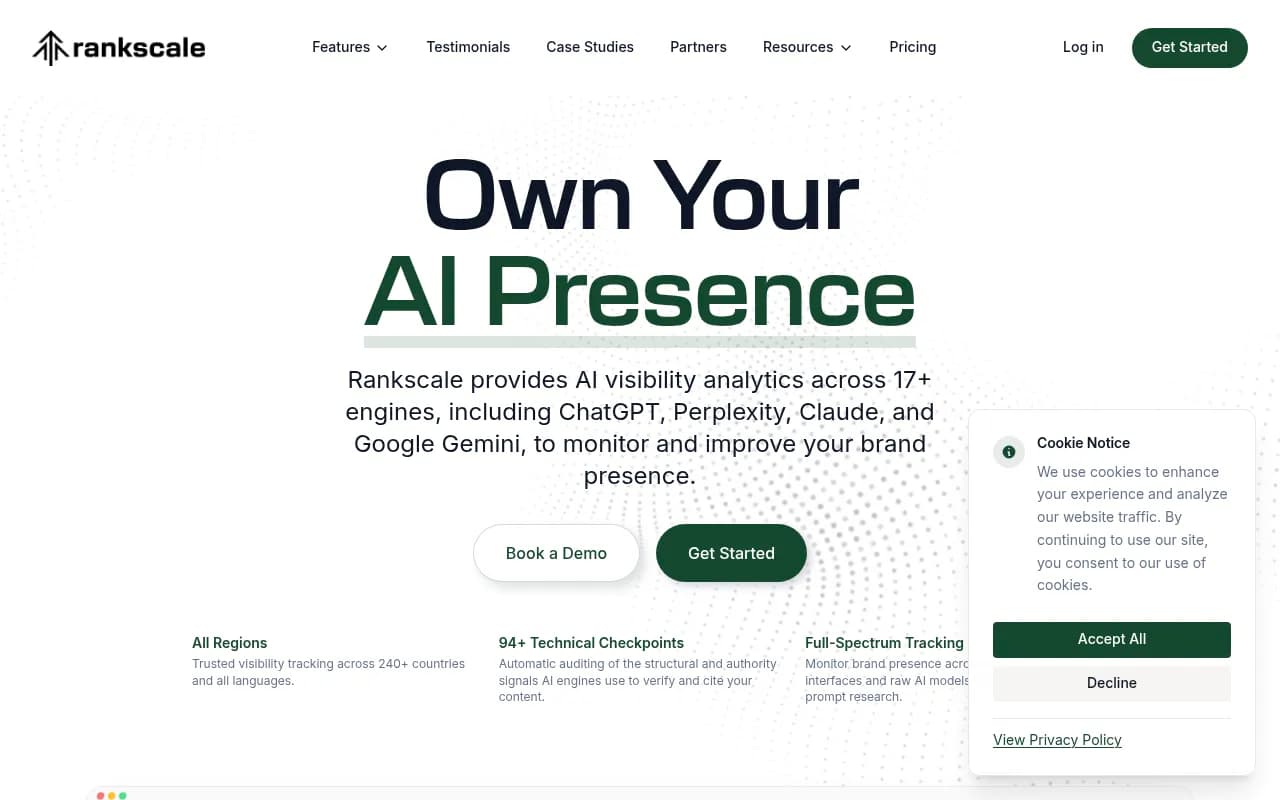
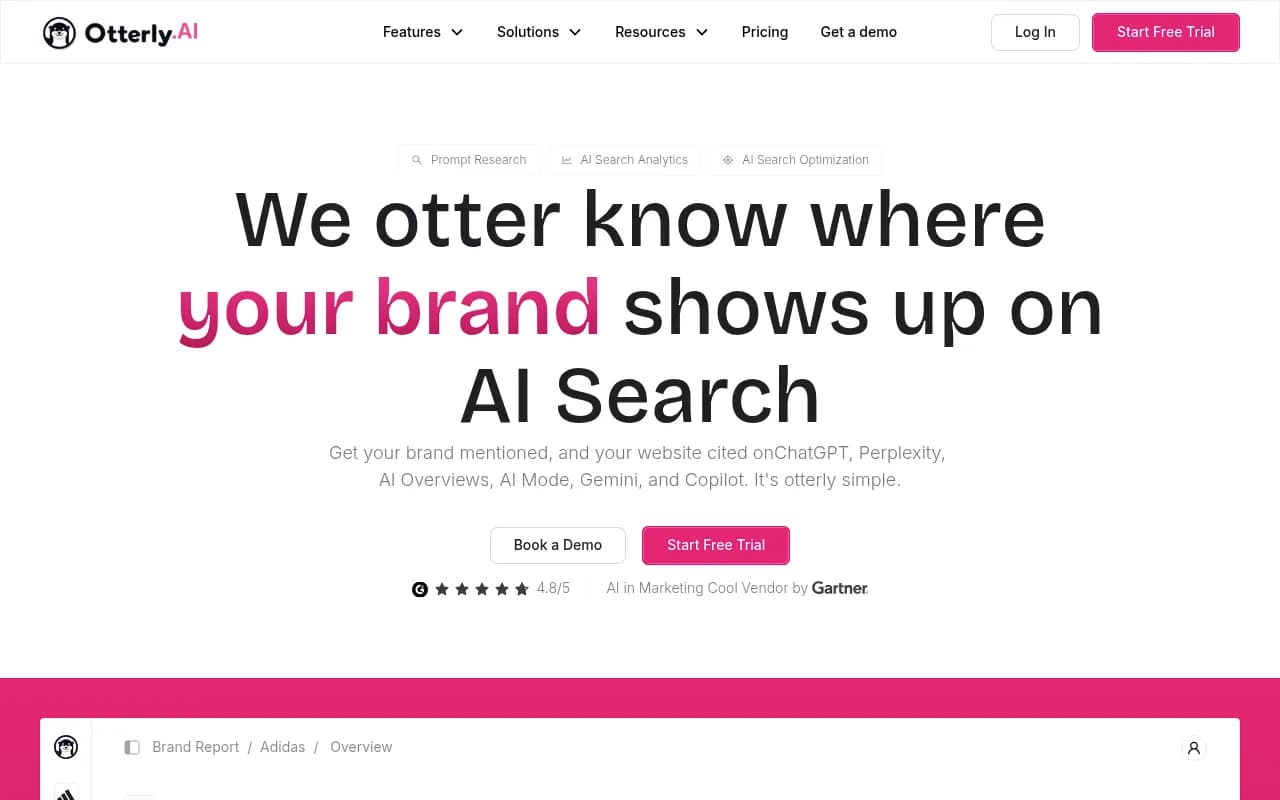
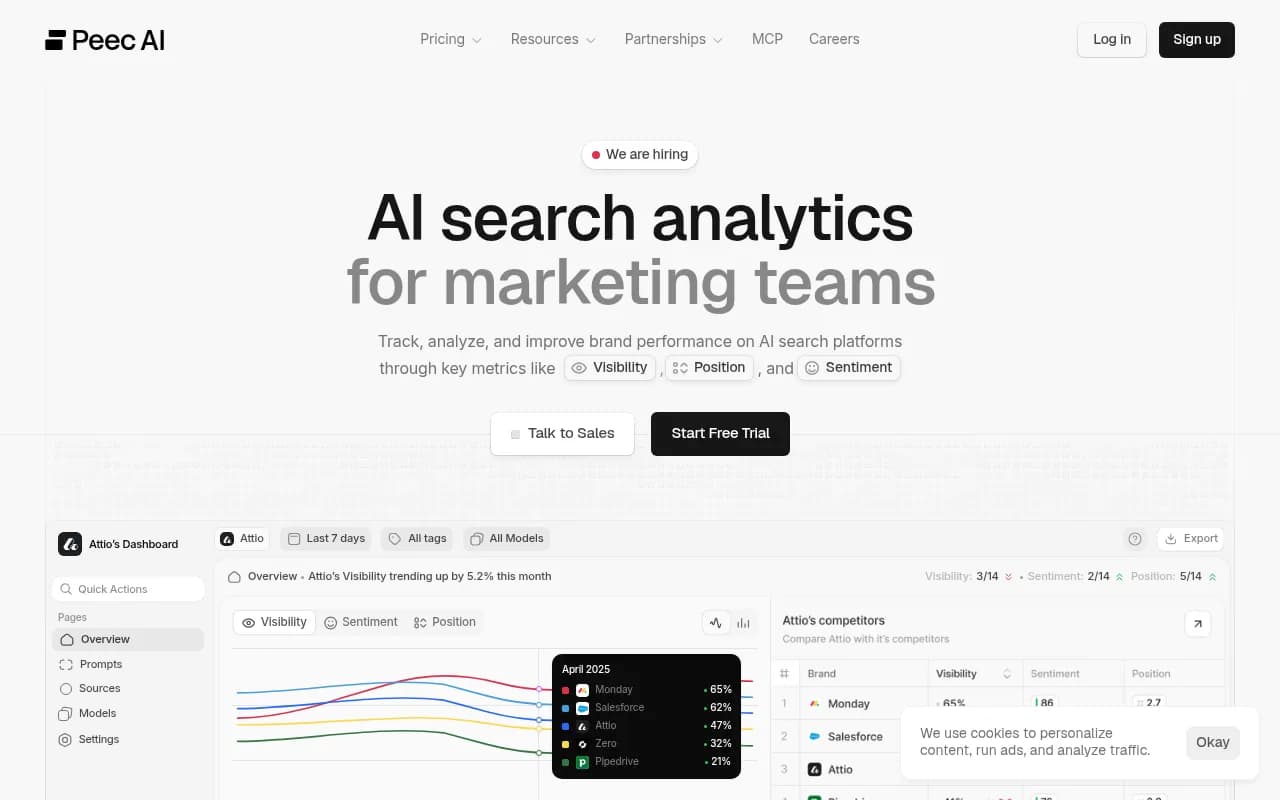
For tracking your overall AI visibility across ChatGPT, Perplexity, Gemini, and others, a few options worth evaluating:
For traditional technical SEO auditing (crawl errors, broken links, redirect chains), Ahrefs and Semrush both have strong site audit tools that complement the AI-specific monitoring.
The compounding effect
Technical optimization for AI search isn't a one-time project. It's an ongoing process. AI crawlers revisit pages regularly, and their behavior changes as the models are updated. A page that wasn't being cited six months ago might start getting cited after a model update -- or stop getting cited after one.
The brands that are winning in AI search in 2026 aren't the ones that did a big optimization sprint. They're the ones that have continuous visibility into what's happening -- which pages are being crawled, which are being cited, which gaps are opening up -- and are making steady, incremental improvements based on that data.
That's the real competitive advantage: not a single technical fix, but the infrastructure to keep finding and fixing gaps as they emerge.
Start with the crawler access audit. Fix what's broken. Then build the monitoring layer so you can see what's working and what isn't. The content strategy work compounds on top of that foundation.