Key takeaways
- AI Overviews now appear in over 50% of Google searches, and ChatGPT processes 100M+ search-like queries per day — GEO is no longer optional for brands that want to stay visible.
- Most GEO tools in 2026 are monitoring dashboards. They tell you where you're invisible but don't help you fix it.
- The tools that actually move the needle combine prompt tracking, content gap analysis, and content generation in one workflow.
- 99% of AI Overview citations come from the organic top 10, so traditional SEO and GEO are not separate strategies — they're the same strategy.
- When evaluating a GEO platform, ask one question: does it help me create content, or just show me data?
The GEO tool market has gotten loud. In the past 18 months, dozens of platforms have launched claiming to help brands "rank in AI" — and if you've tried to evaluate them, you've probably noticed they all look similar on the surface. Dashboards, citation counts, brand mention scores. The marketing copy is nearly identical.
But the tools themselves are not equal. Some are genuinely useful. Others are monitoring wrappers that show you a problem and then leave you alone with it.
This guide cuts through the noise. We'll look at what the GEO landscape actually looks like in mid-2026, what separates real optimization platforms from glorified trackers, and which tools are worth your time depending on what you're trying to accomplish.
Why GEO became urgent in 2026
Search behavior has shifted faster than most marketing teams expected. According to data from ControlAltDigital, AI Overviews now appear in more than 50% of all Google searches, and the click-through rate for the #1 organic result when an AI Overview is present has dropped to just 2.6%. That's not a rounding error — that's a structural change in how traffic flows.
Meanwhile, ChatGPT processes over 100 million search-like queries per day. Perplexity passed 15 million daily active users in early 2026. And perhaps most telling: traffic from AI chatbots to retailers grew 520% between 2024 and 2025, with those visitors converting at 4.4x the rate of traditional search traffic.
That last number is the one that should get your attention. AI-referred visitors aren't just more numerous — they're more qualified. They've already received a synthesized answer that named your brand. They arrive pre-sold.
The problem is that most brands have no idea whether they're being named at all.
What GEO tools are supposed to do
Generative Engine Optimization is the practice of structuring your content and digital presence so that AI models — ChatGPT, Google AI Overviews, Perplexity, Claude, Gemini, and others — can retrieve, cite, and recommend your brand when answering user questions.
Traditional SEO got you onto a list of links. GEO gets you named in the synthesized answer, which carries an implicit endorsement no organic listing ever could.
A proper GEO platform should help you do three things:
- Understand where you're visible and where you're not, across specific prompts and AI models
- Identify what content is missing — the gaps between what AI models want to cite and what your site actually has
- Create content that fills those gaps, grounded in real prompt data
Most tools on the market in 2026 do step one. A few do steps one and two. Very few do all three.
The monitoring-only problem
Here's the honest reality: a lot of GEO tools are dashboards with a data problem dressed up as a strategy problem.
They'll show you that a competitor appears in 73% of ChatGPT responses for "best project management software" while you appear in 12%. That's useful information. But then what? The tool doesn't tell you why. It doesn't show you what content the competitor has that you don't. It doesn't help you write anything. You're left to figure it out yourself.
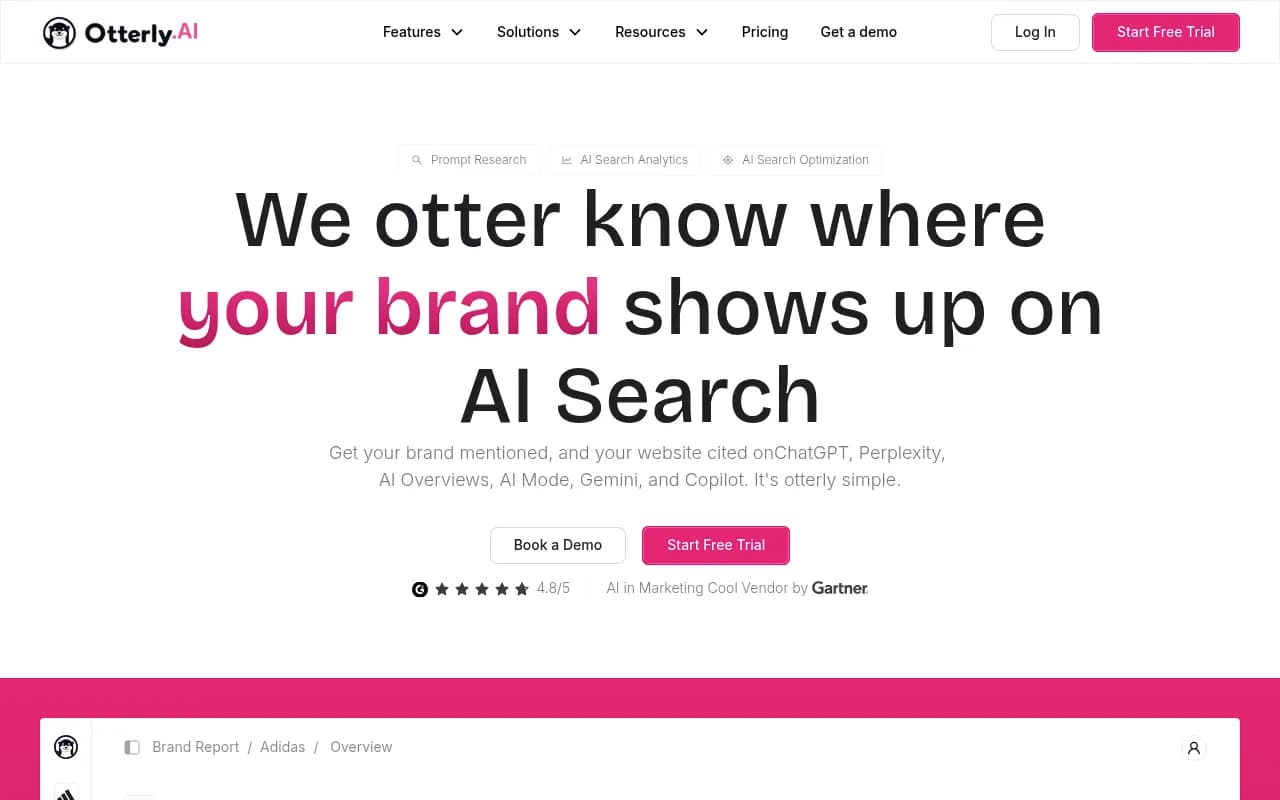
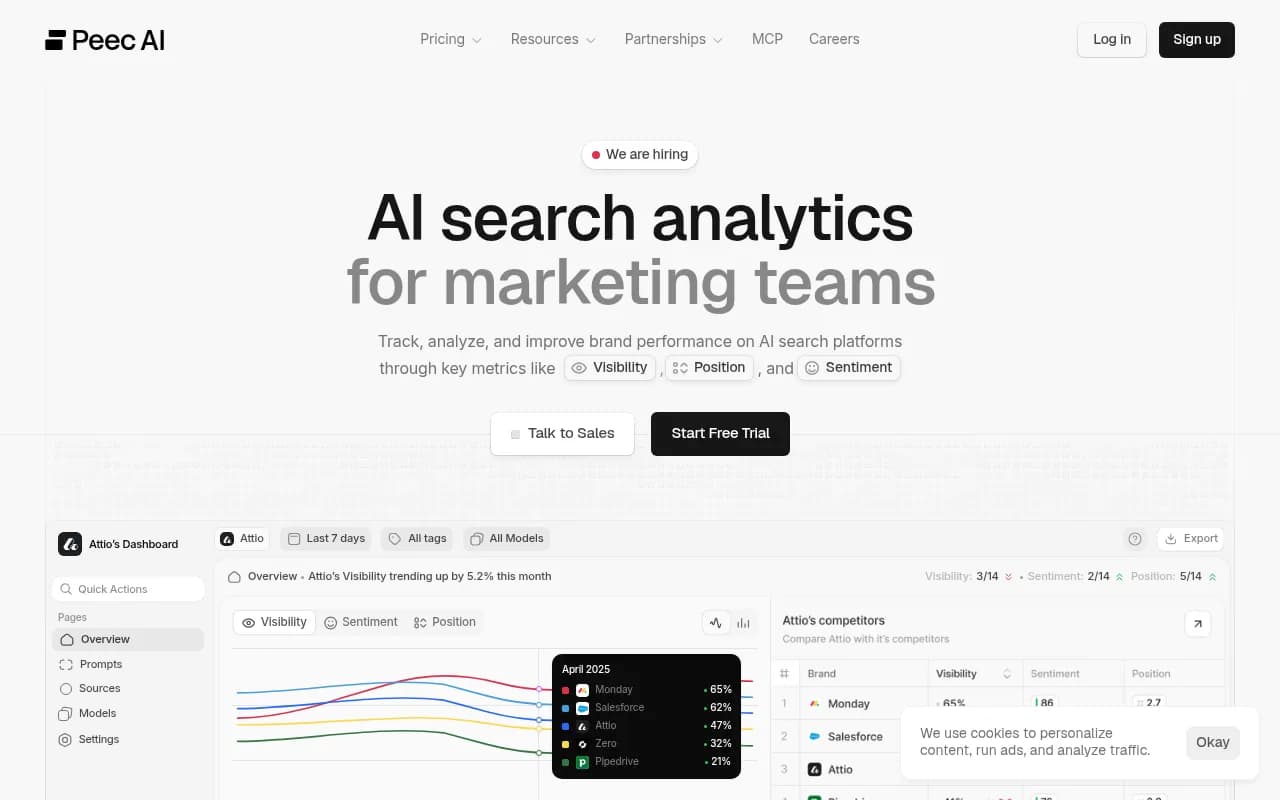
This is the core limitation of monitoring-only platforms. Tools like Otterly.AI and Peec.ai are affordable and easy to use, but they stop at the dashboard.
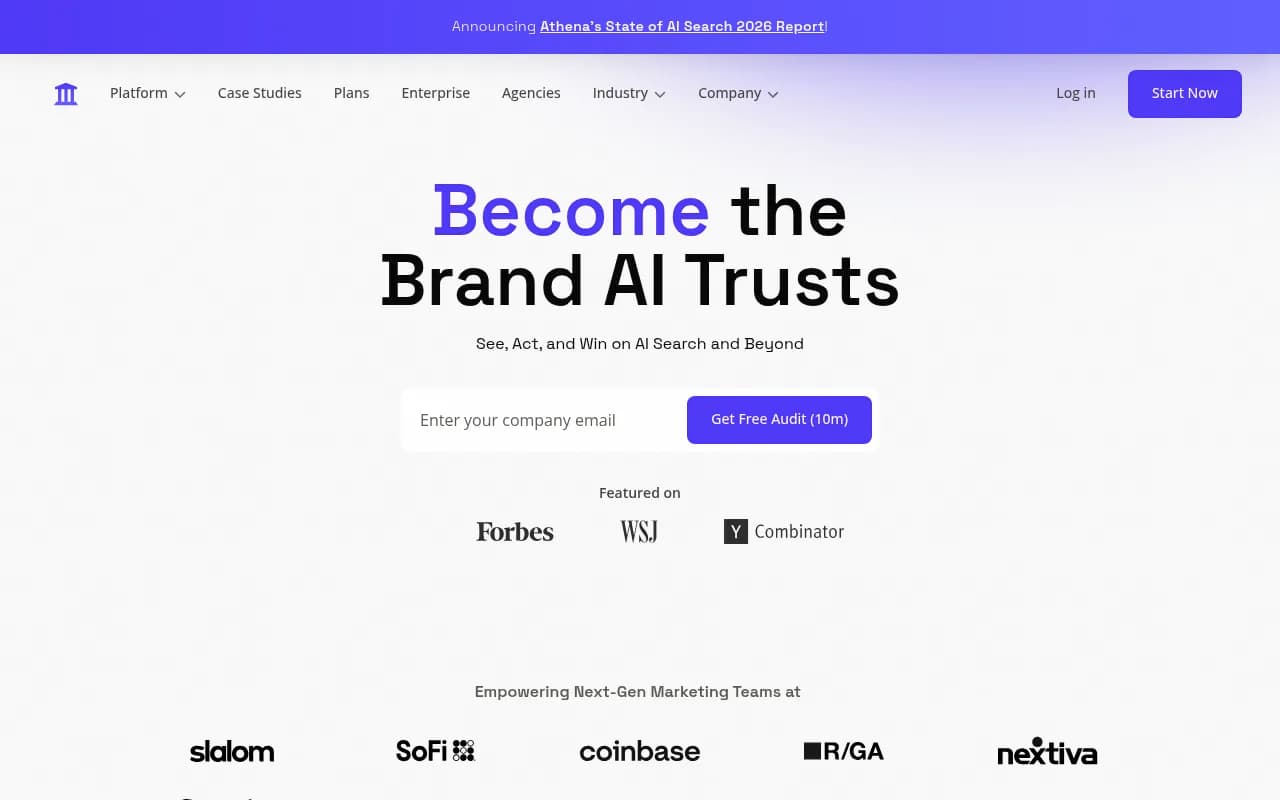
AthenaHQ is more sophisticated in its monitoring — it tracks narrative tone and how AI models characterize your brand — but it's still fundamentally an observation tool.
Search Party is built for agencies and does a reasonable job of tracking visibility across clients, but prompt metrics are limited and there's no content gap analysis.
None of this is to say monitoring is worthless. You need to know where you stand before you can improve. But monitoring without action is just expensive anxiety.
The tools that go further
The more interesting platforms in 2026 are the ones that have built a workflow around the data — not just a display layer.
Profound
Profound is one of the more mature enterprise-grade platforms in the space. It covers answer engine insights, prompt volumes, shopping tracking, and agent analytics. The "Agents" feature lets teams run automated workflows against their visibility data. It's a strong product, especially for larger teams with dedicated AEO resources.
The tradeoff is price and complexity. Profound is built for enterprise, and the learning curve reflects that. Smaller teams may find it more than they need.
Semrush AI Visibility Toolkit
Semrush has been adding AI visibility features to its existing SEO platform. If you're already a Semrush user, the AI Visibility Toolkit is a natural extension. The limitation is that it uses fixed prompts rather than letting you define your own, and there's no AI traffic attribution — so you can see mentions but can't connect them to actual revenue.
Ahrefs Brand Radar
Similar story with Ahrefs. Brand Radar tracks your brand across AI search engines and is useful for teams already in the Ahrefs ecosystem. Fixed prompts and no traffic attribution are the same constraints as Semrush.
SE Ranking
SE Ranking has built out solid GEO monitoring alongside its traditional SEO features. Good value for mid-market teams that want one platform covering both.
BrightEdge
For enterprise teams with complex content operations, BrightEdge integrates AI search intelligence into a broader organic marketing workflow. It's a serious platform but priced accordingly.
Scrunch AI
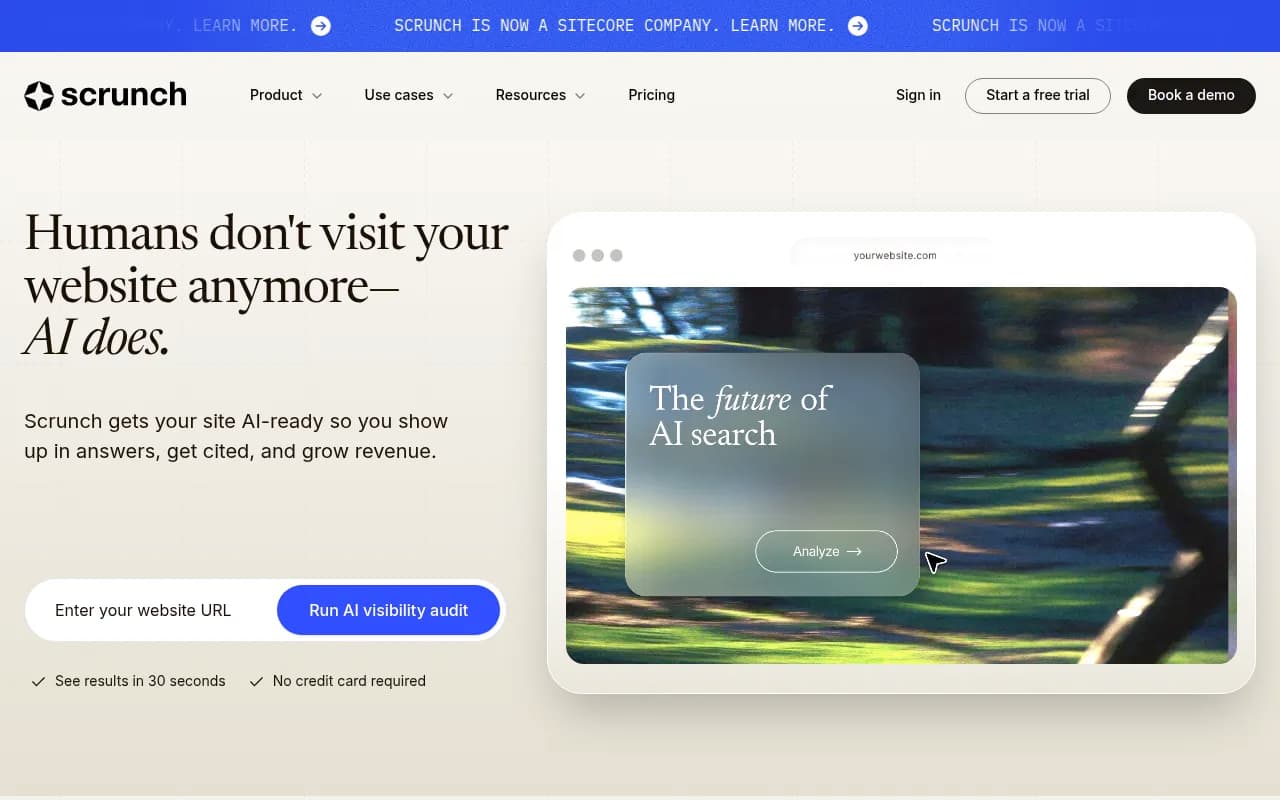
Scrunch AI focuses on brand and agency monitoring across AI models. It covers the core tracking use cases but lacks content optimization and generation capabilities.
What a full-cycle GEO platform looks like
The tools that stand out in 2026 are the ones built around a complete loop: find the gaps, create content to fill them, track the results.
Promptwatch is the clearest example of this architecture. Rather than stopping at visibility data, it connects the monitoring layer to an action layer — Answer Gap Analysis shows you exactly which prompts competitors rank for that you don't, Content Agents generate articles and briefs grounded in that prompt data, and page-level tracking shows you when new content starts getting cited and by which models.
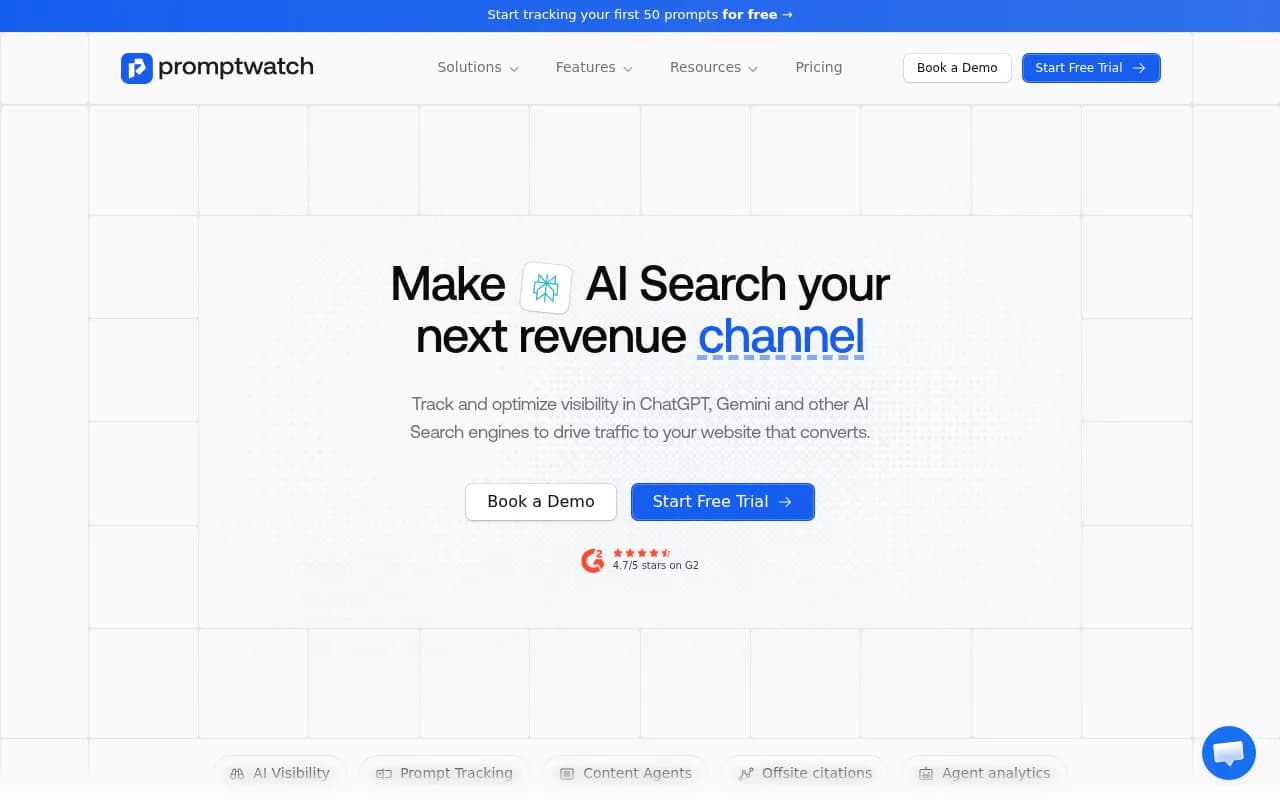
The crawler log feature is worth calling out specifically. Most GEO platforms have no visibility into how AI crawlers actually interact with your site — which pages they read, how often they return, what errors they hit. Promptwatch surfaces this in real time, which means you can diagnose indexing problems before they become visibility problems. That's a capability most competitors don't have at all.
It also tracks Reddit and YouTube as citation sources, which matters more than it sounds. AI models frequently cite Reddit threads and YouTube videos in their responses — if you're not monitoring those channels, you're missing a significant part of the picture.
The platform covers 10 AI models: ChatGPT, Perplexity, Google AI Overviews, Google AI Mode, Claude, Gemini, Meta/Llama, DeepSeek, Grok, and Copilot. Pricing starts at $99/month for a single site.
How the major platforms compare
Here's a practical comparison of the main GEO tools across the capabilities that actually matter for moving visibility numbers:
| Platform | Prompt tracking | Content gap analysis | Content generation | Crawler logs | Reddit/YouTube | Traffic attribution | Price range |
|---|---|---|---|---|---|---|---|
| Promptwatch | Yes (custom) | Yes | Yes (Content Agents) | Yes | Yes | Yes | $99-$579/mo |
| Profound | Yes (custom) | Partial | Yes (Agents) | Yes | No | Partial | Enterprise |
| Semrush AI Toolkit | Fixed prompts | No | No | No | No | No | Add-on |
| Ahrefs Brand Radar | Fixed prompts | No | No | No | No | No | Add-on |
| AthenaHQ | Yes | No | No | No | No | No | Mid-market |
| Otterly.AI | Yes | No | No | No | No | No | $49-$199/mo |
| Peec.ai | Yes | No | No | No | No | No | $49+/mo |
| Search Party | Yes | No | No | No | No | No | Agency |
| Scrunch AI | Yes | No | No | No | No | No | Mid-market |
| SE Ranking | Yes | No | No | No | No | No | $44+/mo |
| BrightEdge | Yes | Partial | No | No | No | Partial | Enterprise |
The SEO-GEO connection you can't ignore
One thing that gets lost in the GEO tool marketing is that traditional SEO still matters enormously. Data from ControlAltDigital shows that 99% of AI Overview citations come from the organic top 10, and 87% of ChatGPT citations correspond to top Bing results.
This means GEO is not a replacement for SEO — it's an extension of it. If your pages don't rank in traditional search, they're unlikely to get cited in AI responses either. The brands winning in AI search are generally the ones with strong organic foundations who are also actively optimizing for AI-specific signals.
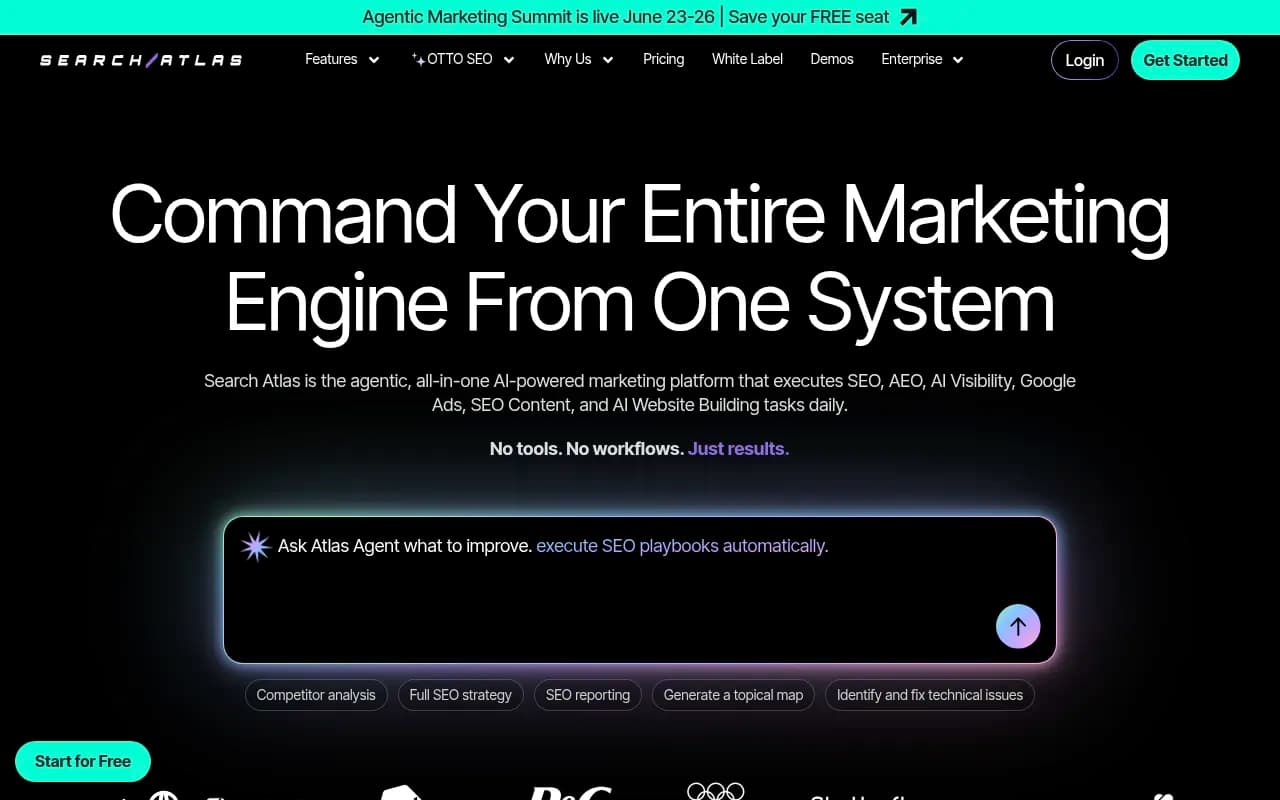
Tools like Search Atlas cover both traditional and AI SEO in one platform, which is useful if you're trying to manage both without running separate tool stacks.
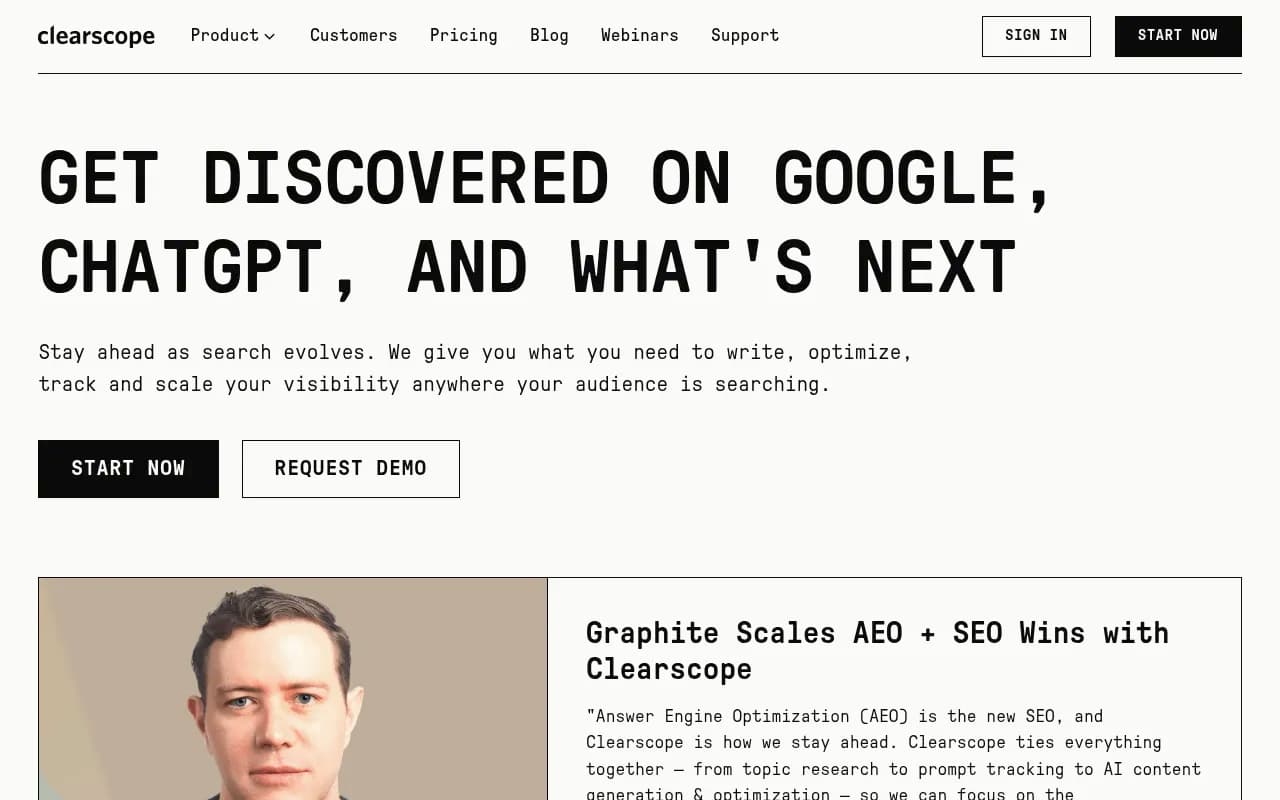
For content optimization that feeds both traditional and AI search, Clearscope and Surfer SEO remain solid choices for the actual writing workflow.
Niche tools worth knowing about
Beyond the major platforms, a few specialized tools are worth having on your radar:
For tracking AI-driven clicks and traffic: LLMclicks.ai focuses specifically on measuring clicks and traffic that originate from AI search engines — useful if you want granular attribution data without a full GEO platform.
For query and citation research: LLMrefs surfaces query insights specifically for LLM citation optimization, helping you understand what questions are driving citations in your category.
For rank tracking with AI coverage: Nightwatch has extended its traditional rank tracking into AI search, making it a reasonable option for teams that want one tool covering both.
For local AI visibility: Birdeye Search AI tracks AI visibility at the location level, which is genuinely useful for multi-location businesses trying to appear in local AI responses.
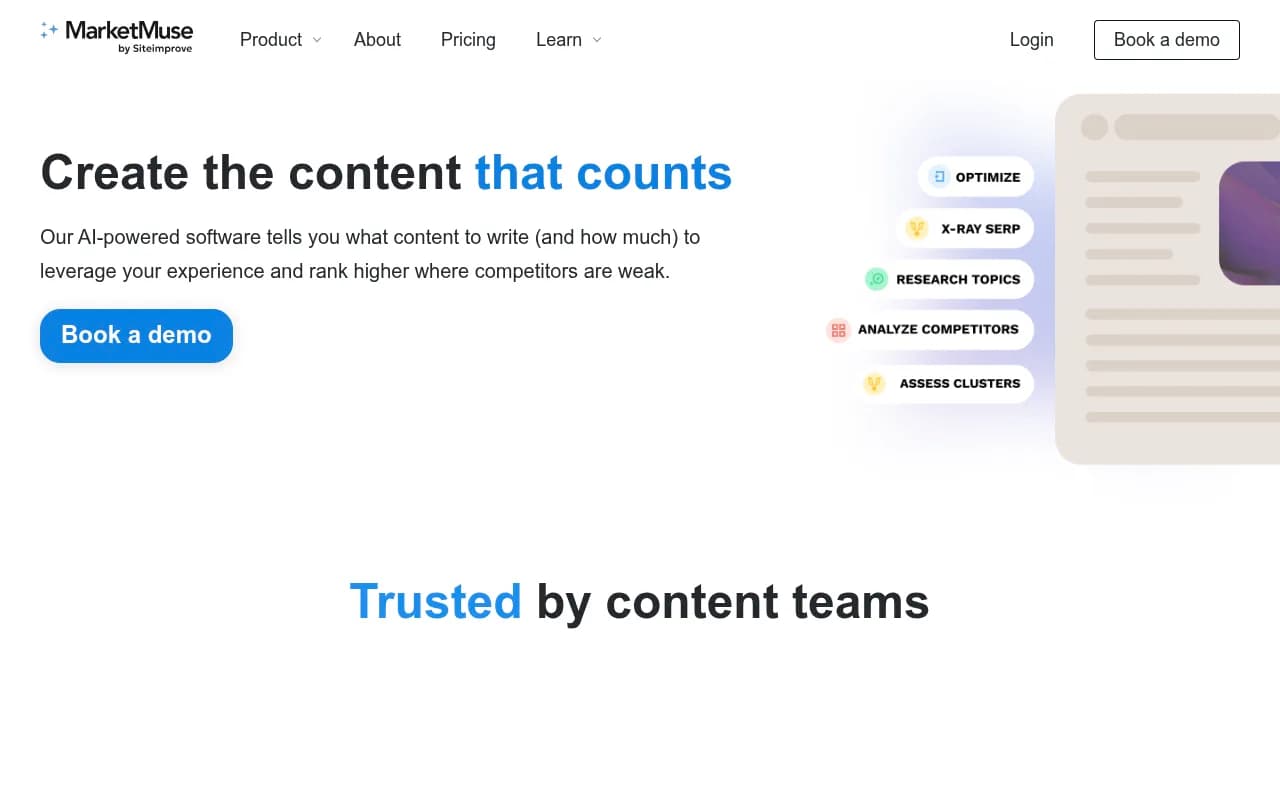
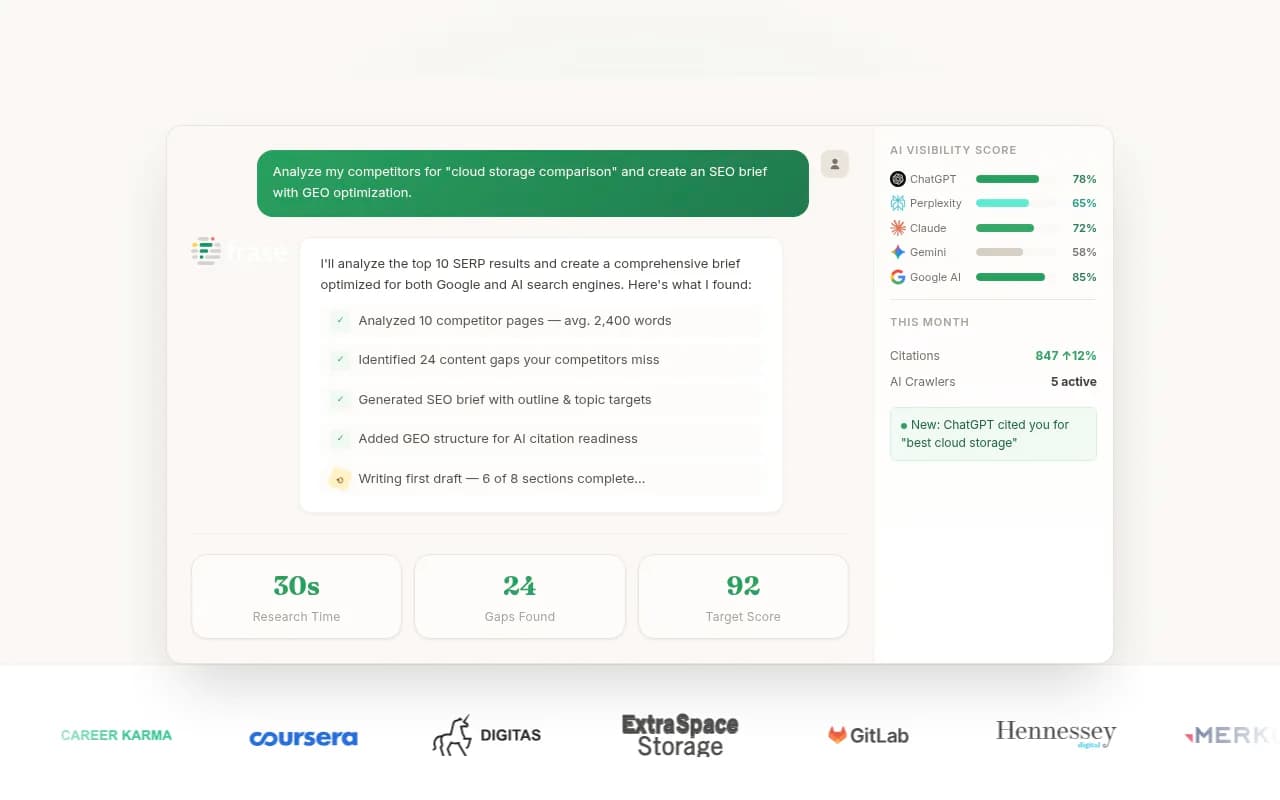
For content strategy: MarketMuse and Frase both help with content planning and optimization, and both have been adding AI search features to their existing workflows.
How to choose the right GEO tool for your situation
The right tool depends on where you are in your GEO journey and what resources you have.
If you're just starting out and want to understand your current AI visibility without a big investment, Otterly.AI or Peec.ai give you a quick read on where you stand. They're affordable and easy to set up.
If you're a mid-market brand or agency that wants to actually improve visibility — not just measure it — you need a platform with content gap analysis and some form of content workflow. Promptwatch is the most complete option at this tier, covering the full loop from gap identification to content creation to results tracking.
If you're an enterprise with a dedicated AEO team and complex reporting needs, Profound or BrightEdge are worth evaluating. Both have the depth for large-scale operations, though the price and implementation complexity are significant.
If you're already deep in the Semrush or Ahrefs ecosystem, their AI visibility add-ons are a reasonable starting point — just go in knowing the limitations around fixed prompts and attribution.
What to watch in the second half of 2026
A few trends are worth tracking as the GEO tool market continues to evolve:
AI models are getting better at real-time web access, which means the gap between "what's on your site" and "what AI cites" is shrinking. Crawler log data will become increasingly important for diagnosing why specific pages aren't getting picked up.
ChatGPT's shopping and product recommendation features are expanding. Brands in e-commerce need to track not just text citations but product appearances in AI shopping results — a capability only a handful of platforms currently support.
The volatility in AI citations is real. Research suggests 40-60% monthly variance is normal as models retrain and update their knowledge. This makes point-in-time snapshots less useful than trend data over time — another reason to prioritize platforms with strong historical tracking.
Finally, the "entity" framing is becoming more useful than the "keyword" framing for GEO. AI models don't just match keywords — they reason about relationships between brands, topics, and claims. The tools that help you build entity authority (through structured data, consistent brand signals, and authoritative citations) will have an edge over pure keyword-focused approaches.
The GEO tool market will keep consolidating. Some of the monitoring-only players will add content features or get acquired. The platforms that built the full workflow early will be harder to displace.