Key takeaways
- When ChatGPT receives a local service query, it doesn't run a single search -- it fans out into multiple sub-queries covering reviews, location signals, service type, and trust indicators simultaneously.
- Most local businesses are invisible in these responses not because they lack a website, but because their content doesn't answer the specific sub-questions AI models are asking.
- Schema markup, review signals, and structured service pages are the three biggest levers for local AI visibility right now.
- Tracking which prompts trigger your business to appear (and which don't) is the only way to know if your optimization is working.
- The gap between businesses that show up in AI answers and those that don't is widening fast -- and it's not correlated with ad spend.
The moment everything changed for local search
A homeowner in Jacksonville noticed her kitchen faucet dripping last spring. She didn't open Google. She picked up her phone and said: "Hey ChatGPT, who's a good plumber near me that won't rip me off?"
ChatGPT gave her three names. She called the first one. They came out the next morning. $280 faucet replacement. Done.
She never saw an ad. Never visited a website. Never scrolled a map pack.
According to Digital Footprint Solutions, roughly 1 in 3 homeowners now use AI assistants to find contractors -- and that number is climbing. The shift from "Google it" to "ask ChatGPT" is happening faster in local services than almost any other category, partly because the stakes feel personal. People want a recommendation they can trust, not a list of paid results.
So what actually happens inside ChatGPT when someone types "best plumber near me"? The answer is more complex than most business owners realize -- and understanding it is the first step to doing something about it.
What "fan-out" means and why it matters
Fan-out is the term for what happens when a single user query triggers multiple internal sub-queries. ChatGPT doesn't just process "best plumber near me" as one question. It breaks it apart.
Think of it like a detective gathering evidence from several sources at once rather than checking one file. The model fans out to gather information across different dimensions of the question before synthesizing an answer.
For a local service query like "best plumber near me," the fan-out typically covers:
- Location resolution: Where is "near me"? What city, neighborhood, or zip code?
- Service category: What kind of plumbing work? Emergency? Routine? Specific fixture?
- Trust signals: What do reviews say? How long has the business operated? Any complaints?
- Availability and context: Is this urgent? Are there businesses open right now?
- Comparison framing: What makes one plumber better than another in this area?
Each of these sub-queries pulls from different parts of ChatGPT's training data and, in the case of ChatGPT with web browsing enabled, from live search results. The final answer is a synthesis of all those threads.
This is why showing up for "best plumber near me" isn't a single optimization task. It's five or six different ones happening at the same time.
How ChatGPT resolves location for "near me" queries
Location is the trickiest part of local fan-outs, and it's worth spending time here because most businesses misunderstand it.
ChatGPT doesn't have GPS access by default. When a user types "near me," the model has to infer location from context clues:
- The user's stated location in the conversation
- Location data passed by the app or browser (if the user has granted permission)
- Prior conversation context ("I'm in Austin, Texas -- who should I call?")
- Implicit signals in the query ("best plumber in Buckhead" vs. "best plumber near me")
When no location context exists, ChatGPT will often ask a clarifying question: "What city or area are you in?" This is actually a fan-out trigger -- the model is pausing to gather the location input it needs before it can complete the rest of the query decomposition.
Once location is resolved, the model fans out to find businesses associated with that geography. This is where your Google Business Profile, local citations, and location-specific content pages become critical. If your business name appears consistently across Yelp, Angi, HomeAdvisor, local news mentions, and your own website with the same city/service combination, you're more likely to surface in that location sub-query.
Inconsistent NAP (name, address, phone) data across directories is one of the most common reasons local businesses fail to appear in AI answers -- the model can't confidently attribute you to a specific location.
The trust sub-query: reviews and reputation signals
After location, trust is the next major fan-out branch. When someone asks for the "best" plumber, ChatGPT interprets "best" as a quality signal, not just a ranking signal. It looks for evidence of quality.
The primary sources for this sub-query are:
- Google reviews (volume and recency matter, but so does content -- reviews that mention specific services, technician names, and outcomes are more useful to the model than generic "great service!" reviews)
- Third-party directory ratings on Yelp, Angi, HomeAdvisor, and similar platforms
- Mentions in local publications, community forums, and Reddit threads
- Response patterns -- does the business reply to reviews? Do they address complaints?
This is why a plumber with 200 reviews averaging 4.8 stars will almost always outperform a competitor with 40 reviews averaging 4.9 stars in AI responses. Volume signals confidence; the model has more data points to work with.
There's also a recency factor. Reviews from the last 90 days carry more weight than reviews from 2021. ChatGPT's browsing-enabled responses in particular will pull fresh review data, so a business that stopped actively collecting reviews 18 months ago may have been strong in training data but is now losing ground in live responses.
The service-type sub-query: why generic pages fail
Here's where most plumbing businesses leave the most visibility on the table.
When ChatGPT fans out on service type, it's trying to match the user's specific need to a business's demonstrated expertise. "Best plumber near me" might be asked by someone with a burst pipe at 2am, someone who needs a water heater replaced next week, or someone looking for a contractor to rough-in plumbing for a bathroom addition. These are very different jobs.
If your website has one page that says "Plumbing Services -- we do it all," the model has almost nothing to work with for the service-type sub-query. It can't confidently recommend you for emergency burst pipe repair if you've never published content that specifically addresses emergency burst pipe repair.
Businesses that show up consistently in AI answers for local service queries tend to have:
- Dedicated service pages for each major service category (water heater installation, drain cleaning, emergency plumbing, sewer line repair, etc.)
- FAQ sections that answer the specific questions homeowners ask ("How much does it cost to replace a water heater in [city]?", "How long does a sewer line inspection take?")
- Location-specific landing pages if they serve multiple cities or neighborhoods
- Schema markup that tells AI crawlers exactly what services are offered, where, and at what price range
The schema point is worth emphasizing. LocalBusiness schema with ServiceArea, hasOfferCatalog, and Review markup gives AI models structured data they can parse reliably. It's the difference between the model guessing what you do and knowing what you do.
How the fan-out synthesizes into a recommendation
Once ChatGPT has run its sub-queries -- location, trust, service type, context -- it synthesizes them into a ranked recommendation. The synthesis isn't a simple scoring formula. It's more like a judgment call based on which businesses appear consistently across multiple sub-query results.
A business that appears in the location sub-query AND the trust sub-query AND the service-type sub-query is far more likely to make the final recommendation than one that only appears in one of them. This is the compounding effect of local AI visibility: every signal you add doesn't just help one sub-query, it increases your probability of appearing in the synthesis.
The final answer the user sees is typically two to four business names, sometimes with brief explanations of why each was recommended. Those explanations are drawn directly from the sub-query data -- so if ChatGPT mentions "highly rated for emergency response" next to a business name, it's because the trust sub-query surfaced that specific attribute from reviews or directory listings.
What businesses are getting wrong right now
The most common mistake is treating AI visibility like traditional SEO. Plumbers who are investing in backlinks and keyword density are optimizing for a ranking algorithm that isn't the one making the recommendation.
A few specific patterns that hurt local businesses in AI fan-outs:
Thin or duplicate location pages. Pages that just swap city names without unique content ("Best Plumber in Austin" vs. "Best Plumber in Round Rock" with identical body text) are easy for AI models to identify as low-value. They don't answer the service-type sub-query meaningfully.
No structured data. Without schema markup, the model has to infer your services, location, and hours from unstructured text. It often gets it wrong or skips you entirely.
Review stagnation. A business with 150 reviews and nothing new in six months is losing ground to a competitor with 80 reviews that are all from the last quarter.
Ignoring third-party citations. ChatGPT doesn't only pull from your website. It pulls from Yelp, Angi, HomeAdvisor, local news, Reddit, and anywhere else your business has been mentioned. If those citations are outdated, inconsistent, or absent, you're invisible in the trust sub-query.
No FAQ or Q&A content. The specific questions homeowners ask AI ("Is it worth repairing a 15-year-old water heater or should I replace it?") need to be answered somewhere on your site. If they're not, a competitor who has answered them will get the citation.
Tracking your AI visibility as a local business
This is where most local businesses are flying blind. They might optimize their website, update their Google Business Profile, and collect more reviews -- but they have no way to know whether any of it is actually moving the needle in AI responses.
The only way to know is to track the specific prompts that matter to your business and monitor whether you appear in the answers. Tools like Promptwatch are built for exactly this -- you set up the prompts your customers are likely asking ("best plumber in [city]", "emergency plumber [city] open now", "who to call for water heater replacement [city]"), and the platform tracks whether you appear in responses across ChatGPT, Perplexity, Google AI Overviews, and other models.
The prompt fan-out data is particularly useful here. Promptwatch's query fan-out feature shows how a single prompt like "best plumber near me" branches into sub-queries -- which means you can see exactly which sub-questions you're answering well and which ones you're missing. That's a much more actionable signal than a generic "you appeared in 12% of AI responses this month."
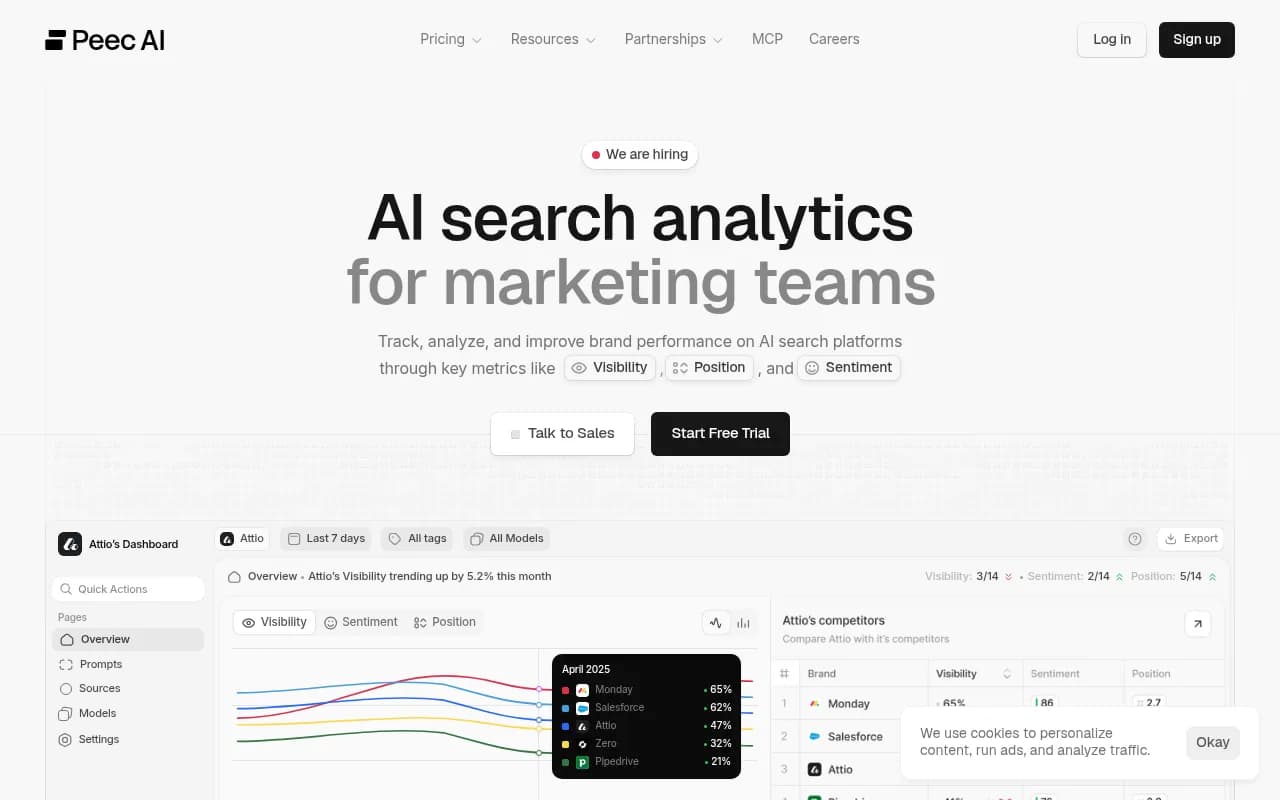
For local businesses without a dedicated marketing team, simpler monitoring tools can at least give you a starting point.
A practical checklist for local service businesses
If you want to improve your chances of appearing when ChatGPT fans out on a local service query, here's where to start:
Fix your structured data first. Add LocalBusiness schema with accurate service areas, hours, phone number, and a service catalog. Use Google's Rich Results Test to verify it's parsing correctly.
Create dedicated service pages. One page per major service category, with real content -- not just a paragraph. Include cost ranges, what the process looks like, how long it takes, and what questions customers typically ask.
Build review velocity. Set up a system to ask every completed job for a review. Aim for at least 2-4 new reviews per week. The content of reviews matters -- encourage customers to mention the specific service and outcome.
Audit your third-party citations. Check your listings on Yelp, Angi, HomeAdvisor, Thumbtack, and your local chamber of commerce. Make sure NAP data is consistent everywhere.
Publish FAQ content. Answer the questions homeowners actually ask AI. "How much does it cost to..." and "Should I repair or replace my..." are high-value formats because they match the conversational queries that trigger fan-outs.
Track your prompts. Pick 10-15 prompts that represent how your customers would ask for your services and monitor them monthly. Without tracking, you're optimizing blind.
How different AI models handle local queries differently
Not all AI models fan out the same way, which matters if you're trying to be visible across multiple platforms.
| AI model | Location handling | Review source | Live web access | Fan-out depth |
|---|---|---|---|---|
| ChatGPT (browsing) | GPS + context | Google, Yelp, Angi | Yes | High |
| ChatGPT (no browsing) | Context only | Training data | No | Medium |
| Perplexity | Strong live search | Multiple directories | Yes | High |
| Google AI Overviews | Google ecosystem | Google reviews | Yes | Very high |
| Claude | Context only | Training data | Limited | Medium |
| Gemini | Google ecosystem | Google reviews | Yes | High |
The practical implication: if you have a strong Google Business Profile and recent Google reviews, you're better positioned for Google AI Overviews and Gemini than for Perplexity or ChatGPT without browsing. Perplexity tends to pull from a wider range of directories, so breadth of citations matters more there.
This is why a multi-model approach to local AI visibility is worth thinking about -- what works for one model doesn't automatically work for all of them.
The competitive reality
The businesses showing up in AI answers for local service queries right now are not necessarily the biggest or the most established. They're the ones whose digital presence is structured in a way that AI models can parse and trust.
A solo plumber with a well-structured website, 200 recent reviews, consistent citations across directories, and dedicated service pages can outperform a regional chain with a bloated site and stale review data. That's genuinely new. Traditional local SEO rewarded ad spend and domain authority. AI visibility rewards clarity and trust signals.
The gap between businesses that have figured this out and those that haven't is growing. The homeowner who asks ChatGPT for a plumber recommendation and gets three names -- those three businesses are going to keep getting that call. Everyone else won't know what they're missing.
Understanding how the fan-out works is step one. Structuring your presence to show up in each sub-query is step two. Tracking whether it's working is step three. Most local businesses haven't started step one yet, which means there's still real opportunity here for the ones that move first.