Key takeaways
- AI search engines like ChatGPT don't answer a single query -- they silently generate 8-12 sub-queries (fan-outs) and synthesize results from all of them
- Winning the "main" keyword isn't enough; your competitor may be showing up across multiple fan-out sub-queries while you only appear in one
- Brand signals -- mentions in third-party sources, Reddit, listicles, and review sites -- heavily influence fan-out visibility, sometimes more than content quality
- The fix isn't just writing better content; it's mapping your content against the full fan-out tree and filling the gaps
- Tools that show you prompt-level visibility and query decomposition give you a real advantage over those that only track top-level keyword rankings
You've done the work. Your content is more thorough, better structured, and more accurate than your competitor's. Yet you search for something directly in your space on ChatGPT, and there they are -- cited, recommended, sometimes even named first. Your site doesn't appear at all.
This is one of the most common and genuinely maddening experiences in AI search right now. And the explanation isn't that ChatGPT is broken, or that your competitor paid for placement, or that you need to write more listicles. The explanation is fan-out queries -- and once you understand how they work, the whole thing starts to make sense.
What fan-out queries actually are
When you type a question into ChatGPT, Perplexity, or Google AI Mode, the model doesn't just look up that exact phrase. It breaks your question apart into a cluster of related sub-queries, runs those in parallel (often against live search results), and then synthesizes everything into a single answer.
Research from Ekamoira found that a single user query typically fans out into 8 to 12 sub-queries. So when someone asks "What's the best project management tool for remote teams?", the AI isn't just searching that phrase. It might simultaneously be searching:
- "project management software comparison 2026"
- "best tools for distributed teams"
- "Asana vs Monday vs ClickUp remote work"
- "project management tools Reddit recommendations"
- "top-rated project management apps reviews"
- "project management software pricing"
- ...and several more
Each of those sub-queries pulls from different sources. The AI then weighs what it found, looks for patterns and consensus, and builds its answer from the sources that appeared most consistently across the whole fan-out tree.
Here's the critical part: if your content only answers the top-level query but doesn't show up in the sub-queries, you're invisible to the synthesis process. Your competitor, meanwhile, might have mediocre main content but appear in five of those twelve sub-queries -- through a Reddit mention here, a comparison listicle there, a review site citation somewhere else. The AI sees them everywhere and concludes they're the authoritative answer.
Why content quality alone doesn't win in AI search
This is the part that feels unfair, and honestly, it kind of is -- at least compared to what we expected from AI.
The assumption most marketers made was that AI search would reward the best content. Better depth, better accuracy, better structure. In practice, AI models are doing something closer to what a researcher does when they Google something: they look for corroboration. If five different sources all point to the same brand, that brand gets cited. If only one source -- yours -- has the right answer, the model might not trust it enough to use it.
Wil Reynolds at Seer Interactive put it well in his analysis of ChatGPT 5.5's fan-out patterns: the tactics that were getting brands into AI answers early on were "almost uniformly low on quality and high on scalability." Listicles, comparison pages, roundup posts. Not because AI models love thin content, but because that kind of content tends to appear across multiple sub-queries simultaneously.
The good news is that ChatGPT 5.5 and newer models are getting better at filtering out low-quality spam. The bad news is that brand signal breadth -- how many different places mention you -- still matters enormously, and that's something most content strategies completely ignore.
The fan-out visibility gap in practice
Here's a concrete scenario. Say you run a cybersecurity company. A user asks ChatGPT: "What are the best endpoint security tools for small businesses?"
Your site has a detailed, well-researched guide on exactly this topic. Your competitor has a shorter, less detailed page -- but they've also been mentioned in:
- A "10 best endpoint security tools" listicle on a tech review site
- A Reddit thread where someone asked for recommendations
- A YouTube video comparing security tools
- A G2 or Capterra profile with reviews
- A guest post on a cybersecurity blog
When ChatGPT fans out that query, it pulls from all of those sources. Your competitor appears in the listicle sub-query, the Reddit sub-query, the review site sub-query. You appear in... your own site. The model synthesizes the results and your competitor looks like the consensus choice.
This is exactly what people on Reddit's r/GenerativeSEOstrategy have been reporting: "Smaller competitors with weaker sites keep getting cited. Mine doesn't come up." It's not a glitch. It's the fan-out mechanism working exactly as designed.
The five layers of fan-out visibility
To show up across a fan-out tree, you need to think about visibility in layers:
1. Your own site content
This is where most brands focus all their energy. You need content that directly answers the top-level query -- but this is table stakes, not a differentiator.
2. Comparison and listicle coverage
AI models frequently fan out into "[category] best tools" or "[product A] vs [product B]" queries. If you're not appearing in those results -- either through your own comparison content or through third-party mentions -- you're missing a major branch of the fan-out tree.
3. Community and forum mentions
Reddit is cited by AI models constantly. Perplexity in particular leans heavily on Reddit threads. If people aren't discussing your brand in relevant communities, you're invisible to a whole sub-query category. This isn't about gaming Reddit -- it's about whether real users are talking about you there.
4. Review platform presence
G2, Capterra, Trustpilot, and similar sites show up in fan-out sub-queries for "[product] reviews" and "[product] ratings." A strong presence here feeds directly into AI citations.
5. YouTube and video content
YouTube content is increasingly cited in AI answers, especially for how-to and comparison queries. If your competitors have video content and you don't, they're winning a sub-query category you're not even competing in.
How to map your fan-out gaps
The first step is figuring out which sub-queries you're actually winning versus losing. This is harder than it sounds because fan-out queries happen invisibly -- you can't see them in your analytics.
One practical approach: take your most important target prompts and manually generate the likely sub-queries yourself. Ask: what would an AI research to answer this question? Then check where you appear (and don't appear) for each of those sub-queries.
A more systematic approach is using a platform that tracks prompt-level visibility and shows you where competitors are appearing that you're not. Promptwatch has an Answer Gap Analysis feature that does exactly this -- it shows you the specific prompts where competitors are visible but you aren't, which maps directly to the fan-out gaps you need to fill.
Building a fan-out content strategy
Once you know your gaps, the fix is less about rewriting your existing content and more about expanding your surface area across the fan-out tree.
Create content that targets sub-queries directly
If "best [category] tools 2026" is a common fan-out sub-query in your space, you need a page that targets that. Not a thin listicle -- a genuinely useful comparison that happens to include you. The goal is to appear in that branch of the fan-out tree with something worth citing.
Get mentioned in third-party sources
This is the part that feels like old-school PR but matters more than ever. Guest posts, podcast appearances, press mentions, and industry roundups all create the kind of third-party citations that AI models pick up in their fan-out research. If you only exist on your own site, you're one node in the tree. If you exist across ten different domains, you're everywhere.
Build a Reddit and community presence
Not spam -- actual participation. Answer questions in relevant subreddits. Share useful content when it's genuinely relevant. The goal is to have real discussions that mention your brand, because those discussions feed directly into AI answers.
Optimize your review profiles
Make sure your G2, Capterra, or relevant review profiles are complete, accurate, and have recent reviews. These pages rank for "[product] reviews" sub-queries and get cited constantly.
Use prompt volume data to prioritize
Not all fan-out branches are equal. Some sub-queries have much higher effective volume than others. Prioritize the gaps that will have the most impact -- which means you need data on which prompts are actually being asked, not just which ones you think matter.
Tracking fan-out visibility over time
Here's where most GEO strategies fall apart: they optimize for fan-outs but have no way to measure whether it's working. Traditional rank tracking doesn't capture this. You need to track visibility at the prompt level, across multiple AI models, and see how it changes as you publish new content and build new citations.
| What you need to track | Why it matters for fan-outs |
|---|---|
| Prompt-level visibility scores | Shows which sub-queries you're winning or losing |
| Competitor visibility by prompt | Reveals which fan-out branches competitors dominate |
| Citation sources | Shows which third-party pages are driving AI mentions |
| Page-level citation tracking | Connects specific content to AI citations |
| Reddit/YouTube mentions | Tracks community and video sub-query coverage |
| Visibility changes over time | Confirms whether your content is actually working |
Most monitoring tools show you a single visibility score and call it done. That's not enough for fan-out optimization. You need granular data at the sub-query level to know where you're winning and where you're still invisible.
Tools worth looking at for this kind of tracking:
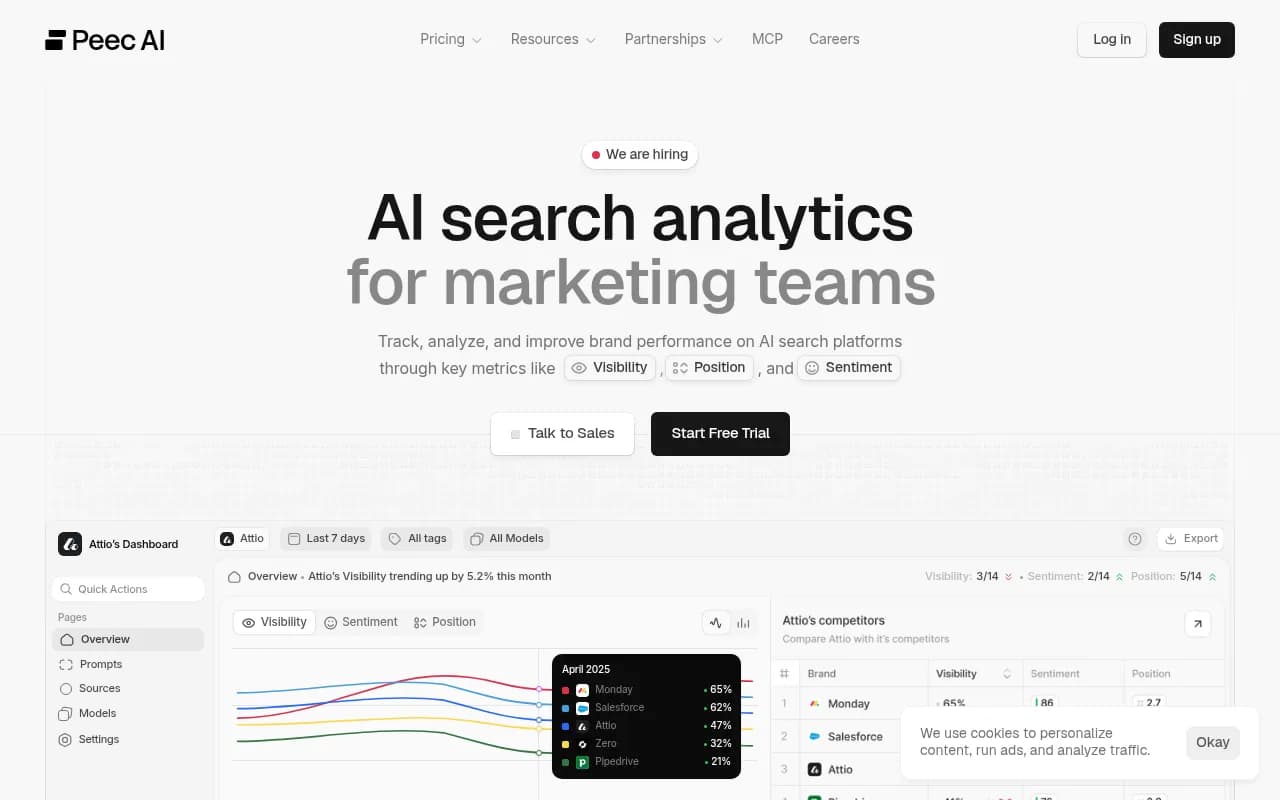
The table below gives a quick sense of how these differ in terms of fan-out and prompt-level capabilities:
| Tool | Prompt-level tracking | Competitor gap analysis | Content generation | Reddit/YouTube tracking |
|---|---|---|---|---|
| Promptwatch | Yes | Yes (Answer Gap Analysis) | Yes (Content Agents) | Yes |
| Peec AI | Partial | Limited | No | No |
| Otterly.AI | Basic | No | No | No |
| Rankscale | Yes | Partial | No | No |
The brand signal problem
One thing that Seer's analysis of ChatGPT 5.5 makes clear: brand recognition is becoming a bigger factor in fan-out visibility, not a smaller one. As AI models get better at filtering spam, they're increasingly weighting sources that appear consistently across multiple contexts -- which is essentially a proxy for brand authority.
This creates a compounding effect. Brands that are already mentioned widely across the web get cited more in AI answers, which increases their perceived authority, which makes them more likely to be cited again. Smaller or newer brands that only exist on their own site get stuck in a loop where they're invisible in AI search despite having excellent content.
The way out of that loop is deliberate, systematic expansion of your brand's footprint across the sources AI models actually cite. That means third-party coverage, community presence, review profiles, and yes -- comparison content that puts you in the same conversation as the established players.
What to do this week
If you're frustrated that a competitor keeps showing up in ChatGPT while you don't, here's a practical starting point:
- Pick your three most important target prompts -- the questions your ideal customers are asking AI models
- For each prompt, manually generate 6-8 likely fan-out sub-queries
- Search each sub-query and note where your competitor appears that you don't
- Identify which gap is easiest to close (a missing comparison page, a review profile, a Reddit thread you could participate in)
- Start there, then track whether your AI visibility improves over the following weeks
The content quality argument isn't wrong -- it just isn't sufficient on its own. Fan-out queries mean that AI models are doing distributed research, and you need to be present across that distribution, not just at the top of it.
The brands winning in AI search right now aren't necessarily the ones with the best single piece of content. They're the ones that appear consistently, across multiple sources, in the sub-queries that feed into the final answer. That's the game, and now you know the rules.