Key takeaways
- Semrush's AI Visibility Toolkit tracks brand mentions, share of voice, and sentiment across major AI platforms including ChatGPT, Perplexity, Google AI Overviews, and Gemini.
- The biggest advantage is consolidation: if you're already paying for Semrush, you get AI monitoring without adding another subscription.
- The biggest limitation is depth: Semrush uses fixed prompt sets, lacks AI crawler logs, and has no content generation tied to AI gap analysis.
- For teams that need to actually fix their AI visibility (not just measure it), a dedicated GEO platform fills the gaps Semrush leaves open.
- Semrush is a reasonable starting point for smaller teams; larger brands or agencies running active GEO programs will likely need more.
What Semrush's AI Visibility Toolkit actually is
Semrush launched its AI Visibility Toolkit as part of the Semrush One bundle, positioning it as the answer to a real problem: brands that rank well in Google but essentially disappear when someone asks ChatGPT or Perplexity the same question.
The toolkit sits inside the Semrush platform and adds a new layer of reporting on top of the traditional SEO data you're probably already familiar with. The core idea is that you shouldn't have to switch between tools to understand your traditional search performance and your AI search performance.
Here's what's actually inside:
AI visibility score and competitor benchmarking
The headline metric is an AI Visibility Score, which aggregates how often your brand appears in AI-generated answers across a set of tracked prompts. You can compare this score against competitors to see share of voice across platforms.
This is genuinely useful for executive reporting. A single number that says "you appear in 34% of relevant AI answers, your top competitor appears in 61%" is easy to communicate and easy to track over time.
Brand performance and sentiment tracking
The Brand Performance section breaks down how different AI models talk about your brand, including sentiment and perception. So you can see whether ChatGPT tends to mention you positively in a category, or whether Gemini rarely mentions you at all.
This is one of the more interesting features because it surfaces differences between models. A brand might have strong visibility in Perplexity but almost none in Google AI Mode, and knowing that helps you prioritize.
Prompt research and prompt tracking
Semrush treats prompts the way it treats keywords: you can research which prompts are relevant to your category and track your visibility for specific ones over time. This is a logical extension of the keyword research workflow most SEO teams already know.
The limitation here is that Semrush uses a fixed prompt set. You're working within prompts Semrush has pre-defined, rather than pulling from real user query data. For most teams this is fine, but it means you might miss niche or emerging prompts that actual users are typing into AI tools.
Third-party brand mentions
This section shows where your brand is being cited in AI answers from external sources: which domains, articles, or pages are being referenced when AI models mention you. The idea is to turn AI citations into PR targets, so you know which publications to pitch or which listicles to try to get included in.
AI site audit
Semrush added an AI-focused site audit that checks whether your site is "AI-ready." It looks at technical factors that affect how AI crawlers read and index your content, things like structured data, page speed, and content clarity.
What the toolkit gets right
The honest answer is: quite a lot, for what it is.
If you're a marketing team that lives inside Semrush for keyword research, site audits, and competitor analysis, having AI visibility data in the same interface is genuinely convenient. You don't have to export data from one tool and import it into another. You can see your SEO performance and AI visibility in one dashboard, which makes it easier to spot correlations between the two.
For smaller companies or teams that are just starting to think about AI search, the Semrush toolkit is a reasonable entry point. It covers the major AI platforms (ChatGPT, Perplexity, Google AI Overviews, Gemini), gives you a competitive benchmark, and doesn't require learning an entirely new tool.
Semrush's own research suggests AI search visitors convert 4.4x better than traditional organic search visitors. If that holds for your category, even modest improvements in AI visibility are worth tracking, and having a baseline measurement is the first step.
Where it falls short
This is where it gets more complicated, and where the gap between "monitoring" and "optimization" becomes obvious.
Fixed prompts, not real query data
Semrush's AI tracking is built around a predefined set of prompts. You're not seeing how real users are actually querying AI tools in your category. You're seeing how you perform on a curated list.
This matters because AI search behavior is highly variable. The way someone asks ChatGPT about project management software is different from how they ask Perplexity, and both are different from what shows up in Google AI Mode. A fixed prompt set can't capture that variation, and it can't surface the long-tail, conversational queries where a lot of AI search volume actually lives.
No AI crawler logs
One of the most useful things a dedicated GEO platform can show you is which AI crawlers are actually visiting your site, which pages they're reading, and whether they're encountering errors. This tells you whether your content is being discovered and indexed by AI models at all.
Semrush doesn't have this. You can see your visibility scores, but you can't see the underlying crawl activity that explains why those scores are what they are. If your AI visibility is low, you don't know if it's because AI models aren't crawling your content, can't parse it, or are crawling it but choosing not to cite it.
No content generation tied to gap analysis
This is the biggest gap. Semrush can tell you that competitors are appearing in AI answers for prompts you're not. It cannot help you create the content that would close those gaps.
The workflow breaks down at the most important step: you identify a gap, and then you're on your own to figure out what to write and how to write it. There's no content brief generation grounded in AI response data, no article generation tied to specific prompt gaps, and no way to track whether new content you publish eventually gets cited.
No Reddit or YouTube tracking
A significant portion of AI citations come from Reddit threads, YouTube videos, and other user-generated content. Perplexity in particular cites Reddit heavily. Semrush doesn't surface which Reddit discussions or YouTube content are influencing AI recommendations in your category, which means you're missing a whole channel of AI visibility that you could potentially influence.
No AI traffic attribution
Semrush can show you your AI visibility score, but it can't connect that visibility to actual website traffic or revenue. You can't see which AI citations are driving clicks to your site, or whether improvements in your AI visibility score are translating into business outcomes.
The monitoring-only problem
The pattern across most AI visibility tools, including Semrush's toolkit, is that they're built to show you data. They're not built to help you act on it.
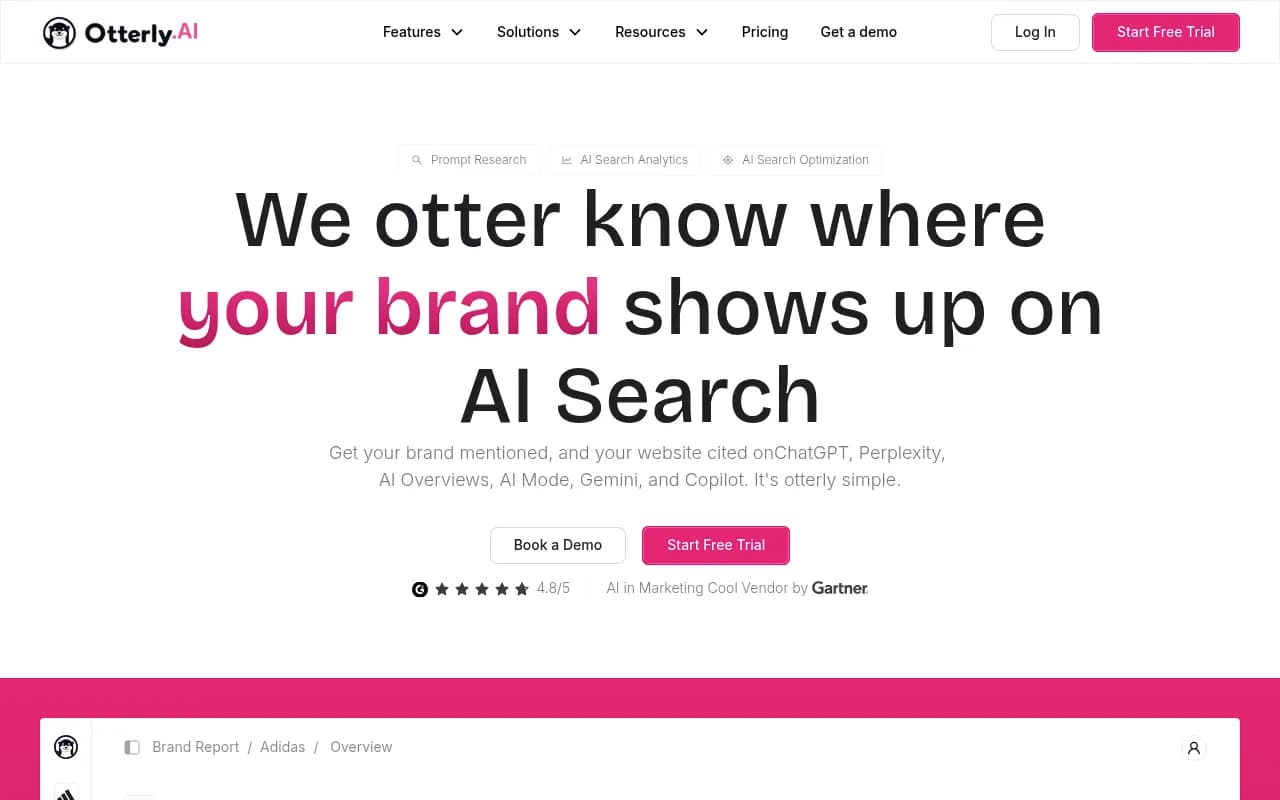
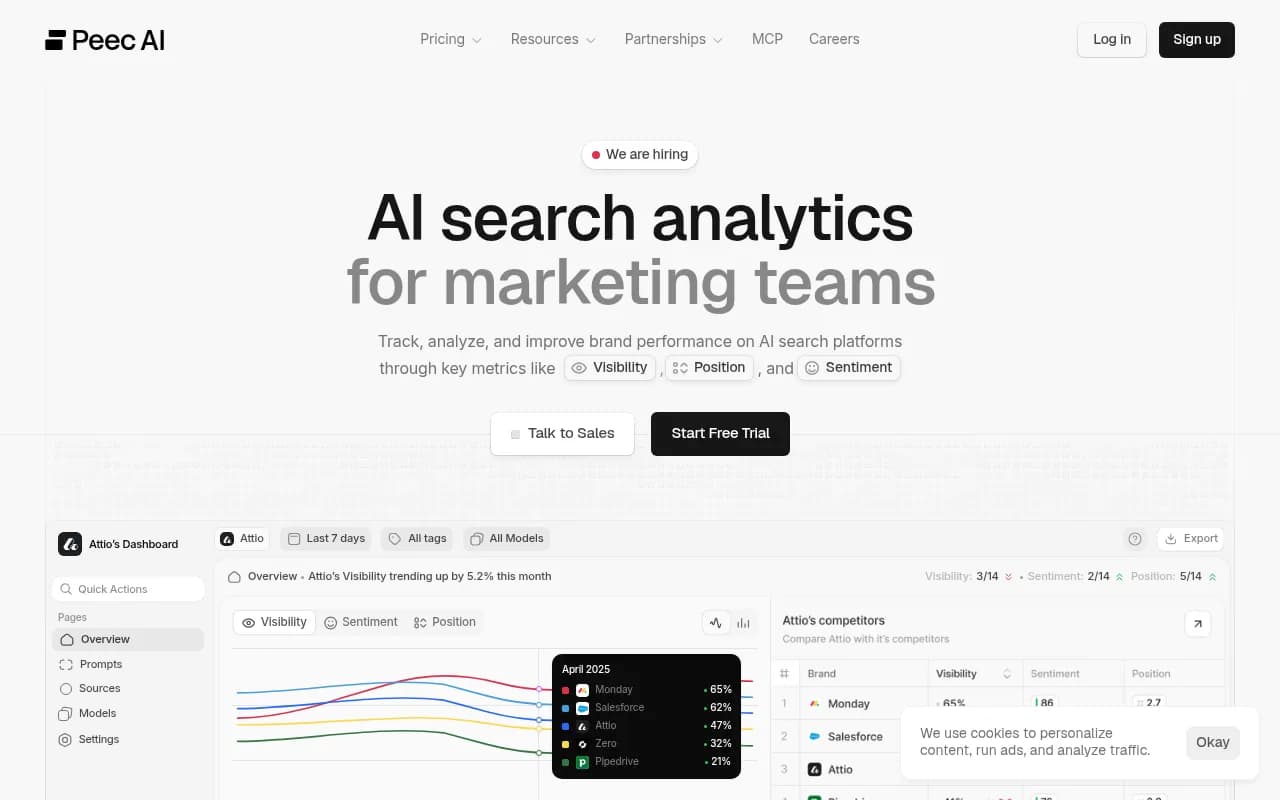
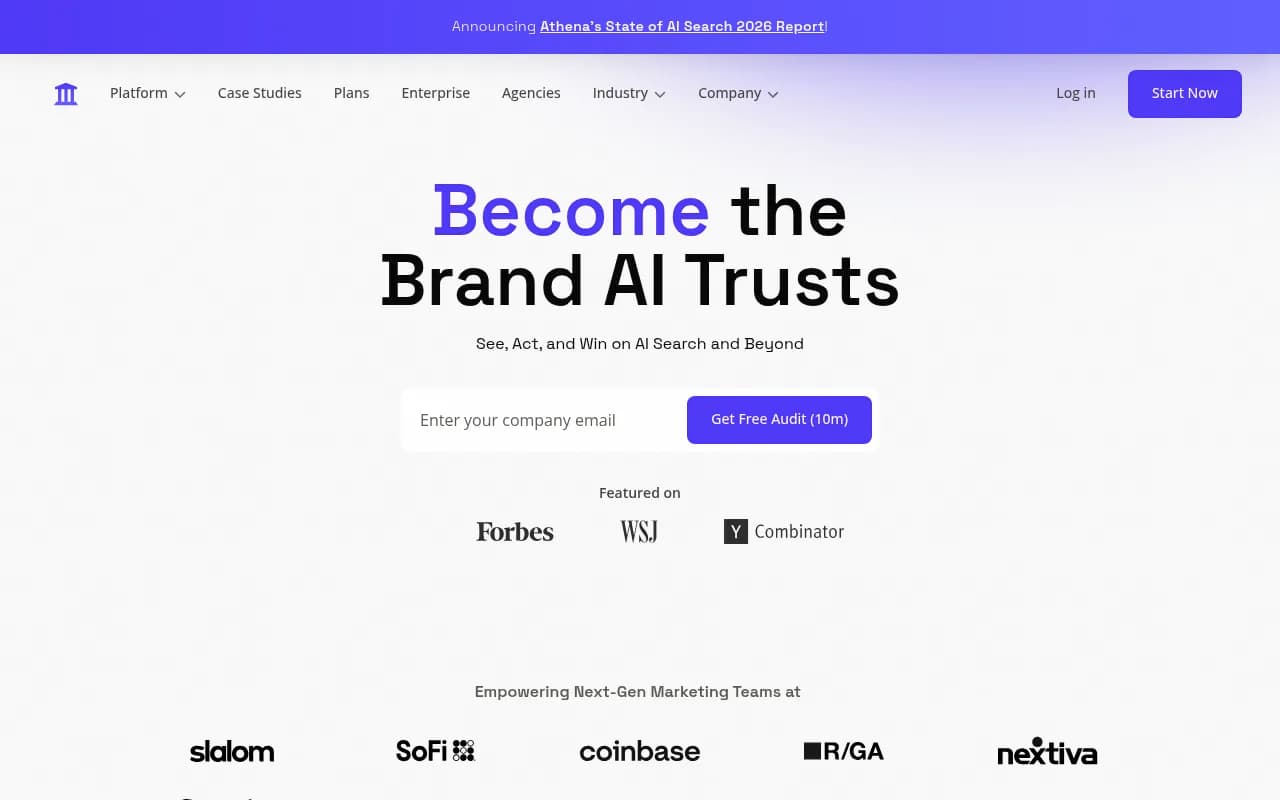
This isn't a criticism unique to Semrush. Most tools in this space, from Otterly.AI to Peec.ai to AthenaHQ, stop at step one: here's your visibility score, here's where competitors are beating you. What you do next is your problem.
The teams that are actually improving their AI visibility are running a different workflow: find the gaps, create content specifically designed to answer those gaps, and track whether that content gets picked up. Semrush covers the first step partially. It doesn't cover the second or third steps at all.
How Semrush compares to dedicated GEO tools
Here's a direct comparison across the features that matter most for an active GEO program:
| Feature | Semrush AI Toolkit | Dedicated GEO tools (e.g. Promptwatch) |
|---|---|---|
| AI visibility score | Yes | Yes |
| Competitor benchmarking | Yes | Yes |
| Prompt tracking | Yes (fixed prompts) | Yes (real query data + custom prompts) |
| Sentiment analysis | Yes | Yes |
| AI crawler logs | No | Yes |
| Content gap analysis | Basic | Deep, with brief generation |
| AI content generation | No | Yes (grounded in prompt data) |
| Reddit/YouTube tracking | No | Yes |
| AI traffic attribution | No | Yes |
| ChatGPT Shopping tracking | No | Yes |
| Multi-model coverage | 4-5 models | 10+ models |
| Page-level citation tracking | No | Yes |
| Traditional SEO integration | Yes (native) | Via integrations |
The tradeoff is real: Semrush wins on consolidation and familiarity. Dedicated GEO platforms win on depth and the ability to actually do something about what you find.
When Semrush is enough
There are situations where the Semrush toolkit is genuinely the right call:
You're already paying for Semrush and your AI visibility needs are basic. If you just want to know whether you're appearing in AI answers and how you compare to a handful of competitors, the toolkit gives you that without adding another tool or budget line.
Your team is small and bandwidth-constrained. If you don't have the capacity to run a full GEO program, having AI visibility data inside a tool you already use is better than having a dedicated platform you never log into.
You're in an early stage of understanding AI search. The Semrush toolkit is a reasonable way to get familiar with the concept of AI visibility before deciding whether to invest in deeper tooling.
You want executive-level reporting without complexity. The AI Visibility Score is a clean, communicable metric that works well for stakeholder updates.
When you need a dedicated GEO tool
The calculus shifts when your needs go beyond basic monitoring.
If you're running content at scale and want to know which topics to prioritize based on actual AI query data, Semrush can't give you that. If you want to understand why your AI visibility is low (crawl issues? content gaps? citation patterns?), you need crawler logs and page-level tracking. If you want to close the gaps you find rather than just document them, you need content generation tied to those gaps.
Promptwatch is built around this full loop: identify gaps through Answer Gap Analysis, generate content through Content Agents grounded in real prompt data, and track whether that content gets cited. It covers 10 AI models, tracks AI crawler activity in real time, surfaces Reddit and YouTube discussions influencing AI recommendations, and connects AI visibility to actual traffic and revenue.
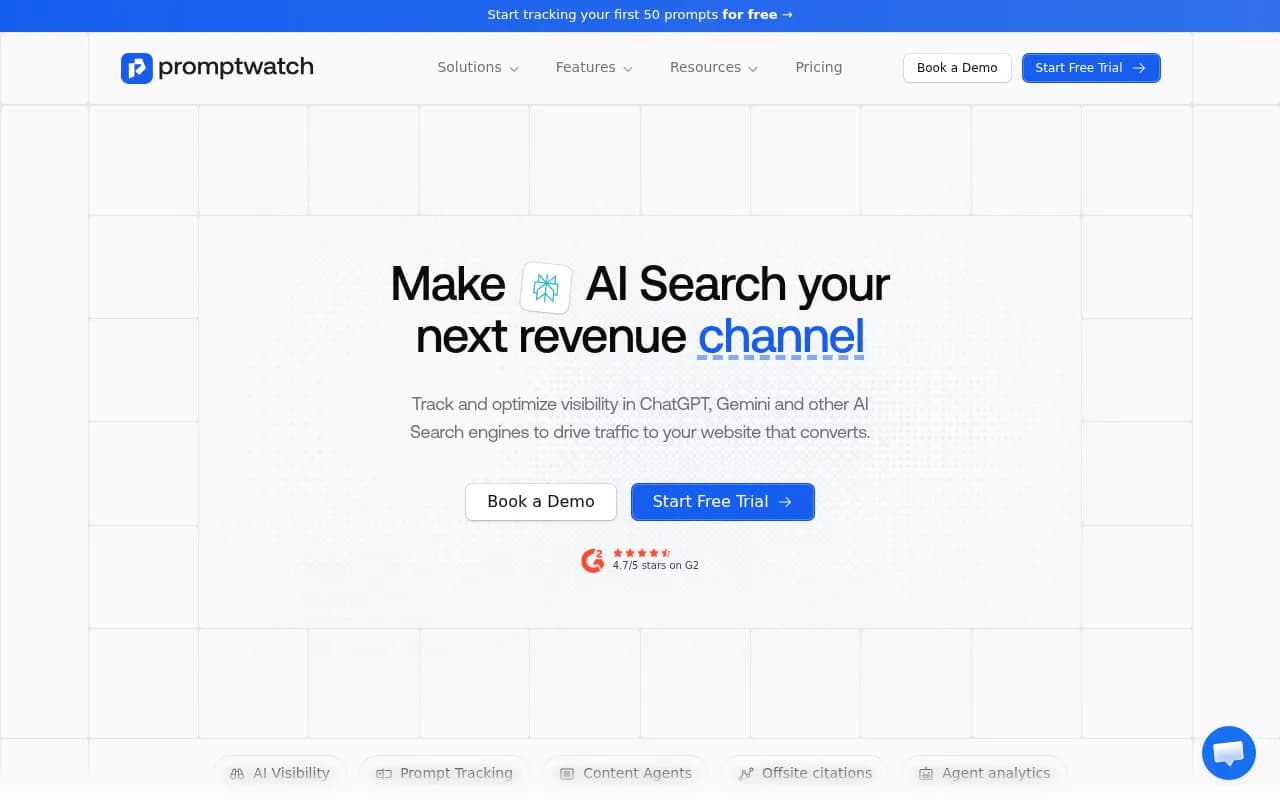
For brands that are serious about AI search as a growth channel, not just a reporting metric, that kind of end-to-end workflow is what separates teams that move the needle from teams that produce dashboards.
Other dedicated GEO platforms worth considering depending on your use case:
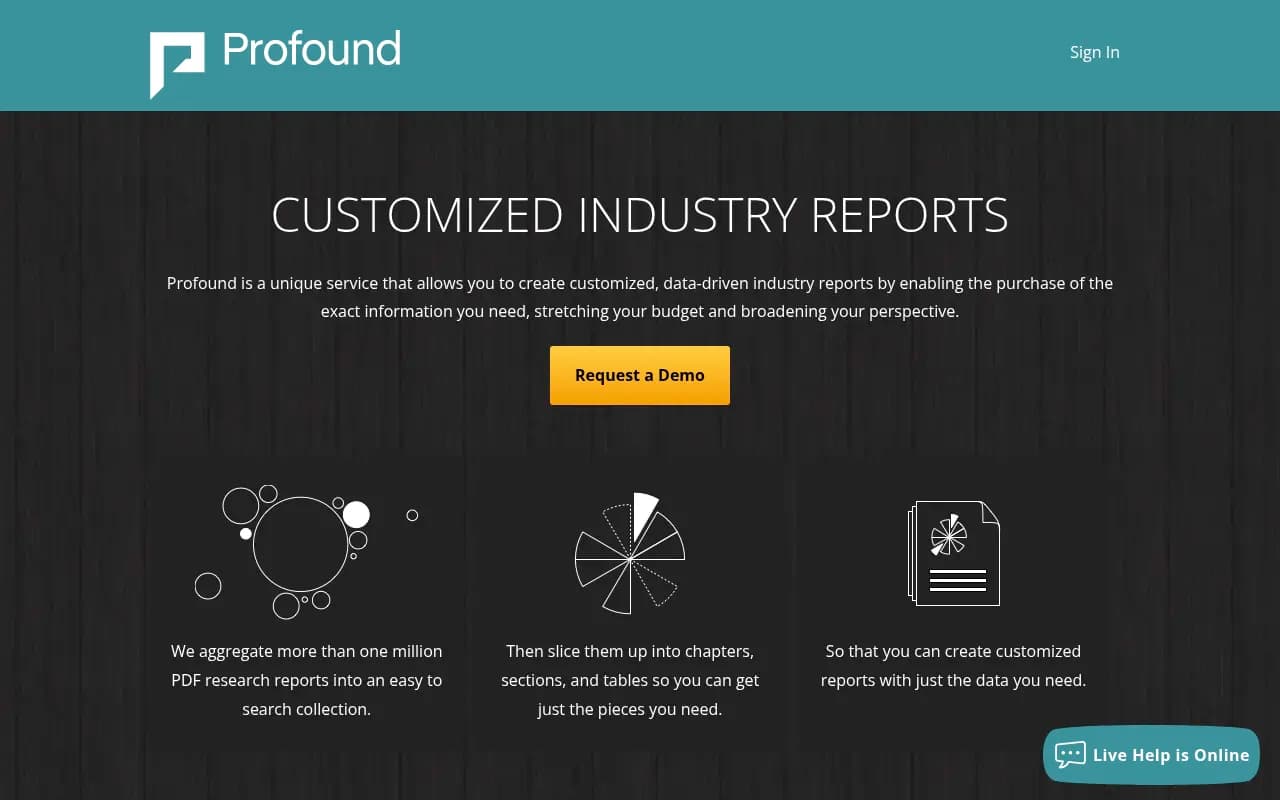
Profound has strong enterprise-grade monitoring and answer engine insights, though at a higher price point than most mid-market teams need.
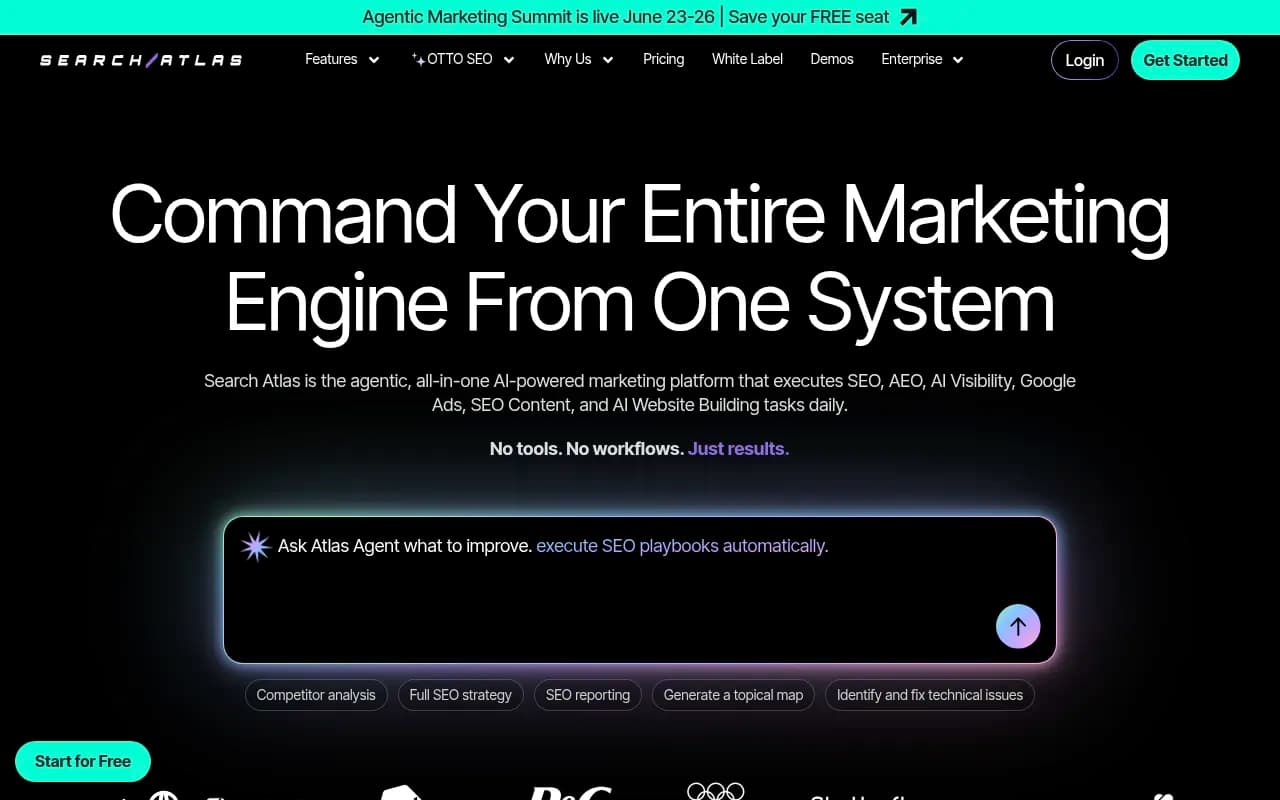
Search Atlas combines traditional SEO with AI visibility tracking and is worth a look if you're evaluating Semrush alternatives more broadly.
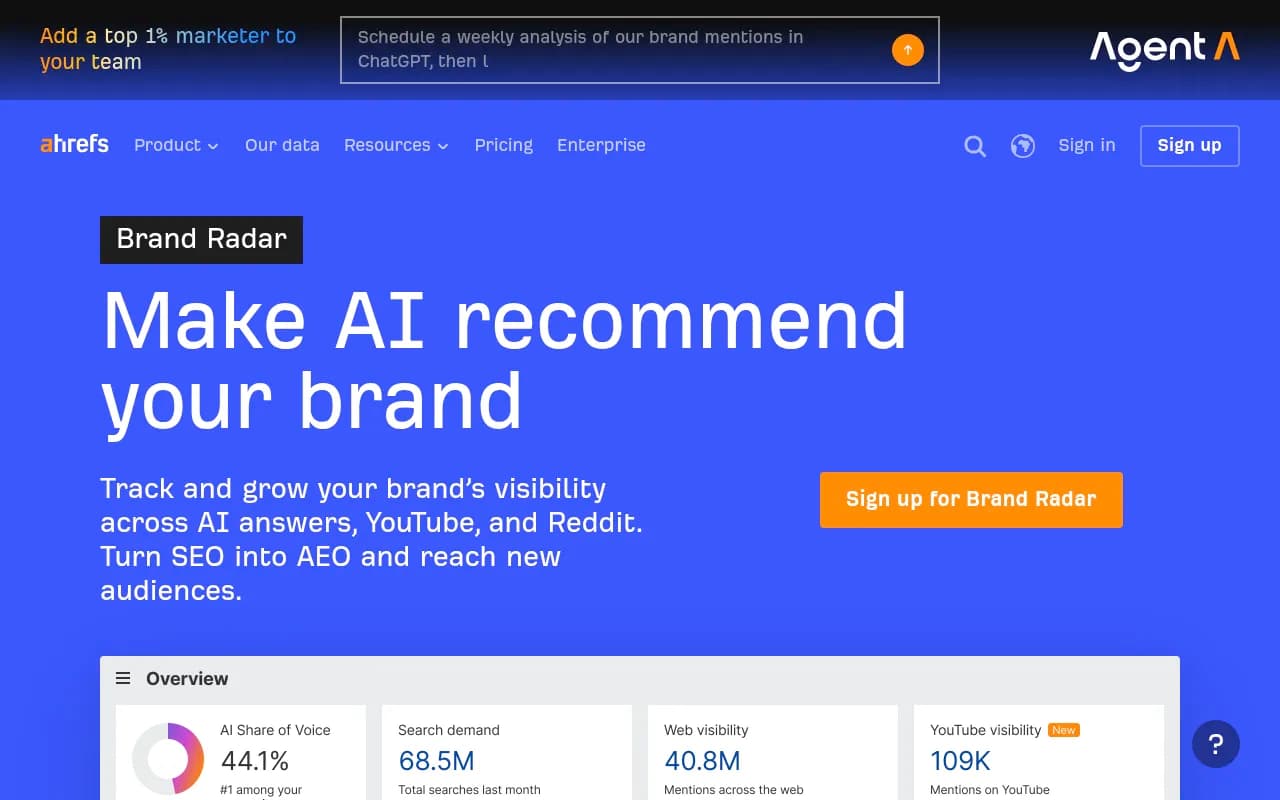
Ahrefs Brand Radar is another option if you're already in the Ahrefs ecosystem, though like Semrush it uses fixed prompts and lacks AI traffic attribution.
A practical recommendation
Start with Semrush if you're already a customer and want to understand your baseline AI visibility without adding new tools. Run it for 60-90 days, track your scores, and see where competitors are consistently outperforming you.
Then ask yourself: do you know why those gaps exist? Do you know what content to create to close them? Can you see whether AI models are actually crawling your site? If the answer to any of those is no, that's when a dedicated GEO platform earns its place in the stack.
The two approaches aren't mutually exclusive. Some teams run Semrush for traditional SEO and use a dedicated GEO tool for the AI-specific workflow. The overlap in data is manageable, and the gaps in Semrush's coverage are real enough to justify the addition for teams running active optimization programs.
What you want to avoid is treating your AI Visibility Score as a destination. It's a starting point. The work happens after you see the number.
Bottom line
Semrush's AI Visibility Toolkit is a solid addition to a platform that most marketing teams already know. It makes AI monitoring accessible, integrates cleanly with existing SEO workflows, and gives you a competitive benchmark without requiring a new tool.
But it's a monitoring product, not an optimization product. It shows you the problem; it doesn't help you solve it. For teams that want to actively improve their AI search presence rather than just track it, the gaps in Semrush's coverage (no crawler logs, no content generation, no Reddit tracking, no traffic attribution) are significant enough to warrant a dedicated GEO platform alongside it.
The AI search channel is real, the conversion data is compelling, and the brands building systematic GEO programs now are the ones that will have a structural advantage as AI search continues to grow. Whether Semrush gets you there depends on how seriously you're taking that opportunity.