Key takeaways
- Most traditional SEO tools that added AI search tracking in 2026 treat it as a bolt-on feature, not a core workflow -- which limits how useful it actually is day-to-day.
- The tools that score highest are the ones where AI visibility data connects to something actionable: content creation, gap analysis, or fixing what's broken.
- Semrush and Ahrefs have the most mature implementations among legacy SEO platforms, but both have meaningful gaps (fixed prompt sets, no traffic attribution).
- If you're serious about AI search visibility rather than just curious about it, a dedicated GEO platform will outperform any of these bolt-ons.
- The ranking below is based on one question: after you see the data, can you actually do something with it?
Something interesting happened in early 2026: almost every major SEO platform quietly shipped an "AI visibility" feature. Semrush added it. Ahrefs added it. SE Ranking added it. Surfer added it. Even some content tools that had nothing to do with rank tracking suddenly had dashboards showing you how often ChatGPT mentions your brand.
The cynical read is that this is feature-flag marketing -- adding a checkbox so sales teams can say "yes, we do that too." The generous read is that these companies are genuinely trying to keep up with a real shift in how people find information.
Both reads are probably true. About 68% of Google searches ended without a click in early 2026, according to SparkToro's analysis of Similarweb clickstream data. ChatGPT hit roughly 900 million weekly active users in February 2026. The pressure on SEO tools to cover AI search is real.
But "covering AI search" and "doing it well" are different things. This guide ranks 7 tools by how useful their AI tracking features actually are -- not how prominently they're marketed.
The ranking criterion is simple: after you see the data, can you do something with it?
How we ranked them
Each tool is scored on four things:
- Coverage: Which AI models does it track? How many prompts?
- Data quality: Is it tracking real user-facing responses or just API outputs?
- Actionability: Does the data connect to content creation, gap analysis, or fixing problems?
- Integration: Does the AI feature fit naturally into the existing tool, or does it feel like a separate product?
The ranking
1. Semrush AI Visibility Toolkit
Semrush has the most complete AI visibility implementation of any legacy SEO platform. It tracks brand mentions across ChatGPT, Perplexity, Gemini, and Google AI Overviews, and the data sits inside the same interface you're already using for keyword research and site audits.
The practical upside: you can see a keyword losing traditional ranking and check whether you're at least appearing in AI answers for the same topic. That cross-referencing is genuinely useful.
The real limitation is that Semrush uses a fixed set of prompts. You can't define the exact questions your customers are asking -- you get Semrush's interpretation of what matters for your category. For niche industries or specific use cases, that gap is noticeable.
There's also no traffic attribution. You can see that Perplexity cited you, but you can't connect that citation to actual visits or conversions.
Still, for teams already on Semrush who want AI visibility without adding another tool, this is the most practical option in the legacy category.
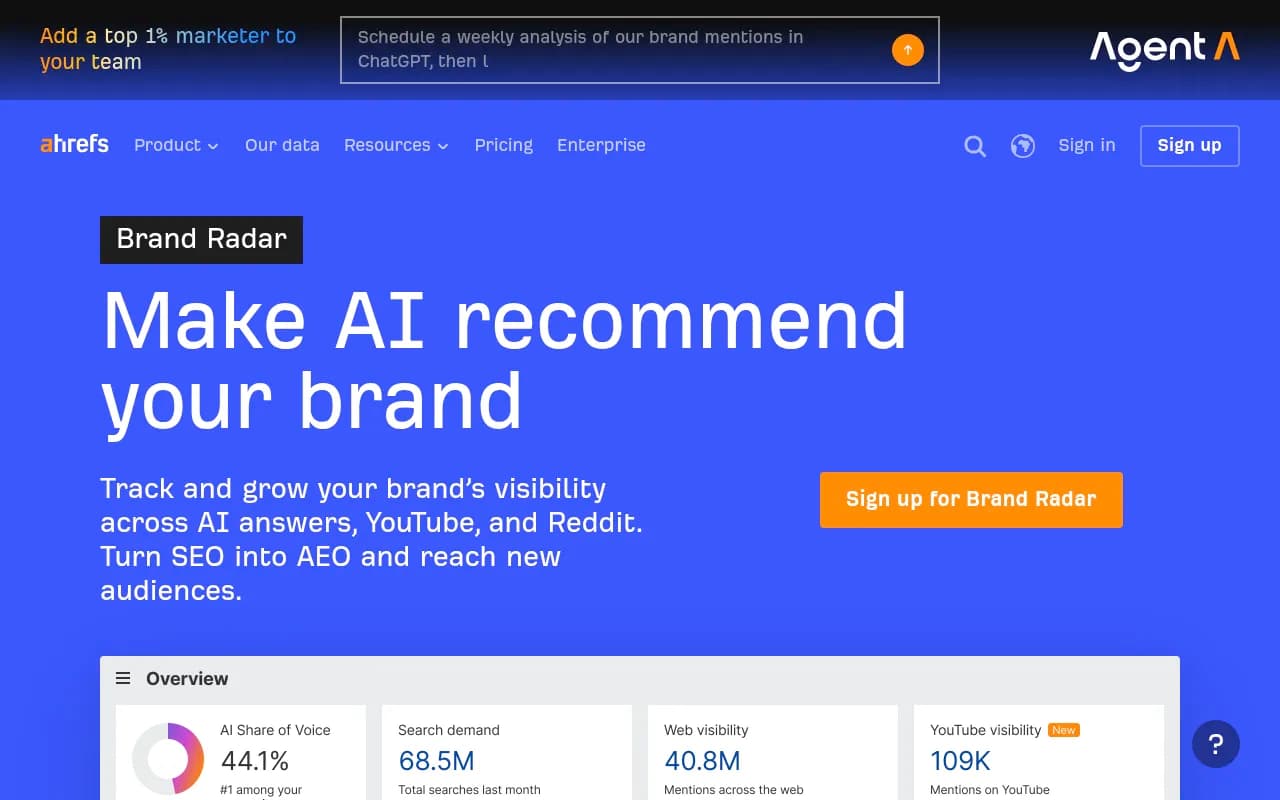
2. Ahrefs Brand Radar
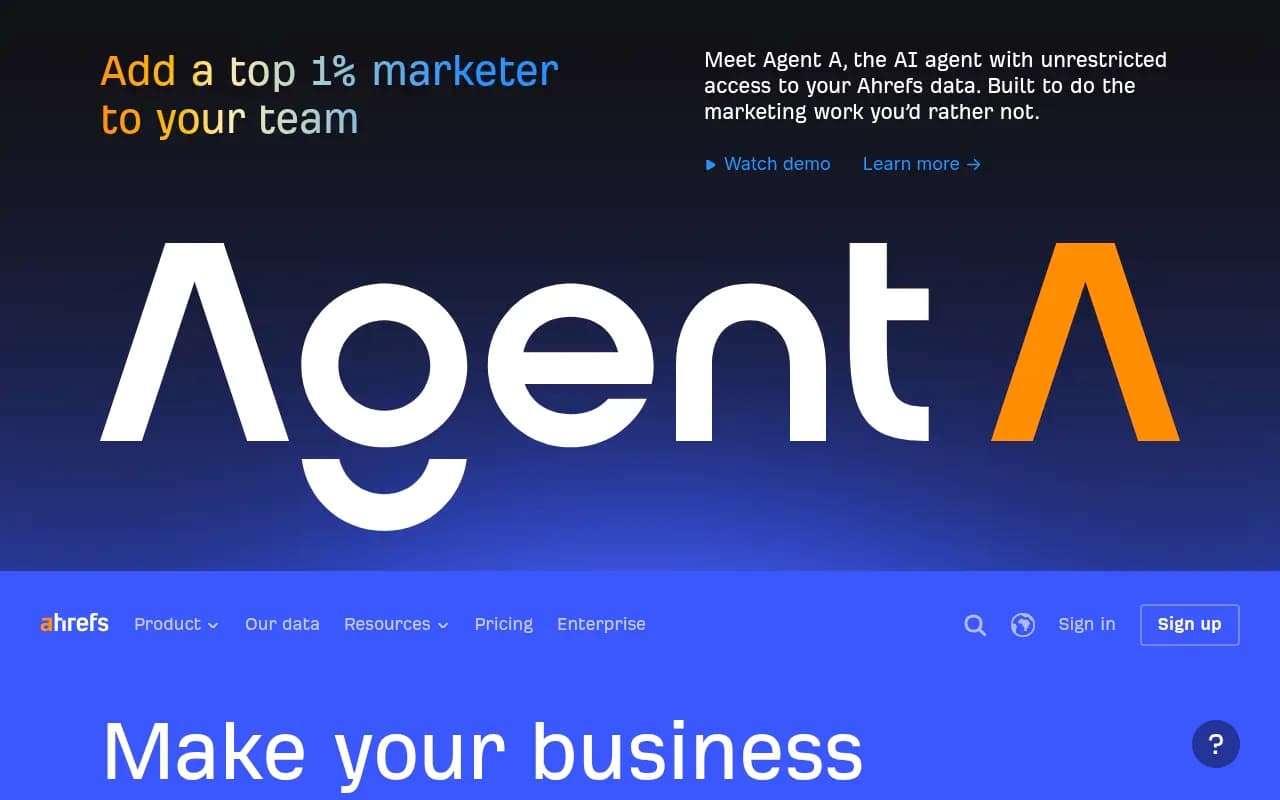
Ahrefs took a slightly different approach. Brand Radar tracks how your brand appears across AI search engines and surfaces which pages are being cited. The interface is clean, and the data is reasonably fresh.
The problem is the same as Semrush: fixed prompts. You can't customize the query set to match your actual customer journey. And like Semrush, there's no AI traffic attribution -- no way to know whether those citations are driving any real behavior.
What Ahrefs does better than most: it connects AI visibility data to its existing backlink and content data, so you can see whether pages that are getting AI citations also have strong link profiles. That's a useful correlation, even if it doesn't tell you what to do next.
3. SE Ranking AI Overview Tracker
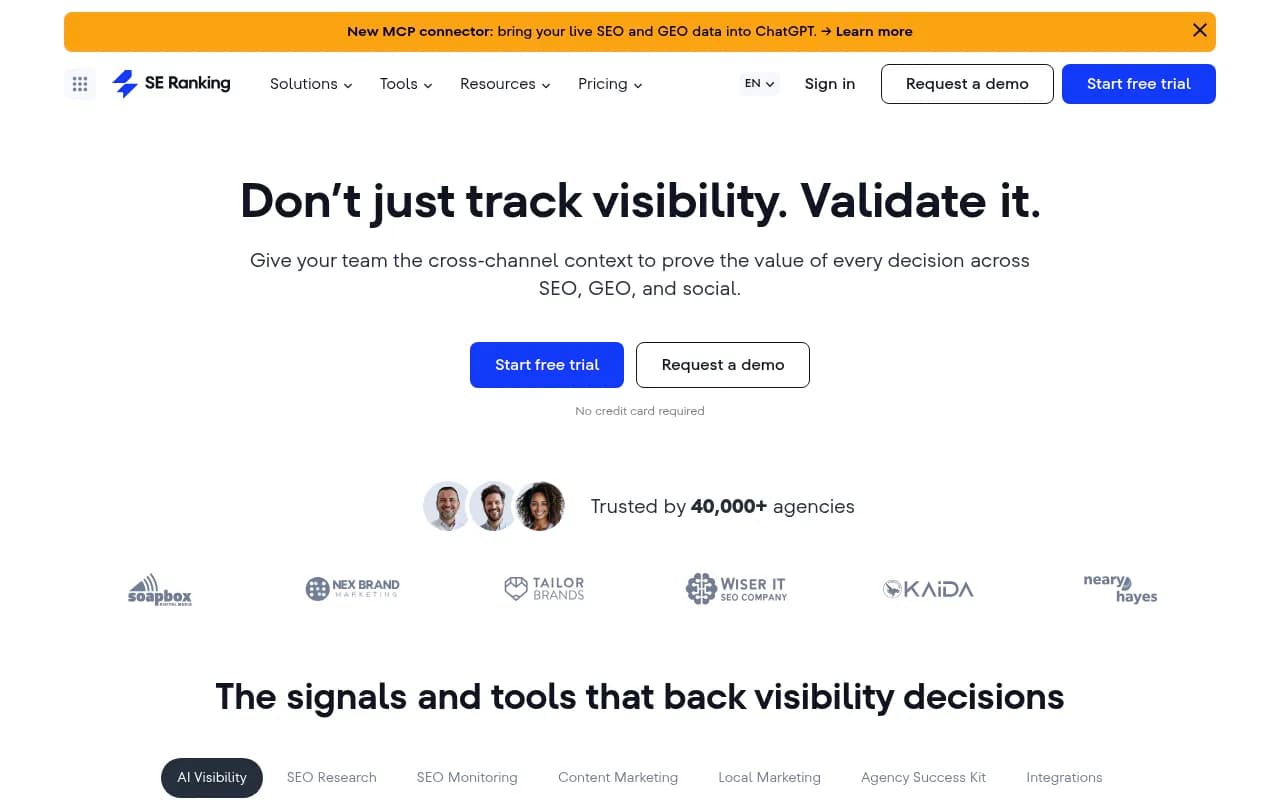
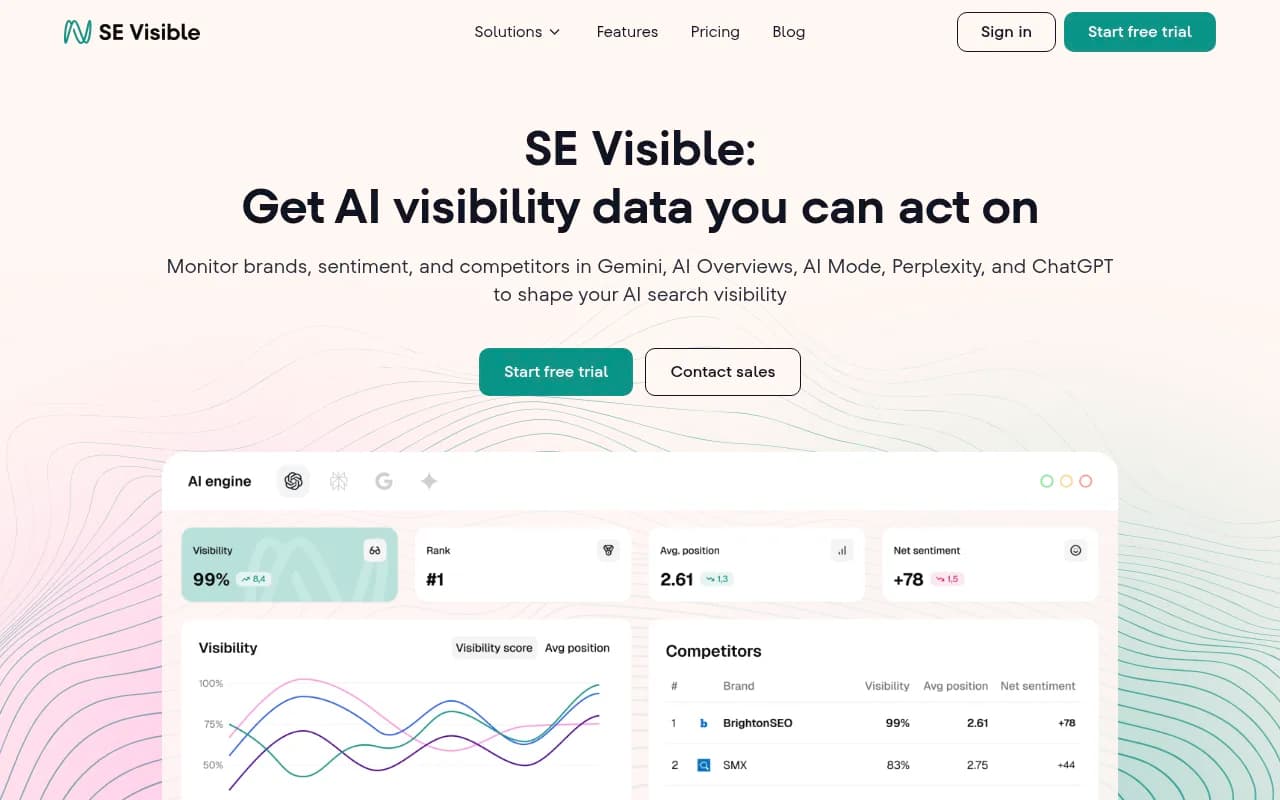
SE Ranking's implementation is more focused than Semrush or Ahrefs -- it specifically targets Google AI Overviews, which is the AI surface that still drives the most measurable organic traffic for most businesses.
The tracker shows you which of your pages appear in AI Overviews, how often, and for which queries. Because it's scoped to Google's ecosystem, the data tends to be more reliable than tools trying to track five different AI models simultaneously.
The downside is the narrow scope. If you care about ChatGPT or Perplexity visibility, SE Ranking's AI feature doesn't help much. It's a good tool for teams where Google AI Overviews is the primary concern, but it's not a complete AI visibility solution.
4. Surfer SEO (AI visibility on Scale plan)
Surfer added AI visibility tracking to its Scale plan in 2026, and the implementation is interesting because it connects directly to Surfer's content editor. The idea: you see which topics are getting AI citations, then use Surfer's editor to optimize your content for those topics.
In theory, that's the right workflow. In practice, the AI visibility data is fairly surface-level -- it shows you whether you're appearing, not why you're appearing or what's missing. The content optimization side of Surfer is genuinely strong, but the AI tracking feels like it was added to justify the price tier rather than because it's deeply integrated.
Worth noting: if you're already a Surfer user optimizing content, the AI visibility layer gives you a useful signal about which content is working in AI search. It's just not a standalone reason to choose Surfer.
5. Writesonic GEO
Writesonic's GEO feature is a mixed bag. It tracks AI visibility across several models and pairs that with content generation -- which is the right combination. The gap analysis shows you where competitors are appearing and you're not, and you can generate content to close those gaps directly in the tool.
The execution is uneven. The prompt coverage is limited, the AI model tracking doesn't include some of the models that matter most (DeepSeek, Grok, Mistral), and the content generation quality varies. It's a genuinely useful feature set that feels like it needs another six months of development.
For smaller teams or solopreneurs who want a single tool that does both tracking and writing, Writesonic GEO is worth considering. For anyone who needs reliable, comprehensive data, it's not there yet.
6. Clearscope (AI topic tracking)
Clearscope is primarily a content optimization tool, and its AI tracking feature reflects that. It shows you which topics are appearing in AI-generated answers, then grades your content against those topics.
The problem is that "topic tracking" is a long way from "AI visibility tracking." Clearscope tells you what topics AI models seem to care about -- it doesn't tell you whether your brand or your pages are being cited. For content teams who want to write for AI search, it's useful context. For anyone who wants to know whether AI is actually recommending them, it's the wrong tool.
Clearscope is still excellent at what it was built for. The AI feature is more of a content strategy input than a visibility tracker.
7. BrightEdge AI Pulse
BrightEdge's AI Pulse feature is enterprise-grade in price and in complexity. It tracks AI visibility across major models and surfaces competitive intelligence about which brands are winning in AI search for your category.
The data is solid. The problem is the workflow. BrightEdge is built for large enterprise teams with dedicated SEO analysts, and the AI Pulse feature follows the same pattern -- lots of data, not much guidance on what to do with it. There's no content generation, no gap analysis that connects to a fix, no crawler logs to help you understand why pages are or aren't being cited.
For enterprise teams that already have the analysts to interpret the data and the resources to act on it separately, BrightEdge AI Pulse is a credible option. For everyone else, the price-to-usefulness ratio is hard to justify.
Side-by-side comparison
| Tool | AI models tracked | Custom prompts | Traffic attribution | Content generation | Crawler logs | Starting price |
|---|---|---|---|---|---|---|
| Semrush AI Toolkit | ChatGPT, Perplexity, Gemini, AI Overviews | No (fixed) | No | No | No | $165/mo |
| Ahrefs Brand Radar | Multiple | No (fixed) | No | No | No | $129/mo |
| SE Ranking AI Overview Tracker | Google AI Overviews | Limited | No | No | No | ~$65/mo |
| Surfer SEO | Limited | No | No | Yes (editor) | No | $79/mo |
| Writesonic GEO | Several | Partial | No | Yes | No | ~$49/mo |
| Clearscope | Topic-level only | No | No | No | No | $129/mo |
| BrightEdge AI Pulse | Multiple | Yes | Limited | No | No | $3,000+/mo |
The honest verdict on bolt-on AI tracking
Here's the pattern across all seven tools: the AI visibility feature was added to an existing product, and it shows. The data is often surface-level, the prompt sets are fixed or limited, and there's almost never a clear path from "you're not appearing here" to "here's how to fix it."
That's not a criticism of any individual tool -- it's a structural problem. Building real AI search tracking is hard. You need to track user-facing responses (not just API outputs, which can differ significantly), process enormous volumes of prompt data, and connect citations to actual traffic. Most of these tools are doing a reasonable job with the monitoring side. The gap is almost always on the action side.
The tools that come closest to closing that gap -- Semrush for breadth, SE Ranking for Google-specific depth, Writesonic for the tracking-plus-writing combination -- are still limited by the fact that AI visibility wasn't their original design goal.
What to look for if you need more than monitoring
If the data in the table above makes you think "none of these quite do what I need," you're probably right. The tools that were built specifically for AI search visibility from the ground up tend to outperform these bolt-ons on every dimension that matters: prompt customization, model coverage, crawler intelligence, and actionable gap analysis.
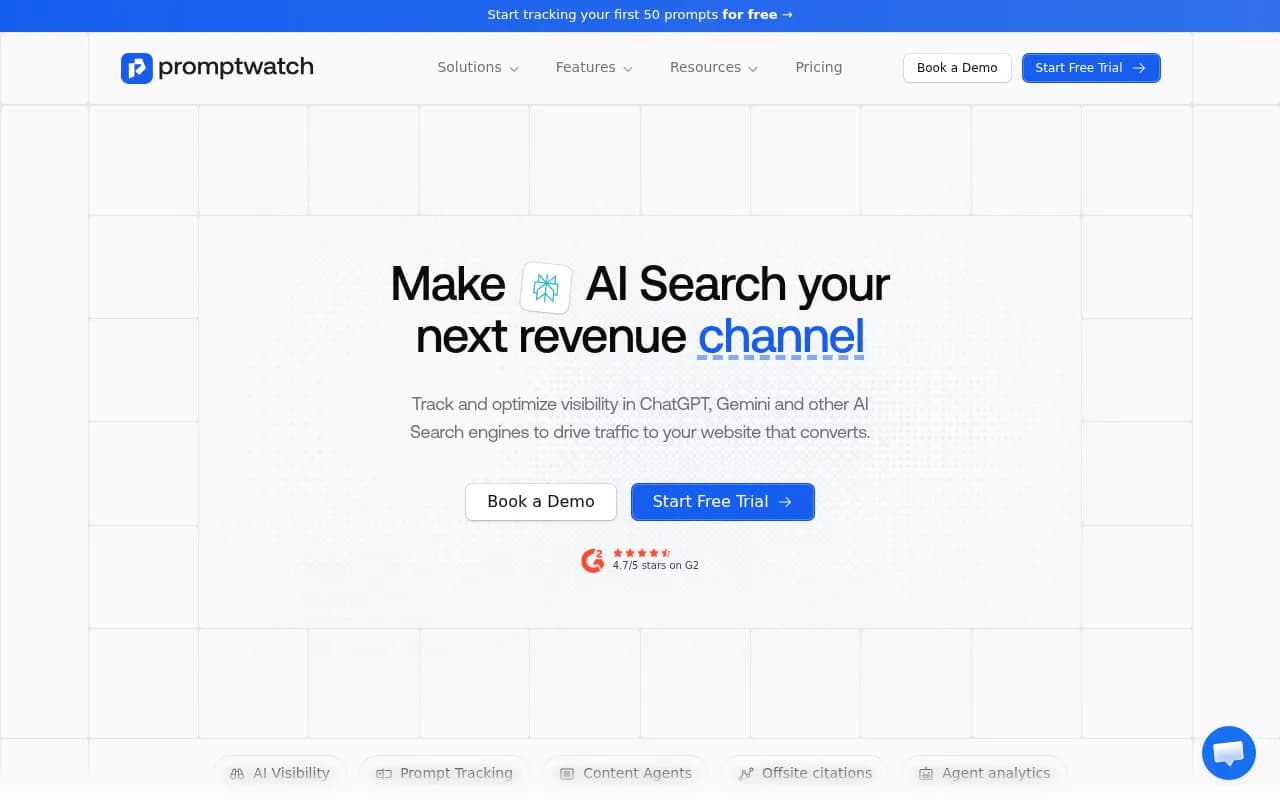
Promptwatch is worth looking at if you're serious about this. It tracks 10 AI models (including DeepSeek, Grok, Mistral, and Copilot -- models most of the tools above don't cover), uses real user-facing response data rather than API outputs, and includes crawler logs that show you exactly which pages AI engines are reading and which ones they're ignoring. The part that separates it from the monitoring-only category is the content generation layer: when you find a gap, you can generate content to close it without leaving the platform.
Other dedicated platforms worth considering:
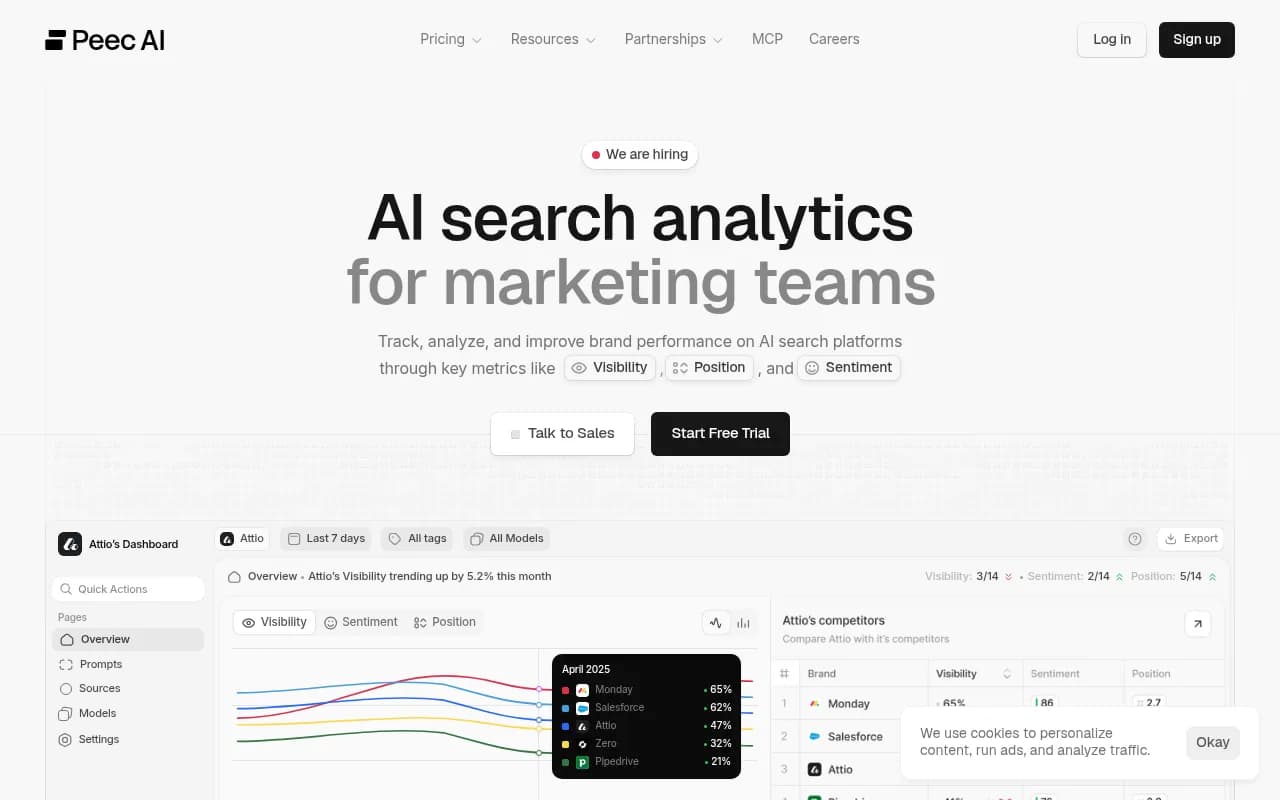
Peec AI is a clean, focused monitoring tool that's good for teams that want straightforward AI visibility data without a lot of complexity.
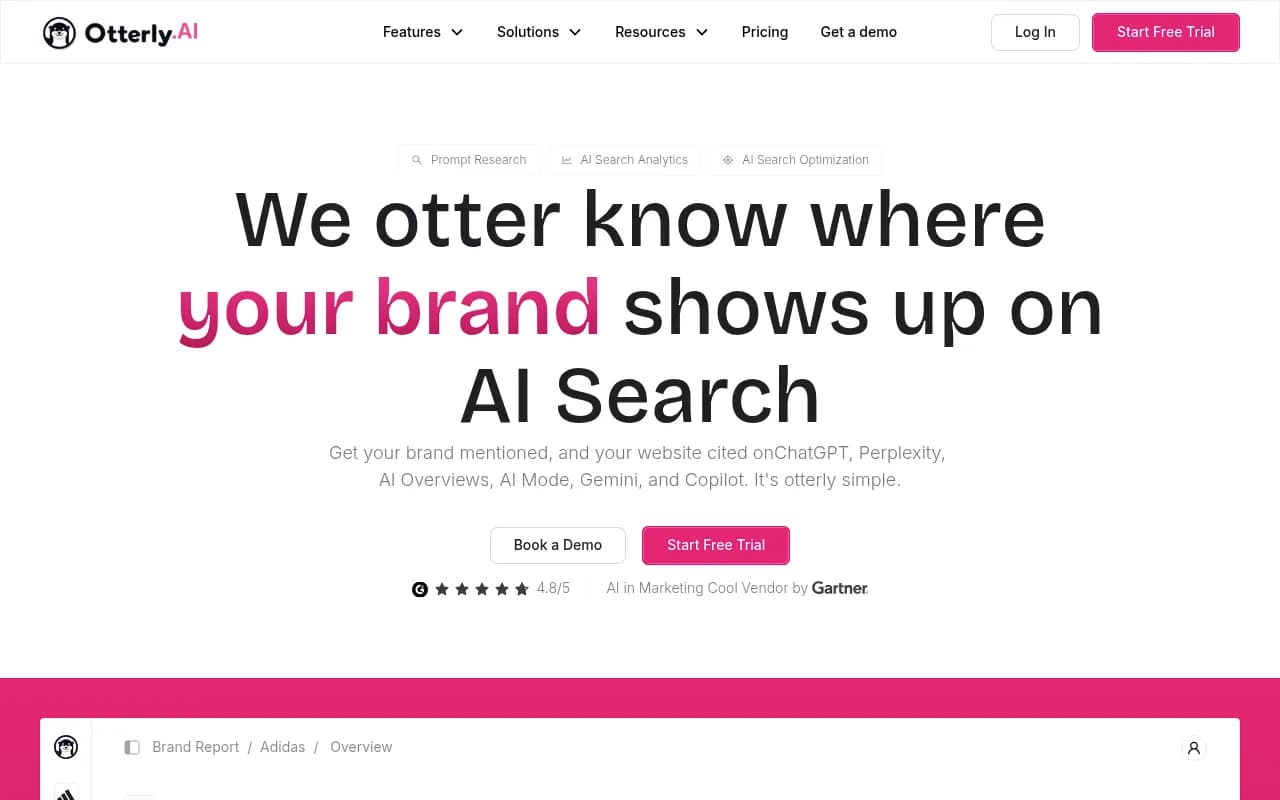
Otterly.AI is one of the more affordable options for brand monitoring across AI models, useful for smaller teams that want to keep an eye on AI mentions without a large budget.
Profound has a strong enterprise-grade monitoring implementation with detailed competitive intelligence, though like BrightEdge it's more of a data platform than an optimization tool.
AthenaHQ covers AI visibility monitoring with good model breadth, though it's primarily focused on tracking rather than helping you act on what you find.
Which tool should you actually use?
It depends on what you're optimizing for:
- If you're already on Semrush and want AI visibility as an add-on, use the AI Toolkit. It's the most integrated bolt-on available.
- If Google AI Overviews is your primary concern, SE Ranking's tracker is the most focused option.
- If you want tracking plus content generation in one place and you're on a budget, Writesonic GEO is imperfect but functional.
- If you need serious AI visibility work -- custom prompts, multiple models, crawler logs, gap analysis, content generation -- none of the seven tools above will fully satisfy you. A dedicated platform is the right call.
The broader point: AI search visibility is becoming a real discipline, not a feature. The tools that treat it as a checkbox will keep falling behind the tools that treat it as a core product. The gap between "we added AI tracking" and "we built an AI visibility platform" is large, and it's getting larger.
Most of the tools in this list are on the wrong side of that gap -- not because they're bad tools, but because AI visibility wasn't what they were built for. That's worth knowing before you decide which one to trust with your strategy.