Key takeaways
- Promptwatch and Otterly.AI were built specifically for AI search visibility; Conductor and BrightEdge added AI tracking onto existing enterprise SEO platforms.
- Monitoring alone is not enough in 2026. LLM-referred traffic converts at 30-40% according to VentureBeat, so brands that can't act on their visibility data are leaving real revenue on the table.
- Promptwatch is the only platform here that closes the full loop: find gaps, generate content to fill them, then track whether citations improve.
- Conductor and BrightEdge are strong choices for large teams that already run mature SEO programs and want AI tracking layered in without switching tools.
- Otterly.AI is the most accessible entry point for teams that want dedicated AI monitoring without enterprise pricing.
The conversation around AI search visibility has shifted fast. Eighteen months ago, most marketing teams were still treating ChatGPT citations as a curiosity. Now Forrester's February 2026 Consumer Pulse Survey shows 26% of consumers use ChatGPT to research products before buying. On the B2B side, research from Magenta Associates found 66% of UK senior decision-makers already use ChatGPT, Copilot, or Perplexity to research suppliers — and 90% of them trust what those tools recommend.
That trust gap is the real problem. If an AI engine recommends a competitor when your buyer asks "who's the best option for X," your website doesn't even get a chance to make its case. You're simply not in the consideration set.
So the question isn't whether to track AI visibility. It's which platform actually helps you improve it.
This guide compares four platforms that enterprise marketing teams are actively evaluating in 2026: Otterly.AI, Promptwatch, Conductor, and BrightEdge. They approach the problem from very different angles, and the right choice depends heavily on what your team already has in place and what you actually need to do with the data.
What separates these four platforms
Before getting into specifics, it's worth understanding the fundamental split in this category.
Otterly.AI and Promptwatch were built from scratch for AI search. They didn't start as traditional SEO tools and bolt on LLM tracking — AI visibility is the core product. That shapes everything: how they define prompts, how they track citations, how they think about optimization.
Conductor and BrightEdge are enterprise organic marketing platforms with deep roots in traditional SEO. Both have added AI search tracking features in 2025-2026, and both have the workflow infrastructure that large organizations need. But AI tracking is a feature set within a broader platform, not the organizing principle.
Neither approach is wrong. They serve different situations.
Otterly.AI
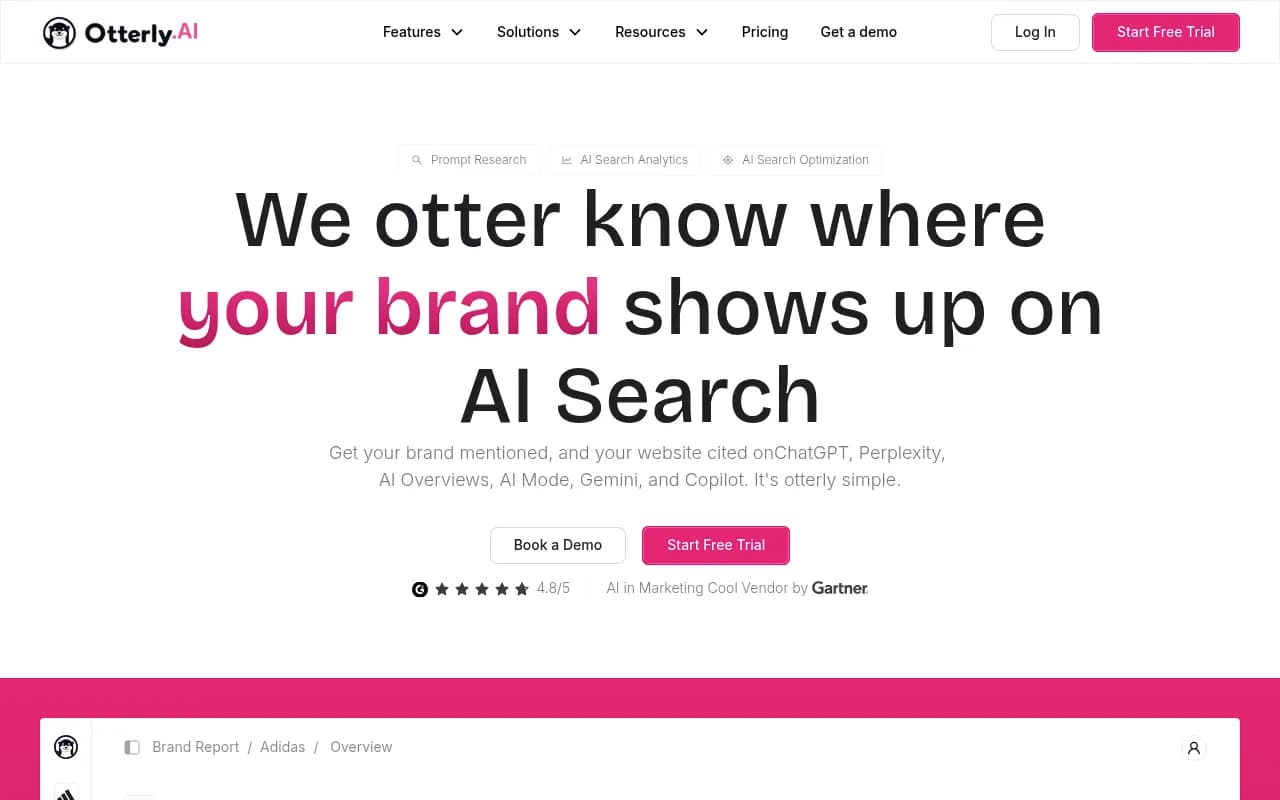
Otterly.AI positions itself as an end-to-end GEO platform built specifically for the AI search era. It covers the major AI engines — ChatGPT, Perplexity, Google AI Overviews, Gemini, and Claude — and tracks brand mentions, citations, sentiment, and competitive positioning across all of them.
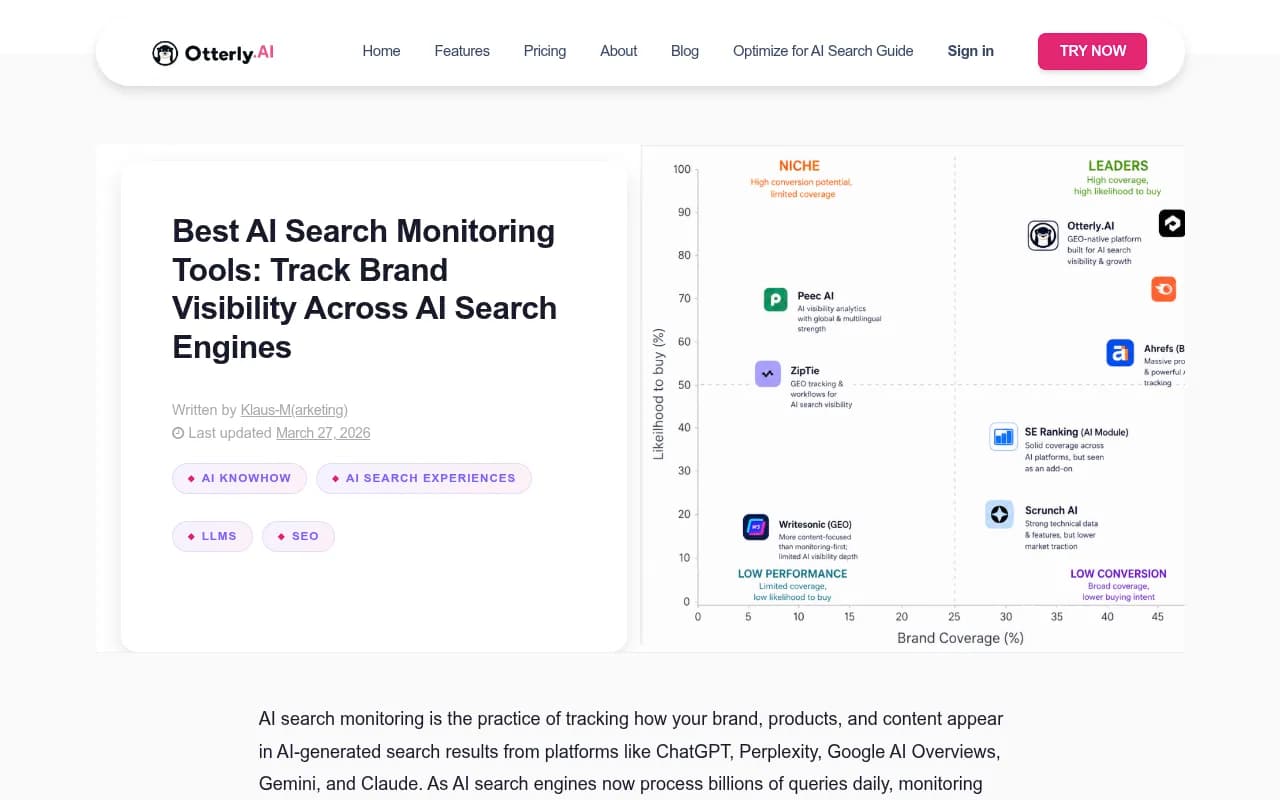
The platform's strength is accessibility. Setup is relatively straightforward, the interface is readable without a long onboarding process, and the pricing is designed for teams that can't justify enterprise contracts. According to Otterly.AI's own 2026 research, 15% of all website traffic now originates from AI agents and bots, with ChatGPT accounting for 56% of AI search referral traffic — and the platform is built to help you understand your share of that.
Where Otterly.AI gets more limited is on the action side. It gives you solid monitoring data: you can see where you appear, where competitors appear, and how sentiment tracks over time. But the path from "I'm invisible for this prompt" to "here's what I do about it" requires more manual work. There's no built-in content generation, no crawler logs showing how AI agents interact with your site, and no traffic attribution connecting visibility to revenue.
For teams that want a dedicated AI monitoring tool and are comfortable doing their own content strategy work, Otterly.AI is a reasonable choice. For teams that need the full optimization workflow in one place, it's the starting point rather than the destination.
Promptwatch
Promptwatch is the platform that's hardest to categorize as just a monitoring tool, because monitoring is only the first step of what it does.

The core workflow is built around three stages. First, Answer Gap Analysis shows you exactly which prompts competitors are visible for that you're not — not as a vague "you're missing coverage here" signal, but as specific questions AI models are already answering from competitor content. Second, Content Agents generate articles, comparisons, and briefs grounded in that prompt data, with brand guidance, competitor analysis, and real citation data baked in. Third, page-level tracking shows whether your new content actually gets cited, by which models, and how often — with agent analytics showing the timeline from publish to crawl to citation.
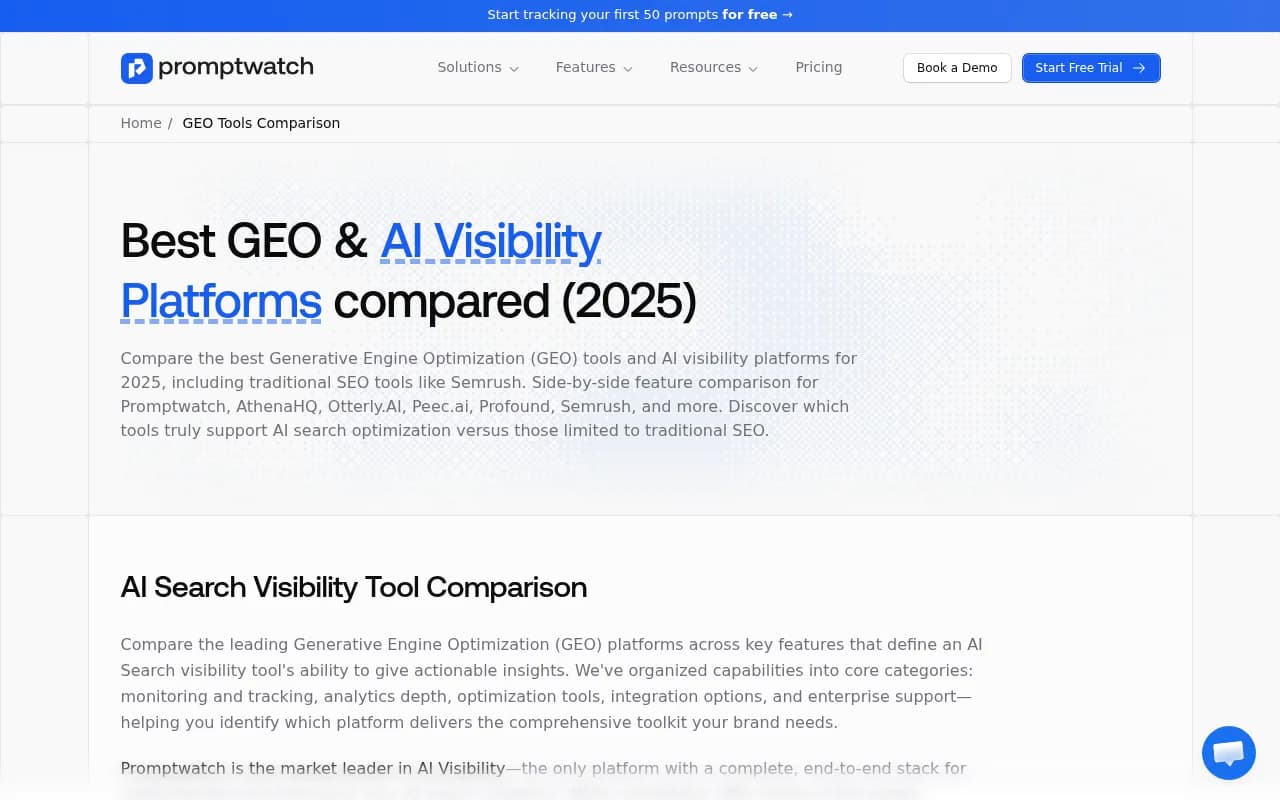
The platform covers 10 AI models: ChatGPT, Perplexity, Google AI Overviews, Google AI Mode, Claude, Gemini, Meta/Llama, DeepSeek, Grok, Mistral, and Copilot. It also tracks Reddit discussions and YouTube content that influence AI recommendations — a channel most competitors ignore entirely.
A few capabilities stand out as genuinely differentiated. AI Crawler Logs show real-time data on which AI crawlers are hitting your site, which pages they read, errors they encounter, and how often they return. Most platforms have no equivalent. ChatGPT Shopping tracking monitors when your brand appears in product recommendations and shopping carousels. Prompt Intelligence gives volume estimates and difficulty scores for each prompt, so you can prioritize high-value, winnable opportunities instead of guessing.
Pricing starts at $99/month for the Essential plan (1 site, 50 prompts, 5 articles), $249/month for Professional (2 sites, 150 prompts, 15 articles, crawler logs), and $579/month for Business (5 sites, 350 prompts, 30 articles). Agency and enterprise pricing is available on request.
The honest limitation: if your team doesn't have bandwidth to act on content recommendations, the optimization layer goes unused. The monitoring data alone is strong, but the platform is designed for teams that want to close the loop, not just observe it.
Conductor
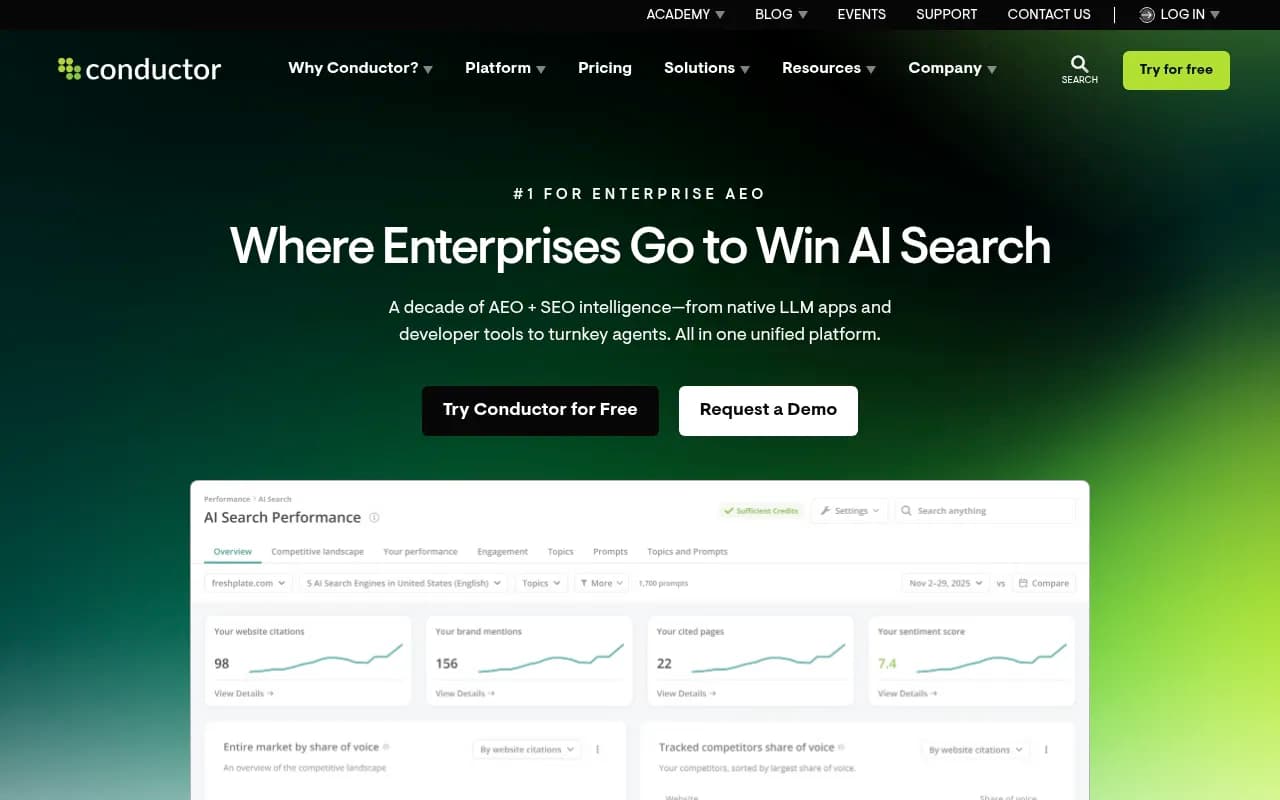
Conductor is an organic marketing platform that's been around long enough to have real enterprise credibility. It's used by large marketing organizations that need workflow management, team collaboration, content calendars, and SEO analytics all in one place — and it's added AI search tracking to that mix.
The AI visibility features in Conductor cover the major engines and give teams visibility into how their content performs in AI-generated answers. Where Conductor genuinely earns its enterprise positioning is in the surrounding infrastructure: integrations with CMS platforms, approval workflows, content performance reporting, and the kind of organizational tooling that a 50-person marketing team actually needs.
The tradeoff is depth on the AI-specific side. Conductor's AI tracking is solid for teams that want to understand their general AI search presence without switching platforms. But it doesn't have the prompt-level granularity, crawler log data, or content gap analysis that dedicated GEO platforms provide. It's AI visibility as a feature, not AI visibility as a product.
If your team is already running Conductor for SEO and content operations, adding AI tracking within the same platform makes sense. If AI search visibility is your primary concern and you're evaluating from scratch, Conductor's AI features alone probably won't be the deciding factor.
BrightEdge
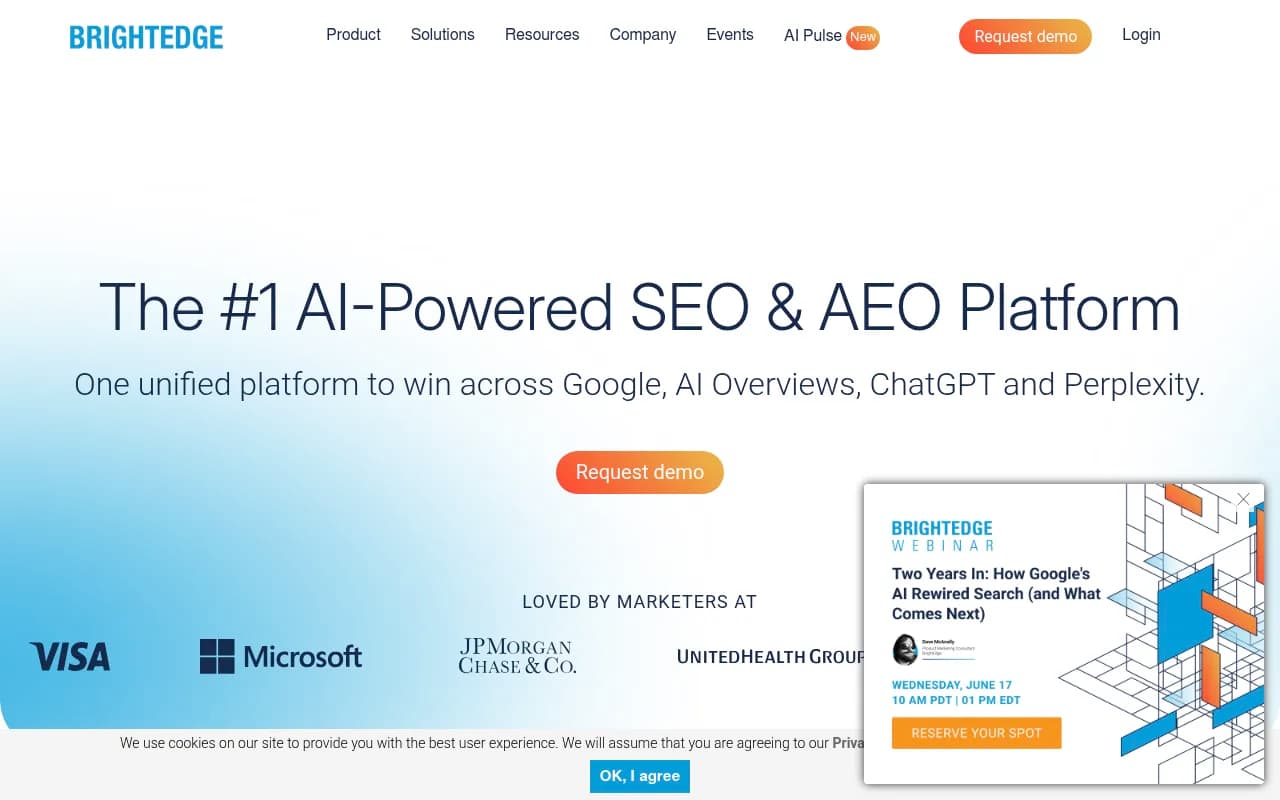
BrightEdge is one of the oldest enterprise SEO platforms in the market, and it has the data infrastructure to show for it. The platform processes enormous volumes of search data and has added AI search intelligence features that fit naturally into its existing analytics framework.
BrightEdge's AI tracking covers major engines and integrates with its broader content performance data, which means you can see AI visibility alongside traditional organic performance in the same reporting environment. For enterprise teams that report on organic channel performance holistically, that unified view has real value.
The platform also has strong integrations and the kind of enterprise support (dedicated CSMs, SLAs, security reviews) that large organizations require before signing contracts.
The limitations are similar to Conductor's: AI search tracking is a layer on top of a traditional SEO platform, not the organizing principle. The prompt-level intelligence, content gap analysis, and crawler log capabilities that dedicated GEO tools provide aren't part of the BrightEdge offering in the same depth. Pricing is enterprise-tier and typically requires a sales conversation, which puts it out of reach for smaller teams.
BrightEdge makes most sense for large enterprises that are already invested in the platform and want to extend their existing SEO reporting into AI search, rather than teams starting fresh with AI visibility as the primary goal.
Head-to-head comparison
| Feature | Promptwatch | Otterly.AI | Conductor | BrightEdge |
|---|---|---|---|---|
| Built for AI search | Yes (core product) | Yes (core product) | No (added feature) | No (added feature) |
| AI models covered | 10 | 5 | Major engines | Major engines |
| Prompt-level tracking | Yes, with volume + difficulty | Yes | Limited | Limited |
| Answer gap analysis | Yes | No | No | No |
| AI content generation | Yes (Content Agents) | No | Partial (content briefs) | No |
| AI crawler logs | Yes | No | No | No |
| Traffic attribution | Yes | No | Yes (organic) | Yes (organic) |
| Reddit/YouTube tracking | Yes | No | No | No |
| ChatGPT Shopping tracking | Yes | No | No | No |
| Competitor heatmaps | Yes | Yes | Partial | Partial |
| Multi-language/region | Yes | Limited | Yes | Yes |
| Enterprise workflow tools | Limited | Limited | Yes | Yes |
| Starting price | $99/mo | ~$49/mo | Enterprise (custom) | Enterprise (custom) |
| Free trial | Yes | Yes | Demo only | Demo only |
Which platform fits which situation
The right answer here genuinely depends on your team's situation, not on which platform has the longest feature list.
If AI search visibility is your primary focus
Promptwatch is the strongest choice for teams where AI visibility is a dedicated priority. The combination of monitoring, gap analysis, and content generation means you're not just watching the problem — you're working on it. The crawler log data and traffic attribution also give you the feedback loop to know whether what you're doing is working.
Otterly.AI is a reasonable starting point if budget is a constraint or if you want to get familiar with AI monitoring before committing to a more comprehensive platform. It covers the basics well and is genuinely easier to get started with.
If you're an enterprise team with existing SEO infrastructure
Conductor and BrightEdge both make sense if your team is already running one of these platforms and wants to extend its capabilities into AI search without adding another vendor. The workflow infrastructure, integrations, and enterprise support are real advantages for large organizations.
The honest caveat: neither platform's AI tracking is as deep as what dedicated GEO tools provide. If AI search visibility becomes a strategic priority rather than a reporting checkbox, you may find yourself needing a dedicated tool alongside your enterprise SEO platform anyway.
If you need to prove ROI to leadership
Traffic attribution is the key capability here. Promptwatch connects AI visibility to actual site traffic and revenue, which makes the business case for continued investment much easier to make. Conductor and BrightEdge have organic attribution built in, but their AI-specific attribution is less developed. Otterly.AI doesn't have traffic attribution at all.
A note on the monitoring-only trap
One pattern worth flagging: several platforms in this category are effectively dashboards that show you data and then leave you to figure out what to do with it. That's useful, but it's not optimization.
The teams seeing real results from AI search in 2026 are the ones that have closed the loop: they know which prompts they're missing, they create content specifically designed to answer those prompts, and they track whether AI models start citing that content. That cycle requires more than a monitoring dashboard.
Promptwatch is the only platform in this comparison that supports all three stages natively. Conductor and BrightEdge have the content workflow infrastructure but not the AI-specific gap analysis. Otterly.AI has the monitoring but not the content generation or attribution.
That doesn't mean every team needs the full stack from day one. But it's worth knowing what you're buying and what you'll need to build or buy separately.
Other platforms worth knowing
If none of the four above are quite the right fit, a few other tools are worth considering depending on your use case.
For enterprise AI analytics with deep prompt data:
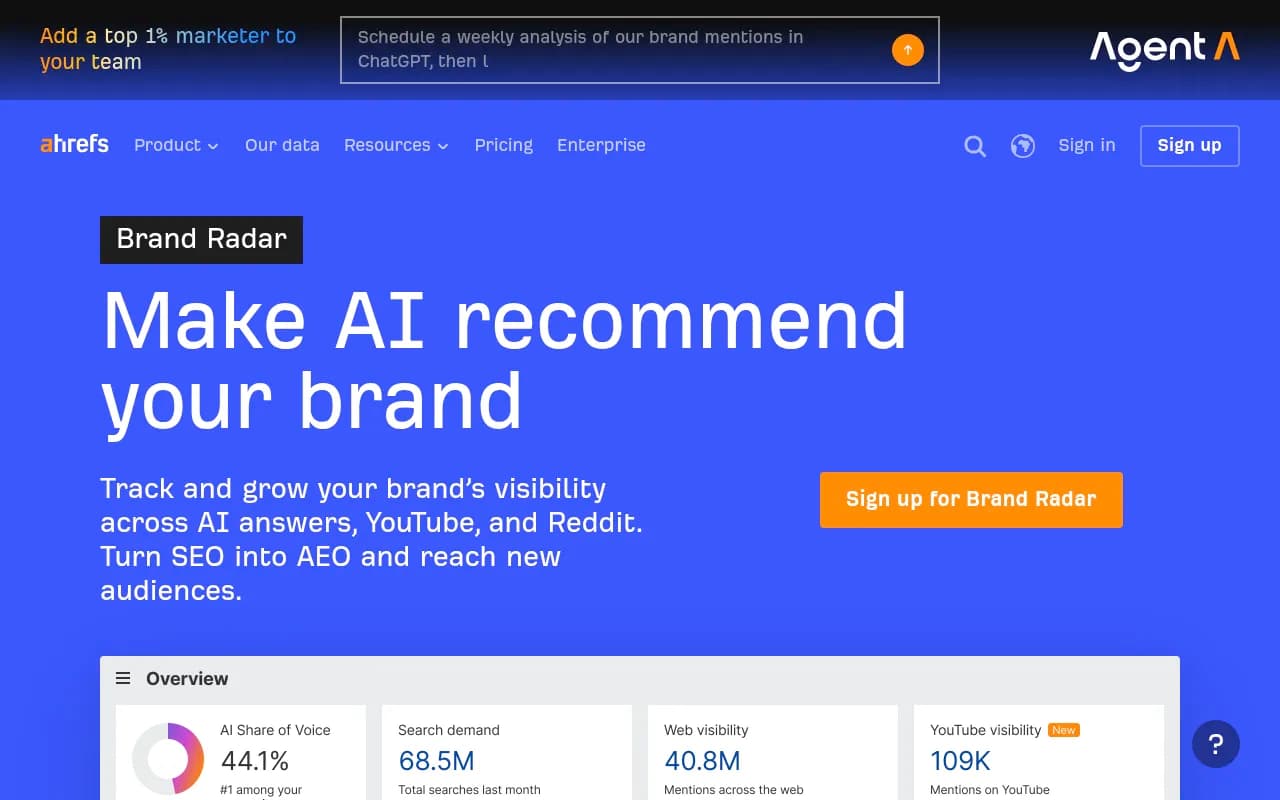
For teams that want AI monitoring integrated with broader SEO research:
For agencies managing multiple clients:
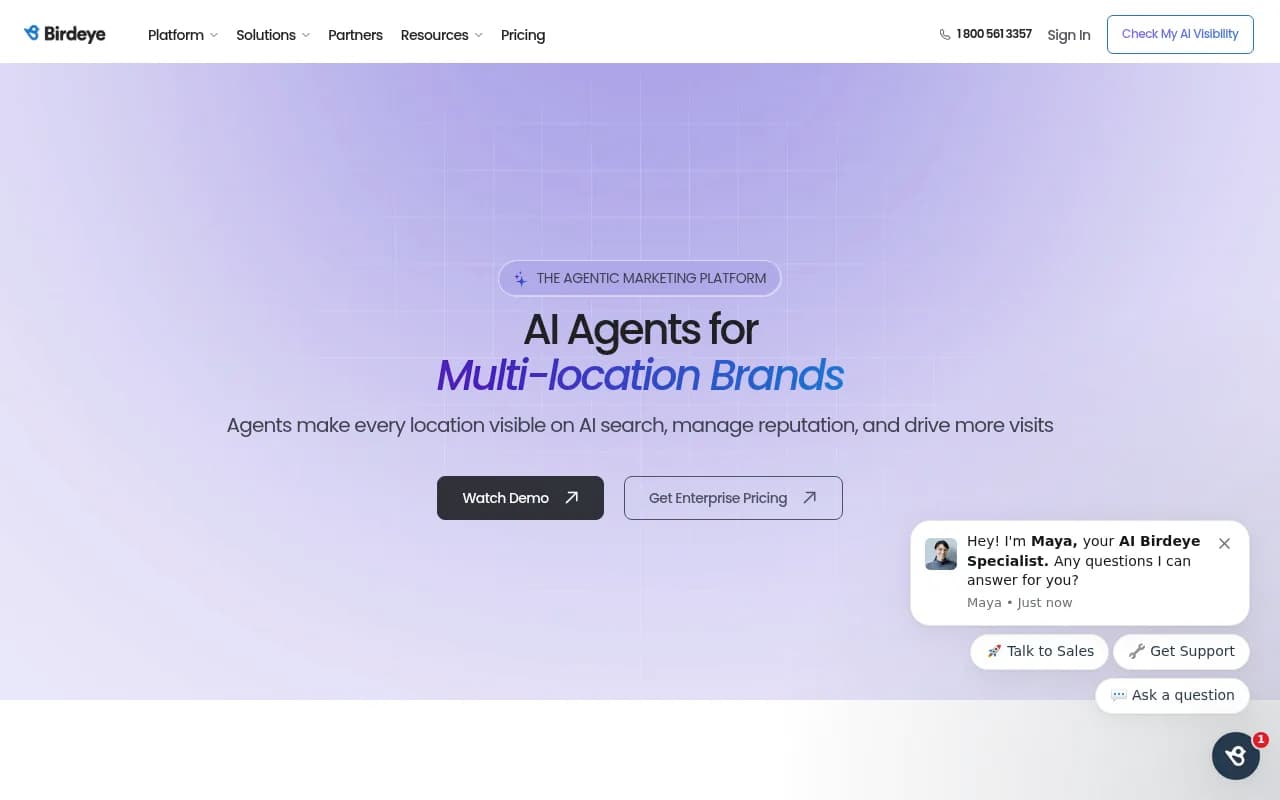
For teams focused specifically on local AI visibility:
The bottom line
These four platforms are not really competing for the same buyer. Otterly.AI and Promptwatch are for teams where AI search visibility is the job. Conductor and BrightEdge are for enterprise organizations that want AI tracking as part of a broader organic marketing platform.
Within the dedicated AI visibility category, Promptwatch's advantage is that it doesn't stop at showing you the problem. The answer gap analysis, content generation, and crawler logs form a workflow that actually moves visibility scores — which is what the data is for in the first place.
If you're evaluating for the first time, start with a free trial of Promptwatch or Otterly.AI to get a sense of what your current AI visibility actually looks like. The numbers are often more surprising than teams expect, and seeing the gap is usually what makes the case for investing in closing it.