Key takeaways
- When a user asks ChatGPT a city-level query like "best dentist in Denver," the model silently expands it into 8-10 parallel sub-queries covering reviews, pricing, complaints, and comparisons before generating an answer.
- 95% of these fan-out sub-queries show zero monthly search volume in traditional keyword tools, making them invisible to standard SEO tracking.
- Fan-out sub-query length has roughly doubled since late 2025, growing from ~6 words to ~12 words by January 2026, meaning AI is getting more specific, not less.
- Local businesses need content that explicitly answers each layer of the fan-out: trust signals, pricing transparency, comparison pages, and neighborhood-level specificity.
- Tools that track prompt-level fan-outs (rather than just brand mentions) give local businesses the clearest picture of where they're losing AI visibility.
What query fan-out actually means for a local business
Most local business owners think about AI search the same way they think about Google: someone types a query, results appear, you either show up or you don't. That mental model is wrong, and it's costing them visibility.
When a user asks ChatGPT something like "who's the best HVAC company in Charlotte," the model doesn't just retrieve an answer. It runs a background research process, firing off multiple parallel sub-queries to cross-check its response before committing to one. This is called query fan-out, and it's the mechanism that determines whether your business makes the final cut.
According to data from a study of 72,000+ AI-generated queries and 8,700+ prompts, a single user prompt to ChatGPT or Gemini routinely triggers 8 to 10 parallel sub-queries. These sub-queries are hyper-specific. They look for things like recent reviews, pricing comparisons, complaints, and "vs" framings. The AI is essentially doing due diligence on your behalf -- or against you.
The kicker: 95% of these fan-out sub-queries show zero monthly search volume in traditional keyword tools. They don't exist in your Semrush dashboard. They don't show up in Google Search Console. They're invisible to every conventional SEO workflow -- but they're the gatekeepers deciding which local businesses get recommended by AI.
How fan-out works at the city level
City-level queries are where fan-out gets particularly interesting for local businesses. A prompt like "best Italian restaurant in Nashville" doesn't stay at that level of abstraction. The model expands it into something like:
- "Italian restaurants Nashville reviews 2025 2026"
- "best pasta Nashville Reddit"
- "Italian restaurant Nashville price range"
- "Italian restaurant Nashville vs [competitor name]"
- "Italian restaurant Nashville complaints"
- "authentic Italian food Nashville neighborhood"
Each of these sub-queries is executed concurrently. The model is looking for consensus across multiple sources before it feels confident recommending anyone. If your restaurant has great food but no review presence on Reddit, no pricing information on your website, and no comparison content anywhere, you're invisible to several of those checks.
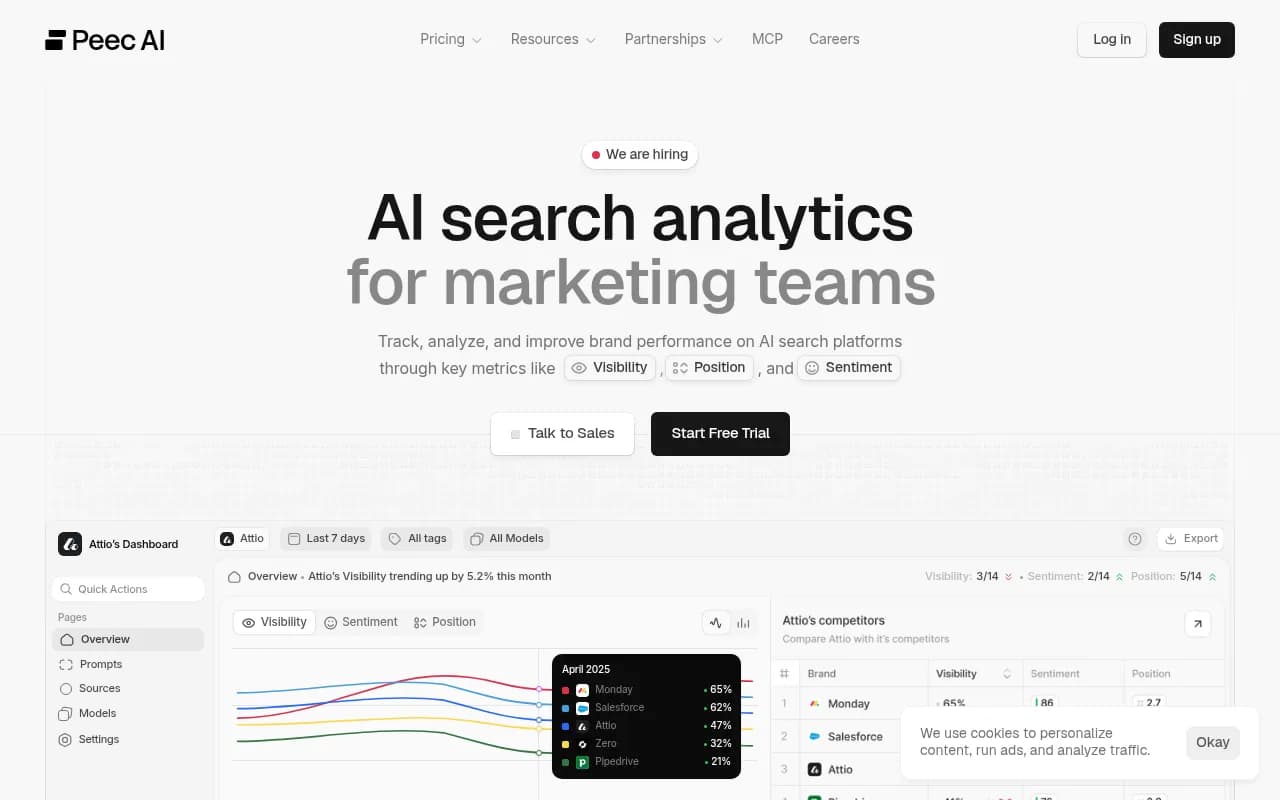
Research from Peec AI shows that fan-out sub-query length has roughly doubled since late 2025, rising from around 6 words in October 2025 to around 12 words by January 2026, with a peak of about 16 words around calendar week 49. This means AI models are getting more specific in their background research, not less. The longer and more specific the sub-query, the harder it is to rank for it with generic, thin content.
The four layers of a city-level fan-out
Understanding the structure of fan-out helps you build content that survives each check. For local businesses, city-level fan-outs tend to cluster around four recurring themes.
Trust verification
The AI wants to confirm your business is legitimate and well-regarded. Sub-queries here pull from Google reviews, Yelp, Trustpilot, Reddit threads, and local news mentions. If your review profile is thin or your ratings are mixed, you'll fail this check.
What to do: actively build your review footprint across platforms. Respond to negative reviews publicly and specifically. Create a dedicated testimonials page on your website that quotes real customers and mentions the city or neighborhood by name.
Pricing and value signals
"Cost", "pricing", "free", and "cheap" appear in the top 5-grams of fan-out queries across industries. The AI is trying to price-anchor its recommendation. If your website has no pricing information, the model can't confidently include you in a response where the user's intent includes budget.
What to do: publish a pricing page or at minimum a "what to expect to pay" section. Even ranges work. Transparency here isn't just good for conversion -- it's what gets you cited.
Risk and complaint signals
The AI actively looks for "pros and cons", "complaints", and "limitations" when evaluating local businesses. This is the model's way of balancing its recommendation. If the only content about your business online is your own marketing copy, the AI may treat you as unverified.
What to do: don't be afraid to publish honest comparison content. A page titled "How we compare to [competitor]" or "Common questions people have before hiring us" directly addresses what the AI is checking for.
Neighborhood and hyper-local specificity
City-level queries often fan out into neighborhood-level sub-queries. "Best plumber in Phoenix" might generate a sub-query for "plumber Scottsdale" or "plumber Tempe" depending on the user's context. If your content only mentions your city and not the specific neighborhoods or suburbs you serve, you miss these.
What to do: create location-specific service pages for each area you cover. Not thin doorway pages -- actual content that describes what you do in that neighborhood, any local nuances, and specific examples of work done there.
Why AI usage for local search jumped so fast
AI usage for local search went from 6% in 2025 to 45% in 2026, a 7.5x increase in a single year. That's not a gradual trend -- it's a step change. Google's AI Overviews now trigger on a large share of local queries, and ChatGPT's user base has grown to the point where it's a legitimate referral source even for small businesses.
Sterling Sky's data from late 2025 showed something interesting: ChatGPT traffic was converting at twice the rate of Google traffic for their agency, even at half the volume. The implication for local businesses is that AI-referred visitors arrive with more context and higher intent. They've already been pre-qualified by the AI's research process.
That said, most local businesses in Sterling Sky's sample set weren't seeing large volumes yet. The opportunity is real but early -- which is exactly when it's worth building the right content infrastructure.
How to track fan-out performance for your local business
This is where most local businesses are completely blind. Standard rank tracking tells you where you appear for a specific keyword. Fan-out tracking tells you which sub-queries the AI is running when someone asks about your category in your city -- and whether you're showing up in any of them.
There are a few approaches worth knowing about.
Manual fan-out auditing
You can do a rough version of this manually. Take your core city-level query ("best [service] in [city]") and ask ChatGPT to show you its research process, or use a tool that surfaces the sub-queries it generates. Then check each sub-query individually: do you appear in the results? Does your content address that specific angle?
This is time-consuming but educational. Do it once for your top 5 queries and you'll quickly see where your content has holes.
Prompt-level tracking tools
Several platforms now track AI visibility at the prompt level, meaning they show you not just whether you're mentioned but which prompts trigger your citation and which don't. For local businesses, this is more useful than simple brand monitoring.
Promptwatch includes query fan-out data as part of its prompt intelligence layer, showing how a single prompt branches into sub-queries and where your content is or isn't showing up across those branches. For local businesses running multiple location pages, this kind of page-level citation tracking is the difference between knowing you have an AI visibility problem and knowing exactly which pages to fix.
Peec AI has published some of the most detailed public research on fan-out query length and structure, and their platform tracks AI visibility with a focus on query-level data.
For agencies managing multiple local business clients, Search Party offers location-level tracking that can help surface city-specific visibility gaps.
Birdeye Search AI is worth mentioning specifically for local businesses -- it's built around location-level AI visibility tracking, which maps well to the city-level fan-out problem.
What content actually survives fan-out checks
The research from 85sixty is pretty direct on this: only sources that survive cross-examination surface in the final answer. For local businesses, that means your content needs to be findable and credible across multiple sub-query types simultaneously.
Here's what tends to work:
FAQ pages with specific local context. A page that answers "how much does a roof replacement cost in Denver" will survive the pricing sub-query check. A page that just says "we offer competitive pricing" won't.
Review aggregation pages. Pull your best reviews onto your own site, attributed and specific. The AI crawls your site and third-party review platforms. Having both increases your chances of surviving the trust check.
Comparison content. "How we compare to [competitor]" pages directly address the "vs" sub-queries that fan-out generates. These pages feel uncomfortable to write but they're exactly what AI models are looking for.
Neighborhood service pages. One page for your city isn't enough if the AI is generating sub-queries at the neighborhood level. A plumber in Houston needs pages for The Heights, Montrose, Sugar Land, and so on -- each with genuine content, not just the city name swapped out.
Reddit and forum presence. AI models cite Reddit heavily in local queries. If your business or category has no Reddit presence, you're missing a major citation source. This doesn't mean you should spam Reddit -- it means you should participate genuinely in local subreddits and encourage satisfied customers to mention you.
Comparison: how different tools handle local fan-out tracking
| Tool | Fan-out / sub-query data | City/location-level tracking | Content gap analysis | Best for |
|---|---|---|---|---|
| Promptwatch | Yes (query fan-outs) | Yes | Yes | Brands and agencies wanting full action loop |
| Peec AI | Yes (published research) | Partial | No | Visibility monitoring |
| Birdeye Search AI | No | Yes (location-level) | No | Local multi-location businesses |
| Search Party | No | Yes | No | Agencies managing local clients |
| Otterly.AI | No | No | No | Basic brand mention tracking |
| Ahrefs Brand Radar | No | No | No | Traditional SEO teams adding AI layer |
The pattern is clear: most tools track whether you're mentioned, not why you're missing. Fan-out data is what closes that gap.
Google's AI Mode and what it means for local fan-out
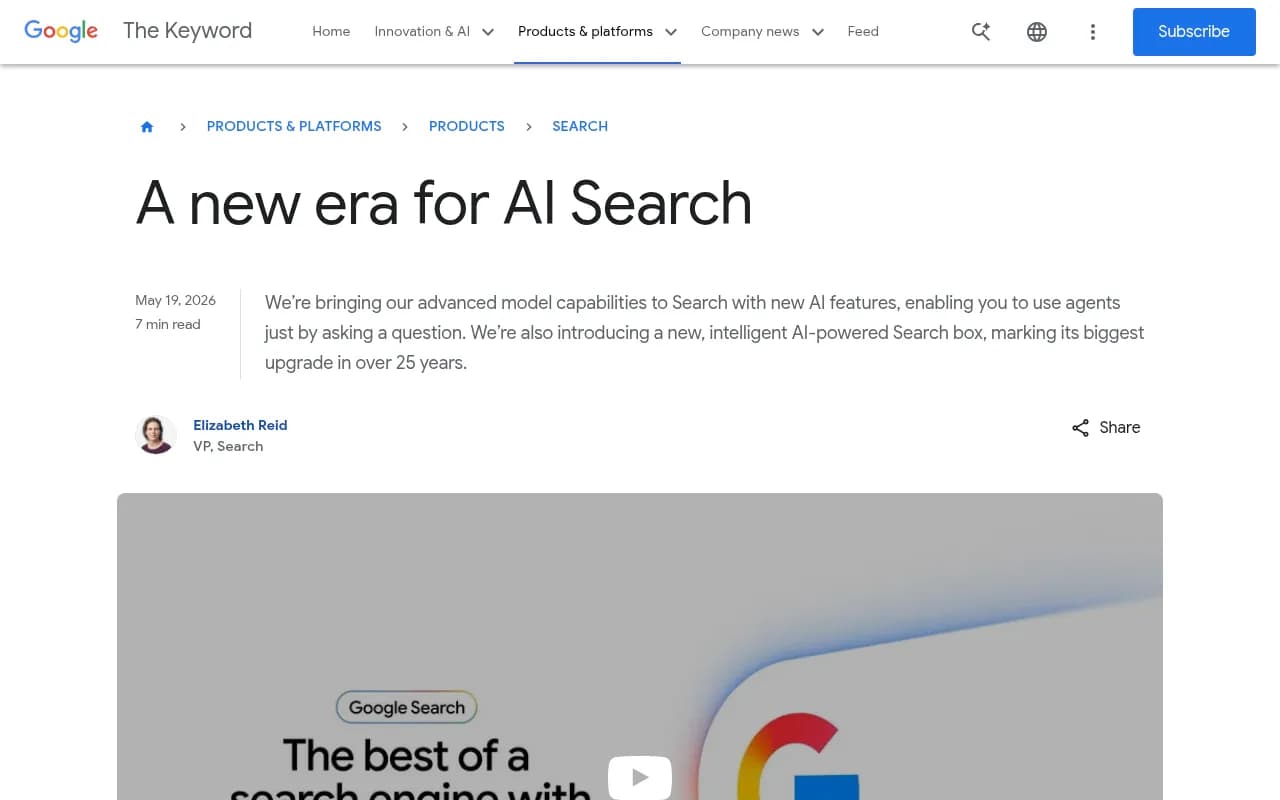
Google's I/O 2026 announcements made it clear that AI agents are now a core part of Search, not an experiment. Google's AI Mode uses the same fan-out logic -- expanding queries into sub-queries, cross-referencing sources, and synthesizing responses -- but with the added advantage of Google's local business data from Maps and Business Profiles.
This means your Google Business Profile is now a fan-out signal, not just a local SEO asset. Keeping it updated with accurate hours, services, photos, and responses to reviews directly feeds into what Google's AI can confidently cite. A stale or incomplete profile is a fan-out failure waiting to happen.
The same logic applies to structured data on your website. If your site uses LocalBusiness schema with accurate NAP (name, address, phone), service areas, and opening hours, AI models have cleaner data to work with when running sub-queries about your business.
A practical checklist for local fan-out readiness
Run through this before assuming your AI visibility is in good shape:
- Do you have a pricing page or at minimum a "what to expect to pay" section?
- Do you have location-specific pages for each neighborhood or suburb you serve?
- Is your review profile active and recent on Google, Yelp, and at least one other platform?
- Do you have any comparison content addressing how you differ from competitors?
- Is your Google Business Profile complete and updated within the last 30 days?
- Does your website use LocalBusiness schema with accurate service area data?
- Have you searched for your business category on Reddit to see what's being said?
- Do you have a FAQ page that addresses common pre-purchase questions with city-specific context?
If you answered no to more than three of these, you're likely failing multiple fan-out sub-query checks right now -- and you won't see it in your Google Analytics until AI referral traffic becomes a standard tracked channel.
The bottom line
Fan-out is the mechanism that makes AI search fundamentally different from keyword search. It's not about ranking for one query -- it's about surviving 8 to 10 simultaneous checks that happen before any user sees a recommendation. For local businesses, those checks are city-specific, review-heavy, price-sensitive, and increasingly neighborhood-level.
The businesses that figure this out now, while AI usage for local search is at 45% and still climbing, will have a real advantage. The ones that wait until it's obvious will be playing catch-up against competitors who've already built the content infrastructure that AI models trust.
Start with a manual audit of your top city-level queries. Then build the content that answers each layer of the fan-out. Track which pages start getting cited. Repeat.