Key takeaways
- Google AI Mode, powered by Gemini 3.5 Flash, now handles a significant share of local search queries -- giving synthesized answers instead of a list of blue links
- Local businesses that relied on map pack rankings and traditional organic results are seeing traffic patterns shift as AI-generated responses absorb more clicks
- Being "cited" by Google AI Mode requires different signals than traditional local SEO -- structured data, authoritative content, and third-party mentions matter more than ever
- The May 2026 search update accelerated this shift, particularly for research-heavy queries like "best [service] near me" and category comparisons
- Tracking your AI visibility separately from traditional rankings is now a practical necessity, not a nice-to-have
What Google AI Mode actually is (and why local search is different now)
Google AI Mode isn't just AI Overviews with a new coat of paint. At Google I/O 2026, the company announced a redesigned AI-first search experience built on Gemini 3.5 Flash, with persistent "search agents" that can handle multi-step queries. Elizabeth Reid, VP of Search at Google, described it as "the biggest upgrade to the Search box in over 25 years."
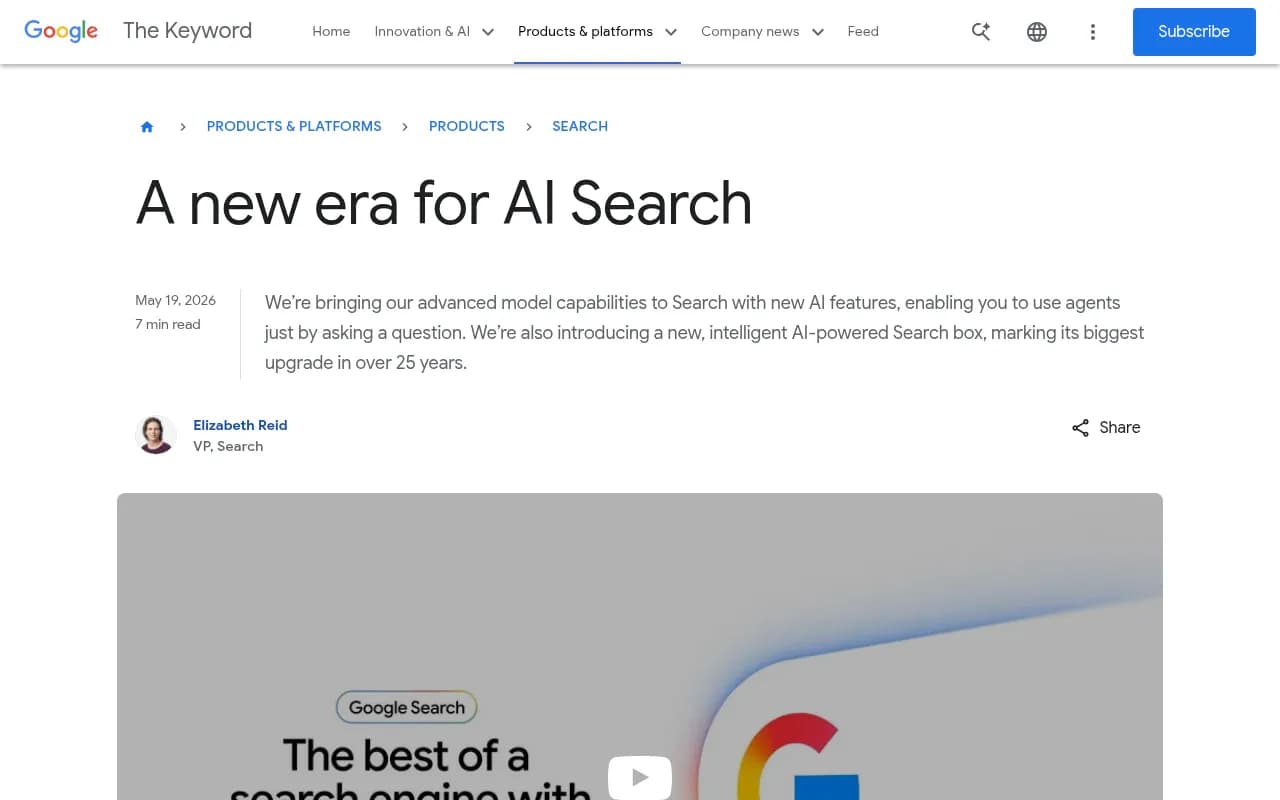
For most informational queries, this means users get a synthesized answer at the top of the page before they ever see a traditional result. For local queries, the impact is more specific and, frankly, more disruptive.
When someone searches "best Italian restaurant near downtown Chicago" or "emergency plumber open now in Austin," Google AI Mode now generates a response that pulls from multiple sources -- reviews, local business profiles, third-party directories, and editorial content -- and presents a recommendation. The user doesn't need to scroll through a map pack or click ten different restaurant review sites. They get an answer.
The May 2026 search update made this behavior more aggressive for B2B and service-based queries too. According to Discovered Labs, the update changed how buyers research software and services before contacting vendors -- the same pattern is playing out in local service categories like legal, medical, home services, and financial advice.
How local search behavior has actually shifted
The shift isn't theoretical. Here's what's happening in practice:
Traditional local SEO was built around three things: your Google Business Profile, map pack rankings, and organic results for location-based keywords. Those still exist. But AI Mode now sits above all of them for many query types, and it doesn't always pull from the same sources that rank well traditionally.
A few patterns worth knowing:
AI Mode synthesizes, not just ranks. Instead of showing you the top three map pack results, AI Mode might say "Based on reviews and local sources, [Business Name] is frequently recommended for [service] in [city] because of [specific reason]." That's a citation, not a ranking. Getting cited requires being mentioned in places the AI trusts -- review platforms, local news, niche directories, and editorial content.
Query intent is interpreted more broadly. If someone asks "who's the best dentist for kids in Brooklyn," AI Mode doesn't just match keywords. It interprets the intent, pulls pediatric dentistry mentions from multiple sources, and synthesizes a recommendation. Businesses that have thin or generic online profiles get passed over even if they rank well in traditional search.
Follow-up questions change the game. The new search agents support multi-turn conversations. A user might ask "find me a plumber near me," then follow up with "does he work on weekends?" and "what do reviews say about his pricing?" Each follow-up query pulls from different signals. If your business information is inconsistent across sources, you drop out of the conversation at some point.
Click-through rates on traditional results are falling for AI-answered queries. This is the uncomfortable truth. When AI Mode gives a confident answer, a meaningful portion of users don't click anything. If your business is cited in the AI response, you still get brand exposure. If you're not cited, you're invisible for that query.
What signals Google AI Mode uses for local citations
This is where it gets practical. Google AI Mode doesn't have a published ranking algorithm for citations, but based on observable behavior and what's known about how large language models are trained and grounded, a few signal categories matter most:
Review volume and sentiment specificity
Generic reviews ("Great service, highly recommend!") carry less weight than reviews that mention specific services, staff names, or outcomes. AI Mode appears to pull sentiment signals from review text to support its recommendations. A dental practice with 200 reviews that mention "gentle with kids" and "no wait time" is more likely to be cited for pediatric dentistry queries than a practice with 400 generic five-star reviews.
Third-party editorial mentions
Being mentioned in local news articles, neighborhood blogs, niche directories (like Houzz for contractors or Zocdoc for doctors), and community forums gives AI Mode sources to cite. A Reddit thread where locals recommend your business is a real citation source. This is a meaningful departure from traditional SEO, where most of the focus was on your own website.
Structured data and schema markup
LocalBusiness schema, FAQ schema, and service-specific markup help AI models understand what your business does and where. If your site doesn't have proper schema, AI Mode has to infer your services from unstructured text -- and it will sometimes get it wrong or skip you entirely.
Consistent NAP and entity signals
Name, address, and phone number consistency across Google Business Profile, your website, Yelp, Apple Maps, and other directories matters more than ever. AI models use entity resolution to confirm that "Joe's Plumbing" at 123 Main Street and "Joe's Plumbing LLC" in a Yelp review are the same business. Inconsistencies break that resolution.
Content that directly answers local questions
If someone in your city is asking "what's the average cost of a roof replacement in Denver," and you have a page that answers that question with local context, you're a candidate for citation. Businesses that publish genuinely useful local content -- not keyword-stuffed location pages, but real answers to real questions -- are pulling ahead.
The tools that can actually help you track and improve this
Tracking AI Mode citations is different from tracking keyword rankings. You need to know when and where your business appears in AI-generated responses, not just where you rank in the blue links.
Promptwatch is one of the more complete options here -- it monitors AI responses across Google AI Mode, ChatGPT, Perplexity, and other models, and shows you which prompts your competitors are being cited for that you're not. The answer gap analysis is particularly useful for local businesses: you can see the exact questions AI models are answering where your competitors show up and you don't, then use that to guide content creation.

For local-specific tracking, Birdeye Search AI has location-level tracking that's worth looking at if you're managing visibility across multiple locations or a franchise.
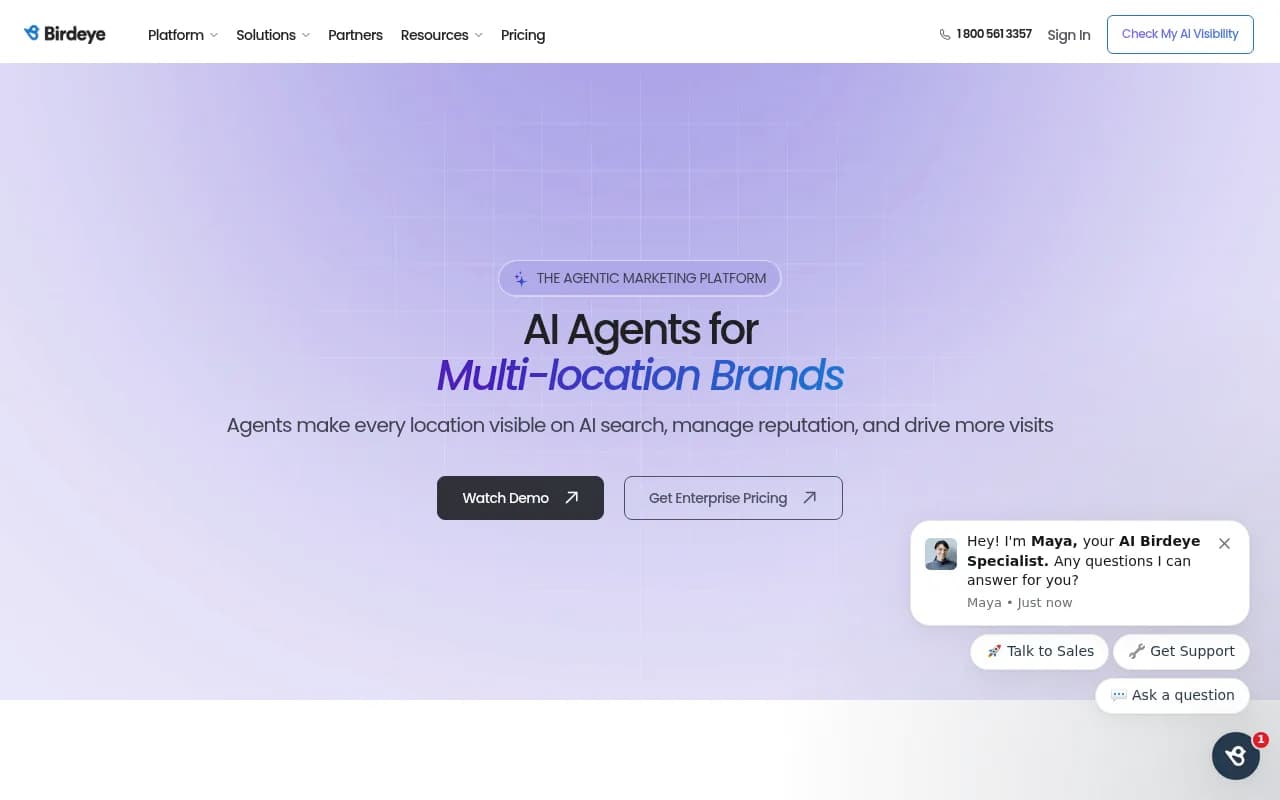
If you want to track citations across AI models more broadly without the full optimization workflow, Otterly.AI and Peec AI are lighter-weight options that cover the monitoring side.
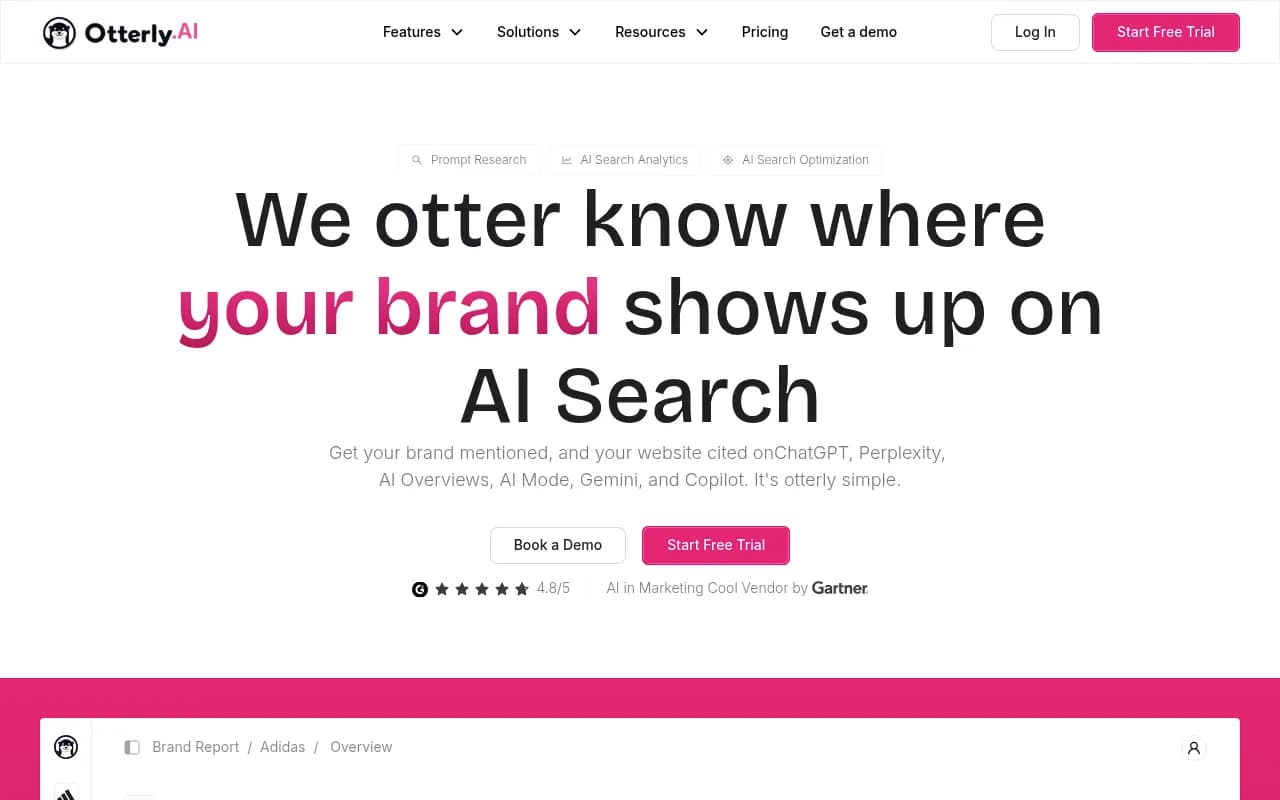
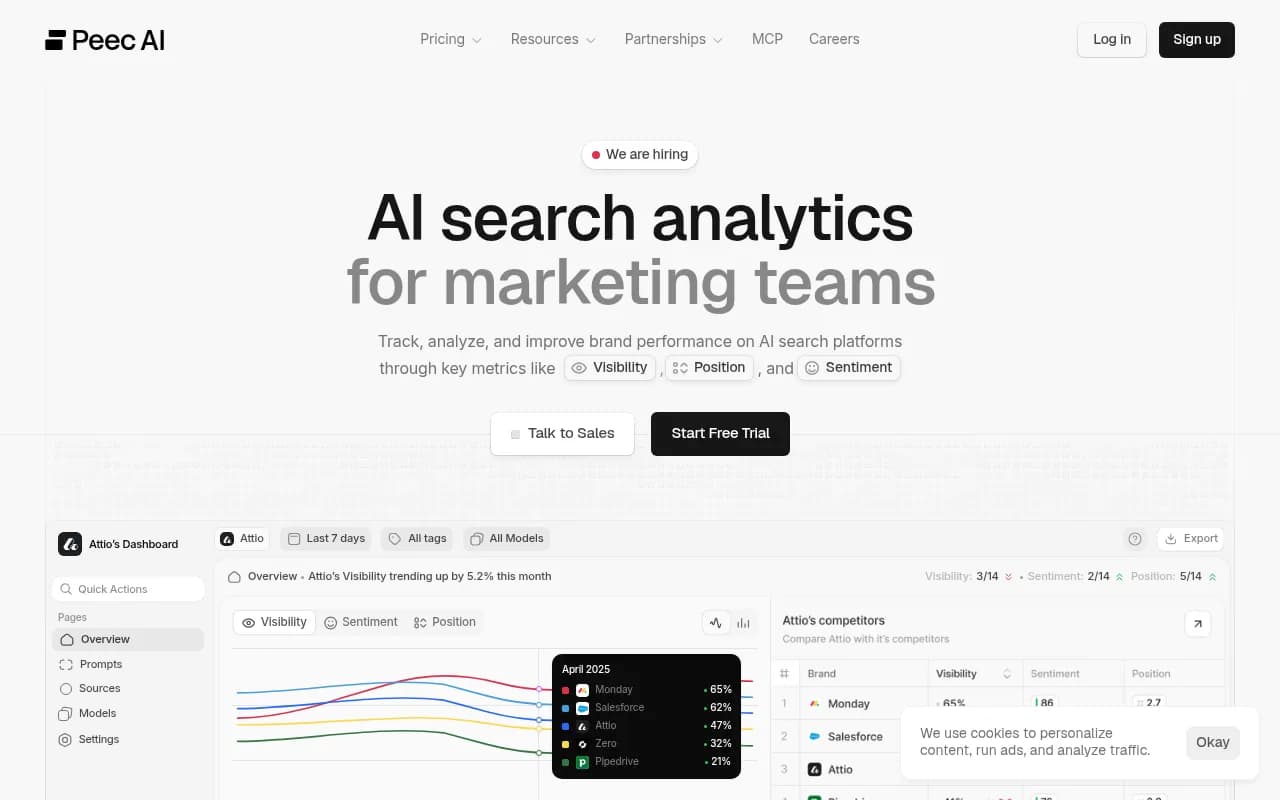
For content optimization -- making sure your pages are structured in a way that AI models can actually parse and cite -- Clearscope and Surfer SEO are solid choices for the writing and optimization layer.

Here's a quick comparison of the main approaches:
| Tool | AI model coverage | Local tracking | Content optimization | Best for |
|---|---|---|---|---|
| Promptwatch | 10+ models incl. Google AI Mode | Yes | Yes (content agents) | Full GEO workflow |
| Birdeye Search AI | Google AI Mode focus | Location-level | No | Multi-location businesses |
| Otterly.AI | Multiple models | Limited | No | Monitoring on a budget |
| Peec AI | Multiple models | Limited | Basic suggestions | Small teams |
| Clearscope | N/A | N/A | Yes | Content teams |
| Surfer SEO | N/A | N/A | Yes | Content optimization |
What local businesses should actually do right now
The practical playbook isn't complicated, but it does require doing things that most local businesses haven't prioritized before.
Audit your current AI visibility first. Open an incognito window and search for the queries you currently rank for. See what Google AI Mode says. Does your business appear? If yes, what context does it use? If no, who does appear, and why? This 30-minute exercise will tell you more than any ranking report.
Fix your entity signals. Check that your business name, address, phone number, and category are consistent across Google Business Profile, your website, Yelp, Apple Maps, Bing Places, and any industry-specific directories. Use a tool or do it manually -- inconsistencies are silent killers in AI-cited search.
Get specific reviews. Ask customers to mention specific services or outcomes in their reviews. "They fixed my burst pipe at 11pm on a Sunday" is more useful to AI Mode than "5 stars, great job." This doesn't require gaming anything -- just prompting customers with a specific question when you ask for a review.
Publish local content that answers real questions. Think about what your customers actually ask you. "How much does X cost in [city]?" "What's the difference between X and Y service?" "When should I call a professional vs. DIY?" Write pages that answer these questions with local context. These are exactly the kinds of queries AI Mode handles, and if your page is the best answer, you get cited.
Build third-party mentions intentionally. Reach out to local bloggers, neighborhood news sites, and community forums. Sponsor local events that generate press coverage. Get listed in niche directories relevant to your industry. These off-site mentions are citation sources for AI Mode in a way they never fully were for traditional SEO.
Track the results. This is the part most businesses skip. If you're creating content and building mentions, you need to know whether AI Mode is actually citing you more. Tools like Promptwatch can show you this at the prompt level -- which specific queries now include your business, and which ones still don't.
The honest picture for local businesses
Google AI Mode is genuinely good for users. It gives faster, more synthesized answers to local queries. For businesses, the picture is more complicated.
If you're already the clear authority in your local market -- lots of specific reviews, consistent entity signals, editorial mentions, useful content -- AI Mode probably helps you. You get cited in responses that reach users who might never have scrolled down to your map pack listing.
If you've been coasting on a decent Google Business Profile and a few backlinks, the shift is harder. AI Mode doesn't reward presence alone. It rewards being the answer to a specific question, and that requires more deliberate work than most local SEO has historically demanded.
The businesses that will do well are the ones that treat AI visibility as a separate discipline from traditional local SEO -- with its own tracking, its own content strategy, and its own optimization loop. The tools exist. The playbook is becoming clearer. The window to get ahead of competitors who haven't figured this out yet is still open, but it won't be forever.