Key takeaways
- You can't rely on traditional Google rankings to know if you're visible in AI search -- ChatGPT, Perplexity, Google AI Overviews, and others pull from different sources and use different signals.
- The fastest manual check is to ask AI engines direct questions about your brand, products, or niche and see if your site gets cited.
- Google Search Console has a regex trick that surfaces AI Overview-driven traffic, which is a useful (if incomplete) proxy for AI visibility.
- Dedicated AI visibility tools automate what would take hours to do manually, and the better ones tell you why you're missing and what to do about it.
- If you're not showing up, the fix usually starts with content gaps -- topics AI models want to answer but can't find on your site.
Why checking AI search visibility is different from checking Google rankings
A few years ago, checking your search visibility meant logging into Google Search Console, looking at your keyword rankings, and calling it a day. That still matters, but it's no longer the whole picture.
AI search engines -- ChatGPT, Perplexity, Google AI Overviews, Claude, Gemini, Grok -- don't rank pages the way traditional search does. They synthesize answers and cite sources. Your page might rank #3 on Google but never get cited in a single AI response. Or you might have a relatively obscure article that gets cited constantly by Perplexity because it answers a specific question better than anything else out there.
The mechanics are genuinely different. AI models pull from training data, live web crawls (in some cases), and their own internal weighting of what counts as a trustworthy source. Getting cited isn't just about keywords -- it's about whether your content actually answers the question being asked.
So the first thing to understand: you need to check AI visibility separately from traditional SEO visibility. They overlap, but they're not the same thing.
Step 1: Do the manual check first
Before you set up any tooling, just ask the AI engines directly. It takes 10 minutes and gives you a real sense of where you stand.
Open ChatGPT, Perplexity, Google AI Overviews (just search in Chrome), and Claude. Then run a few different types of queries:
Brand queries -- search your company name directly. Does the AI know you exist? Does it describe you accurately? Does it link to your site?
Category queries -- search for what you do without using your name. "Best [your product category]", "How to [problem you solve]", "[your industry] tools for [use case]". These are the queries where you're competing against everyone else in your space.
Problem queries -- think about the questions your customers ask before they even know your product exists. "How do I fix [problem]", "What's the difference between X and Y", "Is [thing you do] worth it". These are often the highest-value queries because they catch buyers early.
Write down what you find. Which AI engines mention you? Which ones don't? When you are mentioned, is your website actually cited as a source, or just your brand name dropped in passing? There's a meaningful difference -- a citation means the AI is directing traffic to you; a mention without a link doesn't.
This manual process is tedious to repeat regularly, which is why tools exist. But doing it once gives you a baseline and an intuition for where your gaps are.
Step 2: Check Google Search Console for AI Overview traffic
Google Search Console doesn't have a dedicated "AI Overviews" report yet, but there's a workaround that surfaces queries where AI Overviews are likely driving impressions.
Here's how to do it:
- Log in to Google Search Console
- Go to Performance > Search results
- Click the "+" filter button and choose "Query"
- Select "Custom (regex)" from the match type dropdown
- Enter a regex pattern that captures question-format queries -- something like
^(how|what|why|when|who|which|can|does|is|are|will)\b - Look at the impressions and clicks for these queries
Question-format queries are much more likely to trigger AI Overviews than short keyword queries. If you're getting high impressions but low clicks on these, that's a signal that an AI Overview is appearing and answering the question without sending traffic to you -- even if your page is technically ranking.
This isn't a perfect measurement, but it's a free one that gives you a real signal about where AI search is eating into your organic traffic.
Step 3: Use a dedicated AI visibility tool
Manual checks and Search Console workarounds will only get you so far. If you want to track visibility systematically across multiple AI engines, you need a tool built for this.
The market has split into two types of products: monitoring-only dashboards that show you data, and full-cycle platforms that help you act on what they find.
Here's a quick comparison of the main options:
| Tool | AI engines covered | Content generation | Crawler logs | Best for |
|---|---|---|---|---|
| Promptwatch | 10+ (ChatGPT, Perplexity, Claude, Gemini, Grok, etc.) | Yes (AI content agents) | Yes | Brands and agencies wanting full GEO workflow |
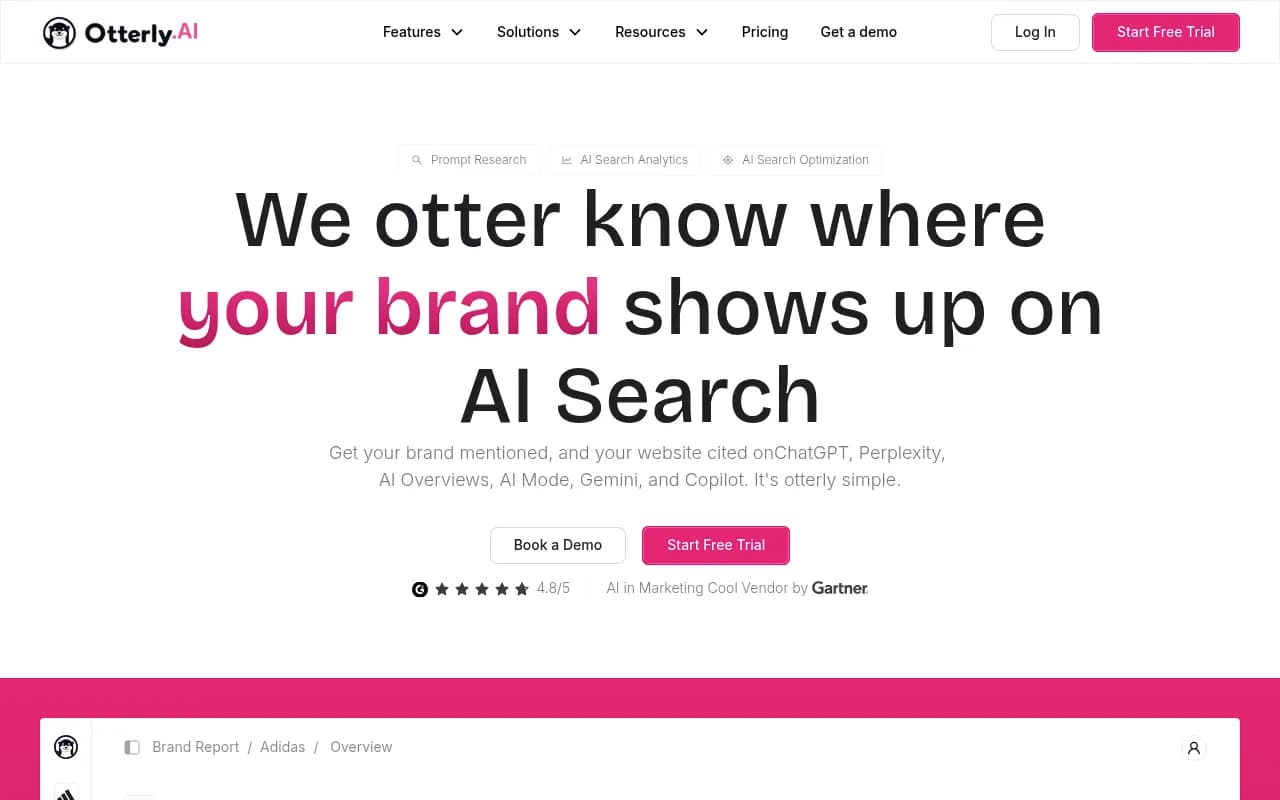
| Otterly.AI | ChatGPT, Perplexity, Gemini, Claude | No | No | Budget monitoring |
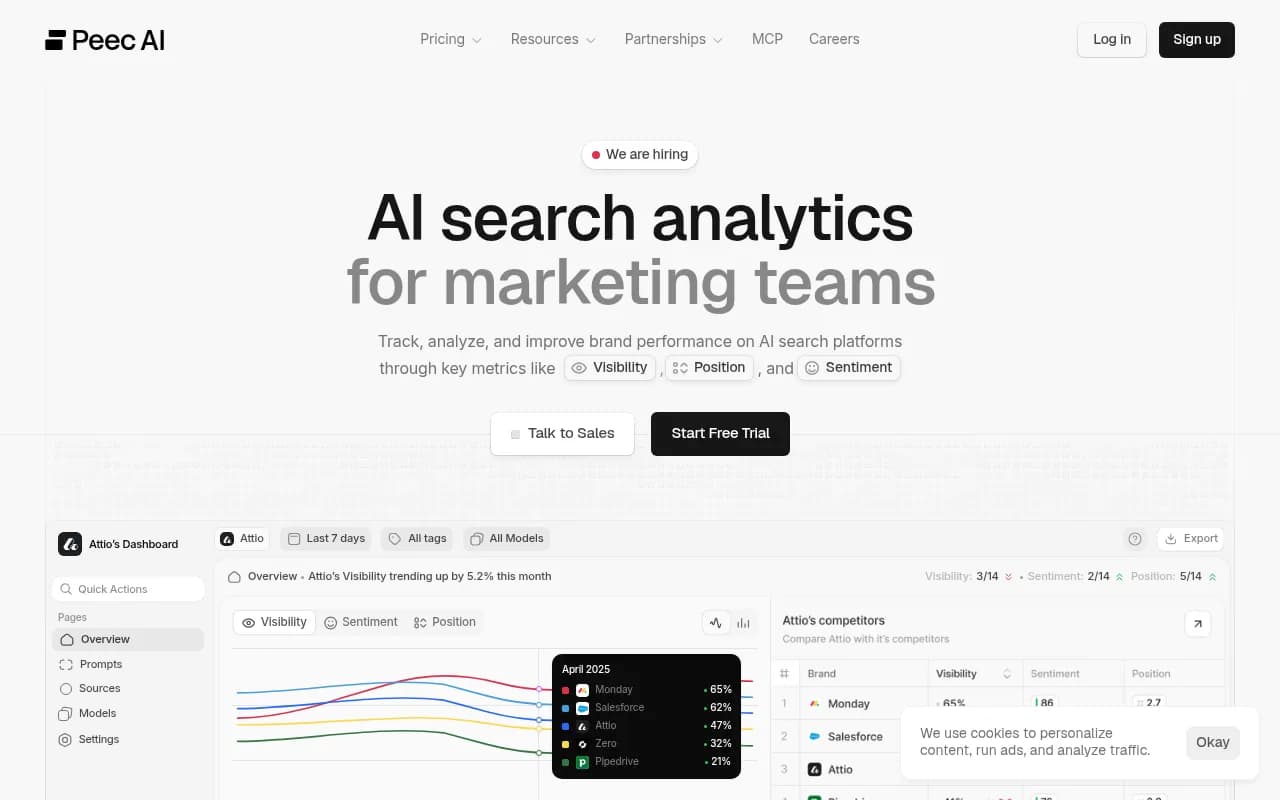
| Peec AI | ChatGPT, Perplexity, Google | No | No | Simple brand tracking |
| AthenaHQ | ChatGPT, Perplexity, Gemini | No | No | Monitoring-focused teams |
| Profound | ChatGPT, Perplexity, Gemini, Claude | No | No | Enterprise monitoring |
| Semrush AI Visibility | Google AI Overviews, ChatGPT | No | No | Teams already on Semrush |
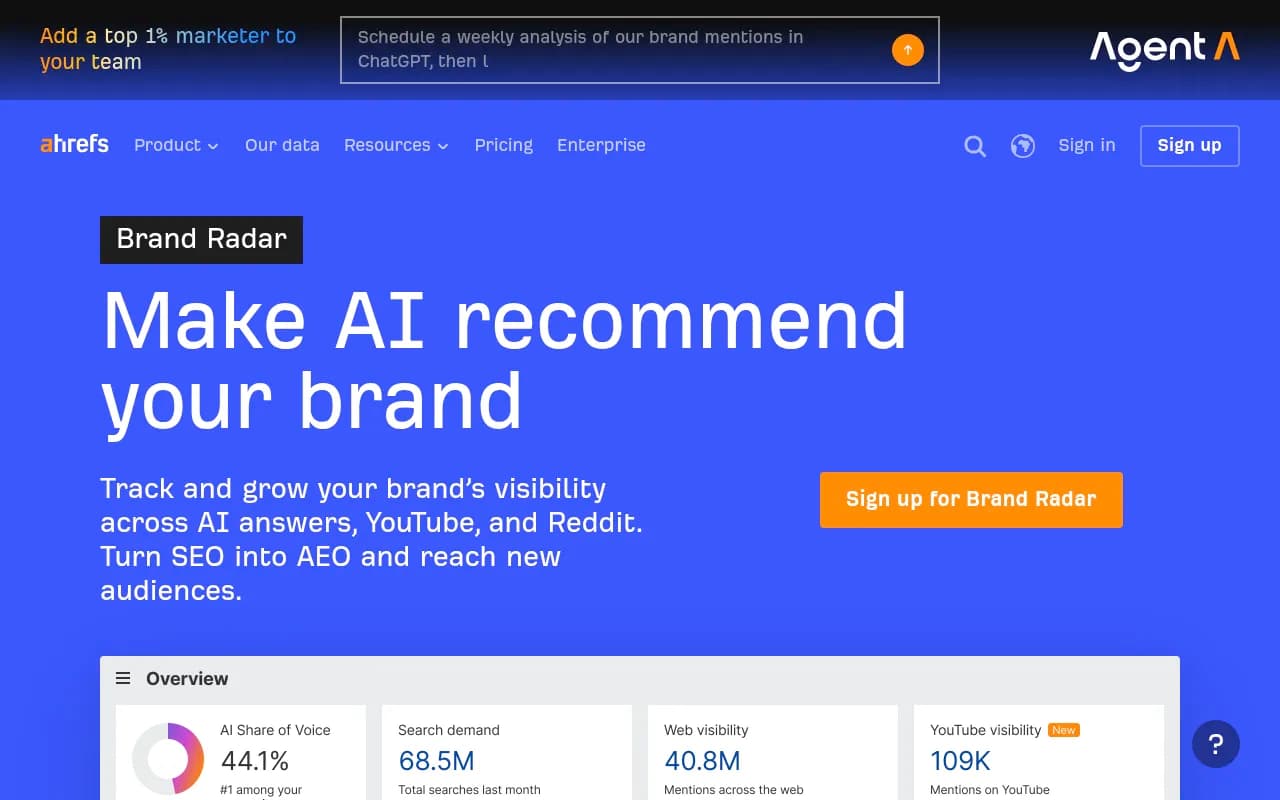
| Ahrefs Brand Radar | ChatGPT, Perplexity, Gemini | No | No | Teams already on Ahrefs |
Most of these tools work the same way at the core: you enter your domain and a set of prompts (questions your customers might ask), and the tool queries AI engines on your behalf and tracks whether your site gets cited.
Promptwatch goes further than the others -- it doesn't just show you where you're missing, it helps you figure out what content to create and then generates it. That distinction matters if you want to actually improve your visibility, not just measure it.

For pure monitoring on a budget, Otterly.AI and Peec AI are solid starting points.
If you're already paying for Semrush or Ahrefs, their AI visibility features are worth turning on even if they're less comprehensive.
Step 4: Set up your prompt tracking list
Whether you're using a tool or doing this manually, you need a list of prompts to track. This is the part most people skip, and it's why their visibility data ends up being useless.
Don't just track your brand name. That tells you almost nothing about your competitive position. Instead, build a prompt list across three categories:
Awareness prompts -- questions people ask when they're just starting to research a problem. "What is [your category]?", "How does [thing you do] work?", "What are the benefits of [your approach]?"
Comparison prompts -- queries where buyers are evaluating options. "Best [your category] tools", "[Your category] alternatives to [competitor]", "[Your product type] vs [other product type]"
Decision prompts -- high-intent queries close to a purchase. "Is [your product] worth it?", "[Your brand] reviews", "How much does [your service] cost?"
A good starting list is 20-50 prompts. Run them across at least 3-4 AI engines (ChatGPT, Perplexity, Google AI Overviews, and one of Claude/Gemini). Track which prompts you appear in, which competitors appear instead, and which prompts nobody in your space is winning yet (those are your biggest opportunities).
Step 5: Understand what "showing up" actually means
There's a spectrum here, and it's worth being precise about where you sit:
Not mentioned at all -- the AI doesn't know your brand exists or doesn't associate it with the topic. This is the worst position.
Brand mention without citation -- the AI knows your brand name and might describe what you do, but doesn't link to your website. You get some brand recognition but no traffic.
Cited as a source -- your URL appears as a reference in the AI's response. This is what actually drives traffic and builds authority with AI models over time.
Featured prominently -- your content is the primary source the AI draws from when answering a question. This is the equivalent of ranking #1.
Research from AirOps found that brands earning both a mention and a citation in AI-generated answers are up to 40% more likely to maintain ongoing visibility. Getting cited once tends to compound -- AI models that have cited you before are more likely to cite you again.
Step 6: Check which of your pages are actually being crawled
Here's something most people don't think to check: AI engines have their own crawlers (GPTBot, ClaudeBot, PerplexityBot, etc.), and they don't crawl every page on your site. If a page isn't being crawled, it can't be cited.
You can check your server logs or Cloudflare logs for requests from these user agents:
GPTBot(OpenAI/ChatGPT)ClaudeBot(Anthropic)PerplexityBot(Perplexity)Google-Extended(Google AI)meta-externalagent(Meta AI)
If you're not seeing these bots in your logs, check your robots.txt file. Some site setups accidentally block AI crawlers. A line like Disallow: / under User-agent: GPTBot will stop ChatGPT from ever reading your content.
Also check that your important pages are actually accessible -- no login walls, no JavaScript-only rendering that bots can't parse, no noindex tags on pages you want cited.
Tools like Promptwatch can show you AI crawler activity in real time, including which pages each bot visited, how often they return, and whether pages have moved from "crawled" to "cited." That's genuinely useful for diagnosing why certain pages aren't getting picked up.
Step 7: Look at your traffic sources for AI-driven visits
Google Analytics 4 and most other analytics platforms are starting to capture some AI search traffic, though attribution is still messy.
In GA4, look at your traffic sources for referrals from:
perplexity.aichatgpt.comclaude.aiyou.comphind.com
These referrals are direct -- when someone clicks a citation link in Perplexity or ChatGPT, it shows up as a referral from that domain. Google AI Overviews traffic is harder to separate because it still shows as organic Google traffic.
The numbers will probably be smaller than you expect right now, but they're growing fast. Tracking them now means you'll have a baseline when the volume becomes significant.
What to do if you're not showing up
Finding out you're invisible in AI search is frustrating, but the fix is usually straightforward in principle (if not always quick in practice).
The most common reasons brands don't show up:
Content gaps -- you don't have pages that directly answer the questions AI engines are fielding. This is the most common issue. AI models cite pages that answer specific questions well, and if you don't have those pages, you can't be cited.
Technical issues -- AI crawlers are blocked, pages are behind logins, or content is rendered in ways bots can't read.
Authority gaps -- AI models weight sources they've seen cited elsewhere. If your brand isn't mentioned on third-party sites, forums, Reddit, YouTube, or industry publications, you're starting from a weaker position.
Content freshness -- AI search engines, particularly those with live web access, favor recent content. Pages that haven't been updated in years tend to lose traction.
The most direct path to improvement is identifying which specific prompts you're losing and creating content that directly answers those questions. That's not generic SEO advice -- it's about matching your content to the exact questions AI models are being asked.
Promptwatch's Answer Gap Analysis does this automatically: it shows you which prompts your competitors are visible for that you're not, then helps you generate content to close those gaps. It's the difference between knowing you have a problem and knowing exactly what to do about it.
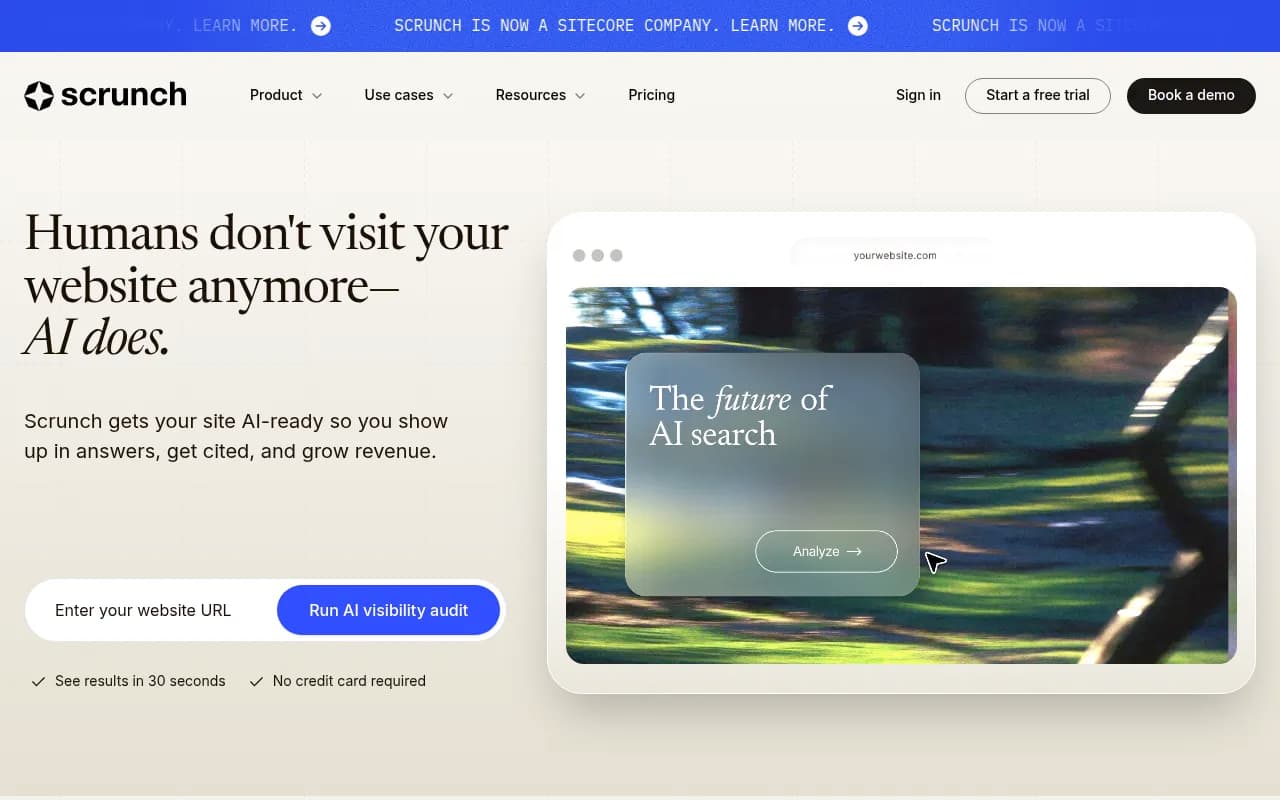
If you want to explore other options in the space, here are a few more worth looking at:
A realistic timeline
Don't expect overnight results. AI visibility tends to move on a longer cycle than traditional SEO:
- New content published today might get crawled by AI bots within days to weeks
- Moving from "crawled" to "cited" typically takes a few weeks to a few months
- Consistent citation across multiple AI engines builds over 3-6 months of sustained effort
The brands that are winning in AI search right now started paying attention to this 12-18 months ago. The brands that start now will be ahead of the ones that wait until 2027.
The first step is just knowing where you stand. Run the manual checks, set up a tracking list, and get a baseline. Everything else follows from there.