Key takeaways
- InSpace markets NOVA, an AI SEO and GEO platform plus services. I found no InSpace page that documents ChatGPT Shopping card tracking or SKU-level citation tracking.
- Its own e-commerce guidance lists keyword mapping, content at scale, technical SEO, optimisation workflows and publishing. Measurement advice centers on AI Overviews inclusion and brand mentions, which is brand-level, not product-level.
- Product visibility means which SKUs appear, in what position, and which retailer gets the link. Brand mention counts do not answer that.
- Shopping features show up in only a small share of ChatGPT answers and move around, so you need a fixed prompt set and sample sizes.
- If shopping tracking is a must-have, ask InSpace for a demo of it specifically, or pair it with a dedicated tracker.
What InSpace actually is
InSpace presents itself as an AI SEO and content platform called NOVA, sold alongside agency-style services. Its pricing page positions plans around winning visibility "on Google and AI answer engines like ChatGPT and Gemini." The Milky Way plan is listed at roughly $1,190 to $1,700 a month and the Universe plan at $2,100 to $3,000 a month. The ranges appear to reflect discounts by payment term, though the exact mapping is not clear from the public page. A blog post also mentions packages starting around 600 a month without stating a currency, so confirm the numbers directly.
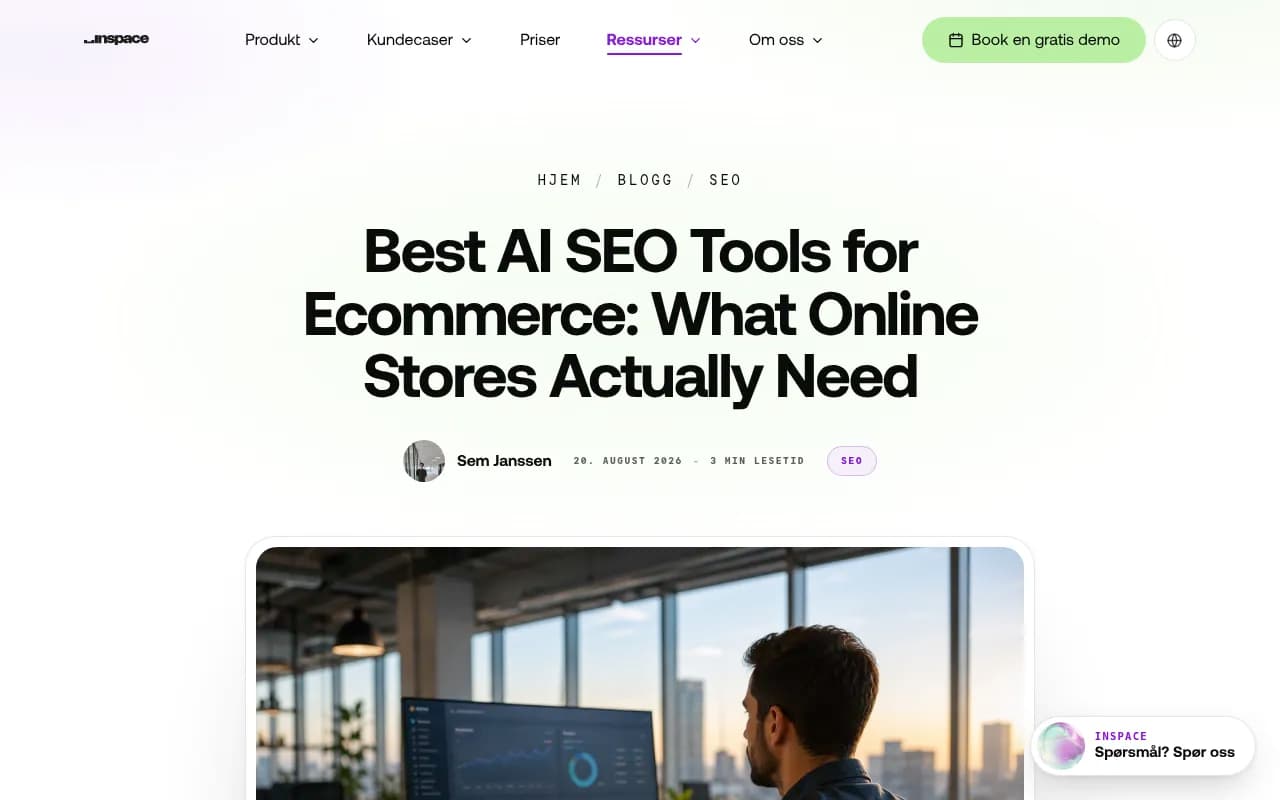
In its August 2026 e-commerce article, InSpace lists what online stores need: keyword mapping, content production at scale, technical SEO (crawl, duplication, faceted navigation), optimisation workflows, and publishing plus measurement. It describes NOVA as covering strategy, topic clustering, technical optimisation, content, publishing, tracking and continuous optimisation. That is a content and SEO execution pitch. Shopping-card monitoring is not in it.
The direct answer: does it track ChatGPT Shopping?
I could not find public documentation showing that it does. That is not proof it can't. It means the claim is unevidenced, and I would not assume it.
InSpace's own measurement guidance points to AI Overviews inclusion, brand mentions in AI summaries and passage coverage. All useful. None of it tells you that your vacuum cleaner showed up third in a ChatGPT product card while a retailer got the link.
Questions worth asking on a demo call:
- Can I see which of my SKUs appear in ChatGPT product cards, and in what position?
- Do you record which retailer or review site is cited next to my product?
- How many shopping answers sit behind each percentage you report?
- Do you track ChatGPT separately from Google AI Mode and Gemini?
- Can I export prompt-level results?
If the answers are vague, treat shopping visibility as outside the product.
How ChatGPT Shopping works, briefly
OpenAI introduced shopping research on November 24, 2025. You describe what you want, ChatGPT asks clarifying questions, researches across the web, and returns a personalized buyer's guide. It rolled out to logged-in Free, Go, Plus and Pro users and does best in detail-heavy categories such as electronics, beauty, home and garden, kitchen and sports.
According to GrowByData (October 2026), product data comes from merchant feeds via the Agentic Commerce Protocol, Shopify Catalog and direct feed applications, and OpenAI says picks are chosen independently and are not ads. In GrowByData's sample, product picks pointed to third-party review and retail pages on 118 of 159 placements. A clean feed is necessary, but it does not win by itself. The same analysis found ChatGPT and Google AI Mode never put the same product first on the same day in a September 2026 week, so each surface needs its own tracking.
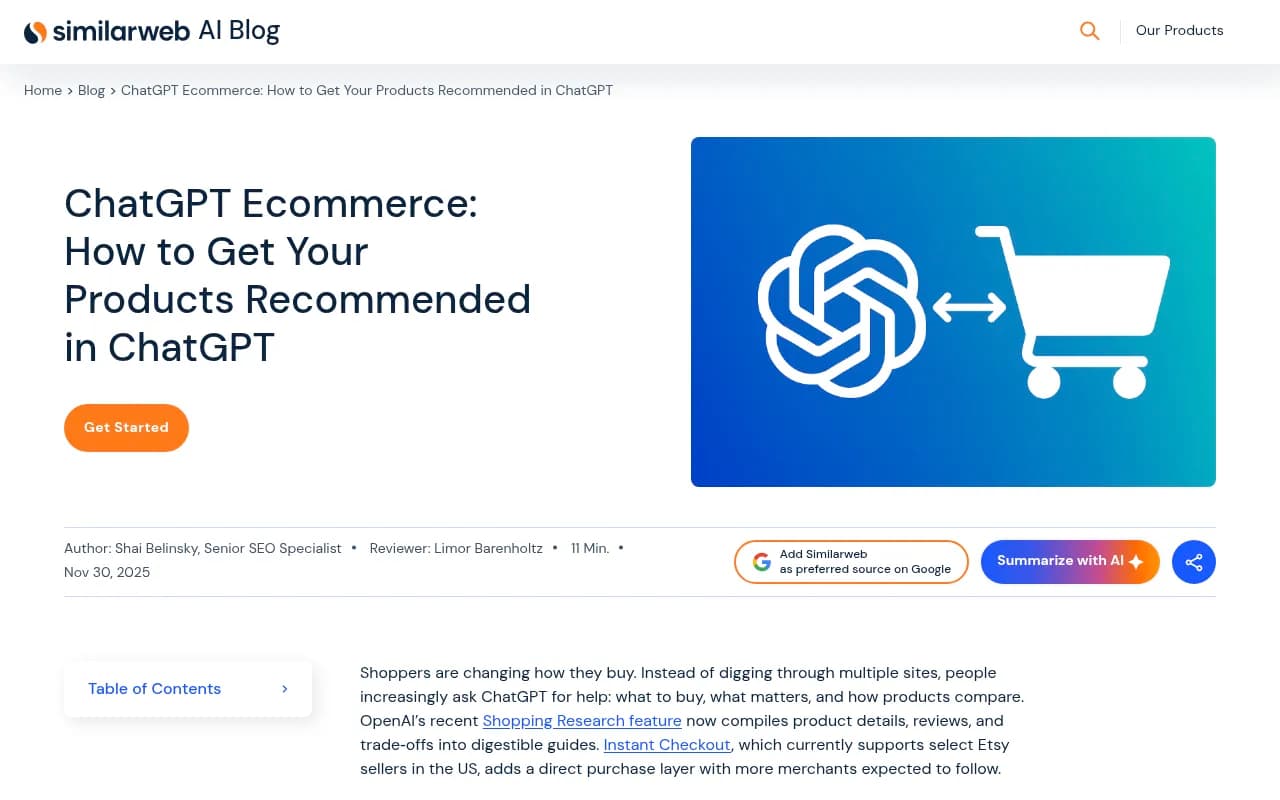
Similarweb's e-commerce write-up makes a related point: the same signals shape ChatGPT's ordinary conversations, not only the dedicated shopping mode. People ask "what's a good laptop for design school?" and get product recommendations without ever opening shopping research.
What the data says about product citations
Promptwatch Data shows that ChatGPT attaches shopping features such as product cards and price comparisons to only a low single-digit percentage of web-search responses. The rate moves in steps. In the window shown it roughly doubled overnight in late May, then fell back weeks later, which suggests OpenAI tunes when cards appear. The features concentrate on commercial and transactional prompts, and the metric only counts responses where web search triggered.
The citation side is more encouraging for store owners. In Promptwatch's ChatGPT citation share by content type report (Sep 28 to Oct 4, 2026), product pages were the most cited type at 22.4% of classified citations, and landing pages added 16.8%. For commercial prompts, product pages hit 26.0%, landing pages 20.6%, listicles 15.0% and comparisons 7.9%, almost 70% combined.
Two takeaways. Your own product and category pages matter a lot. And the listicles and comparisons written by other sites matter nearly as much, which fits the GrowByData finding that third-party pages carry many placements. The content half-life report adds that landing pages and docs stay cited for months while news loses half its pages in about five weeks. Evergreen product and category content is a safer bet than news-style posts.
Brand tracking versus product tracking
This is where I think most buyers get misled. A tool that reports "your brand was mentioned in 34% of prompts" is measuring something real. It just isn't shelf position.
Product-level tracking needs:
- SKU or product identification inside answers and cards
- Position and share of shelf across a fixed prompt set
- Retailer versus direct-to-consumer share of links
- Competitor and retailer co-occurrence
- A count of shopping answers behind every percentage
Percentages in a shopping report are computed over shopping answers only, so a score of 40% on a sample of 12 answers means very little. Ask for the denominator every time.
Tools that do track shopping or products
Research notes point to several tools with explicit shopping or product-level features. Pricing below comes from third-party roundups and may be stale, so check each vendor.
| Tool | Shopping or product coverage | Notes |
|---|---|---|
| Promptwatch | ChatGPT Shopping tracking, Amazon Alexa product results, product catalog upload, alerts when competitors replace you in shopping results | Also adds crawler logs, visitor analytics and a Content Agent |
| Scrunch | Shopping module covering ChatGPT and Copilot, share of shelf, first-position win rate, retailer vs DTC share | Perplexity listed as coming |
| Profound | Described as offering product-level ChatGPT Shopping | Starter reported at $99/mo annual, ChatGPT only, 50 prompts |
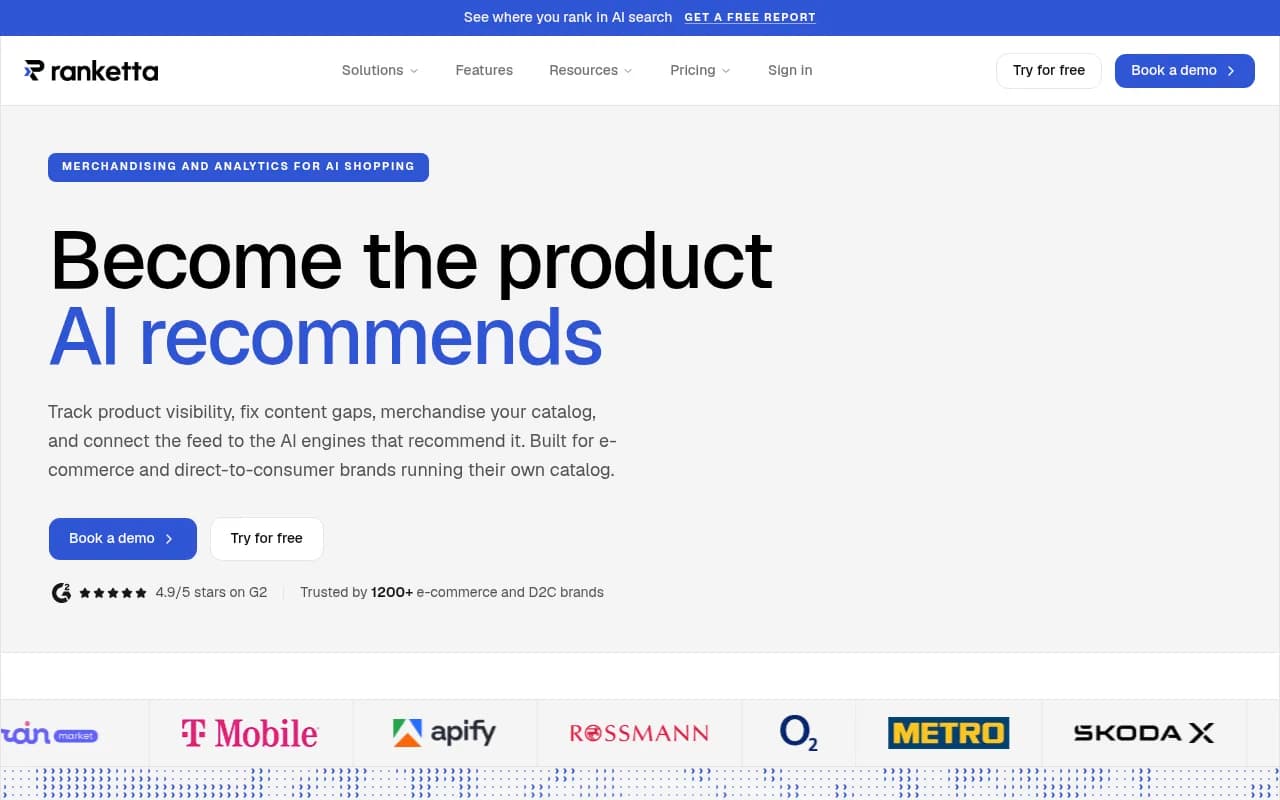
| Ranketta | Product-level AI visibility for ecommerce | Narrow focus |
| Alhena AI | Visibility tracking built for ecommerce catalogs | Catalog-oriented |
| Yotpo Discover | Ecommerce catalogs and reviews | Fits review-led stores |
| Azoma | Agentic-commerce GEO for AI shopping agents | Shopping-agent focus |
Promptwatch is the one I would put first on a shortlist if you want tracking and action in one place. It monitors the real ChatGPT interface rather than only API output, tracks shopping carousels and Alexa product results, and connects what it finds to crawler logs and AI-referred traffic. Its Content Agent and Action Board then turn gaps into work. The Business plan ($579/mo) includes Shopping Insights and Ads Radar, so confirm at promptwatch.com/pricing which tier covers what you need.

Scrunch's Shopping module is the closest competitor on shelf-style metrics.

Profound is the enterprise option, with product-level shopping coverage reported by third parties.

For store-specific products, Ranketta, Alhena AI and Yotpo Discover are worth a look.
Yotpo Discover
If you want to browse more options, the GEO software directory at bestgeosoftware.com lists far more tools than fit here.
Where InSpace still makes sense for e-commerce
Don't write it off. Shopping tracking is one need. If your bottleneck is producing category content, fixing technical SEO across thousands of URLs, and publishing consistently, a platform that handles strategy through publishing can do real work. InSpace's own table positions NOVA against Semrush, Ahrefs and Surfer SEO, which tells you where it sees itself: SEO execution first.
A sensible split:
- Use InSpace for content, technical SEO and publishing, if its demo convinces you.
- Use a dedicated tracker for ChatGPT Shopping and product citations.
- Keep the tracker's prompt set fixed so results are comparable month to month.
That adds cost, but it avoids paying a premium for a measurement feature that may not exist.
Preparing your catalog regardless of tool
Feed and page hygiene helps whichever tracker you pick:
- Complete Product schema with accurate prices and availability
- A clean merchant feed through the channels OpenAI supports
- Product and landing pages that state specs, sizing and use cases plainly
- Presence on the review sites and roundups that AI already cites for your category
- Crawler access, since a blocked page cannot be cited
Then run buyer prompts yourself and record which brands fill the cards. Do it weekly, note how many answers had shopping features, and compare surfaces separately.
A note on viral numbers
You will see claims such as 50 million daily ChatGPT shopping queries, or that nearly half of citation traffic goes to brand sites tagged with utm_source=chatgpt.com. They come from a Dataslayer blog post and a LinkedIn post. I could not confirm them against a primary source, so I would not put them in a board deck.
Verdict
Based on public material, InSpace is an AI SEO and content platform, and ChatGPT Shopping or product-citation tracking is not documented. Ask for a live demo of that exact feature before buying on that assumption. If you need SKU-level shelf data now, choose a tracker built for it, and pair it with whichever content platform you prefer.