Key takeaways
- InSpace.io today is an AI SEO and GEO company (its product is NOVA), not a video or collaboration app. This guide covers alternatives to that product.
- Reported pricing starts around €600/month on a 12-month contract, so small teams have good reasons to look at cheaper options.
- Budget content tools like Frase and Writesonic start near $39/month. Monitoring tools like Peec AI and Otterly.AI cost less than a full execute-and-publish platform.
- Free options exist for tracking AI traffic and testing your visibility before you pay for anything.
- Pick based on whether you need a tool that writes and publishes pages, or one that only measures visibility. Mixing those up is the most common mistake.
First, which InSpace do you mean?
The name causes confusion, so let me clear it up. Searching for InSpace alternatives turns up a lot of Microsoft Teams, Basecamp and desk-booking comparisons. Those are a different product category.
- inspace.io is an AI SEO and GEO company. Its product, NOVA, is described as an autonomous platform that researches, writes, publishes into your CMS and keeps improving pages so brands show up in Google and in AI answers. Humans review every page.
- An older InSpace was a virtual classroom and video platform that launched at Champlain College. GetApp lists it alongside Teams and Zoom.
- inspace.app is a separate hybrid-workplace and desk-booking tool from a different company.
The .io domain is the one most people mean, and the rest of this guide assumes it. If you landed here looking for a video or classroom tool, the Teams alternatives roundups (Pumble, Zoom Workplace, Google Meet, Slack) are the better place to start.

What InSpace.io actually costs
The pricing below comes from a competitor's comparison page (Launchmind), so check inspace.io/pricing before you budget. Treat it as a ballpark.
| Plan | Pages per month | NL/BE/DE/IE | UK | US |
|---|---|---|---|---|
| Stratosphere | 10 | €600 | £700 | $1,000 |
| Milky Way | 20 | €1,000 | £1,200 | $1,700 |
| Universe Access | 40 | €1,750 | £2,000 | $3,000 |
The contract runs 12 months, auto-renews for 12 months, needs one month's written notice, and is paid upfront by direct debit. Category pages start at Milky Way and location pages at Universe. Link building is not included. InSpace says it has 500+ customers and 37,856 pages built, but those are vendor figures.
Is that expensive? For an agency-style managed service, maybe not. For a five-person team with a modest content budget, a $1,000 monthly commitment locked in for a year is a big bet. That is where alternatives come in.
Decide what you actually need
These tools do three different jobs, and comparing them head to head is misleading.
- Execute and publish. The tool researches, writes and pushes pages into your CMS. NOVA sits here, along with Frase, Writesonic and a few others.
- Optimize content you write yourself. Scoring and briefs for human writers. Surfer SEO and Clearscope live here.
- Monitor AI visibility. Tracks whether ChatGPT, Gemini or Perplexity mention you. Peec AI and Otterly.AI mostly do this and nothing else.
If you pay for monitoring and expect pages to appear, you will be disappointed. If you pay for a content engine and have no idea whether AI cites you, you are flying blind. Most small teams need a bit of both.
Cheaper alternatives to compare
Prices below come from Tim Soulo's March 2026 comparison of AI SEO tools. They move often, so confirm on each vendor's site.
| Tool | Entry price | What it does | Best for |
|---|---|---|---|
| Frase | $39/mo | Content briefs and generation, 10 to 100 articles/mo | Tightest budgets |
| Writesonic | $39/mo | Content plus GEO tracking across 7 AI engines | Writing and tracking together |
| Surfer SEO | $99/mo | Content optimization | Teams with human writers |
| SE Ranking | about €87/mo | Classic SEO plus AI tracking | One tool for both |
| Peec AI | €89/mo | Tracking only, unlimited seats | Monitoring for larger teams |
| Clearscope | $129/mo | Content grading, unlimited users | Editorial teams |
| Ahrefs Brand Radar | from $50/mo | AI tracking, large prompt database | Research-heavy teams |
| Launchmind | €425/mo | Auto-publishing, 10 articles | Closest like-for-like swap |
Budget content engines
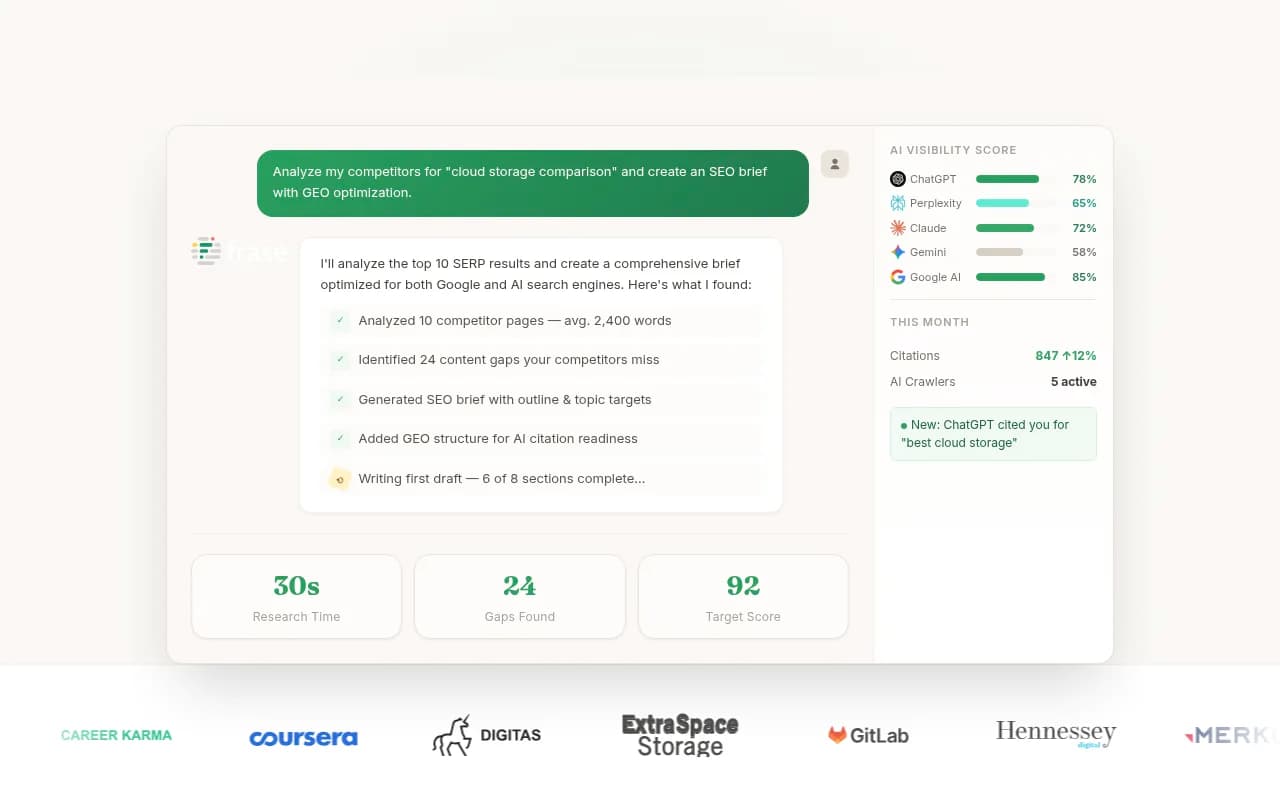
Frase is the one most often called the best budget option, and it has a 7-day free trial with no card. It works best when you give it solid briefs and edit the output yourself.
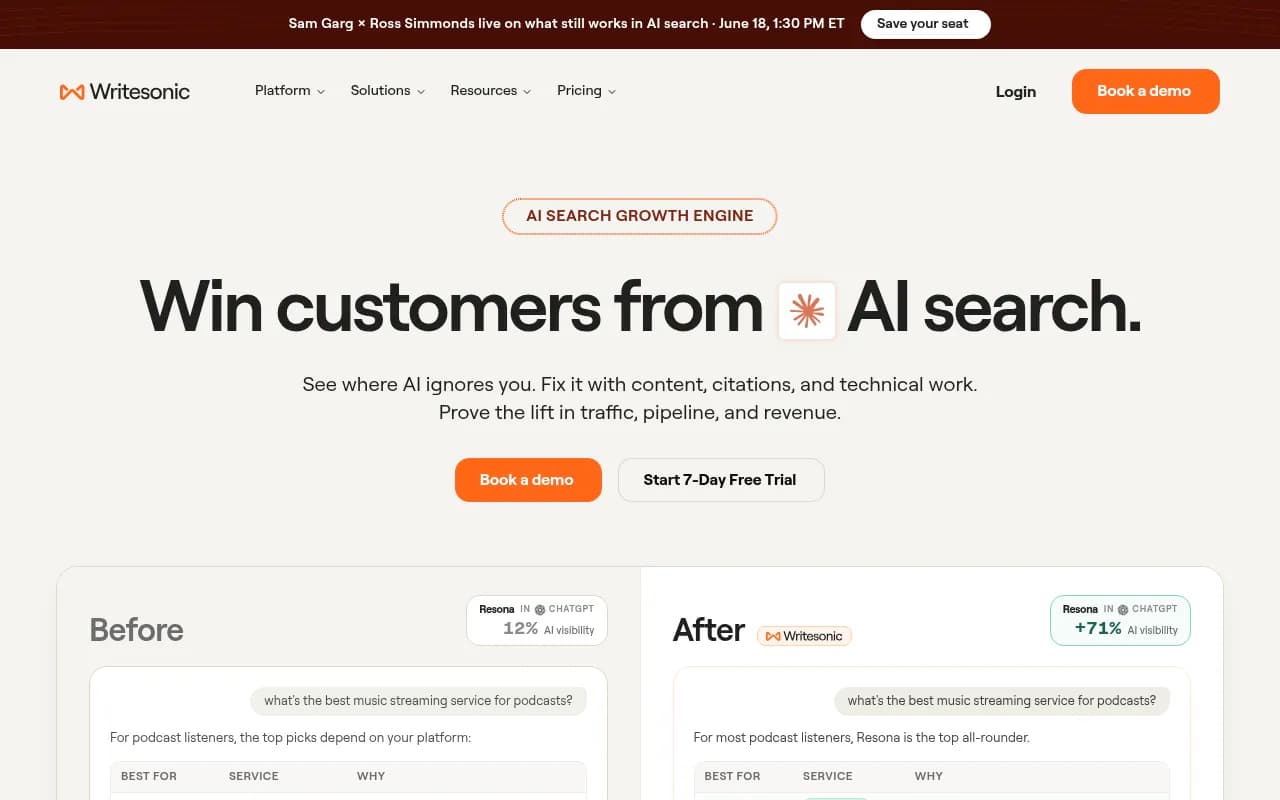
Writesonic's GEO product is useful if you want content generation and AI visibility tracking from one login, at the same $39 entry point.
If you need something even lighter, GrowthBar is a budget AI SEO tool with a Chrome extension.
Content optimization for human writers
If you already have a writer, you may not need an autonomous platform at all. Surfer SEO and Clearscope give you data-driven briefs and grading so your own drafts hit the mark.

Like-for-like platforms
Launchmind is the most direct cheaper rival, by its own claim: 10 articles for €425 and 17 for €599, with monthly terms available at a 7% premium. Note its default behavior. Articles auto-publish after 48 hours if you don't answer the approval email, so set a reminder or you will ship things you haven't read. Neuramerce also markets itself as an InSpace/Nova alternative, though I haven't verified its pricing.
SEO.AI and Junia AI are also in the hands-off, autopilot-publishing camp.


Cheap and free ways to track AI visibility
A surprising amount of what a $1,000 platform sells is measurement. You can get that for far less.
Ahrefs Webmaster Tools lets you track AI search traffic for free. The paid Brand Radar starts around $50 a month with custom prompts and has a 243M+ prompt database, which matters because most tools make you add every prompt by hand.

Peec AI is tracking only, with unlimited seats, which is handy if your whole team wants a login.

Otterly.AI is another affordable monitor, and Airefs positions itself on price too.

One warning. "AI engines supported" ranges from 1 to 11 or more across these tools. A cheap plan that covers only one engine can look great until you realize your customers use another.
If you want tracking plus the ability to act on it, Promptwatch goes beyond monitoring. It has a free Explore plan for ChatGPT, and paid plans from $95/month add crawler logs, content gap analysis and AI traffic attribution. Its free AI Visibility Report is a no-login way to see how ChatGPT, Gemini and Perplexity describe your brand before you spend anything. Pricing changes, so confirm at promptwatch.com/pricing.

For a longer list of options, the GEO software directory at bestgeosoftware.com and the rank tracker directory at ai-rank-tools.com are good places to keep browsing.
What content actually gets cited
This is where I'd push back on the "publish 40 pages a month" pitch. Volume is not the whole story. In Promptwatch's data on ChatGPT citations by content type (Sep 28 to Oct 4, 2026), product pages made up 22.4% of citations and landing pages 16.8%. Together that is about 39%. Listicles were 13.6%, how-to guides 8.7%, and comparisons 5.9%. You can read the full breakdown in Promptwatch's content type report.
For commercial prompts like "best CRM for small businesses," product pages, landing pages, listicles and comparisons add up to almost 70% of citations. Practical takeaways for a small team:
- Make pricing and specs clear on your product pages.
- Publish your own comparison pages.
- Get listed in "best of" roundups.
- Collect reviews on sites trusted in your category.
There is also a shelf-life angle. According to Promptwatch's content half-life report, news pages lose half their citations in about five weeks, while landing pages and docs last months. A smaller set of well-built, durable pages often beats a large stream of disposable posts, and it is a lot cheaper.
A budget stack for a small team
Here is how I'd put it together depending on your situation.
| Situation | Suggested setup | Rough monthly cost |
|---|---|---|
| Solo founder, almost no budget | Ahrefs Webmaster Tools, Frase trial, hand-built landing pages | $0 to $39 |
| Small team that writes its own content | Surfer or Clearscope plus a free visibility check | $99 to $130 |
| Need drafts and tracking | Writesonic plus a monitor | $39 to $130 |
| Want hands-off publishing | Launchmind or a similar autopilot tool | about €425 and up |
| Want tracking and action in one place | Promptwatch Essential | $95 |
None of these is a perfect substitute for NOVA. InSpace sells a managed process with human checks on every page. If you cut the price by 80%, you are usually also cutting that review step, so budget your own editing time.
Questions to ask before you switch
- How long is the contract, and how does cancellation work? A 12-month auto-renewal is the opposite of a trial.
- Does the tool publish directly to your CMS? InSpace supports Shopify, WordPress, WooCommerce, Magento, Wix, Webflow, HubSpot, Storyblok and Framer. Launchmind lists WordPress, Shopify, PrestaShop, Webflow, Craft, Framer and Laravel. Check yours is on the list.
- Is a human reviewing output? Auto-publish with no review is the fastest way to ruin a small site's quality.
- Which AI engines does the visibility tracking cover?
- Is link building included? With InSpace it isn't.
Where I land
I wouldn't leave InSpace.io just because it costs more than a $39 tool. Managed execution has real value if you have no one to run it. But for a team of three with a few thousand dollars a quarter, a budget content tool plus a cheap monitor gets you most of the way there. Start with the free visibility checks, find out which pages and prompts matter, and only then decide whether to pay for an autonomous platform.
If you'd rather have an agency handle strategy and execution, 1001 SEO Media offers SEO and GEO services with no long-term contracts, which is a different trade-off from a 12-month platform commitment.