Key takeaways
- InSpace.io's NOVA is a managed platform for long-tail and GEO content. The InSpace pages I reviewed describe content automation and site monitoring, but say nothing about AI crawler logs. I haven't verified their feature pages or pricing, so check with them directly.
- Crawler log monitoring answers a different question than prompt tracking: did GPTBot, ClaudeBot or PerplexityBot actually reach and read your pages?
- Promptwatch is the most complete option here, with IP-verified crawler logs, visitor analytics and a content agent in one product. Botify, Qwairy, Scrunch and Trakkr cover parts of the problem.
- Whatever you pick, insist on IP verification. Spoofed user agents inflate numbers and hide real blocks.
- Compare your own logs against industry baselines. If a provider is big in the baseline but near zero on your site, you are probably blocked.
Why crawler logs matter more than another dashboard
Most AI visibility tools run prompts and report whether your brand was mentioned. That is useful, but it tells you the symptom, not the cause. If ChatGPT never cites your pricing page, is the content weak, or did OAI-SearchBot get a 403 from your WAF three weeks ago?
Crawler logs answer that. They are the raw record of which bots requested which URLs, when, and with what response code. For anyone publishing content at scale, which is what InSpace's NOVA is built for, this is the feedback loop that tells you whether the published pages are even readable by AI systems.
What InSpace.io does, and where the gap is
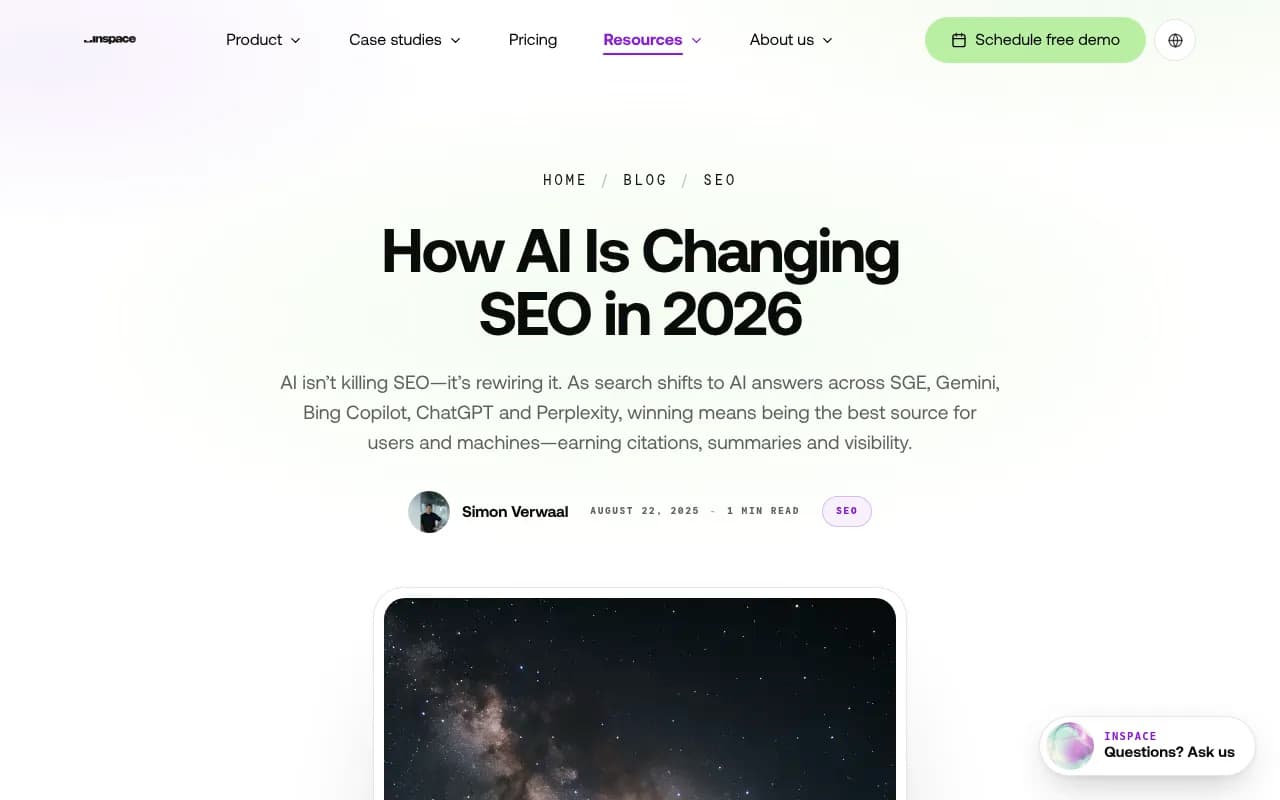
Per InSpace's own blog, NOVA is an AI-driven platform that automates long-tail and GEO SEO from research to publication: it generates, structures and optimizes pages and pushes them to your CMS, with expert oversight on top. Their automation guide also lists website crawling and issue detection for crawlability, indexing and site health.
That last part is classic technical SEO: Googlebot-style crawling of your site. It is not the same as logging what GPTBot or ClaudeBot do when they visit you. In the excerpts I saw, there is no mention of AI crawler detection, bot-level request logs, or crawl-to-citation tracking. That may exist in the product or not. If it matters to you, ask in the demo.
To be fair, InSpace is a managed service. If you want someone else to run your SEO, an analytics-first tool is a different purchase. Many teams end up using both: a managed content engine plus a monitoring layer that keeps it honest.
What good AI crawler monitoring looks like
Before comparing tools, here is the checklist I would use.
- IP verification. Only count requests whose source IP matches the operator's published ranges. User agents are trivially faked.
- Training vs answer-time bots. GPTBot (training) and ChatGPT-User or OAI-SearchBot (answer-time fetches) mean very different things for visibility.
- Error visibility. 403s, 429s, timeouts and robots.txt blocks, ideally explained in plain language.
- Page-level data. Which URLs get read, and which of those later get cited.
- Coverage of newer bots. Meta, xAI, Mistral, DeepSeek and Cohere crawlers, not just OpenAI.
- Infrastructure fit. Cloudflare, Vercel, Fastly, CDN logs or a plugin, so setup doesn't need a quarter of engineering time.
The bot list matters more than it sounds. Promptwatch's tracked user agents include GPTBot, OAI-SearchBot, ChatGPT-User, ClaudeBot, Claude-User, Claude-SearchBot, PerplexityBot, Perplexity-User, Google-Extended, MistralAI-User, GrokBot, DeepSeekBot, cohere-ai and the Meta family (meta-webindexer, meta-externalagent, meta-externalfetcher, FacebookBot). If a tool's list stops at three bots, it is out of date.
The baseline: what AI crawler traffic looks like in 2026
You need a reference to know whether your logs look healthy. Promptwatch Data's AI crawler traffic report, covering June 8 to September 6, 2026, counts only IP-verified requests from raw server and CDN logs. OpenAI made up 79.8% of requests in the week of Aug 31 to Sep 6, down from 94.8% in early June. The rest is split across Anthropic, Google, Perplexity and Mistral.
The Meta story is stranger. Promptwatch's Meta-WebIndexer data shows that bot going from about 2.2% of tracked AI crawler requests in mid-July to 37.8% on August 9, roughly 17x in under a month, making it the heaviest AI crawler in their logs. Reports of Meta building its own web index are unconfirmed, but one developer, @levelsio, said the traffic triggered load alerts on his server. If your hosting bills per request, that is a real budget line.
The practical use: compare your logs to the baseline. If a provider is a large share in the report and near zero on your site, you are likely blocked or unreachable for it. That is a five-minute robots.txt or WAF check, not a content problem.
Comparison table
| Tool | Crawler log monitoring | Beyond crawlers | Best for |
|---|---|---|---|
| Promptwatch | IP-verified logs, spoofed bots filtered, crawl-to-citation path | Prompt tracking, visitor analytics, content agent, CMS publishing | Teams that want to find and fix visibility gaps |
| Botify | Enterprise log analysis for bots | Technical SEO at scale | Large sites with technical SEO teams |
| Scrunch | Agent traffic context | Monitoring plus agent-ready pages | Brands and agencies |
| Qwairy | AI crawler detection (claimed in a competitor listicle, verify) | Multi-model tracking, MCP server | Teams wanting broad tracking |
| Trakkr | AI visitor tracing | Revenue attribution | Traffic-to-revenue reporting |
| Otterly.AI | Crawlability checks (not log-based) | Prompt monitoring, content audit | Budget monitoring |
Treat the non-Promptwatch entries as starting points. I did not verify their pricing or current feature depth, so confirm log-level capability on a demo call.
The alternatives
Promptwatch
Promptwatch is the one I would look at first for this specific requirement, because crawler logs are a core part of the product rather than a bolt-on. Agent Analytics shows real-time, IP-verified requests from GPTBot, ClaudeBot, PerplexityBot and the rest, which pages they read, the errors they hit with plain-language explanations, and a citation rate per page. Spoofed bots are filtered out.

Setup works through Cloudflare (Logpush or a Worker), AWS CloudFront, Fastly, Vercel, Netlify, Akamai, Google Cloud CDN, a custom HTTP endpoint, or the official WordPress plugin. That covers most stacks without custom engineering.
What makes it a real alternative to a content platform like NOVA is what happens after you spot the problem. Visitor analytics tracks actual AI-referred traffic and conversions. Weekly site audits run 21 checks. The Content Agent plans, writes and publishes GEO content to WordPress, Webflow or Framer, then tracks whether each page gets crawled, cited and clicked, and sends underperformers back as actions on the Action Board. TreeHouse, the company behind Pararius, fixed crawler access and published proprietary data, and reached around 25% of organic conversions from AI search.
Plans start with a free Explore tier (ChatGPT only, 10 prompts). Essential is $95/month, Professional $245, Business $579, with crawler log volume scaling by tier (25M on Professional, 100M on Business). Confirm current numbers at promptwatch.com/pricing. It is ISO/IEC 27001 certified and GDPR compliant, which helps in enterprise reviews.
Honest caveat: it is a software platform, not a managed service. Its Business plan includes automation, but if you want humans running everything, InSpace's model is different.
Botify
Botify is the enterprise technical SEO name most people know for log file analysis, and it now positions around AI search optimization.
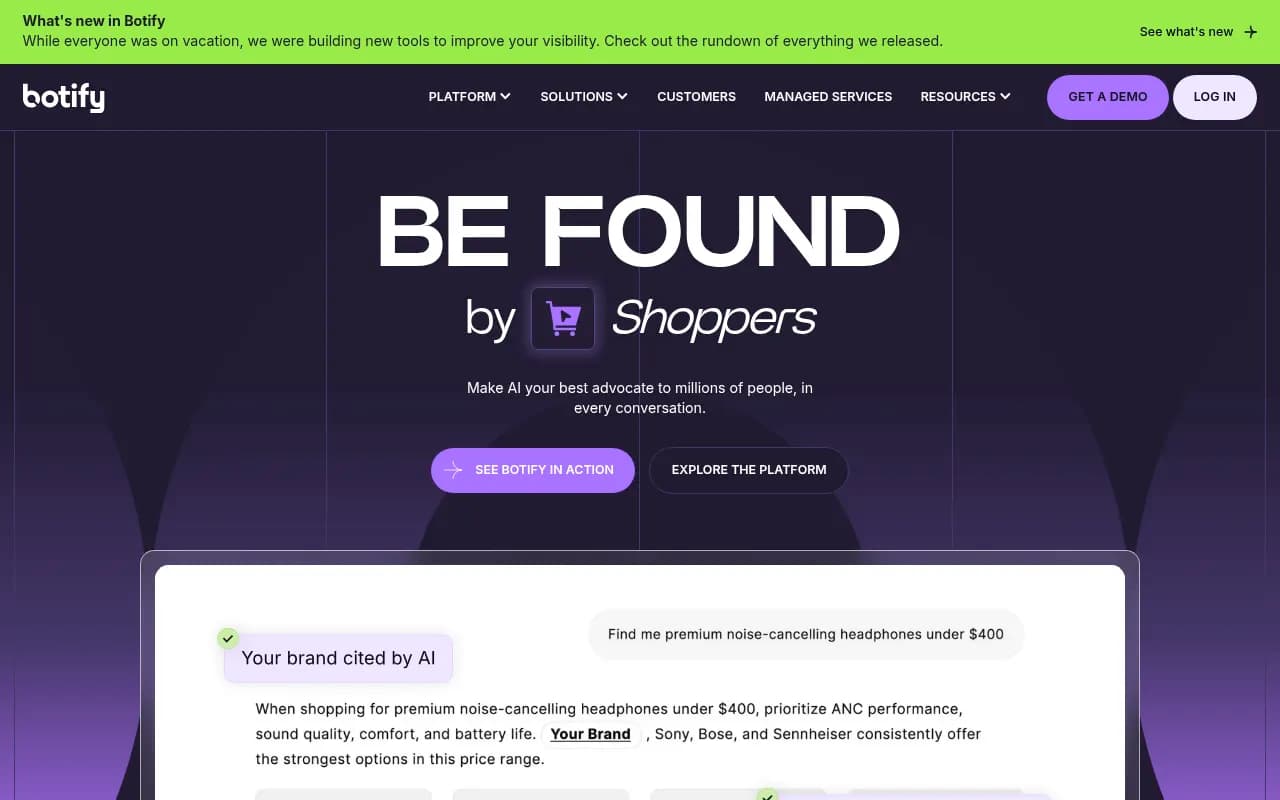
It makes sense if you run a huge site, already have a technical SEO team and want crawl data tied to rendering and indexing. It is heavier and more expensive than lighter tools, and less focused on prompt-level visibility.
Scrunch
Scrunch pairs AI search monitoring with agent-ready versions of your pages and gives some AI-agent traffic context.
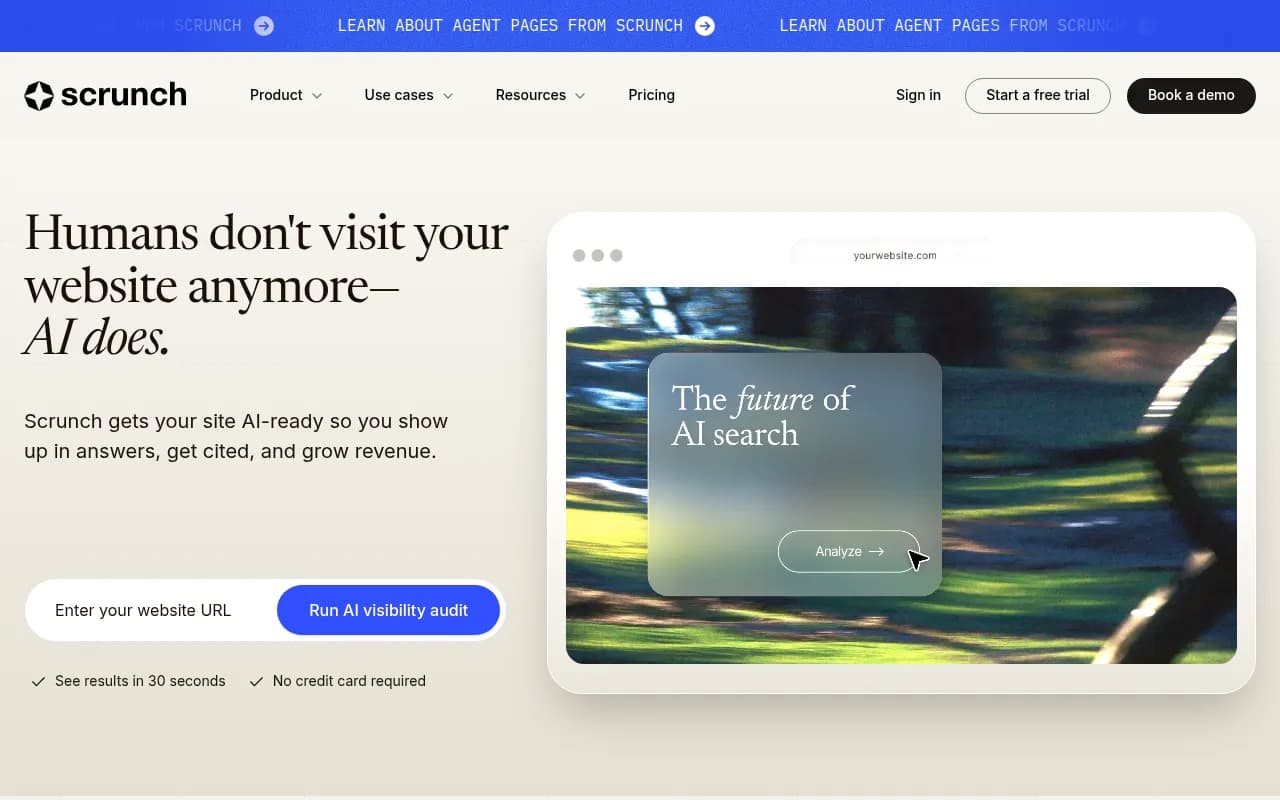
A reasonable pick for brands and agencies that want citation intelligence plus a way to serve cleaner content to bots. Pinggy's roundup describes it as an enterprise answer-share tool. It is a monitoring-first product, so check how deep the raw log view goes.
Qwairy
Qwairy tracks many AI providers and models and has an MCP server. A competitor listicle claims it includes AI crawler detection, which I could not confirm independently.
Trakkr
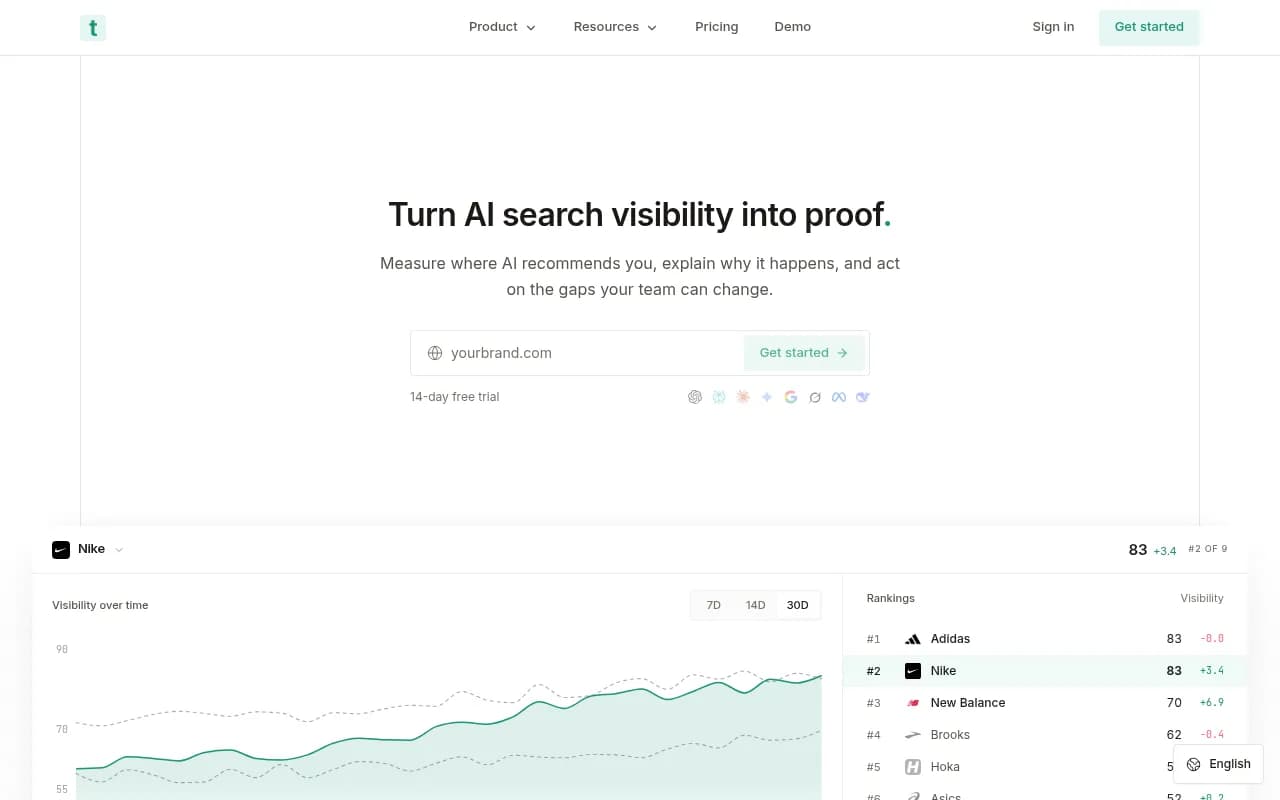
Trakkr focuses on tracing AI visitors to revenue. That is the traffic side of the story rather than the bot-request side, but pairing the two is how you prove a fix worked.
Otterly.AI
Otterly.AI is an affordable multi-engine monitor with content audit and crawlability checks. Those checks look at your pages, not your server logs, so it won't tell you what bots actually did.

What about prompt trackers like Peec and Profound?
Peec AI and Profound are strong at the mention, position and sentiment layer. If your only goal is share of voice in answers, they work. For this particular question, though, they answer "was I mentioned?" rather than "could the bot even read me?" Several tools on the list, including Peec AI, fall into that category, so don't assume monitoring equals log access.


How to pick
- If you need logs plus a way to act on them, start with Promptwatch.
- If you manage a very large site with an in-house technical SEO team, Botify deserves a demo.
- If you need agent-ready pages alongside monitoring, look at Scrunch.
- If you only need cheap mention tracking, Otterly or Peec will do, but you will still need a separate log solution.
- If you want hands-off content, keep InSpace and add a monitoring layer beside it.
One more thing. Ask every vendor the same three questions: Is it IP-verified? Which bots do you cover by name? Can I see errors per URL? Vague answers are an answer.
A quick audit you can run this week
Even before buying anything, do this:
- Check robots.txt, CDN and WAF rules for each AI provider. Blocks often come from default bot-protection settings nobody remembers enabling.
- Pull a week of raw logs and search for GPTBot, OAI-SearchBot, ClaudeBot, PerplexityBot and meta-webindexer.
- Compare the mix against the public baseline above.
- Look at the status codes on your highest-value pages. A 403 on a pricing page is worth more attention than a hundred new blog posts.
Free helpers exist too. Promptwatch offers an Agentic Readiness Check and an AI Crawler URL Inspector, and its directory at promptwatch.com/bots lists 440+ bots. For a wider tool list, browse the GEO software directory at bestgeosoftware.com.
The bottom line
InSpace is a content engine. If it works for you, keep it. But publishing more pages doesn't help if AI crawlers get blocked on half of them, and the InSpace material I reviewed doesn't show a way to see that. Add a tool that reads the logs, verify IP sources, and check your robots.txt this week. Based on the data, a surprising number of sites will find at least one major bot returning errors.