Key takeaways
- Buyers and sellers ask ChatGPT neighborhood questions and "who's the best agent in X" questions. Those answers name one or a few agents, so being absent costs you leads you will never see in analytics.
- Tracking works by building a prompt set per neighborhood and intent, running it repeatedly, and logging mentions, position, and which pages get cited.
- Promptwatch Data shows ChatGPT leans on landing pages, listicles, and how-to content, and since August 2026 it runs
site:searches against specific domains. Your neighborhood pages need to be crawlable and indexed. - No public dataset measures real estate citations in ChatGPT specifically. Anything below that applies general figures to real estate is my inference, and I flag it as such.
Why neighborhood queries are different
Traditional local SEO is about the map pack. Someone types "realtor near me", Google shows three pins, and you fight for one of them. ChatGPT is different. A relocating buyer might write: "We have two kids, a $650k budget and want a walkable neighborhood near good elementary schools in Austin. Where should we look, and who should we talk to?"
That one prompt mixes a neighborhood question, a school question, and an agent recommendation. The answer might name three neighborhoods, cite a city data page and a local magazine, and suggest two agents. If your name is not in that answer, you were not in the conversation.
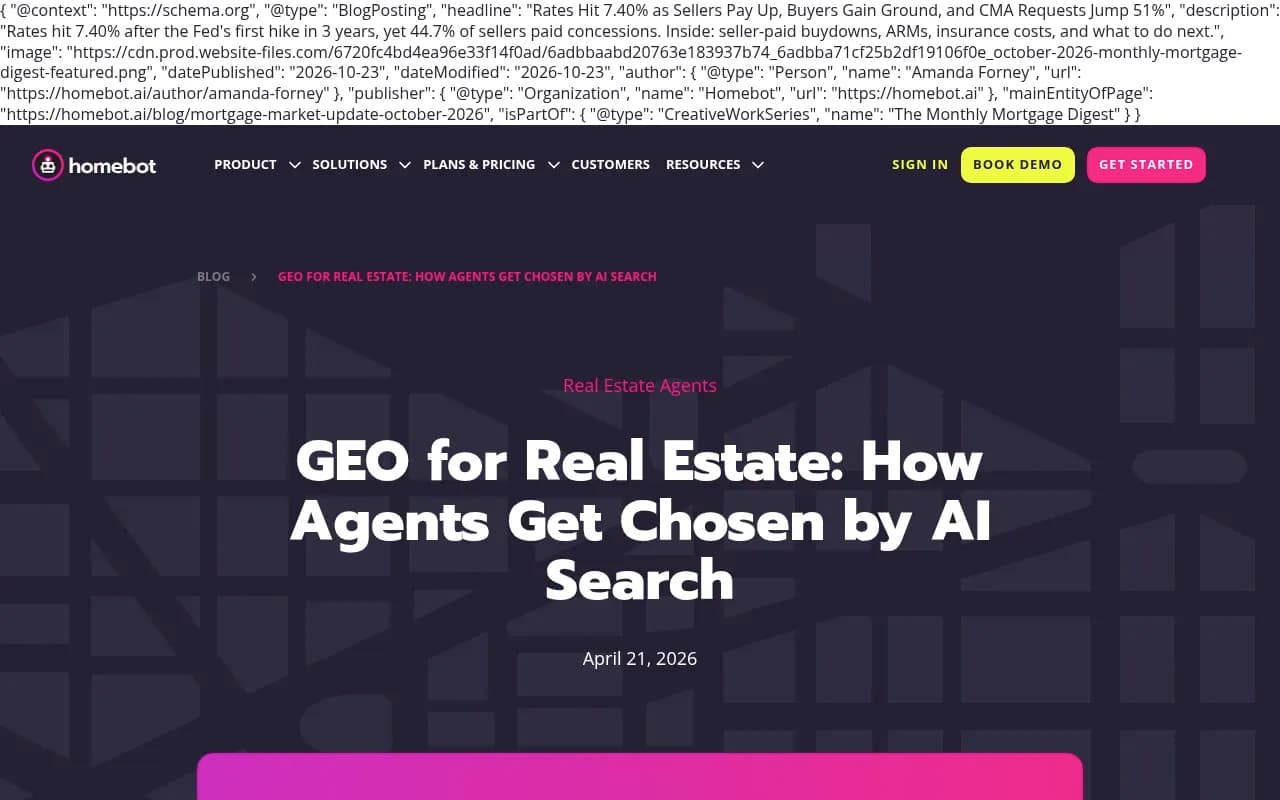
The Homebot guide to GEO for real estate makes the same point: AI tends to return one or two names instead of ten blue links. That makes local authority a market-lens game, not just a pin on a map. Their advice to rotate the communities you feature, based on where your clients are active, is practical and cheap to do.
What the data says (and what it does not)
I should be upfront. Promptwatch has published ChatGPT citation reports for healthcare, travel, software, and automotive. There is no real estate report, and no public measurement of how often ChatGPT cites Zillow, Redfin, Realtor.com, or a Google Business Profile. So I use the general ChatGPT reports below and label the real estate angle as inference.
Fanouts are short and keyword-like
When ChatGPT answers a prompt, it often runs its own web searches behind the scenes, called query fanouts. Promptwatch's query fanout data shows these have gotten shorter. Average query length fell from about 117 characters in early December 2025 to about 53 characters in April 2026, roughly six to eight words. Average searches per response ranged from about 2.15 in December to 1.84 in early March, and the report logged 1.0 per response in April.
What that means for you (my inference): the searches ChatGPT runs look more like "best neighborhoods Austin families 2026" than a chatty paragraph. Headings on your neighborhood pages that read like those short queries are more likely to match. Put the place and the topic first.
ChatGPT now searches inside specific sites
On August 8, 2026, ChatGPT started using the site: operator at scale. Promptwatch Data recorded site: queries jumping from 0.37% to 16.8% of all fanout queries in a day, and average fanouts per response rose from about 1.08 to about 1.83 and stayed there.
For an agent, a plausible reading is that ChatGPT may sometimes query a brokerage or agent site directly for a topic, like site:youragency.com Eastside condos. I can't prove it happens for real estate. But it makes the boring stuff matter more: neighborhood pages that are indexed, crawlable, and not thin. If you built a keyword-to-page map before August 8, it is stale.
Which content types get cited
Promptwatch's content type report covers September 28 to October 4, 2026:
| Content type | Share of ChatGPT citations |
|---|---|
| Product pages | 22.4% |
| Landing pages | 16.8% |
| Listicles | 13.6% |
| How-to guides | 8.7% |
| Documentation | 7.5% |
| General articles | 6.1% |
| Comparisons | 5.9% |
| News | 5.7% |
| FAQ | 3.3% |
| Reviews | 1.7% |
By prompt intent, commercial prompts favored landing pages and listicles, informational prompts gave how-tos more room, and branded prompts leaned on landing pages, reviews (more than 3x their overall share), and FAQ content.
Mapped to real estate, again as inference:
- "Best agent in [city]" is commercial. Listicles and roundup pages matter, so getting named in third-party "best agents" lists helps.
- "Is [your name] a good agent?" is branded. Your own landing page, your reviews, and a real FAQ do the work.
- "What is it like to live in [neighborhood]?" is informational. Guides and how-tos gain share here.
One more caution. Promptwatch's half-life report found landing pages and docs stayed cited longest while news lost half its pages within 36 days. Evergreen neighborhood pages beat "market update" posts for staying power.
Build your neighborhood prompt set
This is the part nobody hands you. Here is the method I would use, and it is a suggested practice rather than a validated benchmark.
Step 1: list your territories
Pick the neighborhoods, zip codes, and suburbs where you want listings. Include the names buyers actually use, not just official ones. "The Heights" and "Houston Heights" can return different answers.
Step 2: pick intents per neighborhood
For each place, write prompts across these types:
- Agent discovery: "Who are the best real estate agents in [neighborhood]?"
- Seller: "Who should I hire to sell a house in [neighborhood]?"
- Neighborhood research: "Is [neighborhood] good for families?" and "Cost of living in [neighborhood] vs [neighbor]"
- Buyer how-to: "How do I buy a condo in [neighborhood] with 5% down?"
- Branded: "Is [your name] a good agent?" and "[Brokerage] reviews"
- Comparison: "[Neighborhood A] vs [Neighborhood B] for young professionals"
Five neighborhoods times six intents is 30 prompts. That is a workable starting set.
Step 3: vary the persona
A first-time buyer, a retiree downsizing, and an investor ask differently. Add a persona line to some prompts: "I'm relocating from Chicago with two kids." Answers shift.
Step 4: run them repeatedly
ChatGPT answers vary run to run. One manual check tells you almost nothing. You want the same prompt many times over weeks, logging three things: were you mentioned, where in the answer, and which sources were cited.
Step 5: log fanouts and citations
The citations tell you who is winning the source slot. If the same local magazine, city site, or a Zillow page shows up for every "best neighborhoods" prompt, that is your target list for mentions and your content brief for what to publish.
Doing it by hand
You can start for free. Open ChatGPT in a fresh session, run your prompts, and paste results into a spreadsheet with columns for prompt, date, mentioned (yes/no), position, competitors named, and sources cited. The free GEO Inspector Chrome extension from Promptwatch shows fanouts and fetched versus cited sources for a ChatGPT response, which helps you see the searches behind an answer.
The limits show up fast. Thirty prompts times five runs times weekly is 150 runs a week. Nobody keeps that up by hand for long, and logged-in ChatGPT with memory will bias results toward you, since it already knows your business.
That Facebook thread is a fair summary of how most agents start: ask the AI for the best agent in your area and see who comes back. It is a fine five-minute test. It is not tracking.
Tools for tracking at scale
Most AI visibility platforms are built for brands and SaaS, not neighborhoods. What matters for you: can it track by country or city, does it use real ChatGPT interface data instead of API output, and does it show citations and not just mentions.
Promptwatch monitors the actual ChatGPT interface and tracks by country on every paid plan, with state and city tracking from the Business plan. It also shows query fanouts, citation sources, and prompt difficulty, and its Content Agent can draft pages against the gaps it finds. Check promptwatch.com/pricing for current plans; the Essential tier starts at $95 a month for 50 prompts, which covers a small neighborhood set.

Rank Prompt markets a real estate use case with hyper-local visibility tracking for agents, brokerages, and listings.
Rank Prompt
Birdeye Search AI is aimed at local businesses and tracks AI visibility at the location level, which suits multi-office brokerages.
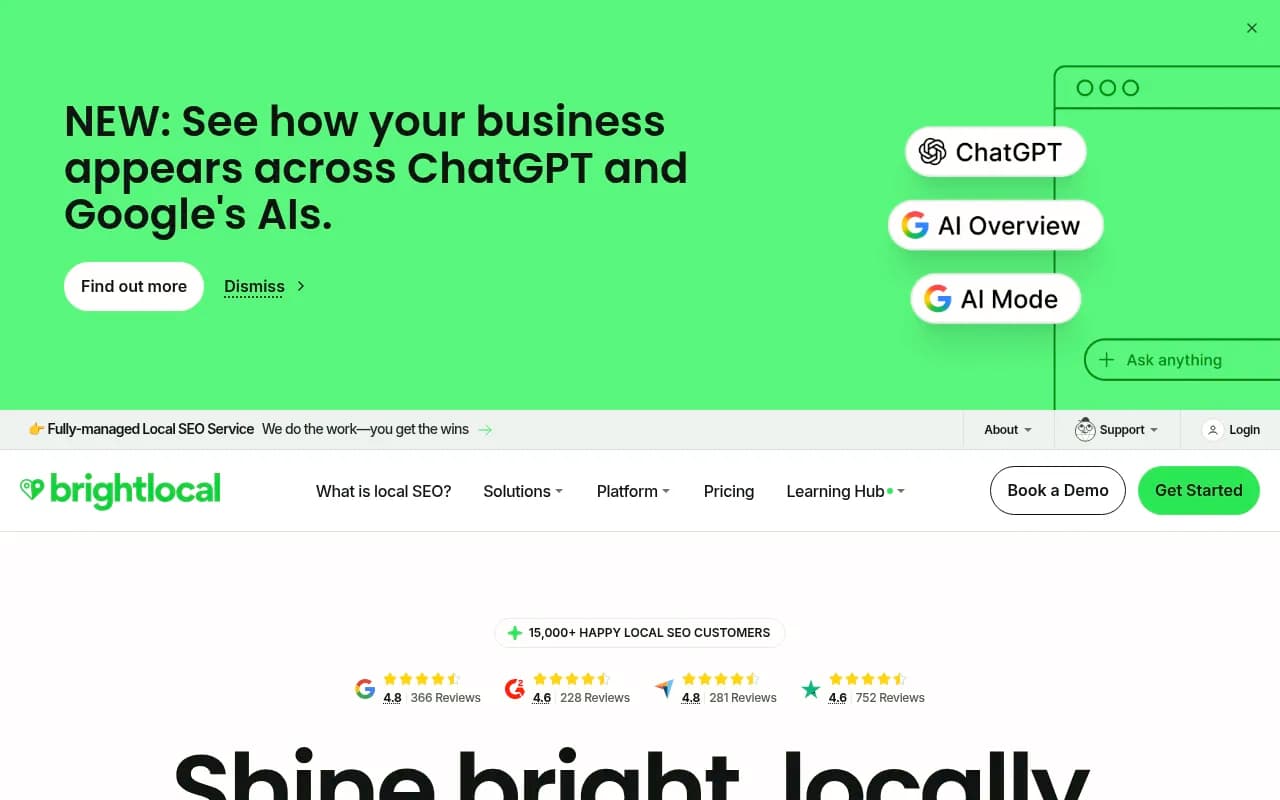
For the local SEO side that feeds AI answers (listings, reviews, rankings), BrightLocal is a solid pick.
| Tool | Best for | Local angle | Notes |
|---|---|---|---|
| Promptwatch | Tracking plus fixing gaps | Country on all paid plans, state/city from Business | Real UI data, citation and fanout detail, content tools |
| Rank Prompt | Agents wanting a real estate framing | Hyper-local tracking | Real estate use case page |
| Birdeye Search AI | Multi-location brokerages | Location-level tracking | Local-business focus |
| BrightLocal | Listings, reviews, local rankings | Strong local SEO base | AI visibility added on |
| Manual spreadsheet | Testing the idea | Whatever you type | Free, doesn't scale |
I have not benchmarked these against each other on real estate prompts, so test with a trial before committing. More options are listed in the GEO software directory at bestgeosoftware.com.
Read the results
When you have a few weeks of data, sort the gaps into patterns.
- Never mentioned, and competitors always are: a coverage problem. You lack pages or third-party mentions for that neighborhood.
- Mentioned late in the answer: a prominence problem. Others have stronger proof.
- Your pages cited but not your name recommended: the content answers the question but does not sell you.
- Competitor pages cited and yours never: check whether your pages are indexed and crawlable, and whether they say anything the competitor's does not.
A quick note on third-party platforms. Promptwatch Data found reddit.com's share of ChatGPT citations fell from about 4% to about 0.5% on August 14, 2026, and its social media report shows ChatGPT drew just 0.46% of citations from social platforms from September 28 to October 4, 2026, versus 12.2% for Google AI Overviews. If your plan was to win ChatGPT through neighborhood subreddit comments, rethink it. Your own site, listicles, and reviews matter more there.
What to fix first
Make one real page per neighborhood
Not a stub with a map and three stock sentences. Include median price ranges with a date, school info, commute patterns, housing stock, what clients regret, and who the area suits. Write from your own deals. That is the one thing a generic listing portal cannot copy.
Write headings like short searches
Based on the fanout data, use "Best neighborhoods in Austin for families" and "Buying a condo in Downtown Austin" as H2s. Place name first, topic second. Build a focused page for each sub-question instead of one giant city page.
Keep your entity consistent
The BrandGhost guide points out that when your website says downtown condos, your social bio says luxury suburbs, and an old profile lists a former brokerage, you weaken the entity AI is trying to understand. Fix the name, brokerage, service area, and specialty everywhere. Add schema for your agent profile and local business details.
Get into the lists
Because listicles take a big share of commercial citations, find which "best agents in [city]" pages ChatGPT cites in your tracking. Earn a place there with real reviews, awards you can document, and straightforward outreach. Do not buy spam placements.
Collect reviews that name places
Reviews hold a small share of overall citations but over 3x that on branded prompts. Ask clients to mention the neighborhood and the situation (relocation, first purchase, downsizing). That is what a branded or local prompt matches against.
Check that AI can read your site
Given the site: shift, confirm your neighborhood pages are in the sitemap, not blocked by robots.txt, and server-rendered. If your site runs on an IDX plugin that loads content with scripts, test how a crawler sees it.
A simple monthly routine
- Week one: run your full prompt set and log mentions, position, and citations.
- Week two: fix the two or three neighborhoods with the worst gaps, new page or rewrite.
- Week three: pursue two or three third-party mentions or list placements.
- Week four: rerun the set, compare to last month, and rotate in a new neighborhood based on where clients are active.
Re-audit after major ChatGPT changes. Promptwatch's own data shows behavior can flip in a day, as it did on August 8. Citations per response also dropped across models around the GPT-5.3 rollout on March 4, 2026, so a sudden drop in your numbers is sometimes the platform and not you.
Frequently asked questions
Does ChatGPT really recommend local agents?
It can, and you can test it in five minutes. Results vary by run and by wording, which is why repeated tracking beats a single check.
Is this a replacement for Google Business Profile and local SEO?
No. Reviews, listings, and a solid site feed the sources AI draws from. Treat GEO as the layer on top.
How many prompts do I need?
Start with 20 to 40 across your top three to five neighborhoods. Expand once you see which intents generate real inquiries.
Can I measure leads from ChatGPT?
Partly. Look for ChatGPT as a referral source in analytics and ask new leads how they found you. Some platforms offer AI visitor analytics, but attribution for a six-figure commission decision will always be fuzzy.
Bottom line
Pick five neighborhoods, write 30 prompts, and run them every week for a month. You will learn which areas you own, which belong to a competitor, and which pages to write next. Do that before you spend anything on tools.