Key takeaways
- Morningscore starts at $69/mo and SE Ranking at $129/mo -- but the price gap narrows quickly once you add SE Ranking's optional modules for white-label, user management, and AI search
- Morningscore is simpler and more beginner-friendly; SE Ranking has a broader feature set and higher keyword limits at scale
- SE Ranking tracks up to 2,000 keywords on its base plan vs. Morningscore's 100 -- a meaningful difference for larger sites
- Both tools now offer some AI search visibility features, but they're add-ons rather than core capabilities
- If AI search visibility is a priority, a dedicated GEO platform will serve you better than either tool's bolt-on module
Growing teams have a specific problem with SEO tools: most are either too simple to be useful or so complex that half the features go untouched. Morningscore and SE Ranking both try to solve this, but in different ways. One bets on simplicity and motivation; the other bets on breadth and flexibility.
This guide breaks down exactly where each tool wins, where it falls short, and which type of team should pick which.
What each tool is actually trying to do
Before comparing features, it helps to understand the design philosophy behind each product.
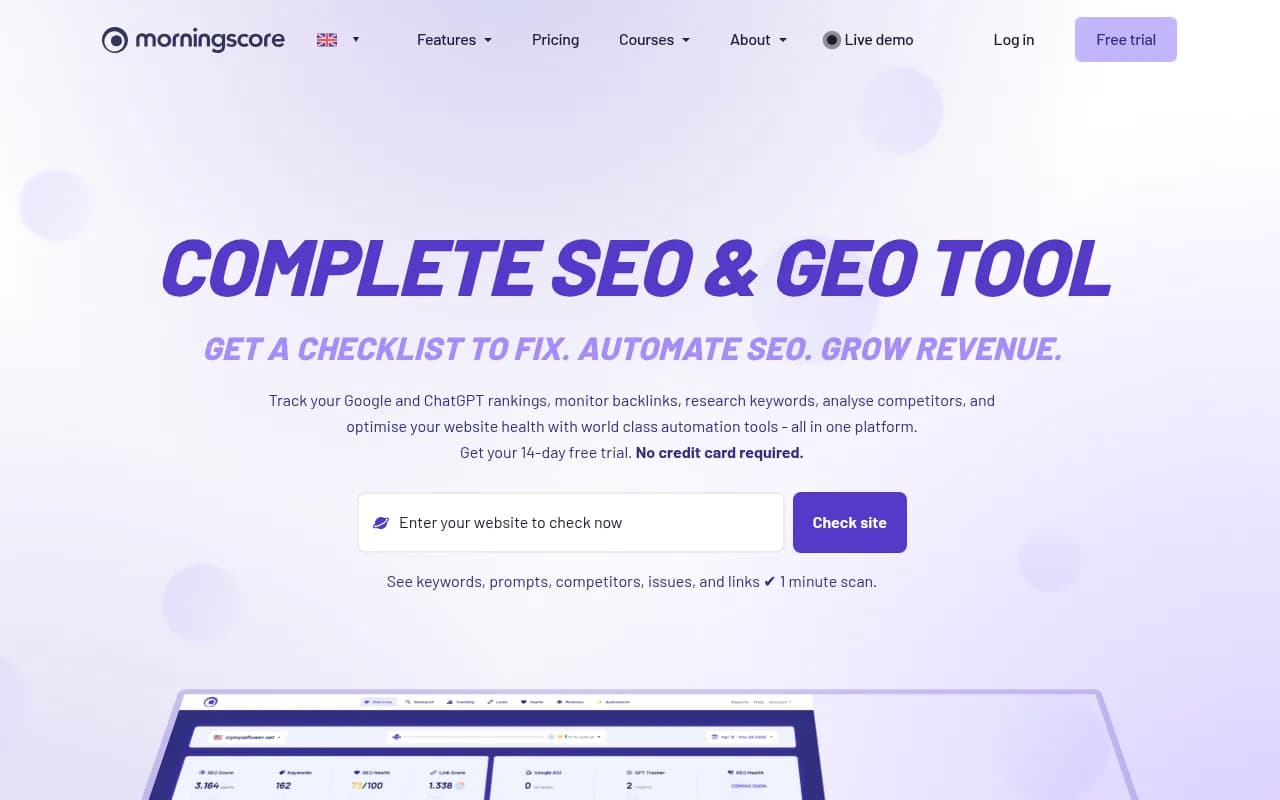
Morningscore is built around the idea that most SEO tools are overwhelming. Its interface uses a gamification layer -- missions, scores, and rewards -- to help non-SEO-specialists understand what to do next. It's genuinely aimed at small business owners, in-house marketers who wear multiple hats, and lean teams that don't have a dedicated SEO person.
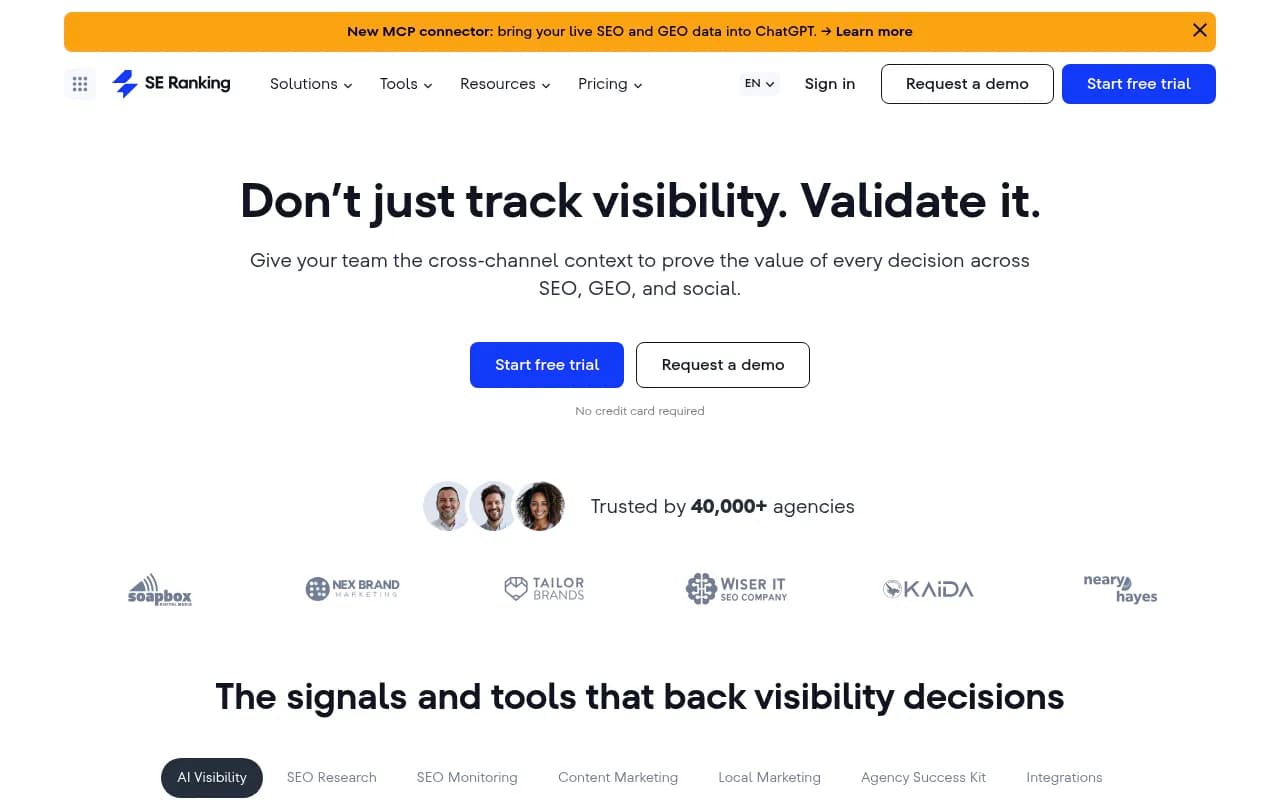
SE Ranking takes a different approach. It's a full-featured SEO suite that competes with Semrush and Ahrefs on price while offering a comparable (if not identical) feature set. The target user is someone who already knows SEO and wants a capable tool without paying enterprise rates.
That difference in philosophy shapes almost every comparison below.
Feature comparison
Here's a side-by-side look at what each tool includes on its base plan, based on publicly available pricing as of May 2026:
| Feature | Morningscore ($69/mo) | SE Ranking ($129/mo) |
|---|---|---|
| Keyword rank tracking | Yes | Yes |
| Daily keyword updates | Yes | Yes |
| Tracked keywords (base plan) | 100 | 2,000 |
| Keyword research | Yes | Yes |
| Keyword difficulty scores | Yes | Yes |
| Competitor analysis | Yes | Yes |
| Website health audit | Yes | Yes |
| Backlink monitoring | Yes | Yes |
| User management | Yes | Add-on from $16/mo |
| White-label reports | Yes | Add-on +$69/mo |
| AI visibility tracking | Yes (add-on +$89/mo) | Add-on +$89/mo |
| ChatGPT prompt tracker | Yes | No |
| Google AI Overviews tracking | Yes | Yes (add-on) |
| Content writer tool | Yes | Yes |
| WordPress + Shopify plugins | Yes | No |
| API access | Yes | Yes |
| Website projects (base plan) | 3 | 10 |
The keyword limit difference is the biggest practical gap. 100 tracked keywords is enough for a small local business or a single-product site, but a growing e-commerce store or content site will hit that ceiling fast. SE Ranking's 2,000-keyword base plan is far more generous for teams managing multiple pages or categories.
On the other hand, Morningscore includes user management and white-label reports in its base price. SE Ranking charges extra for both. If you're an agency or a team with multiple contributors, those add-ons push SE Ranking's effective cost up considerably.
Keyword tracking and research
SE Ranking's keyword database is one of its strongest points. It has a large index, solid SERP history, and keyword grouping features that help teams organize campaigns at scale. The rank tracker is accurate and updates daily.
Morningscore's rank tracker works well for what it is, but the 100-keyword limit on the base plan is a real constraint. You can upgrade to higher tiers to track more, but the pricing structure means you're essentially paying for keyword slots rather than unlocking new capabilities.
For keyword research specifically, SE Ranking's Keyword Research tool gives you more data points: search volume, CPC, competition level, SERP features, and related keyword clusters. Morningscore's keyword explorer is simpler and more visual, which is fine for beginners but can feel thin if you're doing serious content planning.
Site auditing and technical SEO
Both tools run website crawls and surface technical issues. SE Ranking's site audit is more detailed -- it checks for a wider range of issues, categorizes them by severity, and gives you historical comparisons to track progress over time.
Morningscore's health check is easier to understand at a glance. It gives you a health score, highlights the most important issues, and explains what to fix in plain language. For a team without a technical SEO specialist, that clarity is genuinely useful. You're less likely to open the audit, feel overwhelmed, and close the tab.
Competitor analysis
SE Ranking has a dedicated competitor research module that lets you analyze any domain's organic keywords, traffic estimates, backlink profile, and paid search activity. It's reasonably comprehensive.
Morningscore's competitor analysis is more limited but still covers the basics: you can see how your rankings compare to competitors on shared keywords and track their SEO scores over time. It won't replace a deep competitor audit, but it gives you enough to spot opportunities.
Backlink analysis
SE Ranking's backlink checker has a large index and lets you monitor new and lost links, toxic link detection, and anchor text distribution. It's one of the stronger backlink tools in the mid-market price range.
Morningscore tracks backlinks and monitors new/lost links, but its index is smaller. For most small sites, this won't matter. For a site actively doing link building at scale, SE Ranking's backlink data will be more useful.
AI search visibility: where both tools stand
This is where things get interesting, because AI search is now a real channel -- and neither Morningscore nor SE Ranking was built with it as a core feature.
Both tools offer AI visibility tracking as an add-on. Morningscore's AI Search module (an extra $89/mo) tracks ChatGPT mentions and Google AI Overviews for your keywords. SE Ranking's equivalent add-on covers Google AI Overviews but has more limited ChatGPT tracking.
The honest assessment: these are bolt-on features, not purpose-built AI visibility platforms. They'll tell you whether you're appearing in AI answers for a set of keywords, but they won't help you understand why you're not appearing, which content gaps are causing the problem, or what to do about it.
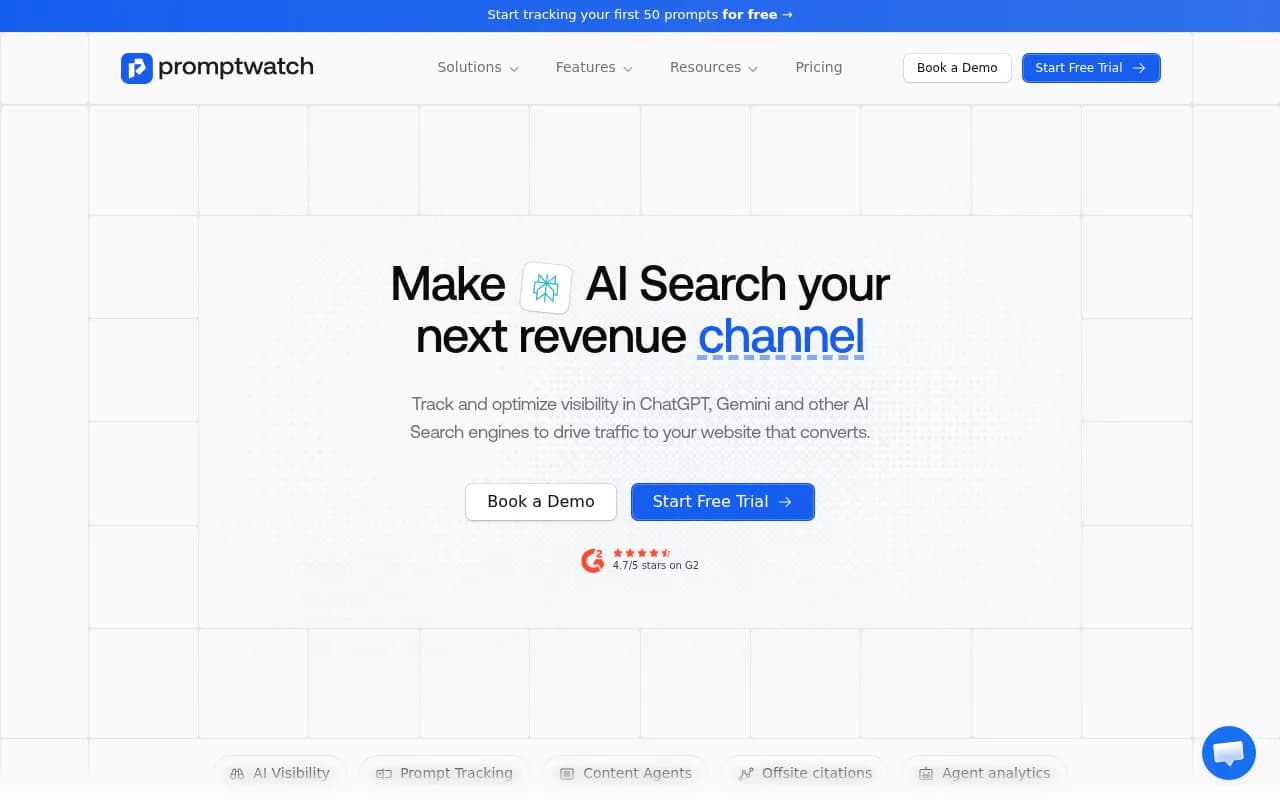
If AI search visibility is a serious priority for your team -- and for most growing teams in 2026, it should be -- you'll want a dedicated platform for that work. Promptwatch is built specifically around this: it tracks your visibility across 10 AI models, identifies which prompts competitors are visible for but you're not, and generates content to close those gaps. It's a different category of tool from Morningscore or SE Ranking.
That said, if you just want a basic signal of whether you're showing up in AI Overviews alongside your regular rank tracking, both tools' add-ons are functional enough for that limited use case.
Reporting and white-label
For agencies, reporting matters a lot. Morningscore includes white-label reports in its base price, which is a genuine advantage. You can brand reports with your agency's logo and send them to clients without paying extra.
SE Ranking charges $69/mo for its Agency Pack, which unlocks white-label reporting. If you're managing more than a handful of clients, that cost adds up. A team managing 10 clients on SE Ranking's base plan plus the Agency Pack is paying $198/mo before they've added any other modules.
Ease of use
This is where Morningscore has a real edge, and it's worth taking seriously.
The gamification approach -- missions, SEO scores, task checklists -- sounds gimmicky until you see it in action. For teams where SEO isn't anyone's full-time job, having a tool that tells you "here are the three things to fix this week" is genuinely more useful than a dashboard full of data you don't know how to act on.
SE Ranking has improved its UX over the years, but it's still a tool that rewards users who already know what they're looking for. The learning curve is real.
Pricing breakdown
Here's a clearer picture of what you'd actually pay for common team configurations:
| Scenario | Morningscore | SE Ranking |
|---|---|---|
| Solo founder, 1 site, 100 keywords | $69/mo | $129/mo |
| Small team, 2 users, white-label reports | $69/mo (included) | $129 + $16 + $69 = $214/mo |
| Agency, 5 sites, white-label | Higher tier needed | $129 + $69 = $198/mo (+ per-site costs) |
| Adding AI visibility tracking | +$89/mo | +$89/mo |
The headline price difference ($69 vs $129) is real but can be misleading. SE Ranking's base plan includes 2,000 keywords and 10 projects, which is a lot more capacity than Morningscore's base plan. You're paying more, but you're getting more keyword headroom.
Which tool fits which team
Choose Morningscore if:
- You're a small business owner or solo marketer doing SEO yourself
- Your team doesn't have a dedicated SEO specialist
- You want a tool that tells you what to do, not just what the data says
- You need white-label reports without paying extra
- You're tracking fewer than 500 keywords across a small number of sites
Choose SE Ranking if:
- You have at least one person who knows SEO and can interpret data
- You need to track 500+ keywords across multiple projects
- You want a more complete backlink and competitor research toolset
- You're doing serious keyword research and content planning
- You don't need white-label reports (or are willing to pay for the Agency Pack)
How they compare to other tools in the market
Neither Morningscore nor SE Ranking is the right choice for every team. Here's a quick sense of where they sit relative to the broader market:
Semrush and Ahrefs are the obvious step up from SE Ranking -- more data, more features, higher price. For teams that have outgrown SE Ranking's limits, Semrush is typically the next move, especially if you need content marketing tools alongside SEO.
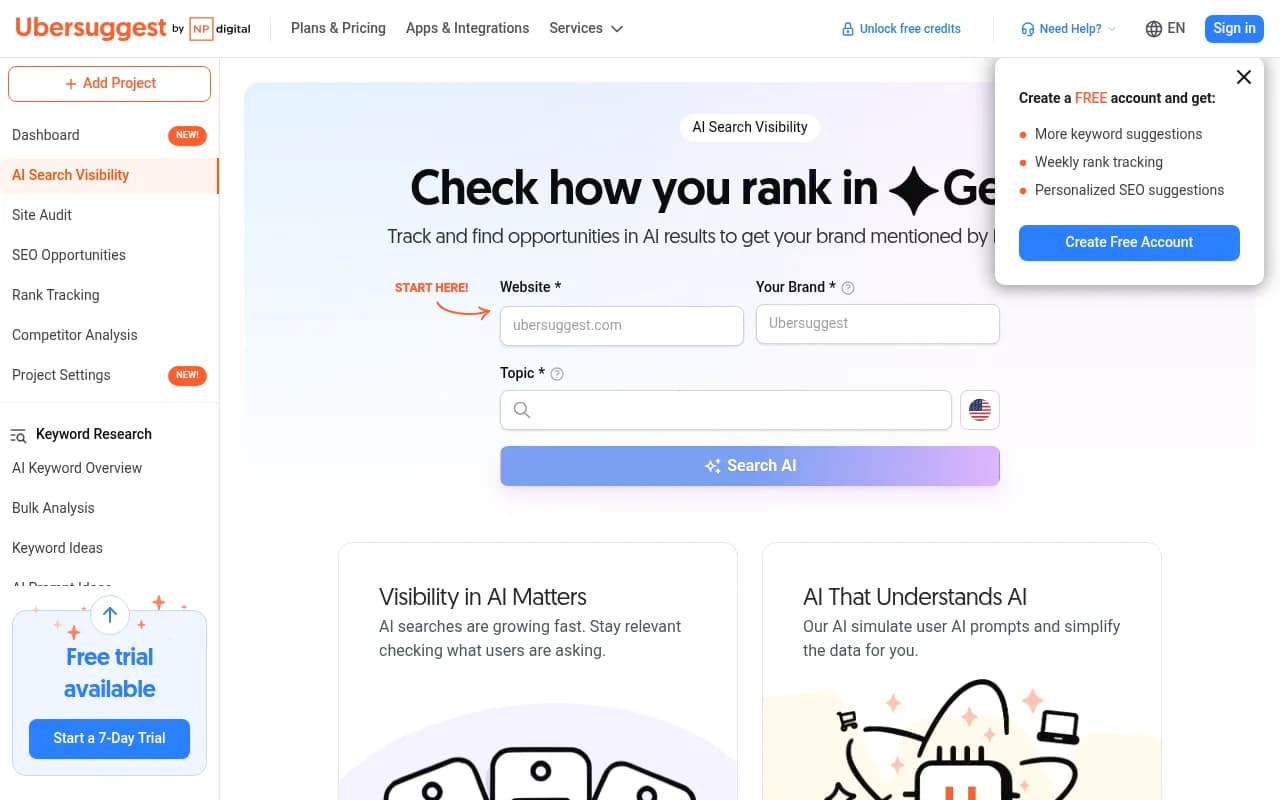
For teams that want something even simpler than Morningscore, tools like Ubersuggest cover the basics at a lower price point, though with less depth.
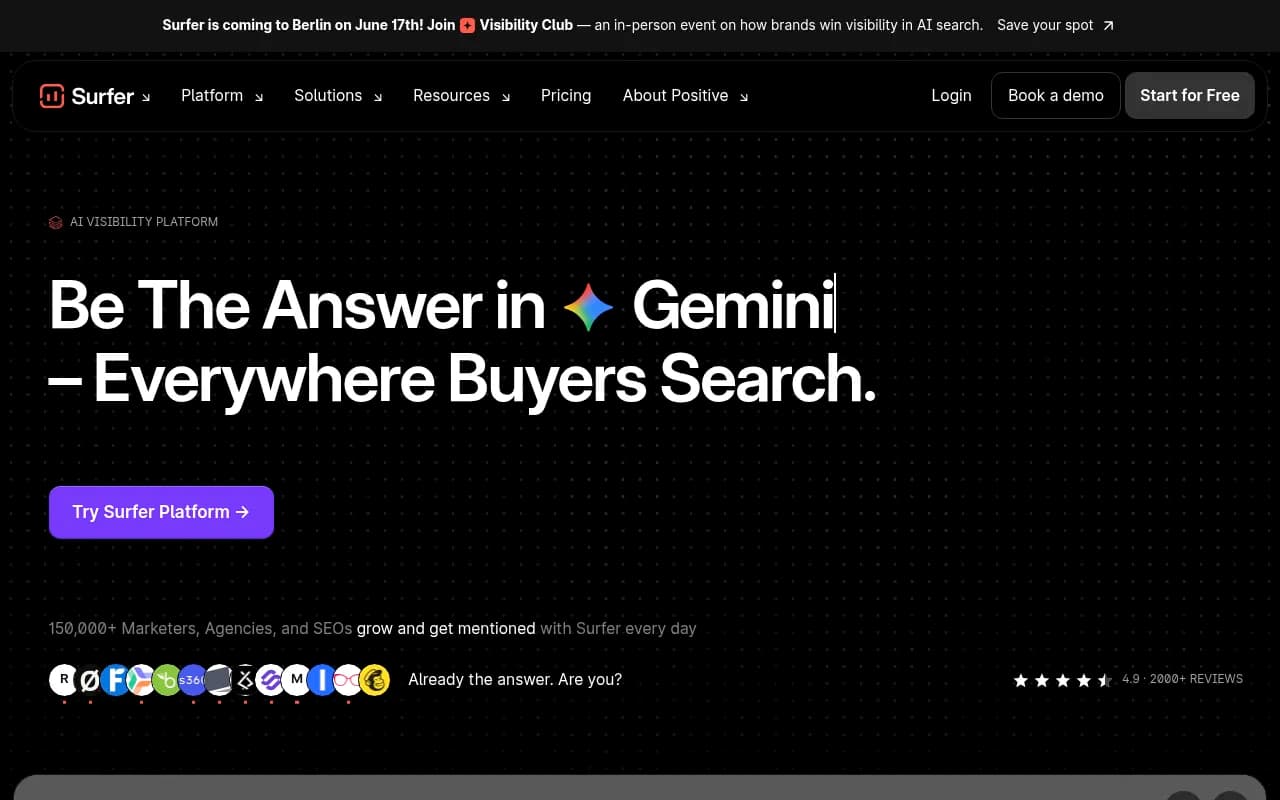
For content optimization specifically, tools like Surfer SEO or Clearscope go deeper than either Morningscore or SE Ranking on the content side.

And for AI search visibility -- which is increasingly a separate discipline from traditional SEO -- neither Morningscore nor SE Ranking is purpose-built for it. That's a gap worth planning around.
The AI search visibility gap
One thing worth flagging directly: the SEO tool market is going through a real transition right now. Traditional rank tracking still matters, but AI search (ChatGPT, Perplexity, Google AI Mode, Gemini) is now a meaningful traffic source for many sites, and the way you optimize for it is different from how you optimize for Google's blue links.
Both Morningscore and SE Ranking have added AI visibility features as add-ons, but neither was designed with AI search as a core use case. If your team is starting to ask "why aren't we showing up in ChatGPT answers?" or "how do we get cited in Perplexity?", you'll need a different tool for that work.
Platforms like Promptwatch are built specifically to answer those questions -- tracking citations across 10 AI models, identifying content gaps, and helping you create content that actually gets cited. It's not a replacement for Morningscore or SE Ranking; it's a different layer of the stack.
Final verdict
Morningscore and SE Ranking are both solid tools for growing teams, but they serve different users.
Morningscore wins on simplicity, included features (white-label, user management), and price for small teams. If you're not an SEO expert and you want a tool that guides you through the work, it's genuinely well-designed for that.
SE Ranking wins on keyword capacity, data depth, and backlink analysis. If you know what you're doing and need a capable tool at a reasonable price, it delivers more raw capability per dollar at scale.
The choice comes down to this: do you need a tool that holds your hand and keeps the team moving, or do you need a tool with the data depth to support serious SEO work? Morningscore for the former, SE Ranking for the latter.
Either way, if AI search visibility is on your roadmap -- and it should be -- plan to add a dedicated GEO platform to your stack. Neither of these tools was built for that problem.