Key takeaways
- Otterly.AI has three self-serve plans: Lite ($29/mo), Standard ($189/mo), and Premium (pricing not publicly listed). The jump between Lite and Standard is steep.
- Gemini and Google AI Mode are not included in base plans -- they're paid add-ons costing $9 to $149/month extra depending on your tier.
- Claude is not tracked at all on any Otterly plan.
- The Lite plan's 15 prompts across 4 engines is enough to experiment, not enough to monitor a real brand.
- Otterly is a monitoring tool. It shows you where you stand but doesn't help you fix it -- which matters if you're trying to actually improve AI visibility, not just measure it.
Otterly.AI was one of the first tools to make AI search monitoring accessible to regular marketing teams. At $29/month, it lowered the barrier to entry for a category that used to require enterprise contracts. That's genuinely worth acknowledging.
But "accessible" and "worth it" aren't the same thing. The pricing structure has some real gotchas that aren't obvious from the homepage, and a lot of teams end up paying more than they expected -- or hitting limits faster than they planned.
This guide walks through each tier honestly: what you get, what you don't, and who each plan actually makes sense for.
How Otterly.AI's pricing is structured
Otterly runs three named tiers: Lite, Standard, and Premium. There's also a free trial, and enterprise/agency pricing exists but isn't publicly listed.
The core variables across tiers are:
- Number of prompts you can track
- Number of AI engines monitored
- Refresh frequency (how often Otterly re-runs your prompts)
- Access to features like competitor tracking, brand reports, and historical data
Here's a rough overview before we go deeper:
| Plan | Price | Prompts | Core engines | Gemini/AI Mode |
|---|---|---|---|---|
| Lite | $29/mo | 15 | 4 (ChatGPT, Perplexity, Grok, Copilot) | Add-on ($9+/mo) |
| Standard | $189/mo | 100 | 4 core | Add-on ($49+/mo) |
| Premium | Not listed | 300+ | 4 core | Add-on ($149/mo) |
The add-on structure for Gemini and Google AI Mode is the thing that catches people off guard. More on that below.
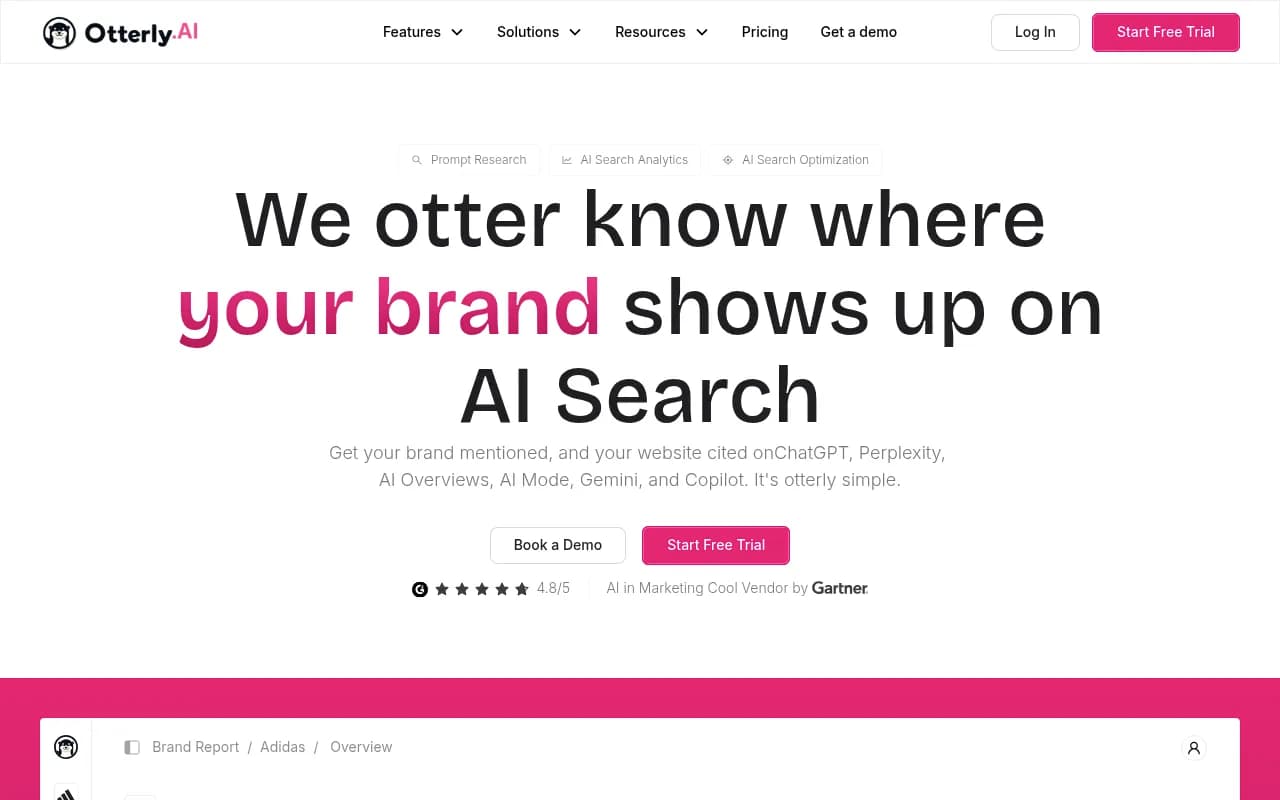
The Lite plan ($29/mo): good for a first look, not much else
Fifteen prompts. Four engines. That's the Lite plan in a sentence.
If you're a solo founder or a freelancer who wants to see whether your brand shows up when someone asks ChatGPT about your category, $29/month is a reasonable experiment. You can set up a handful of prompts, check the dashboard, and get a real sense of your AI visibility for the first time.
The problem is that 15 prompts runs out fast. A single product category might have 20+ meaningful queries. Add in competitor tracking and branded vs. unbranded splits, and you're already over the limit before you've covered your full market.
The four included engines are ChatGPT, Perplexity, Grok, and Copilot. That's a reasonable starting set, but it's missing two of the most important surfaces: Gemini and Google AI Mode. If you care about Google's AI-generated answers -- and most brands should, given how much search traffic flows through Google -- you'll need to pay extra.
The Lite add-on for Gemini/Google AI Mode runs around $9/month. That brings your real cost to $38/month for still-limited coverage.
Who this works for: someone who's never tracked AI visibility before and wants to see what the data looks like before committing to a larger plan. It's a trial in practice, even if it's technically a paid tier.
Who it doesn't work for: any team trying to monitor a real brand across a real category.
The Standard plan ($189/mo): where most teams actually land
Standard gives you 100 prompts, the same four core engines, and more frequent refresh cycles. This is the plan most marketing teams end up on after realizing Lite is too thin.
100 prompts is workable. You can cover your main category queries, a few competitor comparisons, some branded prompts, and still have room to experiment. The historical data access also improves, which matters if you want to track how your visibility changes after publishing new content.
The jump from $29 to $189 is significant though -- it's a 6.5x increase for roughly 6.5x the prompts. You're not getting a better product, just more of the same product. There's no meaningful feature unlock between Lite and Standard.
The Gemini/Google AI Mode add-on at this tier runs around $49/month. So if you need full engine coverage, you're looking at $238/month.
One thing worth noting: most teams discover they need Standard within the first two weeks of using Lite. The prompt limit hits faster than expected, especially once you start adding competitor brands to track alongside your own.
Who this works for: marketing or SEO teams at a single brand who want ongoing AI visibility tracking across their main keyword set.
Who it doesn't work for: agencies managing multiple clients, or teams who need Claude tracking (which Otterly doesn't offer on any plan).
The Premium plan: for higher-volume needs
Premium is positioned for teams tracking 300+ prompts, and the pricing isn't listed publicly -- you need to contact Otterly. Based on the add-on pricing structure, expect the Gemini/Google AI Mode add-on to run around $149/month at this tier.
If you're a larger brand or an agency with a few key clients, Premium is where you'd land. The feature set is broadly the same as Standard, just at higher volume.
The lack of public pricing at this tier is a minor annoyance. It's not unusual for SaaS tools to do this, but it does mean you can't compare costs without a sales call.
The add-on problem: what the headline price hides
This is the most important thing to understand about Otterly's pricing.
The homepage and marketing materials reference six AI engines. But Gemini and Google AI Mode are not included in any self-serve base plan. They're add-ons at every tier, priced at $9 to $149/month depending on which plan you're on.
So the real cost of "full" Otterly coverage is:
- Lite: $29 + $9 = $38/month
- Standard: $189 + $49 = $238/month
- Premium: [unlisted] + $149/month
That's not a dealbreaker, but it's worth knowing before you sign up expecting six-engine coverage at the base price.
The other gap: Claude. Anthropic's model has a meaningful share of AI search activity, particularly among certain professional audiences. Otterly doesn't track it at all. If Claude visibility matters to your brand, you'll need a different tool or a supplementary one.
What Otterly does well
It's worth being fair here. Otterly has real strengths.
The interface is clean and relatively easy to navigate. The brand report view -- showing your coverage over time against competitors -- is genuinely useful for communicating AI visibility to stakeholders who aren't deep in the weeds. The prompt setup process is straightforward, and the data comes back quickly.
For teams that are just starting to think about AI search visibility, Otterly is one of the most accessible entry points. The $29 Lite plan lets you see real data without a significant financial commitment.
The citation economy report Otterly published in early 2026 (analyzing over 1 million AI citations across ChatGPT, Perplexity, and Google AI Overviews) is also worth reading if you want context on how AI citation patterns actually work.
Where Otterly falls short
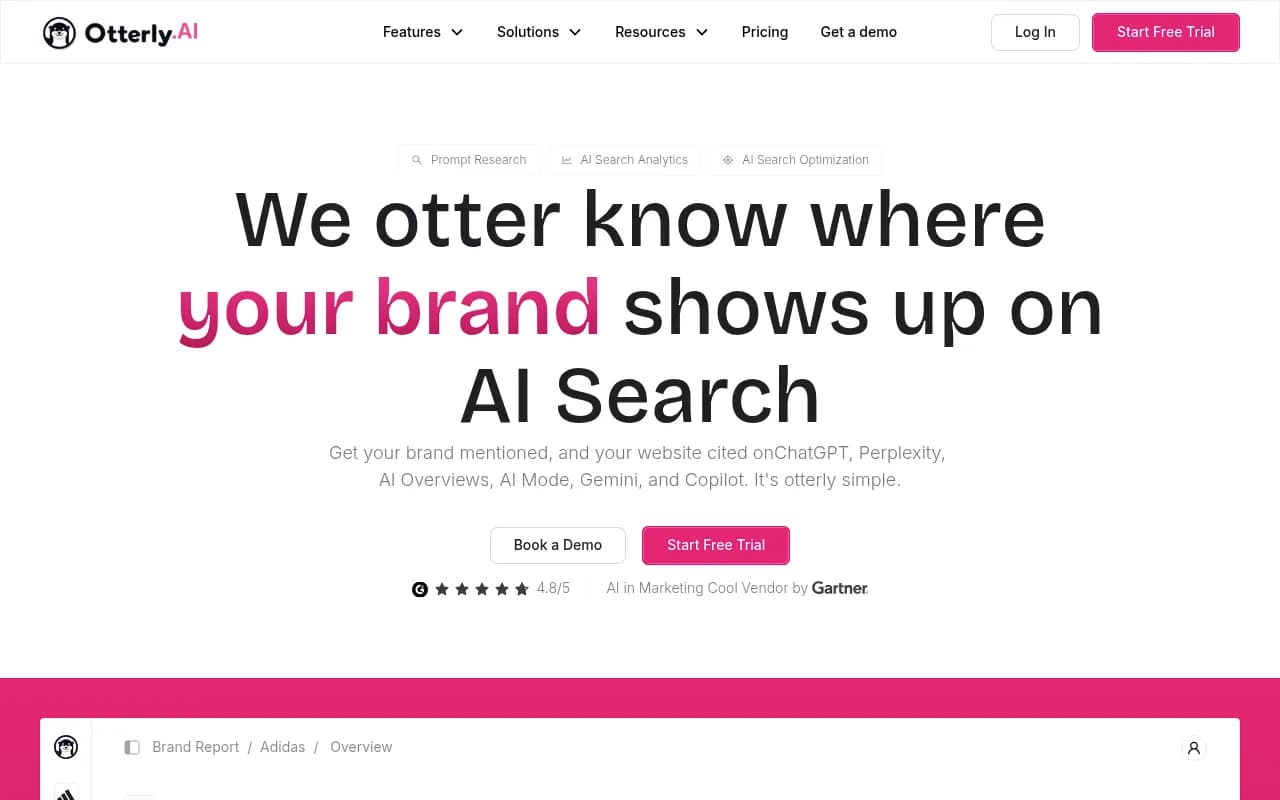
The core limitation is that Otterly is a monitoring tool. It shows you numbers. It doesn't help you move them.
You can see that your brand appears in 12% of relevant AI responses. You can see that a competitor appears in 34%. What you can't do inside Otterly is understand why, get specific content recommendations, generate content to close the gap, or track which pages on your site are being cited by AI crawlers.
For teams that want to actually improve their AI visibility -- not just measure it -- this is a real constraint. Monitoring data is only useful if it connects to action. Otterly stops at the data layer.
There's also no Reddit or YouTube tracking, no AI crawler logs, no prompt volume or difficulty scoring, and no content gap analysis. These aren't exotic features -- they're things you need if you want to understand why AI models cite certain sources and how to get cited more.
Who Otterly is actually right for
Be honest with yourself about what you need:
Otterly makes sense if:
- You're new to AI visibility tracking and want a low-cost way to see your baseline data
- You're a solo marketer or small team at a single brand
- You need a clean dashboard to show stakeholders that you're monitoring AI search
- You don't need to act on the data immediately -- just observe
Otterly probably isn't enough if:
- You're an agency managing multiple clients
- You need Claude tracking
- You want to understand why your visibility is what it is, not just what it is
- You need content recommendations or content generation tied to visibility gaps
- You need AI crawler logs to see how AI engines interact with your site
- You need prompt volume data to prioritize which gaps to close first
Alternatives worth considering
If you're evaluating Otterly and finding the limits too tight, here are a few tools worth looking at depending on what you need.
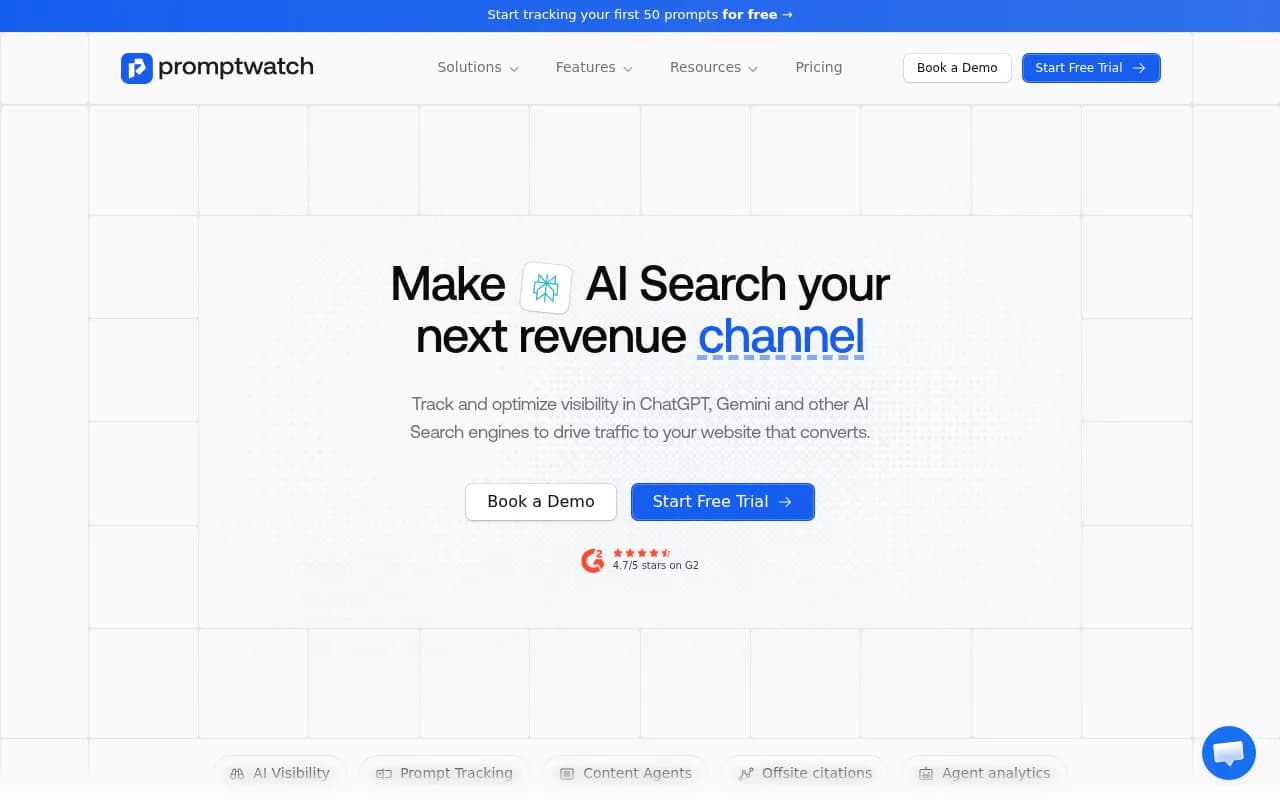
For teams that want monitoring plus the ability to act on what they find, Promptwatch goes further than any monitoring-only tool. It tracks visibility across 10 AI models (including Claude, which Otterly skips entirely), provides AI crawler logs, runs content gap analysis, and generates content briefs and articles grounded in real prompt data. The action loop -- find gaps, create content, track results -- is what separates it from tools that just show dashboards.
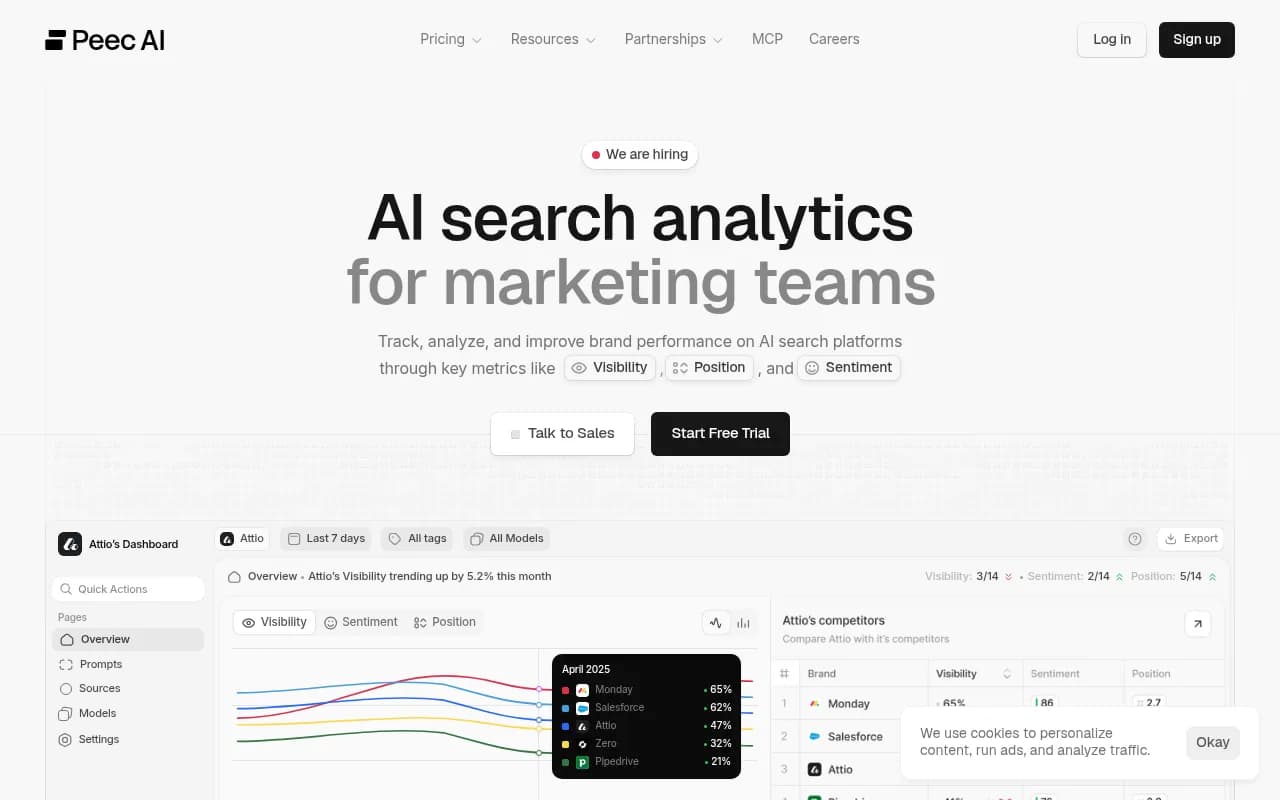
For teams that want clean analytics without the complexity of a full platform, Peec AI is worth a look. It's focused on precise AI visibility reporting and works well for mid-market teams that want reliable data without a lot of overhead.
For enterprise teams that need AI visibility tied to revenue metrics, AthenaHQ and Profound both offer more sophisticated analytics, though at higher price points.
If you're already inside the Semrush ecosystem, their AI Visibility Toolkit is a reasonable add-on -- though it uses fixed prompts rather than custom ones, which limits how precisely you can target your specific market.
Comparing Otterly to alternatives at similar price points
| Tool | Starting price | Prompts at entry | Claude tracking | Content generation | Crawler logs |
|---|---|---|---|---|---|
| Otterly Lite | $29/mo | 15 | No | No | No |
| Otterly Standard | $189/mo | 100 | No | No | No |
| Peec AI | ~$49/mo | Varies | Yes | No | No |
| Promptwatch Essential | $99/mo | 50 | Yes | Yes (5 articles) | No |
| Promptwatch Professional | $249/mo | 150 | Yes | Yes (15 articles) | Yes |
| Profound | Enterprise | Custom | Yes | No | No |
The Promptwatch Essential plan at $99/month gives you 50 prompts, Claude tracking, and content generation -- more than Otterly Standard at nearly twice the price, without the add-on complexity.
The bottom line
Otterly.AI is a legitimate tool that does what it says. The Lite plan is a fair entry point for teams that want to see AI visibility data for the first time. The Standard plan works for ongoing monitoring at a single brand.
But the pricing structure has real gotchas -- the add-on cost for Gemini and Google AI Mode, the absence of Claude, and the steep jump between tiers. And the fundamental limitation is that Otterly is a monitoring dashboard, not an optimization platform. If you want to improve your AI visibility rather than just track it, you'll hit that ceiling quickly.
For most teams past the exploration stage, the question isn't whether Otterly is a good tool -- it's whether monitoring alone is enough. In 2026, with AI search eating into traditional organic traffic at a measurable rate, the answer for most brands is no.