Key takeaways
- Otterly.AI is a solid entry-level monitoring tool, but its steep pricing tiers ($29 to $989/month) and lack of actionable optimization make it a poor fit for agencies managing multiple clients
- The best alternatives for agencies combine multi-client workspace management, white-label reporting, and content optimization -- not just dashboards
- Promptwatch is the only platform rated as a "Leader" across all GEO categories in 2026, with a full action loop from gap analysis to AI content generation to citation tracking
- Peec AI, Scrunch AI, Search Party, and SE Ranking round out the top five with different strengths depending on your agency's size and workflow
- If your clients are asking "why aren't we showing up in ChatGPT?" you need a tool that can answer that question AND help fix it -- not just confirm the problem
Agencies have a different problem than in-house marketing teams. You're not managing one brand's AI visibility -- you're managing five, ten, maybe thirty. Each client wants to know where they appear in ChatGPT, Perplexity, and Google AI Overviews. Each wants a report that looks like it came from your agency, not a third-party tool. And every single one of them wants to know what you're going to do about it.
Otterly.AI was never really built for this. It's a clean, affordable tool for a solo marketer or a small in-house team who wants to start tracking AI mentions. But the pricing structure punishes scale -- you go from $29/month for 10 prompts to $189/month for 100 prompts, a 550% jump, and then to $989/month for the Pro tier. Multiply that across clients and you're looking at a serious budget problem. And even if you can stomach the cost, you're still left staring at a dashboard that tells you where your client appears but not why they're missing from the other responses.
As one Reddit user put it bluntly: "It tracks the source, but gives zero actionable strategy on how to restructure content to get cited."
That's the gap this guide is about. Below are the five best Otterly.AI alternatives for agencies in 2026, evaluated on multi-client management, white-label reporting, content optimization, prompt coverage, and value for money.
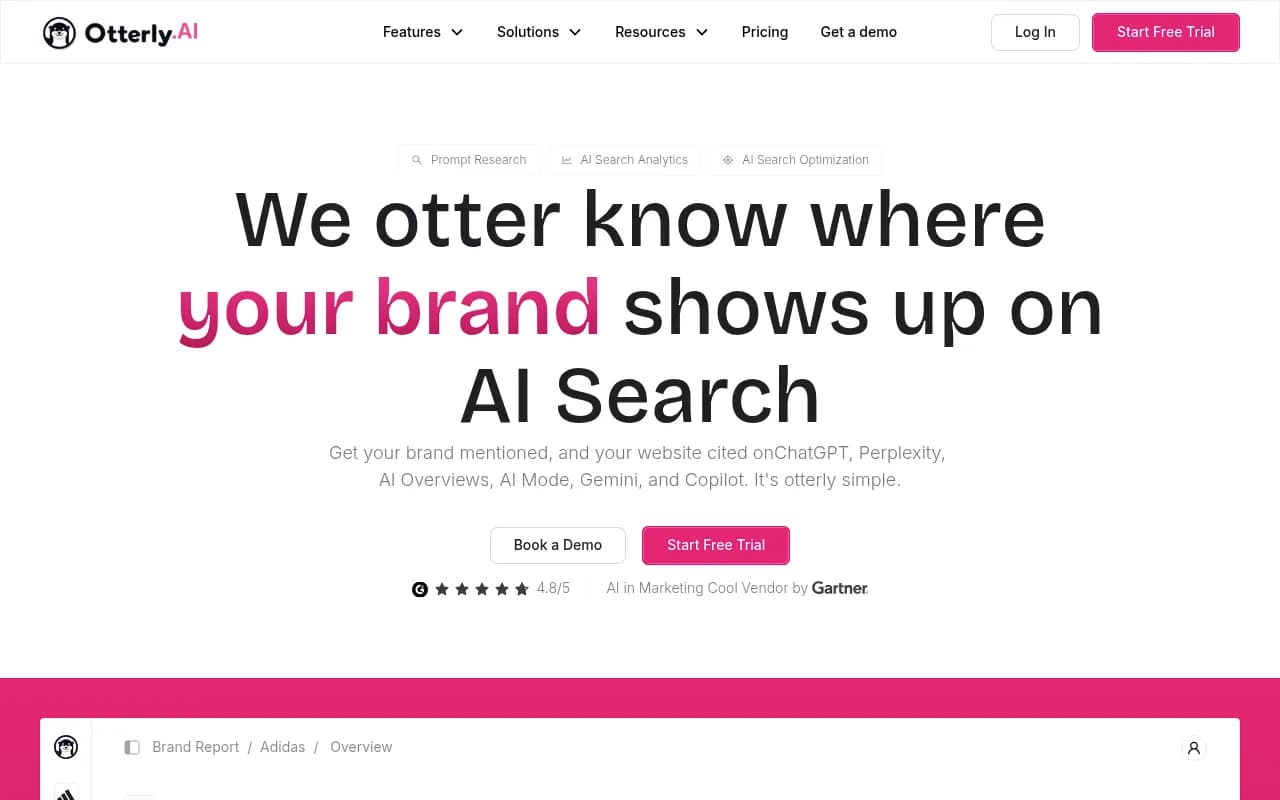
What agencies actually need from a GEO tool
Before getting into the tools, it's worth being specific about what "agency-ready" actually means in the GEO context. A tool that works for an in-house team often falls apart at agency scale for a few reasons:
Multi-client workspaces. You need to manage separate tracking environments for each client without data bleeding between accounts. Ideally, you can switch between clients in a single interface rather than logging in and out of separate accounts.
White-label reporting. Clients don't want to see your vendor's logo on their monthly report. White-label PDF exports or branded dashboards are table stakes for any agency tool worth paying for.
Enough prompts per client. If you're tracking 20 clients and each needs 50 prompts, that's 1,000 prompts minimum. Tools with hard caps at 100 or 150 prompts per account don't scale.
Optimization, not just monitoring. Agencies are hired to improve things. A tool that only shows you data puts the entire burden of "what to do about it" on your team. Tools that surface content gaps, generate briefs, or recommend specific fixes let you deliver more value per client.
AI model breadth. Clients will ask about ChatGPT, Perplexity, Google AI Overviews, and increasingly Gemini, Claude, and Grok. A tool that only covers two or three models creates awkward gaps in your reporting.
With those criteria in mind, here's how the top alternatives stack up.
Comparison table
| Tool | Starting price | Prompts | White-label | Content optimization | AI models covered | Best for |
|---|---|---|---|---|---|---|
| Promptwatch | $99/mo | 50 (Essential) | Yes | Yes (AI Content Agents) | 10+ models | Full-service agencies wanting optimization + tracking |
| Peec AI | ~$99/mo | Varies | Yes | Limited | 5-6 models | Agencies wanting clean multi-client dashboards |
| Scrunch AI | $300/mo | 350 | Partial | No | 6+ models | Mid-market agencies with higher prompt needs |
| Search Party | Custom | Custom | Yes | No | Multiple | Agencies needing custom enterprise setups |
| SE Ranking AI Toolkit | $99/mo (add-on) | 25 | Via SE Ranking | Limited | 3-4 models | Agencies already on SE Ranking |
1. Promptwatch -- best overall for agencies that want to optimize, not just monitor
Most GEO tools stop at step one: showing you data. Promptwatch is built around what happens next.
The core workflow is a three-step loop. First, Answer Gap Analysis shows you exactly which prompts your competitors are visible for but your client isn't -- with specific content recommendations, not vague advice. Second, Content Agents generate articles, listicles, comparisons, and content briefs grounded in real prompt data, citation analysis, and competitor research. Third, page-level tracking shows you when the new content gets crawled by AI engines and when it starts generating citations, so you can show clients a clear timeline from publish to results.
That last part matters more than it might seem. When a client asks "is this working?" you can pull up a dashboard showing exactly which pages ChatGPT and Perplexity are citing, how often, and how that's changed since you started. That's a much better agency conversation than "here's your visibility score this week."
For multi-client management, Promptwatch supports separate workspaces per client and offers agency and enterprise pricing with custom prompt allocations. The Business plan at $579/month covers 5 sites and 350 prompts -- workable for a small agency portfolio. Larger agencies can negotiate custom arrangements.
The platform also covers more AI models than most competitors: ChatGPT, Perplexity, Google AI Overviews, Google AI Mode, Claude, Gemini, Meta/Llama, DeepSeek, Grok, Mistral, and Copilot. That's 10+ models, which means you're not leaving gaps in client reports.
One capability that's genuinely rare: AI Crawler Logs. You can see in real time when ChatGPT's crawler or Perplexity's citation agent hits a client's website, which pages they read, and any errors they encounter. If a client's content isn't getting cited, this is often where you find out why -- a crawl error, a blocked page, a content structure issue. Most competitors don't offer this at all.
Promptwatch also tracks offsite citations -- Reddit threads, YouTube videos, third-party listicles -- which is where a lot of AI recommendations actually originate. That's a channel most agencies aren't optimizing yet, and having the data to show clients is a real differentiator.
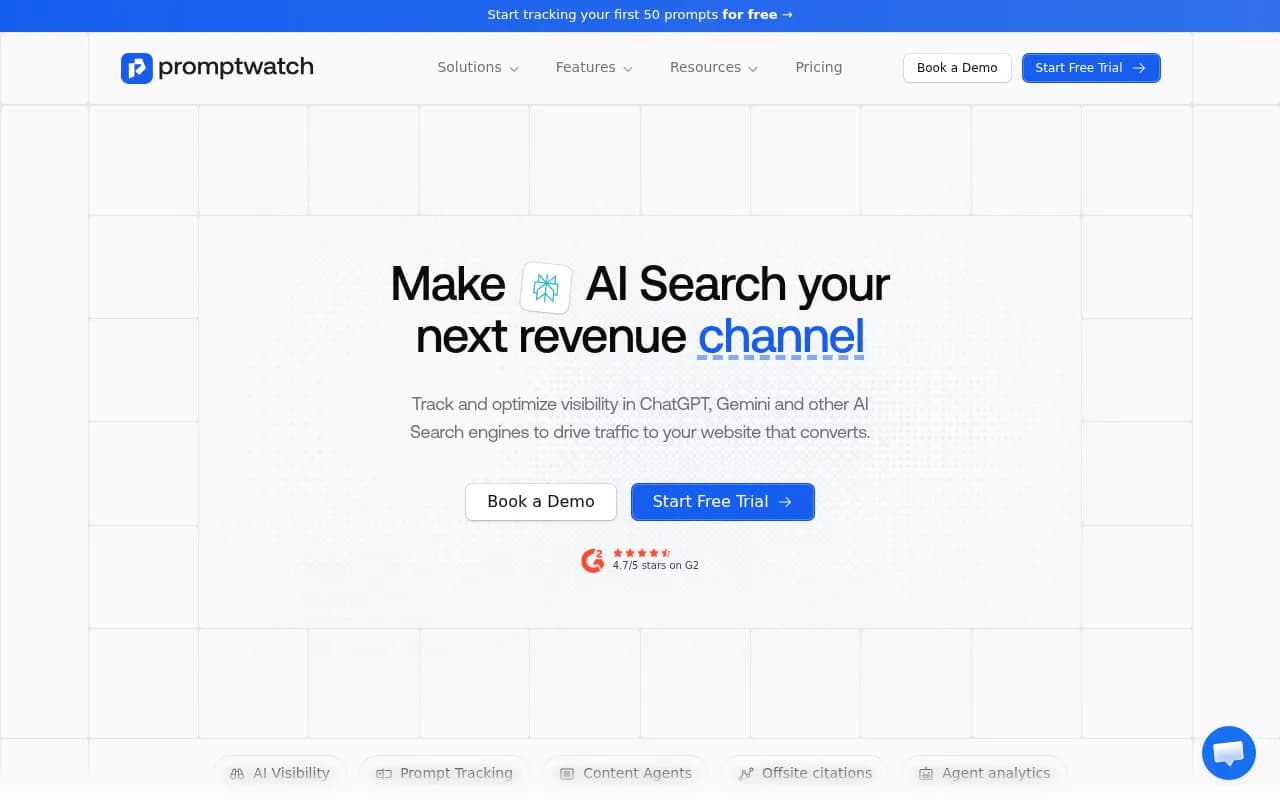
Pricing: Essential $99/mo (1 site, 50 prompts), Professional $249/mo (2 sites, 150 prompts, crawler logs), Business $579/mo (5 sites, 350 prompts). Agency/Enterprise pricing available. Free trial available.
Best for: Agencies that want to deliver measurable improvements in AI visibility, not just monthly monitoring reports.
2. Peec AI -- best for clean multi-client dashboards
Peec AI has built a reputation as one of the more agency-friendly monitoring tools in the GEO space. The interface is clean, client switching is straightforward, and the white-label reporting is solid enough for most agency use cases.
Where Peec AI earns its place on this list is the combination of reasonable pricing and a purpose-built multi-client architecture. You're not hacking together a single-account tool to manage multiple brands -- the product is designed for it.
The limitation is the same one that affects most monitoring-only tools: Peec AI tells you what's happening but doesn't help you change it. There's no content gap analysis, no brief generation, no optimization workflow. For agencies that have their own content production process and just need reliable tracking data to feed into it, that's fine. For agencies that want the tool to do more of the heavy lifting, it's a ceiling you'll hit quickly.
Coverage is decent -- the major models are represented -- but it doesn't match Promptwatch's 10+ model breadth, which can create gaps if clients start asking about Grok or DeepSeek.
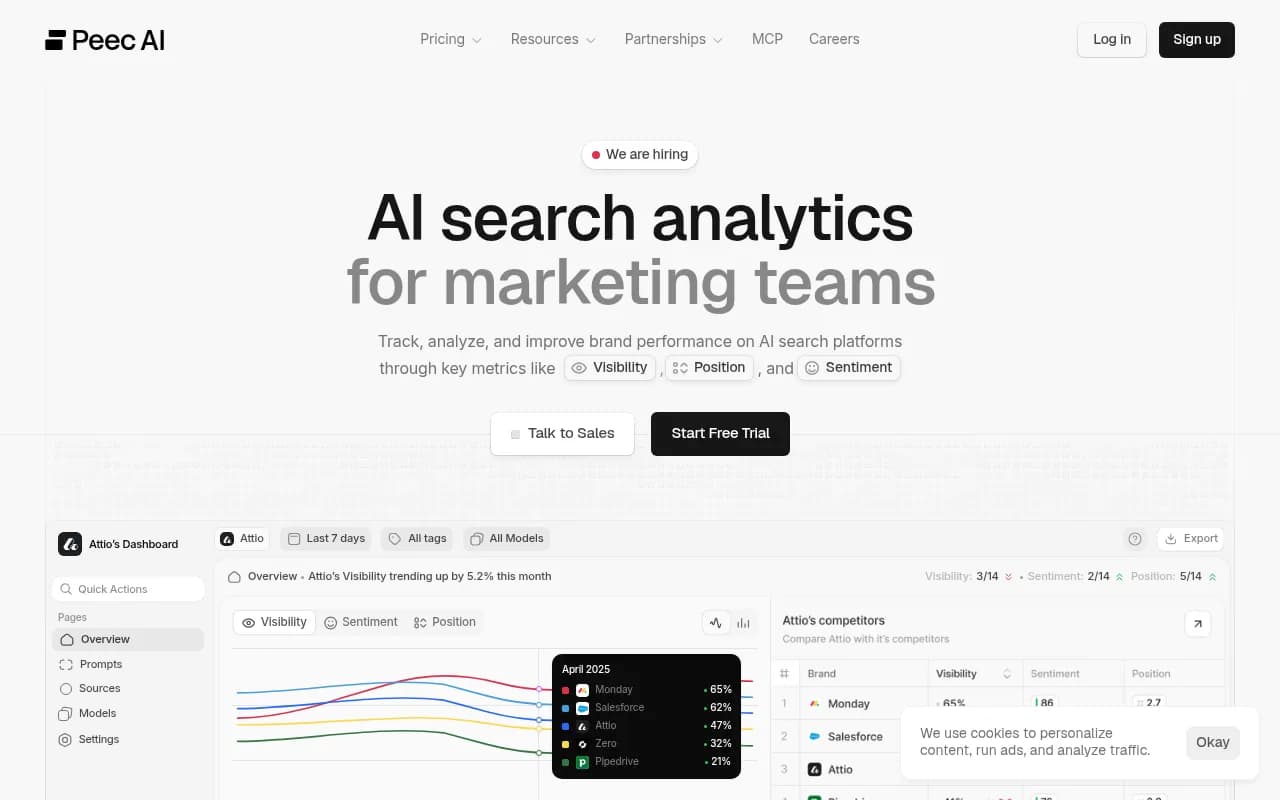
Pricing: Around $99/month for entry-level plans, with agency tiers available.
Best for: Agencies that want a clean, multi-client monitoring setup and handle content strategy separately.
3. Scrunch AI -- best for agencies with high prompt volume needs
Scrunch AI sits at a higher price point ($300/month) but comes with 350 prompts, which is a better deal per-prompt than most competitors at that tier. If you're managing clients with broad topic coverage or running competitive analysis across multiple industries, that prompt headroom matters.
The platform has solid monitoring capabilities and covers a reasonable range of AI models. The reporting is more polished than some alternatives, which helps when you're presenting to clients who care about how things look.
The gap is optimization. Scrunch AI is fundamentally a monitoring product -- it shows you where brands appear in AI responses and how that changes over time, but it doesn't tell you what to do about gaps. For agencies that are comfortable building their own optimization recommendations from raw data, that's workable. For agencies that want the tool to surface specific content fixes, it falls short.
There's also no Reddit or YouTube tracking, which is increasingly relevant as AI models pull more from community content when forming recommendations.
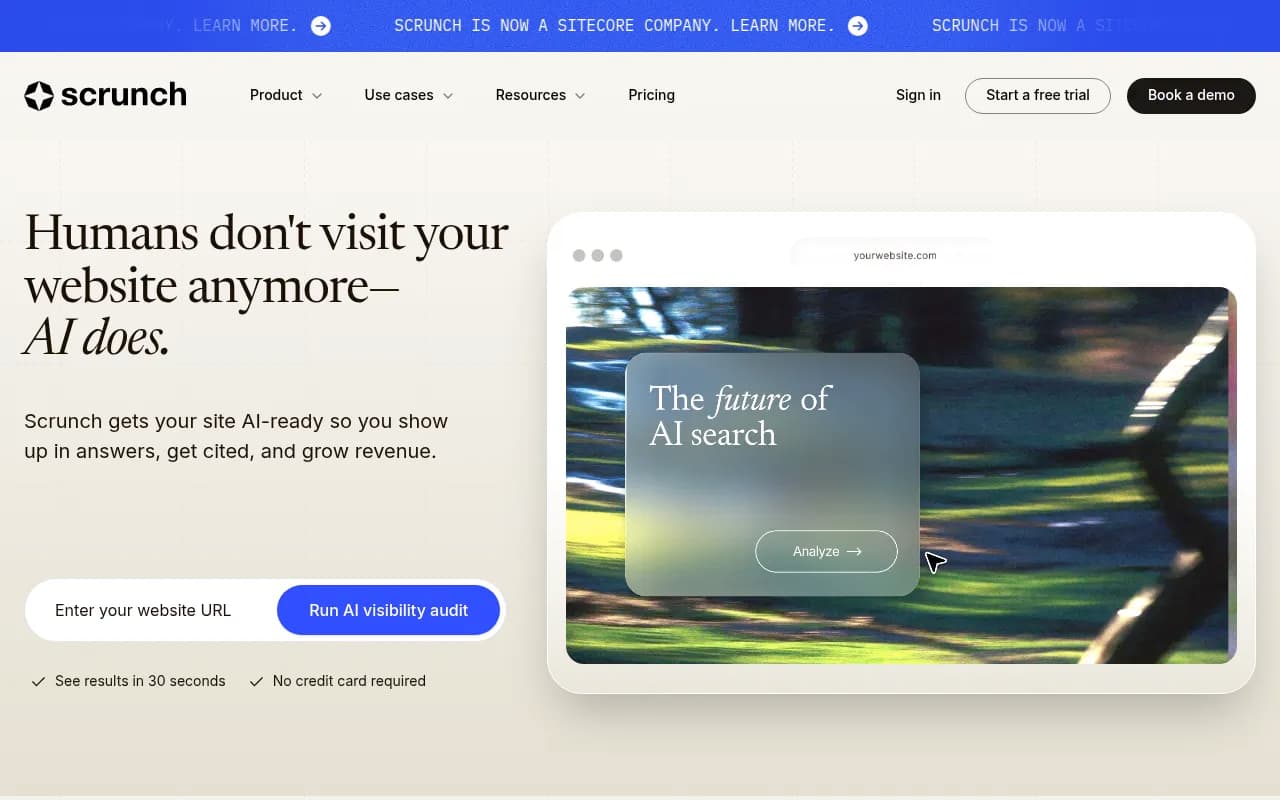
Pricing: $300/month with 350 prompts. Enterprise pricing available.
Best for: Mid-market agencies with high prompt volume needs and an existing content optimization process.
4. Search Party -- best for enterprise agencies needing custom setups
Search Party positions itself explicitly as an agency-first platform, and the product reflects that. Multi-client management is central to the design, white-label reporting is available, and the team offers hands-on onboarding that some enterprise agencies find valuable.
The trade-off is that Search Party leans toward custom pricing and enterprise arrangements, which means it's harder to evaluate without a sales conversation. Prompt metrics and difficulty scoring -- the kind of data that helps you prioritize which queries to target for a client -- are more limited than what you get from platforms built around prompt intelligence.
There's also no content gap analysis or content generation, so like Scrunch AI and Peec AI, it's a monitoring tool that leaves the "what to do about it" question unanswered.
That said, for large agencies with complex client portfolios and a need for custom data integrations, Search Party's flexibility can be worth the opacity on pricing.
Pricing: Custom. Contact for agency pricing.
Best for: Enterprise agencies with complex multi-client needs and dedicated account management requirements.
5. SE Ranking AI Search Toolkit -- best for agencies already in the SE Ranking ecosystem
SE Ranking has been a solid mid-market SEO platform for years, and its AI Search Toolkit add-on extends that into GEO territory. If your agency is already using SE Ranking for traditional SEO work, adding the AI toolkit is a natural extension -- you get a unified view of organic and AI visibility without managing a separate tool.
The add-on starts at $99/month but only covers 25 prompts at that tier, which is genuinely limited for agency use. You'll need to scale up quickly if you're managing more than a couple of clients with meaningful prompt coverage.
The AI model coverage is narrower than dedicated GEO platforms -- you're looking at three or four models rather than ten -- and there's no content generation or gap analysis built in. The value here is consolidation: one platform for SEO and AI tracking, one invoice, one interface for your team to learn.
For agencies that are heavily invested in SE Ranking and want to add AI visibility tracking without onboarding an entirely new tool, this is the most pragmatic choice. For agencies starting fresh and prioritizing GEO capabilities, the dedicated platforms above offer more.
Pricing: $99/month add-on to existing SE Ranking plans (25 prompts at entry level).
Best for: Agencies already using SE Ranking who want to add AI visibility tracking without switching platforms.
The monitoring-only problem, and why it matters for agencies
It's worth spending a moment on why the "monitoring vs. optimization" distinction matters so much for agencies specifically.
When you're in-house, you can absorb a monitoring-only tool because your content team, SEO team, and strategy team can take the data and run with it. The tool is one input among many.
When you're an agency, the tool is often the product. Clients are paying you to improve their AI visibility, not just report on it. If your tool shows them a visibility score and nothing else, you're in the uncomfortable position of having to manually synthesize the data, build your own recommendations, and justify your retainer on the basis of insights that took significant human effort to produce.
Tools that close the loop -- showing gaps AND helping you fill them -- let agencies operate more efficiently and deliver more consistent results. That's the difference between a tool that supports your work and one that creates it.
How to choose the right tool for your agency
A few questions worth asking before you commit:
How many clients and prompts do you actually need? Do the math before you sign up. 10 clients at 50 prompts each is 500 prompts minimum. Most entry-level plans don't cover that.
Do you need content optimization, or do you have that covered? If your agency has strong content production capabilities and just needs reliable data, a monitoring-only tool might be enough. If you want the tool to help generate content recommendations or briefs, you need Promptwatch or a similar optimization-first platform.
What AI models do your clients care about? If clients are asking about Grok, DeepSeek, or Mistral, make sure your tool covers them. Many don't.
Do you need crawler logs? If clients have technical issues with AI indexing -- pages not being crawled, errors blocking citation agents -- crawler logs are the only way to diagnose and fix them. This is a capability most tools don't offer.
What does your reporting workflow look like? White-label PDF exports are the minimum. If you want branded dashboards or Looker Studio integration for custom reporting, check that your tool supports it before committing.
Final take
Otterly.AI is a reasonable starting point for teams new to AI visibility tracking. But for agencies managing multiple clients, the pricing structure doesn't scale, the prompt limits are tight, and the lack of optimization guidance puts too much burden on your team to figure out what to do with the data.
The five tools above each solve part of that problem. Peec AI and Search Party handle multi-client management well. Scrunch AI gives you prompt volume. SE Ranking offers consolidation with your existing SEO stack. But if you want a single platform that covers monitoring, gap analysis, content generation, crawler logs, and citation tracking across 10+ AI models, Promptwatch is the most complete option available in 2026 -- and the only one in this category rated as a "Leader" across all evaluation criteria.
The agencies that will win on AI visibility aren't the ones with the best dashboards. They're the ones who can show clients a clear line from "here's where you're missing" to "here's what we built" to "here's how your citations improved." That loop requires more than a monitoring tool.