Key takeaways
- Prompt volume and difficulty data varies significantly across platforms -- Promptwatch and Profound offer the most detailed scoring, while Peec AI and AthenaHQ lag behind on this specific dimension.
- Most platforms show you which prompts exist, but few tell you how hard they are to win or how much traffic they actually drive.
- Promptwatch is the only platform that combines prompt volume estimates, difficulty scores, and query fan-outs with content generation tools that act on that data.
- Profound has strong prompt volume features but sits at a higher price point and lacks some of the action-oriented tooling.
- If prompt intelligence is your primary buying criterion in 2026, this guide will save you a lot of demo calls.
Prompt volume and difficulty data might be the most underrated feature in the GEO space right now. Everyone talks about citation counts and share of voice, but those metrics are lagging indicators. They tell you what already happened. Prompt volume and difficulty tell you where to go next -- which queries are worth chasing, which are too competitive to win quickly, and which represent genuine gaps your competitors haven't filled yet.
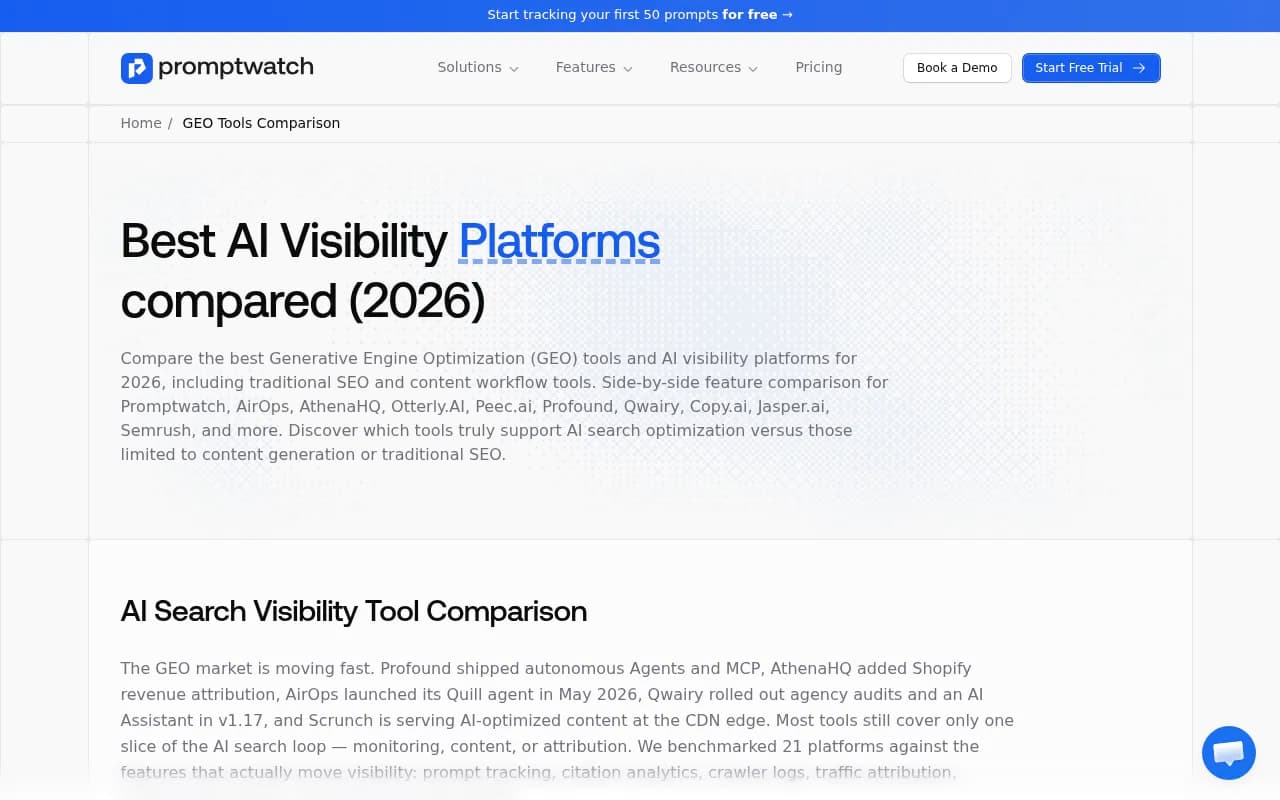
This comparison focuses specifically on that dimension across four platforms: Promptwatch, Peec AI, Profound, and AthenaHQ. These are the four names that come up most often in 2026 when marketing teams evaluate GEO tooling, so it makes sense to put them side by side on the metric that matters most for prioritization.
What "prompt volume and difficulty" actually means in GEO
Before getting into the platforms, it's worth being precise about what we're comparing. In traditional SEO, keyword volume is the estimated number of monthly searches for a query, and keyword difficulty is a score (usually 0-100) representing how hard it is to rank on page one. Both metrics come from crawled data, clickstream data, and competitive link analysis.
In GEO, the equivalent concepts are:
- Prompt volume: How often real users are asking a given question or prompt to AI engines like ChatGPT, Perplexity, or Gemini. This is harder to measure than search volume because AI engines don't expose query data the way Google does.
- Prompt difficulty: How competitive a given prompt is -- meaning how many strong, well-cited sources are already dominating the AI response, and how hard it would be to displace them.
- Query fan-outs: A related concept where one high-level prompt branches into multiple sub-queries that the AI engine resolves internally. Understanding fan-outs helps you see the full content surface area behind a single prompt.
Getting these numbers right requires either direct API access to AI engines (which gives limited data), real user interface monitoring (which is more representative but harder to scale), or proprietary modeling based on crawl and citation patterns. The platforms below take different approaches, and the quality of the output varies a lot.
Promptwatch: prompt intelligence as a first-class feature
Promptwatch treats prompt volume and difficulty as core data, not an afterthought. The platform tracks how AI search engines behave in real user interfaces rather than just through APIs -- which matters because user-facing answers can differ meaningfully from API outputs. That distinction flows directly into the quality of its volume estimates.
The Prompt Intelligence feature gives you volume estimates and difficulty scores for each prompt you're tracking. More usefully, it surfaces query fan-outs: when you track a prompt like "best project management software for remote teams," Promptwatch shows you the sub-queries that prompt branches into, so you can see the full content gap rather than just the surface-level question.
The practical value here is prioritization. Instead of guessing which prompts to target, you can sort by volume, filter by difficulty, and find the prompts that are high-value and winnable. That's a meaningful workflow improvement over platforms that just show you a list of prompts with no scoring attached.
What makes Promptwatch's approach different is that the prompt data feeds directly into its Answer Gap Analysis and Content Agents. You find a high-volume, medium-difficulty prompt where a competitor is getting cited and you're not -- and then you can generate content designed to fill that exact gap without leaving the platform. The loop from data to action is tight.
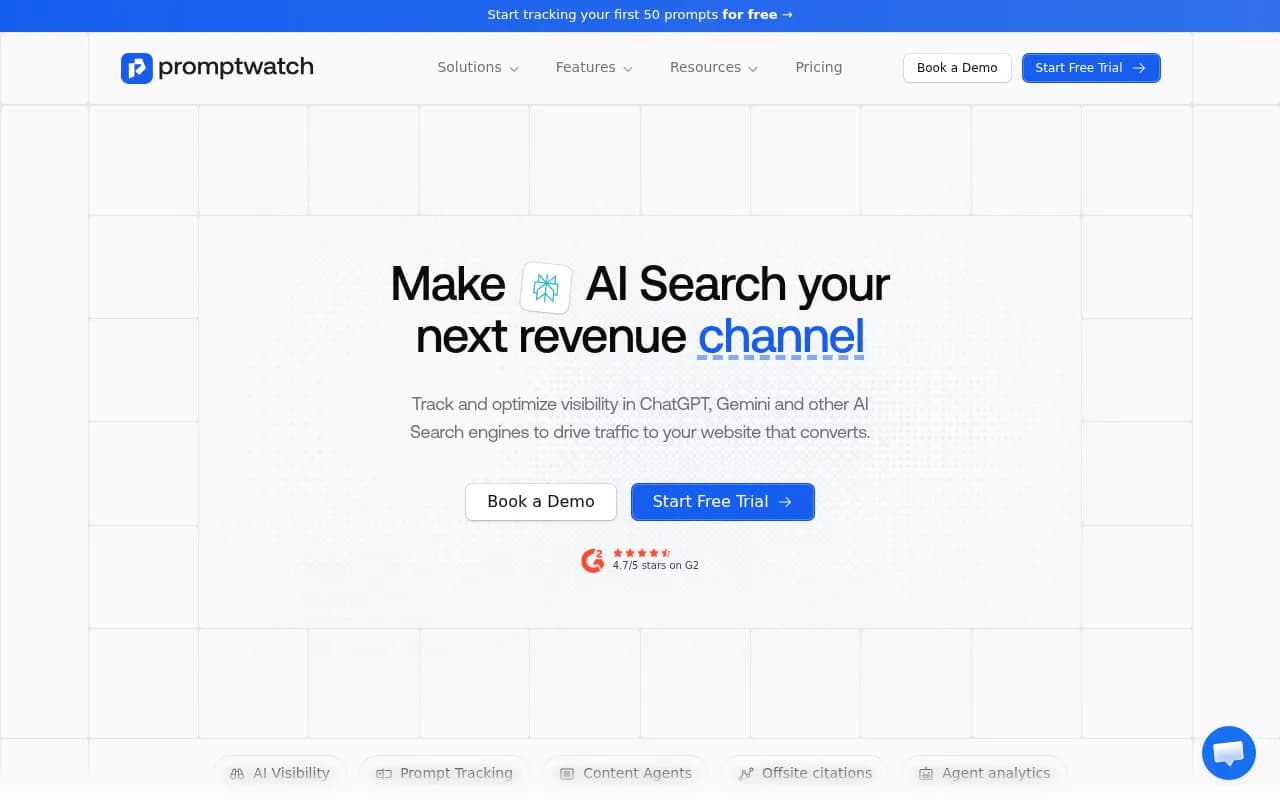
Pricing context: Promptwatch's Professional plan at $249/month includes 150 prompts and crawler logs. The Business plan at $579/month covers 350 prompts across 5 sites. For teams that need serious prompt coverage, those limits are worth factoring in.
Profound: strong prompt volume data, enterprise-grade pricing
Profound has invested heavily in prompt volume as a feature. Their Prompt Volumes page is a dedicated product surface, not just a column in a table, which signals how seriously they take it. The data is solid, and the platform covers a wide range of AI engines.
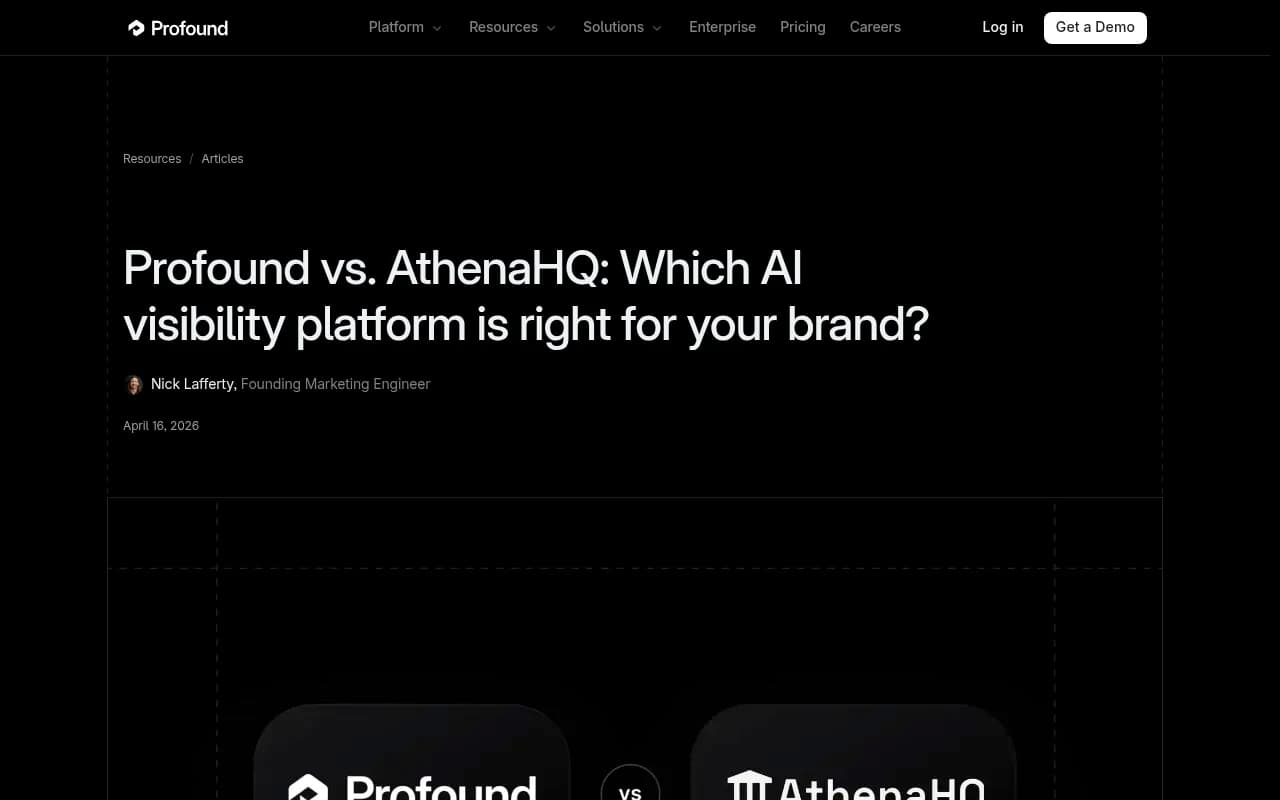
Where Profound gets interesting is their Agent Analytics feature, which tracks AI crawlers hitting your site and connects crawl activity to eventual citations. That's adjacent to prompt difficulty -- if you can see which of your pages AI engines are reading and citing, you can infer which content is competitive and which isn't.
The honest limitation with Profound is price. Their platform is positioned at enterprise and growth-stage companies, and the pricing reflects that. For smaller marketing teams or agencies managing multiple clients on a budget, Profound can feel like a lot of platform for what you actually need. They also don't have Reddit or YouTube tracking, which matters if you're trying to understand the offsite signals that influence AI recommendations.
Profound's autonomous Agents feature (launched in 2026) is worth noting -- it can execute multi-step content workflows based on prompt data. But the content generation side is less mature than Promptwatch's Content Agents, which are specifically built around citation data and prompt volumes rather than general content production.

Peec AI: monitoring dashboard, limited prompt intelligence
Peec AI is a capable monitoring tool, but prompt volume and difficulty is where it shows its limits most clearly. The platform covers three core AI engines (ChatGPT, Gemini, Perplexity), which is narrower than the 10+ models Promptwatch and Profound track. That narrower coverage directly affects the reliability of any volume estimates, since you're only seeing a slice of the AI search landscape.
More fundamentally, Peec AI functions as a passive analytics dashboard. It shows you where you're appearing and where you're not, but it doesn't give you difficulty scores or volume estimates with the granularity that makes prioritization possible. You can see that a prompt exists and whether you're cited, but you can't easily answer "is this prompt worth going after?" from the data alone.
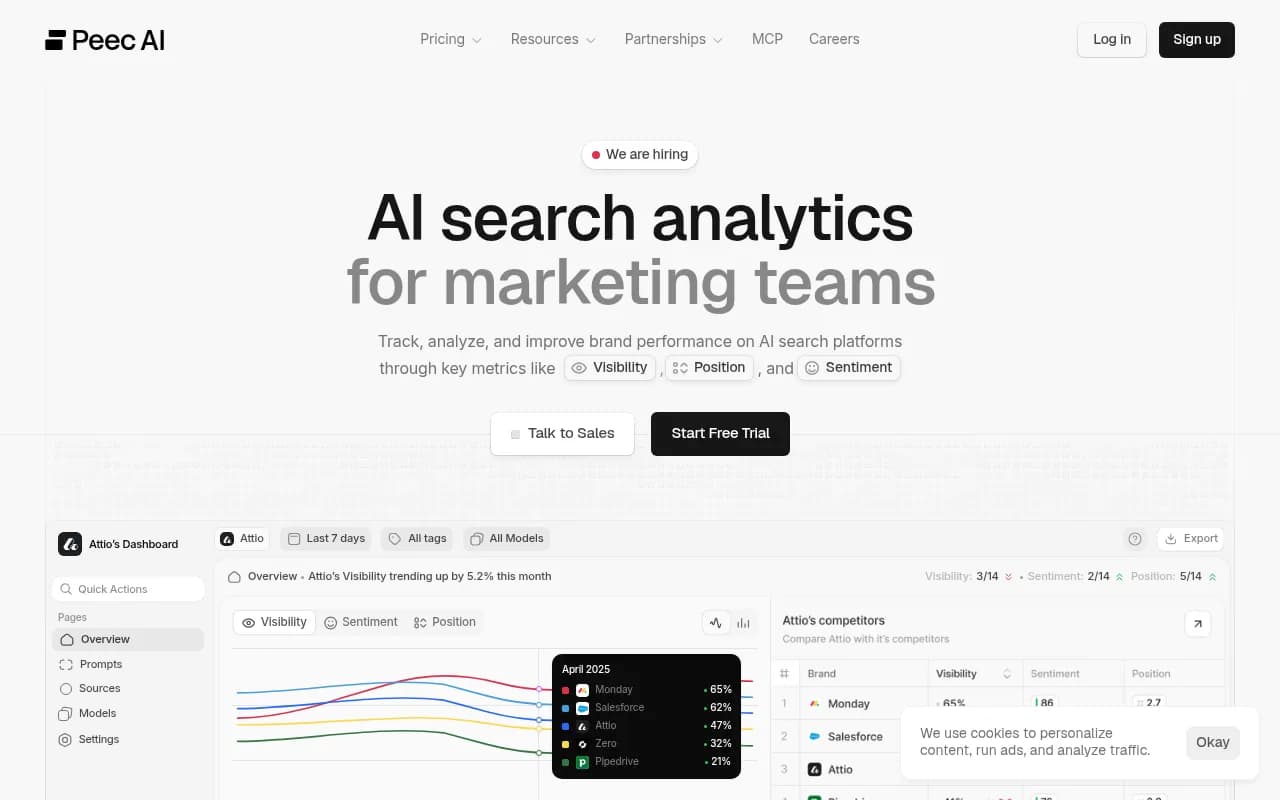
That's not a knock on Peec AI as a product -- it's a reasonable tool for teams that want basic monitoring at a lower price point. But if prompt intelligence is your primary criterion, it's not the right fit. The platform also lacks content generation, crawler logs, and traffic attribution, so the workflow from "I found a gap" to "I filled the gap" requires a lot of manual work outside the tool.
AthenaHQ's own comparison page makes a similar point: Peec AI covers three platforms versus AthenaHQ's eight, and leaves teams to manually interpret data and switch between disconnected tools to act on it.
AthenaHQ: action-oriented but light on prompt scoring
AthenaHQ takes a different angle. Rather than leading with raw prompt data, it translates AI search signals into prioritized optimization tasks through its Athena Citation Engine (ACE). The platform covers 8+ LLMs and has native Shopify and Google Analytics integrations for revenue attribution, which is genuinely useful for e-commerce brands.
The challenge with AthenaHQ from a prompt intelligence perspective is that the platform is more focused on what to do than on the underlying data that justifies doing it. The prioritization is handled by the ACE system, which is helpful if you trust the algorithm, but less useful if you want to do your own analysis -- for example, if you want to manually evaluate prompt difficulty before committing content resources to a topic.

AthenaHQ also doesn't have the query fan-out concept that Promptwatch offers, which means you might be optimizing for a surface-level prompt without understanding the sub-query structure underneath it. For teams that want to go deep on prompt research before creating content, that's a real gap.
Head-to-head comparison
| Feature | Promptwatch | Profound | Peec AI | AthenaHQ |
|---|---|---|---|---|
| Prompt volume estimates | Yes, real UI data | Yes, dedicated feature | Limited | Indirect via ACE |
| Prompt difficulty scores | Yes | Partial | No | No |
| Query fan-outs | Yes | No | No | No |
| AI engines covered | 10+ | Multiple | 3 | 8+ |
| Content generation | Yes (Content Agents) | Yes (Agents) | No | Partial |
| Answer gap analysis | Yes | Yes | No | Yes |
| Crawler logs | Yes | Yes (Agent Analytics) | No | No |
| Reddit/YouTube tracking | Yes | No | No | No |
| ChatGPT Shopping tracking | Yes | Yes | No | No |
| Traffic attribution | Yes | No | No | Yes (Shopify/GA) |
| Starting price | $99/mo | Enterprise pricing | Lower tier | Mid-market |
| Free trial | Yes | Demo required | Yes | Demo required |
Which platform wins on prompt intelligence specifically?
If you're evaluating these four platforms purely on the quality and depth of prompt volume and difficulty data, the ranking looks like this:
Promptwatch comes out ahead because it combines real UI-based data collection (not just API), volume estimates, difficulty scores, and query fan-outs in a single workflow that connects directly to content creation. The data is actionable by design.
Profound is a close second on the data quality side, with a dedicated Prompt Volumes feature and strong enterprise-grade analytics. The gap is in the action layer -- the content generation tooling is newer and the price point is higher.
AthenaHQ is strong on the action side but abstracts away the raw prompt data in a way that limits your ability to do independent analysis. Good for teams that want the platform to make decisions; less good for teams that want to make their own.
Peec AI is the weakest of the four on this specific dimension. It's a reasonable entry-level monitoring tool, but prompt volume and difficulty data isn't where it competes.
What to look for beyond the data
Prompt volume and difficulty data is important, but it's only useful if it connects to something. A platform that shows you a list of high-volume, low-difficulty prompts where you're invisible is interesting. A platform that then helps you create content to fill those gaps, tracks whether AI engines crawl that content, and shows you when citations start appearing -- that's a workflow.
This is the core argument for Promptwatch over the alternatives: the data and the action layer are built together. Most competitors built monitoring first and are now bolting on content tools. Promptwatch built the loop from the start.
That said, the right tool depends on your team's situation. If you're at an enterprise with a dedicated AEO team and budget for a premium platform, Profound is worth evaluating seriously. If you want a lighter monitoring tool to start and aren't ready to invest in content generation, Peec AI or AthenaHQ might be appropriate starting points.
But if you want the most complete picture of which prompts to target, how hard they are to win, and a direct path from that data to published content that AI engines will actually cite -- Promptwatch is the clearest choice in 2026.
Bottom line
Prompt volume and difficulty data is the foundation of any serious GEO strategy, and not all platforms treat it that way. Profound takes it seriously as a standalone feature. Promptwatch takes it seriously and connects it to the rest of the optimization workflow. Peec AI and AthenaHQ are useful tools, but this specific capability isn't where they lead.
Before committing to any platform, ask the vendor one direct question: "Can you show me how your prompt difficulty scores are calculated, and how I would use them to prioritize content creation?" The answer will tell you a lot about whether the data is real or decorative.