Key takeaways
- Most launch checklists stop at launch day. AI search keeps citing your pages for months, so the work that matters most is on your own site and in the sources AI already trusts.
- Press and news coverage fades fast in ChatGPT. Landing, docs and pricing pages stay cited far longer. Build the durable pages first.
- Social buzz barely reaches ChatGPT (0.64% of its citations come from social platforms). YouTube is the exception for Google AI Overviews.
- Check AI crawler access and baseline visibility before announcement day, then re-measure at 7, 30 and 60 days.
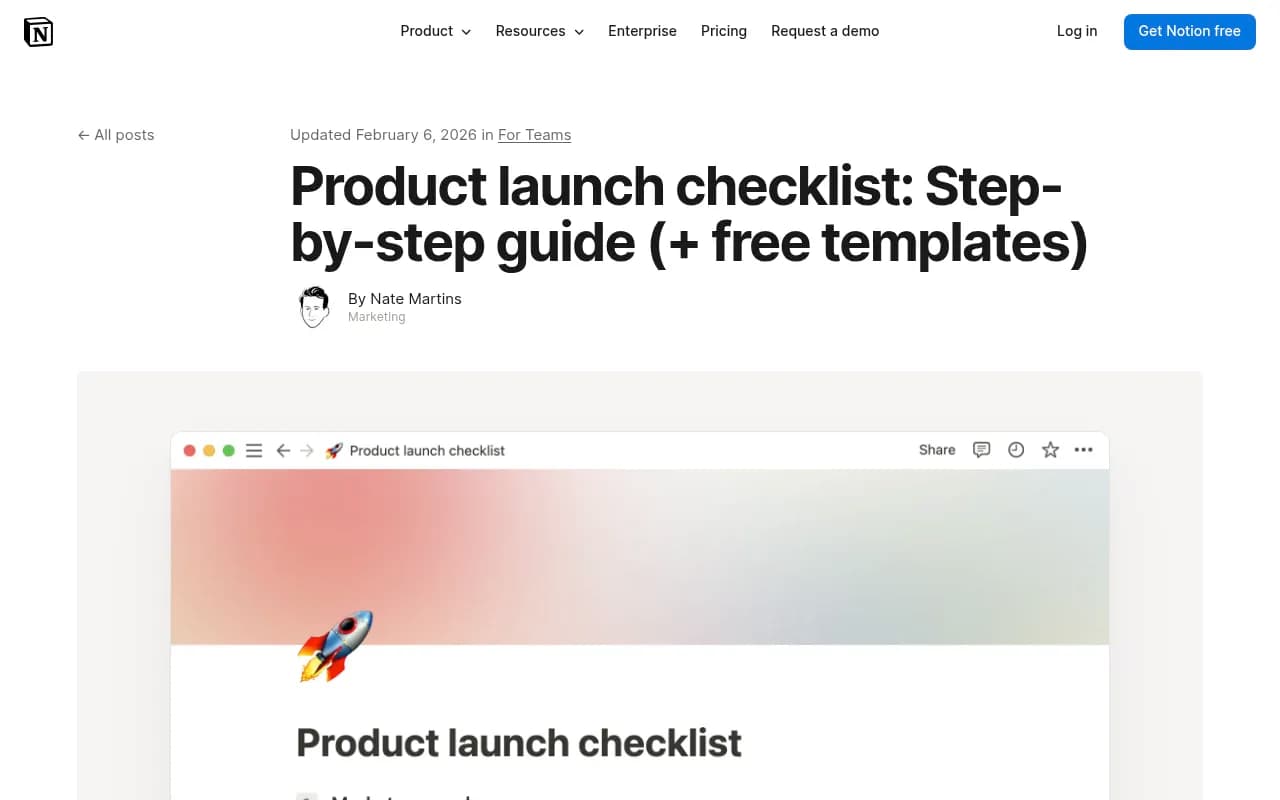
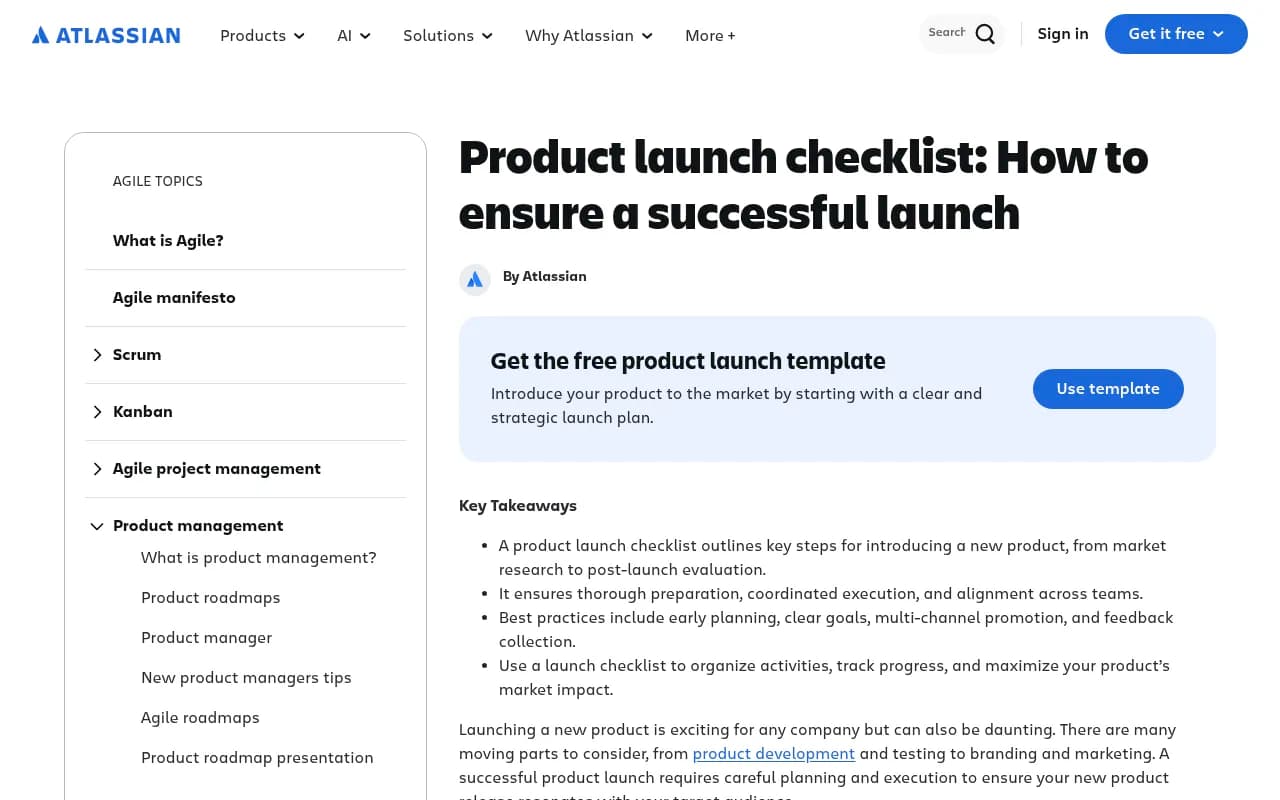
I have read a lot of product launch checklists lately. Atlassian's, Notion's and Okara's are all solid on the classic phases: planning, readiness, launch day, post-launch review. Okara's is the most honest about it, noting that most launches fail three weeks earlier, when nobody wrote down who does what.
None of them ask the question that now decides whether buyers find you later: when someone asks ChatGPT, Perplexity or Google's AI Overviews about your category, what do they say, and where do they get it? This guide adds that layer. Keep your normal launch plan and run these 12 steps alongside it.
Why AI search changes launch PR
A press hit used to be valuable mostly for the traffic and the backlink. Now it is also a possible source for an AI answer. But the data says the shelf life is short and the mix of cited content is not what most PR plans assume.
According to Promptwatch Data on ChatGPT citation share by content type (Sep 28 to Oct 4, 2026), product pages are 22.4% of ChatGPT citations and landing pages are 16.8%. That is 39% of citations going to pages describing what a company sells. News is only 5.7%.
The content half-life report tracked pages ChatGPT cited on July 6, 2026 for 90 days. Landing pages were still cited 78% of the time after 30 days. Docs were at 76%. News pages lost half their number within 36 days, and almost a quarter were never cited again after day 0.
So the plan is simple. Press is a short burst. Your own landing, docs, pricing and comparison pages are the long-term asset. The checklist below is ordered accordingly.
| Asset | Cited after 30 days | Cited after 60 days | Role in a launch |
|---|---|---|---|
| Landing pages | 78% | 69% | Long-term citation asset |
| Docs | 76% | 67% | Long-term citation asset |
| Comparisons | 72% | 63% | Long-term citation asset |
| Product pages | n/a | 55% | Keep current, decays like how-tos |
| News and press | Half gone by day 36 | 41% | Short burst of visibility |
Source: Promptwatch Data, pages cited July 6, 2026, tracked 90 days.
Before announcement day
Step 1: Baseline what AI says about you today
Before you change anything, record where you stand. Run 20 to 50 prompts your buyers would actually type: category prompts ("best X for Y"), comparison prompts, and brand prompts. Note whether you are mentioned, in what position, and which sources get cited.
You can do this by hand in a spreadsheet, but it gets tedious fast and answers vary between runs. Platforms like Promptwatch track prompts across ChatGPT, Gemini, Perplexity, AI Overviews and others from the real interfaces, which matters because user-facing answers can differ from API output.

Other trackers worth a look are Peec AI, Otterly.AI and Profound, and the directory at ai-rank-tools.com lists many more.



The baseline matters because without it you cannot say whether the launch moved anything.
Step 2: Confirm AI crawlers can read your site
This is the boring step that sinks launches. If your new pages sit behind a bot-blocking rule, a JavaScript wall or a stale robots.txt, no amount of PR fixes it. Check that GPTBot, OAI-SearchBot, ClaudeBot, PerplexityBot and Google's crawlers are allowed on the pages you are about to launch.
Two free starting points: Promptwatch's Agentic Readiness Check and its AI crawler URL inspector. If you want to see the bots actually arriving, IP-verified AI crawler logs show which pages they read and which return errors. Promptwatch's AI crawler traffic data shows how much of this activity comes from OpenAI, Anthropic, Google, Perplexity and Mistral.
Put a staging check on the calendar for one week before launch, not the night before.
Step 3: Build the product page as if it will be quoted
The same report that ranks product pages first in ChatGPT citations says why: ChatGPT quotes specs, prices and positioning directly. So write that page for quoting.
- Full specs, stated plainly
- Real prices or price ranges
- One clear sentence on who it is for and what it replaces
- Dates for availability and version numbers
- No claims you would not want repeated verbatim
I would rather ship a plain page with complete facts than a beautiful one that says "the future of work" and nothing else.
Step 4: Publish durable pages before the announcement
The pages that stay cited longest are landing pages, docs, comparisons and listicles. Have them live before the press release goes out, so the first crawl finds them.
- A launch landing page that stays up (do not turn it into a 404 after the campaign)
- Public, crawlable documentation
- A pricing page
- Your own comparison page against the two or three alternatives buyers already weigh you against
- A brand FAQ page, which the citation report lists as a gap for branded prompts (FAQ pages are 4.8% of branded citations)
If you do not have the content capacity for all of this, tools like Promptwatch's Content Agents can plan and draft pages against the prompts where you are invisible, and publish to WordPress, Webflow or Framer. Content-focused alternatives include Surfer SEO and Clearscope for optimization, though neither tells you which AI prompts you are missing.
Step 5: Map the "best of" lists you need to be on
Listicles are 13.6% of all ChatGPT citations, and 15.0% for commercial prompts like "best CRM for small businesses." Find the roundups that are already being cited for your category prompts. Your baseline from Step 1 will list them.
Then pitch those authors. This is the part of AI-era PR that looks most like old PR: a short, specific note to the person who maintains the list, with a reason you belong on it and an embargo-friendly briefing. Outreach tools like Respona can help with the logistics, and a PR agency like Otter PR can handle placements if you lack the relationships.

Step 6: Line up reviews on sites your category trusts
Reviews are small overall (1.7% of citations) but jump to 5.6% for branded prompts, more than three times their overall share. When a buyer asks about you by name, review sites matter. For software, Promptwatch's software citation data shows G2 among the top cited domains alongside GitHub and Microsoft's docs.
Ask beta users and early customers for reviews on the one or two review sites your category prompts actually cite, not every site you can think of.
Step 7: Decide your social plan realistically
This one is a little deflating. From Oct 11 to Nov 9, 2026, Promptwatch Data on social media citations shows only 0.64% of ChatGPT citations came from social platforms. Perplexity was 1.94%. Google AI Overviews was 13.16%, about 20 times ChatGPT.
Inside AI Overviews, YouTube was 6.71% of all citations, more than the other six platforms combined. LinkedIn was 0.78%. X was 0.02%.
For a launch, that means:
- Post your launch on X for humans and community, not for AI citations
- Publish a proper launch video on YouTube if Google is a priority
- Make the LinkedIn and Reddit effort count for Perplexity, where both do better than on other engines
- Do not rely on Reddit for ChatGPT visibility. Promptwatch's Reddit data shows reddit.com's share of ChatGPT citations fell from about 4% to 0.5% on August 14, 2026
Okara's launch guide is a good read on the X side of the plan, including its point that the first 60 to 90 minutes decide reach there. Just do not confuse that with AI visibility.
Step 8: Write one fact sheet and use it everywhere
AI answers repeat claims. If your press release says one price, your site says another and a partner blog says a third, models will pick one unpredictably. Write a single fact sheet: name, one-line description, price, availability, key specs, customer numbers you can defend. Link every external page to it, and use it as the source for the product page, the FAQ, the press release and the briefing notes.
Press releases are a small slice of citations overall but run higher for branded prompts (2.1%). They are worth doing, just not worth over-investing in.
On announcement day
Step 9: Publish in the right order
Order matters more than it used to:
- Product page, landing page, docs, pricing and FAQ go live first
- Press release and embargoed coverage second, linking back to those pages
- Video and social posts last, linking to the same pages
The point is that when a crawler or a journalist follows a link from the news piece, the durable page is already there with the same facts. Submit updated sitemaps and make sure the new URLs are in them. If you use a CMS, publishing through it directly avoids copy-paste drift.
Step 10: Watch crawler logs and first citations in real time
On day 0, check two things. Are AI bots hitting the new pages, and are any returning errors? Crawler logs show this within hours. A page that is being crawled but not cited yet is normal. A page that is not being crawled is a technical problem you can fix the same day.
A useful side note from Promptwatch's report on ChatGPT's use of site: queries: since August 8, 2026 about 17% of ChatGPT fan-out queries use the site: operator, up from roughly 0.4%. ChatGPT is increasingly searching inside specific domains, so a well-structured, crawlable site pays off.
After announcement day
Step 11: Re-measure at 7, 30 and 60 days
Rerun your Step 1 prompts. Compare mentions, position, share of voice and cited sources. Look at what is different:
- Not mentioned at all: a coverage problem. You need more pages and more third-party mentions.
- Mentioned late in answers: a prominence problem.
- Mentioned but your own domain is never cited: a content or crawlability problem.
- Mentioned with wrong claims: fix the source pages that state them.
If you also have web analytics, tag AI referrals. ChatGPT stopped sending a referrer on October 8, 2026, so a utm_source=chatgpt.com parameter on links you control is worth adding where you can, and some tools count tagged visits as ChatGPT traffic. See Promptwatch's guide on attributing AI traffic.
Here is how the main options compare for this measurement step.
| Tool | Tracks prompts across AI engines | Crawler logs | Content creation | Best for |
|---|---|---|---|---|
| Promptwatch | Yes, real interfaces | Yes, IP-verified | Yes, with CMS publishing | Teams that want to fix gaps, not just see them |
| Peec AI | Yes | No | No | Lightweight monitoring |
| Otterly.AI | Yes | No | No | Affordable monitoring |
| Profound | Yes | Limited | No | Enterprise monitoring |
| Semrush AI toolkit | Yes, fixed prompt sets | No | Via the wider suite | Teams already on Semrush |
See the GEO software directory for a longer list, and check the vendors' own pricing pages before you decide.
Step 12: Refresh and extend what works
The half-life data has a practical implication. Product pages, reviews and how-tos all reach half-life at 74 to 77 days. So around day 60, review your launch product page: update specs, pricing, version numbers and screenshots. A stale product page decays about as fast as a how-to.
Then fill the gaps your day-30 measurement revealed. If a competitor comparison prompt cites someone else's page, write yours. If a how-to prompt cites a forum, publish docs. Keep news as what it is: a short burst. Plan a second news beat, such as a customer story or a benchmark, for when the first fades around week five.
Teams that run this loop see results. Crisp reported 2x higher conversion rates from AI traffic than from other channels, and TreeHouse grew AI search to roughly a quarter of its organic conversions by fixing crawler access and publishing proprietary data. Both cases are on the Promptwatch case studies page.
The checklist at a glance
| Phase | Step | Owner |
|---|---|---|
| Before | 1. Baseline prompts and citations | SEO or PR |
| Before | 2. Verify AI crawler access | SEO or dev |
| Before | 3. Make the product page quotable | Product marketing |
| Before | 4. Publish landing, docs, pricing, comparison, FAQ | Content |
| Before | 5. Pitch the "best of" roundups | PR |
| Before | 6. Line up reviews | Customer success |
| Before | 7. Set a realistic social plan | Social |
| Before | 8. Write one fact sheet | Product marketing |
| Day 0 | 9. Publish in order: pages, press, social | PR |
| Day 0 | 10. Watch crawler logs and first citations | SEO |
| After | 11. Re-measure at 7, 30, 60 days | SEO or PR |
| After | 12. Refresh and extend | Content |
Common mistakes
Treating the press release as the main asset is the big one. It is 2.1% of branded citations and decays quickly as news.
Taking the launch page down after the campaign is the second. Landing pages are among the longest-cited pages. Leave them up.
Third, measuring only on launch day. AI answers shift for weeks. A single screenshot of ChatGPT on day 1 tells you almost nothing.
Finally, assuming one engine speaks for all. Social platforms are 0.64% of ChatGPT citations and 13.16% of AI Overviews. Your plan should differ by engine.
Where to go next
If you want a classic launch plan to pair with this, Notion's and Atlassian's templates are good for ownership and timeline, and Okara's is good for social. For the AI search layer, start with a baseline of your prompts, then check the free AI visibility report if you want a quick look at how ChatGPT, Gemini and Perplexity currently describe you. If you want hands-on help running a launch like this, an agency such as 1001 SEO Media handles technical SEO, digital PR and AI search work together, which is the combination this checklist needs.