Key takeaways
- All three tools do the same core job: crawl the pages already ranking, extract common terms and structure, and grade your draft against them. None of them measures accuracy, originality, or usefulness.
- Clearscope has the simplest writer experience (A to F grades, unlimited users). Surfer SEO has the deepest analytics. Rankability is built around agency workflows and bundles AI visibility tracking.
- The correlation studies are vendor-sourced and contradict each other. Surfer cites 26% vs 17.5% in its favor; Clearscope cites an Ahrefs study at 0.30 vs 0.27 in its favor. I found no independent study validating Rankability's score.
- Treat any score as a floor and a checklist, not a target. Check traffic, not the number.
- Pricing units differ (documents, content projects, tracked pages), so compare limits rather than monthly fees.
Why this comparison needs a disclaimer
Most of the head-to-head content on this topic is written by someone selling one of the tools. The Rankability comparison post openly says it reviews Rankability, its own platform. A RankUp article on Clearscope vs Surfer is written by a company with its own product. Even the correlation numbers come from the vendors themselves.
So I will be careful about what is established and what is marketing. Where a claim comes from a vendor, I say so.
What a content score actually measures
Strip away the interface differences and every one of these scores works the same way. The tool pulls the pages currently ranking for your keyword, extracts the terms, length, and headings they share, and compares your draft against that benchmark.
That means a score tells you how much your draft looks like the existing results. It cannot tell you whether your advice is correct, whether your examples are original, or whether a reader would learn anything. Google's own helpful content guidance says content should be made for people rather than to satisfy a formula.
Two pages can both score 85 and only one is worth reading. A score rewards sameness, and sameness is rarely what makes a page win.
The three tools at a glance
Clearscope
Clearscope grades drafts from A to F and gives you a term list grouped for natural reading. It is the tool people recommend when writers, not SEOs, have to use it every day. All plans include unlimited users and projects.
One G2-based review roundup puts its average score at 4.9/5, and the RankUp comparison cites a 10/10 support rating on G2. Both are review-site numbers, so weigh them accordingly. The common complaint is price, particularly for small teams.
Surfer SEO
Surfer gives you a numeric score and a lot more around it: the Content Editor, SERP Analyzer, Topical Map, Content Audit, automated internal linking, and AI drafting. A Chrome extension brings recommendations into Google Docs.
It is the most data-heavy of the three. That is a strength if you have an SEO who wants the data, and a distraction if you have a freelance writer who just wants to know whether the draft is covering the topic.
Rankability
Rankability is aimed at agencies. It combines NLP scoring, Google-powered keyword research, shareable AI content briefs, rank tracking, and AI visibility tracking, with unlimited client workspaces and team members on every plan.
It is the youngest of the three and the one with the thinnest independent validation. Its own comparison article names it best for agencies, which is a reasonable position but not a neutral one.
Side-by-side comparison
| Factor | Clearscope | Surfer SEO | Rankability |
|---|---|---|---|
| Score format | A to F grade plus term list | Numeric score | NLP score with actionable terms |
| Best for | Editorial teams, freelancers | Data-heavy SEO and content teams | Agencies |
| Keyword research | Limited discovery | Keyword research and clusters | Google-powered research |
| Planning | Content Inventory | Topical Map, SERP Analyzer | Research-to-brief workflow |
| Internal linking | Manual suggestions | Automated insertion | Not a headline feature |
| AI drafting | Term and cluster analysis (drafts on paid credits) | Generative drafting | AI drafts included in content projects |
| AI search tracking | ChatGPT and Gemini query tracking | Add-on, AI Search Analytics | 11 AI platforms tracked daily |
| Seats | Unlimited | Varies by plan | Unlimited |
| Learning curve | Lowest | Highest | Low |
What each one costs
Pricing changes often, so confirm on each vendor page before buying. These are the figures I could verify.
| Tool | Entry plan | Mid plan | Top plan | Trial |
|---|---|---|---|---|
| Clearscope | Essentials $129/mo | Business $399/mo | Enterprise, custom | 14 days, no contract |
| Rankability | Starter $97/mo | Agency $297/mo | Agency Pro $497/mo | 7 days, card required |
| Surfer SEO | Disputed, see below | Disputed | Enterprise, custom | Check vendor |
Clearscope plan limits
Essentials includes 50 tracked queries, 50 pages, 20 monthly Discoveries and 20 monthly Drafts. Business raises that to 300 tracked queries, 300 pages, 50 Discoveries and a dedicated account manager. Extra pages and drafts are sold as add-ons. One third-party roundup put Essentials at roughly $6.45 per draft if you use all 20.
Rankability plan limits
A content project is one new page or one refresh, covering research, brief, outline, AI draft, optimization guidance and export, with two AI revisions included. Starter gives 20 projects, 100 tracked AI queries and 50 Google keywords. Agency gives 80 projects, 300 queries and 150 keywords. Agency Pro gives 160 projects, 500 queries, 250 keywords and Gotch Inner Circle coaching. Annual billing is ten monthly payments.
Surfer SEO pricing is murky
Surfer's pricing page is now framed around AI search, with AI Search Analytics starting at $82/month billed yearly. The Content Editor tiers were truncated when I checked, and third-party sources disagree: one lists Discovery at $89 and Standard at $179, another lists Discovery from $49 annually, Standard at $99 and Pro at $182. I would not trust any of those numbers over the live page.
The pattern that holds across sources: Surfer is cheaper per article on its Standard and Pro tiers, while Clearscope wins on unlimited seats. The billing units differ (documents, credits, tracked pages, prompts), so a monthly fee is not a like-for-like comparison.
Which score correlates best with rankings?
This is the question everyone wants answered, and the honest answer is that nobody has answered it independently.
| Evidence | Surfer SEO | Clearscope | Source |
|---|---|---|---|
| Ranking correlation, Originality.ai study | 26% | 17.5% | Cited by Surfer |
| Correlation, Ahrefs study | 0.27 | 0.30 | Cited by Clearscope |
Each vendor points to the study that favors it. These are different studies with different methods, so the numbers are not comparable to each other, and neither is a controlled test of whether raising your score raises your rankings. One comparison post sums it up well: Surfer's model is more granular, but neither score is reliable enough to run content decisions on autopilot.
For Rankability, I found nothing independent at all. That does not mean the score is bad. It means you are taking the vendor's word for it, which is also true of the other two once you read the footnotes.
Do high scores help with AI citations?
Not as far as anyone can show. These scores are built to match Google's top results. They were never validated against what ChatGPT or other assistants cite.
What we do have is data on what gets cited. Promptwatch Data's report on ChatGPT citations by content type (Sep 28 to Oct 4, 2026) found product pages were 22.4% of citations, landing pages 16.8% and listicles 13.6%, with how-tos at 8.7% and documentation at 7.5%. That is a statement about content format, not about term coverage. A page with a perfect score in the wrong format may do worse than a mediocre one in the right format.
Longevity matters too. Promptwatch's content half-life data shows landing pages and docs stay cited for months, while news loses half its cited pages in about 36 days. A content score cannot tell you which type of page you are building.
If you want to measure AI citations directly, you need a tracker rather than an optimizer. Tools like Promptwatch track which of your pages get cited across ChatGPT, AI Overviews, Perplexity and others, which is a different job from scoring a draft.

Clearscope and Rankability both bundle some AI query tracking now, which is convenient if you want one tool, but dedicated platforms go much deeper. You can browse options in the GEO software directory at bestgeosoftware.com.
Who should pick which
Pick Clearscope if writer adoption is the problem
If your bottleneck is freelancers ignoring the tool because it is confusing, a grade they understand in ten seconds beats a dashboard with forty metrics. Unlimited users means you can add every contributor without a seat conversation. You pay for that simplicity.
Pick Surfer SEO if you have an SEO who will use the depth
Topical maps, audits, automated internal links and AI drafting give you a lot to work with. It suits teams that produce content at volume and want numeric scores to track over time. The risk is stuffing: a green number is easy to chase, and keyword stuffing is a real failure mode.
Pick Rankability if you run an agency
Unlimited client workspaces and team members, branded reports and API access at $97 to $497 a month is a sensible package for client work. The mastermind and coaching are included only at Agency Pro. Just remember the validation gap, and run it on a few real pages before committing.
Consider alternatives if none fit
There are other options in the same category, including Frase, MarketMuse and NeuronWriter, each with its own scoring model.
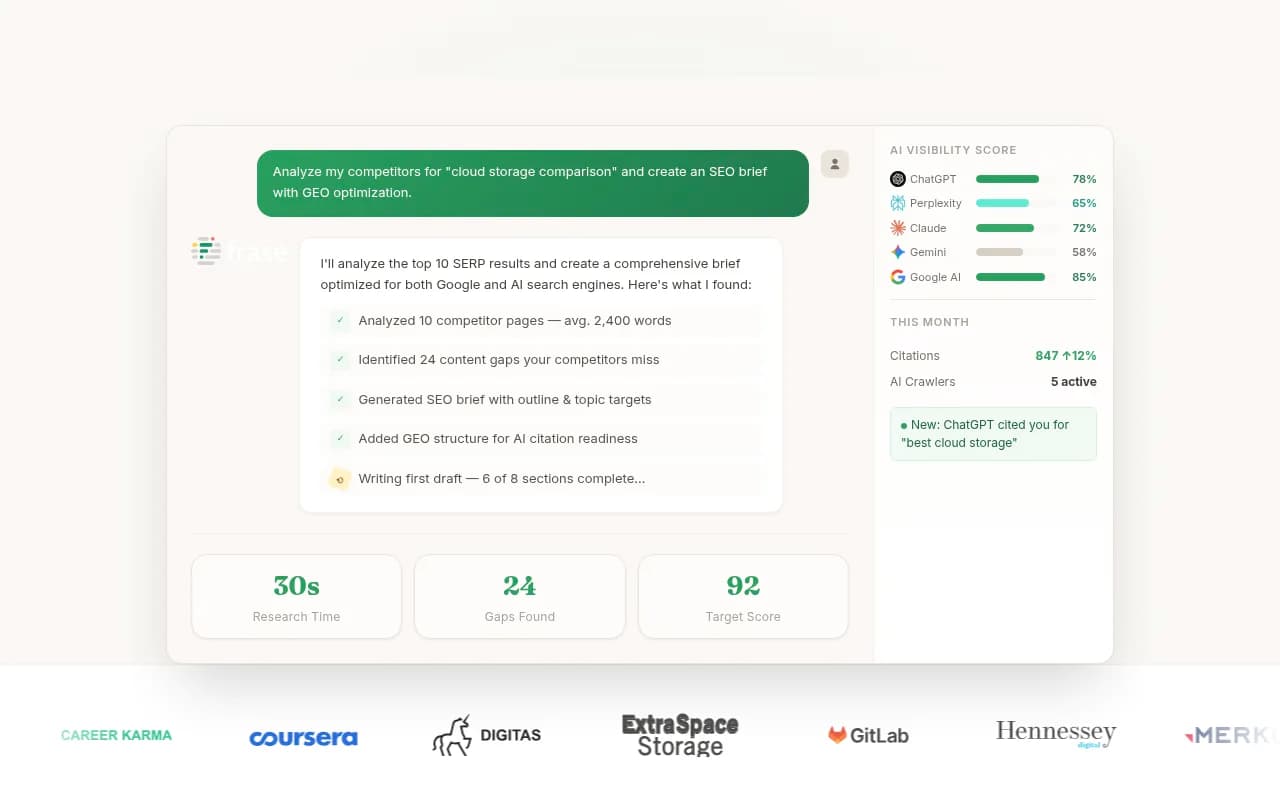
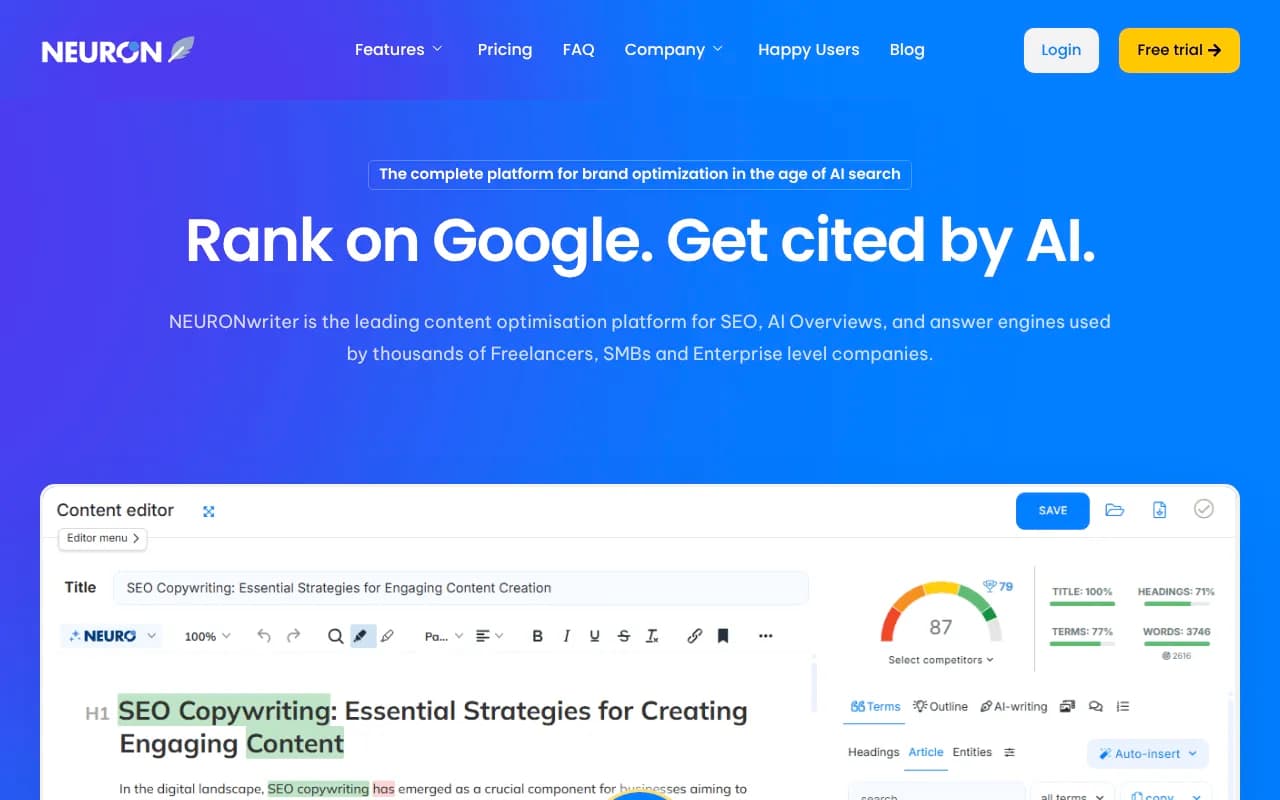
For a wider scan of software in this space, surferstack.com lists reviews and alternatives.
How to use any content score without being fooled
- Use it as a checklist. Look at the missing terms and ask whether each one belongs in your article. Skip the ones that do not.
- Stop at a reasonable score. Going from 75 to 95 by wedging in terms is where articles get worse.
- Add what the score cannot see: your own data, examples, screenshots and opinions. That is what makes a page worth ranking.
- Verify facts and brand voice with a human before publishing.
- Connect Search Console and GA4 so you judge the tool by traffic and rankings, not by the score it gives you.
- Run a 30-day trial on five real pages, with a before and after, instead of trusting any vendor comparison. Clearscope's 14-day and Rankability's 7-day trials are short, so prepare the pages before you start.
So which score is worth trusting?
None of them, in the sense of trusting a number to predict rankings. All of them, in the sense of using a decent checklist of what top-ranking pages cover. The differences that matter are practical: who will actually use the tool, how you are billed, and whether you need extras like AI tracking or client workspaces.
My pick for most editorial teams is Clearscope. For SEO-led teams that want depth, it is Surfer. For agencies, Rankability deserves a trial. And for whichever you choose, check traffic after publishing, because the score will not do it for you.