Key takeaways
- No source I found shows that a higher Surfer, Clearscope or Rankability score causes more AI citations. Treat that link as unproven.
- These tools measure overlap with terms and structure on pages that already rank. They do not measure links, prominence or the unique fact your page adds.
- Page type and freshness look like stronger levers for ChatGPT citations than a score. Promptwatch Data shows product pages and landing pages take about 39% of citations.
- Scores are still useful as a coverage checklist. The AI tracking features bolted onto these tools tell you whether you are cited, not why.
- If you want to know whether scores help you, run a small before-and-after test on your own pages. A method is below.
The question, and why the answers are mostly marketing
Every content optimization vendor now says its tool works for AI search. Surfer added AI visibility tracking. Clearscope talks about discoverability beyond Google. Rankability pitches "brief, draft, optimize, monitor" with visibility tracking across AI platforms.
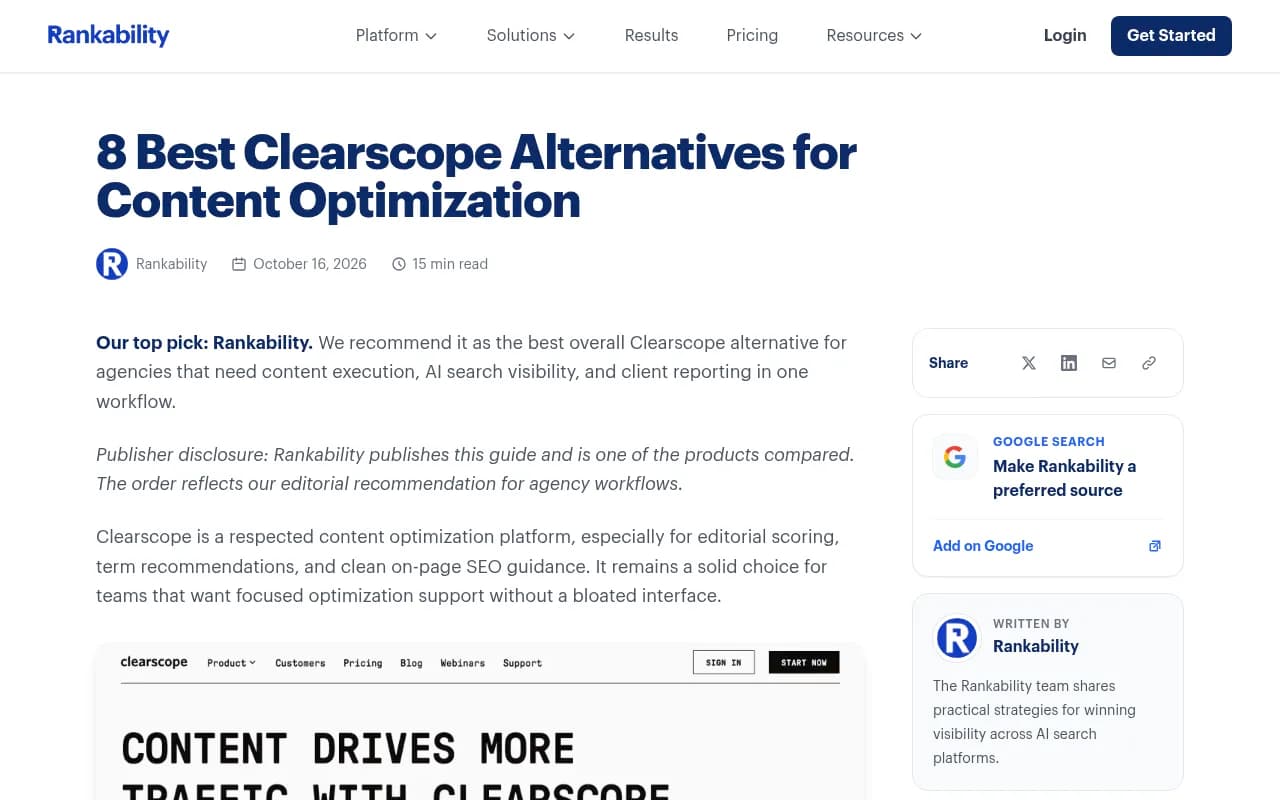
Here is the catch. Almost everything written about this comes from the vendors or from affiliate-style roundups. Rankability's own blog ranks Rankability as the top Clearscope alternative (it discloses this). The aggregator pages that say these tools "work across both Google and AI search" are describing features, not results. Tracking whether you are cited is a different thing from a score that makes you cited.
I went through the available material looking for one piece of evidence that a higher score earns more AI citations. I didn't find it. Plenty of pages say scores "correlate with ranking patterns but aren't guarantees." One agency-focused review is blunter: do not treat a score of 80 as "this URL will rank." That is about Google rankings, and the AI citation claim is weaker still.
So this guide does something different from a feature roundup. It explains what the scores actually measure, what first-party citation data says about what gets cited, and how to run your own test.
What a content score actually measures
The three tools work in a similar way. They pull the pages ranking for your target keyword, extract terms, entities, headings and length, and compare your draft.
- Clearscope runs top results through an NLP engine that combines Google's Cloud Natural Language API with IBM Watson, according to Rankability's review of it. It outputs a content report and a letter-style grade that updates as you write.
- Surfer gives a real-time Content Score in its editor, with term suggestions, structure and word-count targets, plus auto-optimize and plagiarism checking.
- Rankability scores your draft against live SERP data with topic, entity and keyword gap analysis, and adds AI visibility tracking.
The important point: the score is overlap with terms and structure on ranking pages. It isn't prominence, links, or the original fact the page must add. One agency review makes this point with a good example: ship 40 near-duplicate city pages against the same term list and all 40 scores climb together while the pages still lose.
That is also the problem for AI citations. A score tells you that your page looks like the existing top results. AI systems, which pull many sources per answer, may reward something else entirely.
The tools, briefly
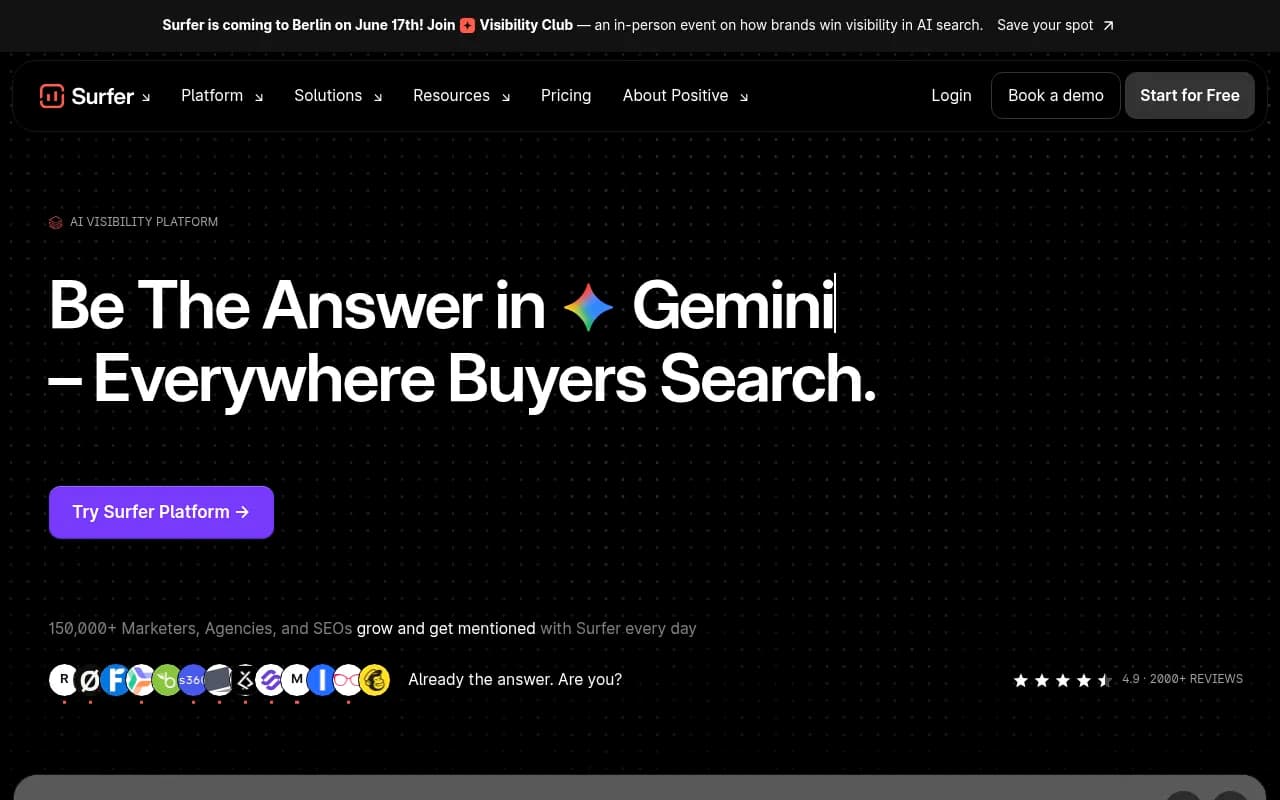
Surfer is the most score-led of the three. Its public pricing in the sources I had was Standard at $99/mo billed yearly (360 documents, Content Score, 25 weekly AI prompts) and Pro at $182/mo yearly (50 daily AI prompts, cannibalization). These numbers came from third-party summaries, so check the pricing page before you buy.
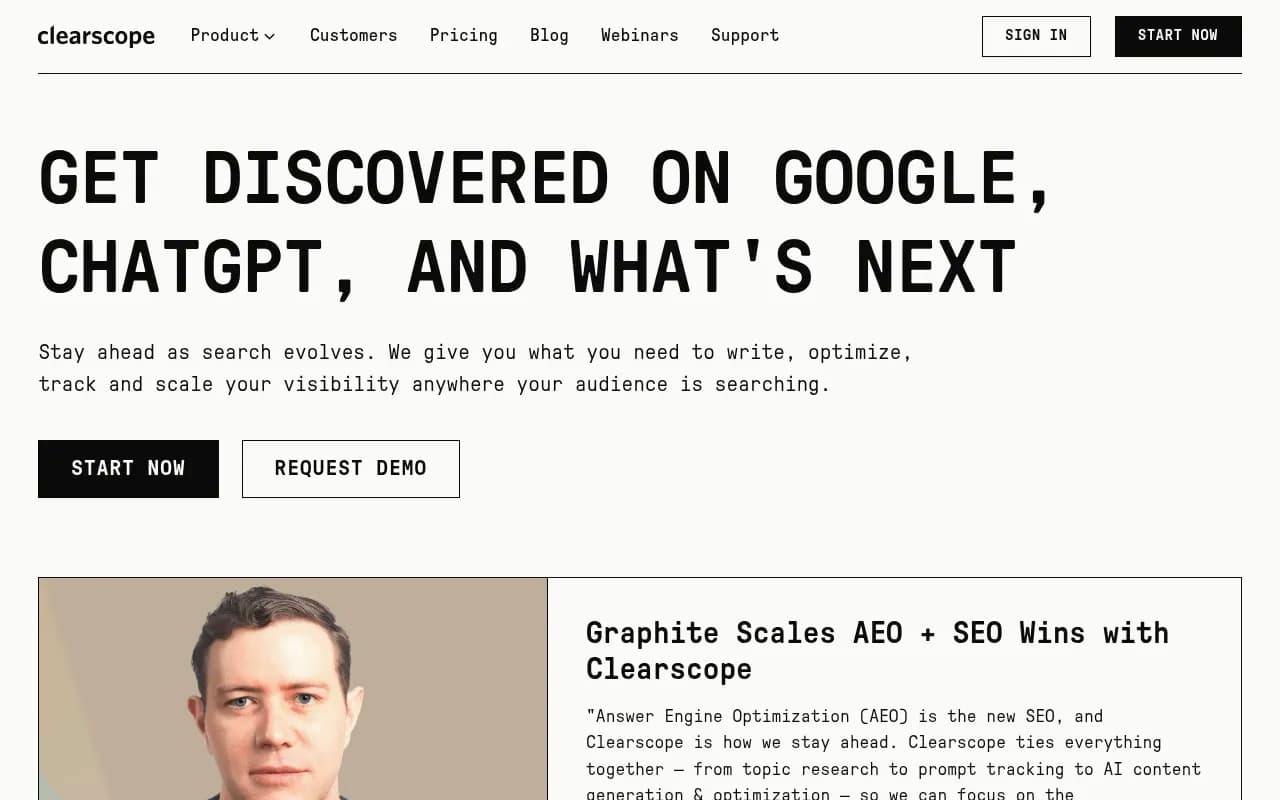
Clearscope leans editorial: content reports, related terms, questions to answer, and an Inventory feature that uses Search Console data to flag refresh candidates. Pricing wasn't available in my sources.
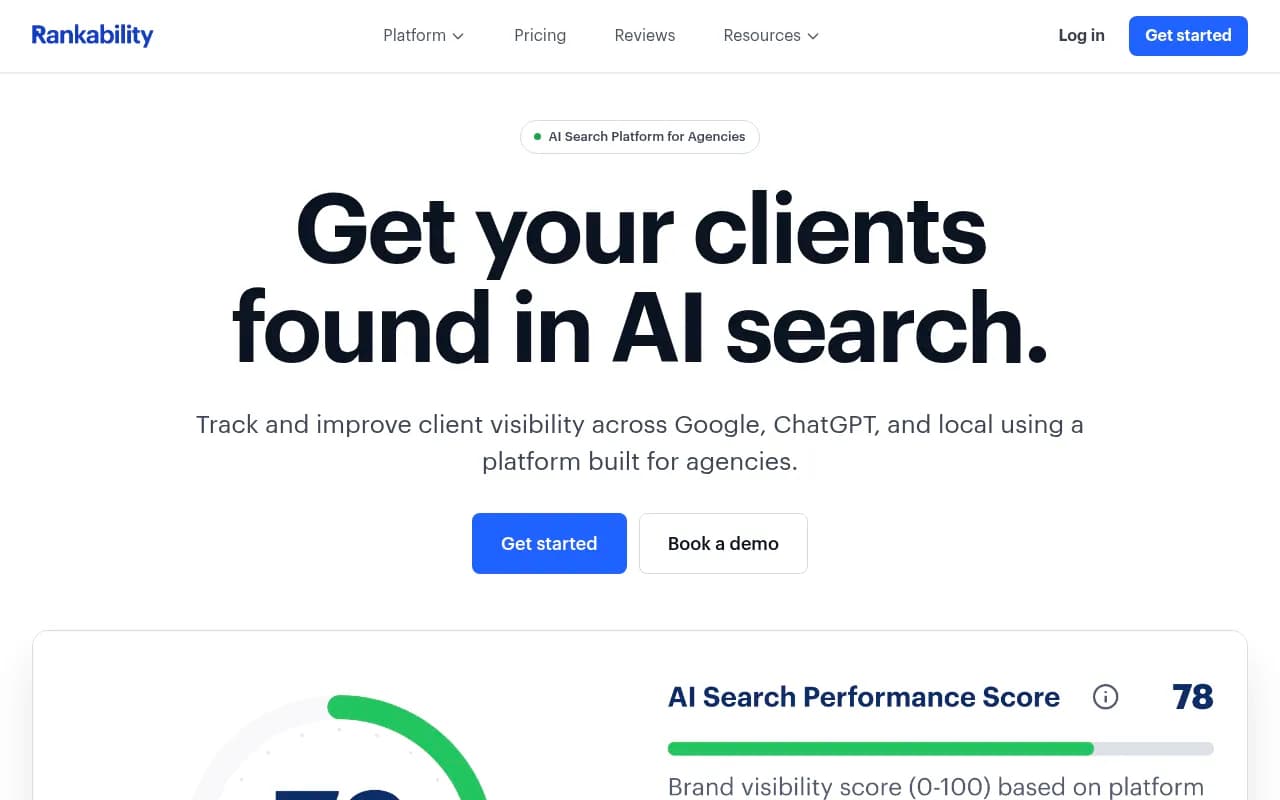
Rankability pairs an optimizer with AI visibility tracking, and is credit-based. A third-party source lists Core at $166/mo and Team at $333/mo, again unverified. It is cheaper at the entry tier according to that same source, but I'd confirm directly.
| Tool | What the score is built from | AI visibility feature | Pricing certainty |
|---|---|---|---|
| Surfer SEO | Top-ranking page terms, structure, length | Prompt tracking on higher plans | Public, verify |
| Clearscope | NLP terms and entities from top results | AI visibility tracking mentioned | Not published in my sources |
| Rankability | Live SERP topic, entity and keyword gaps | Tracking across multiple AI platforms | Third-party figures only |
Other graders in this category include [tool:frase], [tool:marketmuse], [tool:neuronwriter] and [tool:scalenut]. They all sell the same grader loop.
What first-party data says gets cited
Promptwatch Data has no report testing optimization scores against AI citations. What it does have is a breakdown of what ChatGPT cites. Using Promptwatch's ChatGPT citation share by content type (Sep 28 to Oct 4, 2026):
- Product pages take 22.4% of classified citations and landing pages 16.8%. That is about 39% going to pages that describe what a company sells.
- Listicles take 13.6%, how-tos 8.7%, general articles 6.1%, comparisons 5.9% and news 5.7%.
- On commercial prompts, product pages hit 26.0%, landing pages 20.6% and listicles 15.0%.
- On branded prompts, reviews take 5.6%, about three times their overall share.
What does that tell you about scores? Mostly that the thing being scored, a long-form blog post tuned against competing articles, is a minority of what ChatGPT cites. Optimizers are built around the article-versus-article SERP. A big chunk of AI citations goes to product and landing pages, where specs, prices and positioning being complete and factual matter more than semantic coverage.
The citation pool is also broad. Almost half of ChatGPT responses cite 10 or more unique domains in the same week, so there are many slots, and they aren't all won by the page with the best term overlap.
Freshness is something a score can't see
A score is a snapshot at publishing time. Citations decay. Using Promptwatch's content half-life data (pages cited on July 6, 2026, tracked for 90 days):
- After 60 days, ChatGPT still cited 69% of landing pages and 67% of docs.
- Product pages, reviews and how-tos sat at 55% after 60 days, with half-lives of 74 to 77 days.
- News has a half-life of 36 days.
Those are different curves for different page types, and none of them has anything to do with how many NLP terms a draft contains. A page you optimized to 92 in March and never touched is exposed. Clearscope's Inventory-style refresh workflow is arguably more relevant to AI citations than the editor grade, though that is my inference, not a tested result.
Where scores plausibly help
I don't want to dismiss them. Here is where I'd expect a score to matter, with the honest caveat that these are reasoned guesses.
- Coverage of the topic. AI systems run query fan-outs, multiple searches per answer. A page that covers the related questions and entities has more chances to match one of them. A term gap report is a decent proxy for that.
- Ranking in Google or Bing. Many AI answers draw from pages that already rank. If a score helps a page rank, it may indirectly help citations. Even that link is a correlation, not a guarantee.
- Editorial hygiene. Headings, clear structure, and answering the question directly all help extraction, and graders push you toward them.
And where they plausibly don't:
- Product and landing pages, where factual completeness beats term coverage.
- Original-data pages. The unique fact is exactly what graders can't score.
- Anything where domain authority, third-party mentions or community discussion drive the citation.
The trackers still don't grade your live page
One of the sources reviewed, from GEO Toolbox, makes a useful point: the AI tracking features inside content tools tell you whether you showed up, but they don't grade your live page for why. That matches what I saw. Surfer's and Rankability's AI prompt tracking is a bolt-on to a scoring engine. It answers "were we mentioned?" not "which of our pages was read by the crawler, and did it get cited?"
This is the gap that dedicated AI visibility platforms fill. Promptwatch tracks real ChatGPT, AI Overviews and Perplexity interfaces, shows which of your pages get cited, and uses crawler logs to show whether AI bots even reached the page.

Other options in the monitoring category include [tool:profound], [tool:peec-ai], [tool:otterly-ai] and [tool:ahrefs-brand-radar]. For a wider list, the GEO software directory at bestgeosoftware.com is a reasonable place to browse.
How to test it yourself
The vendors haven't given you the evidence, so build it. A small test takes about eight weeks.
1. Pick the pages
Choose 20 to 30 existing pages of the same type, such as how-to or comparison articles. Mixing product pages and articles muddies the result, as the citation data above shows.
2. Capture a baseline
For each page, record the current content score in your grader, and whether any tracked prompts cite it in ChatGPT, AI Overviews and Perplexity. Track at least 15 to 20 prompts per topic. You need an AI visibility tool for this, whether Promptwatch, your grader's built-in tracking, or another.
3. Split into two groups
Optimize half the pages to a high score by adding missing terms, headings and questions. Leave the other half alone, apart from fixing obvious errors. This is your control. Without a control you can't separate the score effect from a general freshness bump.
4. Hold everything else constant
Don't add new backlinks to either group and don't change internal linking. Keep publish dates handled the same way in both groups.
5. Measure at 30 and 60 days
Compare citation counts and position in the source list. Given the half-life data, 60 days is the minimum window. If the optimized group isn't clearly ahead, the score isn't doing the work for AI.
6. Check crawl access first
Before blaming the content, confirm AI crawlers can read the pages. A perfectly scored page that GPTBot can't fetch won't get cited. Robots rules, CDN blocks and rendering issues are common. A crawler log view or a free AI crawler URL inspector can answer that in minutes.
What I'd do with a small budget
- Fix page types before polishing prose. Make sure your product, pricing and landing pages are complete, factual and crawlable. That is where the largest citation share sits.
- Use a grader as a checklist, not a goal. Get to a reasonable score to cover the topic, then stop. Chasing 100 means adding terms for the sake of it, and at that point you are optimizing for the tool.
- Spend your effort on the thing a score can't see: a number, a dataset, a first-hand test, a clear opinion.
- Put refresh dates on a calendar. Based on the half-life numbers, news-style content needs attention within weeks, while docs and landing pages hold longer.
- Track citations independently of the tool that wrote the score. A vendor grading its own homework is the situation to avoid.
For general content tool comparisons, the directory at surferstack.com covers more of this category.
Which tool for which job
| If you need | Consider |
|---|---|
| A live score while writing, plus AI prompt tracking | Surfer SEO |
| Editorial briefs and refresh signals from Search Console | Clearscope |
| Optimizer and AI tracking in one place for agencies | Rankability |
| To see which pages AI crawls and cites, and act on gaps | A dedicated AI visibility platform such as Promptwatch |
Bottom line
A content score tells you how much your page resembles the pages that already rank. That is useful for coverage and sometimes for Google rankings. It isn't evidence of AI citations, and no source I reviewed claimed to have shown it. What the citation data does show is that page type and freshness matter, and that a big share of citations goes to pages a content grader barely touches. Run the eight-week test, and let your own numbers decide whether the score is worth paying for.