Key takeaways
- Rankability combines a content editor with AI search tracking. Most alternatives pick one side: SEO suites that added AI tracking, or AI-first trackers that skip the content editor.
- Rankability's own study found that no pair of AI platforms shared more than 24.1% of the pages they cited, so any replacement should report results per engine, not as one blended score.
- Monitoring-only tools tell you whether you were mentioned. Platforms like Promptwatch also show why, and help you fix it.
- Budget trackers (LLMrefs, Otterly.AI, Airefs) are fine for small prompt sets. Agencies with many clients should look at multi-project pricing and white-label reports first.
- Prices in this category change monthly. Check each vendor's pricing page before you commit.
Why people look for Rankability alternatives
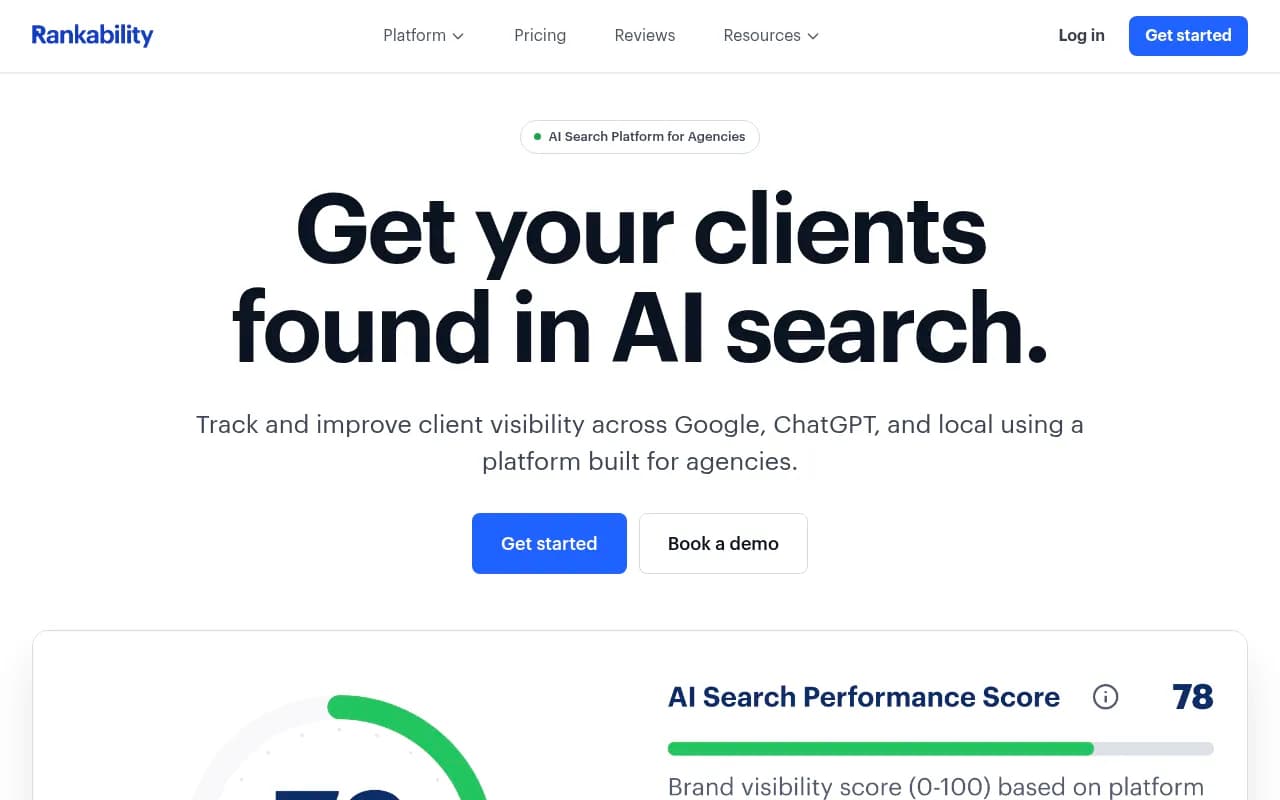
Rankability started as a content optimization tool for SEO agencies and has added AI search visibility tracking on top. That mix is its appeal. You get a content editor, NLP scoring, and tracking across ChatGPT, Perplexity, Gemini, Claude, Copilot, Grok, and Google AI surfaces in one place.
The reasons teams move on tend to be practical:
- They only need AI tracking and don't want to pay for a content editor they won't use.
- They want deeper diagnostics: crawler logs, citation sources, or traffic attribution.
- They already live inside Semrush, Ahrefs, or SE Ranking and would rather add a module.
- They need enterprise features like SSO, audit logs, or location-level tracking.
- They want the tool to act on the data, not just display it.
Before picking, it helps to know what you are actually replacing.
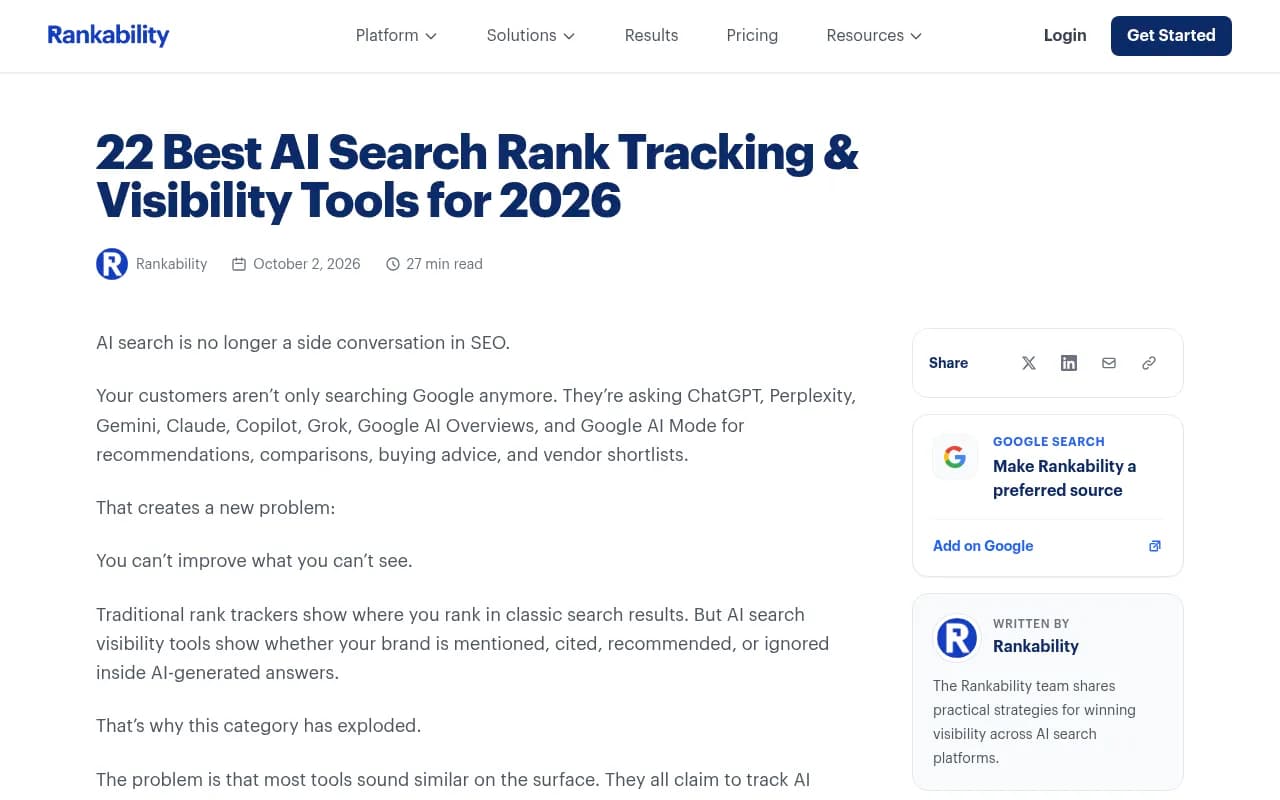
To be fair, that roundup is published by Rankability, which ranks itself first for agencies. Read vendor-written comparisons (including the ones from competitors like AIclicks and LLM Pulse) as a source of candidate names, not as verdicts.
What to look for in an AI visibility tool
Per-engine reporting
Engines behave very differently. According to Promptwatch's sources-per-response data, ChatGPT cites about 5 sources per web-search answer, while Google AI Overviews and Perplexity sit near 10. Microsoft Copilot's average swung from under 2 to nearly 17 within a few weeks. A tool that blends all of that into one number will mislead you. Rankability's own research agrees: platforms overlapped on at most 24.1% of cited pages.
Real interface data
User-facing answers and citations can differ from raw API output. Tools that monitor the actual ChatGPT or AI Overviews interface give you numbers closer to what customers see. Ask every vendor how they collect responses.
Query fan-out visibility
A single prompt can trigger several background searches. Promptwatch's ChatGPT query fanout report shows averages of roughly 1 to 2 fanouts per response in early 2026, with query length falling from about 117 characters in December 2025 to about 53 by April. Short, keyword-like queries are what you are optimizing against, so tools that expose them are more useful than ones that only show the final answer.
Stability of the sources you rely on
Social seeding can stop working overnight. Promptwatch's data shows reddit.com's share of ChatGPT citations collapsing from about 4% to 0.5% on August 14, 2026 (report). For Sep 28 to Oct 4, 2026, social platforms made up 0.46% of ChatGPT citations versus 12.2% in Google AI Overviews. Pick a tool that shows citation sources per engine so you notice shifts like this.
Actionability
Dashboards are easy. What you do on Monday morning is hard. Check whether the tool gives you a prioritized to-do list, content gap analysis, or content generation grounded in the tracking data.
Comparison table
Pricing below is directional and changes often. Confirm on each vendor's site.
| Tool | Type | Best for | Notes |
|---|---|---|---|
| Promptwatch | AI visibility and optimization platform | Teams that want to fix visibility, not just watch it | Crawler logs, traffic attribution, content agent |
| Peec AI | AI-first tracker | Specialist analytics, daily tracking | Visibility, sentiment, share of voice |
| Otterly.AI | Budget tracker | Small teams starting out | Affordable monitoring |
| LLMrefs | Keyword-based tracker | Agencies with existing keyword lists | Roughly $79/mo per Rankability-adjacent roundups |
| Ahrefs Brand Radar | SEO suite add-on | Teams already on Ahrefs | Backlink data plus AI tracking |
| SE Ranking | SEO suite add-on | Agencies on SE Ranking | AI search add-on, about $71/mo annual in one roundup |
| Semrush AI Visibility Toolkit | SEO suite add-on | Semrush-based teams | AI tracking inside a familiar suite |
| AthenaHQ | GEO platform | Mid-market brands | Monitoring-focused |
| Profound | Enterprise platform | Large brands with budget | Higher price points |
| ZipTie | Focused tracker | AI Overviews-heavy tracking | Narrower scope |
The best alternatives, by situation
Best if you want to act on the data: Promptwatch
Promptwatch is the option I would look at first if your frustration with Rankability is that tracking alone doesn't change anything. Most trackers answer "was I mentioned?" Promptwatch tries to answer why you weren't, then helps fix it.

What that looks like in practice:
- IP-verified AI crawler logs show which bots (GPTBot, ClaudeBot, PerplexityBot and others) hit which pages, and which errors they hit. Most competitors don't have this at all.
- Visitor analytics connect AI citations to actual traffic and conversions.
- Prompt volumes, difficulty scores, and query fan-outs help you choose which prompts matter.
- The Action Board generates a prioritized GEO to-do list, and the Content Agent can write and publish to WordPress, Webflow, or Framer, then track whether each page gets crawled and cited.
- It tracks the real interfaces of ChatGPT, Google AI Overviews, AI Mode, Gemini, Perplexity, and Copilot, plus Reddit, YouTube, and LinkedIn citations.
Pricing runs from a free Explore tier, then Essential at $95/mo, Professional at $245/mo, and Business at $579/mo. Agency plans start at $199/mo with unlimited projects. Verify at promptwatch.com/pricing. Agencies that replace Rankability's client reporting will care about the white-label reports and client portal.
It isn't a content editor in the Surfer or Clearscope sense, so if your writers rely on a live scoring sidebar, pair it with one of the editors below.
Best specialist trackers: Peec AI, Otterly.AI, AthenaHQ
Peec AI tracks daily brand visibility, sentiment, and share of voice, and it is a clean, focused product.

Otterly.AI is the common budget pick for teams that just want to see their numbers.

AthenaHQ sits at the mid-market end of the GEO category.

These three are good at measurement. They generally stop there: no crawler logs, no content generation tied to the data. If measurement is all you need, that's a feature, not a flaw.
Best cheap starters: LLMrefs and Airefs
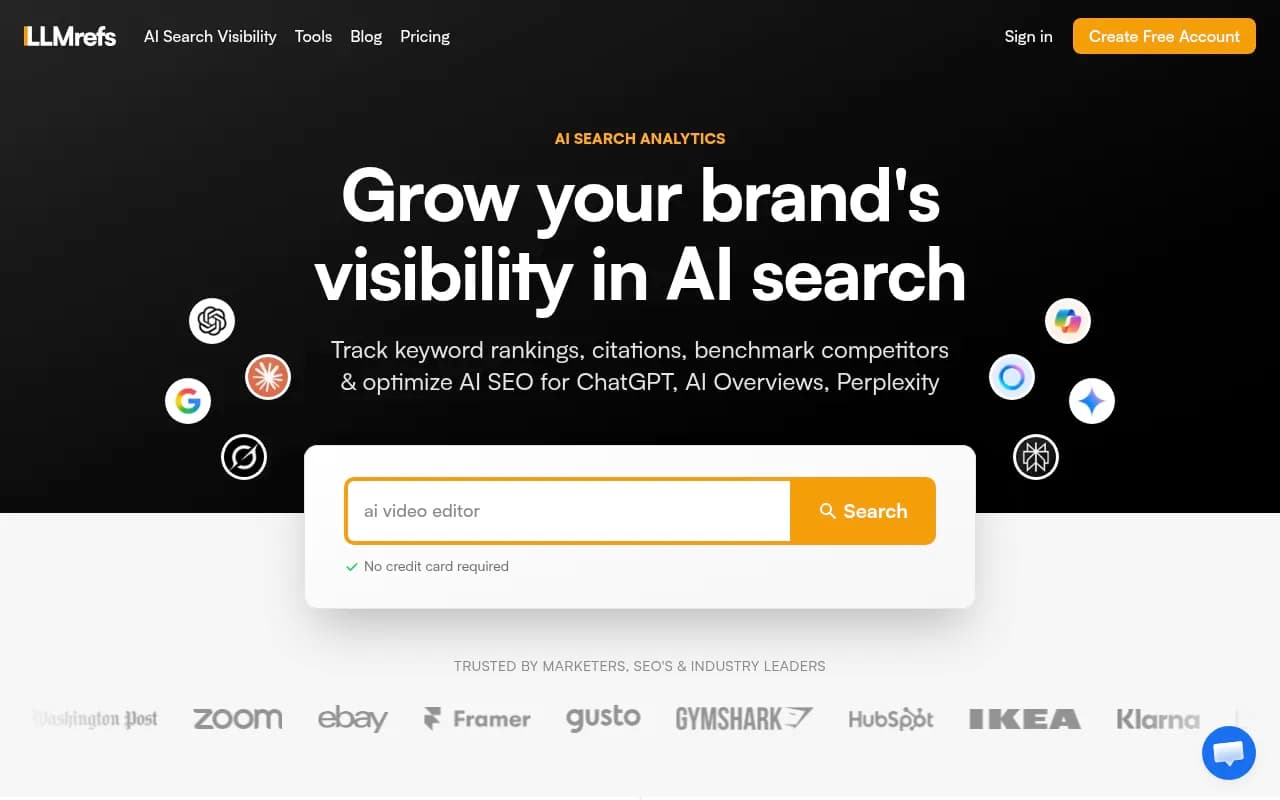
LLMrefs builds its tracking on keyword lists rather than free-form prompts, which suits agencies who already have keyword research to reuse.
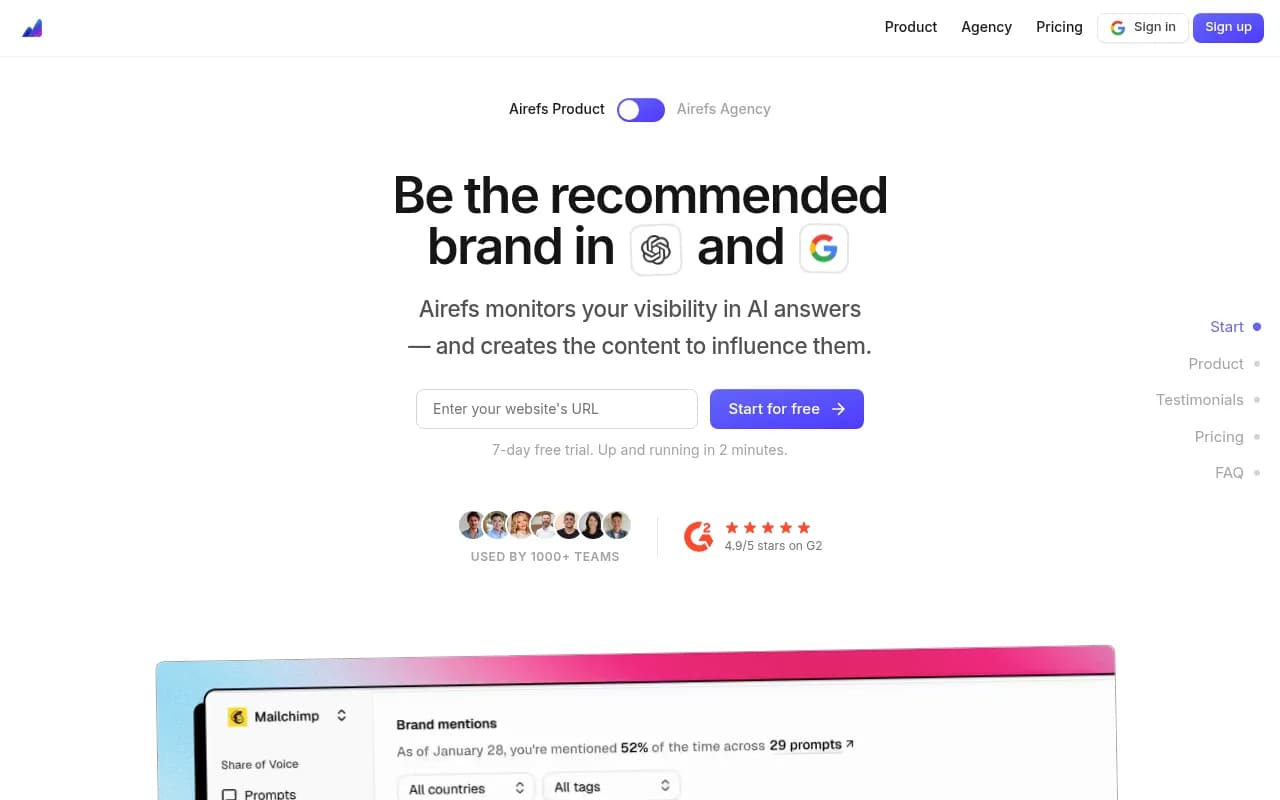
Airefs is another low-cost tracker.
Best if you live in an SEO suite: Ahrefs, Semrush, SE Ranking
If your team already pays for a suite, adding AI tracking there is the path of least resistance. Ahrefs Brand Radar leans on Ahrefs' index and prompt data.

Semrush's AI Visibility Toolkit keeps rank tracking and AI tracking together.
SE Ranking Visible is the AI visibility product from SE Ranking, aimed at agencies already using the platform.
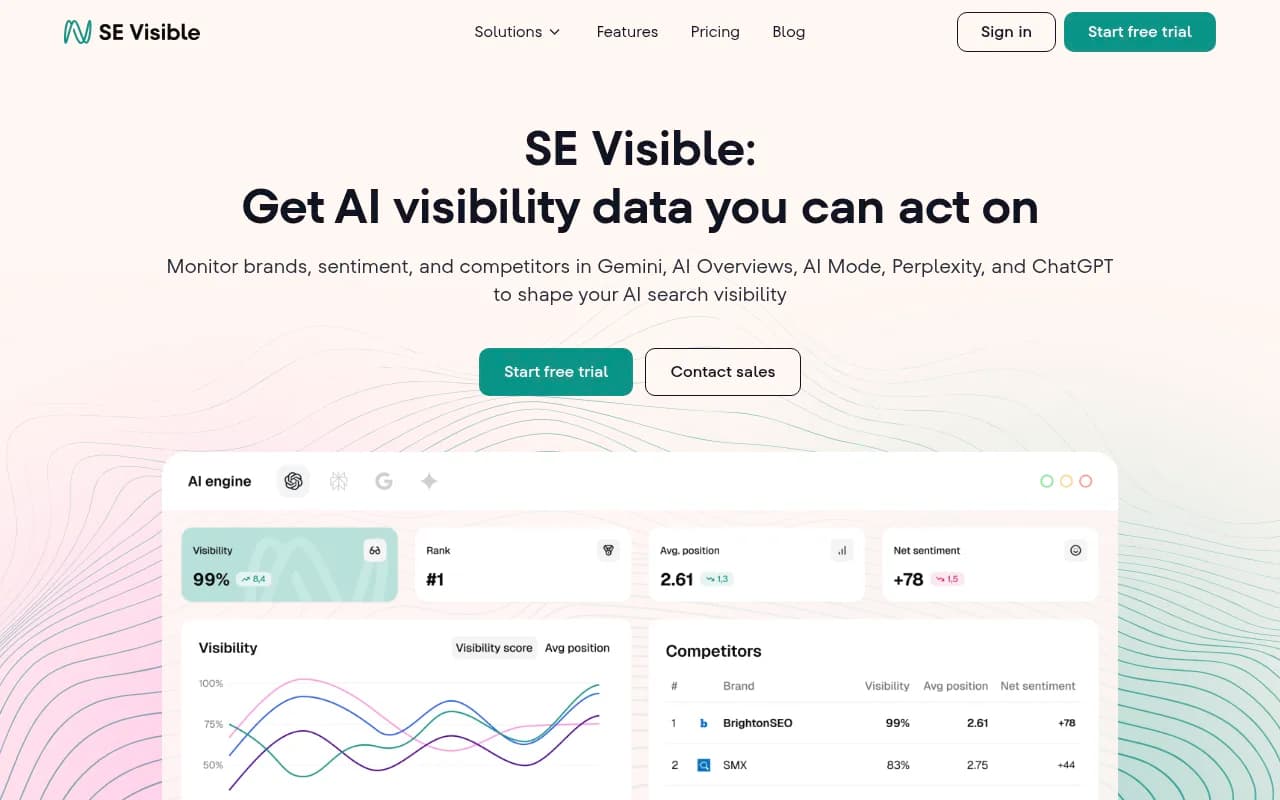
The trade-off: suites tend to use fixed prompt sets and shallower AI-specific data. They are good for continuity, less good for diagnosing why a page isn't being cited.
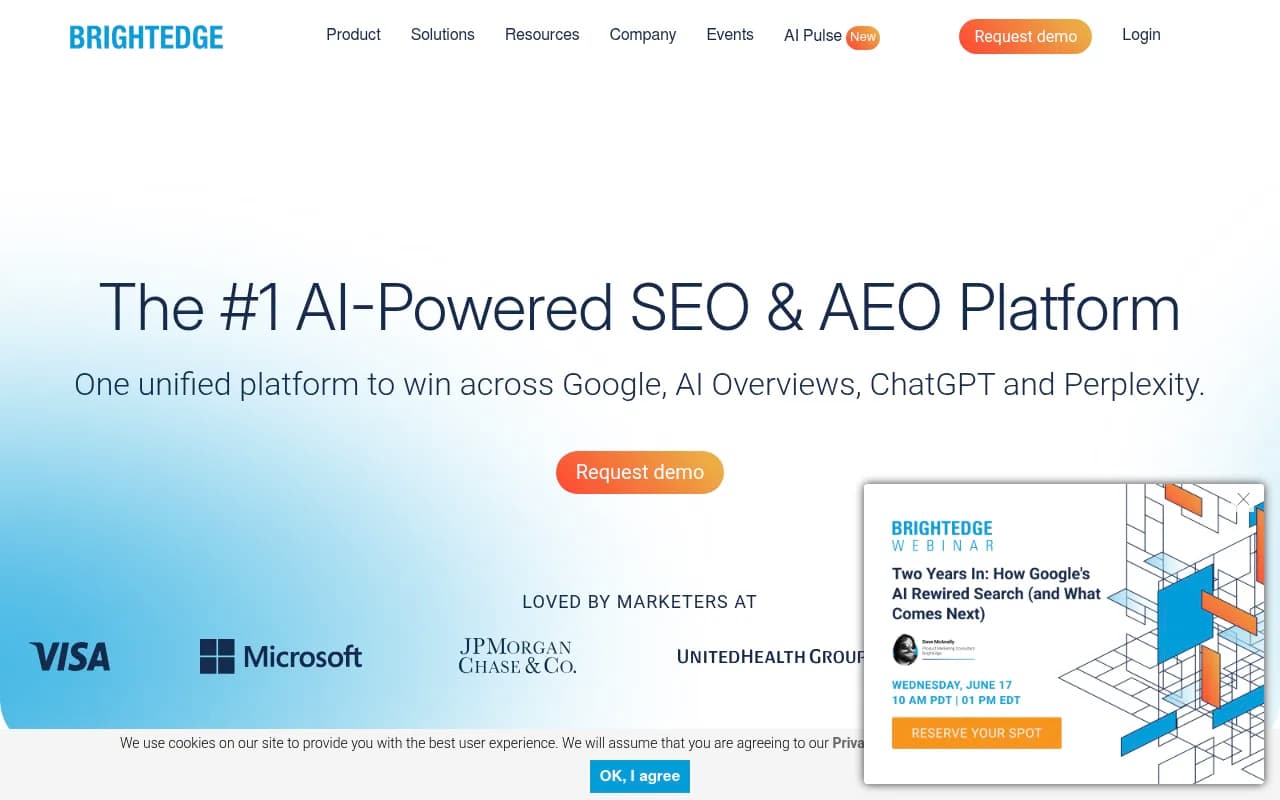
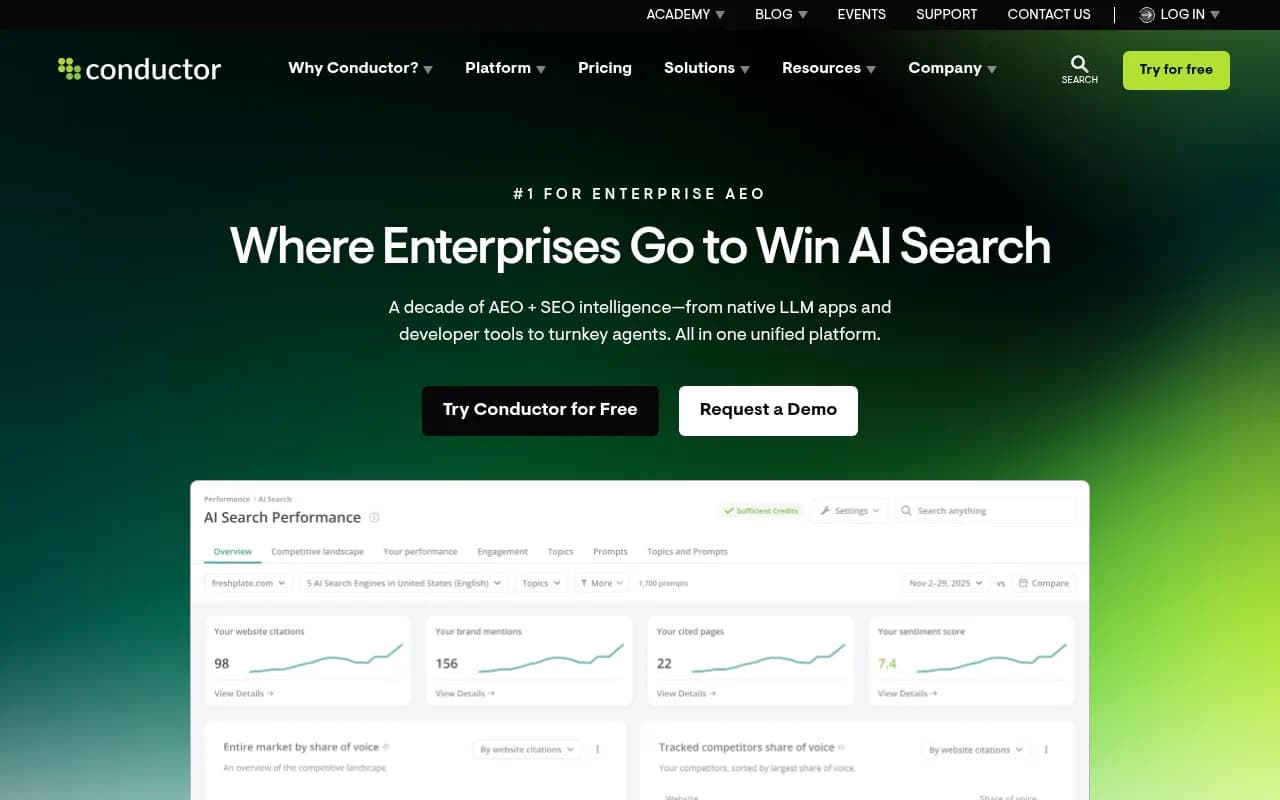
Best enterprise: Profound, Scrunch, Brandlight, BrightEdge
Larger brands with security and procurement requirements usually shortlist Profound, Scrunch, or Brandlight. They are strong at monitoring and come with enterprise price tags.



BrightEdge and Conductor are worth a look if your SEO program already runs on an enterprise platform.
Best AI-first alternatives you may not have heard of
A few from our catalog are worth testing on a free trial:
- Trakkr traces AI visitors to revenue.
- Superlines tracks from real AI interfaces rather than APIs.
- Gumshoe AI uses persona-based tracking.
- Aiso exposes prompt and fan-out tracking.
- LLM Pulse covers visibility and reputation.
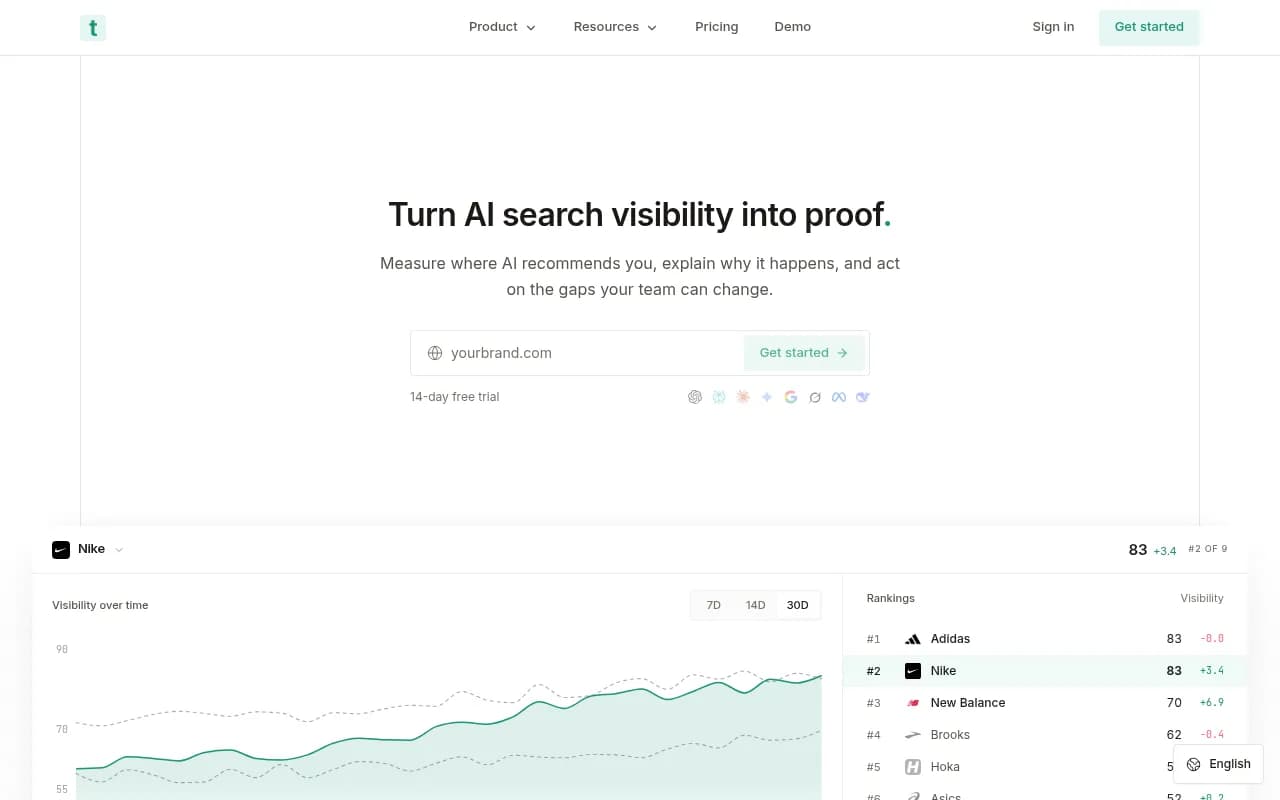
Superlines


If you miss the content editor
The main thing you give up by leaving Rankability is the integrated writing workflow. Standalone editors fill that gap: Surfer SEO, Clearscope, Frase, and MarketMuse are the usual names.
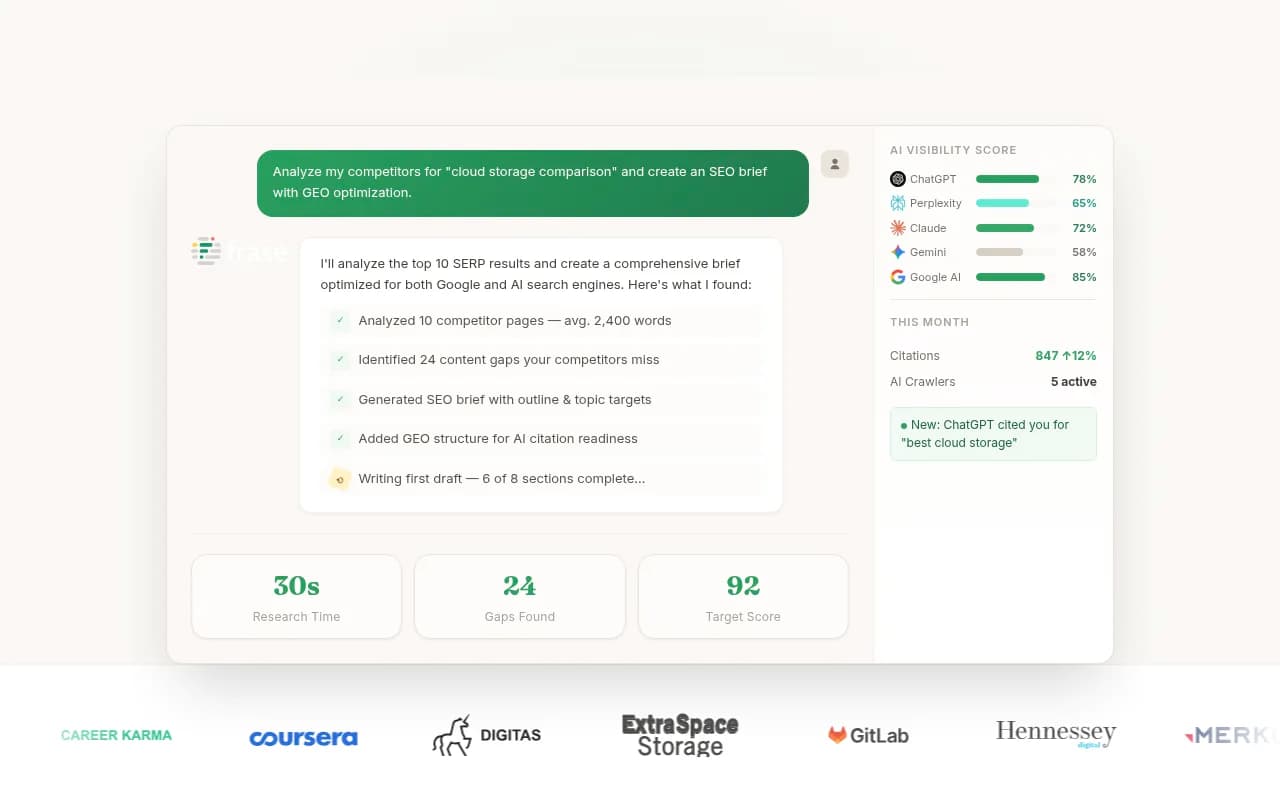
Pairing an editor with a dedicated visibility platform often beats one tool doing both jobs at medium quality. For more options, browse the GEO software directory at bestgeosoftware.com.
How to choose
Run through these questions in order:
- Do you need to write content in the same tool? If yes, stay with Rankability or pair an editor with a tracker.
- Do you need to explain why you're not cited? You need crawler logs and citation-source data. That narrows the list quickly.
- Do you need traffic and revenue attribution? Look for visitor analytics, not just mention counts.
- How many clients or projects? Agencies should compare per-project economics, seats, and white-label reports, not headline price.
- Which engines matter? Confirm coverage of the exact interfaces your buyers use.
How to run a fair trial
Pick 30 to 50 prompts that reflect real buyer questions. Include short, keyword-like versions, since fan-out queries are short. Run the same set in two or three tools for a week. Compare, per engine, how often each tool says you appear, then spot-check a handful of answers by hand in the real ChatGPT or AI Overviews interface. Whichever tool matches reality most closely, and then tells you something you can act on, wins.
Also check how each tool handles instability. Copilot's source counts swung wildly in Promptwatch's data, so judge it on monthly trends, not weekly snapshots. Perplexity's count barely moves, which makes it a stable benchmark.
Agencies: a note on outsourcing
If you'd rather not run any of this in-house, a specialist agency can handle tool selection, tracking, and the content and technical work behind it. 1001 SEO Media is an SEO and GEO agency that uses Promptwatch for its own AI visibility work, and the team can run audits without long-term contracts.
A caveat on the research
Much of the comparison content around this topic is published by vendors who sell the tools being ranked, Rankability included. Rankability's AI SEO study is useful, and it openly states that its findings show correlation, not causation, but you should treat it as one input. For how AI engines actually behave, lean on first-party datasets such as the Promptwatch Data hub, and verify any pricing on the vendor's own page.
Bottom line
Pick based on the gap you're trying to close. For measurement only, Peec AI, Otterly.AI, or LLMrefs are sensible and cheap. For suite continuity, add the module from Ahrefs, Semrush, or SE Ranking. For enterprise procurement, shortlist Profound or Scrunch. And if you want crawler-level diagnosis, traffic attribution, and a platform that helps you publish the fix, start with a free Promptwatch trial and compare it against your current Rankability numbers on the same prompt set.