Key takeaways
- "Real time" in this category almost always means a scheduled daily monitor, not a live streaming feed. No tool refreshes every time someone types a prompt into ChatGPT.
- Claude coverage is the biggest gap across the category. Peec AI and Otterly.ai both exclude it from their default plans and charge extra for it; Ahrefs Brand Radar and Semrush's AI Toolkit don't document it at all.
- Pricing headlines are misleading. A $95/mo "Starter" plan can turn into $400+/mo once you add the engines and prompt volume you actually need.
- Promptwatch is the only tool in this test that tracks all three engines, plus eight more, on every plan including the entry tier.
- Tools built on browser/UI scraping tend to match what your customers actually see; tools built on raw APIs are more stable but can miss what consumer-facing chat interfaces layer on top.
Why this is harder than it sounds
A client asks you: "are we showing up when people ask ChatGPT about our category?" Reasonable question. Then you try to answer it and discover that ChatGPT, Claude, and Gemini don't behave the same way, don't cite sources the same way, and definitely don't get monitored the same way by the tools that claim to track them.
Gemini is the weird one. Promptwatch's own tracking guide points out that the standalone Gemini app tends to synthesize answers with few or no visible source links, which is just how Gemini behaves, not a gap in whatever tool you're using. So if a vendor promises rich "citation tracking" for Gemini specifically, be a little skeptical. For Gemini, mention and sentiment tracking tells you more than citation counts ever will.
Claude, meanwhile, is growing fast as a crawler but still small as a citation source. Promptwatch's data on Claude's citation crawler shows it went from around 30 visits a day in mid-December 2025 to several thousand a day by mid-April 2026, more than a 100x jump in four months (https://promptwatch.com/data/claude-citation-crawler-visits-over-time). That's a real trend worth watching, but Claude still made up under 1% of total tracked AI citation crawler traffic in that window. Treat it as a fast-growing secondary channel, not the main event.
And ChatGPT keeps shifting what it cites. In July 2026, product pages made up roughly a third of ChatGPT's daily citations, up from about 18% in March, nearly doubling in four months (https://promptwatch.com/data/chatgpt-citation-types-over-time-july-2026). If your monitoring tool isn't tracking citation type over time, you're missing that kind of shift entirely.
What "real time" actually means
Here's the thing nobody advertises clearly: none of these tools watch a live feed of every ChatGPT conversation happening right now. That's not how any of them work, and it's not how any of them could work, since consumer chat sessions aren't public.
What you're actually buying is a monitor: a fixed panel of prompts, run on a repeating schedule (usually daily), across a chosen set of models, scoped to a country and language. Some tools let you go down to state or city level. That's a meaningful distinction to make before you sign a contract, because "real-time monitoring" sounds like a dashboard that updates the second your brand gets mentioned, and it isn't that.
The 8 tools, tested
I ran the same basic checks on each: does it track ChatGPT, Claude, and Gemini out of the box, what does that actually cost once you need more than the teaser prompt count, and is the data coming from an API or from scraping the actual consumer interface.
Promptwatch
Promptwatch tracks 11 AI platforms on every plan, including the entry-level Essential tier: ChatGPT, Perplexity, Google AI Overviews, Google AI Mode, Claude, Gemini, Meta Llama, DeepSeek, Grok, and even coding assistants like Claude Code and OpenCode. Within a project you can actively track four models at once, which is a per-project choice rather than something locked behind a higher plan.
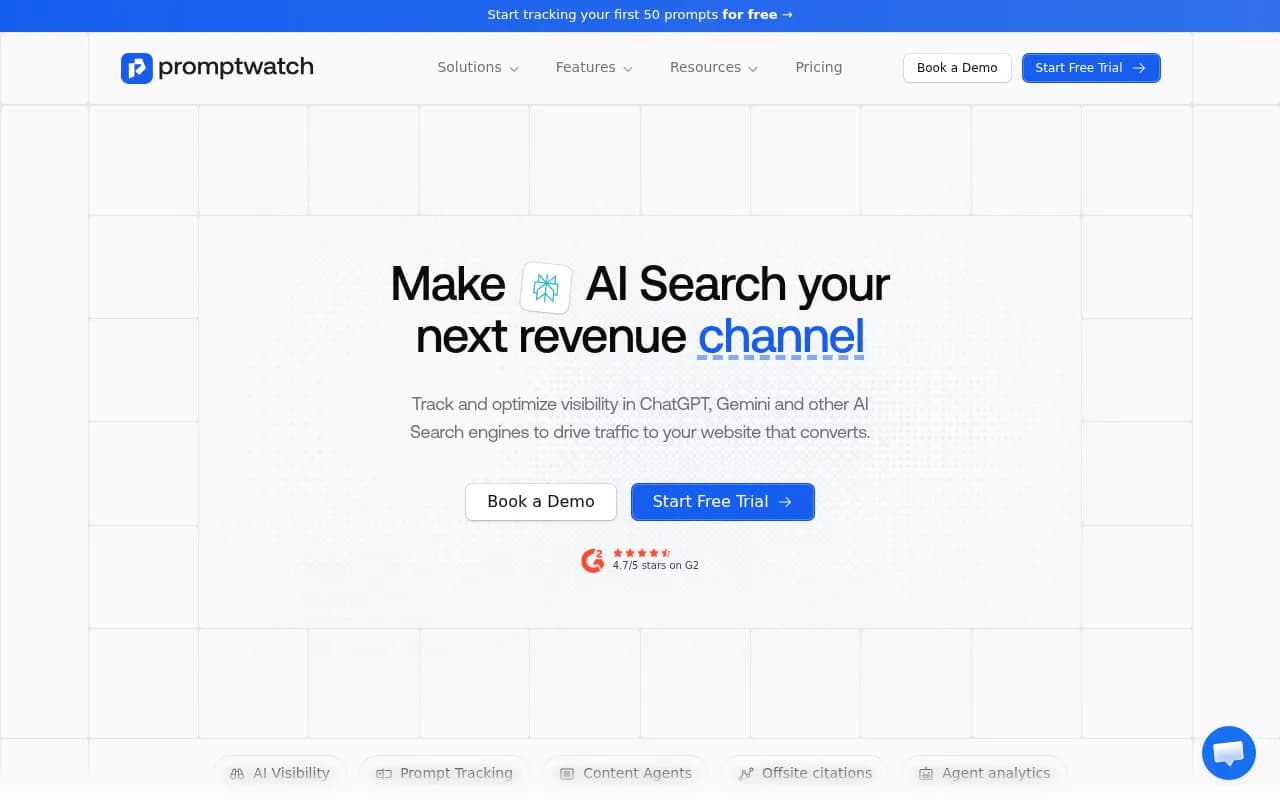
What sets it apart from a straight tracker is that it doesn't stop at "here's your score." It runs on real UI monitoring rather than pure API calls, so the citations and mentions you see reflect what an actual user typing into ChatGPT or Gemini would see, not a sanitized API response. Then it layers on crawler logs (which bots actually hit your site and what they read), content gap analysis, and automated content agents that draft and publish AEO-optimized pages to your CMS. Essential starts at $95/mo for 50 prompts and 6,000 responses; Professional at $245/mo adds state/city tracking and automated content generation. If you're comparing tools in this space, promptwatch.com/best-geo-and-ai-visibility-platforms-compared-2026 has a fuller breakdown against 20 other platforms.
Profound
Profound's Starter plan is $99/mo but it's ChatGPT-only: 50 prompts, 1,500 responses a month, no exports. Claude and Gemini coverage only shows up once you hit the Enterprise tier, which isn't publicly priced but typically runs $2,000 to $5,000+/mo based on third-party estimates. That's a steep jump for what the homepage implies is included from day one.
Peec AI
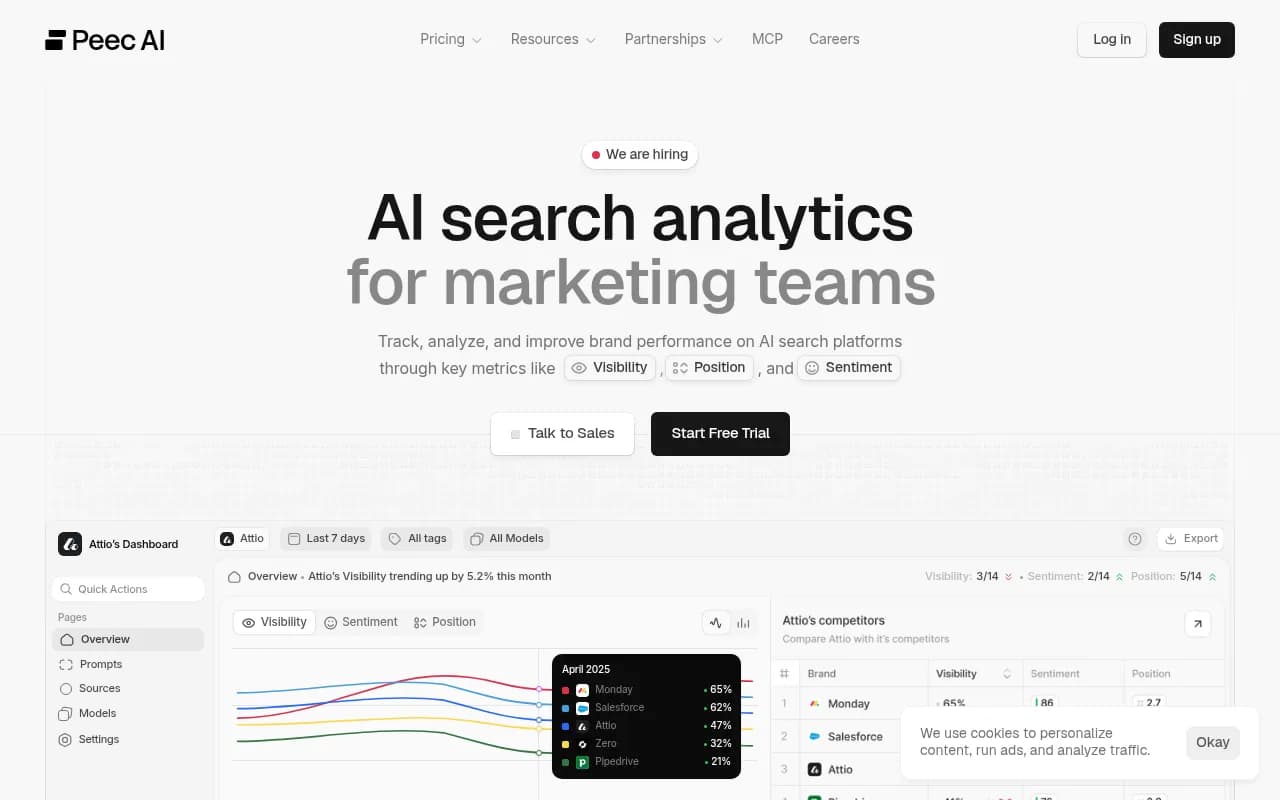
Peec's Starter plan is $95/mo for 50 prompts across a choice of 3 engines out of 7 available (ChatGPT, AI Overviews, AI Mode, Copilot, Perplexity, Gemini). Notice Claude isn't in that default list at all. Adding it costs $35/mo on Starter, $85/mo on Pro, or $165/mo on Advanced, or you get it bundled into the custom Enterprise tier. If Claude matters to you, budget for that add-on before you compare headline prices.
Otterly.ai
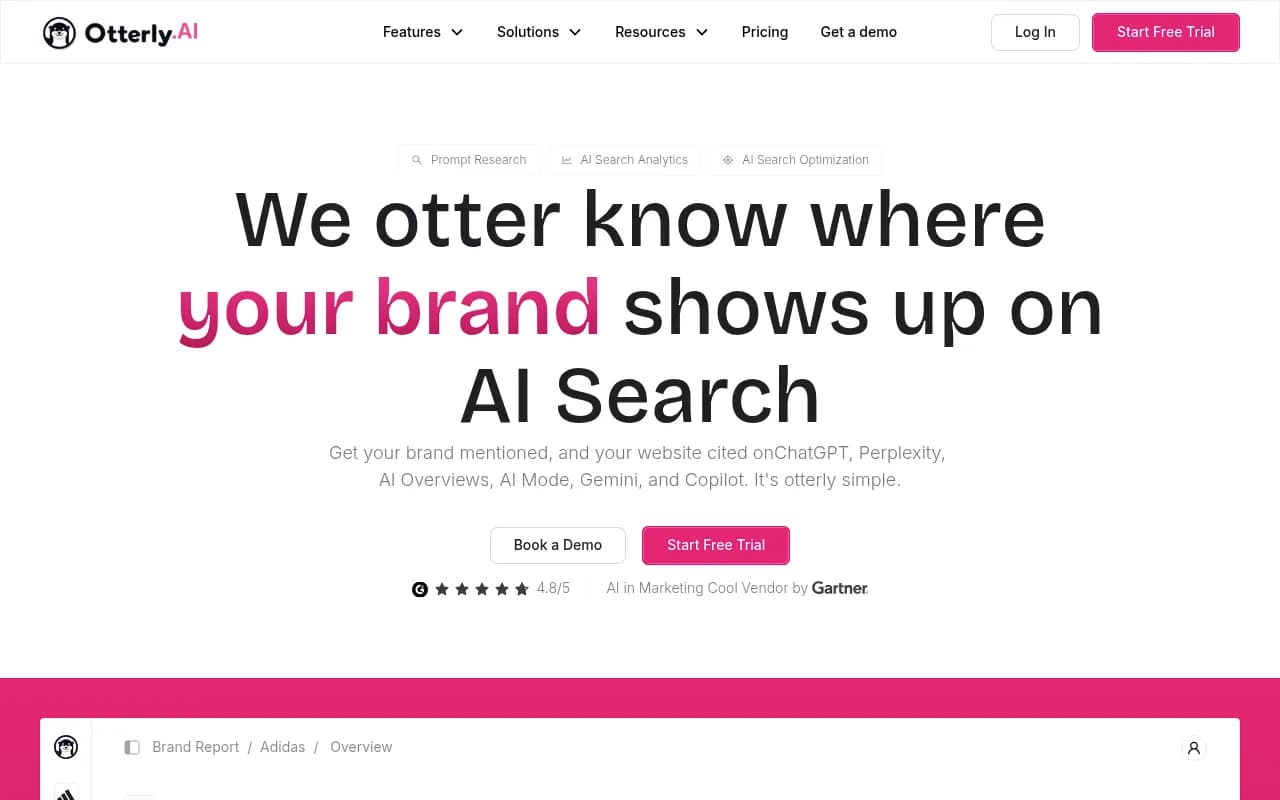
The cheapest entry point in this test at $25-29/mo (Lite), but that plan covers only ChatGPT, AI Overviews, Perplexity, and Copilot by default. Claude, Gemini, and AI Mode are all paid add-ons: Gemini and AI Mode together run $9 to $149/mo depending on tier, and Claude runs $29 to $439/mo. Stack a Premium plan with every add-on and you're near $1,159/mo, according to a review from Dageno AI. The headline price and the real price are very different numbers here.
AthenaHQ
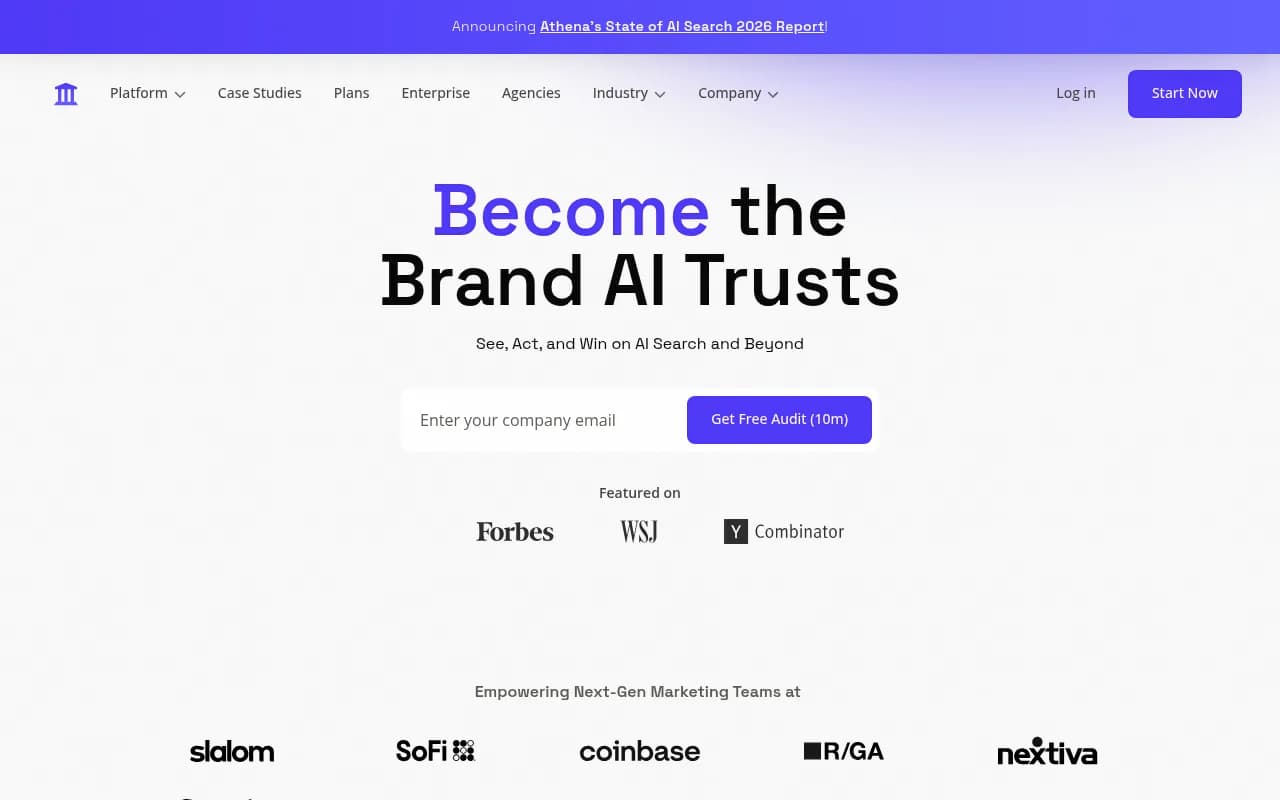
AthenaHQ uses a shared credit pool instead of per-seat pricing, which is refreshing. Starter is $295/mo for 3,600 credits (1 credit = 1 AI response analyzed) covering nine models. There's also a free "Essential" tier with 300 monthly credits, useful for a quick sanity check before you commit to a paid plan.
Ahrefs Brand Radar
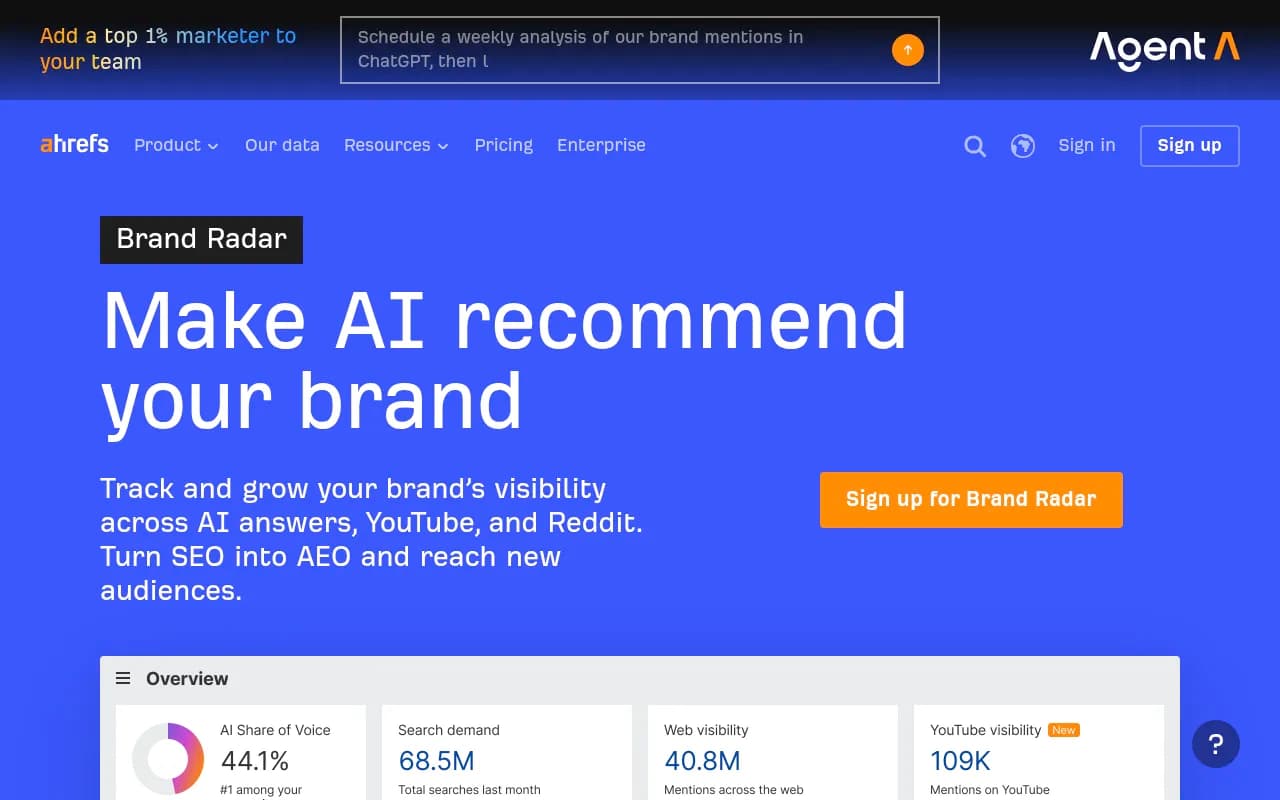
Ahrefs bolts AI visibility onto its existing SEO subscription: $199/mo per platform index or $699/mo for the full bundle, on top of a $129-449/mo base Ahrefs plan. All-in that can land anywhere from $328 to over $1,100/mo. And Claude isn't documented as covered at all, which is a real gap if Claude matters to your buyers.
Semrush AI Toolkit
Semrush dropped its free AI-visibility tier entirely after the Adobe acquisition closed in August 2026, and entry pricing now sits around $165/mo. Sources disagree on exactly which engines it covers; one lists ChatGPT, Gemini, AI Overviews, AI Mode, Perplexity, Claude, Copilot, Grok, and DeepSeek, while Peec AI's own comparison page claims Semrush only covers ChatGPT and Google AI Mode. That inconsistency alone is a reason to get a live demo before buying rather than trusting a features page.
Scrunch AI
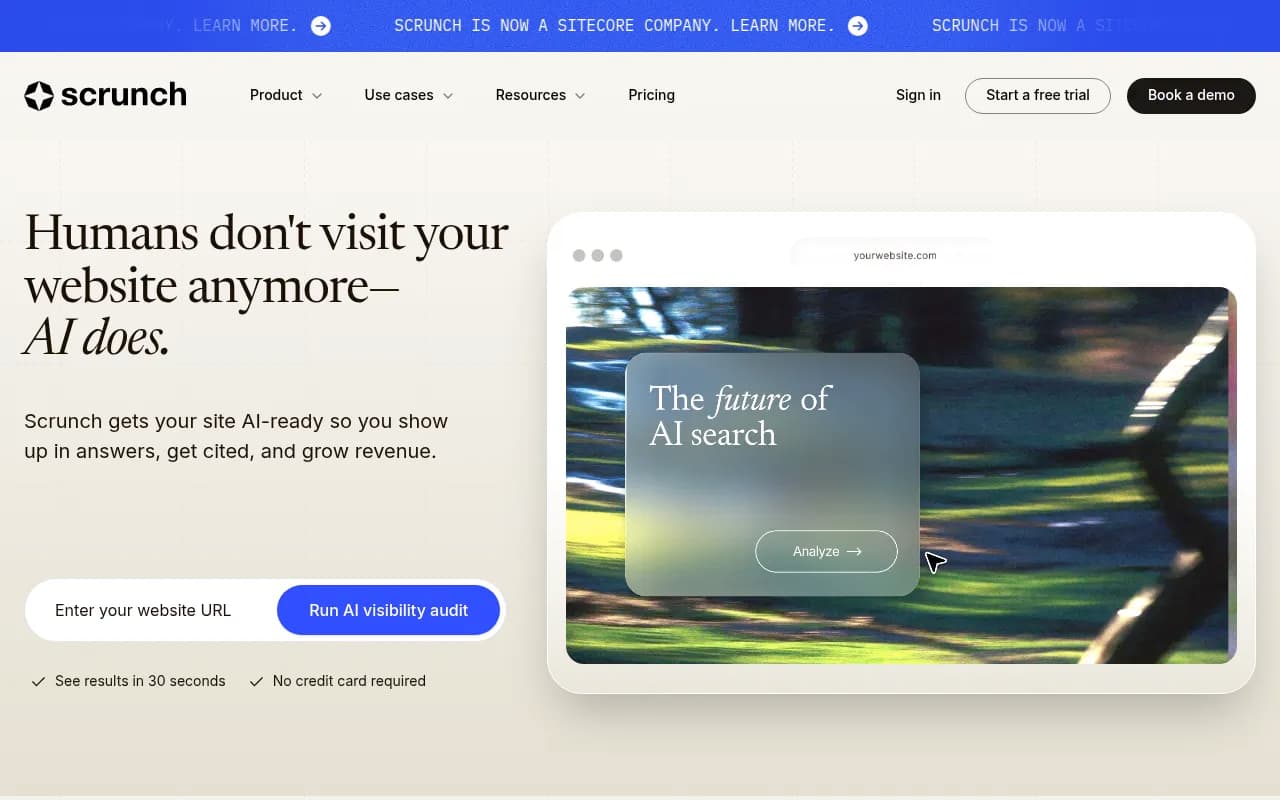
Scrunch's Explorer plan starts at $100/mo but is ChatGPT-only at that tier, per Profound's own comparison of competitors. Gemini, Claude, and the rest show up further up the pricing ladder. Same pattern as most of the field: the entry price gets you one engine, and the multi-engine promise costs more.
Comparison table
| Tool | Claude included by default | Gemini included by default | Entry price | Data source |
|---|---|---|---|---|
| Promptwatch | Yes, all plans | Yes, all plans | $95/mo | Real UI monitoring |
| Profound | No (Enterprise only) | No (Enterprise only) | $99/mo | Consumer front-end scraping |
| Peec AI | No, paid add-on | Yes (one of 3 you pick) | $95/mo | UI-based |
| Otterly.ai | No, paid add-on | No, paid add-on | $25/mo | Mixed |
| AthenaHQ | Yes, credit-based | Yes, credit-based | $295/mo (free tier available) | Not fully disclosed |
| Ahrefs Brand Radar | Not documented | Yes | $199/mo | Custom prompt tracking |
| Semrush AI Toolkit | Disputed | Yes | ~$165/mo | Not fully disclosed |
| Scrunch AI | No (higher tier) | No (higher tier) | $100/mo | Not fully disclosed |
API vs. scraping the actual interface
This is the part most buying guides skip, and it matters more than the pricing table. Two fundamentally different measurement approaches exist, and they produce different numbers for the same brand.
Documented APIs are stable and version-controlled, but they don't reproduce what a logged-in consumer actually sees, because consumer chat products layer system prompts, UI controls, and tuning on top of the raw model. Browser scraping gets closer to the real experience but breaks silently when a vendor changes its interface or adds bot detection.
The response-length differences alone show why this matters for scoring: one methodology cited by Achtung.app found Gemini averaging 3,363 characters per response, ChatGPT 2,458, Perplexity 1,814, and Claude 1,462. If your tool's scoring formula treats a short Claude answer the same as a long Gemini one without adjusting for that, your "visibility score" is comparing apples to essays.
There's also a real disagreement in the industry about which approach is more honest. One vendor (Traqer) argues API responses are materially different from what users actually see, and a brand that appears prominently in an API call may not show up at all in the live web interface. That's a fair point, and it's part of why Promptwatch built its tracking on real UI monitoring, straight from the interfaces of ChatGPT, Gemini, Perplexity, and Claude, rather than API sampling alone, drawing on more than 26 billion analyzed citations, prompts, and responses.
Mention vs. citation vs. visibility score
Three terms get used loosely and mean different things.
A mention is any appearance of your brand, regardless of tone, and repeated appearances within one answer still count as a single mention. A citation is an explicit sourced reference, usually with a link, and citation rank matters, since a source listed first gets clicked far more than one listed fifth. A visibility score is a formula, typically something like position plus context minus competitors, where an unmentioned response counts as zero.
If two tools report wildly different visibility scores for your brand, a 5-15% gap is common and usually comes down to methodology differences rather than a bug in one of them. Ask any vendor you're evaluating to show you the exact formula behind their score. If they can't, that's a signal.
Practical pitfalls worth knowing before you buy
Single-prompt tracking has too much natural variability to trust on its own. Ask ten variations of "best project management software" and you'll get inconsistent answers even from the same model on the same day; a tool needs to aggregate multiple prompt variations around a topic to smooth that out.
Blended scores across five models can also hide the real story. A tool that's strong on Perplexity and weak on ChatGPT, and a tool that's the reverse, might report identical blended visibility scores despite needing opposite content strategies to fix. Look at per-engine breakdowns, not just the headline number.
Geography changes everything too. The same prompt surfaces different brands in the US versus Germany, so a single blended national score can mask a market you're winning or losing entirely.
And content freshness has a real half-life here: content cited in AI answers tends to hold relevance for roughly 8 to 14 weeks before a refresh actually moves the needle, since models re-crawl and re-index on their own schedule rather than yours.
Which tool should you actually pick
If you need Claude, Gemini, and ChatGPT covered without hunting for add-on line items, Promptwatch and AthenaHQ are the two in this test that include all three by default at entry pricing. Promptwatch is the cheaper of the two ($95 vs $295/mo to start) and adds crawler logs, content gap analysis, and CMS publishing that the others treat as separate products or don't offer at all.
If you're already deep in the Ahrefs or Semrush ecosystem and only need directional signal on ChatGPT and Gemini, their AI add-ons are a reasonable bolt-on, just budget for the fact that Claude coverage is thin to nonexistent.
If budget is the only constraint and you can live with ChatGPT-only for now, Otterly's $25/mo Lite plan is genuinely the cheapest way to start, as long as you go in knowing the other engines cost extra later.
For a wider shortlist beyond these eight, the GEO software directory at bestgeosoftware.com and the AI rank tracking tools at ai-rank-tools.com are worth browsing before you commit to a 12-month contract.
A quick note on execution
Monitoring tells you where you stand. It doesn't fix anything on its own. If your visibility score is low on Claude or Gemini, someone still has to write the content, get it crawled, and check that it worked. That's the gap that trips up most teams: they buy a dashboard, watch the number for a few months, and never close the loop back into actual content changes.
This is also where a lot of teams bring in outside help. If you'd rather have an agency build and run the whole GEO program (auditing what's visible now, producing the content, tracking whether it worked) 1001 SEO Media runs technical SEO, content, and AI search visibility work end to end, using Promptwatch as the underlying platform for the monitoring and execution described above.