Key takeaways
- Semrush's AI Visibility Toolkit is a solid add-on for teams already using Semrush for SEO, but it was built as a feature, not a product.
- Dedicated GEO platforms track more AI models, offer deeper prompt intelligence, and -- critically -- help you act on what you find, not just observe it.
- Semrush uses fixed prompts and lacks AI traffic attribution, crawler logs, and content generation tied to real prompt data.
- For small teams doing basic AI monitoring alongside SEO, Semrush is probably fine. For anyone serious about growing AI visibility, the gaps add up fast.
- The honest question isn't "is Semrush good?" -- it's "what are you trying to accomplish?"
The context: why this comparison matters now
AI search is no longer a trend to watch. ChatGPT, Perplexity, Google AI Mode, and a dozen other models are actively routing traffic away from traditional search results. Brands that show up in AI-generated answers get clicks. Brands that don't, don't.
Semrush -- the SEO tool used by millions of marketing teams -- responded by launching its AI Visibility Toolkit. On paper, it makes sense: you're already tracking keywords and competitors in Semrush, so why not add AI visibility to the same dashboard?
But "added to an existing platform" and "built for the job" are different things. This guide looks at exactly where those differences show up, and whether they matter for your team.
What Semrush's AI Visibility Toolkit actually does
Semrush's AI Visibility Toolkit sits inside Semrush One, the company's bundled platform tier. It lets you:
- Track how often your brand appears in AI-generated answers across a set of prompts
- Compare your visibility against competitors
- See which topics and questions are driving AI mentions
- Get content suggestions based on gaps
It's integrated with Semrush's broader SEO data, which is genuinely useful. If you're already living in Semrush for keyword research, backlink analysis, and site audits, having AI visibility data in the same interface removes friction.
The toolkit covers major AI platforms including ChatGPT, Perplexity, and Google AI Overviews. The UI is clean and the learning curve is low for existing Semrush users.
So far, so good. The problems start when you look at what it doesn't do.
Where Semrush falls short
Fixed prompts, not real user behavior
This is the biggest structural limitation. Semrush tracks AI visibility using a fixed set of prompts -- queries that Semrush defines, not queries that real users are actually typing into ChatGPT or Perplexity.
Dedicated GEO platforms track actual conversational queries, including the messy, fragmented, long-tail prompts that real users generate. As one SEO practitioner put it on Reddit's r/seogrowth: "AI queries are more conversational and fragmented, while SEMrush is still treating everything like traditional keyword search tracking."
That's a meaningful gap. If your AI visibility score is based on a curated list of clean, keyword-like prompts, you're measuring something different from what's actually happening in the wild.
No AI traffic attribution
Semrush can tell you that your brand appeared in an AI answer. It can't tell you whether that appearance drove any traffic to your site, or which pages benefited. That connection -- from AI citation to actual visit to revenue -- is what makes GEO actionable for a business.
Platforms built specifically for GEO close this loop. You can see which pages are being cited, how often, and whether those citations are translating into sessions.
No crawler logs or agent analytics
When ChatGPT or Perplexity crawls your website, what pages do they read? How often do they return? Are there crawl errors blocking them from indexing your content? Semrush doesn't answer any of these questions.
Dedicated platforms with crawler log analysis let you see exactly how AI agents interact with your site -- which is the first step to fixing indexing problems that are silently hurting your AI visibility.
Content generation isn't grounded in prompt data
Semrush does offer AI-powered content suggestions, but they're not built around the specific prompts and citation patterns that AI models are actually responding to. There's a difference between "content that might rank in traditional search" and "content engineered to answer the exact gaps AI models are exposing." Semrush's content tools are optimized for the former.
Limited prompt intelligence
Semrush doesn't give you volume estimates or difficulty scores for individual prompts in the way dedicated GEO platforms do. You can't easily prioritize which AI queries are worth targeting first, or understand how one prompt branches into related sub-queries.
How dedicated GEO platforms compare
The dedicated GEO space has matured quickly. Here's how a few of the main players stack up against Semrush's toolkit.
Promptwatch
Promptwatch is the most complete end-to-end GEO platform available right now. Where Semrush stops at monitoring, Promptwatch runs a full action loop: find gaps, create content, track results.
The Answer Gap Analysis shows you exactly which prompts competitors are visible for but you aren't -- down to the specific content your site is missing. Content Agents then generate articles and briefs grounded in real prompt data, citation patterns, and competitor analysis. And AI Crawler Logs give you real-time visibility into how AI agents are crawling your site, which pages they're reading, and when pages move from crawl to citation.
It also tracks ChatGPT Shopping appearances, Reddit and YouTube discussions that influence AI recommendations, and offsite citations across third-party domains. For teams that need to actually move their AI visibility numbers, not just observe them, this is the most capable option.
Profound
Profound is a strong enterprise-focused option with solid answer engine insights and agent analytics. It's particularly well-regarded for its depth of data and its focus on the "marketing engineer" use case -- teams that want to get into the weeds of how AI models behave. The pricing reflects the enterprise positioning.
Peec AI
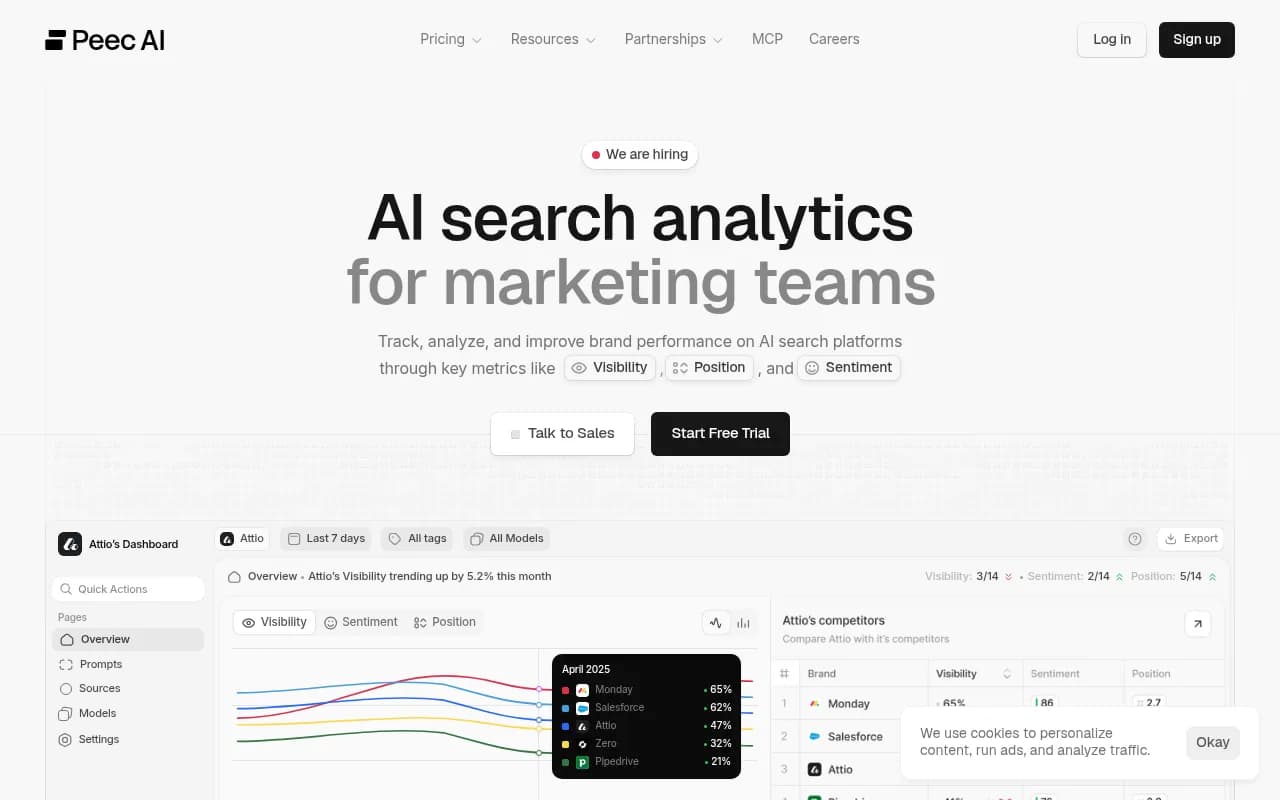
Peec AI is a lighter-weight monitoring tool with smart suggestions. It's more accessible than Profound for smaller teams and covers the core visibility tracking use case well. Like most dedicated GEO tools, it goes deeper on prompt intelligence than Semrush does, but it's more monitoring-focused than action-oriented.
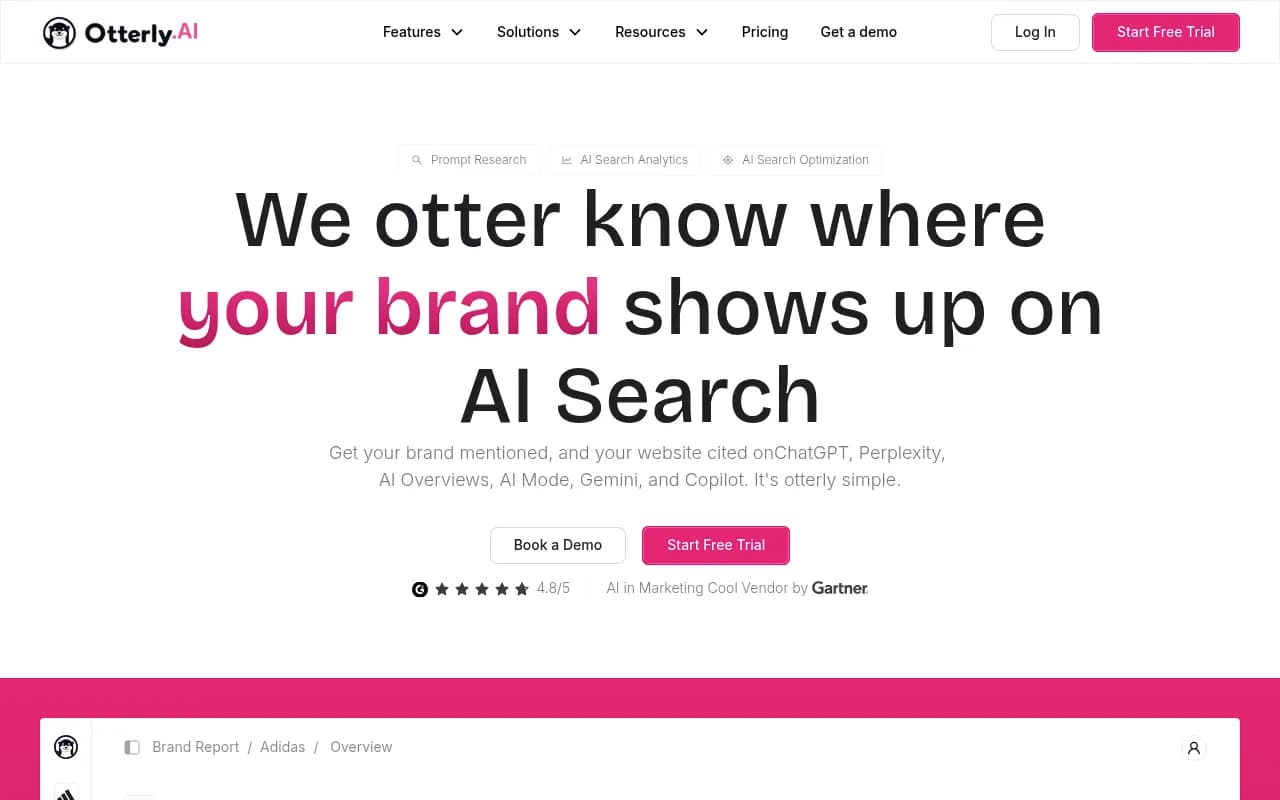
Otterly.AI
Otterly.AI sits at the affordable end of the dedicated GEO market. It's a good entry point for teams that want dedicated AI brand monitoring without a large budget. Feature depth is limited compared to Promptwatch or Profound, but it does the monitoring job reliably.
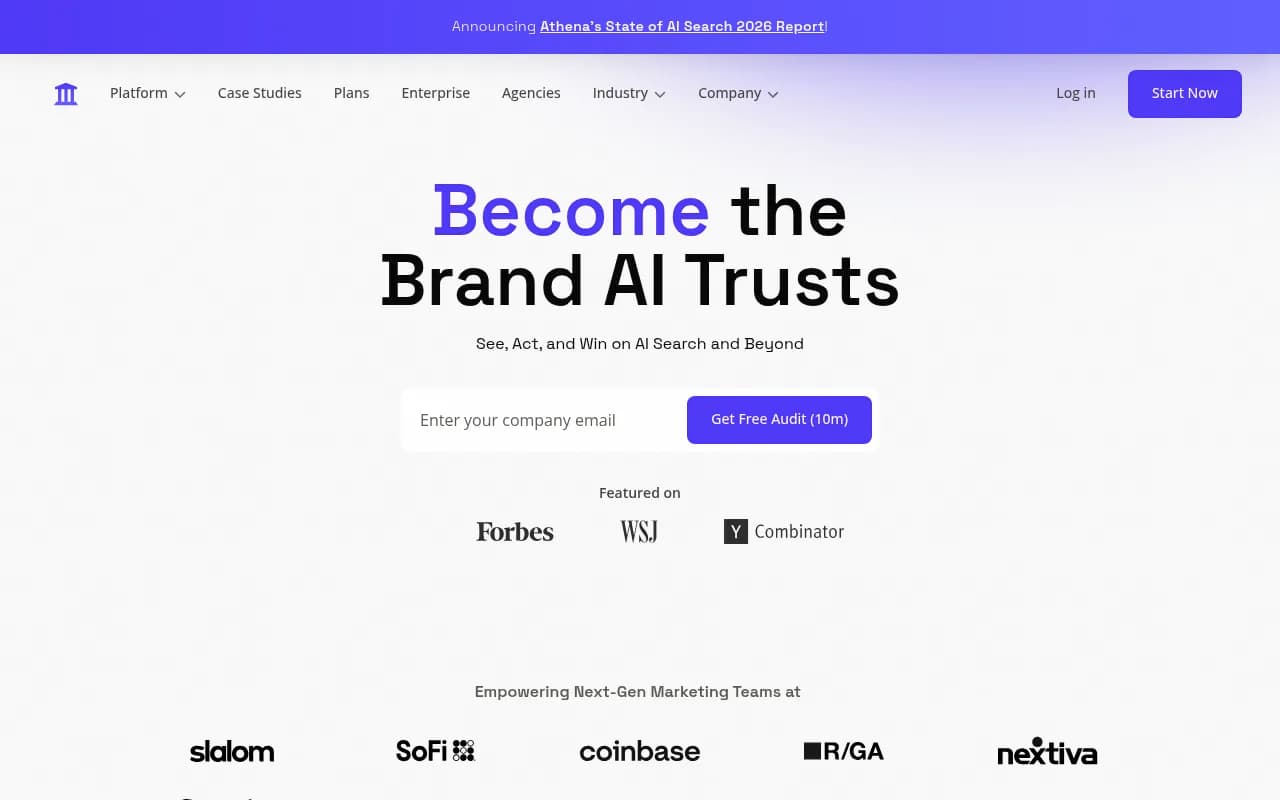
AthenaHQ
AthenaHQ focuses on AI search visibility monitoring with clean reporting. It's solid for tracking brand presence across AI models, though like most monitoring-first platforms, it doesn't extend into content generation or crawler analytics.
Feature comparison: Semrush vs dedicated GEO platforms
| Feature | Semrush AI Toolkit | Promptwatch | Profound | Peec AI | Otterly.AI |
|---|---|---|---|---|---|
| AI brand monitoring | Yes | Yes | Yes | Yes | Yes |
| Models tracked | ~4-5 | 10+ | ~6-8 | ~5-6 | ~4-5 |
| Real prompt data (not fixed) | No | Yes | Yes | Yes | Partial |
| Prompt volume/difficulty scores | No | Yes | Yes | Limited | No |
| AI traffic attribution | No | Yes | Yes | No | No |
| Crawler logs / agent analytics | No | Yes | Yes | No | No |
| Content gap analysis | Basic | Advanced | Advanced | Basic | No |
| AI content generation | Generic | Prompt-grounded | Yes | No | No |
| Reddit/YouTube tracking | No | Yes | No | No | No |
| ChatGPT Shopping tracking | No | Yes | No | No | No |
| Offsite citation analysis | No | Yes | Partial | No | No |
| Integrated with traditional SEO | Yes | Partial | No | No | No |
| Pricing (entry) | Bundled in Semrush One | $99/mo | Higher | Lower | Lower |
The "good enough" question
Whether Semrush is enough depends entirely on what you're trying to do.
If you're a small team or solo marketer who's already paying for Semrush and wants a basic read on how your brand appears in AI answers -- without adding another tool and another bill -- the AI Visibility Toolkit is a reasonable starting point. You'll get directional data, and the integration with your existing SEO workflow is genuinely convenient.
But "good enough to get started" and "good enough to compete seriously" are different bars.
If AI search is a meaningful traffic channel for your business (or you want it to be), the gaps in Semrush's toolkit become real problems. You can't fix what you can't measure, and Semrush doesn't measure the things that matter most: how AI crawlers interact with your site, which specific content gaps are costing you citations, whether your AI appearances are actually driving traffic, and what to create next to close the gap.
One useful framing from a review on GetMint: "Use Semrush to track the problem, but use a dedicated GEO platform to improve your AI visibility." That's not a bad way to think about it -- though at some point, the cost of running two platforms starts to outweigh the convenience of keeping everything in Semrush.
Who should stick with Semrush
- Teams already on Semrush who want basic AI visibility data without switching tools
- Smaller sites where AI search isn't yet a primary traffic source
- SEO-first teams where AI monitoring is a secondary concern
- Anyone who wants a single platform for traditional SEO plus a light AI visibility layer
Who should look at dedicated GEO platforms
- Brands where AI search is already driving (or should be driving) meaningful traffic
- Teams that need to act on AI visibility data, not just observe it
- Agencies managing multiple clients' AI visibility at scale
- Anyone who needs crawler logs, traffic attribution, or content generation grounded in real prompt data
- Enterprise teams that need multi-model, multi-region, multi-language tracking
A note on the broader market
The GEO tool market is moving fast. Semrush is not standing still -- the toolkit has improved since launch and will likely keep improving. But there's a structural difference between a feature added to an SEO platform and a product built from the ground up for AI search optimization.
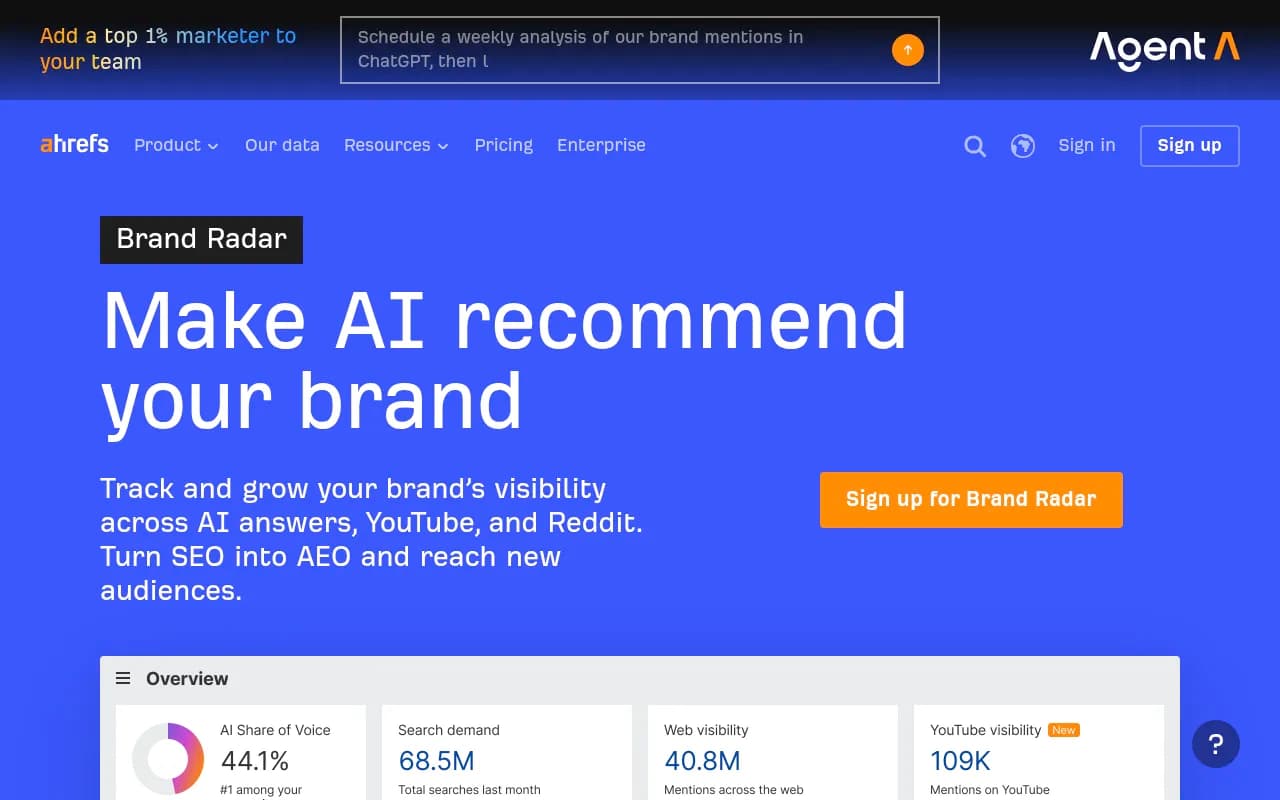
Ahrefs has its own Brand Radar feature, which faces similar limitations: fixed prompts, no AI traffic attribution, and no content generation tied to prompt data.
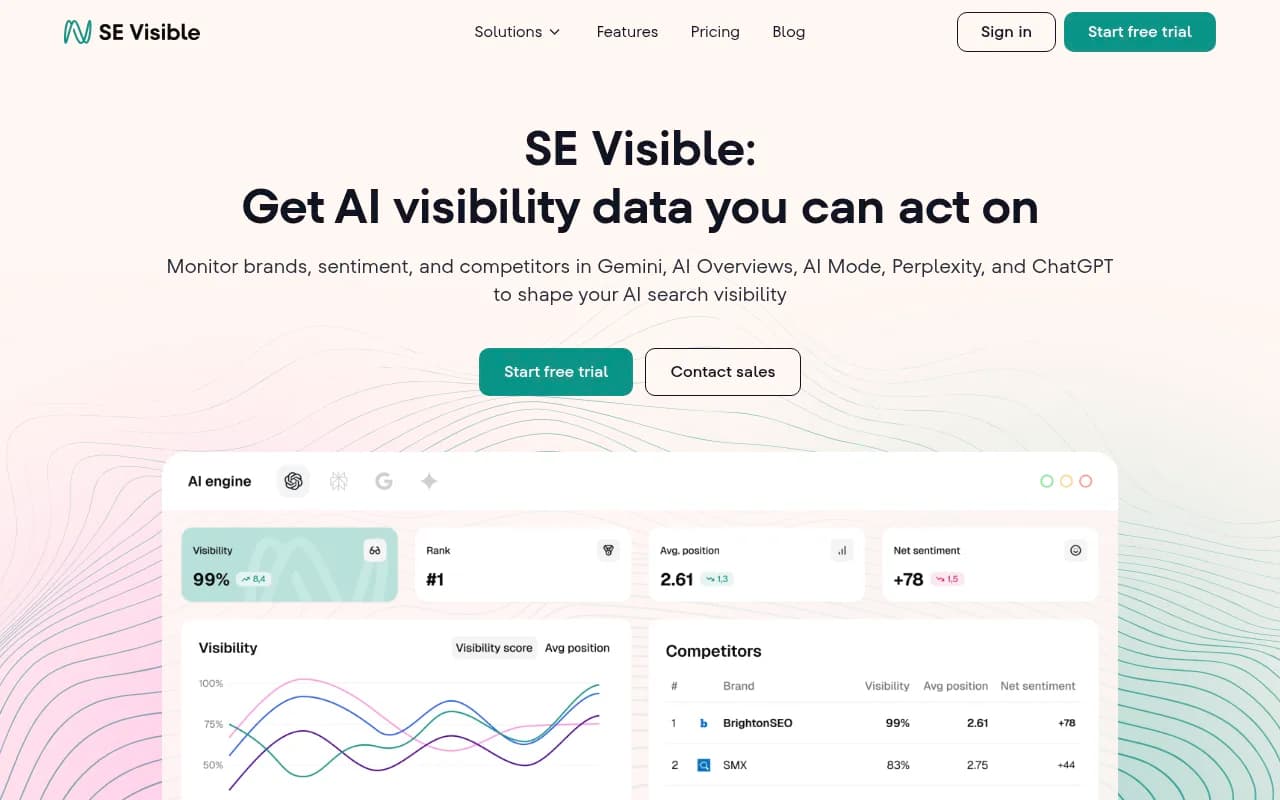
SE Ranking has also entered the space with its Visible product, which is worth watching for teams already in that ecosystem.
For now, if AI visibility is a serious priority, the dedicated platforms -- especially those with a full action loop rather than just monitoring -- have a meaningful lead.
Bottom line
Semrush's AI Visibility Toolkit is a useful addition to an already strong SEO platform. For teams that need basic AI monitoring and don't want to manage another tool, it's a reasonable choice.
But it's a monitoring tool bolted onto an SEO platform, and the bolting shows. No crawler logs. No real prompt data. No AI traffic attribution. No content generation grounded in what AI models actually want to cite.
Dedicated GEO platforms -- particularly those built around the full cycle of finding gaps, creating content, and tracking results -- do the job more completely. The question is whether the completeness is worth the additional cost and complexity for your specific situation.
For most teams taking AI search seriously in 2026, the answer is yes.