Key takeaways
- Google doesn't penalize a page because a machine helped write it. Thin, unoriginal, interchangeable pages are the problem, and AI output tends to be exactly that when nobody edits it.
- Don't delete by batch. Sort every page into keep, update, merge, redirect or delete using traffic, links, conversions, AI citations and intent.
- Check AI citations before you cut. Removing a page that ChatGPT or Perplexity quietly cites throws away visibility you didn't know you had.
- Expect a dip. A roughly 30-day drop in keyword footprint after pruning is documented in case studies, and the job isn't finished until crawlers have reprocessed the site.
- Format matters. Landing pages, docs and comparisons stay cited in ChatGPT much longer than news, so a thin AI-written news-style post is a far weaker keeper than a decent product or docs page.
The question behind the question
Someone usually asks "should I delete my AI pages?" after a bad few months. Traffic slid. A core update landed. A site that published 400 articles in a quarter now has 380 of them earning nothing.
The tempting answer is to purge everything a model wrote. It's also the wrong one. The honest answer is that the origin of the page isn't the test. Quality, uniqueness and usefulness are. One commenter on r/TechSEO put it plainly: AI content doesn't hurt you, low-quality and unoriginal content does, and since AI content tends to be like that, it can end up hurting you.
So the framework below ignores who or what wrote the page. It asks what the page does for readers, for search, and for AI answer engines.
Does AI-generated content actually get penalized?
Google's stated position, echoed by sources like Razor Rank's 2026 breakdown, is that a page isn't penalized simply because a machine helped write it. What gets hit is content produced at scale with little value added. The practical effect is the same, though. If you published hundreds of near-identical, lightly edited articles, you've probably built a site-wide quality problem, and weak pages can drag down the ones that are fine.
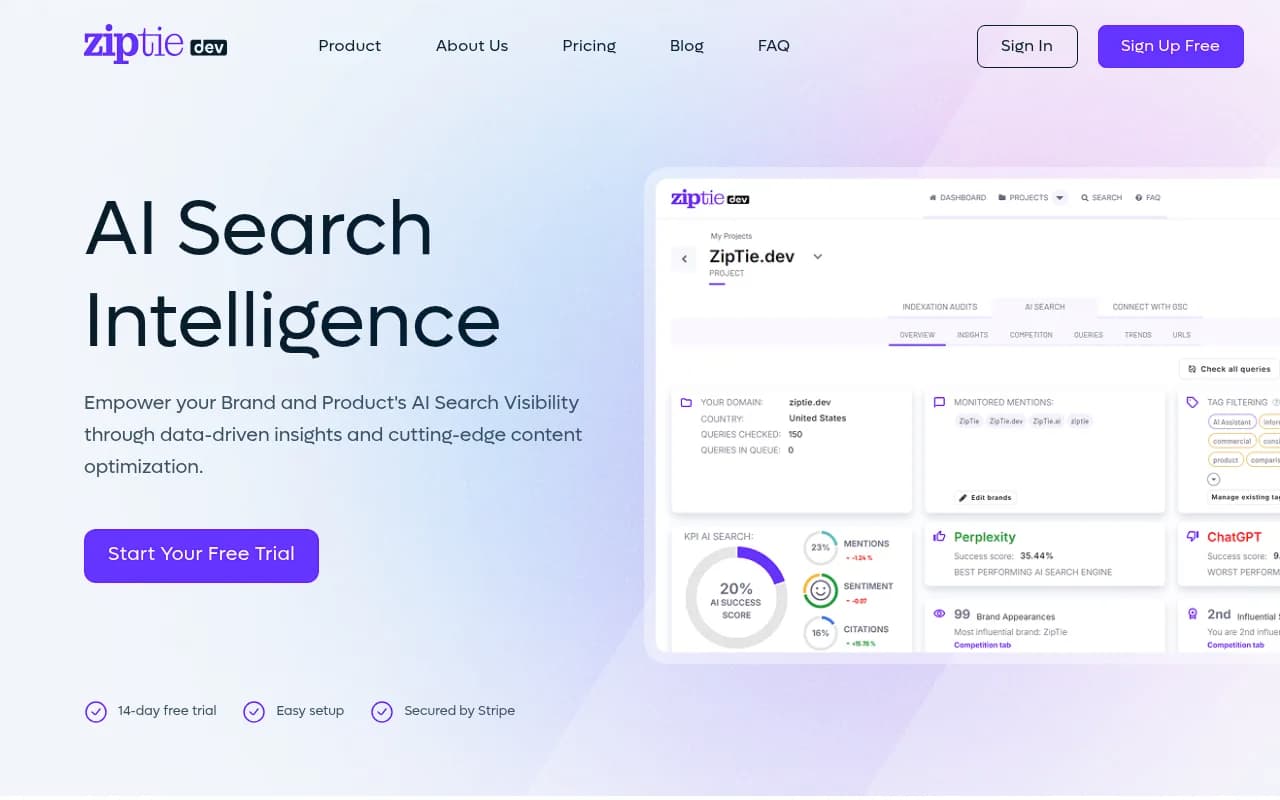
I haven't researched Google's spam policy wording on scaled content abuse in detail for this guide, so read the current policy directly before you make claims about it to a client or a boss. What I can say from the pruning sources is the mechanism: thin pages dilute the signals a domain sends, and consolidating around fewer, stronger pages tends to help. ZipTie's write-up of case studies reports organic traffic gains from +23% to +104% after pruning, and one site removed 85% of its pages without a traffic decline. Treat those as best-case anecdotes, not promises.
Why deleting blindly is risky
Three things go wrong when people delete by pattern ("everything published by the bot in 2025").
- You remove pages that earn links or referrals. Even weak articles sometimes attract a backlink or a trickle of long-tail traffic.
- You break internal link paths. A deleted page can leave orphaned neighbors and dead links in navigation and sitemaps.
- You delete pages AI engines already cite. This is the one almost nobody checks. ZipTie calls it the AI-specific signal that traditional audits miss: removing a page can destroy AI visibility you didn't know you had.
A 30-day dip in keyword footprint after pruning is normal and documented. The danger isn't the dip. It's making the dip permanent by cutting the wrong things.
The pruning framework: five outcomes, not two
Most people think in "keep or delete." Use five buckets instead.
| Action | When it fits | What to do |
|---|---|---|
| Keep | Page serves a real intent, gets traffic, links, conversions or AI citations | Leave it alone, schedule a freshness check |
| Update | Right topic, weak execution, some rankings or backlinks | Rewrite with original data, examples, expert input |
| Merge | Several thin pages cover the same intent | Combine into one strong page, 301 the rest |
| Redirect | Page has links or traffic but a better page exists | 301 to the closest relevant URL |
| Delete | No traffic, no links, no conversions, no strategic role, no useful redirect target | Return 404 or 410, clean up internal links and sitemap |
The LSEO guide frames the deletion test well: delete when there is no meaningful traffic, links, conversions, strategic purpose or realistic path to improvement. That last clause matters. If you can't see how the page gets better, it's a candidate.
Step 1: build the inventory
Export every URL that was produced by your automated workflow. If you don't have a clean list, group by publish date, template, author name or CMS tag. Then attach data to each URL:
- Organic clicks and impressions for the last 12 months (Search Console)
- Referring domains and backlinks
- Internal links in and out
- Conversions or assisted conversions
- Word count, duplicate titles, near-duplicate bodies
- AI crawler hits and AI citations (more on that below)
General SEO suites like Semrush and Ahrefs cover most of the traditional columns.

For crawling and large-site technical work, enterprise platforms like Botify exist, though most sites under a few thousand URLs don't need them.
Step 2: run the AI citation audit before any deletion
This step is what separates pruning in 2026 from pruning in 2019. Check, per URL, whether ChatGPT, Perplexity, Google AI Overviews and others cite it, and whether AI crawlers are even reaching it.
There are two sides to this. Citation tracking tells you which pages get named as sources. Crawler logs tell you whether the bots reached the page and hit errors. A page with zero citations and zero crawls is a different problem from a page that gets crawled constantly and never cited.
Promptwatch can show which of your pages get cited and which AI crawlers are visiting them, so you can mark pages as protected before anyone touches the delete button.

Other tools in this space that track citations or brand mentions across AI engines include ZipTie, Peec AI and Otterly.AI. The GEO software directory at bestgeosoftware.com lists more if you want to compare.


Any page with a live citation goes into "keep" or "update" by default, even if Google traffic is flat.
Step 3: use format and half-life to judge keepers
Not all content types stay cited equally. Promptwatch's content half-life report followed every page ChatGPT cited on July 6, 2026 for 90 days. After 30 days, ChatGPT still cited 78% of landing pages and 76% of docs. After 60 days, it was 69% and 67%. Product pages, reviews and how-tos sat around 55% at day 60, with half-lives of 74 to 77 days. News decayed fastest: half of news pages were gone after 36 days.
The citation share by content type report (Sep 28 to Oct 4, 2026) shows where the citations go. Product pages took 22.4% of classified citations, landing pages 16.8%, listicles 13.6%, how-tos 8.7%, docs 7.5%, general articles 6.1%, comparisons 5.9% and news 5.7%.
What this means for a pruning decision:
- Generic AI-written "articles" and news-style posts live in the lower-share, faster-decaying formats. They are the likeliest deletions.
- Before deleting, check whether a page is really a product, landing, comparison or docs page. Those formats earn citations and keep them.
- A page that ChatGPT stopped citing is a natural pruning candidate. A page it still cites is not.
A caveat. These numbers describe ChatGPT only, over specific windows. They are guidance for prioritizing, not a rule that listicles beat how-tos on your site.
Step 4: score each page
A simple scoring pass beats gut feel. Give each URL one point for each yes:
- Gets meaningful organic traffic
- Has at least one quality backlink
- Converts or assists conversions
- Cited by at least one AI engine
- Covers an intent no other page on your site covers
- Contains something original (data, quotes, experience, screenshots)
Then apply a rough rule:
| Score | Likely action |
|---|---|
| 5-6 | Keep |
| 3-4 | Update |
| 1-2 | Merge or redirect |
| 0 | Delete |
Nobody should treat the thresholds as law. They're a way to stop arguing about individual URLs and start making consistent calls.
Pages that deserve a second look
ALM Corp makes a point worth keeping: if a page fills a genuine informational gap, low traffic alone is not enough reason to remove it. Topical authority is built partly by pages that don't rank themselves but support the ones that do. So before you delete a low-scorer, ask what it supports. If the answer is "a cluster that matters," update it.
Step 5: execute the deletions properly
The mechanics are boring and they matter.
- Confirm the page isn't linked from important sections of the site.
- Check whether external sites link to it. If yes, 301 it to the closest relevant page instead.
- If there's no relevant replacement, serve a 404 or a 410. A 410 signals the removal is intentional.
- Remove the URL from the XML sitemap.
- Fix or remove internal links pointing to it, including navigation and related-post widgets.
- Don't redirect everything to the homepage. It confuses users and search engines.
Do it in waves, not all at once. Cut the lowest-scoring 10 to 20 percent first, watch Search Console for a few weeks, then continue. That way, if something goes wrong, you know which batch caused it.
Step 6: rebuild the survivors
Deleting is half the job. The pages you keep and merge need to be better than what a model produces by default. That means:
- Original data, first-hand experience or named expert input
- A clear answer near the top, then supporting detail
- Updated facts and current-year references
- Internal links that reflect the topic cluster
- Author profiles and sources
Content optimization tools such as Surfer SEO and Clearscope help check coverage against what already ranks, but they don't supply the original insight. That part has to come from your team.


If you want a platform that connects visibility gaps to content creation and publishing, Promptwatch's Content Agent and content gap analysis are built for that loop. Use it for the rewrites, not as a way to mass-produce another batch of thin pages.
Step 7: watch the recovery
The LinkedIn piece on pruning for AI SEO says it well: pruning isn't done when the pages are gone. It's done when AI engines have re-crawled, re-processed and started describing your brand differently.
Track three things for at least 60 to 90 days:
- Search Console clicks and impressions on the surviving and merged pages
- AI citations and crawl activity on the same URLs
- Whether redirected URLs are being picked up and the old ones dropping out of the index
If AI crawlers are being blocked or hitting errors, fixing that matters as much as the pruning. Logik Digital's point is blunt: there's no value in concentrating content into fewer, better pages if the systems you want citing them are turned away at the door. Check robots.txt, firewall rules and CDN settings for AI bots.
Common mistakes
- Deleting by author or date alone. A template is a hint, not a verdict.
- Ignoring AI citations. The most expensive mistake, and the easiest to avoid.
- Mass-redirecting to the homepage. It looks like a soft 404.
- Pruning and then republishing the same thing. If the same automated workflow is still running, you'll rebuild the problem in six months.
- Expecting an instant win. Expect a dip first.
When to delete, quickly
Some cases don't need much debate. Delete when the page is a duplicate tag archive, an empty author page, an obsolete product variant, a near-identical keyword-variant article, or something with no traffic, no links, no citations and no path to improvement. Keeping those indexed adds noise.
When you want help
A pruning project on a large site is a lot of spreadsheet work plus judgment calls on redirects and internal linking. If you'd rather hand the audit to specialists, an SEO agency such as 1001 SEO Media runs content audits and GEO work that include exactly this kind of keep, update, merge and delete triage. It's optional. The framework above works fine in-house if you have a few days and a clean export.
The short version
Don't ask whether a page was written by AI. Ask whether it earns traffic, links, conversions or citations, whether it covers a unique intent, and whether you can make it meaningfully better. Audit AI citations first, delete in waves, redirect where links exist, and give the site 60 to 90 days before you judge the result.