Key takeaways
- Google's policy targets scaled content abuse, meaning many pages produced mainly to rank, whether a human, a bot, or both made them. AI is not the trigger. Lack of value is.
- The August 18-21, 2026 spam update hit sites at the site level. One case with about 1.5M indexed URLs, roughly 85% programmatic, dropped across every section.
- Using AI for research, outlines, schema, meta tags, and internal link mapping is low risk. Publishing hundreds of unedited drafts is where sites get burned.
- Recovery is slow. Expect months, not weeks, after you clean up.
- Penalties can spill into AI Overviews, AI Mode, and ChatGPT answers grounded through Google, so the cost of a mistake is higher than it used to be.
What Google actually says about AI content
Let's kill the myth first. There is no rule that says "AI-written pages get penalized." Google's spam policies (last updated August 28, 2026) describe scaled content abuse, and the example they give is "using generative AI tools or other similar tools to generate many pages without adding value for users." Read that again. The problem is many pages and no value. Both parts matter.
The policy arrived on March 5, 2024, and replaced the old "automatically generated content" rule. Google was explicit that it applies to content made at scale to boost rankings "whether automation, humans or a combination are involved." A content farm full of underpaid freelancers can violate it just as easily as a script can. There is no page-count threshold and the policy doesn't name AI as the offender. The test is purpose and value.
Google's generative AI guidance (updated October 1, 2026) repeats the point: AI content that adds nothing for users may violate the scaled content abuse policy. If you sell products, Merchant Center has its own, separate rules for AI-generated content, so check those too.
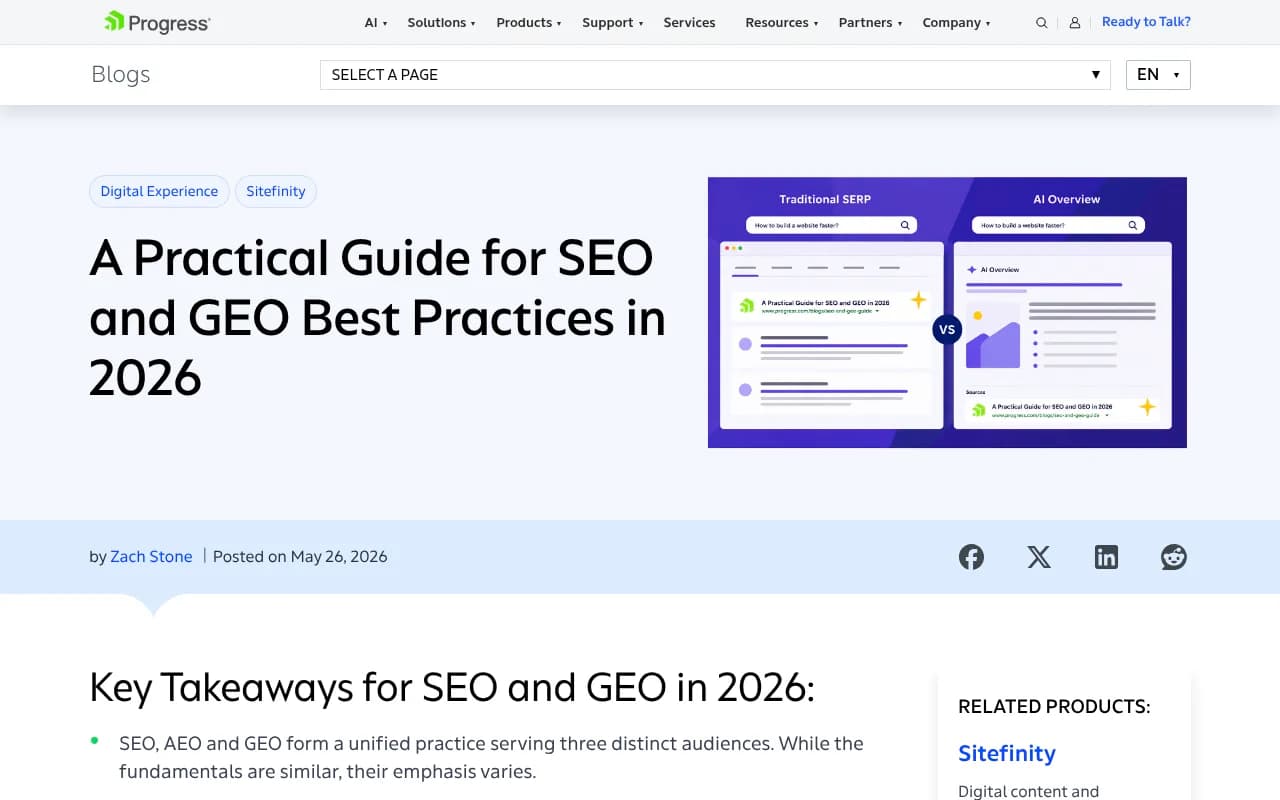
So the working question isn't "did a model write this?" It's "would this page exist if search engines didn't?" If the honest answer is no, you're in the risk zone.
What the August 2026 spam update tells us
Google ran a spam update on August 18, 2026 that finished rolling out on August 21, about two days in total. Another ran in late June. According to Glenn Gabe's case studies at GSQI, the August update wasn't about link spam. It went after content policies: scaled content abuse, thin affiliate pages, doorway abuse, scraping, and user-generated spam. Gabe also notes that scaled AI content has surged as companies try risky tactics to game AI search.
Two details matter for anyone planning a workflow:
- Impact was site-level. The case that stuck with me had roughly 1.5M indexed URLs, about 85% of them programmatic. The whole site dropped, including sections with a human UGC element. A good section did not protect it from the bad ones.
- Recovery is slow. Gabe says it typically takes at least several months. Lily Ray cited a site hit by the December 2025 spam update that only started recovering about five months after fixes began, in June 2026.
One caveat: a vendor page (SEOmatic) points out that Google hasn't said which policies the 2026 updates targeted or named affected sites. So the specifics come from analysts studying the data, not from Google. Treat them as strong signals rather than gospel.
There's another reason to be careful. Sites hit by a spam update can also drop in AI Overviews and AI Mode, and ChatGPT answers grounded via Google can be affected. A penalty used to cost you blue links. Now it can cost you the AI citations too.
The safe zone and the danger zone
Here is how I sort AI tasks by risk. It's a judgment call, not an official list, but it matches how the enforcement cases read.
| AI task | Risk | Why |
|---|---|---|
| Keyword clustering and topic research | Low | Internal work, nothing published |
| Outlines and content briefs | Low | A human still writes and decides |
| Meta titles, descriptions, alt text | Low | Short, reviewed, low volume per page |
| Internal link suggestions | Low | Editor approves each one |
| Schema generation | Low | Validate before shipping |
| First drafts edited by a subject expert | Medium | Fine if real expertise and data get added |
| Refreshing old pages | Medium | Fine if facts are checked, risky if you just reword |
| Bulk-publishing unedited drafts | High | The textbook scaled content abuse example |
| Programmatic pages from templates with thin data | High | The pattern behind site-level drops |
| Rewriting or translating competitor pages | High | Counts as scraping, even when synonymized |
Google's scraping examples are worth memorizing: copying content from other sites and changing it only slightly, scraping feeds or search results to generate pages (including through synonymizing or translating), and creating multiple sites to hide the scale. If your AI pipeline looks like any of those, stop.
A workflow that keeps AI useful and you safe
Start with real questions, then validate
Use AI to generate ideas, but check them against actual search data. A Reddit thread on DigitalMarketing put it simply: use Google or tools to see the real questions people ask, generate ideas with AI, then validate with real search results. Models will happily invent topics nobody searches for.
For research and clustering, tools like Semrush and Ahrefs give you the volume data the model can't.
If you want an AI-first keyword clustering workflow, Machined.ai automates clusters, though you should still review every cluster for intent before you commission pages.

Build briefs from search results, not from the model's memory
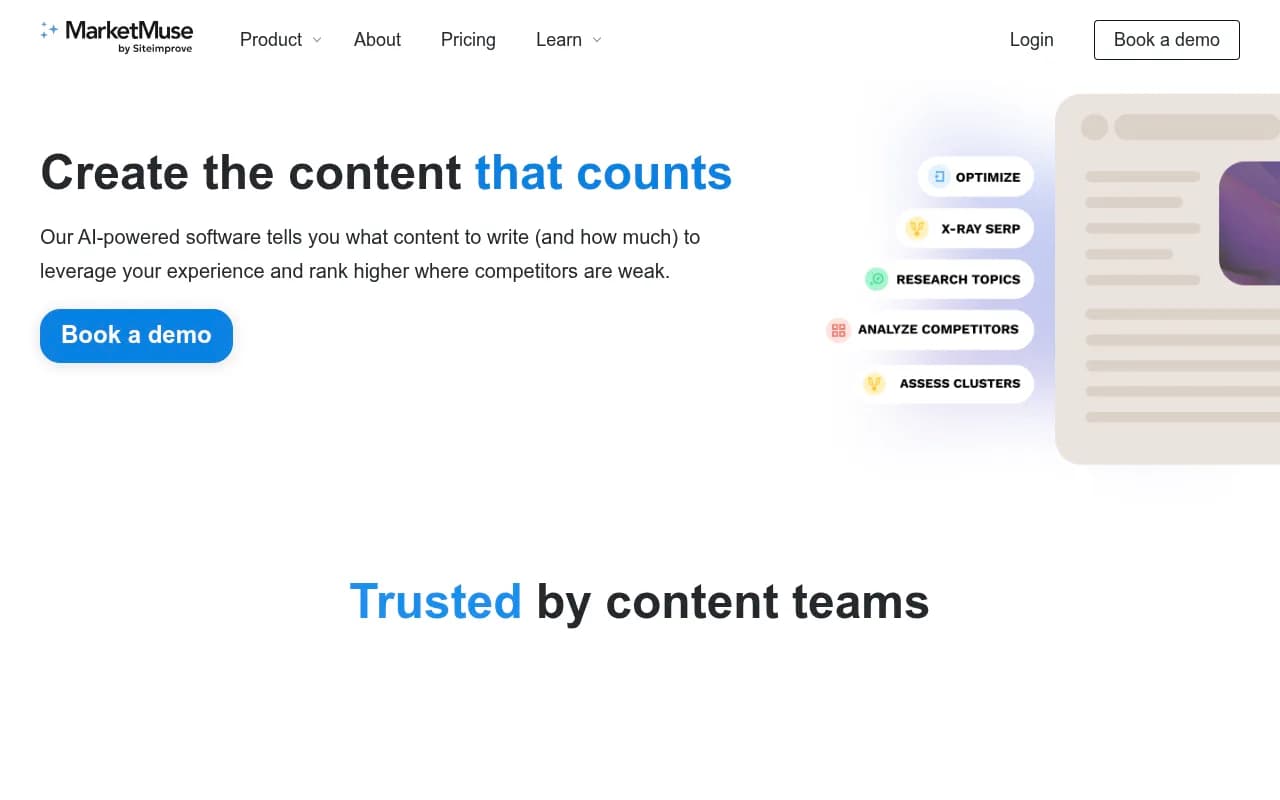
Content optimization tools pull from live SERP data, which keeps drafts grounded in what ranks now. Options include Surfer SEO, Clearscope, Frase, and MarketMuse.


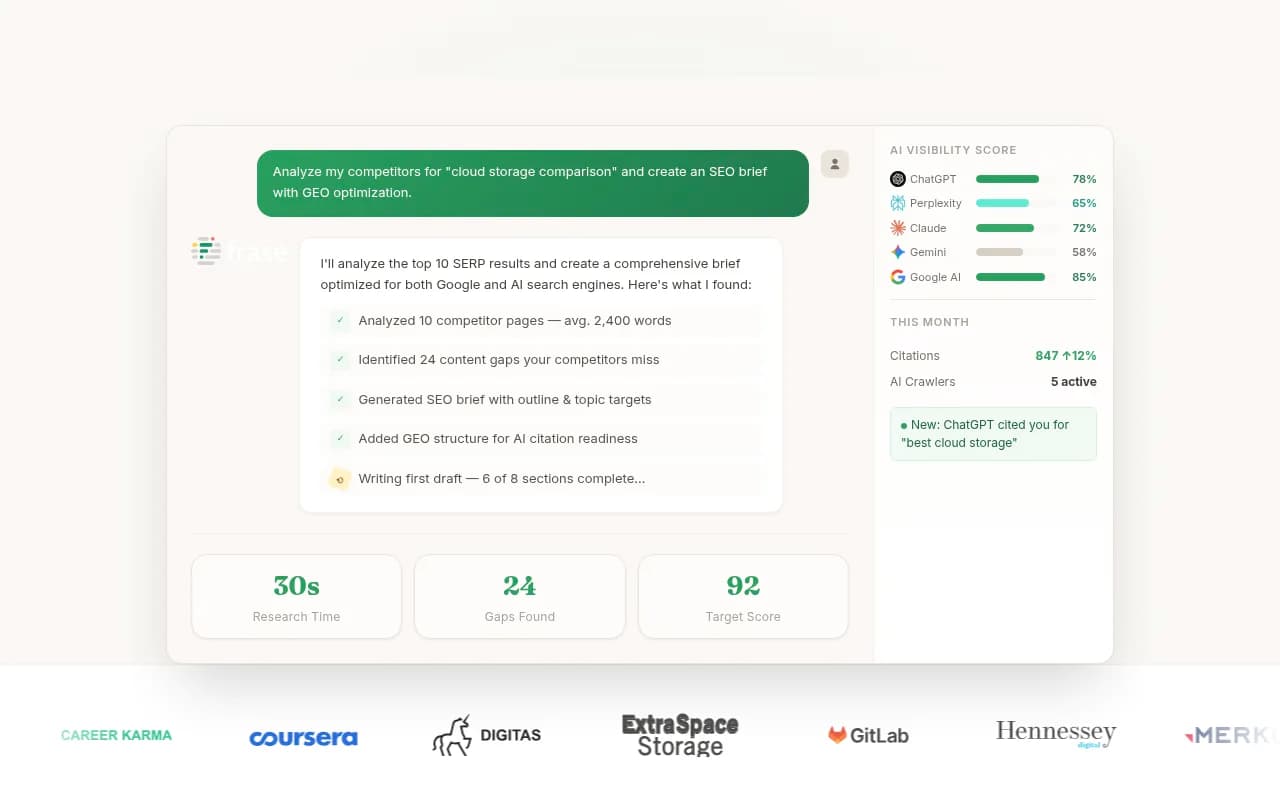
A warning I'd give anyone: an optimization score of 90 does not make a page valuable. It tells you the page covers the same terms as the pages already ranking. The value has to come from you.
Draft with AI, then add what the model can't
This is the step that separates safe from risky. Before anything publishes, a human should add at least one of these:
- First-hand experience: something you tested, shipped, or got wrong.
- Original data: your own numbers, a survey, a benchmark.
- A real opinion, with a position a reader could disagree with.
- Accurate specifics: names, prices, dates, screenshots, all checked.
The Chatter Buzz guide makes a related point for AI answer engines: systems prefer to cite the primary source of a statistic or framework, so publishing your own numbers makes you the reference rather than the echo. That works for Google too. Pure AI text can only echo.
Writing assistants like Jasper, Writer (strong brand controls), and Grammarly for the editing pass all fit here.



Be careful with bulk-publishing tools
Some tools in this space are built around volume: auto-publishing, bulk article generation, keyword-to-live pipelines. Examples in the catalog include Autoblogging.ai, Article Forge, and AutoPublish. I'm not saying never touch them. I'm saying the feature that makes them attractive (no human in the loop) is exactly the feature that matches Google's scaled content abuse example. If you use any automated publisher, put a human review step in front of publish and cap your volume to what you can actually check.
Let AI handle the mechanical SEO
This is where AI earns its keep with almost no policy risk. Meta descriptions, alt text, schema, and internal links are small, checkable jobs. The Showit guide shows a useful pattern: feed the model your existing post titles and ask which pages should link to a new post, with suggested anchor text. They report a 25-30% increase in pages-per-session after systematic internal linking on their top posts, though that's one site's result, not a guarantee.
For entity-based internal linking and schema automation, InLinks and WordLift are built for it.

Sitefinity's guide calls structured data the most impactful action this year because LLMs rely on it even more than traditional engines. Generate it with AI if you like, then run it through a validator. Google's own structured data documentation is the reference for what's supported.
Quality checks before you publish
Run every AI-assisted page through this list. It takes five minutes and catches most of the problems.
- Would this page exist if search engines didn't? If not, don't publish it.
- Is there something here you can't get from the top five results? An original number, a screenshot, an opinion.
- Did a human check every fact, name, date, and price? Models make things up with total confidence.
- Does the page answer the question in the first two sentences? Clear passages help rankings and AI citations.
- Is it too similar to another page on your site? Near-duplicates dilute you and look like scale.
- Is there a named author with real credentials on the topic? This ties to the Experience in E-E-A-T, which the local SEO guide notes was added in response to generic AI content flooding the web.
Audit what you already have
If you've already published AI content at volume, don't wait for a penalty to find out. Chatter Buzz's advice is to audit existing content against the avoid list before creating anything new, and that's right. In Search Console, look at pages with impressions but near-zero clicks, pages that never got indexed, and clusters of near-identical templates. Then decide for each: improve it, merge it, or remove it.
In the August case study, the site was hit as a whole, so a thin section is a risk for the good sections around it. Pruning is not admitting defeat. It's protecting what works.
SEO suites with audit features help here: SE Ranking, Botify for large sites, and BrightEdge or Conductor at the enterprise level.
Don't forget AI search visibility
The other half of the problem is that AI use affects how AI engines see you. Pure generic content is what AI search systems tend to skip, and being cited is increasingly part of the goal. Promptwatch's data on ChatGPT citations (Sep 28 to Oct 4, 2026) shows product pages were the most cited content type at 22.4%, followed by landing pages at 16.8% and listicles at 13.6%. Editorial formats combined, including how-tos, articles, comparisons, and news, make up 43% of citations. For informational prompts, how-tos are 10.7% and docs 8.5%.
Shelf life varies too. In Promptwatch's content half-life report, pages ChatGPT cited on July 6, 2026 were tracked for 90 days. Landing pages and docs stayed cited longest, while news lost half its pages within about five weeks. Content that stays factual and complete lasts. Thin AI news rewrites don't.
To see whether your AI-assisted pages are getting crawled and cited, you need to measure it. Promptwatch tracks citations across ChatGPT, AI Overviews, Perplexity and others, and its crawler logs show whether AI bots are reading the pages you publish. Its Content Agent drafts and publishes against visibility gaps with a review inbox, so a human approves before anything goes live, which fits the safety rules above.

Other trackers worth a look include Peec AI, Otterly.AI, Profound, and Scrunch AI. For a wider survey of options, the GEO software directory lists many more.



Tool types at a glance
| Job | Tool type | Examples | Main risk |
|---|---|---|---|
| Keyword and gap research | SEO suite | Semrush, Ahrefs, SE Ranking | Low |
| Briefs and optimization | Content optimizer | Surfer SEO, Clearscope, Frase | Over-trusting scores |
| Drafting and editing | AI writer | Jasper, Writer, Grammarly | Generic output |
| Schema and linking | Entity tools | InLinks, WordLift | Unvalidated markup |
| Bulk publishing | Auto-publishers | AutoPublish, Autoblogging.ai | Scaled content abuse |
| AI citation tracking | GEO platforms | Promptwatch, Peec AI, Profound | Low |
If you get hit
First, confirm it was a spam update. Check the dates against Google's ranking status page and compare traffic by section in Search Console. A site-wide drop on or right after August 18-21, 2026, with no technical change, is the signature.
Then fix the cause, not the symptom. Remove or substantially rework thin pages, noindex what you can't fix, consolidate near-duplicates, and stop the pipeline that produced them. Then wait. Recovery typically takes at least several months, and the December 2025 example began recovering about five months after fixes started. Don't keep stacking new changes every week hoping to speed things up. You can't tell what worked.
If this sounds like more than your team can audit, an outside review helps. Agencies like 1001 SEO Media run SEO audits and content strategy built around white-hat practice, which is the kind of second opinion you want before deciding what to prune.
The short version
Use AI for the mechanical work and as a drafting partner. Put a human with real knowledge between the draft and the publish button. Keep volume to what you can verify. And measure both search and AI citations, so you know whether the pages you ship are earning their place. Google's policy has not changed to ban AI. It has changed to punish pages that exist only to rank, and that has always been the line.