Key takeaways
- Search volume is one input. Intent, SERP features, clustering and AI citations now decide whether a keyword is worth the effort.
- No single tool covers everything. A suite such as Semrush or Ahrefs, a clustering tool, and an AI visibility tracker is a sensible stack.
- AI assistants fan one prompt out into several short searches. Volume tools do not capture those, so you need to map sub-queries yourself or with a prompt-focused tool.
- Free sources (Google Keyword Planner, Search Console, AnswerThePublic) still do real work. Start there before paying for anything.
- Verify pricing on vendor pages. Aggregator sites disagree with each other, especially on Ahrefs.
Why search volume stopped being enough
You have probably sorted a keyword spreadsheet by volume, picked the top ten, and watched the traffic arrive without a single sale. I have done it. It is a frustrating way to learn that volume measures how many people search, not how many people want what you sell.
Two things changed in the past couple of years. First, Google's results page got crowded: AI Overviews, knowledge panels, review blocks and image packs eat clicks that a position-three ranking used to earn. Second, people now ask ChatGPT, Perplexity and Gemini questions that never show up in a keyword database at all.
So in 2026 a good keyword tool should help with at least four questions:
- What does the searcher actually want (intent)?
- Which topics belong together on one page (clustering)?
- What does the SERP look like, and is a click even available?
- Will AI assistants cite me for this topic?
The tools below are grouped around those questions.
The AI query problem: what volume tools miss
This is the part most roundups skip. When someone types a prompt into ChatGPT, the model does not run one search. It splits the prompt into several queries, a behavior called query fan-out. Promptwatch's ChatGPT query fanout data shows the average number of fanouts per response sitting around 2.15 in early December 2025 and about 1.84 by early March 2026, with query length falling from roughly 117 characters to the high 80s. After fanouts returned in April, they were around 53 characters, so roughly six to eight words. Short, keyword-like, and generated by the model rather than typed by a person.
They can also change overnight. On August 8, 2026, ChatGPT started using the site: operator at scale: site-scoped queries went from about 0.37% to 16.8% of all fanout queries in a day, and average fanouts per response rose from about 1.08 to 1.83. Any keyword-to-prompt mapping you built before that date is probably stale.
What this means for keyword research:
- Cover the sub-questions a topic splits into: "X vs Y", pricing, alternatives, how-tos.
- Build clusters of focused pages instead of one mega-page.
- Write headings that read like search queries ("Best CRM for small agencies 2026"), with the entity and category first.
- Re-check your keyword-to-heading mapping after major ChatGPT updates.
None of that shows up in a volume column. It is also why the tool stack has widened.
The classic suites, still the backbone
Semrush
Semrush remains the one I would reach for first when someone asks for a single paid tool. Zapier's July 2026 roundup of free keyword tools picked it for advanced users because it exposes SERP features (AI Overview, knowledge panel, reviews, site links, image pack) and lets you dig into current results in detail. That SERP-feature view is the most useful "beyond volume" data point in the suite.
Pricing, per Semrush's own SEO + AI Search page, shows plans at $139, $199 and $299 per month ($117.33, $165.17 and $248.17 billed annually), with the $139 plan including 500 daily tracked keywords. Third-party sources list a free plan limited to 10 reports a day. Confirm on the vendor page, since these numbers came from snippets. Semrush also sells an AI visibility add-on, covered below.
Ahrefs
Ahrefs is the pick for long-tail discovery and traffic potential estimates. It has added search intent data and better keyword clustering. Entry pricing is quoted at $108 to $129 per month depending on the source, and there is no free tier, so check the live page.
Ahrefs Brand Radar is the AI-search side of the product, tracking brand mentions across AI engines.

SE Ranking and others
SE Ranking has a free keyword suggestion tool and paid plans around $129 and $279 per month according to DemandSage. It is a reasonable middle option for agencies watching budgets.
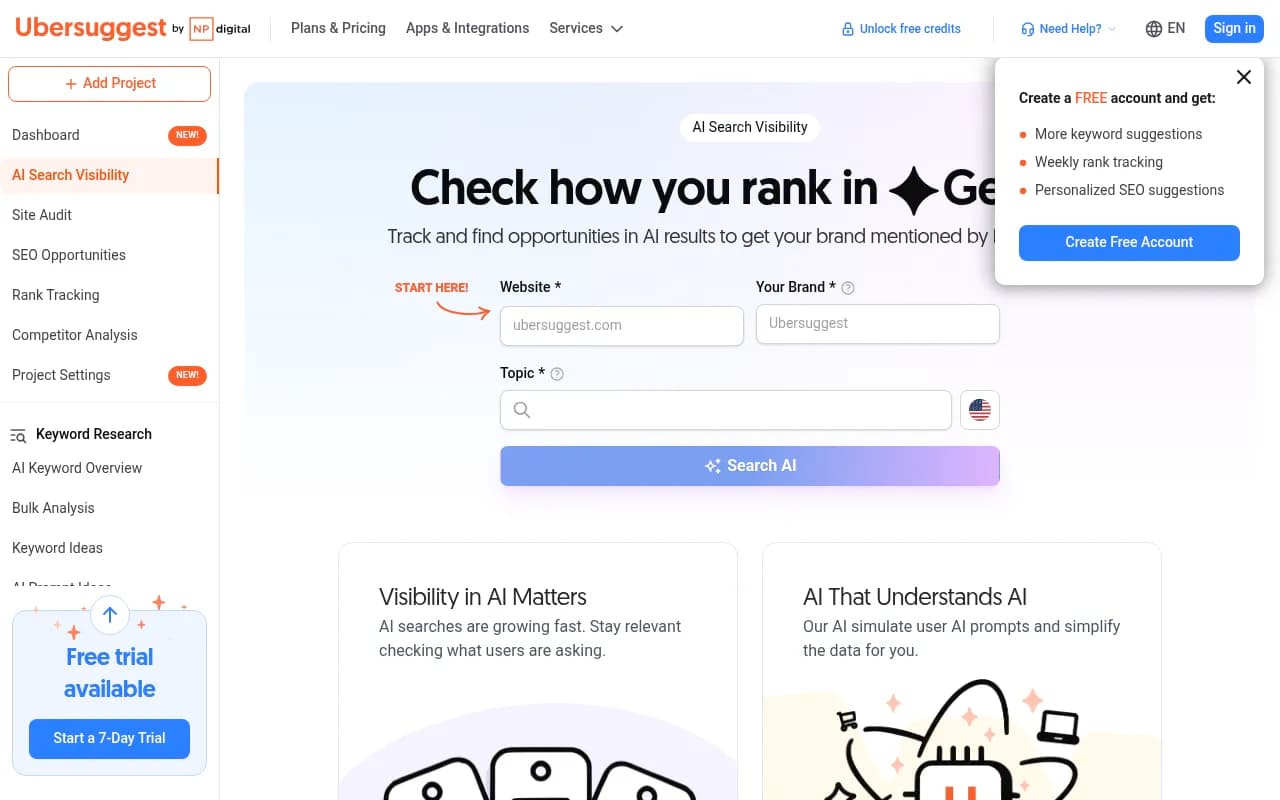
Ubersuggest combines keyword research with an AI brand visibility feature, and is friendlier to small teams that do not want a full suite.
Clustering and intent tools
Once you have a few thousand keywords, the problem shifts from finding them to grouping them. Clustering tools group terms by how Google's results overlap, so you know which keywords share a page.
Keyword Insights is the specialist here, at around $58 per month with a $1 trial. Technova Partners scores it 20/25 and calls it a complement to a main suite, not a replacement. I agree with that framing. It does one job well.
Machined.ai automates keyword clusters for content at scale.

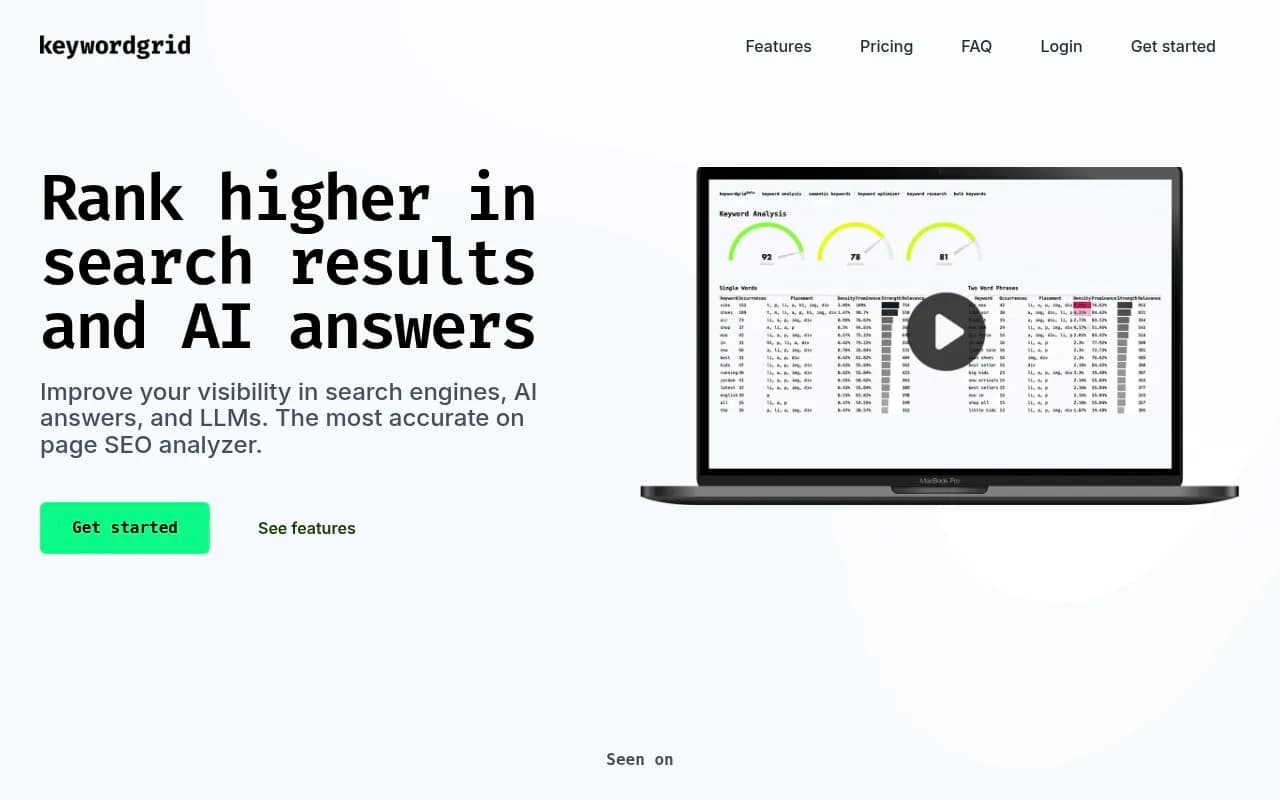
Keyword Grid pitches itself as a semantic analyzer.
LowFruits goes after a different problem: finding low-competition opportunities, which is handy for newer sites that cannot beat established domains on head terms.

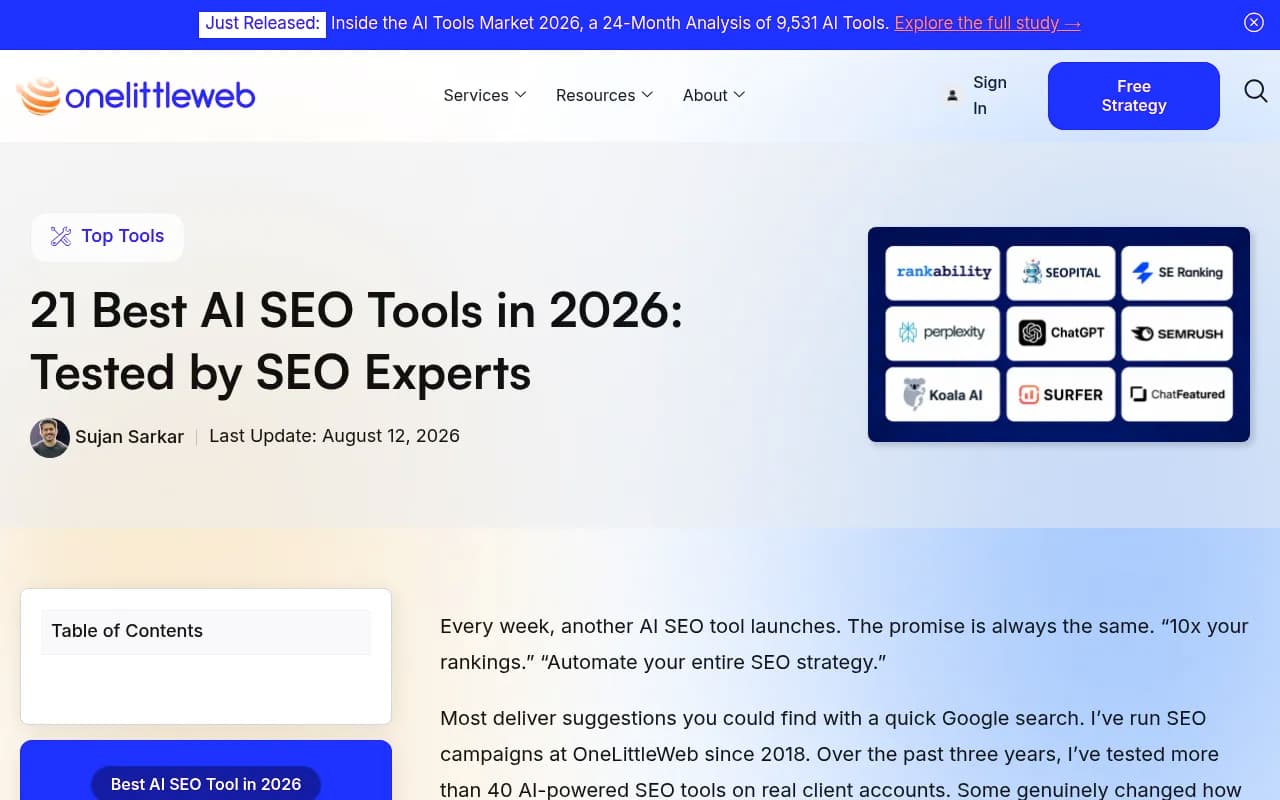
OneLittleWeb's AI SEO roundup lists Keywordly as its pick for clustering, noting that it helps you create content that answers real problems instead of chasing volume. It also pulls Amazon and YouTube keywords, which is useful for ecommerce and video creators.
Content-first tools that start from keywords
Some tools blur the line between research and writing. They take a seed topic and give you terms, headings and coverage gaps.
| Tool | Strength | Best for |
|---|---|---|
| Surfer SEO | SERP-based content scoring | Optimizing existing pages |
| Frase | Briefs from top results | Fast content outlines |
| MarketMuse | Topic authority and planning | Large content programs |
| Clearscope | Search-data grounded terms | Editorial teams |
| NeuronWriter | NLP term suggestions | Budget-conscious writers |
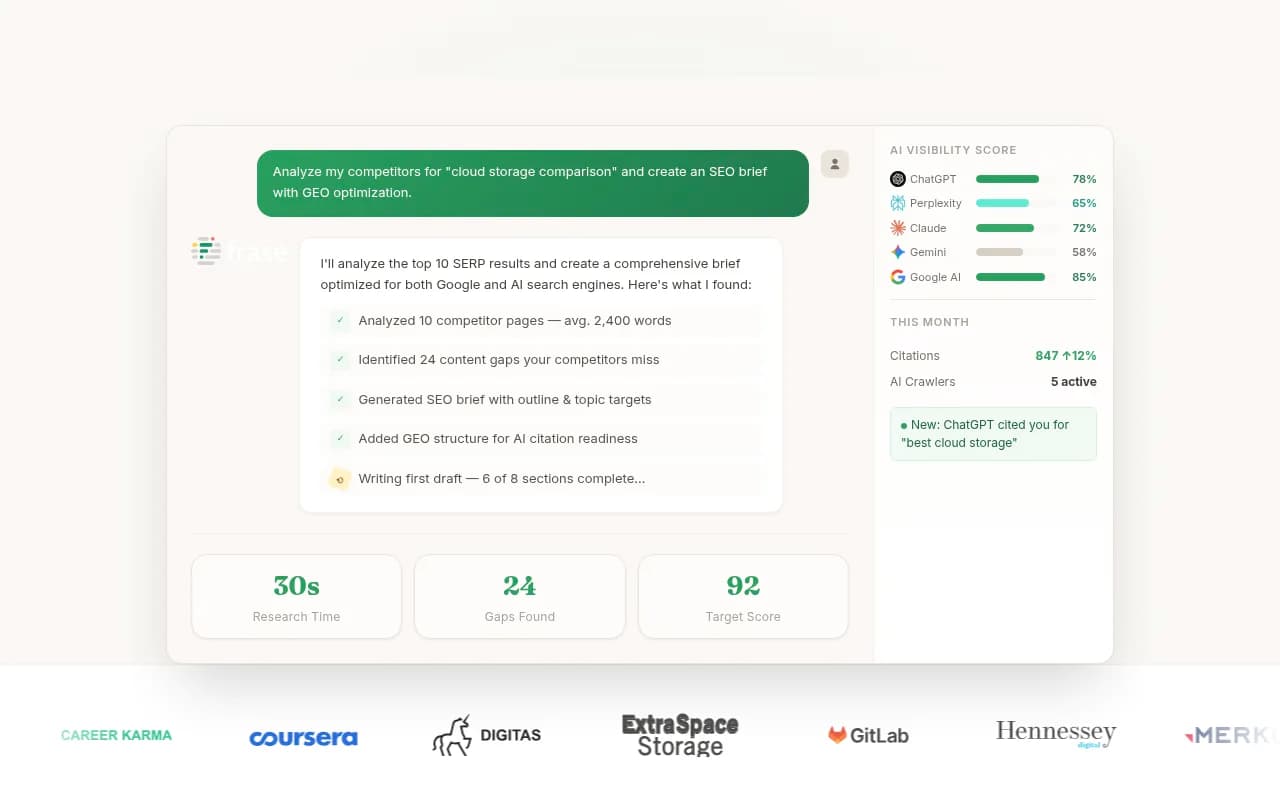

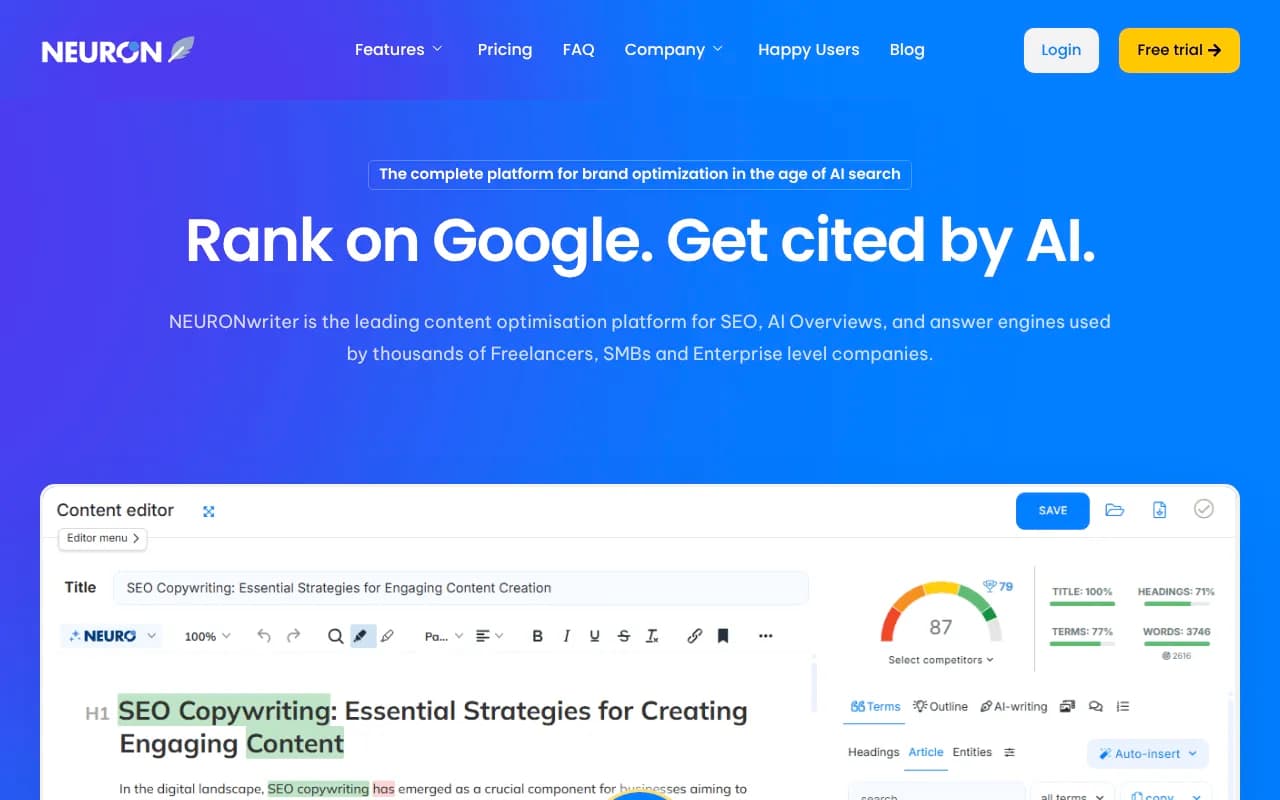
The Quora thread on this topic lists ChatGPT, Semrush, Ahrefs, Keyword Insights, Surfer SEO, Frase and MarketMuse as the usual suspects, which matches what I see practitioners using. One commenter put it well: keyword research is now less guessing Google and more asking AI what Google is thinking. I would add a caution. An LLM will happily invent search volumes. Use it for ideation, clustering and intent labeling, then verify numbers in a real data source.
Free tools worth keeping
You do not need a paid plan to do good research. Zapier tested more than 90 tools with a free option and landed on five:
- Google Keyword Planner, for paid keyword data and raw volume ranges
- Semrush's free tier, for advanced SERP detail
- KWFinder, for ad hoc lookups
- AnswerThePublic, for question-style content ideas
- Allintitle KW Explorer, for research beyond Google
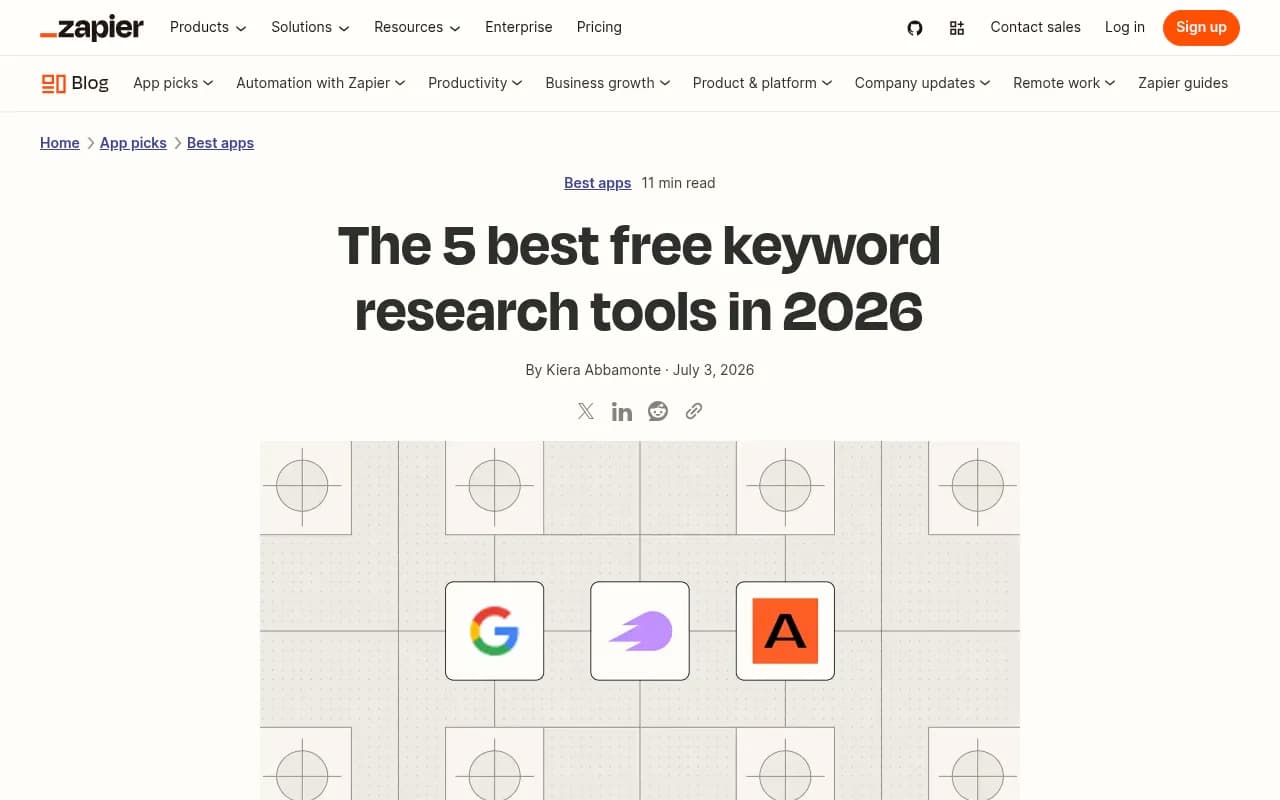
Yotpo's October 2026 piece adds a useful split: Google Keyword Planner as the source of truth for raw volume, and Answer Socrates as a free option for targeting AI Overviews. Add Google Search Console to that list. Your own impressions data is the cheapest, most honest keyword source you have, and it shows queries you already almost rank for.
For ecommerce brands, Yotpo's own product pitches AI visibility tied to catalogs and reviews.
Yotpo Discover
AI visibility tools for the prompt side
This is the newer category. These tools run prompts across ChatGPT, Gemini, Perplexity and others, then tell you whether your brand shows up and which sources get cited. Think of the prompts as the keywords of AI search.
Promptwatch is the one I would put first for keyword-style work because it treats prompts the way SEO tools treat keywords: monthly prompt volumes, difficulty scores, and query fan-outs showing the exact web searches an AI runs for each response. It tracks the real interfaces of ChatGPT, Google AI Overviews, AI Mode, Gemini, Perplexity and others, and it connects to Search Console and Bing data so you can see which pages rank in Google but never get cited. It also goes past tracking: content gap analysis shows which prompts you have no page for, and the Content Agent can draft and publish to your CMS. Pricing starts with a free Explore plan and paid plans from $95 per month, listed at promptwatch.com/pricing.

Other options in the same space, each with a narrower focus:
| Tool | Angle |
|---|---|
| Peec AI | AI visibility tracking with suggestions |
| Otterly.AI | Affordable monitoring |
| Profound | Enterprise analytics |
| AthenaHQ | Monitoring platform |
| Aiso | Prompt and fan-out tracking |
| LLMrefs | Query insights for citation work |
| SE Ranking Visible | AI visibility from SE Ranking |





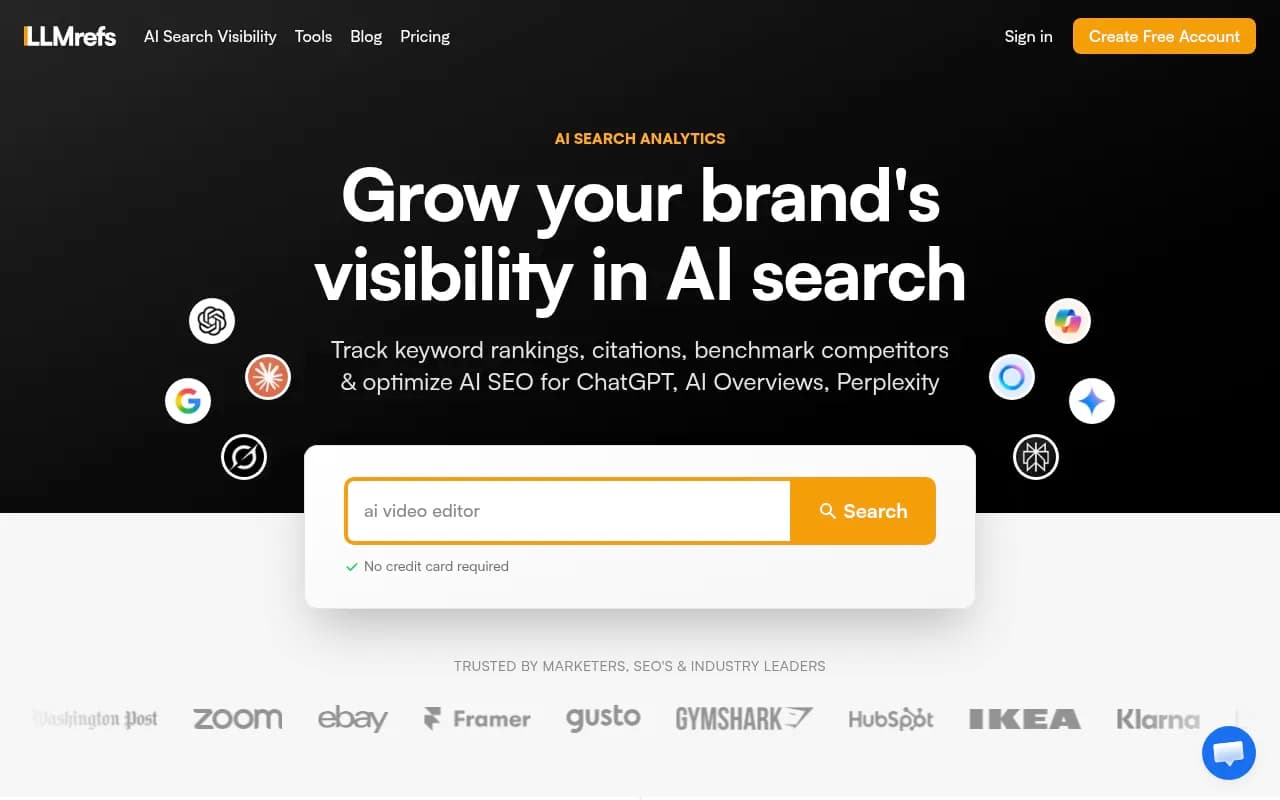
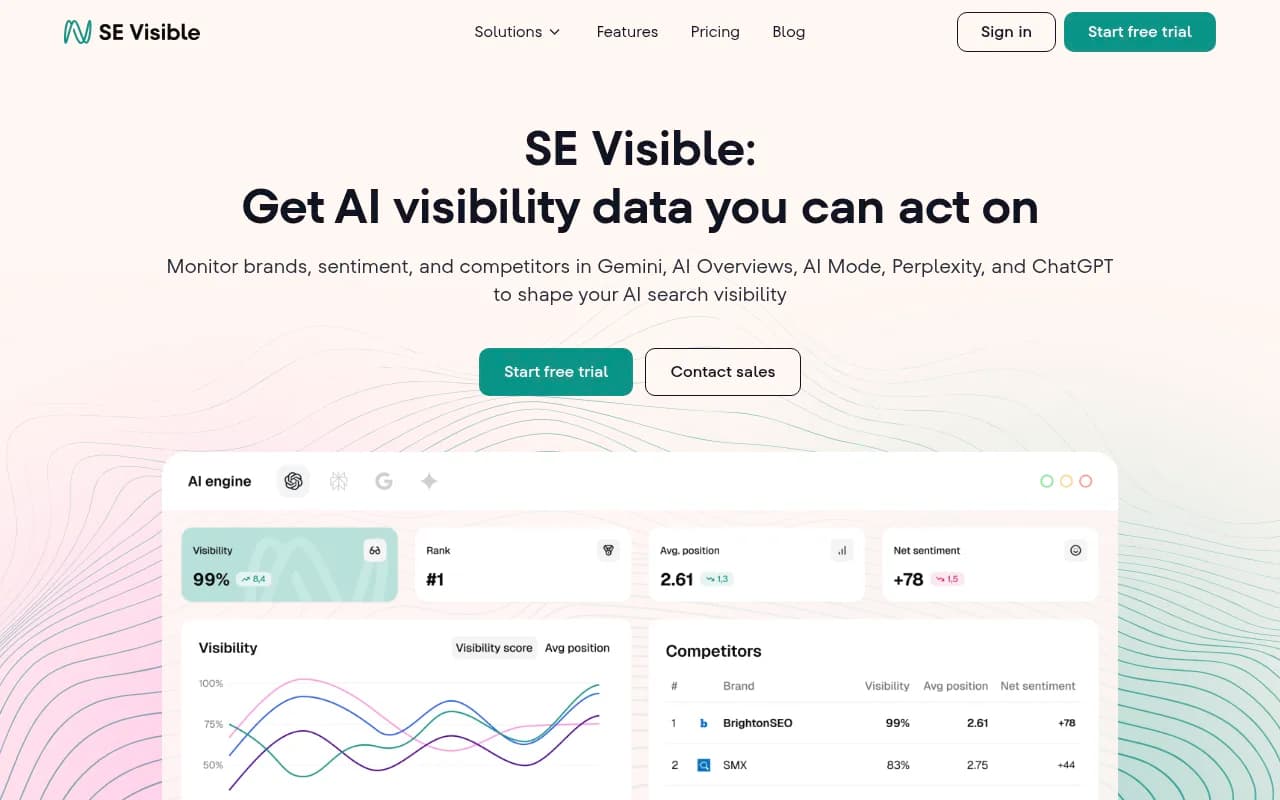
If you want to browse the wider category, the GEO software directory at bestgeosoftware.com lists far more than I can cover here.
All-in-one options
Some teams prefer one login. Search Atlas combines traditional and AI SEO, and Rankability positions itself around unified keyword research across Google and AI, aimed at agencies. Rankability's own roundup ranks itself first, so treat that ranking with the usual skepticism.
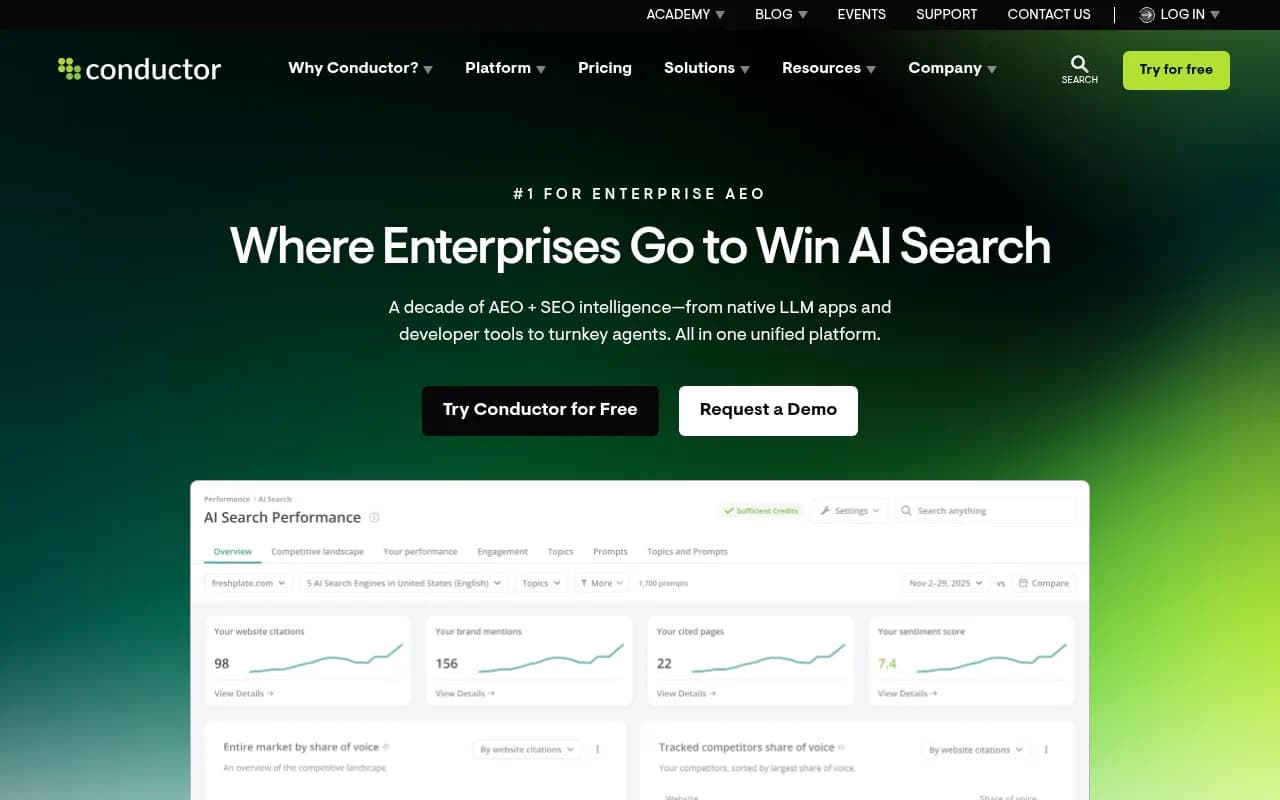
Enterprise teams with big technical footprints usually look at seoClarity, BrightEdge or Conductor.
A workflow that uses all of this
Yotpo's guide makes a point I agree with: no single tool reveals the full picture. Free proprietary data from Google combined with paid competitive intelligence works better than either alone. Here is how I would stitch it together.
- Pull what you already have. Export queries from Search Console and look for terms with impressions but poor positions.
- Expand with a suite. Use Semrush or Ahrefs to find related terms, then filter by intent and SERP features instead of volume alone.
- Check the SERP. If an AI Overview and three review blocks fill the screen, a position-two ranking may not deliver clicks. Be honest about it and prioritize terms where a click is still likely.
- Cluster. Group keywords into pages using a clustering tool, so you build one strong page per topic and not five thin ones.
- Map prompts and fan-outs. List the questions an AI would split your topic into. Write headings that match them, and track the prompts in an AI visibility tool.
- Choose formats by what gets cited. Promptwatch Data on ChatGPT citation share by content type found product pages were the most cited type at 22.4% of citations from Sep 28 to Oct 4, 2026, followed by landing pages and listicles. Informational posts are not always the winning format.
- Refresh on a schedule. Landing pages and docs stay cited longest, while news loses half its pages within 36 days, per Promptwatch's content half-life report. Plan refresh work accordingly.
Comparison: which tool for which job
| Job | Good fit | Cost level |
|---|---|---|
| Raw volume and paid data | Google Keyword Planner | Free |
| Your own query data | Google Search Console | Free |
| SERP feature analysis | Semrush | $$ |
| Long-tail and traffic potential | Ahrefs | $$ |
| Clustering | Keyword Insights | $ |
| Low-competition finds | LowFruits | $ |
| Prompt volumes and fan-outs | Promptwatch | $ to $$ |
| Brief generation | Frase, Surfer | $ to $$ |
Mistakes I see repeatedly
Trusting an LLM for numbers. ChatGPT can cluster and label intent. It cannot tell you monthly volume.
Building one page per keyword. Near-duplicate terms belong on the same page. Cluster first.
Ignoring that AI behavior shifts. Reddit's share of ChatGPT citations, for instance, fell from about 4% to 0.5% on August 14, 2026 according to Promptwatch's Reddit citation data. A strategy built on forum visibility would have needed a rethink that week.
Buying five tools that overlap. Start with Search Console plus one suite and one AI visibility tool. Add a clustering tool only when you hit scale.
If you would rather hand this to specialists, agencies such as 1001 SEO Media combine technical SEO, content and AI search work, which covers most of this stack in one engagement.
Bottom line
Start free with Keyword Planner and Search Console. Add one suite, Semrush if you want SERP detail or Ahrefs if you care about long-tail. Add a clustering tool once your lists outgrow a spreadsheet, and an AI visibility platform once you want to know which prompts and fan-out queries actually mention you. Volume is still a column worth reading. It just should not be the only one.
For more tools in the traditional category, the directory at surferstack.com is a good place to compare options.