Key takeaways
- The most common complaints about AirOps are a steep learning curve, workflow setup that takes real engineering effort, and task-based billing that makes costs hard to predict.
- One publicly documented cancellation involved corrupted text published to WordPress. The author could not say whether the bug persists.
- AirOps is a good fit for teams with a proven SEO process who want to run it at volume. It is a poor fit for teams that still need help deciding what to create.
- People who leave usually want one of three things: simpler AI visibility tracking, managed content plus tracking, or a cheaper entry point.
- Content output alone does not win AI citations. Promptwatch Data shows ChatGPT cites product and landing pages most, so tracking and fixing visibility matters as much as publishing.
What AirOps actually is
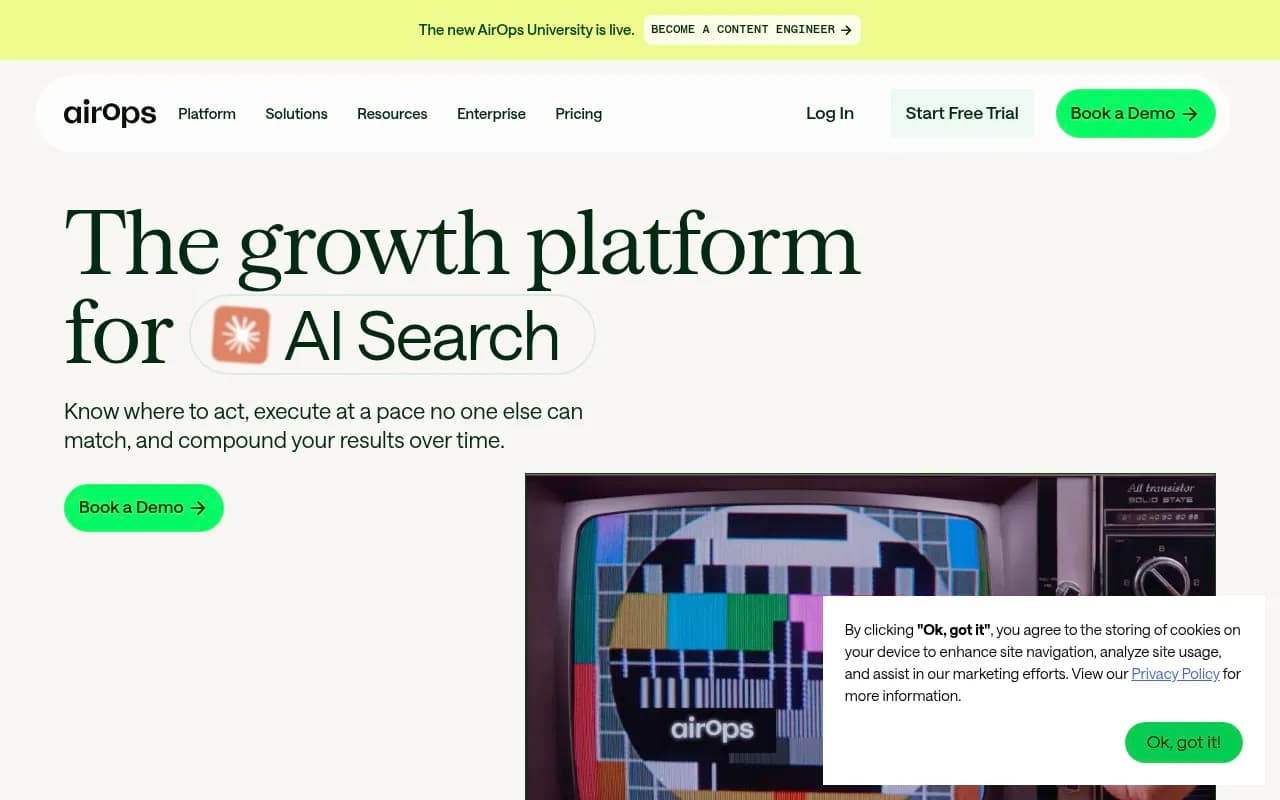
AirOps started as a no-code workflow platform for content teams. You chain AI steps, data sources and prebuilt Power Steps into a pipeline, then run it across rows in a spreadsheet-like Grid. Over the past two years it added AI search visibility tracking, Brand Kits and Knowledge Bases, so it now pitches itself as both an insights layer and a content engine.
That pitch is why it gets bought. It is also why people leave. A platform that can do almost anything needs someone to decide what it should do.
The real complaints
I pulled together the criticisms from hands-on reviews, a public cancellation post and competitor comparisons. Competitor blogs have an obvious bias, so I leaned on the reviews written by people who actually ran workflows. The same themes keep showing up.
The learning curve is real
Indexly's review lists a steep learning curve and complex onboarding as the top cons: setup is not instant and needs configuration before you get value. AIclicks makes a similar point, noting that getting good results often takes iteration and engagement with AirOps' training cohorts. Teams without that capacity get less out of it than the feature list promises.
The workflow runs, but the output still needs judgment
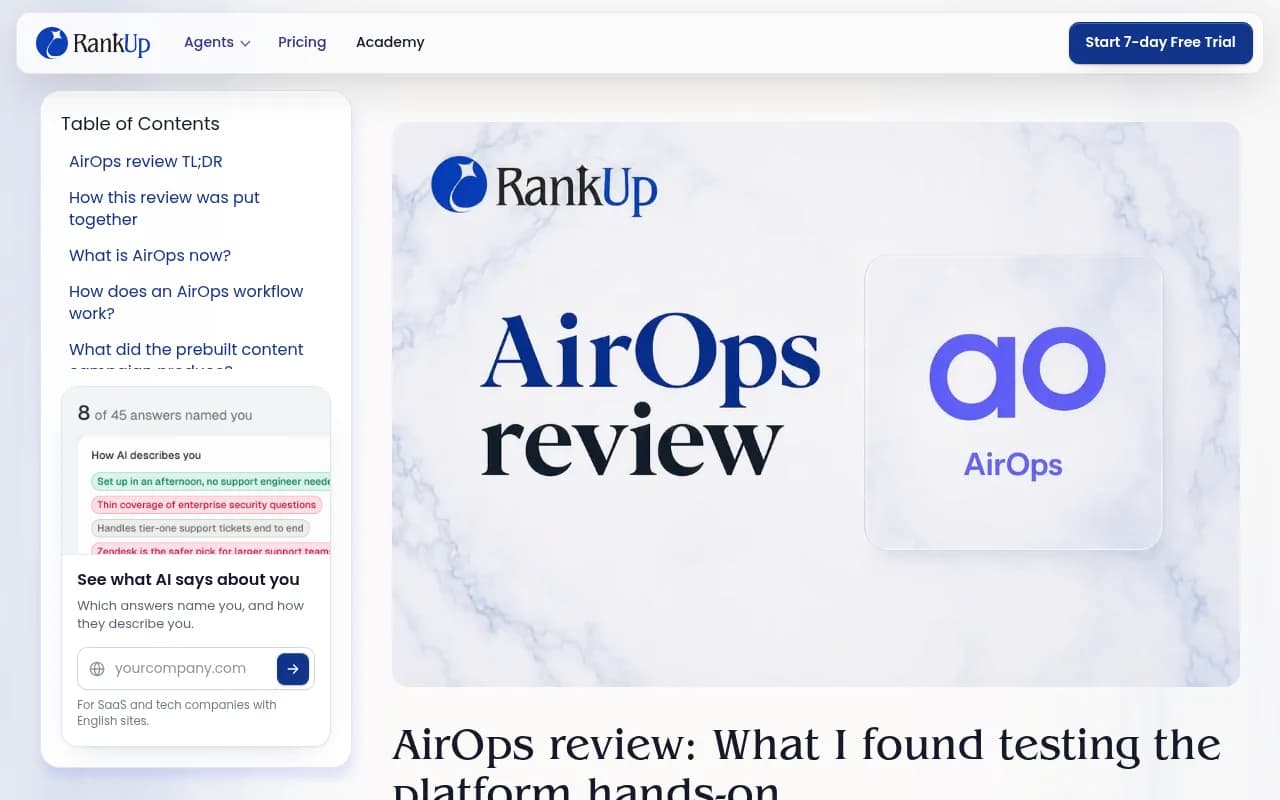
The RankUp review is the most useful one here. The author built a keyword research workflow, published it and ran it for real. It ran to completion exactly as configured and still returned keywords they could not use. Their conclusion: the gap between execution and judgment is what you should understand before paying. The onboarding they tested did not provide a guided SEO methodology, so strategy stayed with them.
This is the complaint I find most credible, because it is not a bug. It is a design tradeoff. AirOps gives you a very capable engine and expects you to bring the map.
Task-based costs are hard to forecast
Every action consumes tasks from your monthly allocation. Testing a workflow before launch, trying different configurations and running larger automations all draw from the same pool. Indexly flags the credit system as making scaling costs less predictable, and AIclicks says the same about overages.
A caveat on numbers. AIclicks quotes $0.025 per extra task on the Solo plan, and one cancellation post mentions a $200 monthly subscription. Neither figure appears on AirOps' current pricing page, which now lists Solo, Pro and Enterprise with no dollar amounts ("Start for free" and "Work with us"). Treat older prices as stale and confirm directly with AirOps.
What the pricing page does show: Solo is a single-user plan with ChatGPT insights only and 35,000 tasks. Pro is for small teams, with insights across 10+ answer engines, 100,000 tasks and unlimited seats. Enterprise is custom. Tasks are the metered unit, which is exactly what makes budgeting awkward. Allocations have also shifted between reviews, so plan details may change again.
Data trust
The sharpest public complaint is Victoria Olsina's post on why she cancelled after two months. In December she found text corrupted inside her WordPress database: words like "four" had been saved as "for" or "tor". She spent about 2.5 hours fixing those errors alone, plus over an hour on broken links. Support took a week to move from its AI agent to a human, and the December charges were refunded on 30 December.
To be fair, she says the tracking dashboards are good and the trial credits were generous. She also says she had not seen the issue in her last few articles, and it may have been a one-off tied to a specific workflow type. But, in her words, it shook her confidence in the platform's data handling. One person's experience is not a pattern. It is still the kind of story that makes a team lead nervous about auto-publishing.
Human review does not go away
AIclicks makes a point that lean teams tend to learn late. The automation speeds up production volume, but editorial judgment is still required before anything goes live. If you bought it expecting end-to-end hands-off content, the remaining review time is a letdown.
Who should stay
Not everyone should leave. AirOps' own comparison content says it fits enterprise teams that need to turn AI visibility into governed, published content and prove the impact. Indexly says something similar: it suits SEO teams with large content libraries, content-led growth teams, agencies and enterprises that need structured workflows.
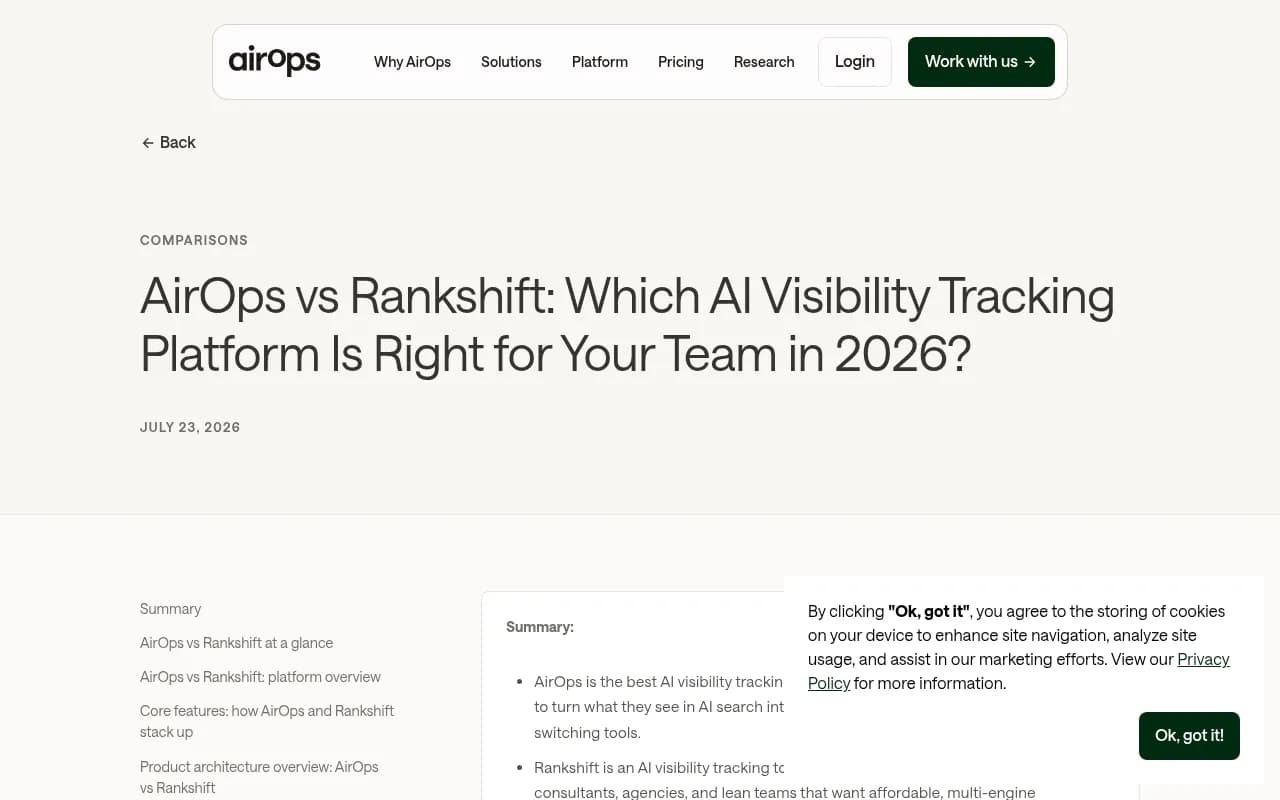
If you have a documented process, someone who owns workflow maintenance and the volume to justify it, AirOps can pay off. The unhappy customers mostly share the opposite profile: small teams, no defined workflow, or an expectation that the tool would supply the strategy.
What the citation data says about content volume
One more reason to be careful with high-volume content automation. Promptwatch's data on which content types ChatGPT cites most (Sep 28 to Oct 4, 2026) found product pages take 22.4% of classified citations, landing pages 16.8% and listicles 13.6%. Product and landing pages together are about 39%. For branded prompts, reviews rise to 5.6%.
So a pipeline that pumps out blog posts is not a citation strategy by itself. You need to know which prompts you are missing, which pages AI actually reads and cites, and whether new content moves anything. Related Promptwatch Data on content half-life in ChatGPT points the same way: news-style content loses half its cited pages within 36 days, while landing pages and docs stay cited longest.
Where teams went
The AIclicks piece frames the exits well. People leaving AirOps usually want a simpler visibility platform that does not need workflow engineering, a managed content-plus-tracking setup, or a cheaper entry point before committing to automation infrastructure. Here is how the options map to that.
| Need | Options | Tradeoff |
|---|---|---|
| Visibility plus optimization without building workflows | Promptwatch, Profound | Less DIY flexibility than a workflow builder |
| Cheap, simple tracking | Otterly.AI, Peec AI, Airefs | Monitoring only, no content engine |
| Content generation with SEO scoring | Surfer SEO, Frase, Clearscope | Little or no AI citation data |
| Existing SEO suite with AI add-ons | Semrush, Ahrefs Brand Radar | Fixed prompt sets, shallower AI data |
| Enterprise governance | Conductor, BrightEdge, Botify | Heavy, expensive, slower to adopt |
Promptwatch: for teams that want the fix, not a toolkit
The core difference is that Promptwatch starts from visibility data rather than from a blank workflow canvas. It shows which prompts you are missing, which pages AI crawlers read (via IP-verified crawler logs), and what traffic AI sends you. Then its Content Agent can plan, write and publish to WordPress, Webflow or Framer, with a review inbox so a human approves what goes out. Published pages are tracked through crawls, citations and clicks, and underperformers come back as actions on the Action Board.
That directly answers two AirOps complaints: you do not have to engineer the strategy, and you can see whether the content worked. Plans start at $95 per month (Essential) and run to $579 for Business, which includes the Content Agent. A 7-day free trial is available on monthly plans, and you should confirm current pricing at promptwatch.com/pricing.

Profound
A strong enterprise monitoring product. Victoria Olsina compared AirOps' dashboards favorably to it. Expect higher price points and less execution help than an agentic platform.

Otterly.AI and Peec AI
Both are straightforward prompt trackers. If your real need is reporting on brand mentions without a workflow layer, these are cheap and quick to set up. They will not write or publish anything for you.


Surfer SEO, Frase and Clearscope
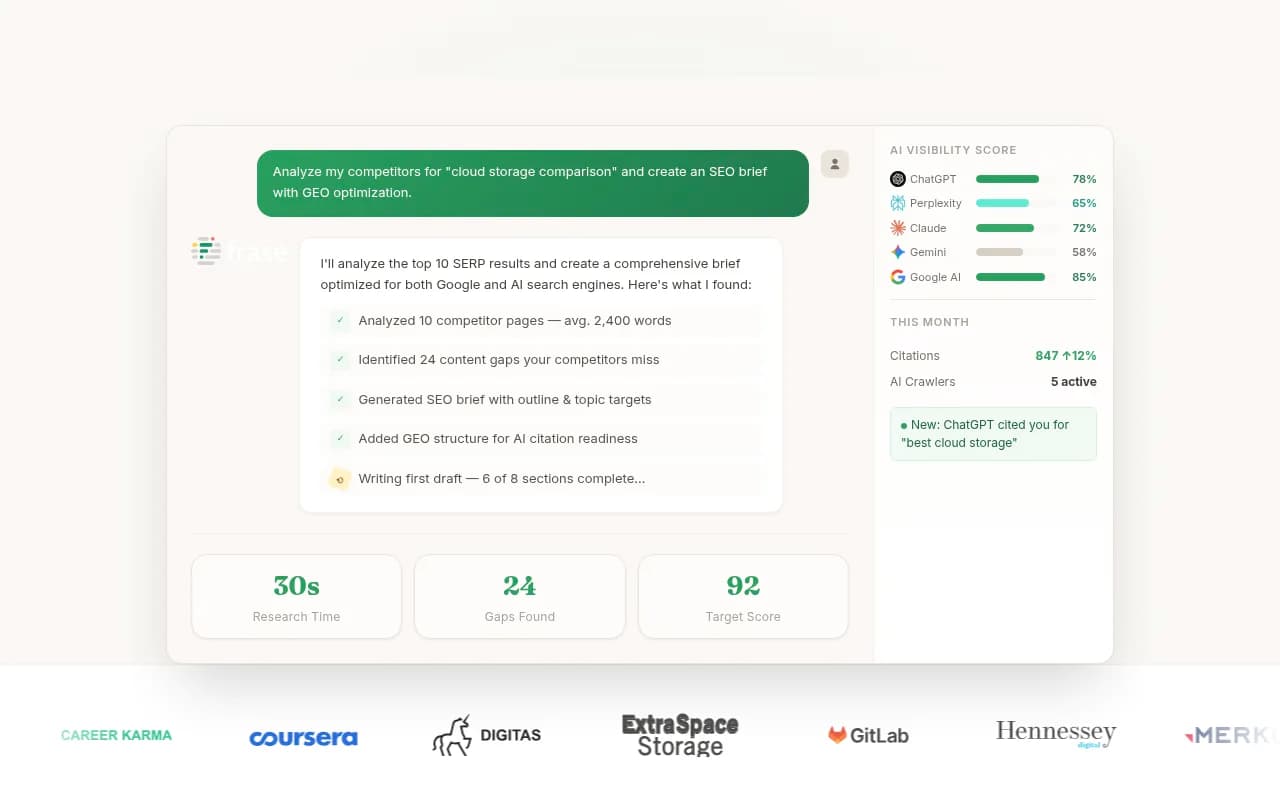
If the part of AirOps you used was content briefs and optimization, dedicated editors are simpler. They are built around a writer working in an editor, not around pipelines.


Semrush and Ahrefs Brand Radar
Teams already paying for a traditional suite sometimes decide the AI tracking add-on is enough. It is a reasonable consolidation move, but you give up depth: no crawler logs and no AI traffic attribution.

Slate and Writesonic GEO
Slate positions itself as an AI-search-first content operations platform, and Writesonic GEO combines visibility monitoring with GEO content generation. Both are worth a look if you want content ops with less configuration.

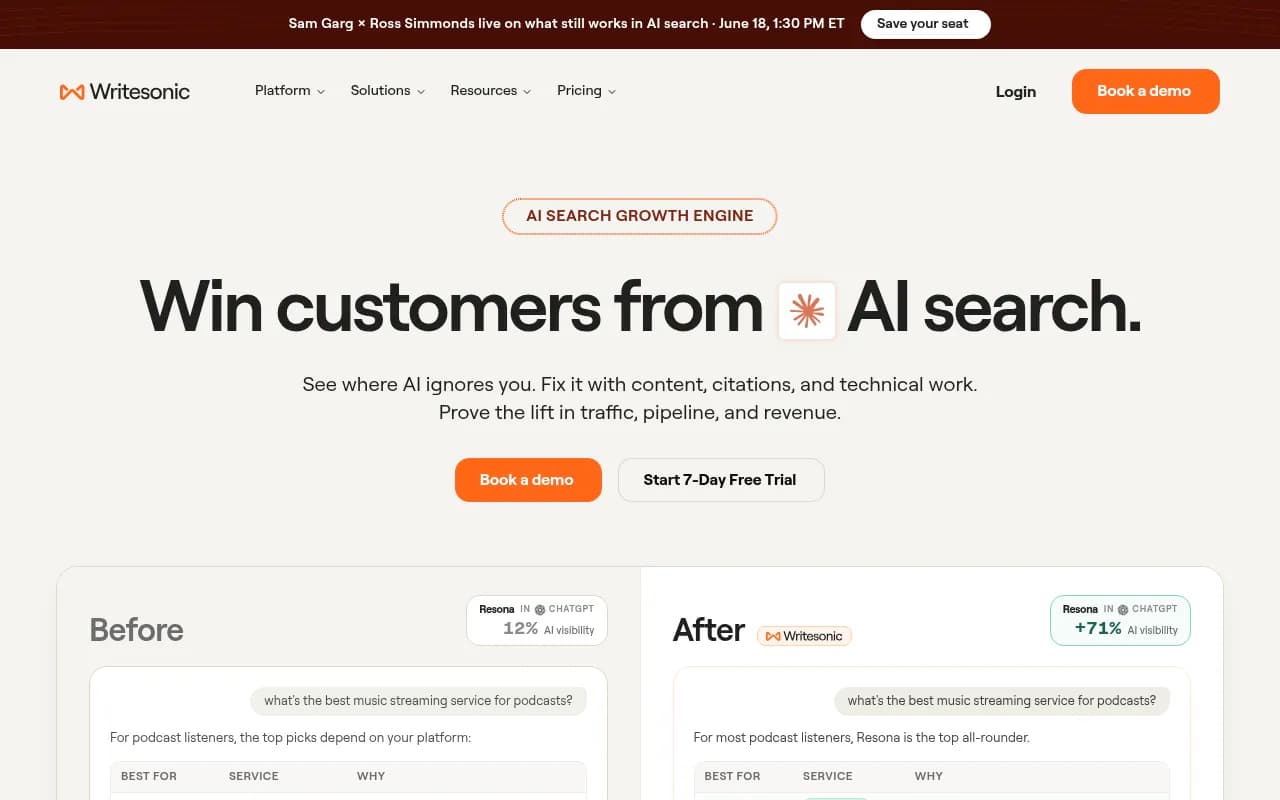
For a wider scan of the category, the GEO software directory lists far more options than fit here.
How to decide before you switch
Moving tools has its own cost, so run through these questions first.
- Do you have a written SEO process that you could hand to a new hire? If not, a workflow builder will not fix that.
- Who owns workflow maintenance? Indexly notes workflows need updates as content systems evolve. If the answer is nobody, expect decay.
- Can you predict monthly task usage? If testing and experimenting eat your allocation, price a plan with a safety margin or move to flat per-response pricing.
- Do you publish automatically? If yes, add a review step and spot-check output for formatting or text errors, whatever tool you use.
- Are you measuring citations and AI-referred traffic? If you cannot see what happened after publishing, you cannot tell whether any tool is working.
Test before you commit
Whatever you pick, use the trial properly. RankUp suggests testing the 14-day AirOps trial on a real workflow rather than a demo. The same advice applies to the alternatives. Take one real prompt cluster, publish a few pieces, and watch for crawls, citations and traffic over a few weeks. A free scan like Promptwatch's AI Visibility Report can give a quick baseline for how ChatGPT, Gemini and Perplexity currently describe you.
Bottom line
Teams leave AirOps mostly because of a mismatch, not because the product is broken. It rewards teams that arrive with a strategy, a workflow owner and a tolerance for usage-based billing. If you need the platform to tell you what to create, then check whether it worked, an optimization-first tool is a better fit. If you already run a mature content operation, the complaints above are manageable, provided you validate every output before it goes live.