Key takeaways
- The cheapest purpose-built AI visibility trackers in 2026 run from $20/month (RankScale) to $69/month (ZipTie), with Otterly.AI at $29/month the most commonly recommended budget pick.
- Independent testing by GTechMe found mention-detection accuracy ranging from 67% to 94% across 12 platforms, a 27-point spread that price did not predict.
- A separate 15-day controlled test found seven citation trackers reporting wildly different numbers for the same site and same queries, an 8.2x gap between the lowest and highest count, because vendors define "citation" differently.
- Cheap tools that only refresh weekly or monthly will misread platform-wide swings (like the 27% ChatGPT citation drop after GPT-5.3) as brand-specific wins or losses.
- There's no "Google Search Console for AI citations," so the real question isn't which tracker is most accurate, it's which citation definition matches what you're trying to measure.
Why cheap AI visibility trackers need a reality check
I'll say the thing nobody selling these tools wants to say out loud: there is no ground truth for AI visibility data. When Google Search Console reports a keyword ranking, you can argue about the methodology but the underlying event (a search, a click) is unambiguous. When an AI visibility tool reports "47 citations this month," that number depends entirely on how the vendor defines a citation, which engines it sampled, how often it re-ran the prompts, and whether it deduplicated results.
That matters more at the cheap end of the market, not less. A $500/month enterprise tool and a $20/month credit-based tracker can both be wrong, but the cheap ones tend to cut corners in ways that are easy to miss until you've already made a decision based on their dashboard.
A controlled test by Ken Imoto ran the same 12 brand queries through seven citation trackers, on the same site, over the same 15-day window in May 2026. The results:
| Tool | Citations reported | Spread vs. lowest |
|---|---|---|
| Otterly AI | 38 | 1.0x |
| Self-built Python script (~$8/mo) | 54 | 1.4x |
| Semrush AI Toolkit | 71 | 1.9x |
| Bluefish AI | 89 | 2.3x |
| Profound (lite tier) | 147 | 3.9x |
| Scrunch | 203 | 5.3x |
| Peec AI | 312 | 8.2x |
Same site. Same 12 queries. Same two weeks. An 8.2x gap between the lowest and highest count. The cause wasn't bad data, it was definitional. Otterly and Profound only count clickable linked sources, which you can verify against GA4 referrer logs. Peec AI counts any brand-name mention whether or not it's linked, which inflates the number but captures more raw brand presence. Scrunch counts mentions and links with no deduplication. None of them is "wrong" exactly, they're measuring different things and calling it the same word.
The accuracy test that actually matters: mention detection
Citation counting is one layer. Whether the tool correctly identifies that your brand was mentioned at all is a separate, more basic test, and it's where the cheap-vs-expensive question gets interesting.
GTechMe tested 12 AI visibility platforms against 600 manually verified prompt-answer pairs across five AI surfaces over four weeks in mid-2026. A few numbers from that test stuck with me:
- Average mention-detection accuracy across all 12 tools: 81%
- Range: 67% (worst) to 94% (best), a 27-point spread
- 9% of all reported mentions were false positives, meaning the tool said your brand was mentioned and it wasn't, or it misattributed the mention
- Sentiment classification, which a lot of dashboards present with confident-looking charts, was accurate only 72% of the time
- Only 4 of the 12 tools re-ran prompts daily; the rest refreshed weekly or monthly
- Only 8 of 12 recorded which source the AI actually cited alongside the mention; the other 4 just logged "mentioned" with no supporting evidence
The part that should worry anyone shopping on price: accuracy and price didn't correlate. A cheap tool could land at 90%+ and an expensive one could land at 70%. Paying more buys you more engines and more polish, not necessarily a more correct answer.
What actually drives these discrepancies
Four things explain almost all of the variance I've seen across these reports.
Citation definition. As above, "strict linked citation" and "any brand mention" produce very different totals from identical underlying data.
Engine coverage. A tool that only samples ChatGPT and Perplexity will report fewer total citations than one sampling five engines, independent of accuracy. GTechMe's coverage breakdown by surface: ChatGPT 12/12 tools covered it, Gemini 10/12, AI Overviews 9/12, Perplexity 8/12, and Claude only 6 of the 12. If your cheap plan doesn't include Claude, you're missing a surface more than a third of competing tools also skip, so you're not alone, but you should know it's happening.
Refresh cadence. This is the one that cheap tools get wrong most often, because daily API/UI sampling costs money and monthly credit-based pricing is how vendors keep the sticker price low. The problem is that AI platforms change behavior overnight. Promptwatch's data shows ChatGPT's average citations per response dropped about 27%, from roughly 6.4 to under 5, within a day of the GPT-5.3 rollout on March 4, 2026, across every ChatGPT variant simultaneously. On August 8, 2026, ChatGPT Search started using the site: operator at scale, jumping from 0.4% to 17% of all fanout queries overnight. And Reddit's share of ChatGPT citations collapsed from about 4% to 0.5% in a single day on August 14, 2026. A tool that samples weekly or monthly will read any of those platform-wide shifts as "you lost visibility this month" when nothing about your content changed at all.
Language and locale defaults. Peec AI queries in 115+ languages by default; several competitors default to English only, which quietly undercounts anything happening in non-English markets even when the brand is genuinely visible there.
The cheapest tools on the market, ranked by price
Here's the full budget ladder as it stood in 2026, pulled from current vendor pricing pages and a 20-tool market survey.
| Tool | Starting price | Engines covered | What you get for the price |
|---|---|---|---|
| RankScale | $20/mo (Essentials, annual) | 8 LLMs incl. ChatGPT, Claude, Gemini, Grok, Perplexity | 120 credits = 480 responses, daily tracking, AI Readiness Audit |
| Otterly.AI | $29/mo (Lite) | ChatGPT, Perplexity, AI Overviews, Copilot (Gemini/Claude are paid add-ons) | 15 prompts, 1,000 GEO URL audits, strict linked-citation counting |
| AI Peekaboo | $50/mo (Starter) | 5 engines incl. AI Mode | 40 prompts every 2 days, white-label reports, unlimited seats |
| ZipTie | $69/mo (Basic) | AI Overviews, ChatGPT, Perplexity | 500 AI Search checks/mo, 10 content optimizations |
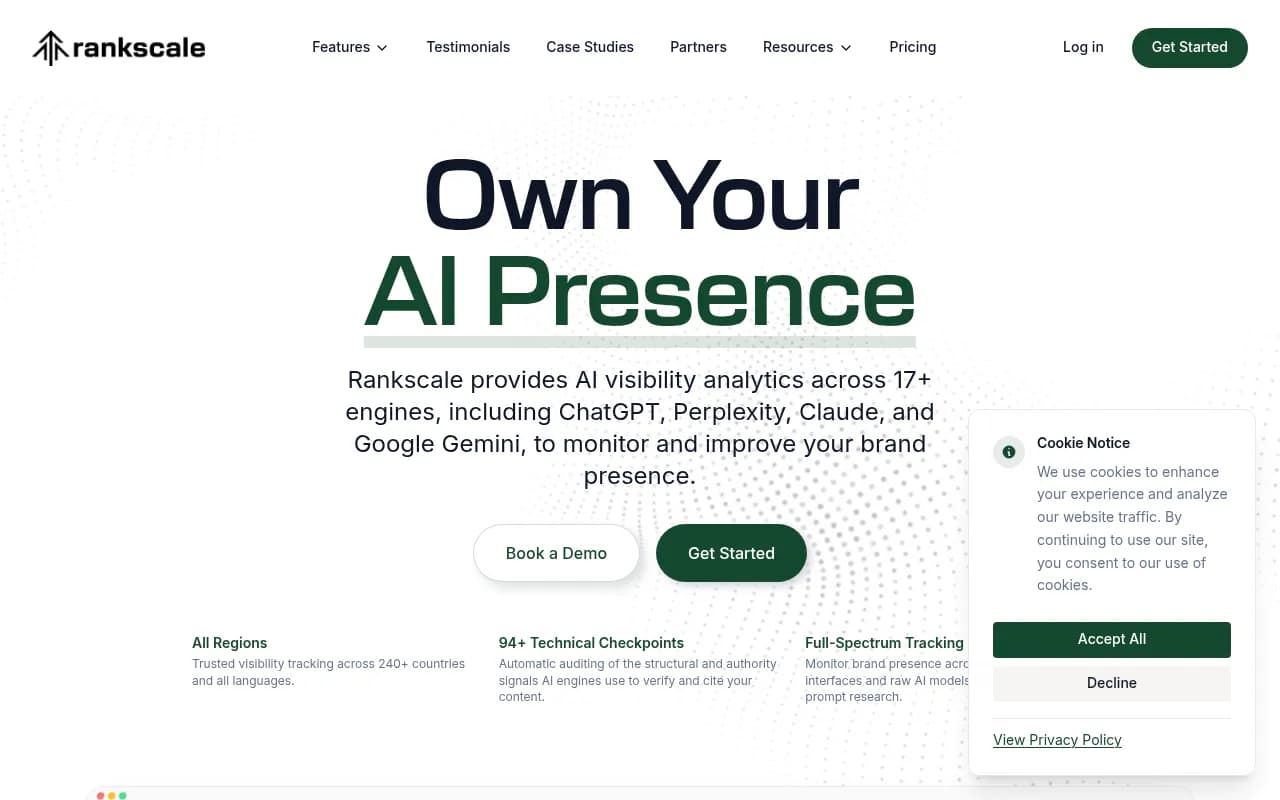

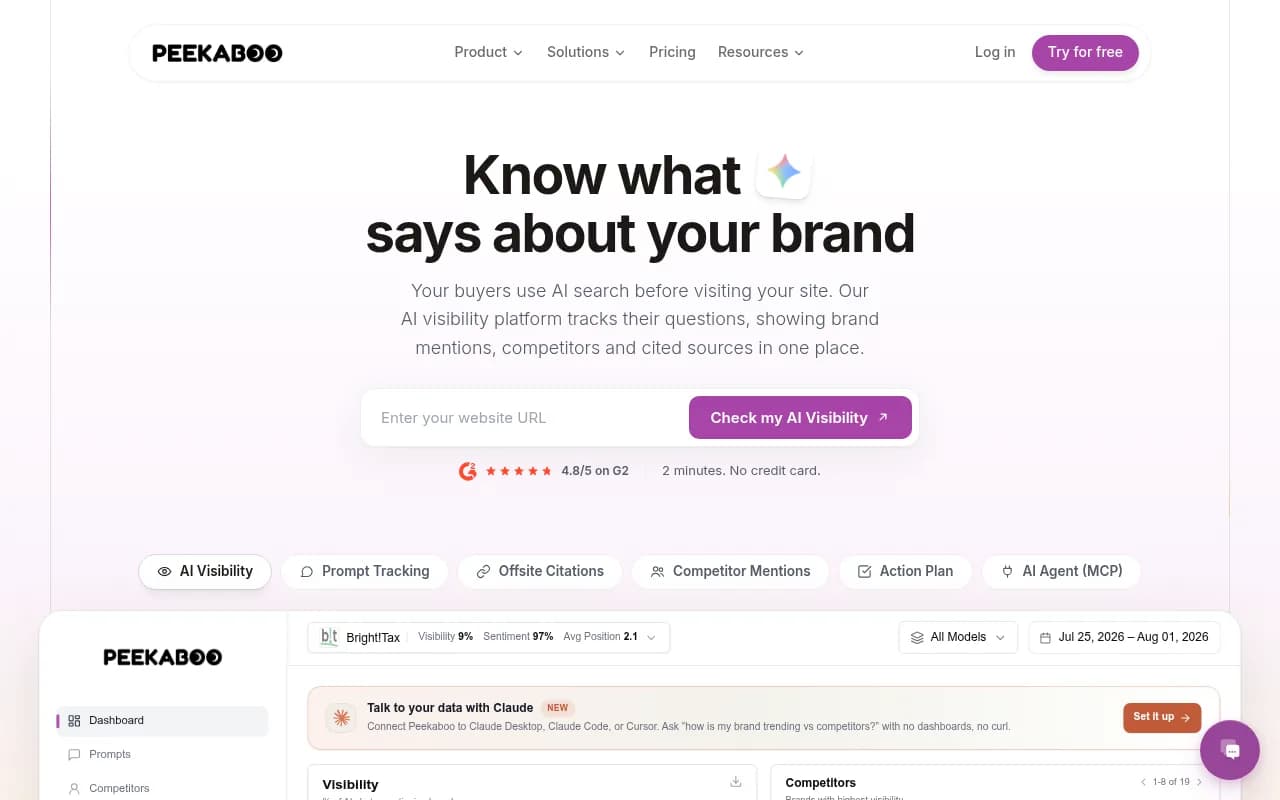
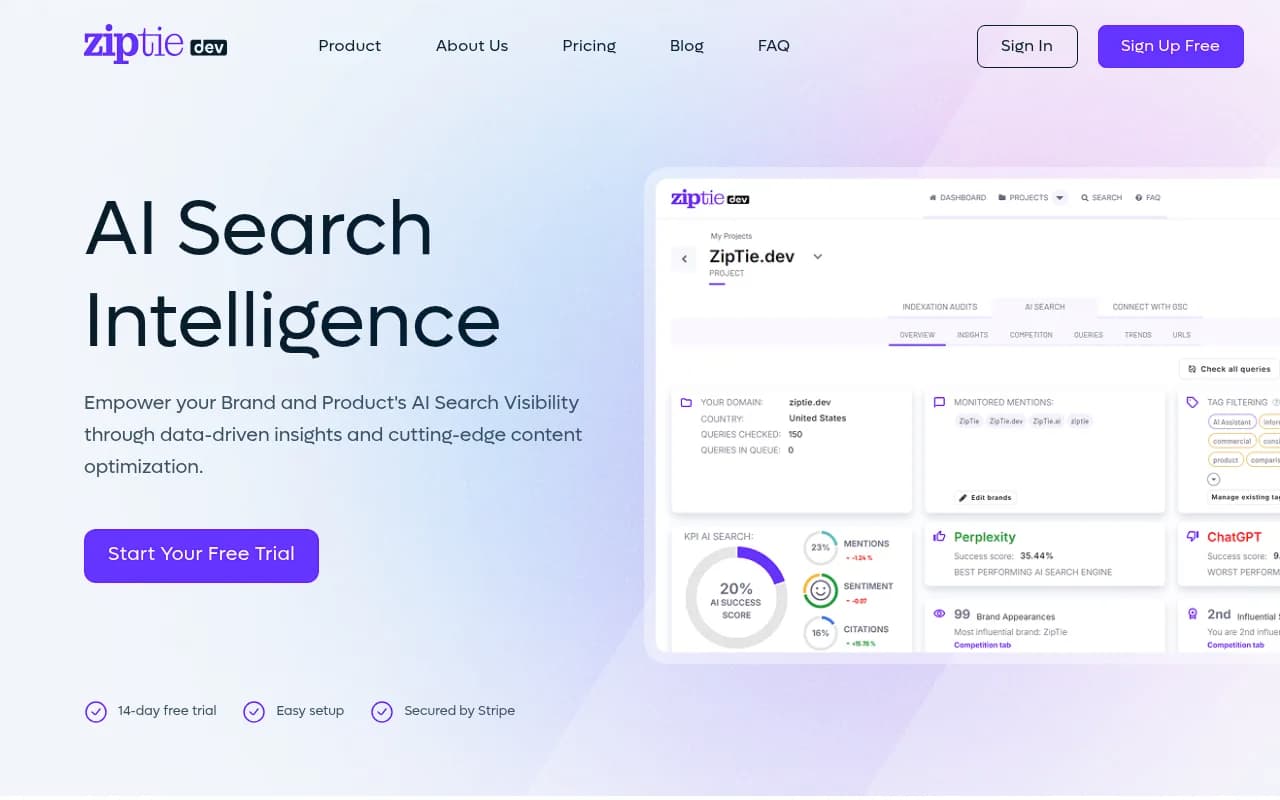
RankScale is the outright cheapest purpose-built tool on the market, and it's credit-based rather than seat-based, which is a sensible model if your query volume is genuinely small. Otterly.AI is the one independent reviewers keep circling back to for the budget tier, mostly because its citation definition (clickable, linked sources only) is verifiable against your own GA4 data, which removes a lot of the guesswork described above. Just know that its 15-prompt Lite plan cliffs hard into a $189/month Standard tier the moment you need more coverage.
Worth noting for context: the broader market averages $337/month across 20 surveyed tools, with a median around $99/month, so anything under $70 is genuinely at the floor of the category, not just cheap relative to Profound or Scrunch.
How to pressure-test any tool before you pay for a year of it
GTechMe's recommended practice, and it's a good one, is to run 20 to 30 manual prompts yourself across ChatGPT, Perplexity, and AI Overviews before trusting a vendor's dashboard. Compare what you see with your own eyes to what the tool reports. This takes maybe an hour and tells you more about real-world accuracy for your specific brand and queries than any vendor benchmark claim will.
A few other checks I'd run before committing a budget tool to a full year:
- Ask the vendor directly whether "citation" means a clickable link, a brand-name mention, or both. Get it in writing if you can, because it changes what the number on your dashboard actually represents.
- Check refresh frequency. If it's weekly or monthly, budget for the fact that platform-level shifts (model updates, new search behaviors) will occasionally show up in your report as fake wins or losses.
- Confirm which engines are included in the base price versus sold as add-ons. Otterly's Gemini and Claude add-ons, for example, can roughly double the effective monthly cost once you need full coverage.
- Check language defaults if you sell outside English-speaking markets.
A related benchmark found that cross-engine agreement on which sources get cited is only about 0.18 on a similarity scale, meaning engines agree on sources less than a fifth of the time. Single-engine tracking at any price point gives you a misleading picture, not just an incomplete one, so make sure whatever tool you pick covers at least ChatGPT, Perplexity, Google AI Overviews, and Claude.
Where a cheap tracker stops being enough
Budget trackers are fine for a first read on whether your brand shows up at all. Where they tend to fall short is turning that read into action. Most of the sub-$70 tools in this guide monitor and report; they don't generate content, tell you what's missing from your pages, or publish fixes. If you're past the "are we even visible" stage and need to actually close gaps, something like Promptwatch pairs the monitoring with content gap analysis, AI crawler logs showing exactly what pages ChatGPTBot and PerplexityBot are reading, and automated content generation that publishes straight to your CMS.

That's a different price tier and a different job than a $29 brand-mention tracker, so it's not an apples-to-apples swap, but it's worth knowing the ceiling exists before you outgrow the floor.
If you want to browse the wider field beyond the handful covered here, the GEO software directory at bestgeosoftware.com and the rank-tracking-focused list at ai-rank-tools.com both cover a broader slice of the market, including a few tools that didn't make this particular price cutoff.
Bottom line
Price tells you almost nothing about accuracy in this category right now. A $20 tool and a $300 tool can both land anywhere in that 67-94% mention-detection range, and the citation counts they report for the exact same site can differ by 8x depending on definitions alone. If you're buying cheap, buy the tool whose citation definition you can actually verify against your own analytics, confirm its refresh cadence, and run your own 20-30 prompt spot-check before you commit. Don't trust the dashboard's trend line until you've done that once.