Key takeaways
- AI Overviews and AI Mode cite the same URLs only about 14% of the time, per Ahrefs' study of 730,000 responses. Visibility in one does not guarantee visibility in the other.
- AI Mode is essentially always on (it triggered on 100% of queries in Otterly.AI's test), while AI Overviews remain selective, appearing on roughly half of queries.
- AI Mode produces far more citations per query (around 310 vs. 51 in one study) and leans on encyclopedic, detailed sources. AI Overviews act more like a curated highlight reel, with a stronger preference for video and community content.
- On brand-name queries, AI Mode heavily favors the brand's own domain. AI Overviews prefer third-party coverage even when you search for the brand by name.
- Google merged the two surfaces into one "seamless AI Search experience" in May 2026, but the citation behavior underneath still differs, so you should track and optimize for both separately.
Two surfaces, one company, very different citation habits
It's easy to assume AI Overviews and AI Mode are the same product wearing different clothes. Both are Google. Both are powered by Gemini. Both show up in Search. If your page gets cited in one, surely it gets cited in the other?
The data says no, and the gap is wider than most marketers expect.
Ahrefs analyzed 730,000 responses and found that AI Overviews and AI Mode cited the same URLs just 13.7% of the time. Even comparing only the top 3 citations from each surface, overlap rose to just 16.3%. In other words, roughly 87% of the time, these two systems answer the same query with completely different sources.
Victorious ran a smaller overlap study (1,540 queries) and landed on a slightly friendlier number, 30-35% URL carryover, but the conclusion was the same: two-thirds of AI Overview citations never appear in AI Mode.

So before we get into tactics, let's be clear about what each surface actually is.
What AI Overviews are
AI Overviews are AI-generated summaries that appear at the top of traditional search results pages. They're designed to give users the gist of an answer quickly, with a limited set of expandable sources. Google's own documentation describes them as a jumping-off point, shown only when the system decides they're "additive to classic Search."
That selectivity matters. In Otterly.AI's study of 100 top German queries, AI Overviews appeared on just 49 of them. Half the time, they don't show up at all.
What AI Mode is
AI Mode is a conversational search experience. Users opt into it (or flow into it from an AI Overview), ask multi-part questions, and get long, scrollable responses with follow-up capability. Google positions it for queries that need "further exploration, reasoning, or complex comparisons."
In the same Otterly.AI test, AI Mode triggered on 100 out of 100 queries. It's essentially always on.
The numbers: how differently they actually behave
Here's where the two surfaces really diverge. These figures come from a mix of first-party Promptwatch Data and third-party studies, and they paint a consistent picture.
| Dimension | AI Overviews | AI Mode | | --- | --- | | Trigger rate | Selective (~49% of queries in Otterly's test) | Essentially always on (100% in the same test) | | Average citations per query | ~51 (Otterly) | ~310 (Otterly), 6x more | | Unique domains drawn from | 615 (Otterly) | 3,621 (Otterly) | | Responses with no citations | 11% (Ahrefs) | 3% (Ahrefs) | | Entities per response | 1.3 (Ahrefs) | 3.3 (Ahrefs) | | Response length | Short summary | ~4x longer (Ahrefs) | | google.com self-citation share (June 2026) | 2.30% | 7.31% | | YouTube citation share | Higher | Lower |
A few of these deserve a closer look.
AI Mode cites more, AI Overviews concentrate more
AI Mode's 310 citations per query versus AI Overviews' 51 sounds like great news for anyone chasing AI Mode visibility, and to some extent it is. More citations means more slots to win. But AI Overviews are actually more concentrated at the top: 21.8% of their citations went to their top 10 domains, versus 18.8% for AI Mode. When you do break into an AI Overview, you're competing for a much smaller, more contested set of positions.
Promptwatch's data on average sources per response adds useful context here: Google AI Overviews average around 10 sources per answer and have been notably steady over time, making them comparatively forgiving to break into on a per-response basis. The catch is getting the overview to trigger at all.
Google cites itself far more in AI Mode
This is one of the sharpest structural differences, and Promptwatch's June 2026 citation share data captures it well. In the June 2026 window, google.com alone captured 7.31% of all AI Mode citations, more than YouTube (2.88%) and Reddit (2.52%) combined. In AI Overviews over the same period, google.com held just 2.30%.
That's a 3x gap in self-citation between the two surfaces, and it's growing. AI Mode's google.com share jumped 72% month-over-month from May to June 2026, on top of a prior sixfold increase. Counting YouTube, Maps, Business Profiles, and support content, Google-owned properties take over 10% of AI Mode's citation mix.
The practical implication: your Google Business Profile, your YouTube channel, and your Merchant Center listings aren't just marketing assets anymore. In AI Mode, they're direct citation channels.
Video wins in Overviews, depth wins in Mode
YouTube gets cited roughly 3x more often in AI Overviews than in AI Mode. Otterly measured 6.33% share in Overviews versus 2.02% in Mode, and Promptwatch's June 2026 data shows the same direction (4.16% vs. 2.88%). Two independent datasets, same conclusion.
Meanwhile, AI Mode leans harder on encyclopedic and detailed sources. Wikipedia appears in about 10% more AI Mode citations than AI Overview citations per Ahrefs, Quora shows up 3.5x more in AI Mode, and health websites get cited nearly twice as much. Otterly's framing is hard to improve on: AI Mode operates like an agentic research assistant that rewards depth and breadth, while AI Overviews operate like a curated answer engine that rewards external validation and authority signals.
Brand queries behave completely differently
This one surprises people. When a user searches for your brand by name:
- For DHL queries, 58.7% of AI Mode citations went to dhl.de, versus 15.4% in AI Overviews
- For Rossmann, it was 62.9% in AI Mode versus 25% in Overviews
- MediaMarkt and Spiegel got essentially zero brand-domain citations in AI Overviews but 55%+ in AI Mode
AI Mode strongly favors the brand's own domain on brand queries. AI Overviews prefer third-party coverage even for explicit brand searches. If your brand monitoring shows you "winning" your brand name in AI Overviews but the citations all point to review sites and listicles, that's not a failure, that's the surface working as designed.
There's a flip side worth knowing: Ahrefs found that if your brand gets mentioned in an AI Overview, there's a 61% chance it also appears in AI Mode's longer response. Entity visibility carries over much better than URL visibility. The mention is the bridge between the two surfaces.
Why are they so different?
Google has said publicly that AI Mode and AI Overviews "may use different models and techniques, so the set of responses and links they show will vary." That's the official one-line explanation. The mechanics behind it are more interesting.
Both surfaces can use query fan-out, where Google expands one query into multiple related sub-queries, runs them in parallel across the live web, the Knowledge Graph, and specialized data like Shopping, then synthesizes a single response. But AI Mode's responses are roughly 4x longer and need far more grounding, which naturally pulls from a wider pool of sources. A 51-citation highlight reel and a 310-citation research document are built by different processes, even when the underlying index is the same.
There's also a filtering difference. AI Overviews surface selectively, likely capturing more edge cases that don't warrant citations (hence the 11% no-citation rate). AI Mode answers everything and cites almost always (3% no-citation rate).
Wait, didn't Google merge them in 2026?
Yes, and this is where the story gets more complicated. At Google I/O on May 19, 2026, Google announced it was merging AI Overviews and AI Mode into one "seamless AI Search experience," letting users flow from a query with an AI Overview directly into an AI Mode conversation without switching interfaces. AI Mode passed 1 billion monthly users around that announcement, and AI Overviews reach more than 2.5 billion.
Does the merger make the distinction obsolete? I don't think so, and the data backs that up. Even inside the unified flow, AI Overviews and classic results remain the default entry point, with AI Mode as the deeper layer users opt into. And the citation behavior underneath still differs sharply, as the June 2026 Promptwatch Data shows: the surfaces were merged at the interface level, but google.com's citation share was still 3x higher in AI Mode than in Overviews that same month.
Treat the merger as a reason to care about both surfaces, not a reason to collapse them into one strategy.
How to optimize for each surface
For AI Overviews
- Win classic rankings first. Research consistently shows most AI Overview links come from pages already ranking in the top organic results. Classic SEO still predicts AI Overview citations far better than it predicts citations in standalone assistants.
- Put answers early. CXL's 100-page study found 55% of AI Overview citations came from the first 30% of the page. Key information in the first 150-200 words significantly improves your citation odds.
- Invest in video. YouTube is the single most-cited domain in AI Overviews in recent months. If you've been deprioritizing video, Overviews are a reason to reconsider.
- Target listicle and product-page formats. Promptwatch's July 2026 data shows listicles at 18% of AI Overview citations and product pages at 16.3%, with product pages overtaking listicles as the top daily format late in the month.
- Get third-party coverage. For brand queries especially, Overviews cite review sites, comparison pages, and editorial sources, not your homepage. Digital PR and review presence matter here.
For AI Mode
- Go deep and structured. Longer, well-sourced, encyclopedic content wins. AI Mode's 97% citation rate and 3.3 entities per response reward pages that thoroughly cover a topic.
- Own your brand domain's content. AI Mode cites the brand's own site heavily on brand queries. Make sure your product, documentation, and about pages are crawlable, current, and answer-rich.
- Optimize your Google properties. With google.com properties taking over 10% of AI Mode's citation mix, your Business Profile, Maps presence, and YouTube channel are first-class citizens.
- Build tightly-scoped pages. Promptwatch's June 2026 analysis notes that almost no independent domain clears 1% citation share in AI Mode, so the open-web opportunity lives in the long tail. Single-question, single-answer pages compete well there.
- Cover entities, not just keywords. AI Mode mentions 2.5x more people and brands per response. Being the entity that gets named, even without a link, is a win.
How to track both (because your analytics treats them as separate too)
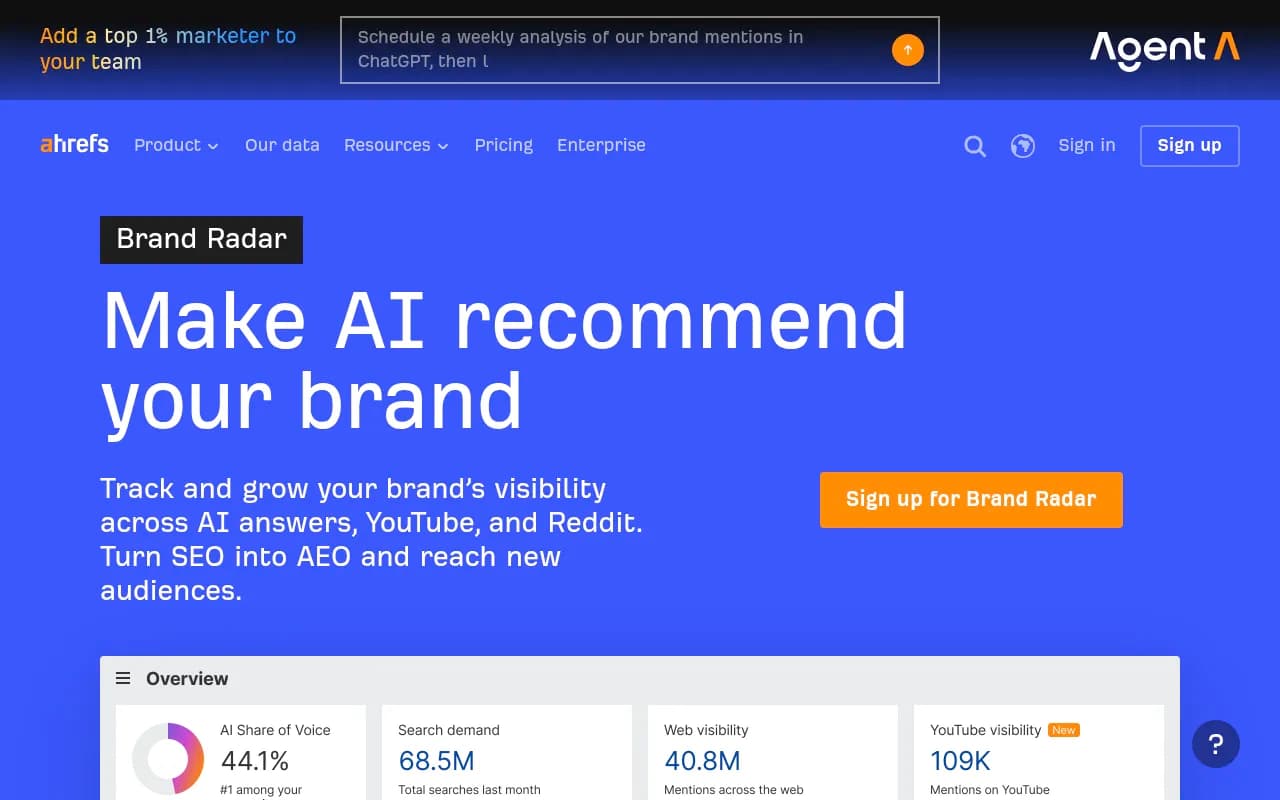
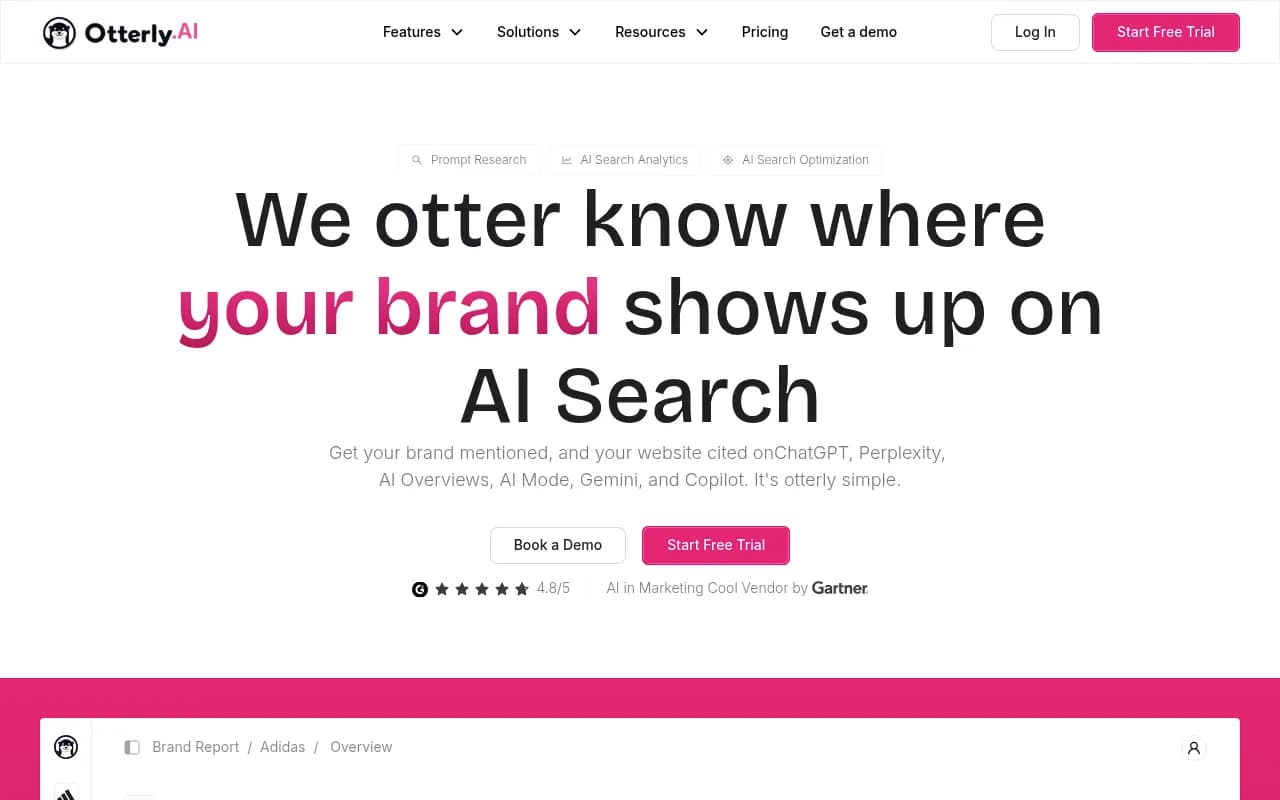
Here's a telling detail: even the tooling industry treats these as different channels. Otterly.AI charges extra for AI Mode tracking as a paid add-on. Ahrefs Brand Radar bills AI Overviews and AI Mode as separate indexes. Google Search Console now has dedicated segments for each, and AI Mode queries in GSC run 2-3x longer than standard web queries.
If you're tracking your AI visibility, you need per-surface data, not a blended "Google AI" number. A platform like Promptwatch tracks AI Overviews and AI Mode separately, along with ChatGPT, Perplexity, Claude, and the other major engines, so you can see exactly where you're cited in each surface and which pages earn those citations.
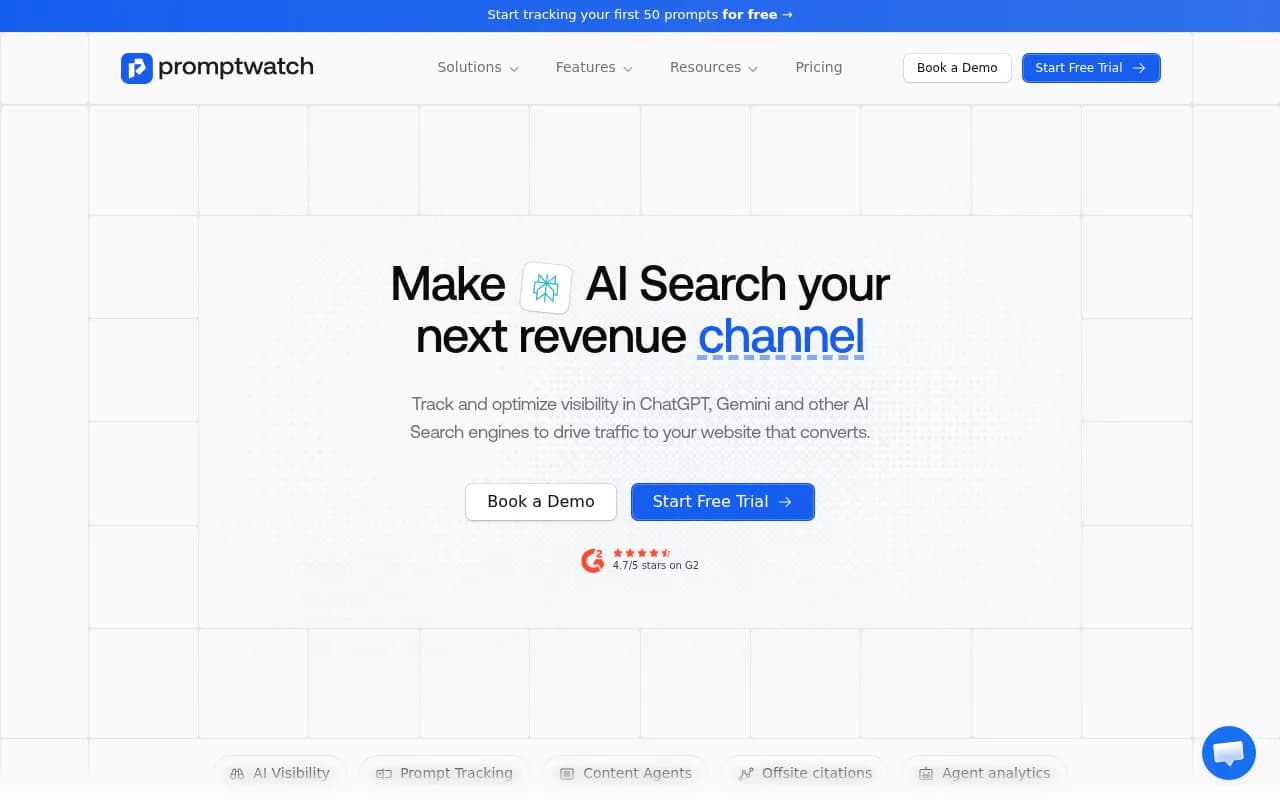
A few other options worth knowing depending on your budget and focus:
| Tool | AI Overviews tracking | AI Mode tracking | Best for |
|---|---|---|---|
| Promptwatch | Included | Included | Teams that want tracking plus content optimization in one platform |
| Ahrefs Brand Radar | Separate index | Separate index | Ahrefs subscribers who want citation data at scale |
| Otterly.AI | Included | Paid add-on | Budget-conscious brand monitoring |
| Knowatoa | Included | Limited | Simple AI Overviews rank tracking |

If you're evaluating the broader landscape, the directories at ai-rank-tools.com and bestgeosoftware.com catalog most of the AI visibility and GEO platforms on the market.
Common mistakes to avoid
Assuming AI Overview visibility transfers. It mostly doesn't. With 13.7% URL overlap, a citation win in Overviews tells you almost nothing about AI Mode. Track them separately and you'll stop being surprised by the gap.
Ignoring the mention because you didn't get the link. 32.8% of responses in Ahrefs' study mentioned no person or brand at all. If AI Mode names your brand without citing your page, that's still entity visibility, and it correlates with a 61% chance of appearing in Overviews too. Offsite mentions matter even without a link back.
Optimizing one page for both surfaces. The same content may not perform equally in both. A punchy video-backed answer page can win an AI Overview slot while a long, well-sourced deep-dive wins AI Mode. Sometimes the right move is two pages.
Treating the May 2026 merger as a reason to stop distinguishing. The interface merged. The citation behavior didn't. Your GSC reports still split them, your monitoring tools still split them, and the underlying data still shows different source preferences.
Frequently asked questions
If I'm cited in AI Overviews, will I be cited in AI Mode?
Probably not, at least not on the same URL. Overlap is around 14-35% depending on the study. But brand mentions carry over much better: a brand mentioned in an AI Overview has a 61% chance of appearing in AI Mode's longer response.
Which surface drives more traffic?
AI Overviews reach far more users (2.5 billion+ monthly versus AI Mode's 1 billion+), but AI Overviews also suppress clicks, with third-party analyses observing CTR drops of 15-89% depending on query type. AI Mode's longer, citation-dense responses behave more like research sessions. Track actual AI-driven traffic rather than assuming either surface is "the traffic one."
Do I need different content for each?
You need different content strategies. Shared fundamentals (crawlability, freshness, structured answers, strong organic rankings) help both. But AI Overviews reward early answers, video, and third-party validation, while AI Mode rewards depth, your own domain's authority, and comprehensive coverage. Test what each surface actually cites in your niche before committing.
Is AI Mode just AI Overviews with a chat box?
No. Different models, different techniques, different citation pools, different trigger rates, and Google says as much in its own documentation. The chat box is the most visible difference, but the 87% citation divergence is the one that should change how you work.
The bottom line
The most useful mental model is the one Otterly offered: AI Overviews are a curated answer engine, AI Mode is an agentic research assistant. Same company, same index, fundamentally different citation behavior. Winning one tells you little about winning the other, which means the only real strategy is to measure both, see which pages and formats each surface rewards in your niche, and build accordingly. The brands that figure this out in 2026 will be the ones whose dashboards never blend the two numbers together.