Key takeaways
- Whitespark's 2026 Local Search Ranking Factors report found Google Business Profile signals drop from roughly 32% weight in the Local Pack to about 12% in AI search visibility, while website content jumps from 15% to 24% and becomes the top AI ranking factor.
- ChatGPT's local citations lean heavily on business websites (58%), third-party mentions (27%), and directories (15%), according to Bigeye's 2026 analysis, though other estimates vary enough that you should verify against your own prompt data rather than trust any single number.
- Google AI Overviews cite roughly 10 sources per answer, almost double ChatGPT's average of about 5, per Promptwatch's data on sources per response, which means a local AI Overview answer has more room for your business to squeeze in, but also more competitors fighting for the same slots.
- Mid-authority domains (DR 46-75) earned about 46% of ChatGPT citations in August 2026 while the biggest sites (DR 91-100) fell to roughly 3-4%, per Promptwatch's citation share by domain rank data, which is good news for a local business that will never out-authority Yelp or TripAdvisor.
- Tracking AI visibility for local requires different tooling than classic rank trackers: you need location-level AI prompt tracking, not just a Map Pack position, and tools like Local Falcon, BrightLocal's AI Visibility module, and Promptwatch each approach this differently.
Why "local SEO" stopped being one thing
For most of the last decade, local SEO meant one scoreboard: where do you land in the Map Pack for "plumber near me," and does your Google Business Profile look complete. That scoreboard still matters. But in 2026 it's one of at least four surfaces a local customer might hit before they ever see your website.
There's the classic Local Pack. There's Google AI Overviews, which now appear on a large share of local queries and sometimes replace the pack entirely on the same results page. There's Ask Maps, Google's Gemini-powered conversational layer inside Maps that ranks businesses using Places data and review sentiment rather than the traditional local algorithm. And there's the open AI layer: ChatGPT, Perplexity, Gemini's standalone app, all of which answer "best taco place in Austin" using a mix of training data, Bing's index, and whatever third-party sites they trust for that category.
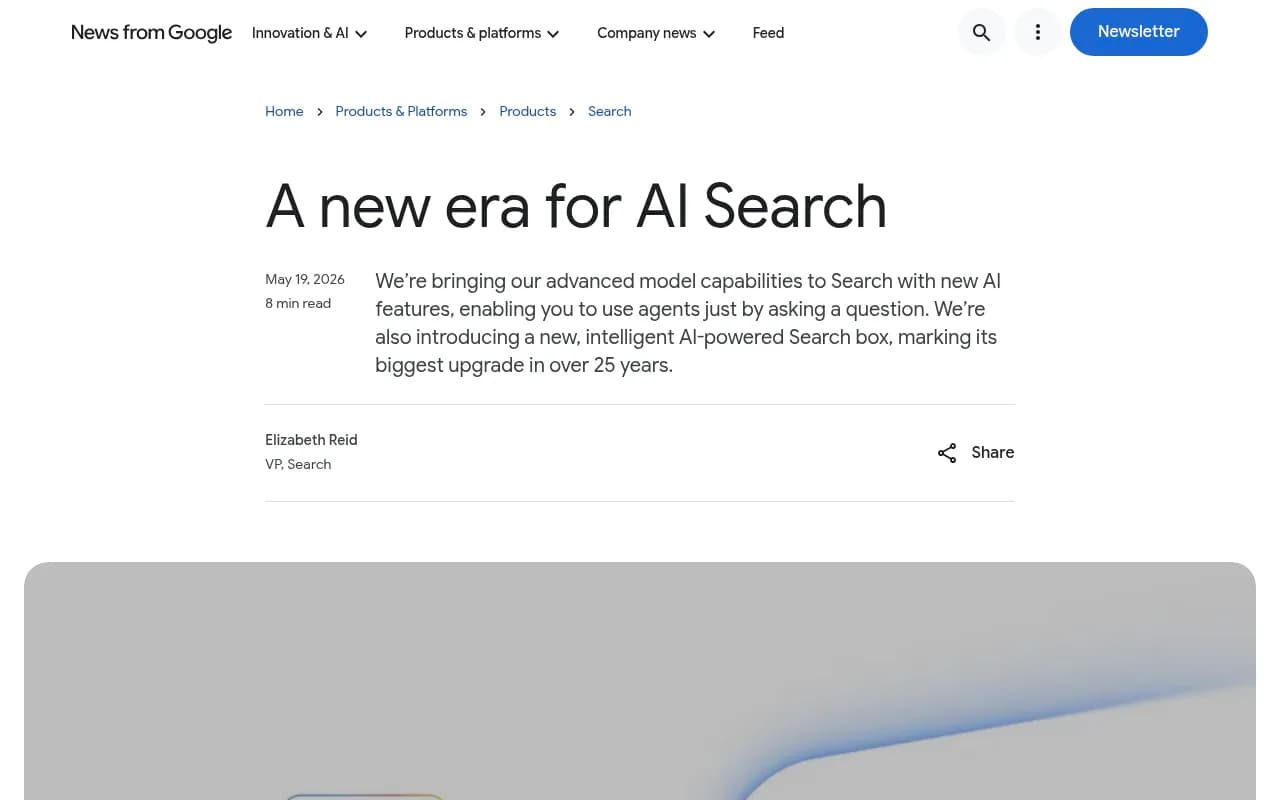
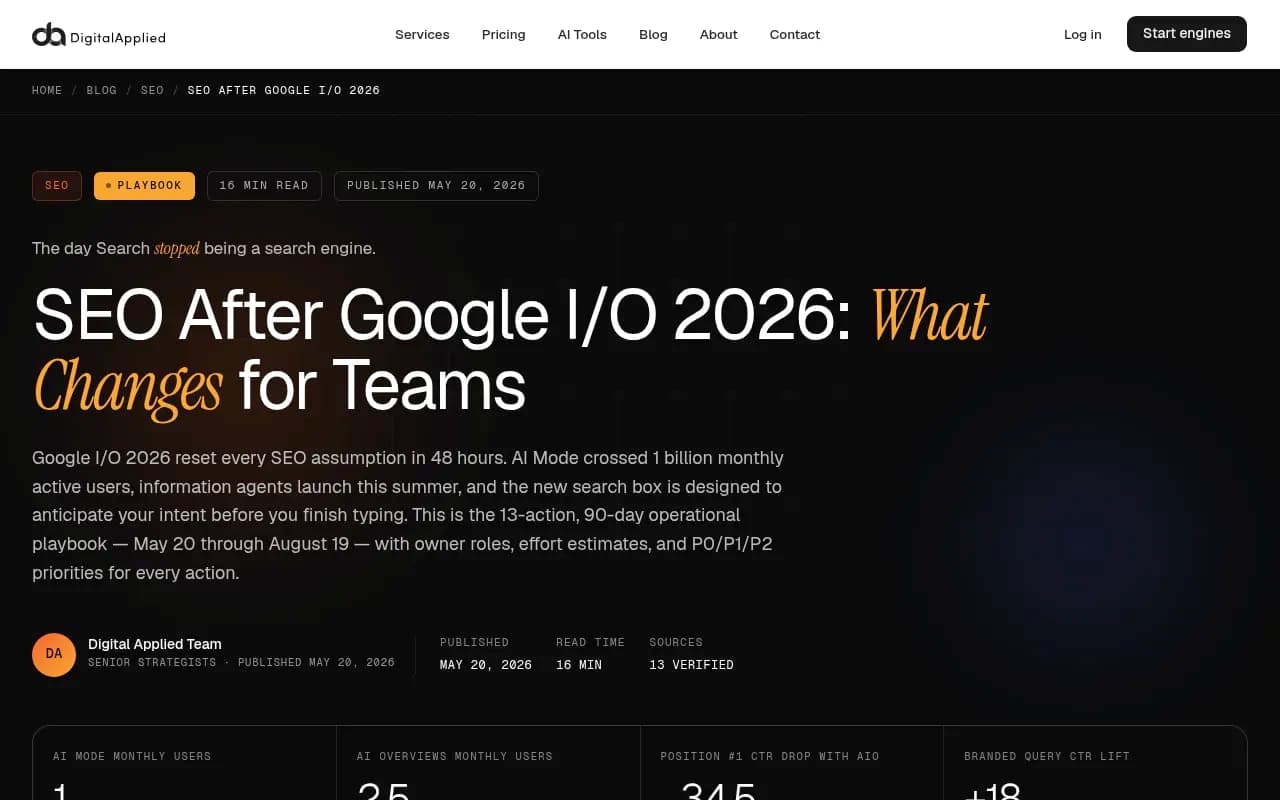
Google's own I/O 2026 announcements made this split explicit. AI Mode crossed one billion monthly users within a year of launch, and Google introduced search agents that take action on your behalf instead of just returning links. That's not a tweak to the SERP. It's a second evaluation layer sitting on top of the one you've spent years optimizing for.
The practical consequence: a local business can rank #1 in the Map Pack and still be invisible when someone asks ChatGPT the same question. Those two outcomes are no longer correlated the way they used to be.
What actually changes in the ranking math
Whitespark's 2026 Local Search Ranking Factors survey, which polled 47 local SEO practitioners across 187 factors, is the first edition to score "AI Search Visibility" as its own category alongside the Local Pack and local organic results. The weight shift it found is the clearest evidence yet that local GEO is not just local SEO with a new label.
| Ranking factor group | Weight in Local Pack | Weight in AI search visibility |
|---|---|---|
| Google Business Profile signals | ~32% | ~12% |
| Website content | ~15% | ~24% |
| Reviews | ~20% | ~16% |
| Citations | ~6% | ~13% |
| Links | ~8-9% | ~13% |
| Social signals | ~4% | ~9% |
The story in that table is simple: the channel most local businesses have been pouring effort into for a decade, the Google Business Profile, matters less than half as much once you're talking about AI visibility. Website content, the thing agencies have historically treated as a once-a-year refresh, becomes the single biggest lever. Citations and links, often dismissed as "old SEO," more than double in relative importance because AI models need corroborating signals from multiple sources before they'll confidently cite or recommend a business.
Whitespark is careful to note local search has been somewhat insulated from the AI disruption that's hit informational content, because people still trust Google's local results more than an LLM's opinion for most local intent. I'd push back gently on how long that insulation lasts. Every data point on AI adoption for local queries points the same direction, and insulation is not the same as immunity.
What local GEO tracking actually has to measure
A Map Pack rank tracker answers one question: where do you sit, for this keyword, in this city. Local GEO tracking has to answer several questions at once, and most of them have no equivalent in the old tool stack.
Are you cited at all, and by what
For local-style branded queries ("is [business name] good"), ChatGPT tends to lean on a small number of sources rather than the sprawling source lists you see on generic informational prompts. That narrows the field but raises the stakes: if your website, your top review site, and maybe one directory are the only three sources an AI model trusts for a query about your business, each one carries outsized weight. Promptwatch's research on sources per AI response shows ChatGPT typically cites around 5 sources per web-search answer, while Google AI Overviews cites close to 10, almost double. That gap matters for local: an AI Overview answer has more room for a smaller business to sneak into the citation list than a ChatGPT answer does.
Does your content type match what AI actually cites
Promptwatch's data on ChatGPT citation types shows product and landing pages consistently lead citation share, often accounting for a third or more of what gets cited in a given month. For a local business, the equivalent is your service pages and location pages, not your blog. If your site's strongest content lives in a generic "About Us" and a thin homepage, you're optimizing for the wrong asset.
Can a smaller site actually compete
This is the part that should reassure local business owners who assume they can't outrank Yelp, Angi, or a national franchise in AI answers. Promptwatch's citation share by domain rank data found mid-authority domains (DR 46-75) earned close to 46% of all ChatGPT citations in August 2026, while the very highest authority sites (DR 91-100) fell to roughly 3-4% by the end of the month. AI models don't automatically default to the biggest, most-linked domain. They look for the source that answers the specific question best. A local dealer or clinic site with a DR in the 30s to 50s, strong on-page specificity, and clean structure can out-cite a national directory on a narrow, local question.
Location-level variance
The trap most generic AI tracking tools fall into is treating "visibility" as a single national number. Local Pack results shift block by block within the same city, and there's no reason to assume AI answers don't do the same, since location context (where the user is, or where they say they are) feeds into both Google's local results and increasingly into AI responses too. A tool that gives you one visibility score for "your brand" across the whole country is telling you almost nothing useful if you have five locations with five different competitive sets.
The tool landscape: what's purpose-built for local vs. general GEO
Most AI visibility platforms were built for brand-level tracking: one company, one set of prompts, a national or even global view. Local adds a dimension those tools weren't designed for, which is why a specialized or configurable layer matters.
| Tool | Built for local-level tracking | AI platforms covered | Notable feature | Starting price |
|---|---|---|---|---|
| Local Falcon | Yes, geo-grid by design | ChatGPT, Gemini, AI Overviews, AI Mode, Grok, Map Pack | Credit-based geo-grid pins with automated action-taking | $24.99/mo |
| BrightLocal AI Visibility | Yes, bundled module | ChatGPT, AI Mode, AI Overviews | AI sources leaderboard, citation gaps feed into Citation Builder | $31/mo |
| Nightwatch | Yes, heatmap + AI tracking | Multiple AI engines plus Map Pack | Combines geo-grid heatmaps with GBP monitoring | $32/mo |
| Birdeye Search AI | Yes, location-level | Multiple AI engines | Local AI visibility tied into reputation management | Custom |

| Promptwatch | Configurable via projects/prompts, not location-grid native | ChatGPT, Gemini, Claude, Perplexity, Grok, Copilot, AI Overviews, AI Mode and more | Crawler logs, content gap analysis, automated CMS publishing, Reddit/YouTube citation tracking | $95/mo |
The honest way to think about this split: Local Falcon, BrightLocal, and Nightwatch answer "where does my specific location rank in AI answers right now," which is the question closest to classic local rank tracking. Promptwatch sits one layer deeper. It's built to answer why you're visible or not (crawler logs showing which AI bots actually read your pages), where your citations are coming from (including Reddit threads and YouTube videos most local tools never check), and what to do about gaps (automated content generation and publishing, not just a dashboard). For a multi-location brand that wants both the geo-grid view and a system that writes and publishes location-specific content to close citation gaps, running a dedicated geo-grid tool alongside a broader GEO platform is a reasonable setup rather than an either-or choice.
If you want to browse the wider category before settling on a stack, the GEO software directory at bestgeosoftware.com has a broader comparison of platforms beyond the ones listed here.
A practical checklist for making the transition
For a business or agency moving from "we do local SEO" to "we track local GEO too," the work breaks down into a few concrete moves rather than a wholesale strategy rewrite.
- Audit what AI bots can actually see. Check your robots.txt and CDN/WAF rules for OpenAI's crawler, Anthropic's ClaudeBot, Google's crawlers, and Perplexity's bot specifically, not just a generic "allow all bots" assumption. A rule that quietly blocked one crawler a year ago now excludes you from a meaningfully different slice of AI traffic than it did then.
- Build or expand genuinely location-specific content. Not a templated page with the city name swapped out. Content that reflects what's actually different about serving that market, the kind of granular detail AI models seem to reward when deciding which source to trust for a specific place.
- Treat reviews as citation fuel, not just reputation management. Specific, detailed reviews that name an employee or a neighborhood carry more weight with both Google's algorithms and AI models evaluating source credibility than generic five-star ratings.
- Set up a bank of 20-30 real local prompts per location and track share of voice across AI engines, not just Map Pack position. This is the single biggest mental shift: you're now tracking a conversation, not a rank.
- Check citations and third-party mentions with the same discipline you used to reserve for backlinks. Citations roughly double in relative importance for AI visibility compared to the Local Pack, according to Whitespark's weighting.
None of this replaces the fundamentals. Google still sends far more traffic than any AI platform combined, and strong traditional local SEO continues to feed AI visibility rather than compete with it. The businesses that get hurt in this transition aren't the ones ignoring AI search entirely. They're the ones treating the two tracks as identical and wondering why their Map Pack ranking stopped predicting whether ChatGPT recommends them at all.