Key takeaways
- Lightweight trackers (Otterly-style tools) answer one question well: was my brand mentioned? Most teams outgrow that question within a quarter or two.
- The pressure comes from platform behavior that changes overnight, from the need to prove traffic and revenue, and from the gap between knowing you are invisible and fixing it.
- The upgrade path is crawler logs, AI traffic attribution, content gap analysis and a way to ship fixes, not just a bigger prompt allowance.
- You do not have to leave a cheap tracker on day one. Move when you hit specific triggers, listed below.
- Check current pricing and limits on each vendor's site before you decide. They change often.
What I mean by a lightweight tracker
A lightweight AI tracker takes a list of prompts, runs them across a few AI engines on a schedule, and reports whether your brand showed up, where, and next to which competitors. Setup takes an afternoon. The price is low. The dashboard is clean.
Otterly.AI is the usual reference point for this category, and the catalog is full of similar tools: Rankscale, ZipTie, Airefs, Peec AI and others. I am not going to pretend these are bad products. For a founder who wants to know whether ChatGPT has ever heard of their company, they are the right size.

The trouble starts when someone senior asks the second question. Fine, we are mentioned in 12% of answers. What do we do about it, and is it making us money?
A note on sourcing: I have not independently verified current Otterly pricing or feature limits for this guide, so I am describing the category pattern rather than quoting its plan details. Check each vendor's pricing page.
Why teams outgrow these tools
1. AI engines change behavior without warning
This is the strongest argument for continuous measurement, and also a quiet argument against tools that only sample a small prompt set.
Promptwatch's data on ChatGPT's use of the site: operator is a good example. On August 8, 2026, the share of fanout queries containing site: went from 0.37% to 16.8% in a single day, about one in six fanouts. Average fanouts per response rose from roughly 1.08 to roughly 1.83 the same day and stayed there. Promptwatch's own conclusion is that platform-controlled search behavior can change overnight, so continuous monitoring matters more than one-off audits.
The practical consequence is bigger than it looks. If ChatGPT now searches your own domain as a retrieval surface, then crawlability and indexing gaps cost you answers directly. A tracker that tells you your mention rate dipped does not tell you why. You need to know whether the bots could read the page.
The query fanout report shows the same instability over a longer window: about 2.15 fanout queries per response in early December 2025, about 1.84 by early March 2026, and exactly 1.0 when fanouts returned in April. Average query length fell from about 117 characters to about 53. Keyword-to-heading mappings built on last quarter's behavior go stale.
2. Mentions are not the same as being read
A mention count says nothing about whether AI crawlers can fetch your pages. That is a separate data source: server or CDN logs, verified against each operator's published IP ranges.
Promptwatch's AI crawler traffic report covers weekly verified requests from June 8 to September 6, 2026. OpenAI made up 79.8% of verified requests in the week of August 31, down from 94.8% in the week of June 8. The mix is shifting, which means a robots.txt or WAF rule written for one bot may quietly block another provider that now matters.
Lightweight trackers generally do not include this layer. If your answer to "why are we not cited?" is a guess, you are stuck. See the AI crawler logs feature for what this data looks like in practice.
3. Finance wants traffic and conversions
Visibility scores are an input. Marketing leaders get asked for pipeline. Tools built around monitoring rarely close that loop. The ones that try, like Trakkr, Passionfruit and LLMclicks.ai, position themselves around traffic and revenue attribution precisely because that is the gap.
There is also a wrinkle in attribution. ChatGPT stopped sending a referrer on October 8, 2026, so referral analytics alone undercounts it. Tools that depend only on referrer headers need a UTM-based workaround.
4. A dashboard does not fix anything
The sharpest complaint I hear is not that trackers are inaccurate. It is that the report ends and the work begins somewhere else. Someone still has to find the content gaps, brief writers, publish, and then check whether the page was crawled and cited.
That gap is why the market split into two camps: monitors, and platforms that also act. Even a Reddit thread comparing AI visibility tools picked out the same difference, favoring the ones that compare you against competitors and then suggest executable actions.
The ceiling, in practice
Here is a rough way to tell whether you have hit it.
| Symptom | What it means | What you need |
|---|---|---|
| Score drops and nobody knows why | No diagnostic layer | Crawler logs, citation tracing |
| Execs ask for AI revenue | No attribution | Visitor analytics, UTM handling |
| Prompt list feels stale | Fanouts changed under you | Query fanout analysis, prompt volumes |
| Backlog of "we should write about X" | Gaps found, not filled | Content gap analysis, content workflow |
| Agency managing 10+ clients | Per-seat or per-brand limits | Unlimited projects, white-label reporting |
| Multi-country or local business | Country-level only | State, city, coordinate-level tracking |
If you recognize two or more rows, the cheap tracker has probably done its job and it is time to look up the stack.
What the next tier looks like
The category has fragmented. It helps to sort options by what they add on top of monitoring.
Monitoring plus analytics suites
Semrush AI Visibility Toolkit, Ahrefs Brand Radar, SE Ranking Visible, Similarweb AI Brand Visibility and Amplitude AI Visibility bolt AI tracking onto products you may already pay for. That is convenient. The tradeoff is usually fixed prompt sets and shallower AI-specific data.

Enterprise visibility platforms
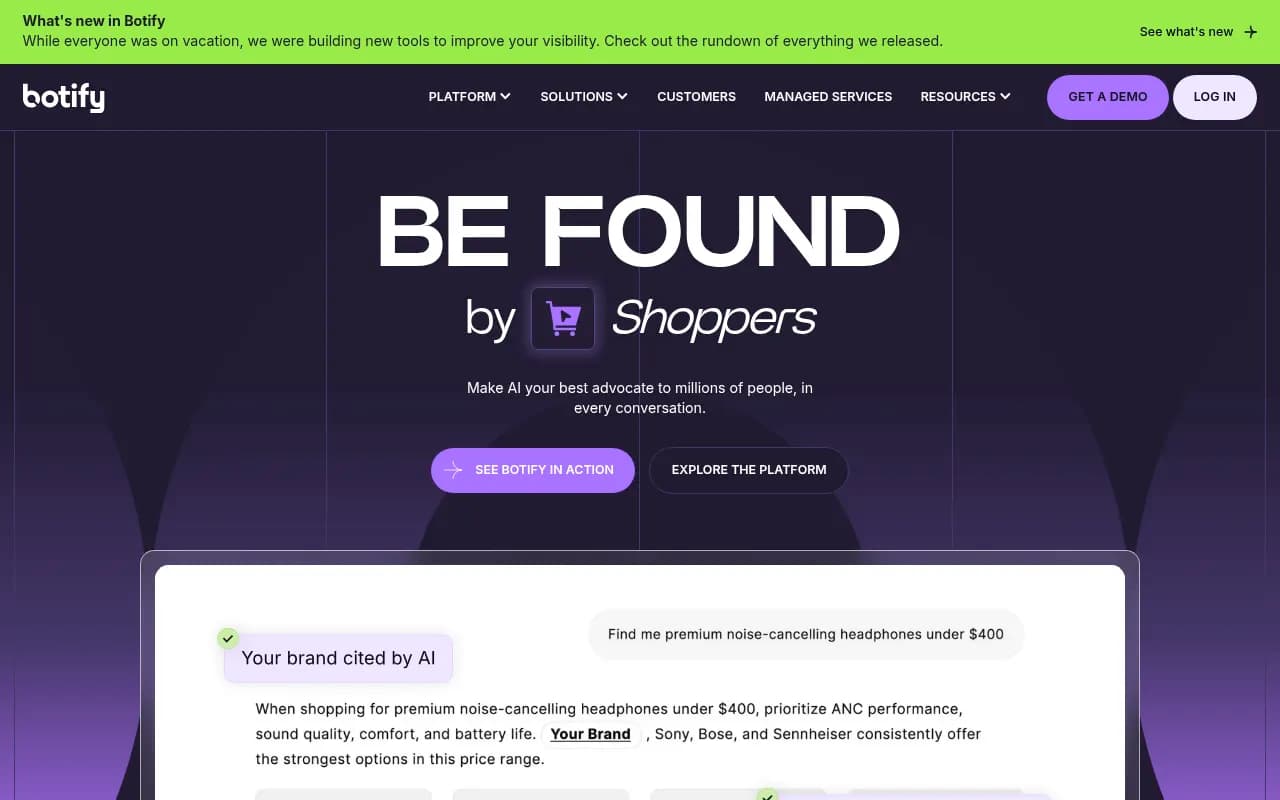
Profound, Scrunch, BrightEdge, Conductor, Botify and Adobe LLM Optimizer target large teams. Strong monitoring, strong reporting, higher price points. Some, like Botify, lean on technical SEO depth.

Content-first tools
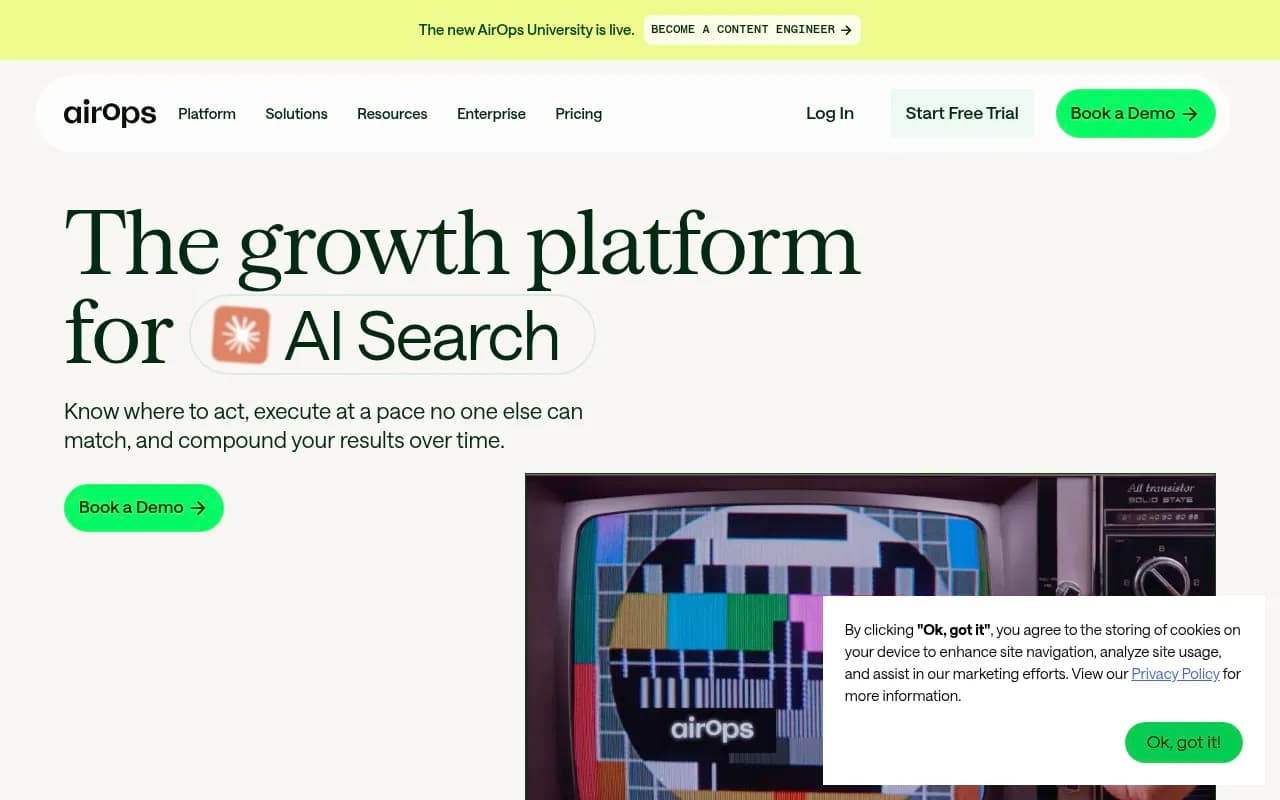
AirOps, Writesonic GEO, Slate, Junia AI and RankControl start from content production. They are useful, but without citation and crawler data to ground the content you are writing partly blind.
End-to-end platforms
This is where Promptwatch sits. It covers monitoring across the real interfaces of ChatGPT, Gemini, Perplexity, Claude, Google AI Overviews and others, then traces which pages and third-party sources get cited, then acts through the Action Board and the Content Agent, then measures with IP-verified crawler logs, page tracking and visitor analytics. That loop of monitor, trace, act and measure is the actual difference from a tracker.

A few specifics worth knowing: plans run from Essential at $95/mo to Business at $579/mo, with agency plans from $199/mo. The Content Agent, hourly tracking, city-level and coordinate targeting, Fact Check and Ads Radar start at Business. Confirm everything at promptwatch.com/pricing because plans change. A side-by-side with the older tools is on the Promptwatch vs Otterly page, and the 2026 platform comparison covers the rest of the field. Both are vendor-authored, so read them as a starting point.
Comparing the categories
| Category | Examples | Strength | Typical gap |
|---|---|---|---|
| Lightweight tracker | Otterly.AI, Peec AI, Rankscale | Cheap, fast setup | No crawler logs, limited attribution, no content workflow |
| SEO suite add-on | Semrush, Ahrefs Brand Radar | One login, familiar UI | Fixed prompts, shallow AI data |
| Enterprise monitor | Profound, Scrunch, BrightEdge | Depth, governance | Price, limited execution |
| Content generator | AirOps, Writesonic GEO | Fast production | No visibility feedback loop |
| End-to-end platform | Promptwatch | Monitor, fix, measure in one product | Higher entry cost than a simple tracker |
How to decide whether to move
Stay on a lightweight tracker if
- You have one brand and under a few dozen prompts.
- Nobody is asking for AI-attributed revenue yet.
- Your site is small and you already know crawlers can read it.
- Budget is the main constraint. Free starting points exist, such as Promptwatch's free AI visibility report, for a one-time baseline.
Move when
- A metric moved and you could not explain it.
- You are producing AI-targeted content and cannot tell if it was crawled, cited or clicked.
- You manage multiple clients or markets and need reporting that does not require rebuilding in slides.
- Leadership wants a line from AI visibility to conversions.
- Platform changes, like the site: shift, keep invalidating your prompt and heading assumptions.
A practical migration path
- Export your existing prompt list and competitor set from the old tool.
- Run a crawler access check before anything else. The free Agentic Readiness Check and AI crawler URL inspector are quick ways to catch robots.txt and CDN blocks.
- Rebuild prompts around query fanouts rather than keywords. Promptwatch's own advice from its fanout data is to write headings that read like search queries, put the entity and category first, and build focused pages for comparisons, pricing, alternatives and how-tos.
- Turn on crawler logs and visitor analytics before you publish anything new, so you have a baseline.
- Pick three content gaps, publish, and check crawl, citation and traffic for each. Do not scale until that loop works.
Other trackers worth a look
Not everyone needs a full platform. Some specialist options in the catalog:
- Alhena AI, Yotpo Discover and Ranketta for ecommerce catalogs.
- Birdeye Search AI and BrightLocal for location-level work.
- Elmo and AI Monitor for open-source, self-hosted setups.
- Search Party for agencies.
For a broader scan, the GEO software directory at bestgeosoftware.com lists far more options than a single article can, and ai-rank-tools.com focuses on rank trackers.
A caution on all of this
I would not take any vendor's claim, including mine, at face value. Run a trial on your own prompts. Ask each tool how it collects data (real interface or API), how often it runs, what it does when a platform changes behavior, and whether you can export everything. The answers separate tools you will keep from tools you will replace in six months.
If your team needs help running that evaluation or building the content program that follows, the agency behind this site, 1001 SEO Media, does AI search and GEO work and uses Promptwatch internally.
Bottom line
Lightweight trackers are not going away. They remain the right first purchase for small teams. But the ceiling is real: they report mentions, and the work that follows (diagnosing crawl problems, filling content gaps, attributing traffic) lives elsewhere. Teams that keep moving beyond them are not chasing features. They are looking for a way to turn a visibility number into something they can change and defend. If you are at that point, start with a 7-day trial of the platform you are considering, and measure whether one published page gets crawled, cited and clicked. That single test tells you more than any feature table.