Key takeaways
- An AI visibility score measures how often and how prominently your brand appears in AI-generated responses across platforms like ChatGPT, Perplexity, Claude, and Gemini.
- The score is not a single universal metric -- different tools calculate it differently, so understanding what's behind the number matters more than the number itself.
- Frequency, breadth (how many relevant topics you appear for), and authority (how credibly you appear) are the three dimensions that drive the score.
- The gap between your score and a competitor's score is more actionable than the raw number.
- Improving your score requires creating content that directly answers the prompts AI models are already responding to -- not just optimizing for traditional keyword rankings.
Why this metric exists at all
Not long ago, "search visibility" meant one thing: how often your pages appeared in Google's results, and how high up. That metric made sense when search was a list of links.
AI search doesn't work that way. When someone asks ChatGPT "what's the best project management tool for remote teams?" or asks Perplexity "which CRM should a 20-person SaaS company use?", they get a synthesized answer. Maybe your brand gets mentioned. Maybe it doesn't. Maybe a competitor gets recommended three times in the same response.
Traditional SEO tools can't see any of this. Google Search Console shows impressions and clicks from Google. It has no idea what ChatGPT said about you this morning.
That's the gap the AI visibility score fills. It's a way to quantify something that was previously invisible: how present your brand is in the answers AI models give to real buyer questions.
One data point worth knowing: ChatGPT's sources have only a 39% overlap with Google's sources, according to research from Profound. That means ranking well in Google doesn't automatically translate to appearing in AI answers. The two are related but increasingly separate problems.
What an AI visibility score actually measures
The exact formula varies by platform, but most AI visibility scores are built from the same underlying data. Here's what they're actually counting:
Mention frequency
The most basic input: out of all the prompts you're tracking, what percentage of AI responses include your brand? If you're tracking 100 prompts and your brand appears in 34 of the responses, your raw mention rate is 34%.
Some platforms call this "share of voice" or "share of visibility." The framing matters less than understanding what's being counted.
Breadth across topics and personas
Appearing for one prompt 50 times is less valuable than appearing for 50 different prompts once each. A good visibility score rewards breadth -- showing up across different buyer intents, use cases, and question types.
This is why the score is more useful than just counting citations. A brand that only appears when someone asks a very specific branded question has low breadth. A brand that appears across "best tools for X," "how to solve Y," and "compare A vs B" prompts has high breadth and is genuinely embedded in the AI's understanding of its category.
Sentiment and positioning
Some platforms go further and score not just whether you appear, but how you appear. Are you mentioned as a top recommendation, a secondary option, or as a cautionary example? Are the surrounding phrases positive, neutral, or negative?
This matters because an AI model might mention your brand in a response while also noting a significant limitation. That's not the same as a clean recommendation.
Citation quality
Where the AI is pulling from to mention you also factors in. A citation from your own website is one signal. Citations from third-party review sites, industry publications, Reddit threads, or YouTube videos carry different weight. Some platforms track which external sources are driving your AI mentions -- which tells you where to invest beyond your own content.
What the score doesn't tell you
The score is a summary metric. Like any summary, it hides things.
A high score on a set of prompts you chose yourself can be misleading. If you only track branded prompts ("what is [your company]?"), your score will look great. That's not useful. The prompts that matter are the ones buyers use before they know your name -- category questions, comparison questions, problem-solution questions.
The score also doesn't tell you why you're appearing or not appearing. A brand might have a low score because:
- AI models haven't crawled the relevant pages on their site
- The content exists but doesn't directly answer the questions being asked
- Competitors have more authoritative third-party coverage
- The brand is new and AI models simply haven't encountered enough signal yet
Understanding which of these is the actual problem requires digging into the data behind the score, not just watching the number.
How different platforms calculate it
There's no industry standard for AI visibility scoring yet. Each platform has its own methodology, which makes cross-platform comparisons tricky.
Here's a rough comparison of how major tools approach it:
| Platform | Score basis | Models tracked | Content gap analysis | Crawler logs |
|---|---|---|---|---|
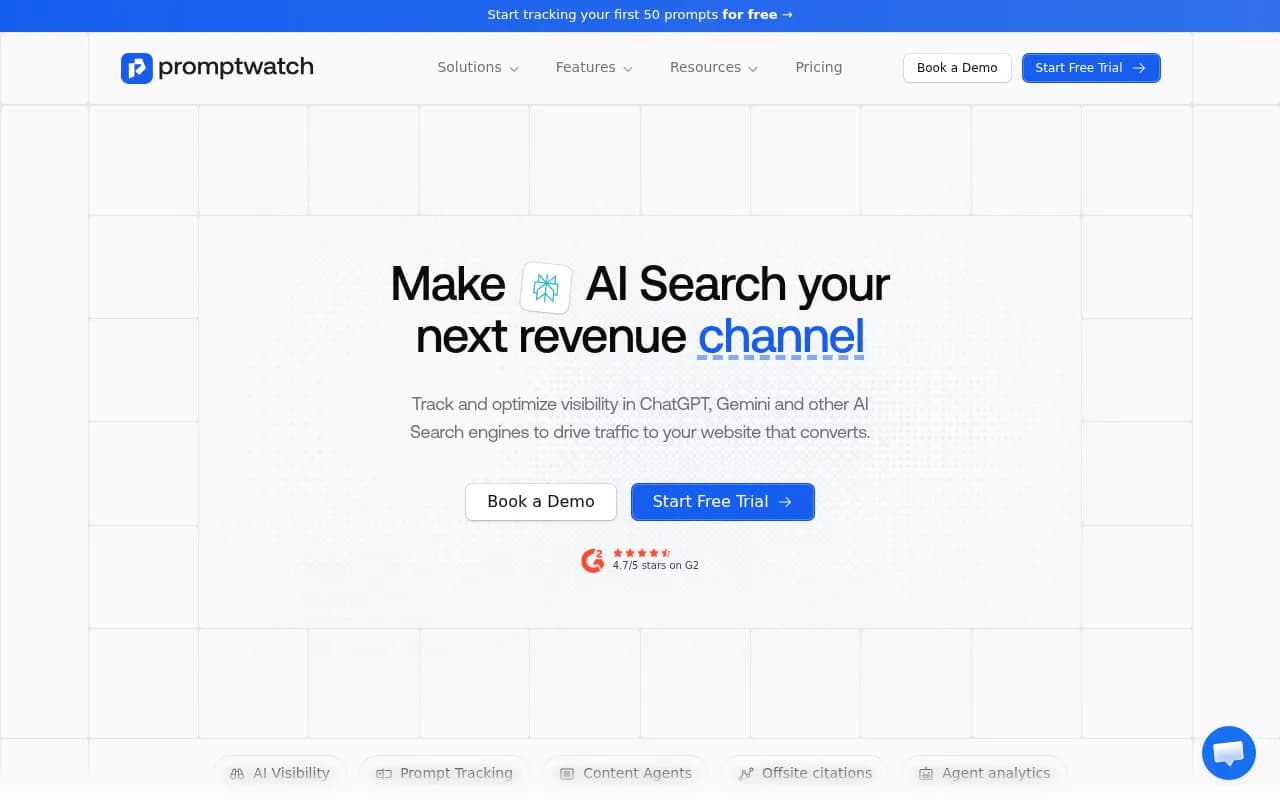
| Promptwatch | Mentions, citations, sentiment across prompts | 10+ (ChatGPT, Perplexity, Gemini, Claude, Grok, etc.) | Yes | Yes |
| Profound | Share of visibility across tracked prompts | Multiple | Limited | Yes |
| Otterly.AI | Mention frequency | Several | No | No |
| Peec AI | Visibility share with suggestions | Several | Basic | No |
| AthenaHQ | Mention tracking and share of voice | Multiple | No | No |
| Semrush AI Visibility | Branded mention tracking | Google AI, ChatGPT | No | No |
| Ahrefs Brand Radar | Brand mentions in AI responses | Several | No | No |
The platforms that only track mentions give you a score but leave you guessing about what to do next. The ones that combine tracking with content gap analysis and crawler data give you a path to actually improving the number.
Promptwatch sits at the more complete end of that spectrum -- it tracks visibility across 10+ AI models and connects the score to specific content gaps and crawler behavior, so you can see not just where you're invisible but why.
The five metrics worth tracking alongside your score
The visibility score is a useful headline number, but these supporting metrics tell you more:
Prompt coverage rate. What percentage of the prompts relevant to your category does your brand appear in? This is more actionable than an aggregate score because it shows you exactly which topics you're missing.
Share of voice vs. competitors. Your score in isolation is less meaningful than your score relative to the brands you're competing against. If you're at 34% and your main competitor is at 61%, that gap is the real story.
Citation source breakdown. Which pages, domains, and external sources are driving your AI mentions? This tells you where to invest -- whether that's improving your own content, getting listed on review sites, or building presence in communities like Reddit.
Model-by-model breakdown. Your visibility can vary significantly between ChatGPT, Perplexity, and Gemini. A brand might be well-cited in Perplexity but nearly invisible in Google AI Overviews. Knowing which models you're weak in helps you prioritize.
Crawl-to-citation lag. How long after publishing new content does it take for AI crawlers to find it, and how long after that before it starts appearing in responses? This is a newer metric that platforms like Promptwatch track through crawler logs, and it's useful for understanding how quickly your optimization efforts are having an effect.
How to actually improve your score
This is where most guides stop being useful. "Create great content" is not advice. Here's what actually moves the needle:
Start with the prompts that matter
Before you can improve your visibility, you need to know which prompts you're invisible for. These aren't branded queries -- they're the questions buyers ask before they know your name.
Think: "best [category] tool for [use case]," "how to solve [problem]," "compare [competitor A] vs [competitor B]." These are the prompts where AI models are already forming opinions about your category, and where your absence is costing you.
Tools that provide prompt volume data and difficulty scores help you prioritize. Not every prompt is worth chasing -- some are dominated by entrenched competitors, others have low query volume. Focus on prompts that are relevant, have real volume, and are winnable.
Close the content gaps
Once you know which prompts you're missing, the next question is: does your website have content that directly answers those questions?
This is different from having content that mentions the topic. AI models are looking for pages that comprehensively answer specific questions. A product page that mentions "project management" in passing won't get cited when someone asks "what's the best project management tool for agencies." A detailed comparison or use-case guide might.
Content gap analysis -- comparing what AI models are citing in their responses against what's on your site -- shows you exactly what's missing. The output is usually a list of topics, angles, and question types that your site doesn't address.
Fix your crawlability
AI models can only cite content they've found and processed. If AI crawlers are hitting errors on your key pages, getting blocked, or not returning frequently enough, your content won't appear in responses regardless of how good it is.
Crawler logs -- which show you which pages AI agents like ChatGPT's crawler are visiting, how often, and what errors they're encountering -- are one of the more underrated tools in this space. Most traditional SEO tools don't capture this data at all.
Build external authority
AI models don't just read your website. They read everything -- review sites, Reddit threads, YouTube videos, industry publications, comparison pages. If your brand is only mentioned on your own domain, your visibility will be limited.
Getting listed on relevant comparison and review sites, participating in community discussions, and earning coverage in industry publications all contribute to the external citation profile that AI models draw from.
Track what's working
After publishing new content or building new citations, you need to know whether it's having an effect. Page-level tracking -- which specific pages are being cited, by which models, and how often -- lets you connect your content investments to actual visibility changes.
Without this feedback loop, you're optimizing blind.
Tools worth knowing about
Beyond Promptwatch, there are a range of tools in this space at different price points and capability levels:
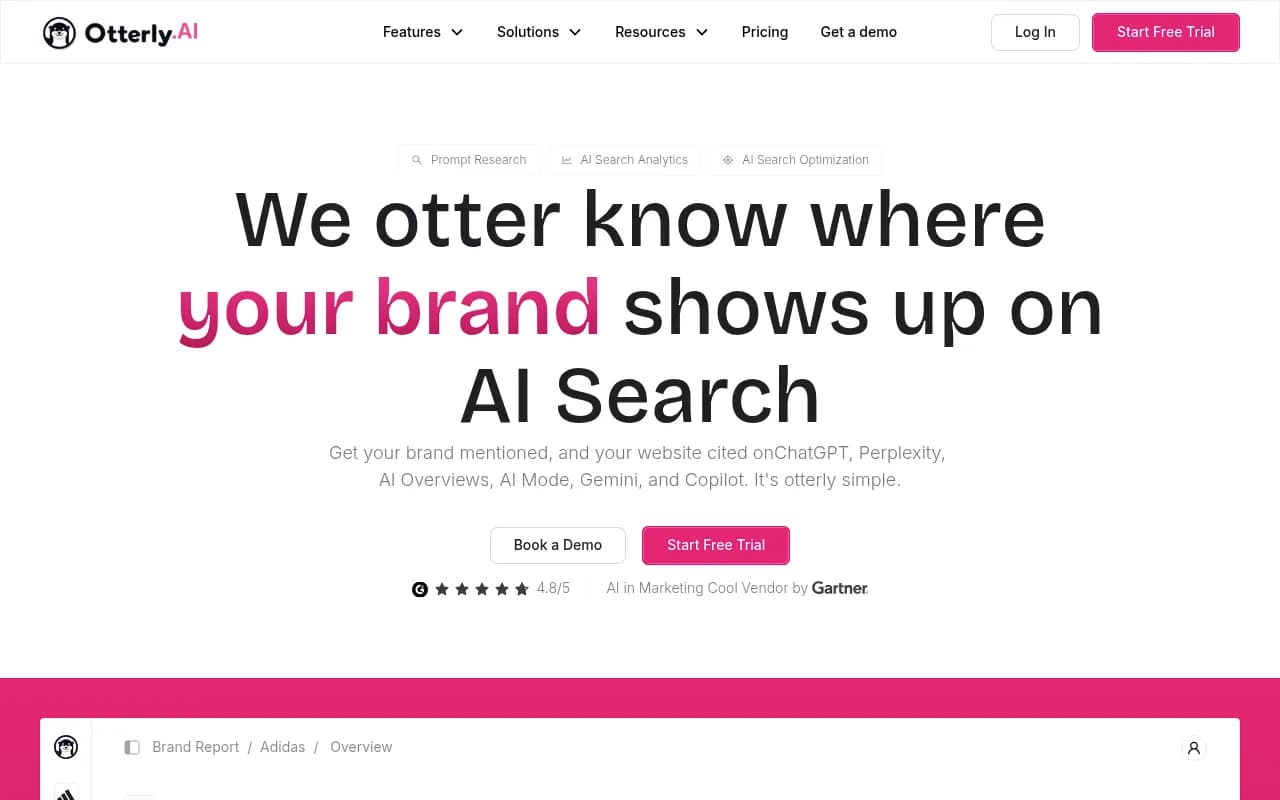
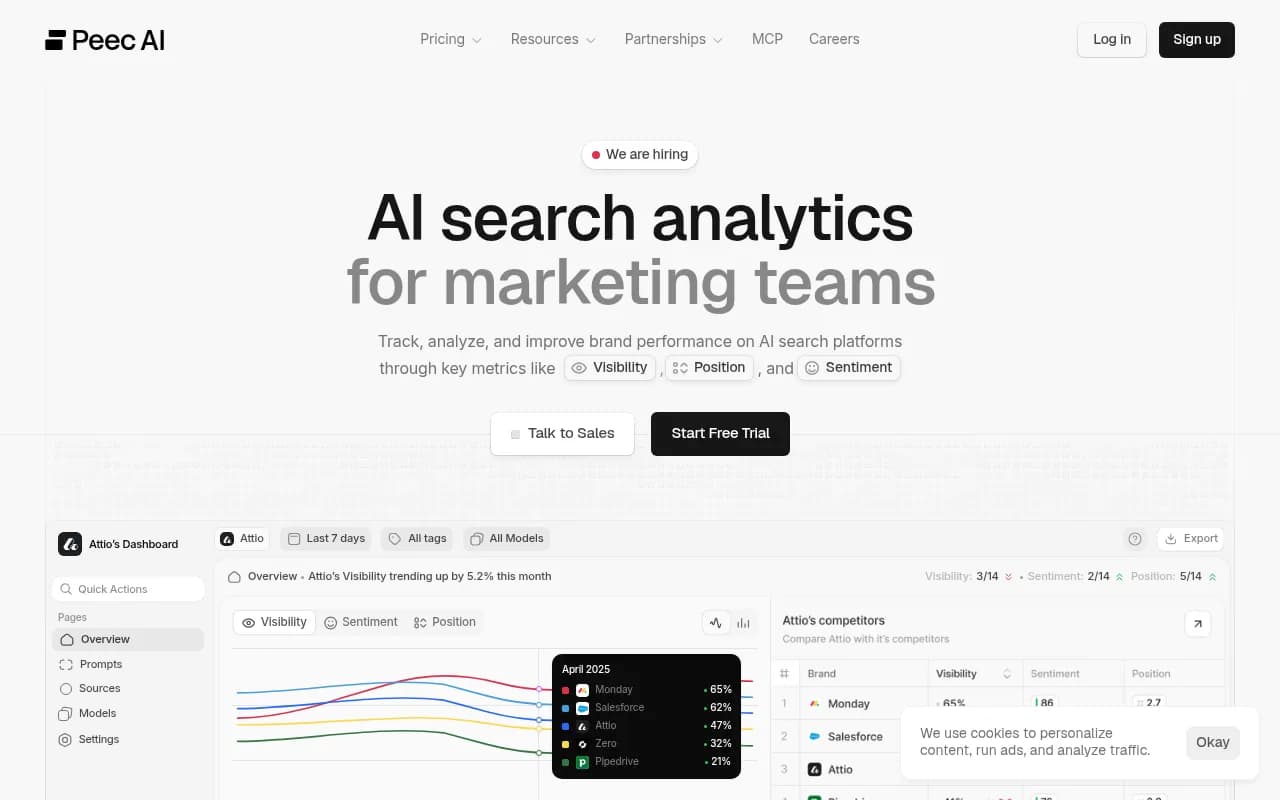
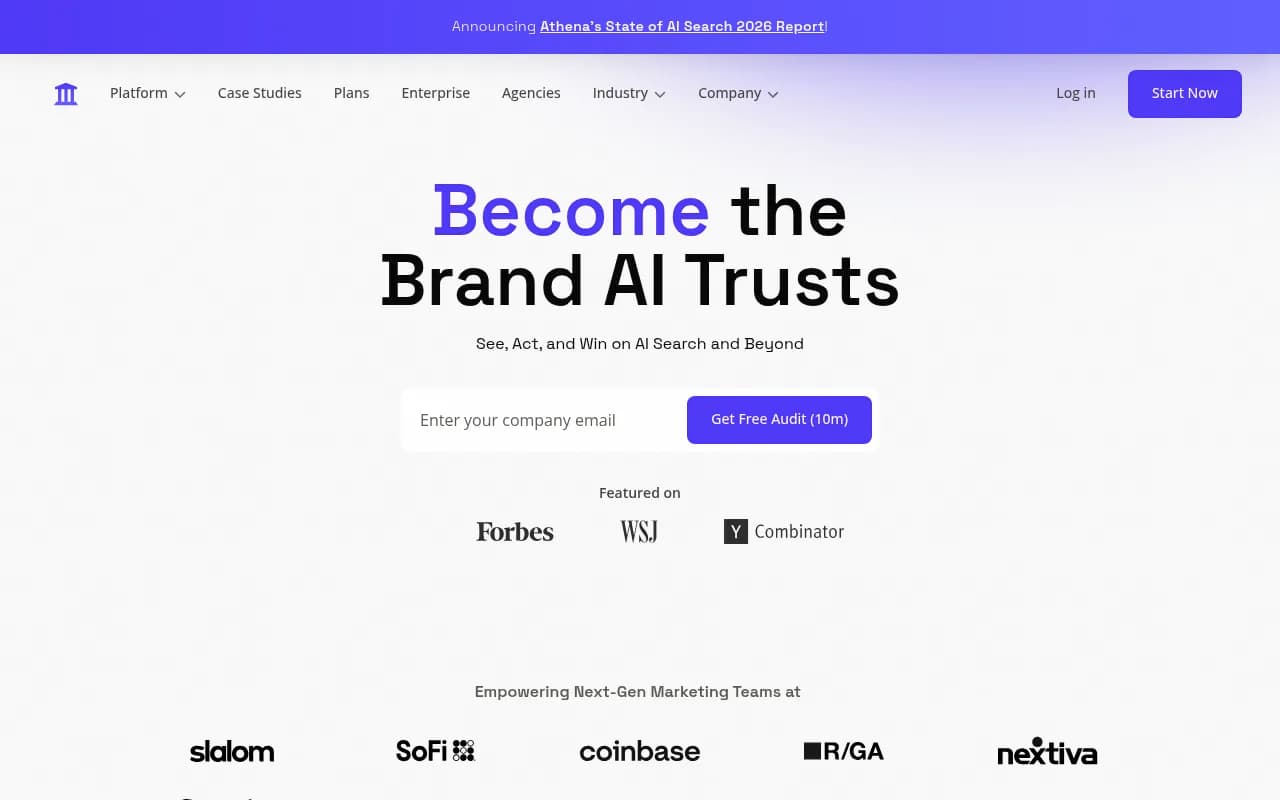
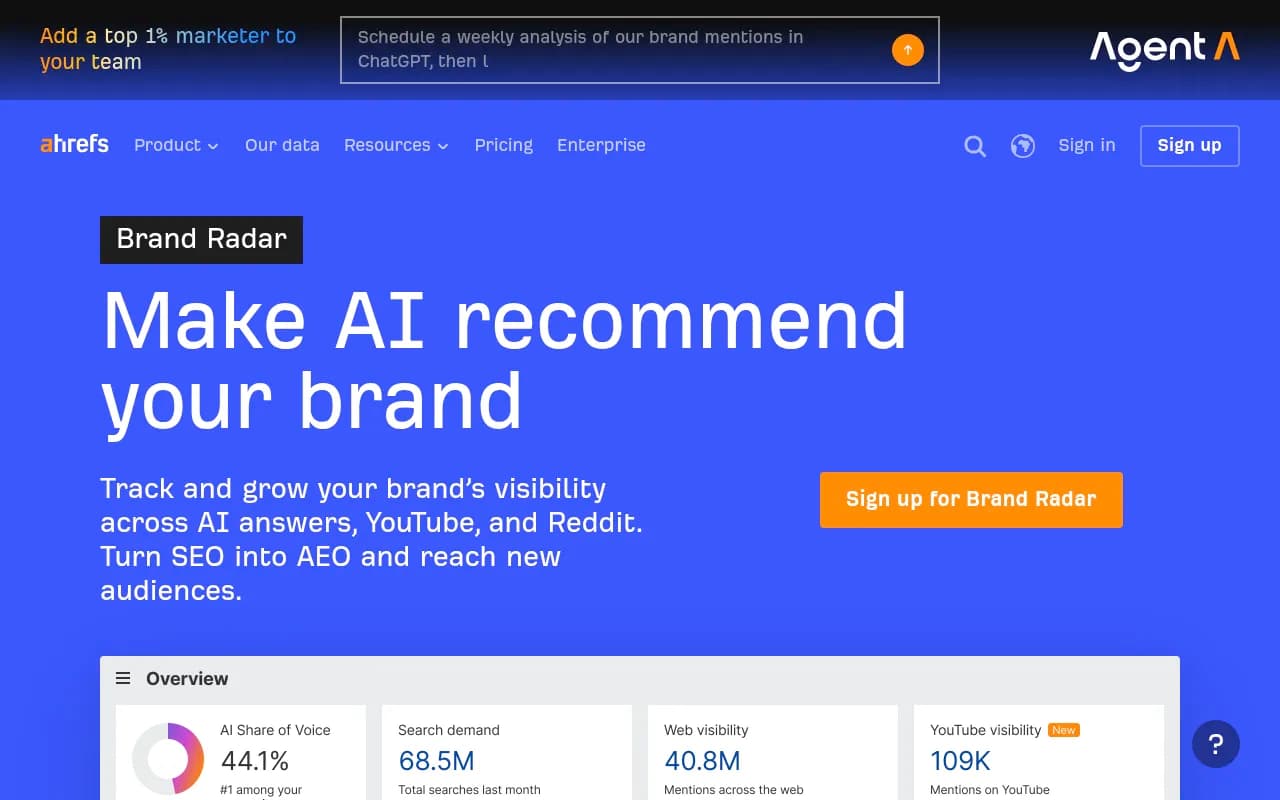
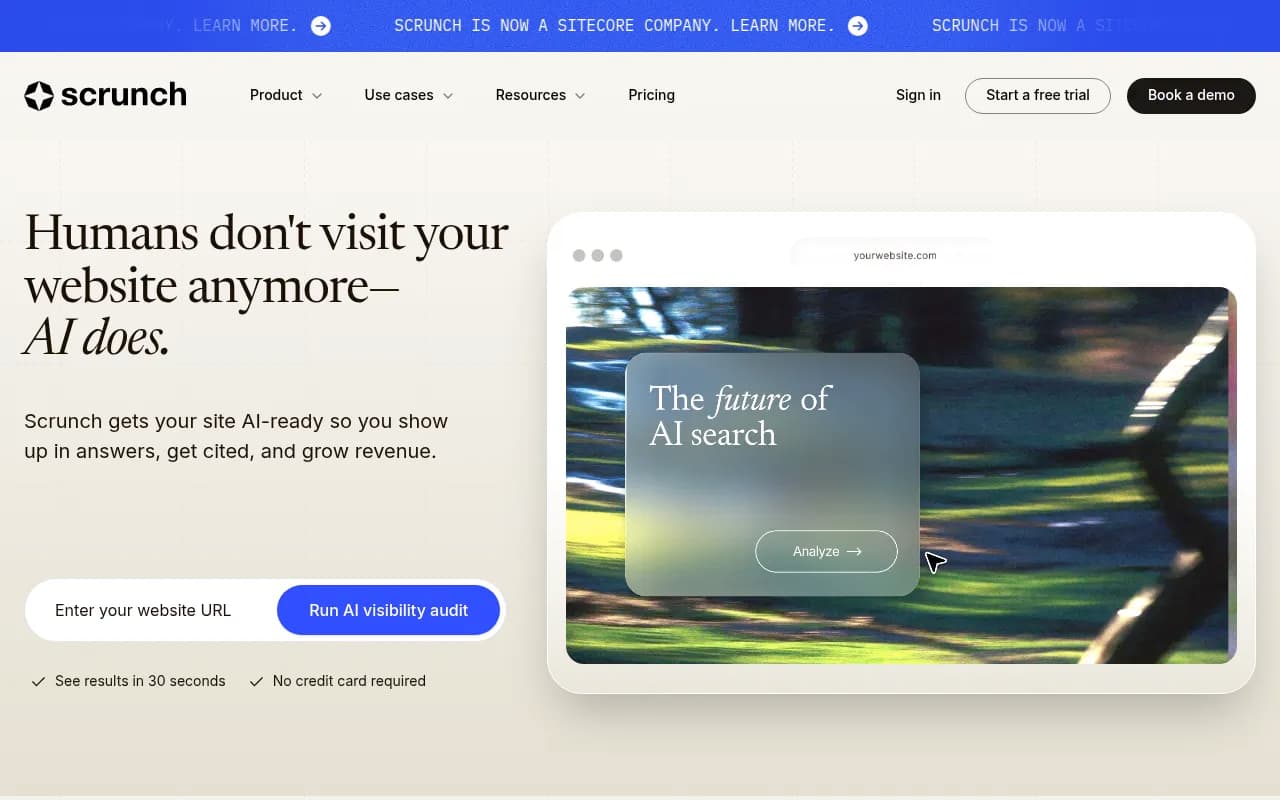
For teams that want a simpler starting point, tools like Otterly.AI and Peec AI offer affordable monitoring. For enterprise teams that need depth -- crawler logs, content generation, multi-model tracking, and attribution -- Promptwatch and Profound are the more complete options. The difference is roughly the difference between a dashboard that shows you data and a platform that helps you act on it.
A realistic expectation for improvement timelines
Improving your AI visibility score is not instant. AI models update their knowledge at different cadences. Some update frequently (Perplexity, which crawls in near real-time), others less so (models with less frequent training updates).
In practice, publishing new content and building external citations typically takes 4-8 weeks to show up in visibility scores, sometimes longer for models with slower update cycles. Crawler log data can tell you when your content was found -- which is the first step in the chain -- but the citation effect comes later.
This is worth setting expectations around internally. AI visibility is a medium-term investment, not a quick fix. The brands that are winning in AI search right now mostly started working on it 12-18 months ago.
The bottom line
Your AI visibility score is a useful summary of how present your brand is in AI-generated answers. But the number itself is less important than what's driving it -- which prompts you're appearing for, which you're missing, which competitors are beating you and why, and whether your content is actually being found by AI crawlers.
The brands that treat this as a real optimization problem -- tracking the right prompts, closing content gaps, fixing crawlability, building external authority -- are the ones whose scores are moving. The ones watching the number without acting on it are mostly watching competitors pull ahead.