Key takeaways
- Ahrefs research covering 863,000 keyword SERPs found that only 37.9% of URLs cited in Google AI Overviews also appear in the top 10 organic results -- down from 76% in mid-2025.
- A Moz study of 40,000 queries found 88% of Google AI Mode citations don't match the organic top 10 at all.
- Ranking #4 on Google gives you roughly a 2.6% chance of appearing in an AI-generated answer.
- Google AI Mode uses a "query fan-out" process that pulls from a much wider source pool than traditional ranking signals.
- The fix isn't better rankings -- it's content structured for context, specificity, and entity authority.
There's a specific kind of frustration that's been spreading through SEO teams in 2026: you check your rankings, everything looks fine, then you look at what Google AI Mode is actually citing in its answers and your pages are nowhere. Meanwhile, some article from a niche blog you've never heard of is getting referenced constantly.
This isn't a bug. It's the system working exactly as Google designed it.
The numbers are hard to ignore
Let's start with the data, because it's pretty striking.
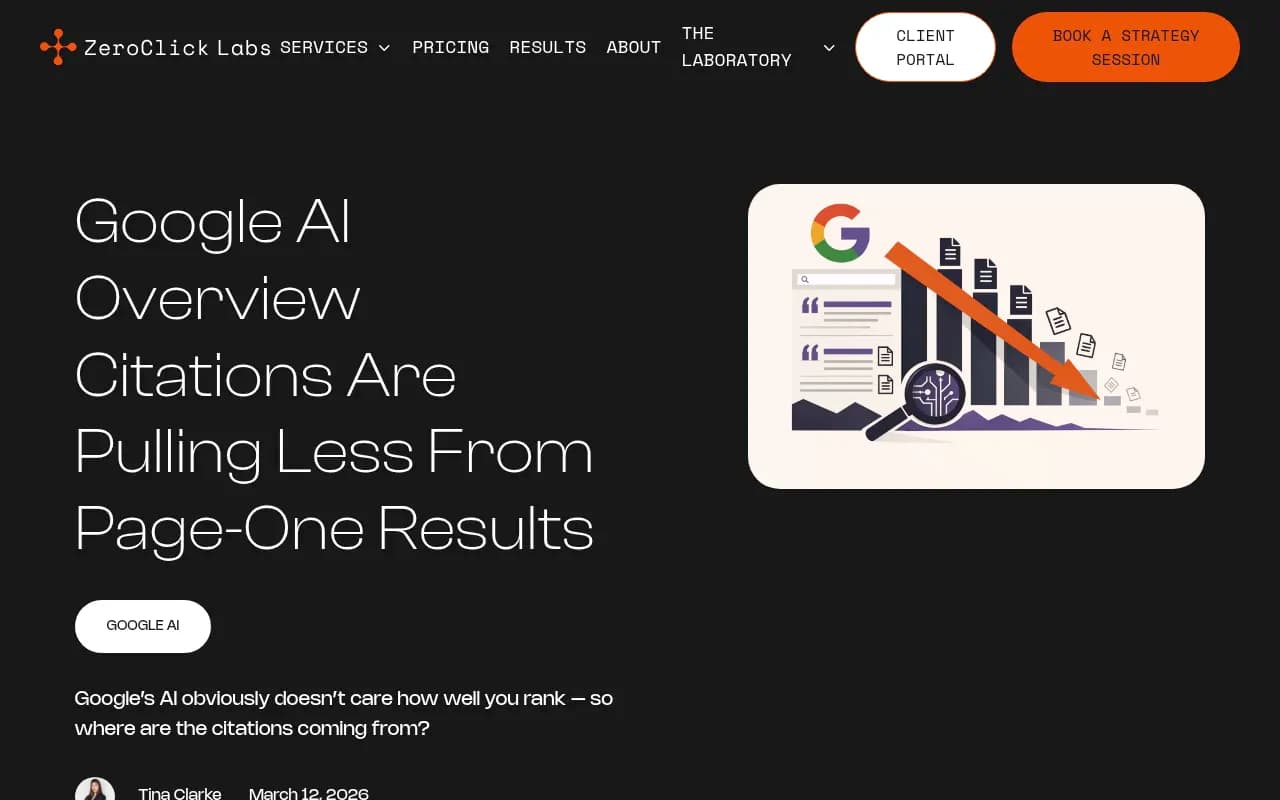
Ahrefs ran an analysis covering 863,000 keyword SERPs and 4 million AI Overview URLs. Their finding: only 37.9% of URLs cited in Google AI Overviews also appeared in the top 10 organic results for the same query. That's down from roughly 76% overlap in their July 2025 study -- so the gap has roughly doubled in less than a year.
Moz went further. Their study of 40,000 queries found that 88% of Google AI Mode citations don't match the organic top 10. That's not a small discrepancy -- that's a near-complete decoupling of two things that used to move together.
And if you want a concrete number: ranking #4 on Google gives you approximately a 2.6% chance of showing up in an AI-generated answer. Rank one isn't much better. The correlation between organic position and AI citation has effectively collapsed.
Why this is happening: query fan-out
The mechanism behind this shift is something Google calls "query fan-out." When a user submits a prompt to AI Mode, Google doesn't just run a single search and pull from the top results. It generates multiple sub-queries -- sometimes dozens -- each targeting a specific angle of the original question.
So if someone asks "what's the best way to treat mild hypertension without medication," Google might fan that out into sub-queries about dietary interventions, exercise protocols, stress reduction techniques, sleep quality, specific supplements, and so on. Each sub-query can pull from completely different sources. A page that ranks well for the broad term might not rank for any of the specific sub-queries -- and vice versa.
This is why a page that ranks #1 for "hypertension treatment" might not appear in the AI answer at all, while a very specific article about "DASH diet and blood pressure reduction" from a mid-tier health site gets cited three times.
The implication is significant: Google AI Mode isn't asking "what's the best page for this query?" It's asking "what's the most useful specific piece of information for each sub-question I've generated?" Those are very different questions.
What Google AI Mode actually wants
SE Ranking's analysis of AI Mode citation patterns identified the signals that most consistently predict whether a page gets cited. A few patterns stand out.
Specificity beats breadth
AI Mode consistently favors pages that go deep on a narrow topic over pages that cover a topic broadly. A 4,000-word guide that touches on everything is less likely to get cited than a 1,200-word page that answers one specific question extremely well.
This runs counter to a lot of SEO intuition built up over the past decade. "Comprehensive" used to be a proxy for quality. For AI citation purposes, it can actually work against you -- the page becomes harder for the model to extract a clean, specific answer from.
Structured content that's easy to parse
Pages with clear headers, defined sections, FAQ schemas, and explicit question-answer structures get cited more often. This isn't surprising -- AI models are essentially trying to extract information, and well-structured content makes that easier.
If your page buries its key claims in long paragraphs with no clear organization, the AI has to work harder to identify what the page is actually saying. Often it just moves on to something cleaner.
Entity authority, not just domain authority
This is the shift that Moz's research points to most directly. Google AI Mode appears to be evaluating whether a page (and the site it lives on) is a recognized authority on a specific entity or topic -- not just whether the domain has high overall authority.
A site with a DA of 40 that consistently publishes detailed, accurate content about a specific niche can outperform a DA-80 site that covers that niche occasionally. The AI is trying to identify "who actually knows about this?" rather than "who has the most links?"
Freshness matters more for some query types
For anything time-sensitive -- product comparisons, pricing, regulations, current events -- AI Mode heavily weights recency. A page that was accurate 18 months ago but hasn't been updated will often lose to a newer page, even if the older page has more backlinks.
Third-party mentions and citations
Pages that are cited by other sources, mentioned in Reddit threads, or referenced in YouTube content tend to appear in AI answers more often. This is Google's way of triangulating credibility -- if other sources are pointing to you, you're probably saying something worth repeating.
The "zero-click" problem is real but overstated
There's a lot of anxiety in SEO communities right now about AI Mode "stealing clicks." The Reddit thread in r/DigitalMarketing captures the mood well -- people are watching their traffic drop while Google answers questions directly without sending users anywhere.
This is real. But it's worth separating two things:
First, some queries were always going to result in zero clicks once AI answers got good enough. Factual lookups, simple definitions, quick calculations -- these were never high-intent traffic anyway.
Second, for queries with genuine commercial or research intent, AI Mode still sends traffic -- just to different pages than before. The sites that are winning aren't necessarily the ones that ranked highest before. They're the ones that got cited, which is now a different game entirely.
The practical question isn't "how do I protect my rankings?" It's "how do I get cited?"
What to actually do about it
Audit your content for specificity gaps
Go through your existing pages and ask: does each page answer one specific question extremely well, or does it try to cover everything? Pages that try to do too much are poor candidates for AI citation. Consider breaking broad guides into more focused sub-pages.
Add FAQ sections with explicit question-answer pairs
This is one of the more reliable tactical moves. FAQ sections give AI models clean, extractable answers. The questions should mirror how people actually phrase prompts -- conversational, specific, sometimes a bit long.
Update stale content aggressively
Any page covering a topic where accuracy degrades over time (pricing, tools, regulations, best practices) needs a refresh schedule. Stale content gets deprioritized fast.
Build entity depth, not just domain breadth
If you want to be cited as an authority on a topic, publish consistently and specifically on that topic. A cluster of 15 tightly focused articles on one subject will build more entity authority than 50 loosely related pieces.
Track citations, not just rankings
This is the behavioral shift that matters most. Rankings tell you where you appear in the old system. Citations tell you whether you're visible in the new one. These are now measuring different things.
Tools like Promptwatch track exactly which pages are being cited by Google AI Mode and other AI search engines, how often, and for which prompts -- so you can see where your content is actually landing in AI answers rather than inferring it from organic position.
For tracking specifically within Google's ecosystem, SE Ranking's AI visibility tools offer solid coverage of AI Overview citation patterns.
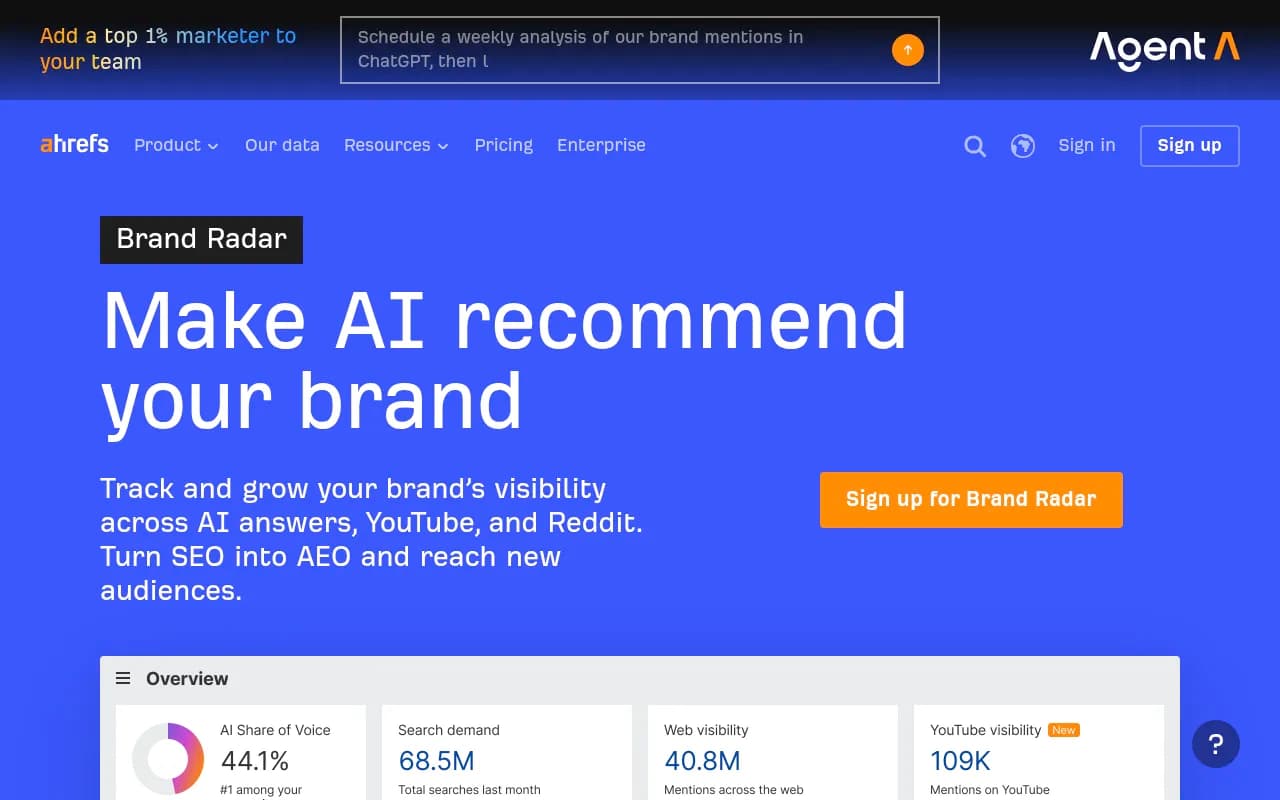
Ahrefs Brand Radar is worth using if you want to cross-reference your organic rankings with AI citation data -- seeing both in one place makes the gap very visible.
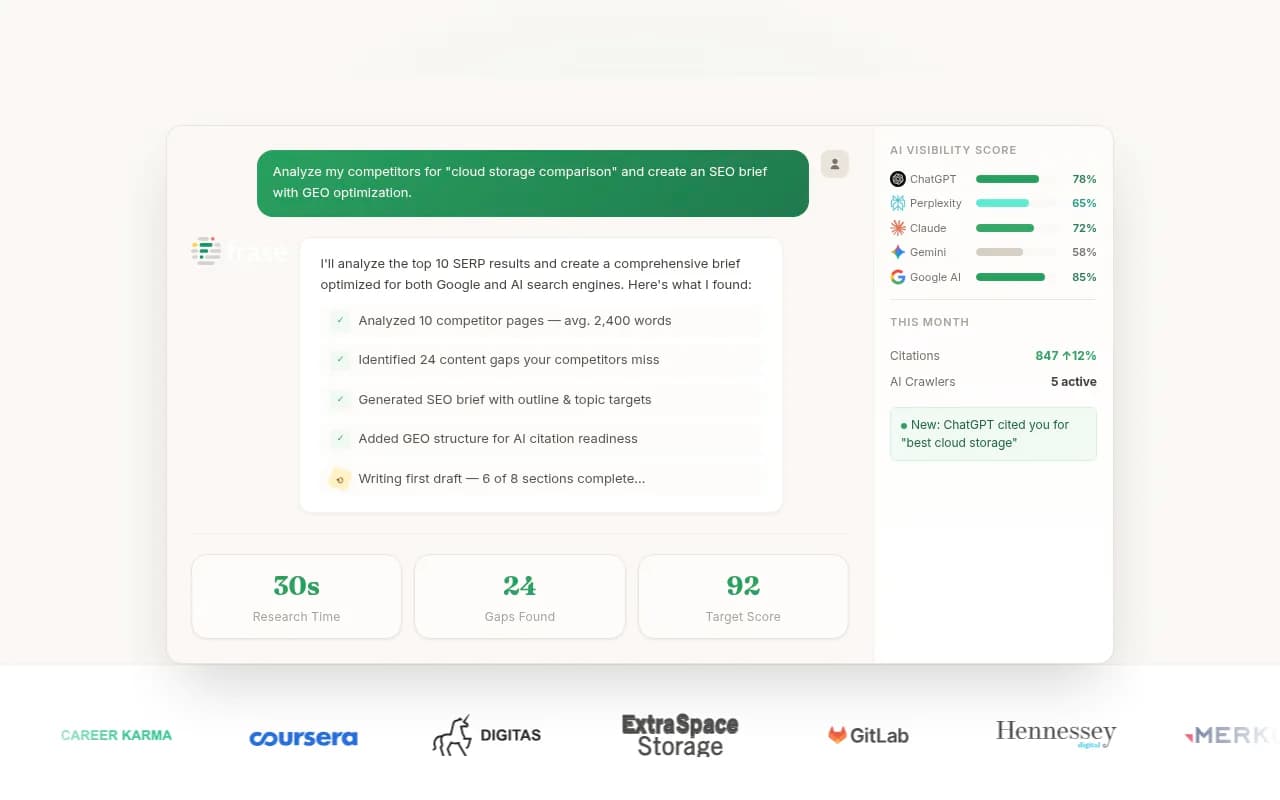
And if you want to go deeper on content optimization for AI citation specifically, Frase is built around closing the gap between what AI models want to cite and what your pages currently offer.
The tools worth knowing about
Here's a quick comparison of tools that help with AI citation tracking and optimization, since this is now a distinct workflow from traditional SEO:
| Tool | AI citation tracking | Content optimization | Crawler/indexing data | Best for |
|---|---|---|---|---|
| Promptwatch | Yes (10 AI models) | Yes (Content Agents) | Yes (AI crawler logs) | Full GEO workflow |
| SE Ranking | Yes (AI Overviews focus) | Partial | No | SEO teams adding AI tracking |
| Ahrefs Brand Radar | Yes (brand mentions) | No | No | Cross-referencing with organic data |
| Frase | No | Yes | No | Content gap analysis and briefs |
| Otterly.AI | Yes (basic) | No | No | Budget monitoring |
| Profound | Yes | No | No | Enterprise monitoring |
The bigger shift
What's happening with Google AI Mode is part of a broader change in how search engines evaluate content. The old model was essentially a popularity contest -- who has the most links, the highest authority domain, the best-optimized page for a given keyword. That model rewarded scale and resources.
The new model is closer to a knowledge graph evaluation -- who actually knows about this specific thing, and can I extract a clean, accurate, specific answer from their content? That model rewards depth and clarity.
This isn't necessarily bad news for smaller publishers. A focused site with genuine expertise on a narrow topic can now compete with much larger domains for AI citations in that niche. The playing field has shifted, but it hasn't tilted entirely toward the incumbents.
What it does mean is that the playbook needs updating. Tracking rankings as your primary success metric is now measuring the wrong thing. The question to ask every week is: "Is Google AI Mode citing my content?" If the answer is no, the fix isn't better link building -- it's better content structure, more specific answers, and a clearer signal to Google about what your pages actually know.
That's a different kind of work, but it's more tractable than most people assume.