Key takeaways
- In August 2026, domains rated DR 46-75 earned about 46% of ChatGPT citations, according to Promptwatch Data. DR 61-75 was the single biggest group at 23.4%.
- DR 91-100 sites averaged just 4.4% for the month and dropped to about 3% from August 14, less than the DR 0-15 bucket.
- The data is a correlation. It shows who gets cited, not why. The "what they do differently" part has to be pieced together from related reports on content type, freshness, and retrieval behavior.
- Practical moves: stop waiting for a high DR, aim PR at DR 61-90 sites, and build the page types ChatGPT actually cites.
The claim: authority matters less than marketers think
A lot of SEOs still assume that a higher Domain Rating means a better shot at being cited by AI. It is a reasonable assumption. Traditional SEO trained us to think that way, because links and authority move rankings.
The ChatGPT numbers tell a different story. Promptwatch published a report, ChatGPT Citation Share by Domain Rank - August 2026, by Klaas Foppen, covering ChatGPT citations from August 1 to 31, 2026. You can read the full thing at Promptwatch Data.

Growth marketer Claudia Serrano summarized the findings on LinkedIn, and her post got people arguing about it:
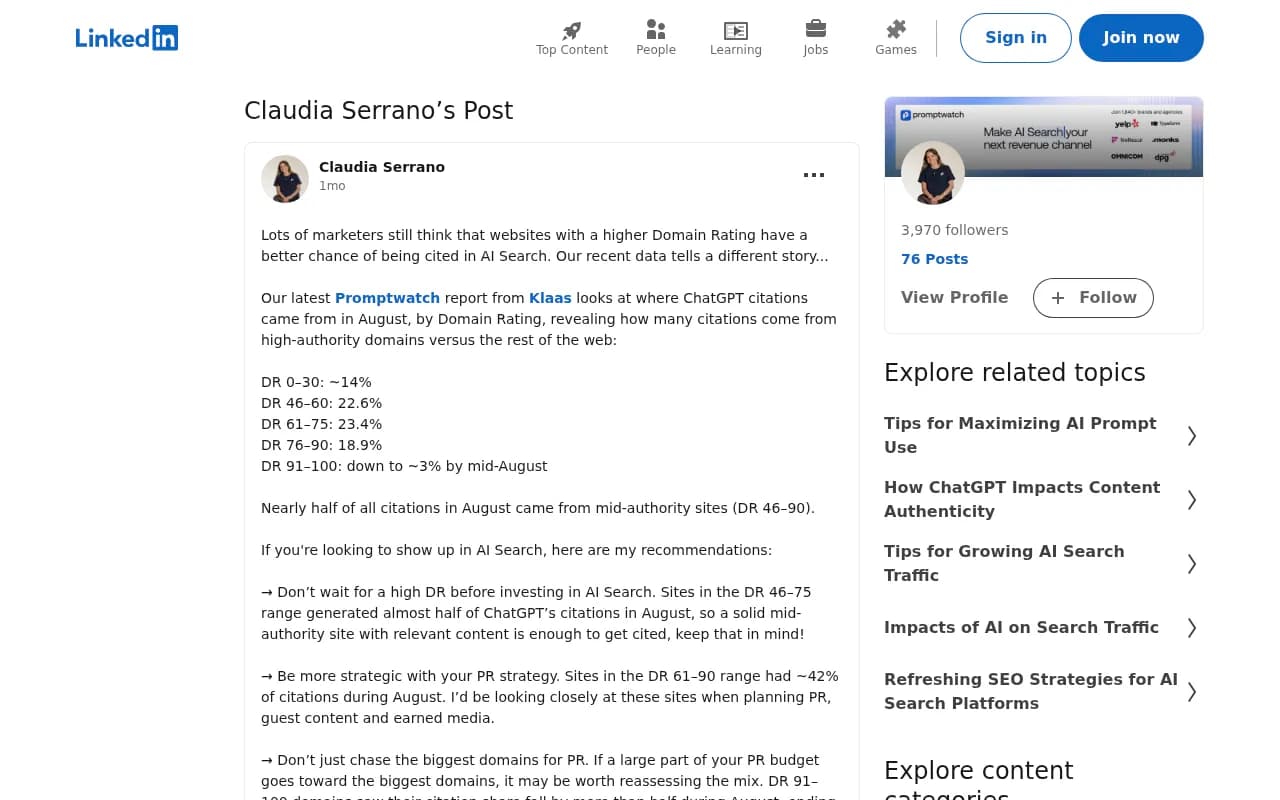
I want to be careful here, because the summary has one number that is easy to misquote. More on that below.
What the August 2026 data says
The report buckets every cited domain by Domain Rating and shows each bucket's share of citations per day. Those ranked domains account for 89.65% of all ChatGPT citations in the period. The other 10.35% came from domains with no known rank and are left out.
Here is the August average by rank group.
| Domain rank | Share of ChatGPT citations (August 2026) |
|---|---|
| DR 0-15 | 6.3% |
| DR 0-30 | about 14% |
| DR 0-45 combined | almost a third |
| DR 46-60 | 22.6% |
| DR 61-75 | 23.4% |
| DR 46-75 combined | about 46% |
| DR 76-90 | 18.9% |
| DR 61-90 combined | about 42% |
| DR 91-100 | 4.4% |
Two things jump out.
First, the middle is where the citations are. DR 61-75 is the highest group, DR 46-60 is close behind, and together they make up the "almost half" in the report.
Second, the top of the authority scale is weak. DR 91-100 domains, the giants, earned 4.4% across the month. That is less than the DR 0-15 bucket, which is the long tail of tiny sites.
A correction worth making
Serrano's post says "nearly half of all citations in August came from mid-authority sites (DR 46-90)." Add up 22.6, 23.4 and 18.9 and you get roughly 65%, not half. The "almost half" figure in the Promptwatch report refers to DR 46-75, which is about 46%. If you quote this stat, use DR 46-75. I would rather you get it right than repeat a number that sounds nicer.
The DR 91-100 drop on August 14
The top tier did not just sit low all month. It fell.
- Around 7% in the first week of August
- About 5% on August 8
- About 3% on August 14, where it stayed through the end of the month
The August 14 date matters. That is the same day reddit.com's share of ChatGPT citations collapsed from roughly 4% to about 0.5%, which Promptwatch covers in its Reddit citations report. Reddit has a very high Domain Rating, so losing it pulls the whole DR 91-100 bucket down with it.
Most of the freed-up share went to the middle tiers. DR 61-75 gained 1.6 points and DR 46-60 gained 0.9 points.
So part of the "mid-authority wins" story is really a "a couple of giant domains got dropped" story. That is worth sitting with. It does not make the finding wrong, but it means the shape can shift again the next time ChatGPT changes how it picks sources.
What this data does not tell you
Honesty time. This report covers a single month, and it ranks only 89.65% of citations. It presents a correlation. It does not say why mid-authority sites do better, and it contains no content-level explanation.
So when someone promises you a neat list of "what DR 46-75 domains do differently," be skeptical. Nobody has a controlled experiment on this. What we can do is stack the related evidence and form a reasonable hypothesis. That is what the rest of this guide does, and I'll flag where I'm inferring.
Why mid-authority sites probably win
ChatGPT is picking fewer, more specific sources
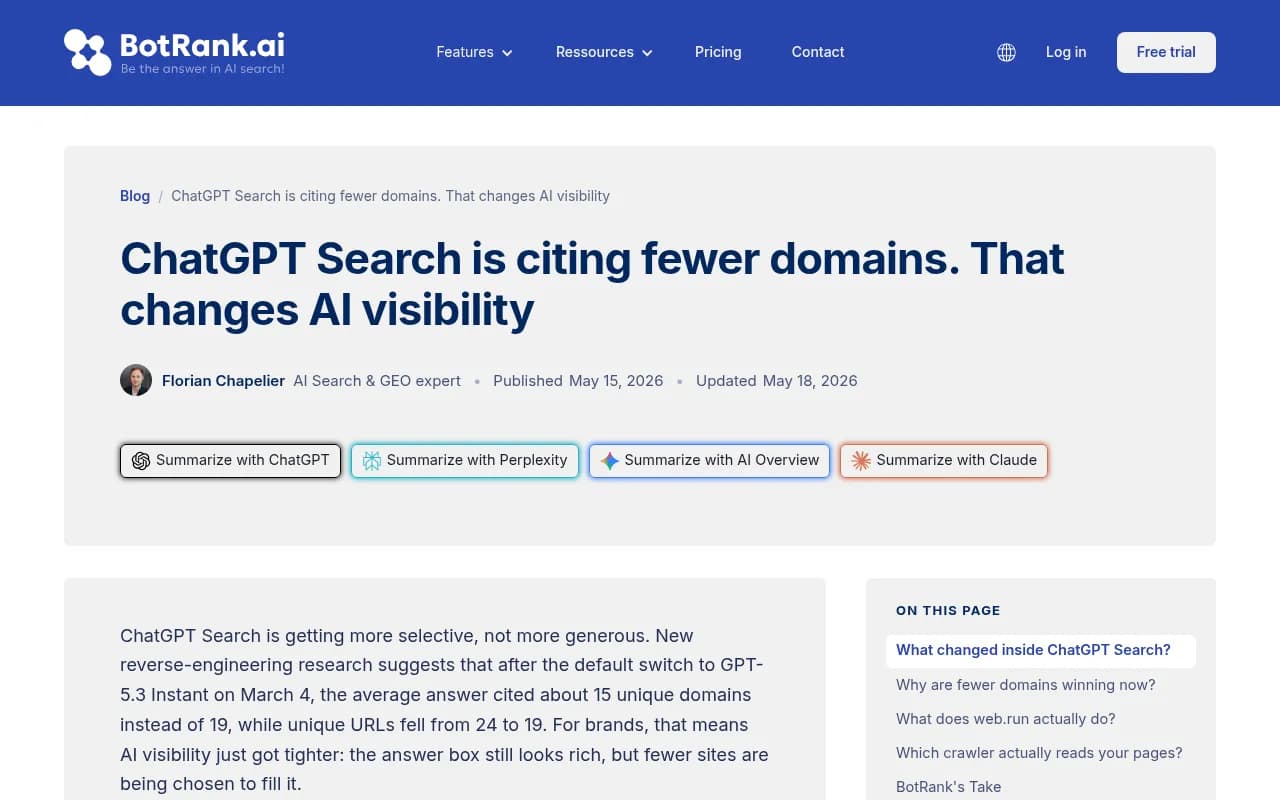
BotRank's May 2026 analysis argues that ChatGPT Search became more selective after GPT-5.3 Instant became the default on March 4. Its figures say the average answer went from about 19 unique domains to about 15, while unique URLs fell from 24 to 19. That is a third-party analysis I have not verified independently, so treat it as context.
Promptwatch's own data on unique domains per response (Sep 28 to Oct 4, 2026) shows almost half of ChatGPT responses still cite 10 or more unique domains. So ChatGPT is not citing a handful of sites per answer. It is citing a lot of them, and the spread is wide enough that there is room for non-giant sites.
Fan-out queries and the site: operator favor focused pages
ChatGPT does not answer from one search. It splits a prompt into several fan-out queries. On August 8, 2026, ChatGPT Search started using the site: operator at scale, jumping from about 0.4% to about 17% of all fan-out queries overnight, per Promptwatch Data. Searches per response nearly doubled.
That is my main hypothesis. When a model runs many narrow queries, a site that covers one subject thoroughly can match more of them than a giant general-interest site that touches the subject once. Mid-authority sites tend to be the focused ones: a SaaS blog, a niche publisher, a category-specific retailer. The giants win on broad topics, and fan-outs are not broad.
Note the timing too. The site: shift happened on August 8, and the DR 91-100 slide started the same week. I would not claim causation, but I would not ignore the overlap either.
ChatGPT cites page types, not brands
Promptwatch's content type report shows product pages are the most cited type in ChatGPT, at 22.4% of citations from Sep 28 to Oct 4, 2026, followed by landing pages and listicles. These are commercial, specific pages. A mid-sized company with a good product page and a solid comparison post is competing on page type, where domain size counts for less than relevance.
In software, for example, GitHub, Microsoft's docs, and G2 lead ChatGPT citations, and documentation and help centers earn the largest share (software citations report). Docs are something a DR 55 SaaS company can produce in volume.
Pages that stay cited are the evergreen ones
In Promptwatch's half-life study, landing pages and docs stayed cited longest among pages ChatGPT cited on July 6, 2026, while news lost half its pages within 36 days. Giant domains lean on news. Mid-authority sites tend to rely on durable pages. That could be a quiet reason they hold share while the news-heavy giants slip.
What DR 46-75 sites do differently (the practical version)
Based on the data above, here is the pattern I would copy. This is inference, not proven cause.
- They publish page types ChatGPT likes: product pages, landing pages, comparisons, documentation.
- They stay narrow. One topic cluster, covered deeply, so more fan-out queries land on them.
- They keep pages evergreen and refresh them instead of chasing news cycles.
- They get mentioned on other mid-to-high-authority sites, which feeds the retrieval pool.
- They let AI crawlers in. A page that ChatGPT-User cannot fetch cannot be cited, whatever your DR says.
That last point is the one people skip. Check your robots.txt and your CDN rules before you spend on content. Promptwatch's free Agentic Readiness Check and AI Crawler URL Inspector cover the basics.
What to do with this data
Don't wait for a higher DR
If your site sits anywhere in the 46-75 range, you are already in the zone where most citations happen. DR 0-45 domains still earned almost a third of citations, so even smaller sites are not shut out. The report's advice is to benchmark yourself against DR 46-75, since that is where most citation competition sits.
Rethink your PR budget
DR 61-90 domains took about 42% of citations all month, and the report calls them the most reliable targets for earned coverage. If most of your PR money goes to a few mega-publications, the August numbers suggest the mix deserves a second look. Guest content and earned media on solid mid-to-upper-tier sites is a sensible spot to shift budget. If you outsource outreach, tools like Respona can help find those placements.
And if you want to go further with an agency, 1001 SEO Media builds digital PR and GEO programs around exactly this kind of citation data.
Measure whether it works
Don't trust a DR number to tell you anything about AI visibility. Track the prompts you care about, see which of your pages get cited, and check whether crawlers reach them. Promptwatch does this end to end: it monitors prompts across ChatGPT and other AI engines, shows which pages get cited, logs AI crawler visits, and its Content Agent writes and publishes pages against the gaps it finds. If you only want monitoring, other options exist.
| Tool | Strength | Good fit |
|---|---|---|
| Promptwatch | Monitoring plus content creation, crawler logs, and traffic attribution | Teams that want to fix gaps, not just see them |
| Peec AI | Prompt-level visibility tracking | Lean monitoring |
| Otterly.AI | Affordable brand mention tracking | Small budgets |
| Profound | Enterprise analytics | Large brands with big budgets |
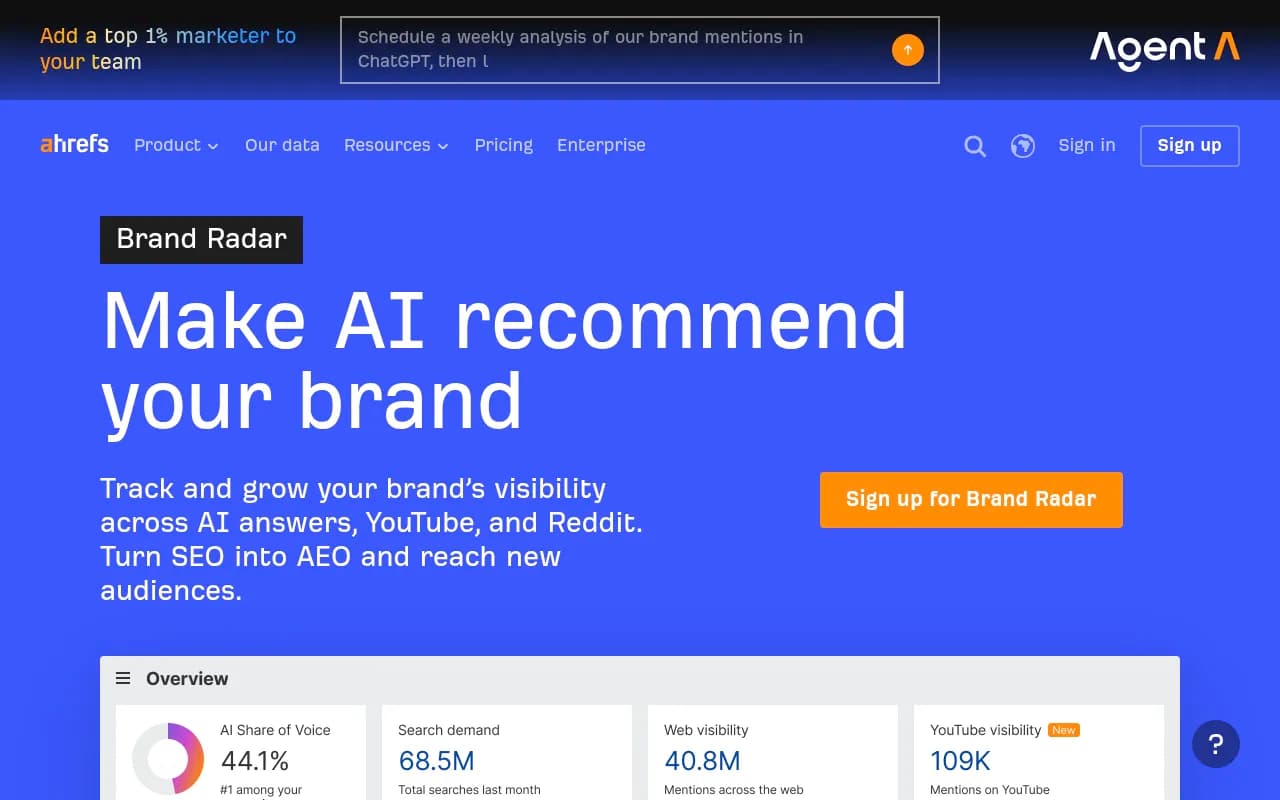
| Ahrefs Brand Radar | AI mentions inside an SEO suite | Existing Ahrefs users |



For a wider look, the GEO software directory at bestgeosoftware.com lists more options. Promptwatch's pricing starts at $95/month for Essential, with a 7-day free trial on monthly billing; confirm current plans at promptwatch.com/pricing. If you just want a quick baseline, the free AI visibility report scans how ChatGPT, Gemini, and Perplexity talk about your brand.
Build the right pages first
A simple order of operations:
- Audit crawler access so ChatGPT-User and OAI-SearchBot can read your pages.
- Identify the prompts you should win, then map them to product, landing, comparison, and docs pages.
- Fill gaps with focused, evergreen pages. A content-gap analysis against your tracked prompts is the fastest way to find them.
- Refresh the pages that already get cited, since half-life data says durable pages hold their position.
- Earn mentions on DR 61-90 sites that ChatGPT already cites in your category.
The caveats again
One month of data is one month of data. The DR 91-100 decline lines up with the Reddit drop, and ChatGPT's retrieval keeps changing: Promptwatch's citation drop report shows average citations per response fell around the GPT-5.3 rollout on March 4, 2026. Industry specifics matter too. Healthcare answers lean on NIH, the FDA, and the NHS, with government and public health sites earning almost half of citations (healthcare report), and in automotive, marketplaces like Autotrader and Cars.com outrank every car brand (automotive report). In some verticals, the winner is neither mid-authority nor a giant brand but a specific category of source.
A LinkedIn post also circulating claims ChatGPT cited 54% fewer unique domains in Q4 2026, going from 21.4 to 9.8 per answer. I could not verify that, and it sits awkwardly next to Promptwatch's finding that almost half of responses cite 10 or more domains. Use the Promptwatch report instead.
Bottom line
A DR 46-75 site had about a 46% slice of ChatGPT's citations in August 2026, and DR 91-100 sat near 3% by mid-month. The data does not explain why, but the pattern of focused fan-out queries, citation-friendly page types, and durable content gives you a workable theory. Stop treating Domain Rating as a gate. Fix crawler access, publish the pages ChatGPT cites, and spend PR money where citations actually land.