Key takeaways
- Profound realistically runs $399+/month and Scrunch starts around $250/month for a single brand. That's enterprise money, and most small teams don't need to spend it.
- Otterly.AI ($29/month) is the cheapest credible entry point, and LLMrefs ($79/month flat, 500 prompts) is the best raw value per dollar.
- Promptwatch at $95/month is the only budget-tier option that goes beyond monitoring into actual optimization work: crawler logs, content generation, and CMS publishing.
- Cheap tools cut corners in predictable places: fewer prompts, fewer engines, add-on pricing for models like Claude and Gemini, and no AI traffic attribution.
- Before you pay anyone, run a free AI visibility report. Several tools on this list offer them, and you'll learn whether you have a problem worth fixing before you commit to a subscription.
Why the expensive tools are a hard sell
Profound and Scrunch AI are genuinely good products. Profound has become the default enterprise answer for AI search analytics, and Scrunch built a strong monitoring layer for brands that need to know what ChatGPT says about them across hundreds of prompts. Nobody's arguing they don't work.
The problem is the price tag. Scrunch runs about $250/month for a single brand with 125 prompts. Profound advertises plans from $99/month, but teams using it seriously tend to land at $399 and up. For a marketing department at a mid-size company, that's defensible. For a solo founder, a five-person agency, or a bootstrapped SaaS, it's a non-starter. You'd be paying enterprise prices to answer a question you can mostly answer for $29 to $95 a month.
Here's the thing, though: the expensive tools mostly measure. They show you where you're invisible, cite by cite, prompt by prompt. The cheaper end of the market has closed most of the monitoring gap in the past year. What still separates the tiers is depth (crawler analytics, traffic attribution, shopping and ads tracking) and support. Whether those gaps matter depends on how serious your AI search channel already is.

What you give up when you go cheap
Be honest with yourself about the trade-offs before you pick a budget tool:
- Prompt limits shrink fast. Otterly's $29 plan tracks 15 prompts. That's fine for "does ChatGPT recommend us for X," useless for a real share-of-voice picture.
- Engines become add-ons. Several cheap tools include ChatGPT and AI Overviews in the base plan, then charge extra for Claude, Gemini, or Google AI Mode. Read the pricing page carefully.
- Monitoring only. Most budget tools stop at "were we mentioned?" They don't tell you why, they don't track the traffic AI sends you, and they definitely don't fix anything.
- Reddit tracking is less valuable than vendors claim. Plenty of tools sell Reddit monitoring as a killer feature. Worth knowing: ChatGPT's Reddit citations collapsed from roughly 4% to 0.5% of citations on August 14, 2026, per Promptwatch's Reddit citation data. Reddit still matters for some queries, but don't buy a tool primarily for that.
- Response volumes are down across the board. After the GPT-5.3 rollout in March 2026, average citations per ChatGPT response dropped across all models, according to Promptwatch's citation drop analysis. Fewer citations per response means the ones that exist matter more, and it also means some cheap tools' per-response quotas go further than they used to.
Quick comparison
| Tool | Starting price | What you get for it | Best for |
|---|---|---|---|
| Otterly.AI | $29/mo | 15 prompts, core engine tracking | Cheapest credible start |
| LLMrefs | $79/mo flat | 500 prompts, all engines | Best raw value |
| Promptwatch | $95/mo | 50 prompts, 6,000 responses, all LLMs, crawler logs, content agents | Teams that want to fix, not just measure |
| Peec AI | $95/mo | Multi-brand workspaces, sentiment | Small agencies |
| ZipTie | ~$69/mo | Lean prompt tracking | Minimalists |
| SE Ranking Visible | Bundled with SE Ranking | AI visibility inside an SEO suite | Teams already on SE Ranking |
| Goodie AI | Free tier available | AEO monitoring and optimization | Testing the waters for $0 |
| Knowatoa | Budget tiers | AI Overviews and brand monitoring | Google-first strategies |
| Ubersuggest | Low monthly or free tier | AI visibility plus keyword research | Solo marketers on a shoestring |
| Airefs | Budget pricing | Affordable visibility tracking | A second opinion tool |
The 10 tools, reviewed
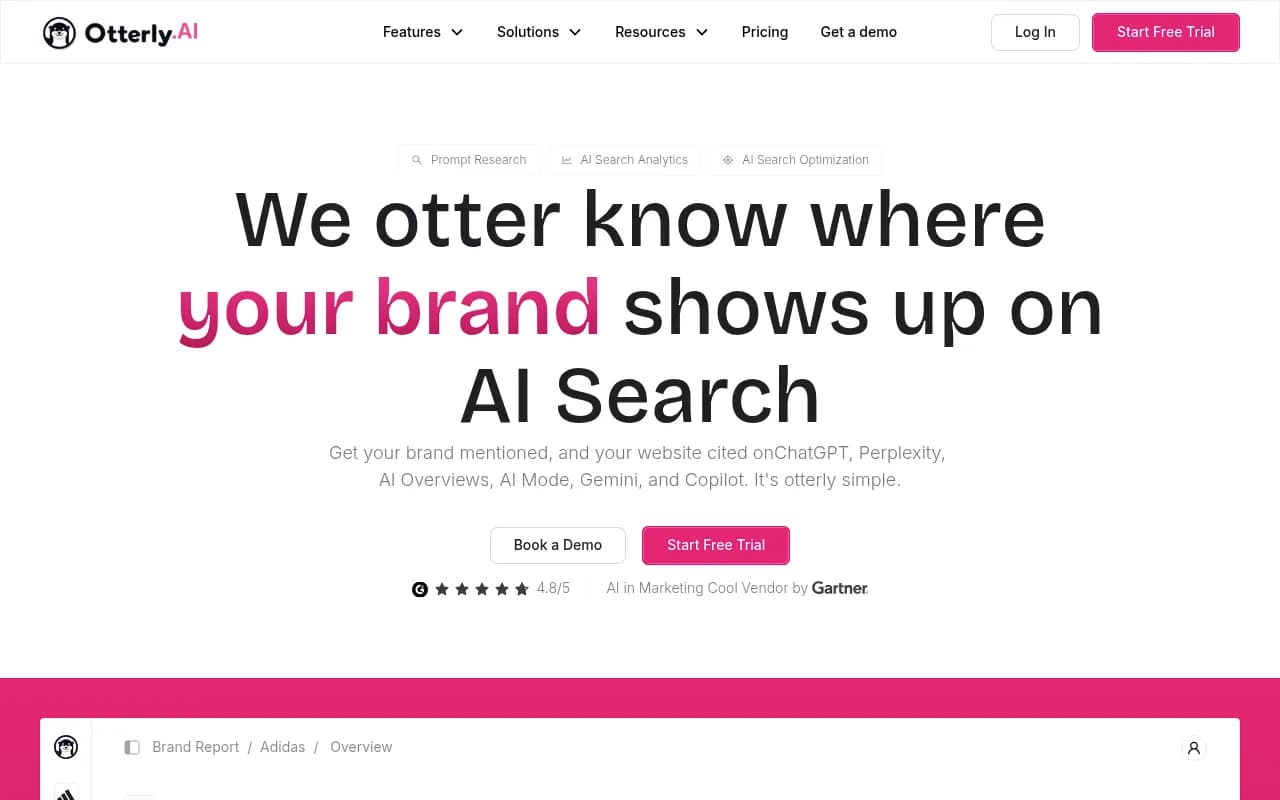
1. Otterly.AI
Otterly is the tool every budget roundup recommends, and for good reason: $29/month is the lowest credible entry price in the category. The Lite plan gives you 15 prompts, which is thin but enough to answer "does AI mention us at all," and the Standard plan at $189 opens things up considerably.
The catch is the add-on structure. Google AI Mode, Gemini, and Claude are paid extras rather than base-plan features, so your real cost climbs if you want full engine coverage. Still, for a first taste of AI visibility data, nothing beats it on price.
2. LLMrefs
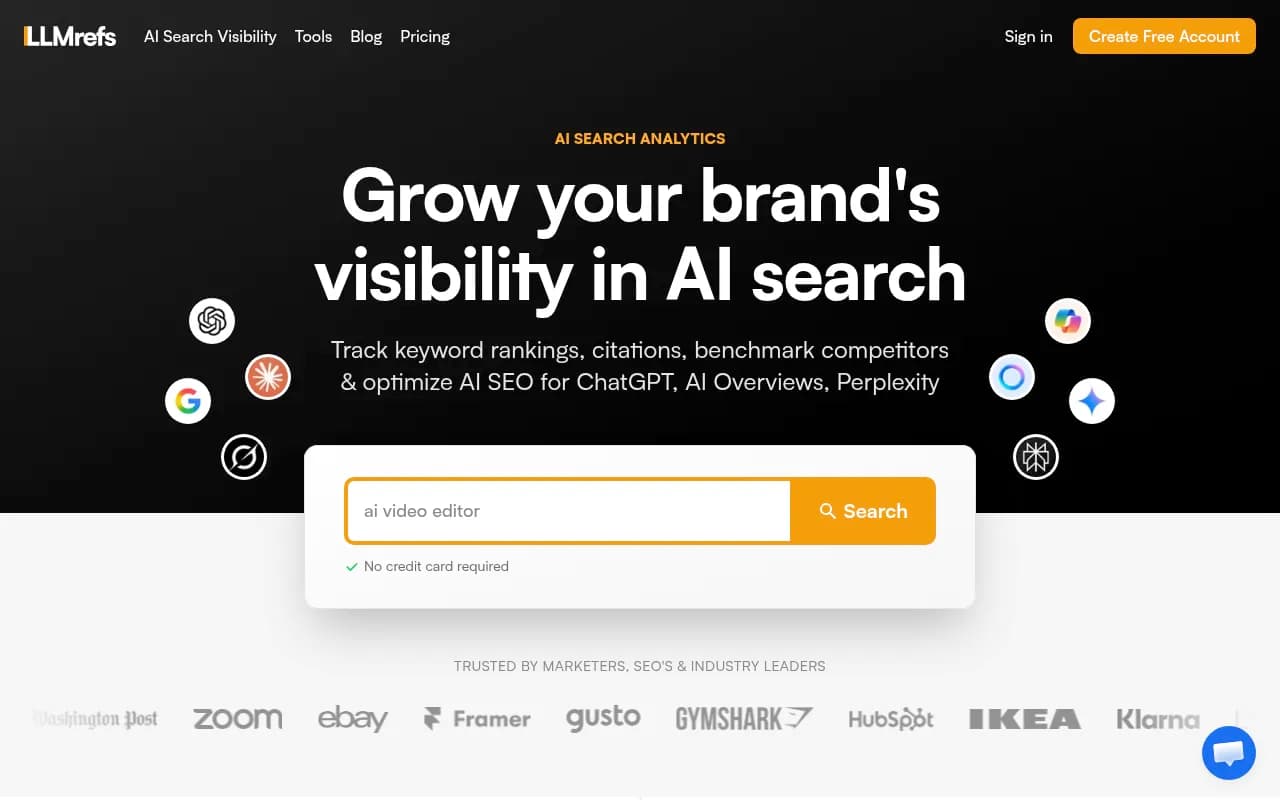
If you judge tools purely on prompts per dollar, LLMrefs wins. $79 flat gets you 500 prompts across all engines, no per-model fees, no add-on games. One independent reviewer called it the tool he points lean teams at most often, and I get why.
The honest caveat: it's a young product from a small bootstrapped team. The data is real, the coverage is real, but you're betting on a company with less track record than the incumbents. For a lot of small teams that's a bet worth taking.
3. Promptwatch
Here's where the budget market gets interesting. Promptwatch costs $95/month on the Essential plan, which puts it in the same bracket as Peec, but it's the only tool at this price that treats visibility as something you fix rather than just something you watch.
The Essential plan includes 50 prompts, 6,000 responses, all LLM tracking, and API access. What you get that the cheaper trackers don't offer: AI crawler logs showing when ChatGPTBot or ClaudeBot actually visits your pages and what errors they hit, plus automated Content Agents that plan, write, and publish GEO-optimized content straight to WordPress, Webflow, or Framer. There's also a free Explore plan (10 prompts, ChatGPT only) if you want to test before paying, and a 7-day free trial on paid plans.
For a small team, the pitch is simple: instead of paying a tracker to tell you you're invisible and then paying a writer to fix it, one subscription covers both halves. It's used by 1,840+ brands and agencies and rated 4.7/5 on G2, which is unusual depth for this price bracket.

4. Peec AI
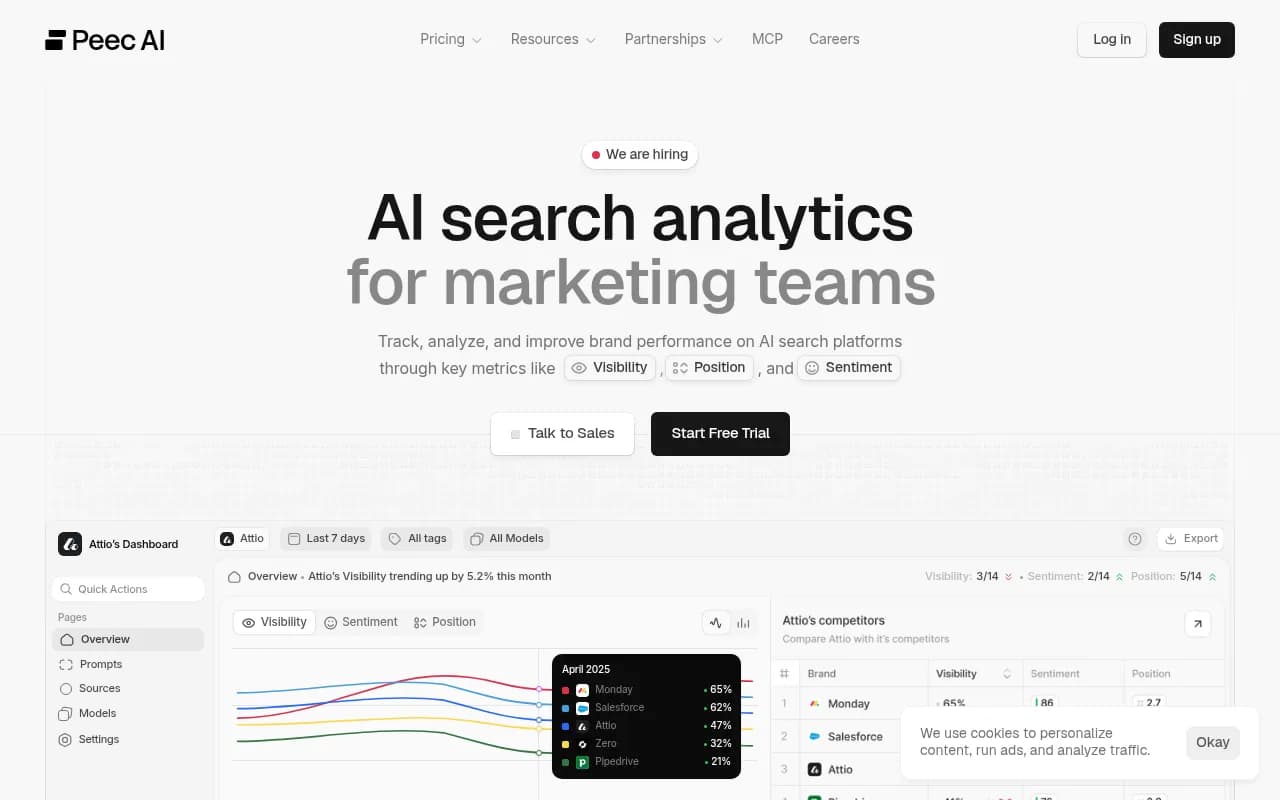
Peec starts at $95/month and has become the agency favorite in the budget tier, with multi-brand workspaces, sentiment analysis, and clean reporting that clients actually understand. If you run a small agency managing several brands and Profound's pricing makes you wince, Peec is the natural landing spot.
It's a monitoring platform first. You'll get solid share-of-voice data and competitor comparisons, but you won't get crawler logs or automated content execution, so plan to do the fixing yourself.
5. ZipTie
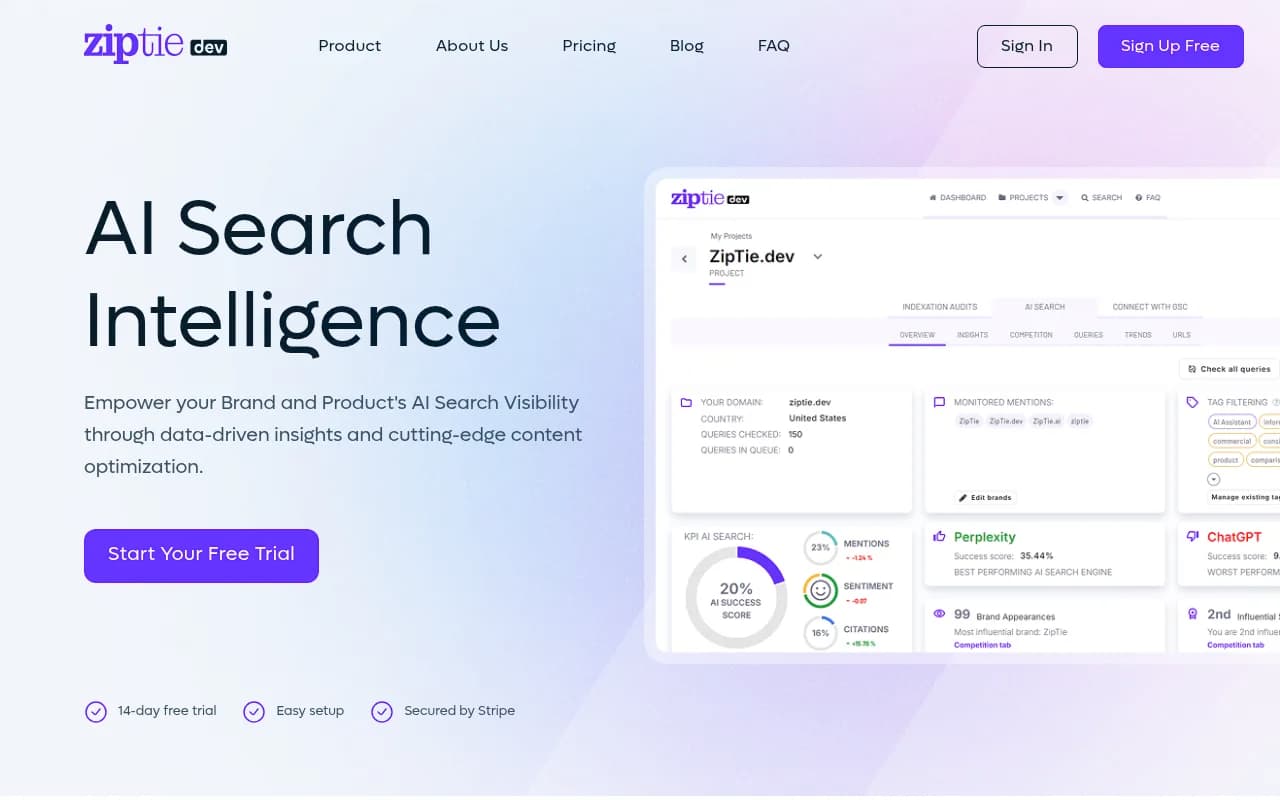
ZipTie shows up in every "tightest budget" comparison alongside Otterly, with entry pricing around the $69/month mark. It's a focused, no-frills AI search visibility tracker. That's the whole pitch, and honestly, sometimes that's the whole job.
If you want a dashboard that answers "are we showing up in AI answers and are we beating competitors," without paying for features you'll never open, ZipTie deserves a look.
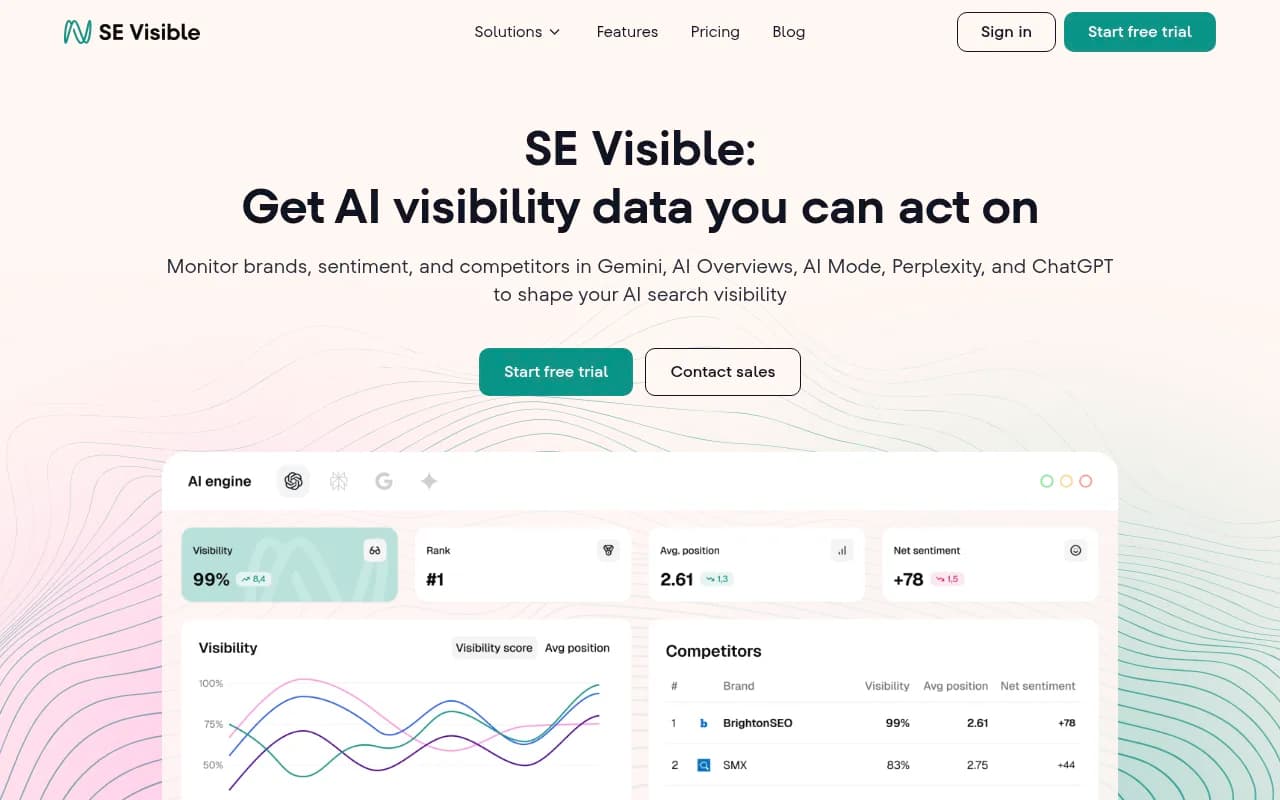
6. SE Ranking Visible
SE Ranking folded AI visibility tracking into its existing SEO platform, which makes it the cheapest option on this list if you already subscribe. You get AI visibility data next to your traditional rank tracking, share of voice in AI answers, and the sources AI engines cite, all inside a tool your team already knows.
The AI-specific depth doesn't match dedicated GEO platforms, there are no crawler logs or content execution, but as a bundled add-on to a suite you're paying for anyway, the value is hard to argue with.
7. Goodie AI
Goodie AI is the freemium option in the AEO space. You can start monitoring and optimizing your AI visibility without paying anything, then upgrade as your prompt count grows. It appears on nearly every Scrunch alternatives list, and its free tier makes it a sensible first stop for teams that aren't sure yet whether AI search matters for them.
The platform covers monitoring and basic optimization guidance. It won't replace a full GEO stack, but as a $0 starting point, it does the job.

8. Knowatoa
Knowatoa focuses on Google's AI surfaces: AI Overviews and brand monitoring. If your audience skews toward people still searching inside Google (and whose doesn't), a Google-first visibility tool has real logic behind it, especially since AI Overviews now cite product pages more than any other content type according to Promptwatch's AI Overviews citation data.
Pricing sits in budget territory, and the narrow focus keeps the product simple. The flip side: you're not getting ChatGPT, Claude, or Perplexity coverage in the same depth as the multi-engine tools above.

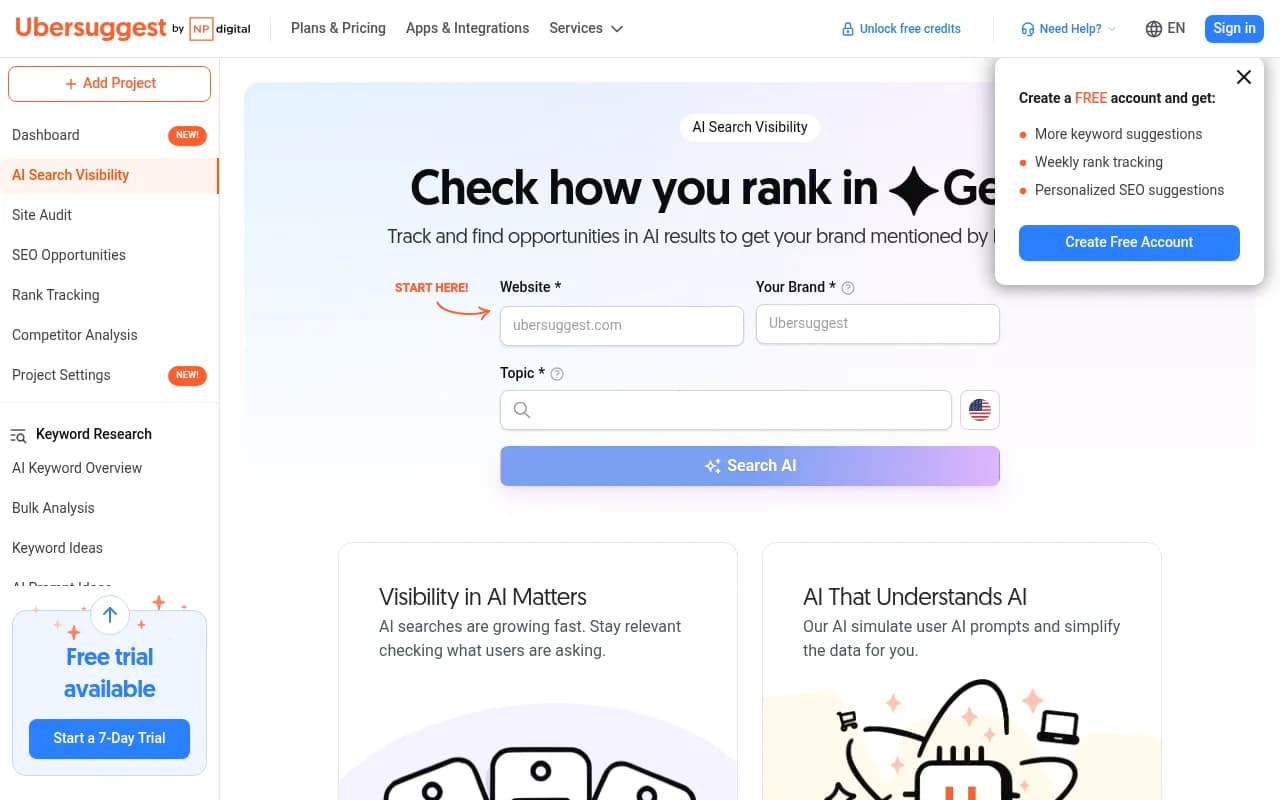
9. Ubersuggest
Ubersuggest added AI brand visibility to its existing keyword research toolkit, and its pricing is among the lowest in the industry. For a solo marketer who wants one cheap subscription covering keyword research, basic SEO, and a rough read on AI visibility, it's a pragmatic pick.
The AI visibility module is shallow compared to dedicated tools. Think of it as a bonus feature on a budget SEO suite rather than a reason to buy.
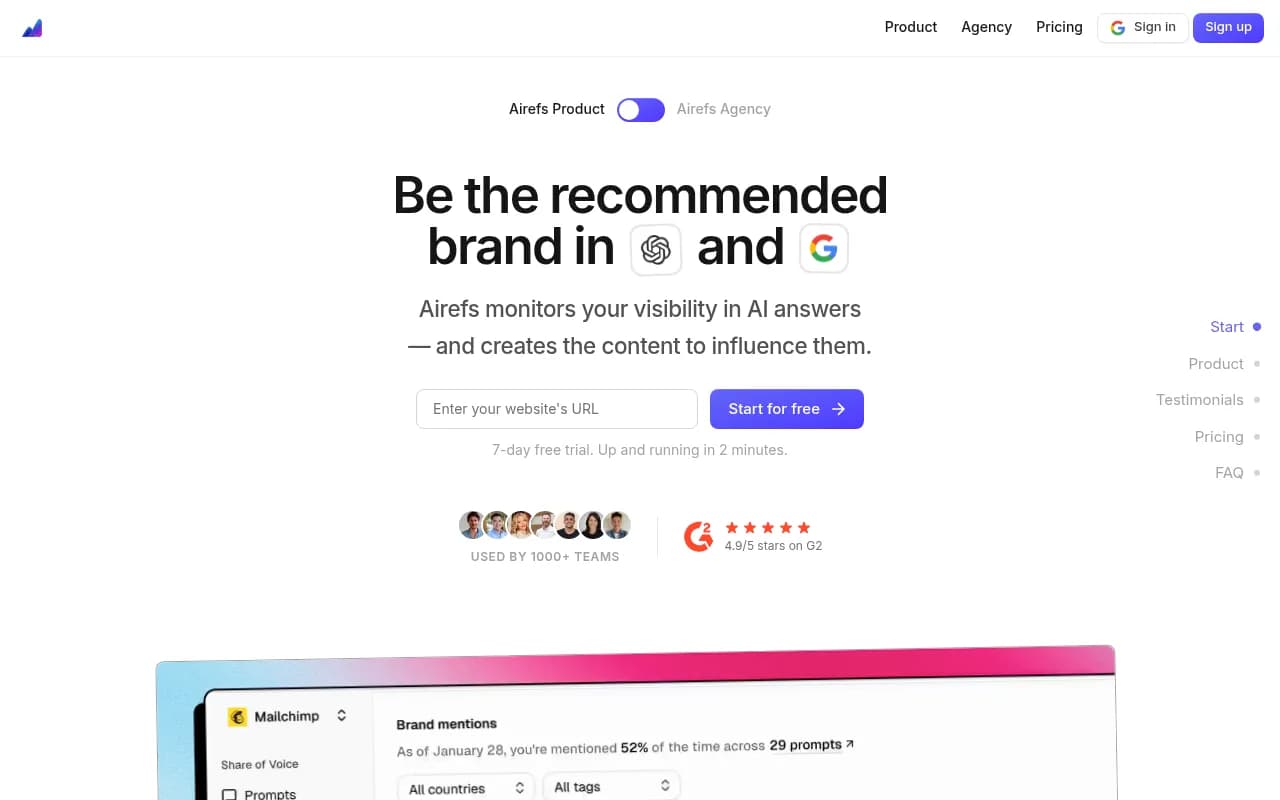
10. Airefs
Airefs positions itself squarely on affordability: AI search visibility tracking at prices aimed at teams that find even $95/month hard to justify. It's a smaller name with a straightforward product, and it works well as a lightweight second tracker to sanity-check what your primary tool reports.
A second data source is genuinely useful in this market. Different tools sample AI responses differently, and cross-checking two trackers against each other will teach you more about your real visibility than either one alone.
How to choose without overthinking it
A few decision rules that hold up in 2026:
- If you've never tracked AI visibility before, start free. Goodie's free tier, Promptwatch's Explore plan, or any vendor's free AI visibility report will tell you whether you have a problem at all.
- If you just need proof the channel exists for your brand, Otterly at $29 or ZipTie at $69 answers that question for the price of a lunch.
- If you want maximum coverage per dollar, LLMrefs at $79 flat with 500 prompts is the strongest raw deal.
- If you intend to actually improve visibility, not just measure it, Promptwatch at $95 is the only sub-$100 option that includes crawler analytics and automated content execution. Everything else at this price is a tracker.
- If you're a small agency, Peec's multi-brand workspaces and client-friendly reporting are built for exactly your situation.
One pattern worth noticing across all of this: the budget market has standardized around monitoring, and monitoring has become cheap. The expensive part of GEO in 2026 isn't the dashboard, it's the work of creating content AI engines want to cite. Budget accordingly. If you want to browse the full market beyond these ten, the GEO software directory at bestgeosoftware.com lists dozens of options with pricing details.
Frequently asked questions
Can a $29 tool really replace Profound?
For monitoring, mostly yes. For enterprise features like AI traffic attribution, crawler analytics, and governance across large prompt sets, no. The question is whether you need those things yet. Most teams in their first year of GEO don't.
How many prompts do I actually need?
A useful starting set is 20 to 50 prompts covering your core product categories, competitor comparisons, and buying questions. If a plan caps you at 15, you'll outgrow it within a quarter of getting serious.
Should I buy multiple cheap tools instead of one expensive one?
Some teams do exactly that, for example Otterly plus a free tier elsewhere, and spend less than half of a Scrunch subscription. The downside is stitching together data from two dashboards. It works, but it costs you time, and time is the thing small teams never have enough of.