Key takeaways
- Most AI visibility platforms are built for enterprise teams with dedicated analysts — not for a two-person marketing team trying to figure out where to start
- Startups should prioritize tools that combine monitoring with content optimization, not just dashboards that show you data without helping you act on it
- Budget matters: entry-level tools start around $29-99/month; enterprise platforms like Profound run into the thousands
- The biggest mistake first-time buyers make is paying for monitoring when what they actually need is optimization
- Before spending anything, audit what you already have — some SEO tools you're already paying for include basic AI visibility features
Your first real marketing budget is a weird thing to spend. You've probably been scraping by on free tools, gut instinct, and the occasional blog post for months. Now you have actual money, and suddenly there are fifteen platforms all claiming to be the thing you need to track your brand in AI search.
Here's the uncomfortable truth: most of them are not built for you. They're built for enterprise marketing teams at companies that already know what GEO is, already have someone who can interpret a citation heatmap, and already have a content team to act on the findings.
If you're a startup raising your first real marketing budget in 2026, you need something different. You need a tool that helps you understand where you stand, tells you what to do about it, and doesn't require a dedicated analyst to make sense of the output.
This guide is specifically for that situation.
Why AI search visibility matters more for startups than for big brands
Big brands get mentioned in AI answers partly because they're big. ChatGPT has seen their name a thousand times across the web. They have Wikipedia pages, press coverage, and years of domain authority working in their favor.
Startups have none of that. Which means if you're not actively working to get cited by AI models, you're essentially invisible to anyone who asks ChatGPT or Perplexity for a recommendation in your category.
The numbers make this concrete. ChatGPT now processes around 2 billion queries daily. Google AI Overviews reaches 2 billion monthly users. AI referral traffic grew 527% year-over-year in 2025. And only 22% of marketers are actively tracking their AI visibility, according to Position Digital's 2025 survey.
That last stat is the opportunity. Most of your competitors aren't paying attention yet. If you move now, you can establish AI visibility before the category gets crowded.
What to look for before you spend anything
Before comparing tools, get clear on what you actually need. There are four distinct things a startup might want from an AI visibility platform:
- Knowing whether you're being mentioned at all (monitoring)
- Understanding why competitors get cited and you don't (gap analysis)
- Creating content that actually gets picked up by AI models (optimization)
- Tracking whether any of this is driving real traffic and revenue (attribution)
Most tools do one or two of these well. Very few do all four. And the ones that do all four tend to charge enterprise prices.
The trap most startups fall into: they buy a monitoring tool, see a dashboard full of data showing they're invisible, and then have no idea what to do next. That's money wasted. You want a platform that shows you the gap and helps you close it.
The market, honestly summarized
The AI visibility tools market raised over $300M in funding between mid-2025 and spring 2026. That's a lot of VC money chasing a real problem, which means there are now a lot of tools, many of which are still finding their footing.
Here's a rough map of the landscape:
| Category | Examples | Starting price | Best for |
|---|---|---|---|
| Enterprise platforms | Profound, Scrunch AI, AthenaHQ | $500+/mo | Large brands, agencies |
| Mid-market analytics | Peec AI, Search Party | $100-300/mo | Growing teams with analysts |
| Full optimization suites | Promptwatch | $99/mo | Startups wanting monitoring + content |
| Entry-level monitoring | Otterly.AI, Rankscale, Airefs | $29-79/mo | First-time buyers, tight budgets |
| SEO tools with AI modules | Semrush, Ahrefs, SE Ranking | Varies | Teams already on these platforms |
| Free checkers | Various | Free | One-time audits only |
Tools worth knowing about, by startup stage
Pre-revenue or very early stage: start with what you have
If you're pre-revenue or in the first few months of operation, the honest answer is: don't buy a dedicated AI visibility platform yet. Instead:
- Check if your existing SEO tool (Semrush, Ahrefs, SE Ranking) has an AI visibility module included
- Use free checkers to get a baseline read on where you stand
- Focus on creating content that answers real questions in your category
Once you're generating revenue and have a content operation running, then it's worth paying for a dedicated tool.
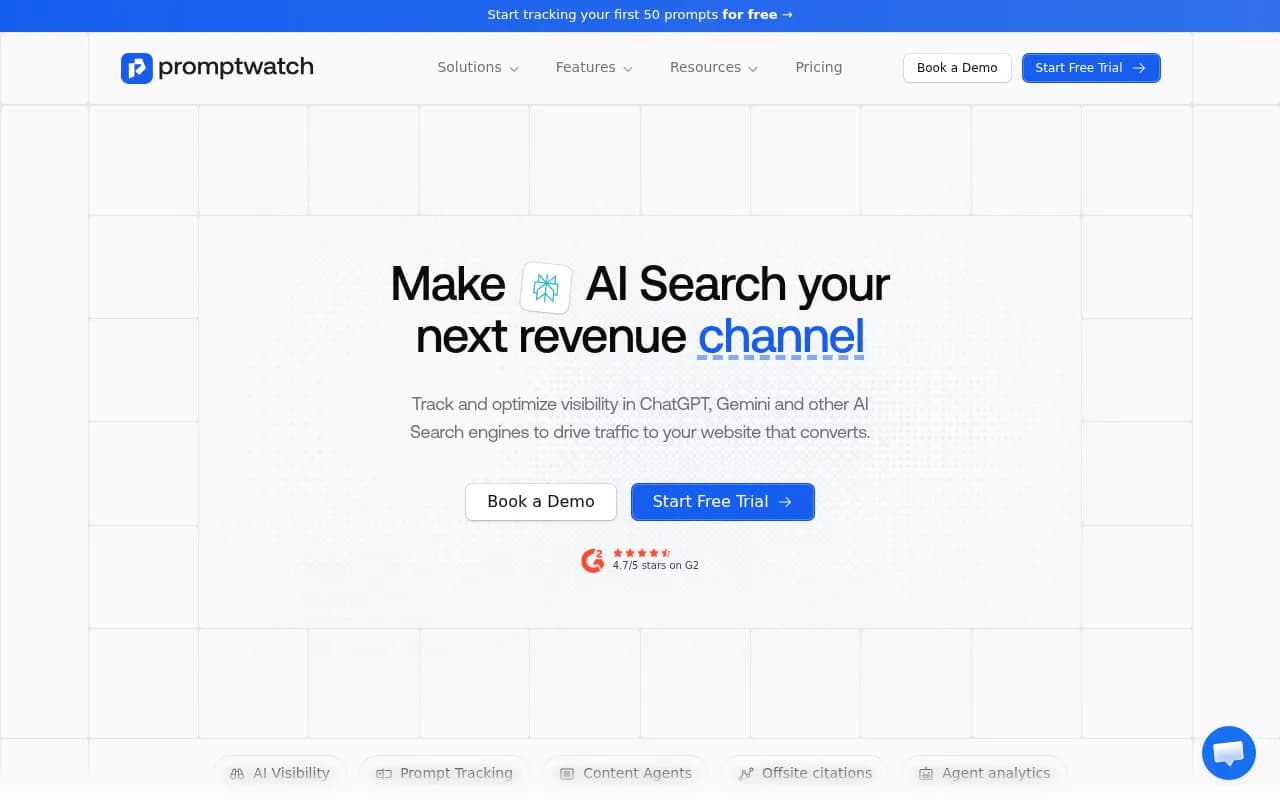
Promptwatch is worth bookmarking even at this stage. The Essential plan at $99/month covers one site, 50 prompts, and 5 articles per month — which is actually a reasonable scope for an early-stage startup that's just starting to think about AI search.
Seed stage: monitoring with a path to action
At seed stage, you probably have a small content team or a single marketer wearing multiple hats. You need a tool that doesn't require hours of interpretation — one that tells you what's wrong and gives you a clear next step.
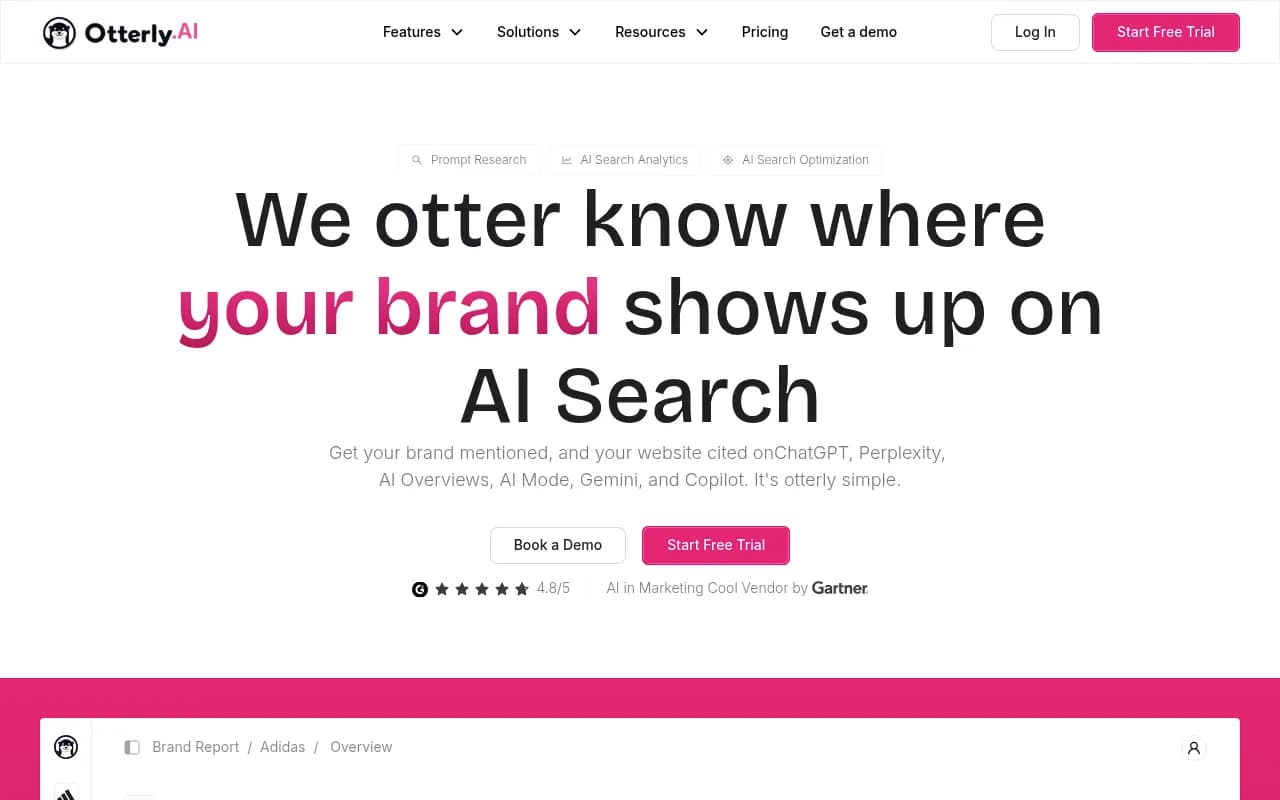
Otterly.AI is the most accessible entry point. Starting around $29/month, it tracks your brand mentions across major AI models and gives you a clear picture of where you're showing up. It's monitoring-only, which means it won't tell you how to fix things, but it's a solid starting point if you just need to know your baseline.
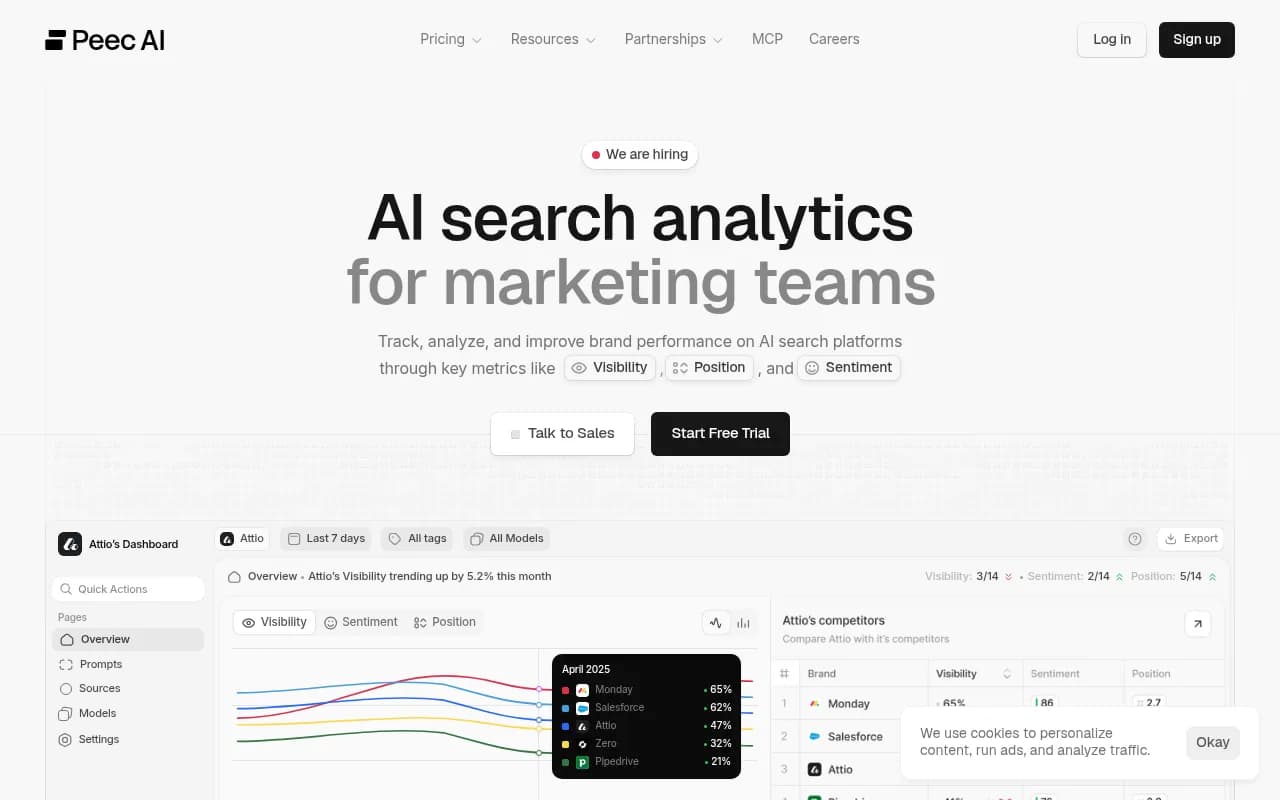
Peec AI is a step up. It raised $29M and hit $4M+ ARR in ten months, which suggests it's doing something right. It's positioned as a mid-market analytics platform with stronger competitive analysis than Otterly. If you want to understand why competitors are getting cited and you're not, Peec is worth looking at.
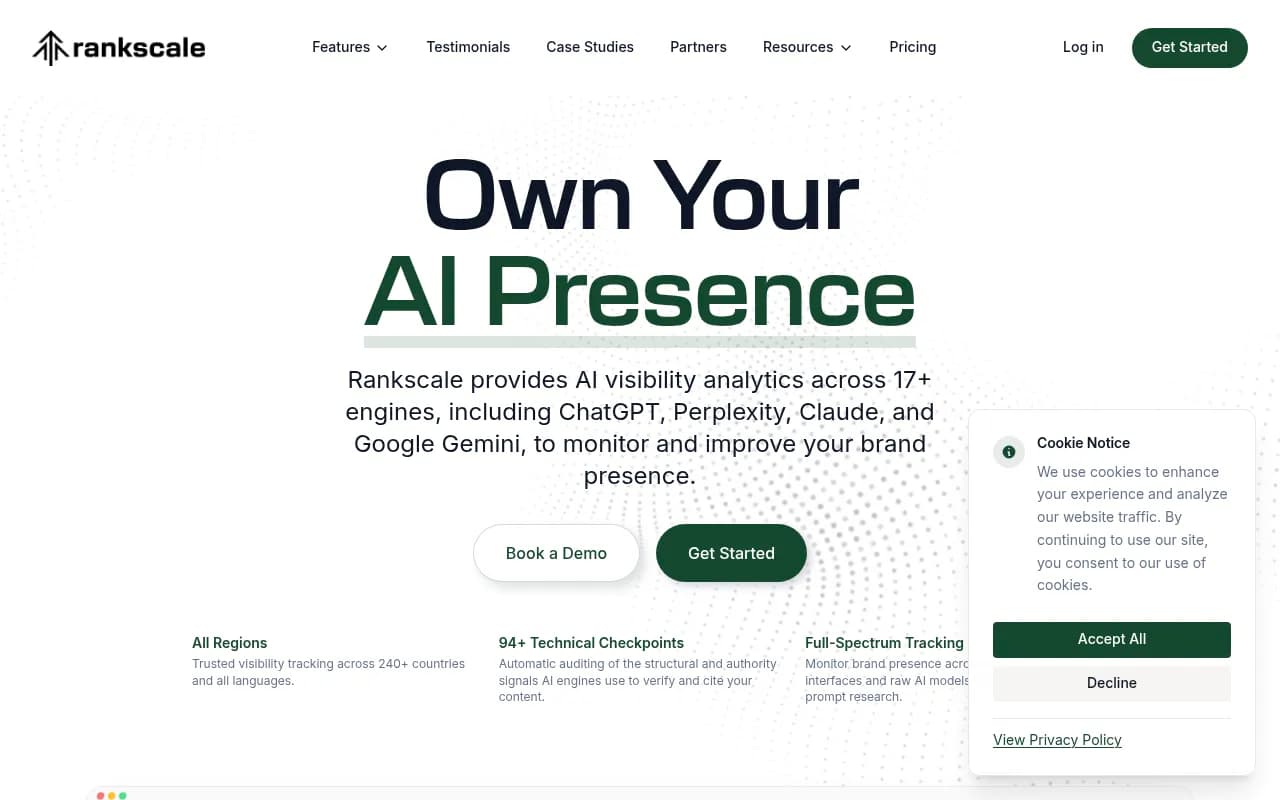
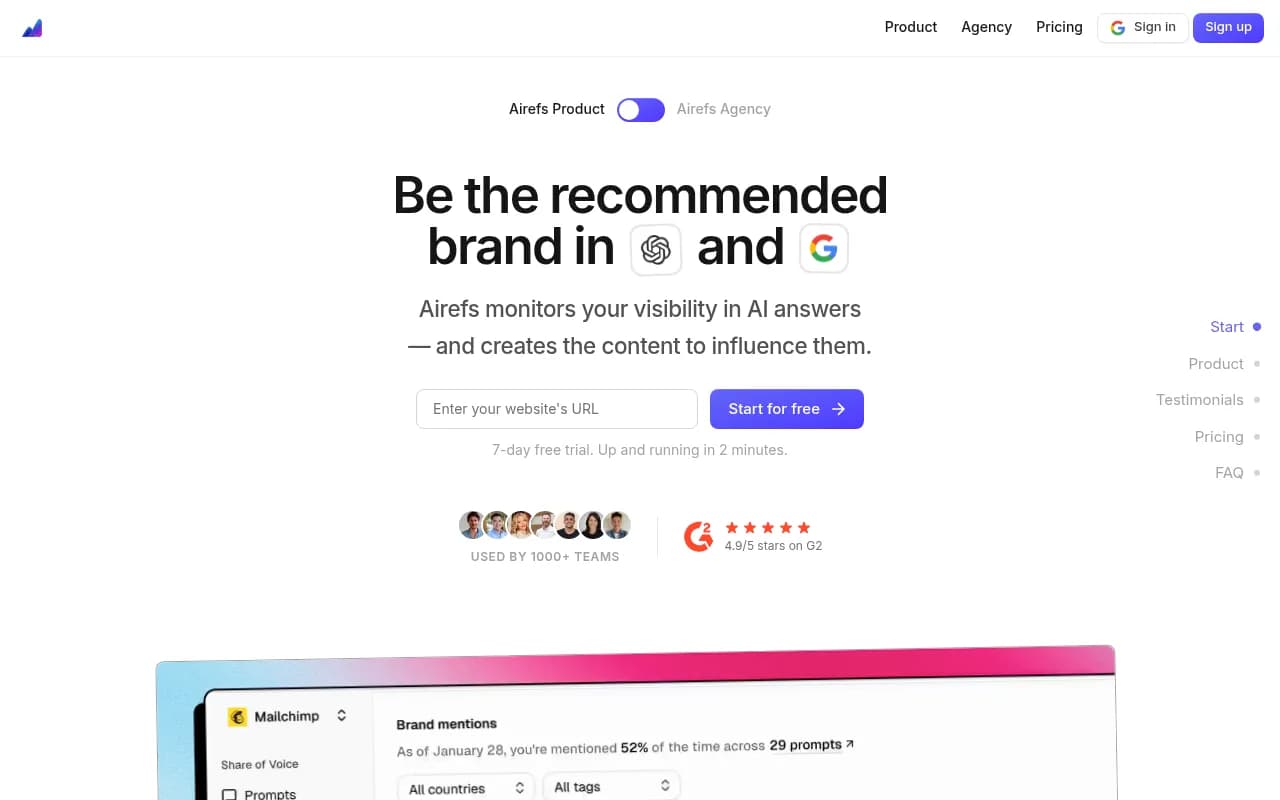
Rankscale and Airefs are the budget challengers in this space. Both offer broad engine coverage at lower price points, and Rankscale in particular offers unlimited seats — useful if you have multiple people who need access to the data.
Series A and beyond: optimization, not just monitoring
Once you have a real marketing budget and a content team, the calculus changes. You're not just trying to understand where you stand — you're trying to move the needle. That requires a platform that closes the loop between data and action.
This is where the distinction between monitoring tools and optimization platforms matters most. Most tools in this category show you a dashboard. The better ones show you the dashboard and then help you do something about it.
Promptwatch is the clearest example of a platform built around this loop. The Answer Gap Analysis shows you which prompts competitors rank for that you don't. The Content Agents generate articles and briefs based on that gap data. Then page-level tracking shows whether the new content is actually getting cited. It's the only platform in a recent comparison of 12 GEO tools rated as a "Leader" across all categories.
At $249/month for the Professional plan (2 sites, 150 prompts, 15 articles, plus crawler logs), it's priced for teams that are serious about AI search but not yet at enterprise scale.
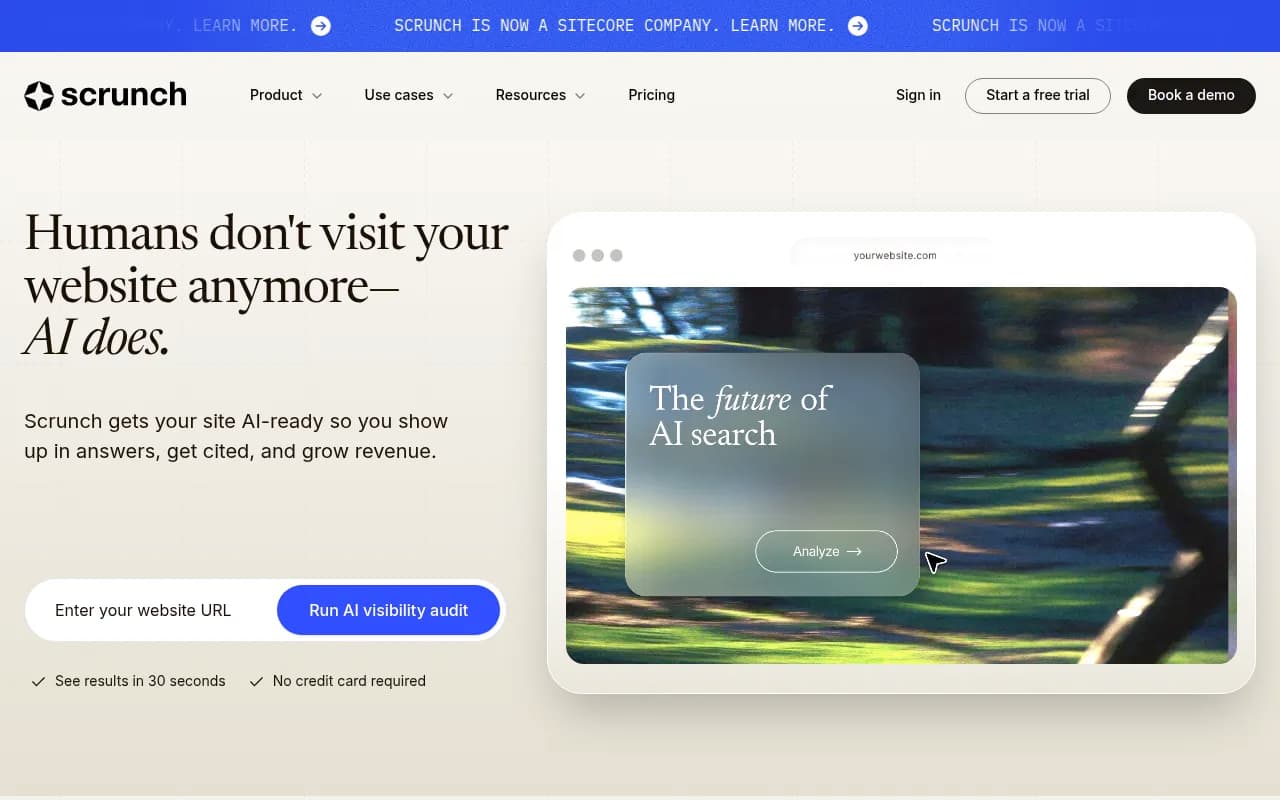
Scrunch AI is another option at this stage, with strong monitoring features and agency-friendly reporting. It's well-funded and enterprise-focused, so pricing tends to be higher, but it's worth evaluating if you're running multiple brands or working with an agency.
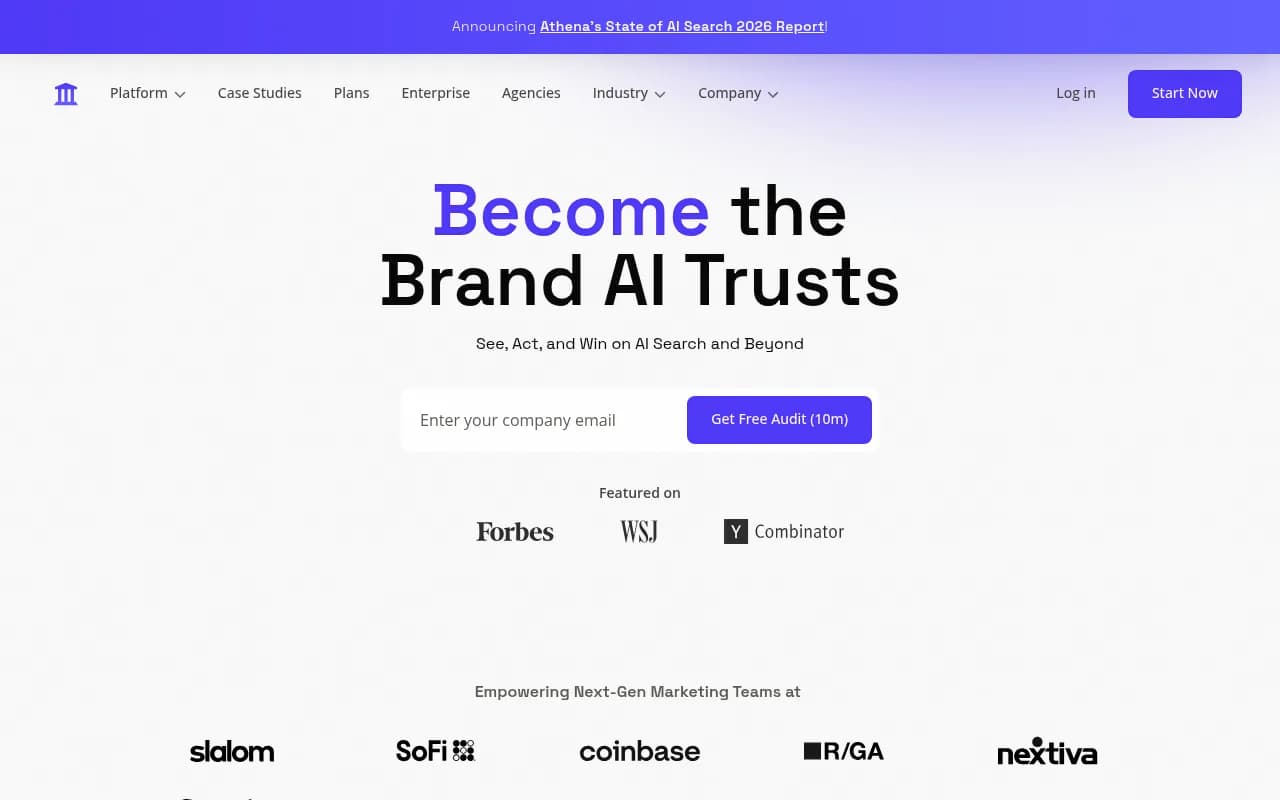
AthenaHQ is monitoring-focused and well-regarded, but it lacks content generation and optimization capabilities. If you already have a strong content team and just need the intelligence layer, it's a solid choice. If you need the platform to help you create content, look elsewhere.
For teams already using traditional SEO tools
If you're already paying for Semrush or Ahrefs, check what's included before buying a separate AI visibility tool.
Semrush has an AI Visibility Toolkit bundled into its platform. It's not as deep as dedicated tools — it uses fixed prompts rather than custom ones, and there's no AI traffic attribution — but it covers the basics and you're already paying for it.
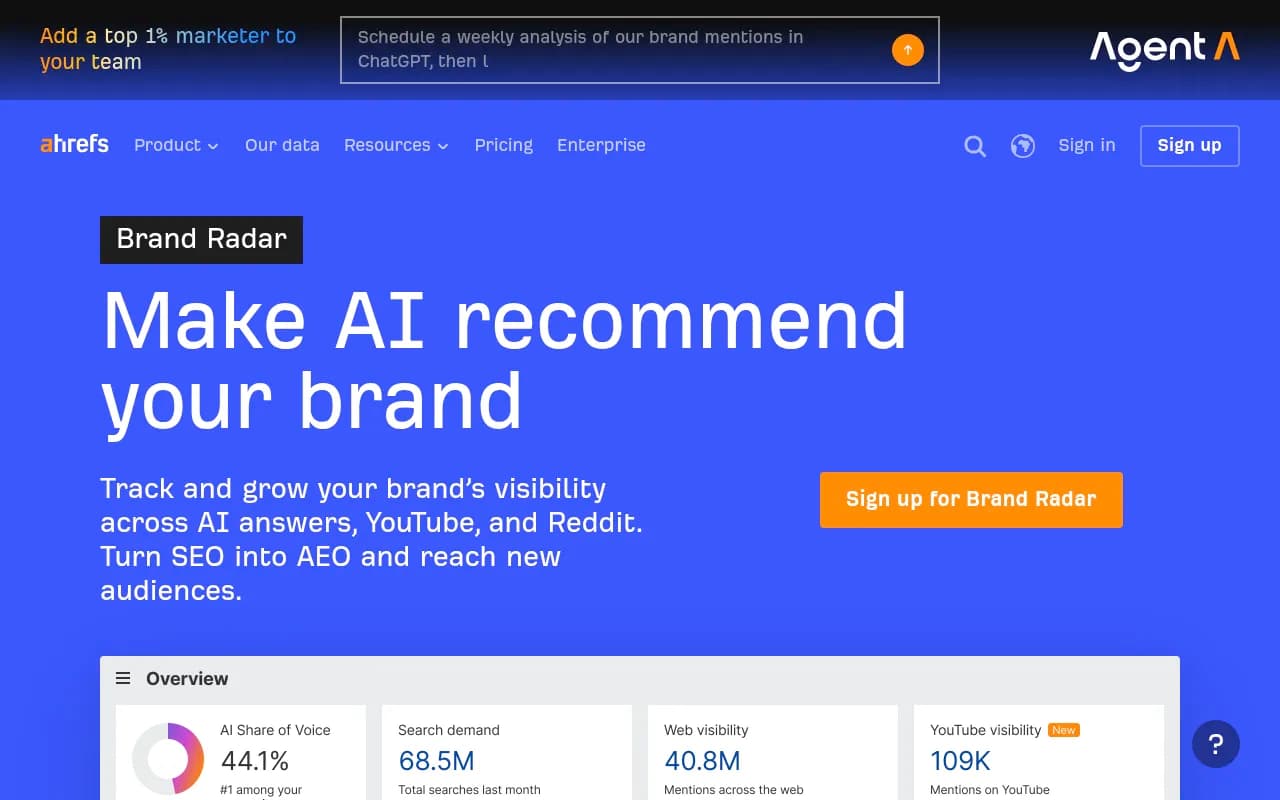
Ahrefs Brand Radar is similar: useful for a quick read on your AI brand presence, but limited by fixed prompts and no traffic attribution. Good for a sanity check, not for serious optimization work.
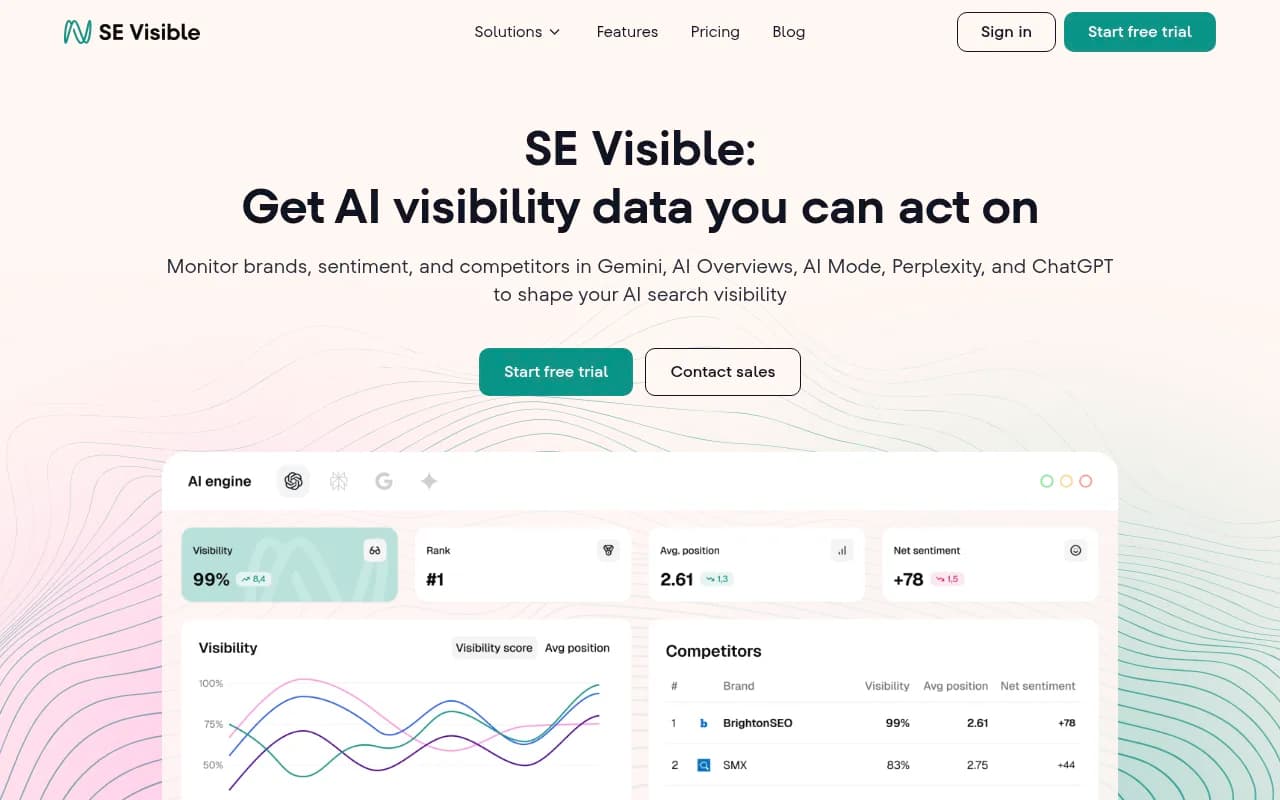
SE Ranking has been building out its GEO features and is worth checking if you're already a customer. The Visible product from SE Ranking is specifically focused on AI visibility tracking.
The content side of AI visibility
Here's something that often gets missed in these comparisons: AI visibility isn't just about tracking. It's about having content that AI models want to cite.
If ChatGPT or Perplexity isn't mentioning your brand, it's usually because there's nothing on your site that directly answers the questions people are asking in your category. You can monitor that gap all you want — but until you create content that fills it, your visibility score won't move.
This is why the most useful platforms for startups aren't just trackers. They're tools that help you understand what content to create and then help you create it.
A few tools worth knowing about on the content side:
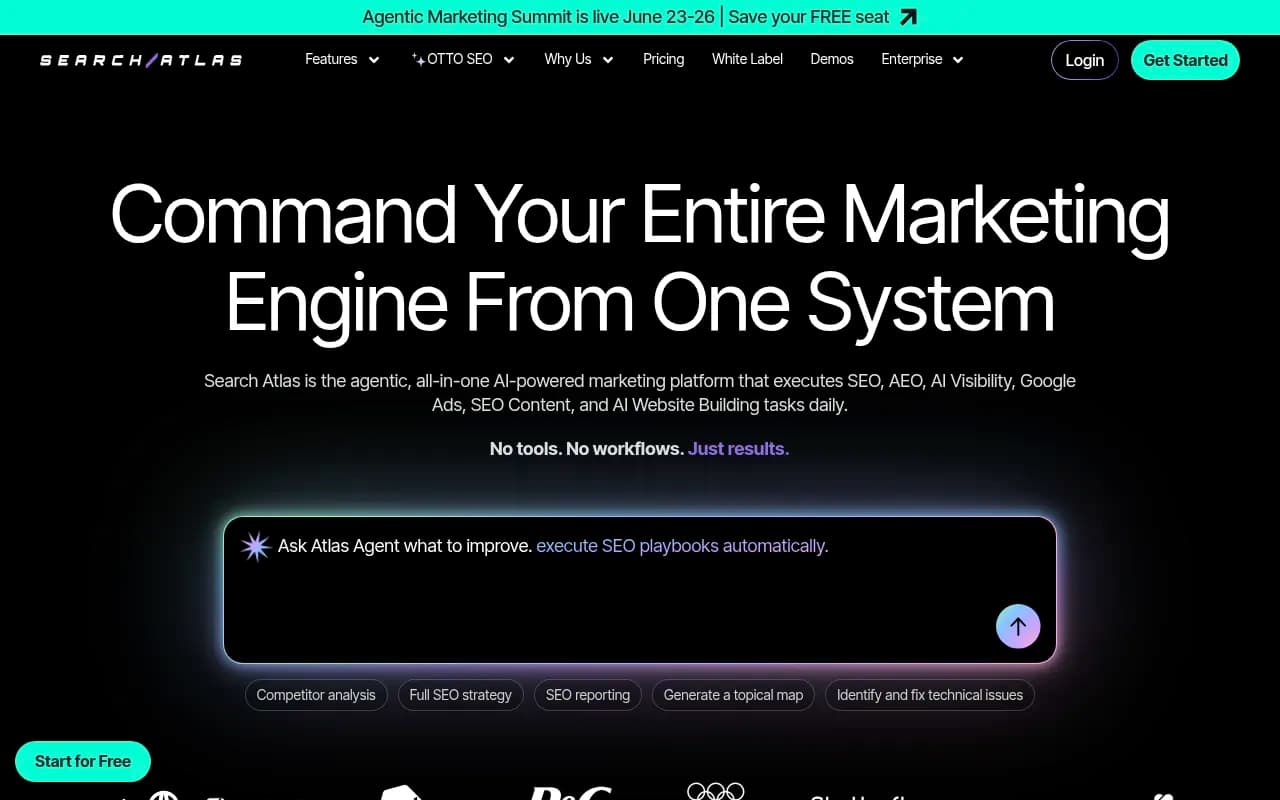
Search Atlas combines traditional SEO with AI visibility features and has content creation capabilities built in. It's an all-in-one option if you want to consolidate your stack.
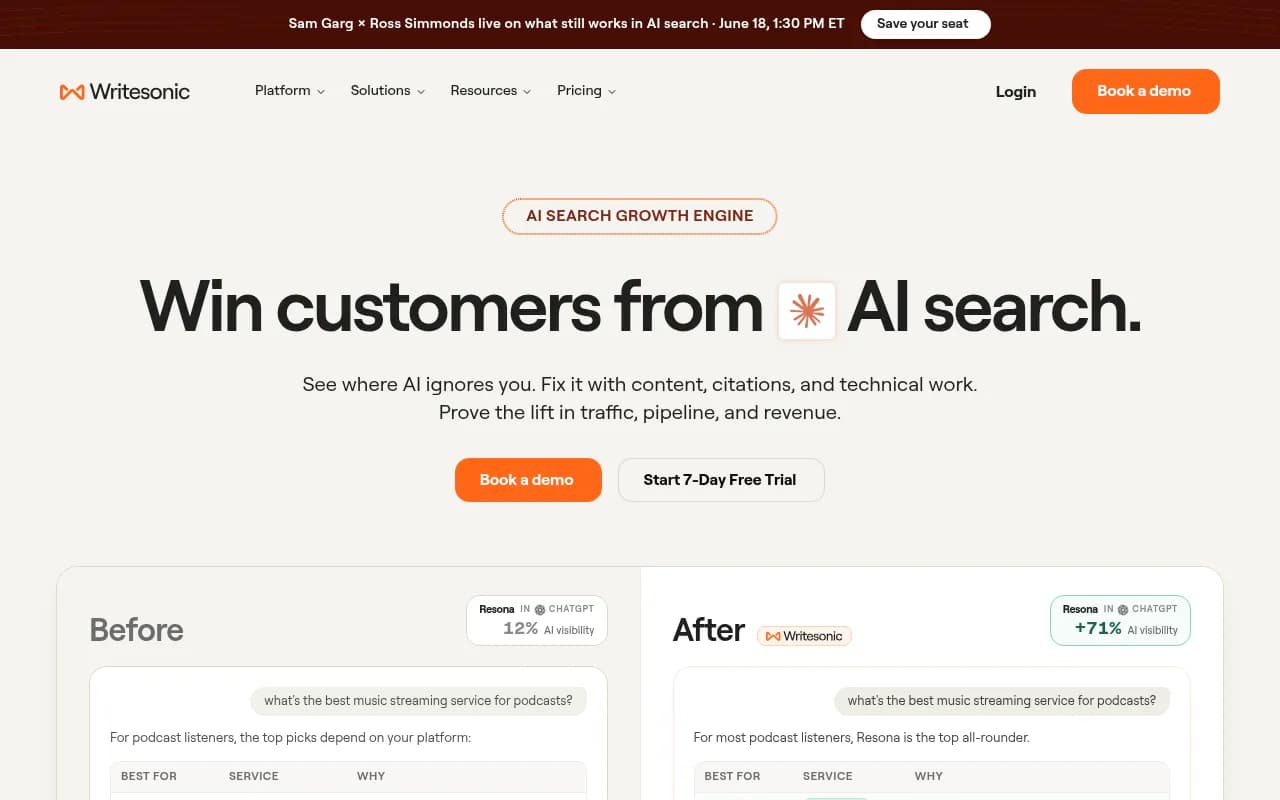
Writesonic GEO lets you monitor AI search visibility and generate GEO-optimized content in the same platform. Useful if you're a lean team that needs both functions without managing multiple tools.
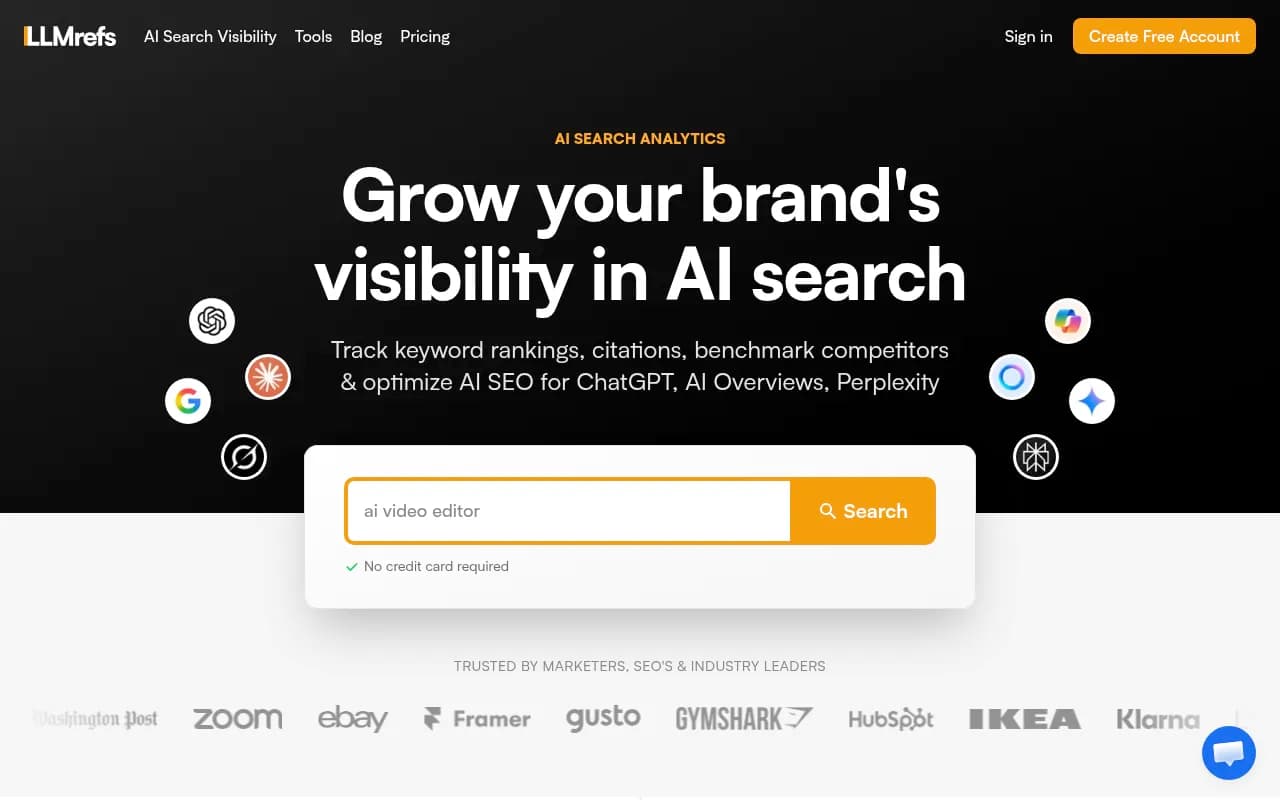
LLMrefs focuses specifically on query insights for LLM citation optimization — understanding which queries are driving citations and how to target them. More specialized, but useful if you want to go deep on the intelligence side.
What the research actually shows
A few things stand out from looking at how the market has shaken out in 2026:
Most platforms are still monitoring-first. The market started with "can we track this?" and many tools haven't moved much beyond that. For startups, this is a problem because monitoring without optimization is just expensive anxiety.
Enterprise pricing is everywhere. Profound raised $155M at a $1B valuation and serves Fortune 500 clients. That's great for Profound, but it means their pricing reflects that customer base. If you're a 20-person startup, you're not their target customer.
The mid-market is genuinely underserved. There are cheap monitoring tools and expensive enterprise platforms, but not many tools that sit in the middle and actually help growing teams take action. This is the gap that platforms like Promptwatch are trying to fill.
Reddit and YouTube matter more than most tools acknowledge. A significant portion of what AI models cite comes from Reddit threads, YouTube videos, and third-party review sites — not just brand websites. Most platforms track your own site. Fewer track the offsite signals that are actually driving (or blocking) your AI visibility.
How to structure your first AI visibility budget
If you're allocating a marketing budget for AI search visibility for the first time, here's a rough framework:
For a startup spending $500-1,000/month on marketing tools total, AI visibility should probably take $100-250 of that. That puts you in the range of Promptwatch's Essential or Professional plan, or a combination of a monitoring tool and a content tool.
For a startup spending $2,000-5,000/month, you have room for a more capable platform and can start thinking about content production at scale. Promptwatch's Business plan at $579/month covers 5 sites, 350 prompts, and 30 articles — enough to run a serious AI search program.
For teams spending more than that, enterprise platforms like Profound or Scrunch AI become relevant, though you should pressure-test whether their pricing reflects value for your specific use case.
One thing worth doing before you buy anything: run a free audit. Several tools offer free AI visibility checkers that give you a baseline read on where you stand. Use one of those first. If the results show you're already getting cited reasonably well, you might not need to spend as much as you think. If they show you're essentially invisible, you have a concrete problem to solve and a clearer sense of what to prioritize.
The honest bottom line
The AI visibility tools market is real, the problem it solves is real, and the opportunity for startups to establish visibility before their categories get crowded is also real. But the market is also full of tools that are better at raising money than at helping small teams actually improve their AI search presence.
For most startups raising their first marketing budget in 2026, the right move is:
- Check what your existing SEO tools already cover
- Run a free audit to understand your baseline
- Choose a platform that does more than monitor — one that helps you identify gaps and create content to fill them
- Start small, track results, and scale spending as you see visibility improve
The platforms that fit that description best at startup-friendly price points are Otterly.AI for pure monitoring on a tight budget, and Promptwatch for teams that want the full loop from gap analysis to content creation to citation tracking. Most other tools are either too expensive, too shallow, or both.
The goal isn't to have a beautiful dashboard. It's to get your brand mentioned when someone asks an AI model a question you should be answering.