Key takeaways
- Goodie AI covers basic AI search monitoring, but small businesses increasingly need tools that help them act on the data, not just collect it.
- The best alternatives in 2026 combine prompt tracking, content gap analysis, and affordable pricing -- some starting under $50/month.
- For businesses that want a full optimization loop (find gaps, create content, track results), Promptwatch is the strongest all-in-one option.
- If you only need lightweight monitoring and have a tight budget, Otterly.AI and Peec AI are solid entry points.
- AI search visibility is no longer optional -- ChatGPT, Perplexity, and Google AI Overviews are now meaningful traffic sources for small businesses.
Small businesses are finally waking up to a real problem: your customers are asking AI chatbots for recommendations, and if your brand isn't showing up in those answers, you're invisible to a growing chunk of your market. Goodie AI was one of the earlier tools to address this, offering basic AI brand monitoring at a price point accessible to smaller teams.
But "basic" is starting to feel limiting. Knowing you're not being cited by ChatGPT is useful. Knowing why, and knowing what to do about it, is what actually moves the needle.
This guide covers five Goodie AI alternatives that small businesses should seriously consider in 2026 -- tools that are affordable, practical, and built to do more than just show you a dashboard.
What to look for in a Goodie AI alternative
Before jumping into the list, it's worth being clear about what "better" actually means for a small business context. Enterprise tools with six-figure contracts aren't relevant here. What matters:
- Pricing that makes sense for a team of 1-10 people (ideally under $300/month)
- Monitoring across the AI engines your customers actually use: ChatGPT, Perplexity, Google AI Overviews, Gemini
- Some form of actionable output -- content suggestions, gap analysis, or briefs -- not just data
- A setup process that doesn't require a dedicated technical team
With that framing, here's where the market stands.
The 5 best Goodie AI alternatives for small businesses in 2026
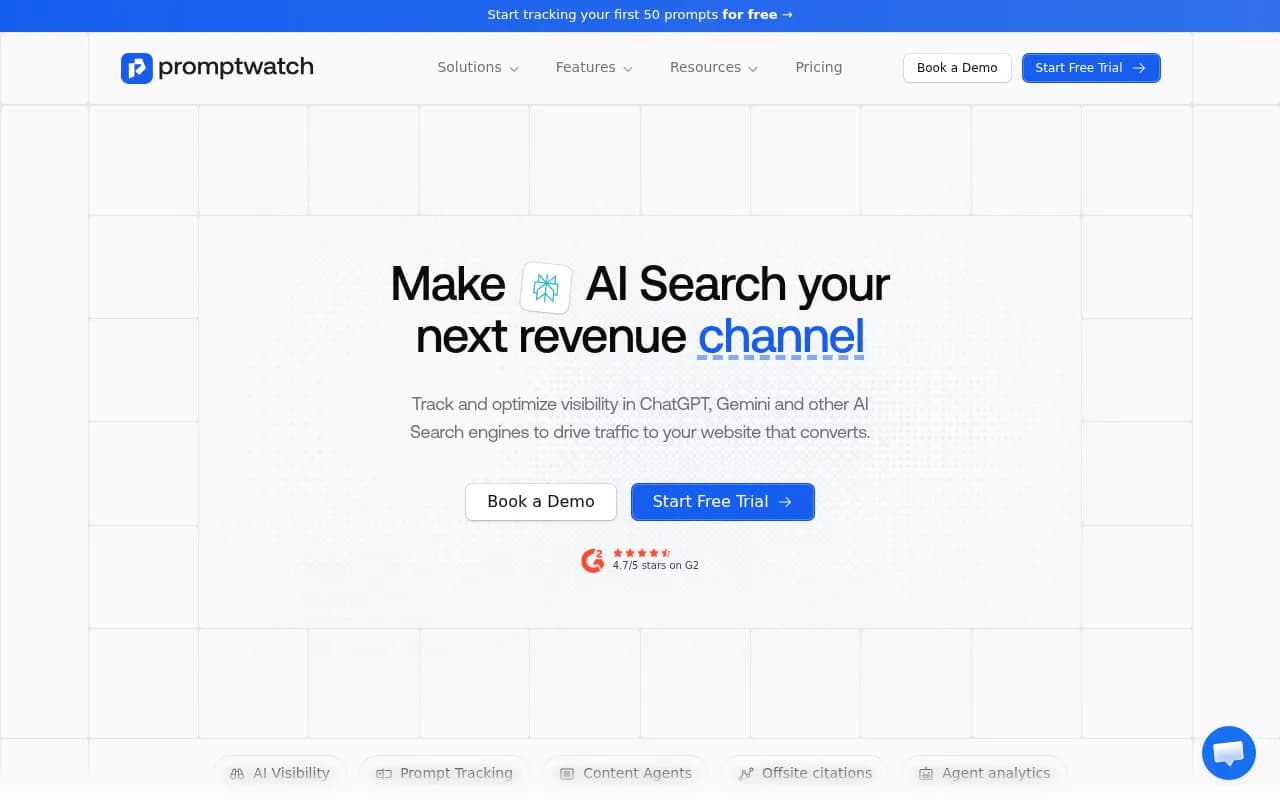
1. Promptwatch -- best for small businesses that want to actually fix their AI visibility
Most monitoring tools show you a gap and leave you staring at it. Promptwatch is built around closing it.
The core workflow: you set up prompts relevant to your business, Promptwatch tracks how AI engines respond to those prompts, and then the Answer Gap Analysis shows you exactly which prompts competitors are getting cited for that you're not. From there, Content Agents generate articles, listicles, and comparison pages grounded in real prompt data -- not generic SEO filler. Then you track whether those pages start getting cited.
For a small business owner who doesn't have a full marketing team, that loop matters. You're not hiring a consultant to interpret the data. The tool tells you what's missing and helps you create it.
Promptwatch monitors 10 AI models including ChatGPT, Perplexity, Google AI Overviews, Claude, Gemini, Grok, and DeepSeek. It also logs AI crawler activity on your site in real time -- which pages ChatGPT's crawler has read, how often it returns, and whether those pages have converted from crawled to cited. That's a level of transparency most tools don't offer.
Pricing starts at $99/month for one site and 50 prompts, which is reasonable for a small business with a focused niche. The Professional plan at $249/month adds crawler logs, city-level tracking, and more content generation capacity.
Best for: Small businesses that want to improve AI visibility, not just measure it. Particularly strong if you're in a competitive niche where competitors are already showing up in AI answers and you're not.
Worth noting: The content generation features are most useful if you have a blog or resource section. If your site is purely a brochure with no content strategy, you'll get less value from the optimization side.
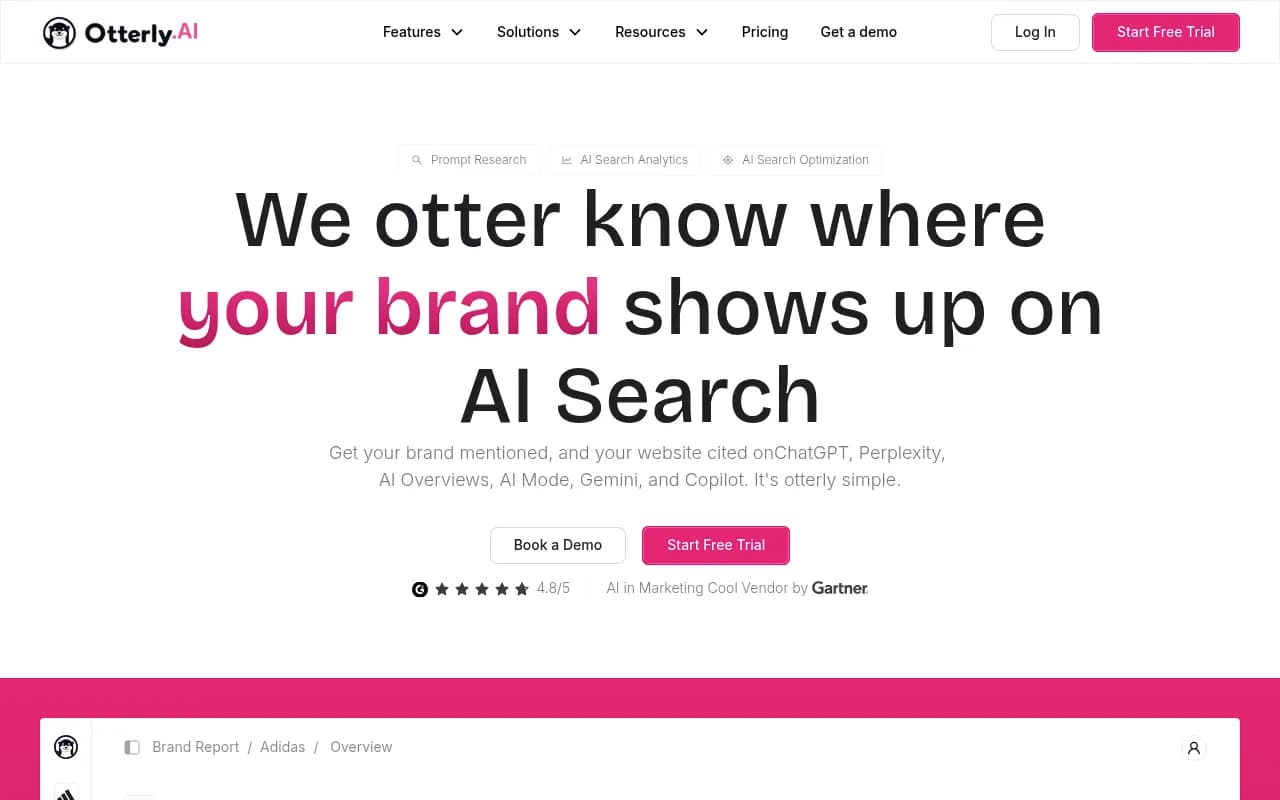
2. Otterly.AI -- best for budget-conscious monitoring
Otterly.AI sits at the affordable end of the AI visibility market and does the core job well: track how your brand appears across AI search engines, monitor competitors, and get alerts when something changes.
It's not trying to be an optimization platform. There's no content generation, no crawler logs, no gap analysis that tells you what to write. But for a small business that just wants to know "are we showing up in ChatGPT when someone asks for [our service] in [our city]?" -- Otterly.AI answers that question without overcomplicating things.
The interface is clean, setup is fast, and the pricing is accessible. If you're earlier in your AI visibility journey and just need situational awareness before committing to a heavier tool, Otterly.AI is a sensible starting point.
Best for: Small businesses that want basic AI brand monitoring without a steep learning curve or a large monthly bill.
Worth noting: You'll outgrow it if you want to do anything beyond monitoring. It's a tracker, not an optimizer.
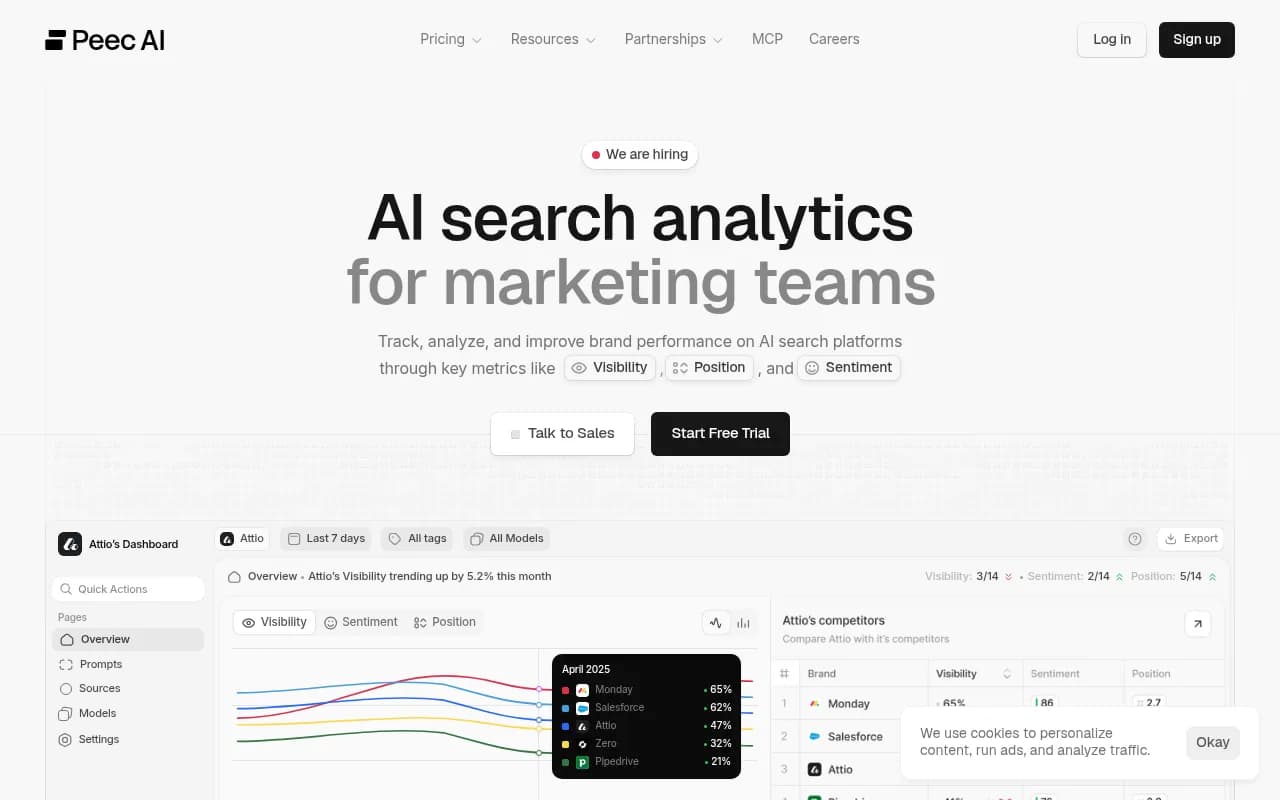
3. Peec AI -- best for teams that want monitoring with some strategic guidance
Peec AI sits a step above pure monitoring tools. It tracks AI visibility across the major models and adds a layer of suggestions -- surfacing which topics or angles might improve your visibility based on what AI engines are currently citing.
It's not as deep as Promptwatch's content generation capabilities, but it gives small business owners more to work with than a raw data dump. The interface is approachable, and the prompt tracking is solid.
For a small business with one person handling marketing who wants some direction without needing to interpret everything from scratch, Peec AI hits a useful middle ground.
Best for: Small businesses that want monitoring plus some strategic direction, without committing to a full optimization platform.
Worth noting: Content creation still happens outside the tool. Peec AI tells you what to work on; you still need to go build it elsewhere.
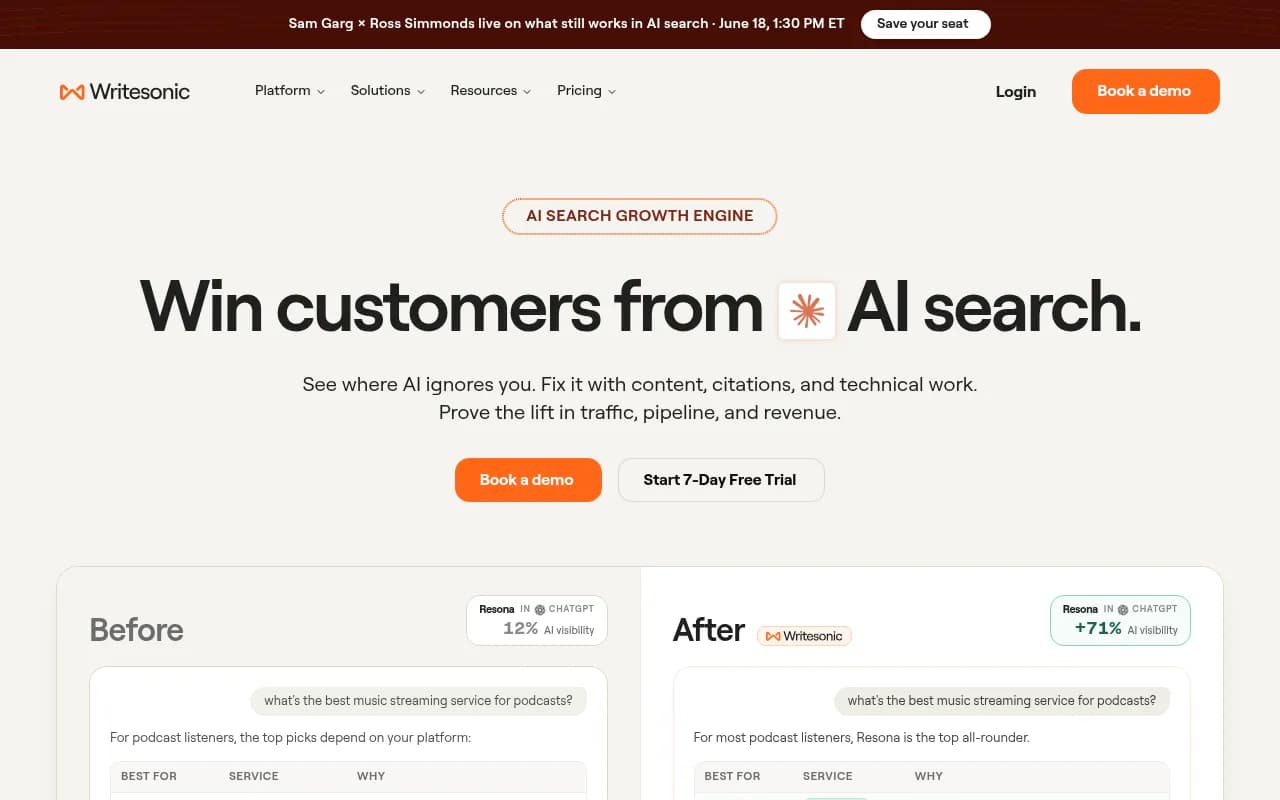
4. Writesonic GEO -- best for small businesses already using Writesonic for content
If your team already uses Writesonic for blog posts or marketing copy, the GEO module is a natural extension. It adds AI search visibility monitoring on top of the content generation you're already doing, which means you can see how your published content performs in AI answers and iterate from there.
The integration between content creation and visibility tracking is the main draw. You write something, publish it, and then track whether it starts appearing in AI responses -- all within the same platform. That's a tighter feedback loop than stitching together separate tools.
Pricing is competitive, and the content generation quality is solid for most small business use cases.
Best for: Small businesses already in the Writesonic ecosystem who want to add AI visibility tracking without adopting a separate tool.
Worth noting: If you're not already a Writesonic user, there's less reason to start here versus a dedicated GEO platform.
5. Ubersuggest -- best for small businesses that want AI visibility alongside traditional SEO
Ubersuggest has been a go-to affordable SEO tool for small businesses for years. Neil Patel's platform has added AI brand visibility tracking to its existing keyword research and site audit features, making it one of the few options where you can manage traditional SEO and AI search visibility in one place.
For a small business owner who is already tracking keyword rankings and running site audits, adding AI visibility monitoring without switching platforms is genuinely convenient. The pricing is among the most accessible in the market.
The AI visibility features aren't as deep as dedicated GEO platforms -- you won't get crawler logs or detailed prompt gap analysis -- but for a business that's just starting to pay attention to AI search, it's a low-friction way to get started.
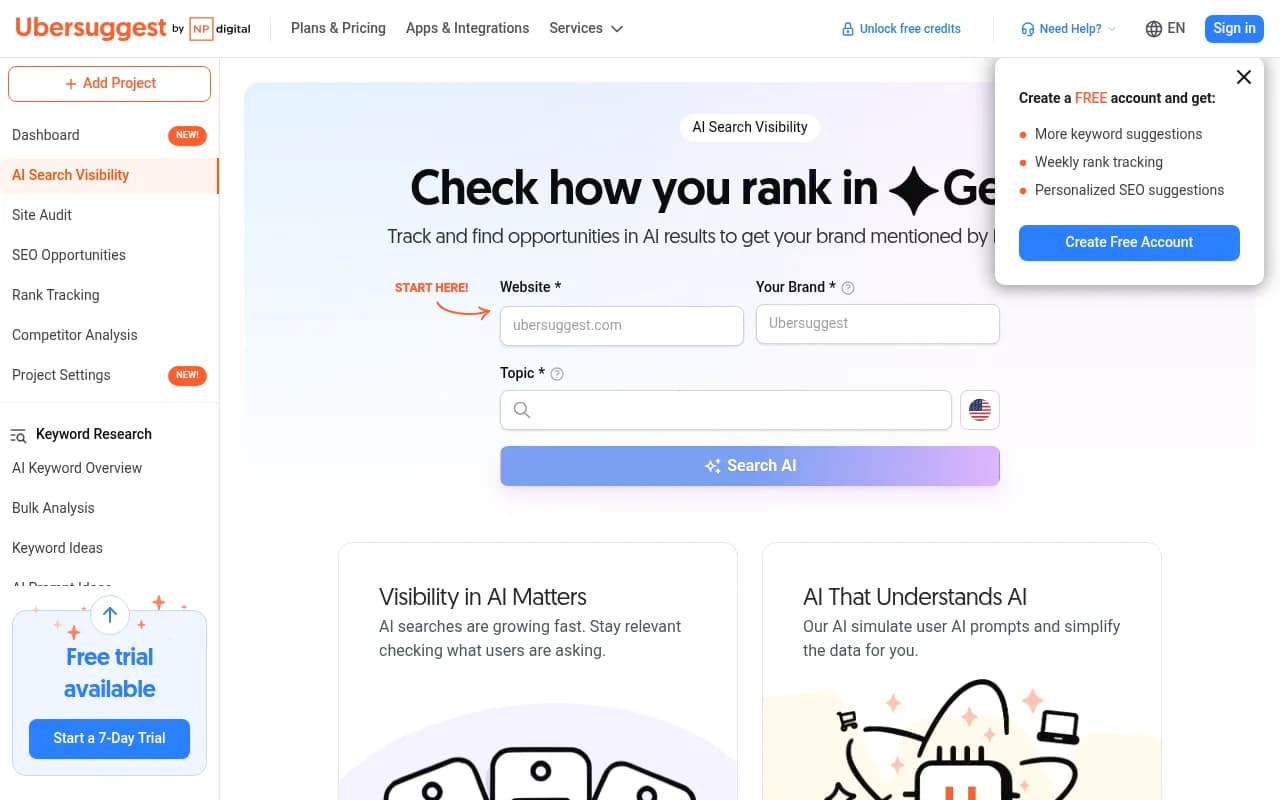
Best for: Small businesses already using Ubersuggest for SEO who want to add AI visibility without adopting a new tool.
Worth noting: If AI visibility is your primary concern (not a secondary add-on to traditional SEO), a dedicated platform will serve you better.
How these tools compare
| Tool | Starting price | AI models tracked | Content generation | Crawler logs | Best for |
|---|---|---|---|---|---|
| Promptwatch | $99/mo | 10 (ChatGPT, Perplexity, Gemini, Claude, Grok, DeepSeek, and more) | Yes (AI content agents) | Yes | Full optimization loop |
| Otterly.AI | Low/affordable | Major models | No | No | Budget monitoring |
| Peec AI | Mid-range | Major models | Suggestions only | No | Monitoring + guidance |
| Writesonic GEO | Varies | Major models | Yes (via Writesonic) | No | Existing Writesonic users |
| Ubersuggest | Low | Growing | No | No | Traditional SEO + AI add-on |
Why "monitoring only" isn't enough anymore
Here's the honest reality: knowing your brand isn't appearing in Perplexity answers is the easy part. The hard part is figuring out what to do about it.
Most small businesses that invest in AI visibility tools in 2026 will hit the same wall. They set up monitoring, they see the gaps, and then they have no clear path to closing them. The data sits in a dashboard while the business keeps being invisible in AI search.
The tools that solve this problem are the ones worth paying for. That means gap analysis that tells you specifically what content is missing, content generation that's grounded in real prompt data (not just generic AI writing), and page-level tracking that shows whether your new content is actually getting picked up.
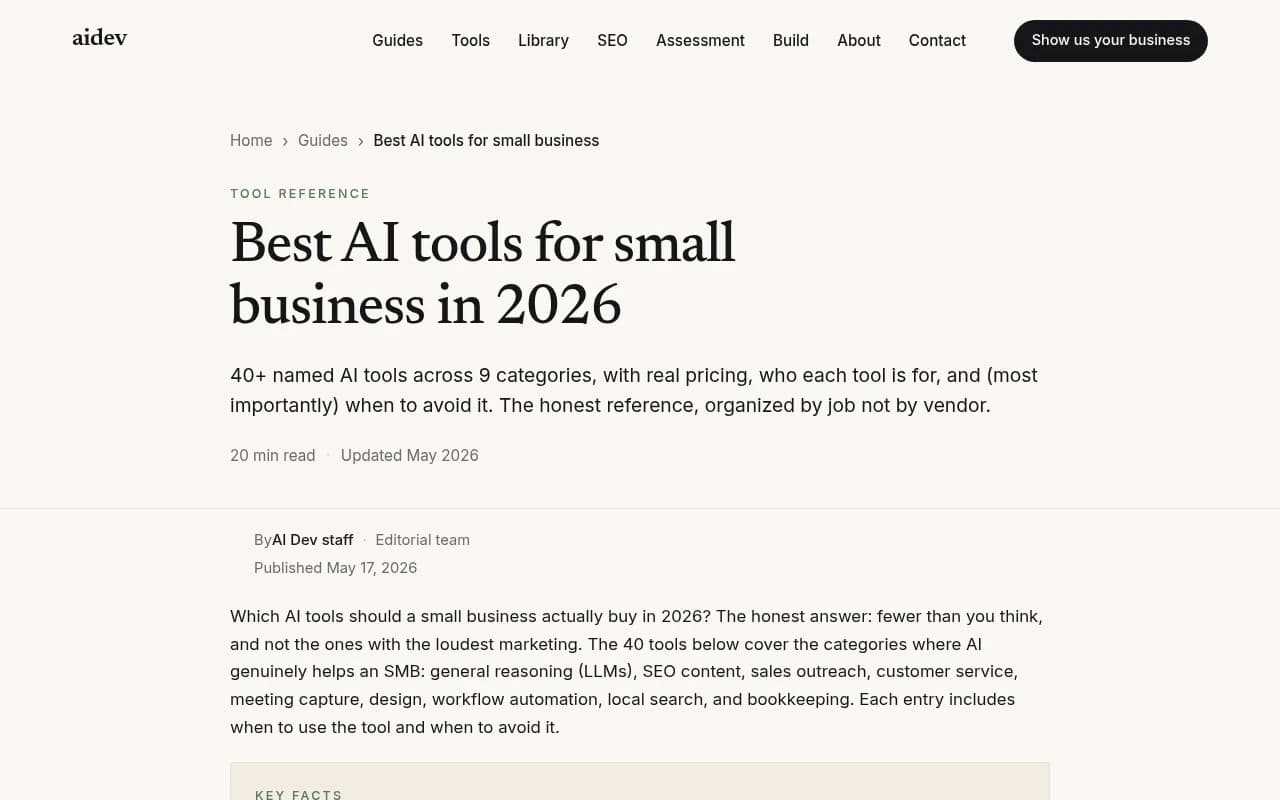
According to research from aidev.com's 2026 review of 40+ AI tools for small businesses, the typical small business AI stack is five tools: one general LLM plus four workflow-specific tools. AI visibility is increasingly becoming one of those four workflow-specific slots -- not because it's trendy, but because AI search engines are a real traffic source now.
The businesses that figure out AI visibility early will have a meaningful head start. The ones that wait until it's obvious will be playing catch-up.
Which alternative should you choose?
It depends on where you are right now.
If you're starting from zero and just want to understand whether your brand is appearing in AI answers, Otterly.AI or Peec AI will get you oriented without a major commitment. They're low-cost, easy to set up, and give you a baseline.
If you're already aware of the problem and want to fix it -- meaning you want to close content gaps, create content that AI models will actually cite, and track the results -- Promptwatch is the strongest option in this list. It's the only tool here that covers the full loop from gap identification to content creation to citation tracking, and it does it at a price point that's realistic for small businesses.
If you're already deep in another platform (Writesonic or Ubersuggest), the integrated options make sense for convenience, even if they're not the most powerful standalone choice.
The one thing to avoid: paying for a monitoring tool, seeing the gaps, and then doing nothing with the information. That's the most common way small businesses waste their AI visibility budget in 2026.
A note on AI search visibility as a channel
Traditional SEO took years to mature as a channel for small businesses. AI search is moving faster. ChatGPT crossed 800 million weekly users in early 2026, and Perplexity's growth has been consistent. Google AI Overviews now appear for a large share of informational queries.
For small businesses in competitive local or niche markets, being cited in AI answers is increasingly the difference between a customer finding you or finding a competitor. The businesses investing in this now -- understanding which prompts matter, what content AI models want to cite, and how to get their pages crawled and referenced -- are building an advantage that will compound.
The tools in this guide are the practical starting points. Pick one that matches where you are, use it consistently, and treat AI visibility as a real channel rather than an experiment.