Key takeaways
- Peec AI is a monitoring tool first. It tracks where your brand appears in AI search, but it won't help you create content to close the gaps it finds.
- Pricing starts at $95/month for brands, but usage limits on prompts, projects, and credits shape what you can actually do at each tier.
- AI Overviews is the largest AI search engine by monthly users (2.5 billion), yet many users don't realize how central it should be to their tracking strategy.
- The referral program gives new customers 30% off their first six months, which is worth knowing before you pay full price.
- If your team needs content generation, crawler logs, or traffic attribution alongside monitoring, you'll likely hit Peec AI's ceiling faster than expected.
Peec AI has picked up real traction in 2026 as more marketing and SEO teams scramble to understand where they stand in AI search. The product is clean, the onboarding is smooth, and the promise -- track your brand across ChatGPT, Perplexity, Google AI Overviews, and more -- is exactly what the market wants right now.
But a pattern keeps showing up in user reviews and community discussions: people sign up expecting one thing and discover something slightly different after a few weeks. Not necessarily worse, just different from what they assumed. Some of those surprises are minor. A few are significant enough to change whether the tool is the right fit.
Here are five things that come up repeatedly.
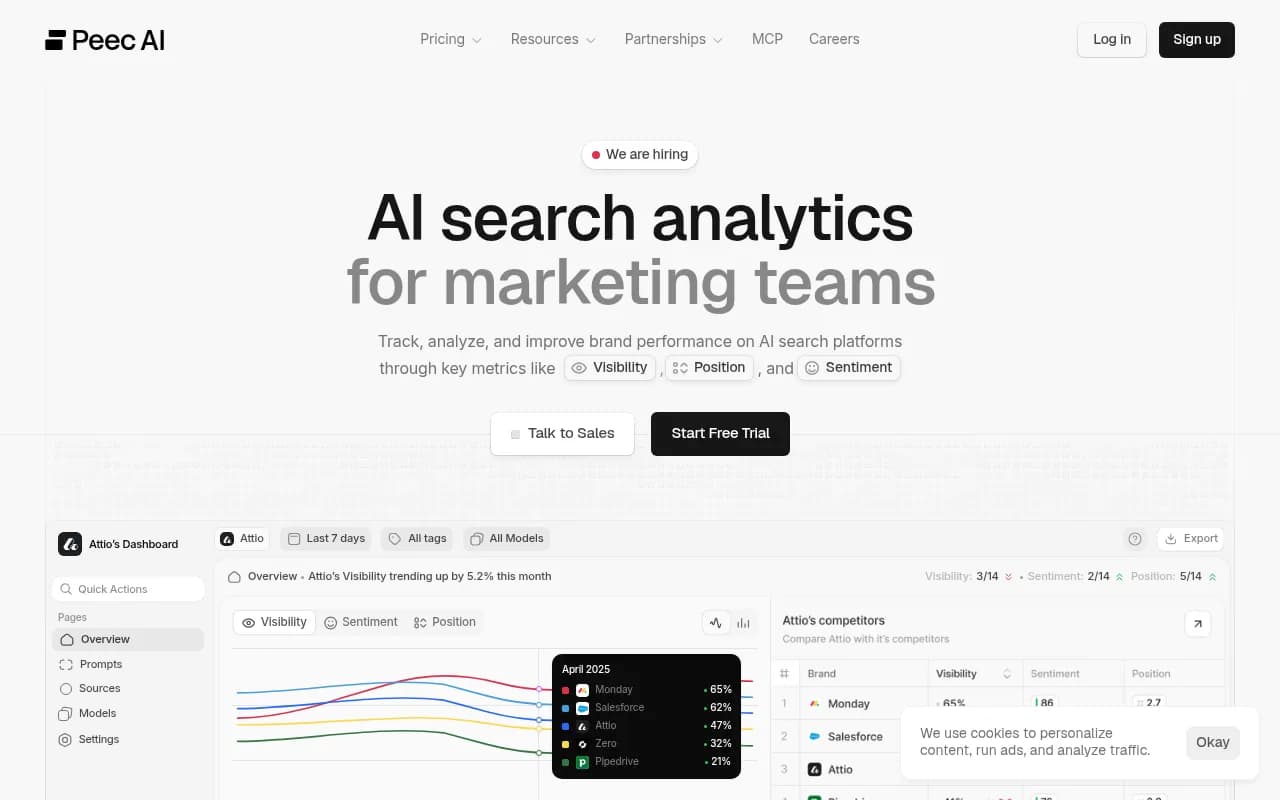
1. It's a monitoring tool, not an optimization platform
This is the most common source of friction. Peec AI does a genuinely good job of showing you where your brand appears in AI-generated responses, how often you're cited, how competitors compare, and what sentiment looks like across models. That's useful data.
What it doesn't do is help you act on it. There's no content generation, no content brief creation, no answer gap analysis that tells you which specific prompts you're missing and what you should write to capture them. You get the visibility picture. What you do next is entirely up to you.
For teams that already have a content workflow and just need the data layer, that's fine. But many users sign up expecting a more complete loop -- find gaps, fix gaps, track results -- and Peec AI only covers the first part.
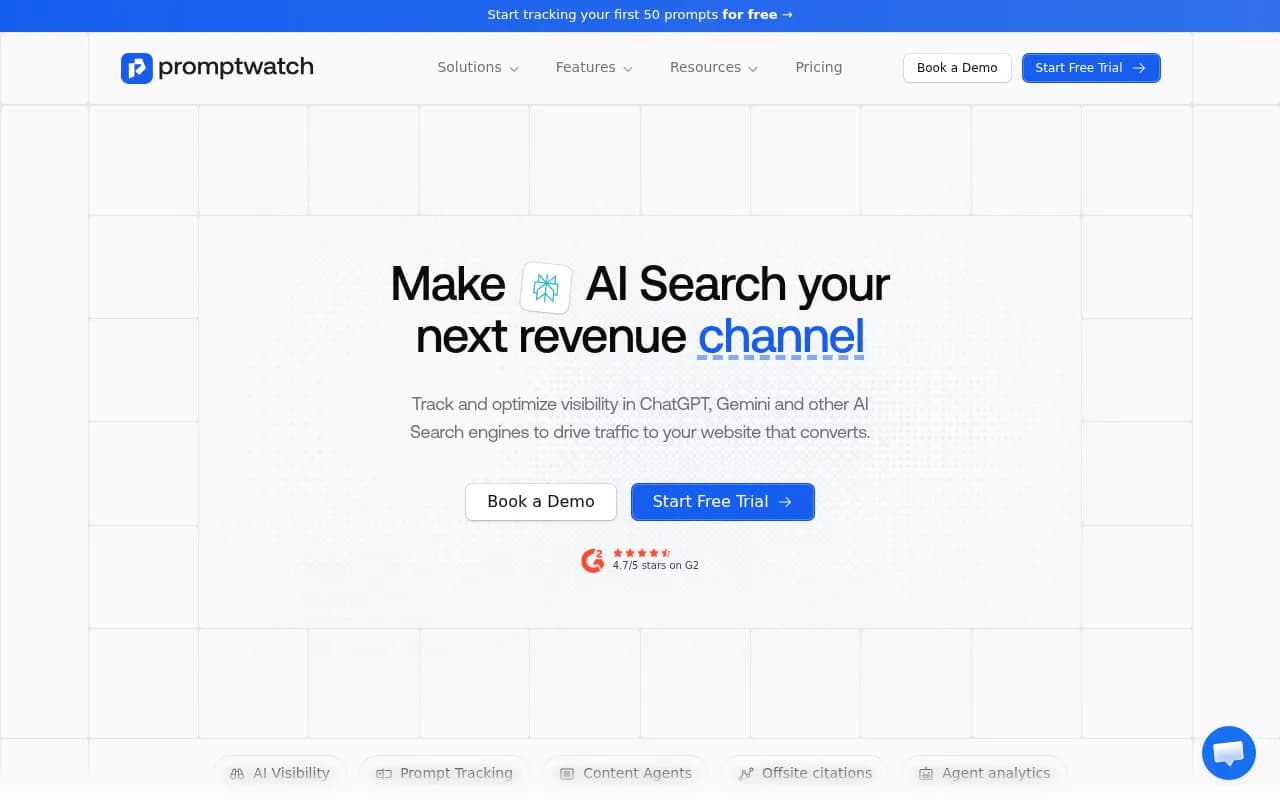
If that full loop matters to you, it's worth looking at platforms built around optimization rather than just reporting. Promptwatch, for example, combines visibility tracking with content gap analysis and AI content generation specifically designed to close the gaps it identifies.
The distinction isn't about which tool has more features. It's about what your team actually needs. If you're a data-first team that can translate monitoring insights into content action independently, Peec AI works well. If you need the platform to help you do something with what it finds, you'll want more.
2. Prompt and credit limits matter more than the headline price
Peec AI's pricing looks reasonable on the surface. Brand plans start at $95/month, agency plans at $245/month, and all plans include unlimited users. That last part is genuinely good -- most competitors charge per seat.
But the usage limits are where things get complicated. Each plan caps the number of prompts you can track, the number of projects, and the number of credits available for running queries. Depending on how many brands, competitors, or markets you're monitoring, those limits can become the real constraint faster than you'd expect.
A few things users consistently flag:
- Tracking a handful of competitors across multiple AI models burns through prompt capacity quickly
- Running regular scheduled queries (rather than on-demand) affects how credits are consumed
- Agencies managing multiple clients often find the agency tier necessary even for relatively modest client counts
None of this is hidden, but it's easy to underestimate when you're evaluating the tool based on the monthly price alone. Before signing up, map out how many prompts you actually need to track across how many projects and models. Then check whether your target tier covers that realistically.
3. AI Overviews deserves more of your attention than you're probably giving it
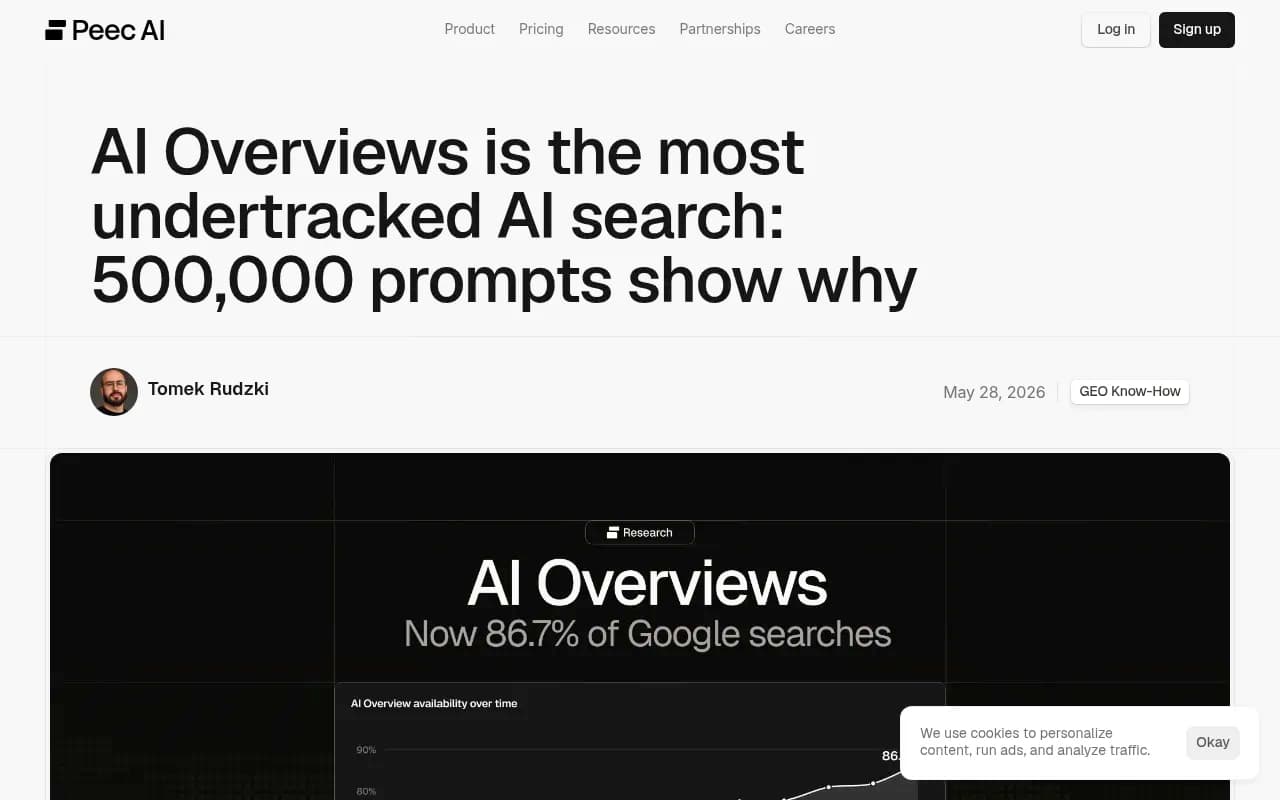
Peec AI published an analysis of 500,000 prompts in May 2026 that's worth reading regardless of which tool you use. The finding: AI Overviews appeared in 86% of those prompts. With 2.5 billion monthly users confirmed at Google I/O 2026, it's the largest AI search engine in the world -- larger than ChatGPT, Claude, and Perplexity combined.
Most GEO conversations in 2026 still center on ChatGPT and Perplexity. Those are important, but if you're not actively tracking AI Overviews, you're ignoring the channel with the most reach. Peec AI does support AI Overviews tracking, but users often set up their prompt tracking with a ChatGPT-heavy focus and underweight Google's AI surfaces.
The practical implication: when you configure your prompt tracking in Peec AI, make sure AI Overviews is a primary model in your setup, not an afterthought. The data suggests it should probably be your first priority.
4. There's a referral discount most new users don't know to ask about
This one is purely practical. Peec AI runs a referral program where existing customers share a personal referral link. If you sign up through one of those links on a paid plan, you get 30% off your first six months. That's not a trial extension or a credit -- it's a direct reduction on your subscription price.
The program launched in April 2026. The referring customer earns 20% revenue share for six months per referral. Both sides benefit.
The catch is that most people evaluating Peec AI don't know to look for this. If you're in any marketing or SEO community where Peec AI comes up -- Slack groups, LinkedIn, industry forums -- it's worth asking whether anyone has a referral link before you sign up at full price. Six months at 30% off on a $95/month plan is a meaningful saving.
5. Content execution and ROI attribution are gaps you'll need to fill elsewhere
Peec AI gives you visibility data. It shows you where you appear, where competitors appear, what sources AI models are citing, and how sentiment tracks over time. That's a solid foundation.
What it doesn't connect is visibility to revenue. There's no traffic attribution that ties AI citations to actual site visits or conversions. There's no crawler log analysis showing you which pages AI bots are reading and which they're ignoring. And as mentioned above, there's no content tooling to help you create the pages that would improve your visibility scores.
For teams at an early stage of AI search monitoring, those gaps might not matter yet. Getting the visibility data is the right first step. But as the practice matures and leadership starts asking whether AI search investment is generating returns, you'll need to answer questions that Peec AI's current feature set doesn't address.
Some teams solve this by pairing Peec AI with other tools. Others decide they'd rather have everything in one place from the start.
How Peec AI compares to the alternatives
Here's a quick comparison of Peec AI against a few tools that come up in the same conversations:
| Tool | Monitoring | Content generation | Crawler logs | Traffic attribution | Starting price |
|---|---|---|---|---|---|
| Peec AI | Yes | No | No | No | $95/mo |
| Promptwatch | Yes | Yes | Yes | Yes | $99/mo |
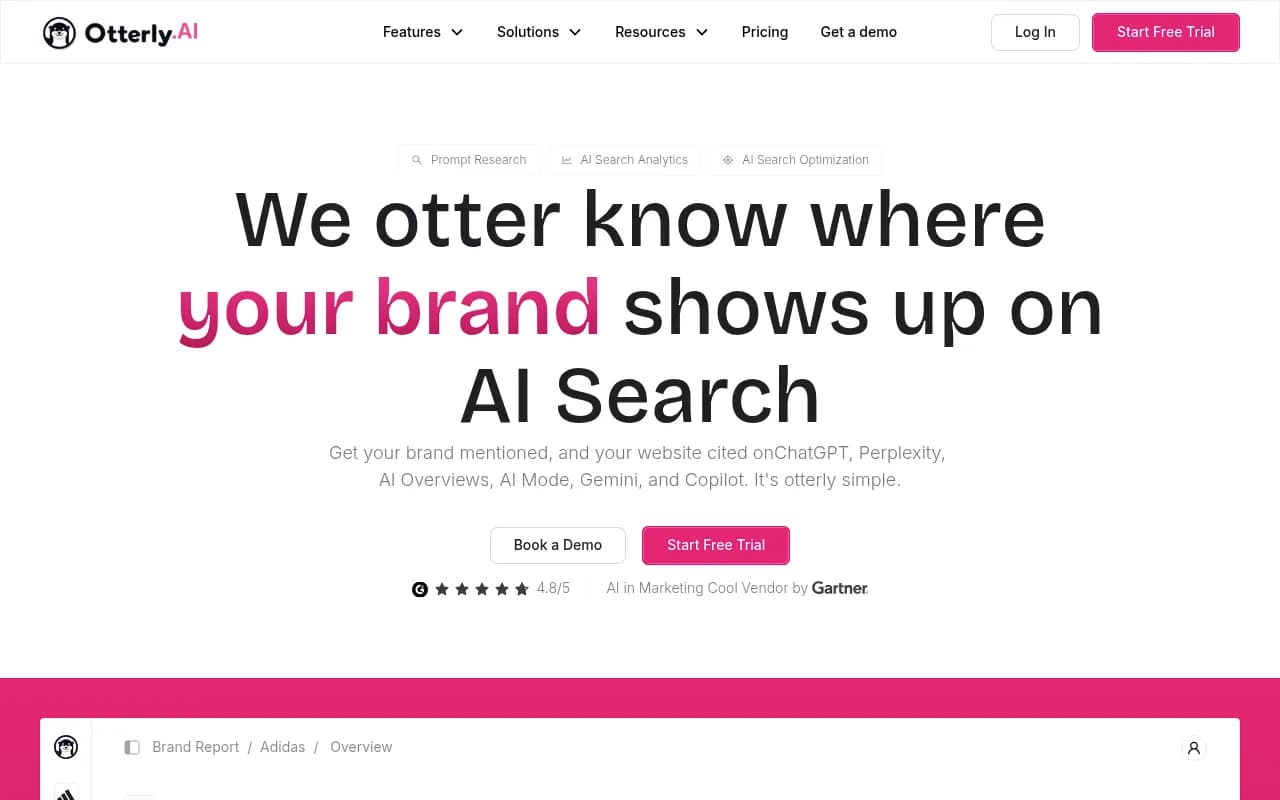
| Otterly.AI | Yes | No | No | No | Lower |
| AthenaHQ | Yes | No | No | No | Higher |
| Profound | Yes | Limited | No | No | Higher |
The monitoring-only category is crowded. Peec AI sits comfortably in it with a clean interface and solid prompt tracking. The question is whether monitoring alone is enough for where your team is headed.

Who Peec AI actually works well for
To be fair to the product: Peec AI is genuinely useful for specific teams and workflows.
If you're an SEO or brand team that wants clean AI visibility data, competitor benchmarking, and citation source analysis without needing the platform to also generate content -- Peec AI delivers that well. The interface is straightforward, the reporting integrations (CSV, Looker Studio, API) are practical, and the unlimited user model means you're not paying per seat as your team grows.
It works less well if you're a newer website with limited existing content, if you need hands-on onboarding support, or if your workflow requires the tool to help you close the gaps it identifies rather than just surface them.
The honest version: Peec AI is a good monitoring tool that some users buy expecting it to be an optimization platform. Knowing that distinction before you sign up saves you from a frustrating first month.
Before you commit
A few practical steps worth taking before you finalize a Peec AI subscription:
- Map your actual prompt volume. Count the prompts, competitors, and models you need to track, then check whether your target tier covers it.
- Ask in a community for a referral link. Thirty percent off for six months is real money.
- Decide whether monitoring alone is enough. If you need content generation or traffic attribution, factor that into your evaluation.
- Check AI Overviews coverage. Make sure the plan you're considering includes the Google AI surfaces you care about, not just ChatGPT and Perplexity.
If you want to compare Peec AI against a platform that covers the full optimization loop -- tracking, gap analysis, content creation, and attribution -- Promptwatch is the most direct comparison worth making.
The GEO tool market is moving fast in 2026, and the gap between monitoring tools and optimization platforms is becoming more obvious as teams move from "we should track this" to "we need to improve this." Knowing which category a tool sits in before you sign up is the most useful thing you can do.